
Yeah, I’ve seen this mistake a thousand times. Someone drops a gorgeous sofa into their living room, pushes it flat against the wall, and wonders why the space feels awkward and cold. Getting your living room layout right is not about expensive furniture. It is about understanding how people move, gather, and breathe inside a room.
Why Your Living Room Layout Matters More Than Decor
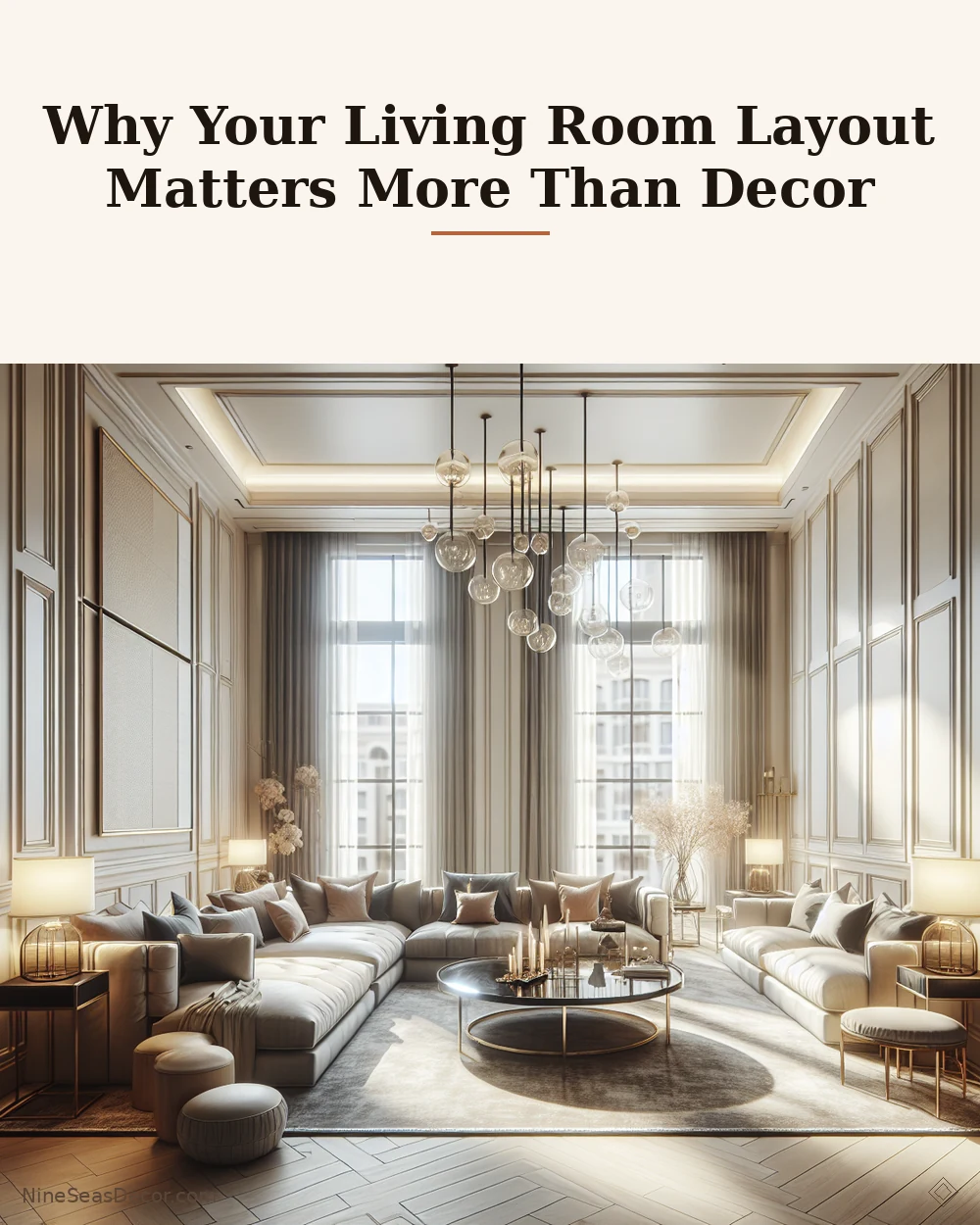
According to a 2023 study published in the Journal of Environmental Psychology, room arrangement directly impacts perceived comfort and social interaction, with well-planned layouts increasing conversational engagement by up to 42%. That number should stop you in your tracks. Your layout is doing emotional work before a single throw pillow gets involved. For more ideas, check out our guide on Complete Bedroom Design Guide 2026: Expert Ideas, Layouts & Style Tips. For more ideas, check out our guide on Living Room Design Guide 2026: Complete Layout, Decor & Style Ideas. For more ideas, check out our guide on Small Bedroom Ideas 2026: Space-Saving Furniture, Storage Solutions & Layout Strategies. For more ideas, check out our guide on Living Room Color Schemes 2026 | Transform Your Space.
A standard living room in the US measures roughly (12×18 feet), giving you about (216 sq ft) to work with. Smaller apartments often deal with (10×12 feet) or less. Every decision, from sofa placement to rug sizing, must account for traffic flow, focal points, and conversation zones. Skipping any one of these creates a room that looks staged but never feels lived in.
THE FLOATING FURNITURE RULE
Pull your furniture away from the walls. I know it feels counterintuitive, but pushing every piece to the perimeter is the single most common layout mistake I encounter. Aim for at least (18-24 inches) between the sofa back and the wall. This creates a natural conversation cluster that draws people inward rather than seating them around the edges like a waiting room. Your space will feel instantly larger and more intentional.
Getting Traffic Flow Right
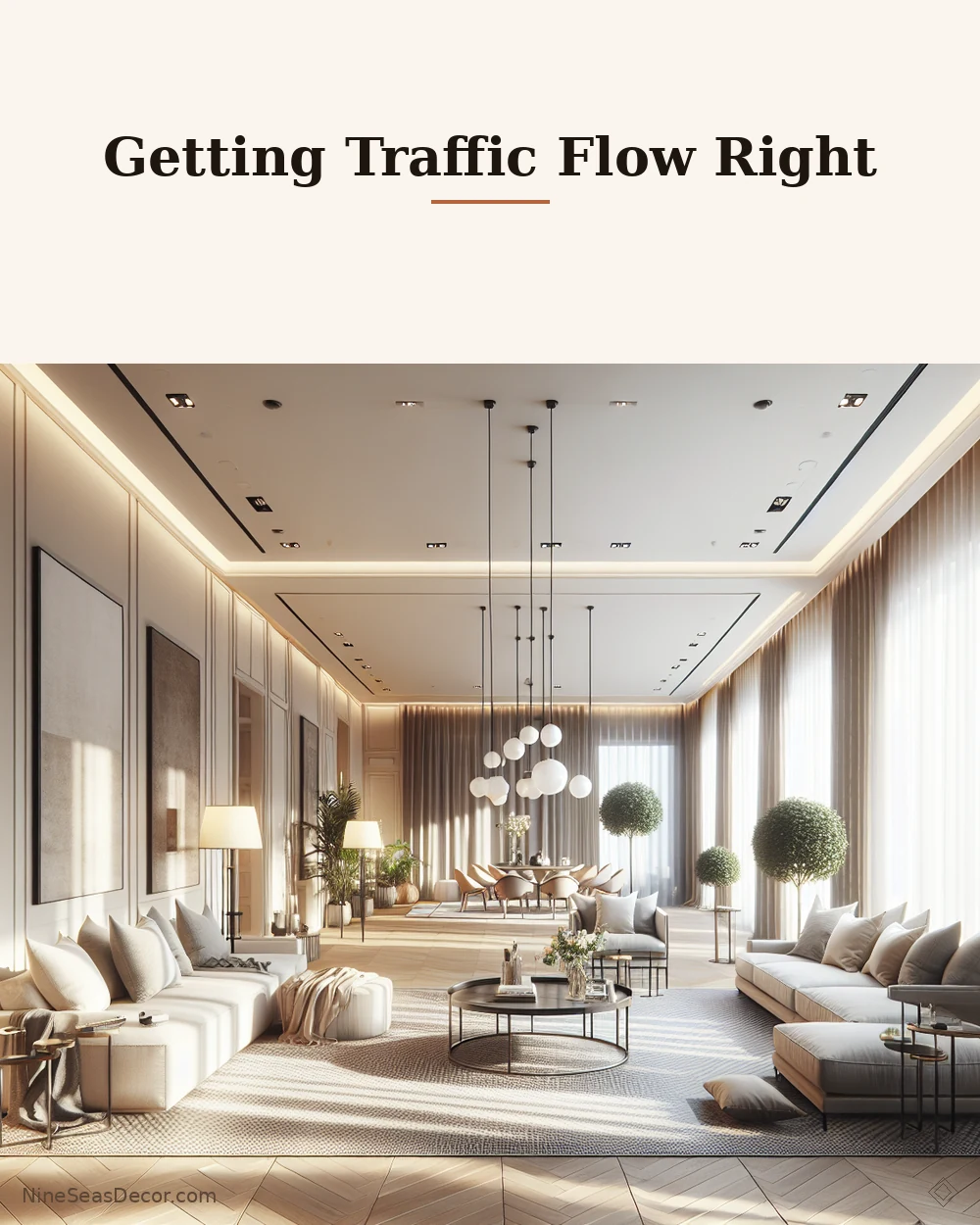
The National Kitchen and Bath Association (NKBA) recommends a minimum (36-inch clearance) for primary walkways and (24-inch clearance) for secondary paths. Apply those same standards to your living room. Your main path from the entry to the seating area should never be blocked by an ottoman or side table.
Arrange your main sofa and chairs to face a clear focal point, whether that is a fireplace, a large window, or a media console. Keep the coffee table at least (14-18 inches) from the sofa edge. That gap is functional, not decorative. It lets people reach their drinks and stand up without performing gymnastics.
CHOOSING THE RIGHT RUG SIZE
A rug that is too small is a layout killer. In a standard living room, go for at least an (8×10 foot rug) or ideally a (9×12 foot rug). All primary seating should have at least the front legs resting on the rug surface. This anchors your furniture grouping and signals intentionality. Expect to spend ($300-$1,200) for a quality area rug in those dimensions, with wool options running ($800-$2,500).
Color and Light That Work With Your Layout
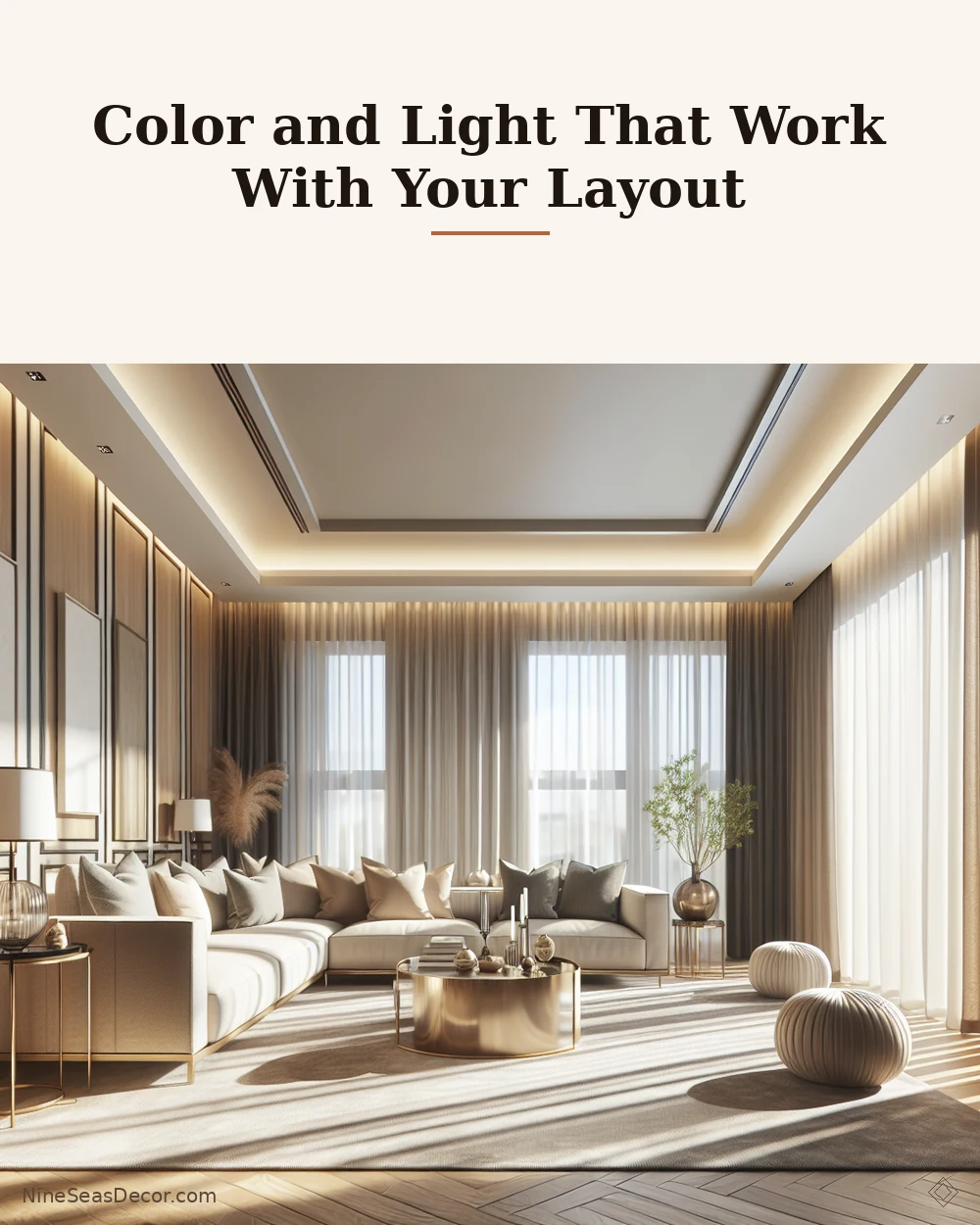
According to the 2024 Houzz U.S. Renovation Trends Report, warm neutrals remain the top color choice for living rooms, with homeowners favoring shades that enhance spatial perception. My go-to recommendations include Sherwin-Williams Accessible Beige (SW 7036) for smaller rooms and Benjamin Moore Revere Pewter (HC-172) for larger, light-filled spaces. Both colors make furniture arrangement feel cohesive regardless of your layout style.
Layer your lighting across three levels: ambient, task, and accent. A single overhead fixture is never enough. Budget ($500-$2,000) for a complete lighting plan including floor lamps, table lamps, and dimmable overhead fixtures.
Frequently Asked Questions
WHAT IS THE BEST LIVING ROOM LAYOUT FOR A SMALL SPACE?
For rooms under (150 sq ft), a single-axis layout works best. Place one sofa facing the focal point, add one accent chair at a slight angle, and skip the loveseat entirely. Use a (5×8 foot rug) to anchor the group. According to a 2024 study published in the Journal of Interior Design, homeowners who plan layouts first report 67% higher satisfaction rates than those who purchase furniture first. Keep your coffee table under (48 inches) long and consider a lucite or glass top to reduce visual weight.
HOW FAR SHOULD A SOFA BE FROM THE TV?
The recommended viewing distance depends on your screen size. For a (55-inch TV), sit between (7-11 feet) away. For a (65-inch screen), that range extends to (8-13 feet). The Society of Motion Picture and Television Engineers suggests a viewing angle no wider than 30 degrees from center for comfortable long-term viewing. Position your sofa accordingly before you finalize any layout, because the TV anchors the entire room.
HOW MUCH DOES HIRING AN INTERIOR DESIGNER FOR A LIVING ROOM LAYOUT COST?
Hiring a professional interior designer for a living room layout consultation typically runs ($150-$500 per hour), with full-service design projects ranging from ($2,000-$8,000) depending on scope and location. Many designers now offer e-design packages starting at ($300-$800) that include a floor plan, mood board, and shopping list without the in-person hourly fees. For most homeowners, a one-time consultation of (2-3 hours) is enough to solve major layout problems.
SHOULD FURNITURE ALWAYS FACE THE FOCAL POINT?
Not always, but your primary seating absolutely should. In larger rooms over (300 sq ft), consider creating two conversation zones, one anchored by the fireplace or TV and a secondary grouping near a window or bookshelf. The 2023 Houzz Layout Satisfaction Survey found that rooms with multiple defined zones scored 38% higher in owner satisfaction than single-zone layouts. Use a secondary (5×7 foot rug) to define the second grouping and maintain visual separation without closing off the space.

Hi, I’m Sophia Rose. I believe every home tells a story. At Nine Seas Decor, I share creative ideas, budget-friendly tips, and modern trends to help you turn your living space into a sanctuary. Let’s make your home beautiful, one corner at a time!