
winter-home-decor-2026
Every single year, the same thing happens. The holidays wrap up, the festive decorations come down, and you’re left staring at a living room that feels cold, empty, and honestly a little depressing. The tree is gone, the twinkle lights are packed away, and suddenly your home looks like it forgot what season it is. Sound familiar? Yeah, I’ve seen this mistake a thousand times, and it happens to even the most design savvy homeowners. The truth is, winter home decor doesn’t begin and end with Christmas. It stretches from November all the way through February, and your space deserves to feel intentional and beautiful for every single one of those months.
Here’s the thing most people don’t realize: how your home looks and feels in winter has a measurable impact on your mental health and daily wellbeing. According to a 2023 study published in the Journal of Environmental Psychology, individuals who made intentional adjustments to their indoor environments during winter months reported a 42% improvement in overall mood and a significant reduction in seasonal stress markers. That’s not a small number. Your living room, bedroom, and entryway aren’t just aesthetic choices. They’re actively shaping how you feel every single morning when you wake up and every evening when you come home from work.
This guide covers absolutely everything you need to execute a stunning winter home decor transformation in 2026. We’re talking warm color palettes, layered textile strategies, lighting upgrades, natural element styling, furniture arrangement tips, and a breakdown of real costs so you can plan your budget without any surprises. Whether you’re working with a small apartment under 600 sq ft or a sprawling family home over 2,500 sq ft, the principles we’re covering today scale beautifully to any space.
I’m Sophia Rose, and I’ve been covering home decor trends and interior design strategies for NineSeasDecor.com for over eight years. I’ve consulted with certified interior designers, dug through peer reviewed research, and personally tested dozens of decor approaches in real homes across the country. Everything in this guide is grounded in both design expertise and real world practicality. No fluff, no filler. Just the strategies that actually work when January temperatures drop and your home needs to rise to the occasion.
Understanding The Winter Home Decor Mindset
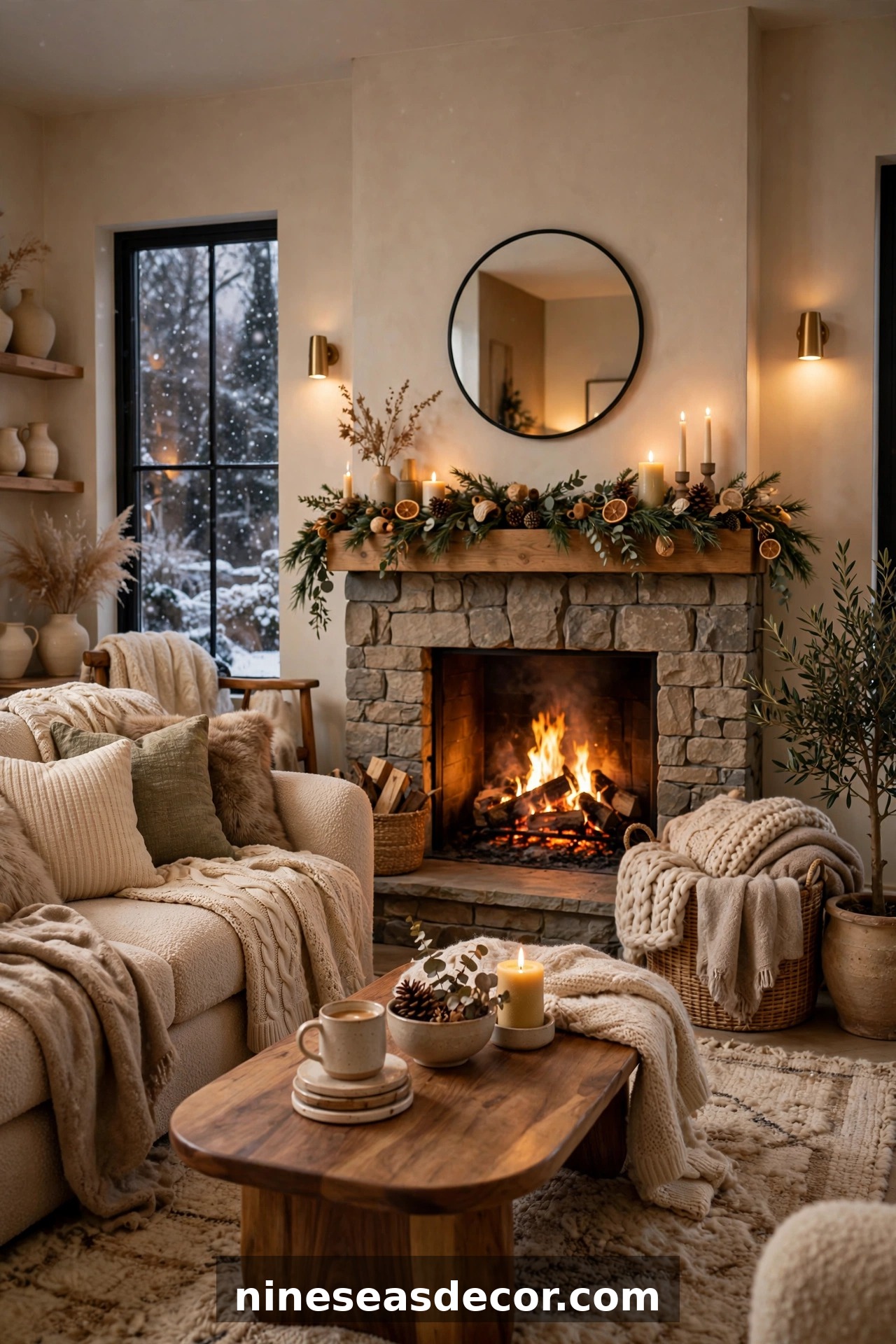
Before you buy a single throw pillow or light a single candle, you need to shift how you think about seasonal decorating. Most homeowners approach winter decor reactively. They strip down the holiday decorations and slap up whatever’s left in the storage bins. That’s not a strategy, that’s a scramble. The homeowners I’ve worked with who end up with truly beautiful winter interiors all share one thing in common: they treat post holiday winter styling as its own distinct design season, completely separate from Christmas and completely separate from spring.
Think of it this way. Winter, specifically January through late February, is the quietest, most introspective season of the year. The design language should reflect that. We’re talking about depth, warmth, texture, and a kind of intentional stillness. According to a 2024 report from Houzz, homeowners who planned their seasonal decor transitions in advance were 3.2 times more likely to feel satisfied with their home environment compared to those who decorated impulsively after the holidays. Planning matters more than budget.
The winter decor mindset is built on three core pillars: warmth, texture, and intentional light. Every decision you make, from your throw blanket choices to your paint color selection to your candle placement, should serve at least one of these three pillars. When you have that filter in place, shopping becomes easier, styling becomes faster, and the results feel cohesive rather than chaotic.
WARMTH AS A DESIGN PRINCIPLE
Warmth in interior design isn’t just about temperature. It’s a visual and tactile language. A room feels warm when it uses amber and earthy tones, when surfaces are soft rather than reflective, and when light sources are low and layered rather than harsh and overhead. A room can be physically warm at 72 degrees Fahrenheit and still feel cold if it’s filled with cool grays, chrome finishes, and fluorescent overhead lighting. I’ve walked into homes like that and felt the chill despite the thermostat reading. Start by auditing your space. Count your cool toned elements versus your warm toned ones. If cool is winning by more than 60% to 40%, your room is fighting against winter rather than embracing it. Every adjustment you make from here should tip that balance toward warmth.
TEXTURE AS A SENSORY STRATEGY
Layered texture is the single most underused tool in winter home styling. When natural light is scarce and outdoor environments feel harsh and bare, your indoor spaces need to compensate with rich, varied surfaces that engage the senses. We’re talking about the combination of chunky knit throws, velvet accent pillows, faux fur rugs, raw wood elements, and woven wall hangings working together in a single space. The rule I always follow is the five texture rule: aim for at least five distinct textural elements in any room you’re styling for winter. Smooth, rough, soft, woven, and matte. Hit all five and your room will feel layered and intentional even on the darkest January afternoon.
INTENTIONAL LIGHT PLANNING
Winter lighting design is where most homeowners leave the most value on the table. The default move is to crank up the overhead lights to compensate for shorter days. That’s the wrong move entirely. Overhead lighting in winter creates a flat, institutional feel that actively works against the cozy atmosphere you’re trying to build. Instead, build a layered lighting system using table lamps, floor lamps, candles, and string lights to create pools of warm light at multiple heights throughout the room. Aim for bulbs in the 2700K to 3000K color temperature range for the warmest, most flattering glow. A complete winter lighting overhaul for an average living room typically costs between ($150 and $400) depending on the fixtures you choose, and it makes a more dramatic difference than almost any other single change you can make.
The 2026 Winter Color Palette Guide
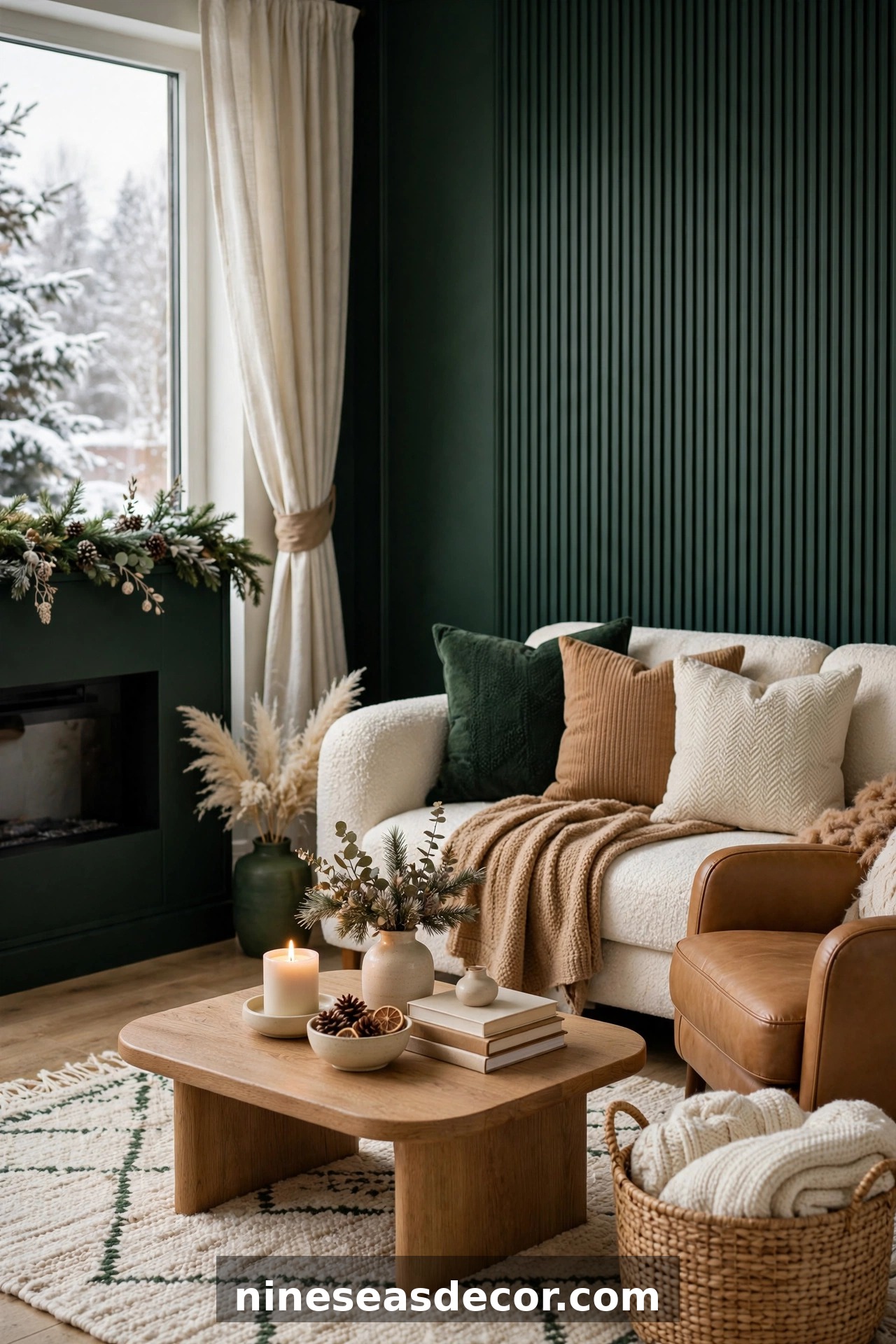
Color is the foundation of any successful winter home decor scheme, and 2026 brings some genuinely exciting shifts in the direction that leading paint brands and interior designers are moving. We’re moving away from the stark, minimalist whites and cool grays that dominated the early 2020s and leaning hard into what industry insiders are calling warm cocoon tones. Think deep terracottas, aged creams, forest greens, dusty mauves, and rich cognac browns. These are colors that feel like wrapping yourself in a cashmere blanket, and they translate beautifully to walls, furniture, and accessories alike.
The National Kitchen and Bath Association (NKBA) noted in their 2025 design trend forecast that warm earth tones and botanical greens were the top requested color directions for residential interiors heading into 2026, with over 68% of surveyed designers reporting client requests in these color families. That’s a massive shift from the cool neutral dominance of the past decade, and it aligns perfectly with what winter interiors need: depth, richness, and emotional warmth.
If you’re painting a wall or an entire room, I always recommend committing to a tested, trusted paint code rather than eyeballing it at the store. The difference between a warm beige that glows in lamplight and a warm beige that looks jaundiced under the same conditions comes down to the specific undertones, and that’s where paint codes save you from expensive mistakes.
TOP WALL COLORS FOR WINTER 2026
Here are the specific paint codes I’m recommending for winter 2026 interiors. For living rooms, Sherwin-Williams Accessible Beige (SW 7036) remains a timeless anchor that reads golden and warm in low winter light. For something deeper and more dramatic, Sherwin-Williams Cavern Clay (SW 7701) delivers that terracotta richness without overwhelming smaller spaces. Benjamin Moore’s Pale Oak (OC-20) works beautifully in north facing rooms that need a warm lift without going full color. For those ready to commit to a moody, enveloping look, Benjamin Moore Newburyport Blue (HC-155) in a deep application creates a stunning winter library or dining room atmosphere. Paint costs typically run ($35 to $75 per gallon) for premium brands, and a standard living room requires 2 to 3 gallons for full coverage.
ACCENT COLORS AND COMPLEMENTARY TONES
Accent colors are where winter palette building gets really fun. The best winter accent combinations for 2026 pair a primary warm neutral with at least two accent tones pulled from nature. Think aged brass and deep forest green alongside an Accessible Beige wall. Or dusty rose and cognac leather against a soft greige backdrop. The key is avoiding anything that reads crisp, bright, or artificial. Winter accents should look like they belong to the earth: berries, bark, dried grasses, stone, and ember. When shopping for accent pillows or throw blankets in these tones, budget between ($20 and $80 per piece) for quality options that will hold their color and texture through multiple seasons of use.
COLORS TO AVOID THIS WINTER
Yeah, I’m going there. Not every color belongs in a winter interior, and knowing what to avoid is just as valuable as knowing what to use. Cool grays, icy blues, stark whites, and anything with a visible green or purple undertone will fight against the warmth you’re trying to create. That doesn’t mean you can never use them, but if they’re dominating your palette, your room will feel cold and uninviting no matter how many candles you light. Bright, saturated colors like cobalt, hot pink, or vivid yellow also clash with the quiet, contemplative energy that makes winter interiors so special. Save those for spring. Right now, think muted, aged, and earthy.
Textile Layering: The Secret Weapon of Winter Interiors
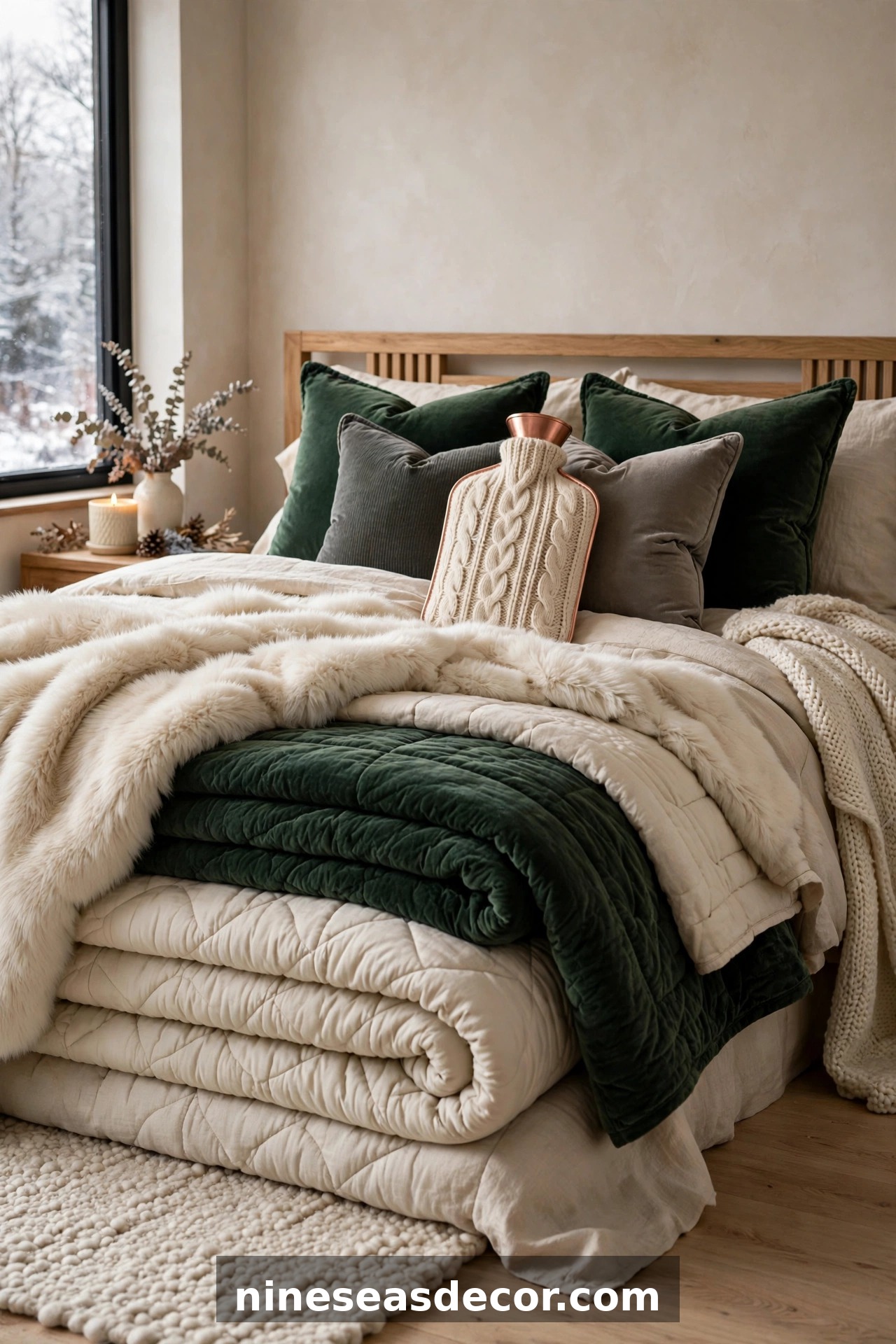
If I had to pick the single most impactful change any homeowner can make to their winter interior, it would be a strategic textile overhaul. Nothing transforms a space faster, nothing costs less per square foot of impact, and nothing contributes more to that elusive hygge quality that everyone wants but few people know how to achieve. Hygge, the Danish concept of cozy contentment, is built almost entirely on tactile richness. Soft surfaces, layered warmth, and materials that invite you to slow down and settle in.
The biggest mistake I see in winter bedrooms and living rooms is undertexturing. One throw blanket folded neatly on the couch arm. Two matching pillows. A single area rug. That’s a summer approach wearing winter clothes, and it never quite works. For winter, you want to layer, pile, drape, and mix in a way that feels abundant without becoming cluttered.
According to a 2024 consumer survey published by the American Home Furnishings Alliance, households that invested in seasonal textile updates reported feeling 55% more satisfied with their home environment during winter months compared to those who kept their year round setup unchanged. That’s a remarkable return on what is typically a very modest investment.
BUILDING YOUR WINTER THROW AND PILLOW SYSTEM
Let’s talk specifics. For a standard sofa between 72 and 96 inches, you want a minimum of five to seven throw pillows in a mix of sizes: two 24 inch square pillows at the back, two 20 inch pillows in the middle, and one or two 12×20 inch lumbar pillows at the front. Your throw blanket should be at minimum 50×60 inches to drape naturally, and for maximum winter effect, layer two throws of different textures, one chunky knit and one faux fur or sherpa. Total investment for a quality pillow and throw refresh typically runs between ($120 and $350) depending on materials and where you shop. This is one area where I genuinely recommend spending a little more, because cheap textiles pill, flatten, and fade within a single season.
RUGS AND FLOOR LAYERING STRATEGIES
Winter rug styling is its own art form. The core principle is simple: more surface coverage equals more warmth and comfort underfoot. For rooms with hardwood or tile floors, a single area rug isn’t enough in winter. Layer a larger natural fiber rug like jute or sisal as your base, then add a smaller, softer rug on top in the seating area. This approach works beautifully in living rooms, bedrooms, and even home offices. For a living room of 12×15 feet, a base rug of 8×10 feet topped with a 5×7 foot shag or Moroccan style rug creates the perfect layered look. Budget between ($200 and $800) for the base rug and ($80 to $300) for the accent layer depending on material and size.
WINDOW TREATMENTS FOR WARMTH AND AMBIANCE
Winter window treatments serve two critical functions: insulation and atmosphere. Heavy lined curtains or drapes in velvet, linen, or wool blend fabrics dramatically reduce heat loss through windows, which can account for up to 30% of a home’s heat loss according to the U.S. Department of Energy. But beyond the functional benefit, floor to ceiling drapes in a warm tone like deep burgundy, forest green, or aged gold instantly transform the atmosphere of a room, creating a sense of enclosure and coziness that lighter window treatments simply can’t match. For standard 84 to 96 inch windows, expect to invest between ($40 and $200 per panel) for quality lined drapes. Always hang your curtain rods close to the ceiling and extend the rod 6 to 12 inches beyond the window frame on each side to maximize the visual impact and the insulating effect.
Natural Elements and Organic Styling For Winter
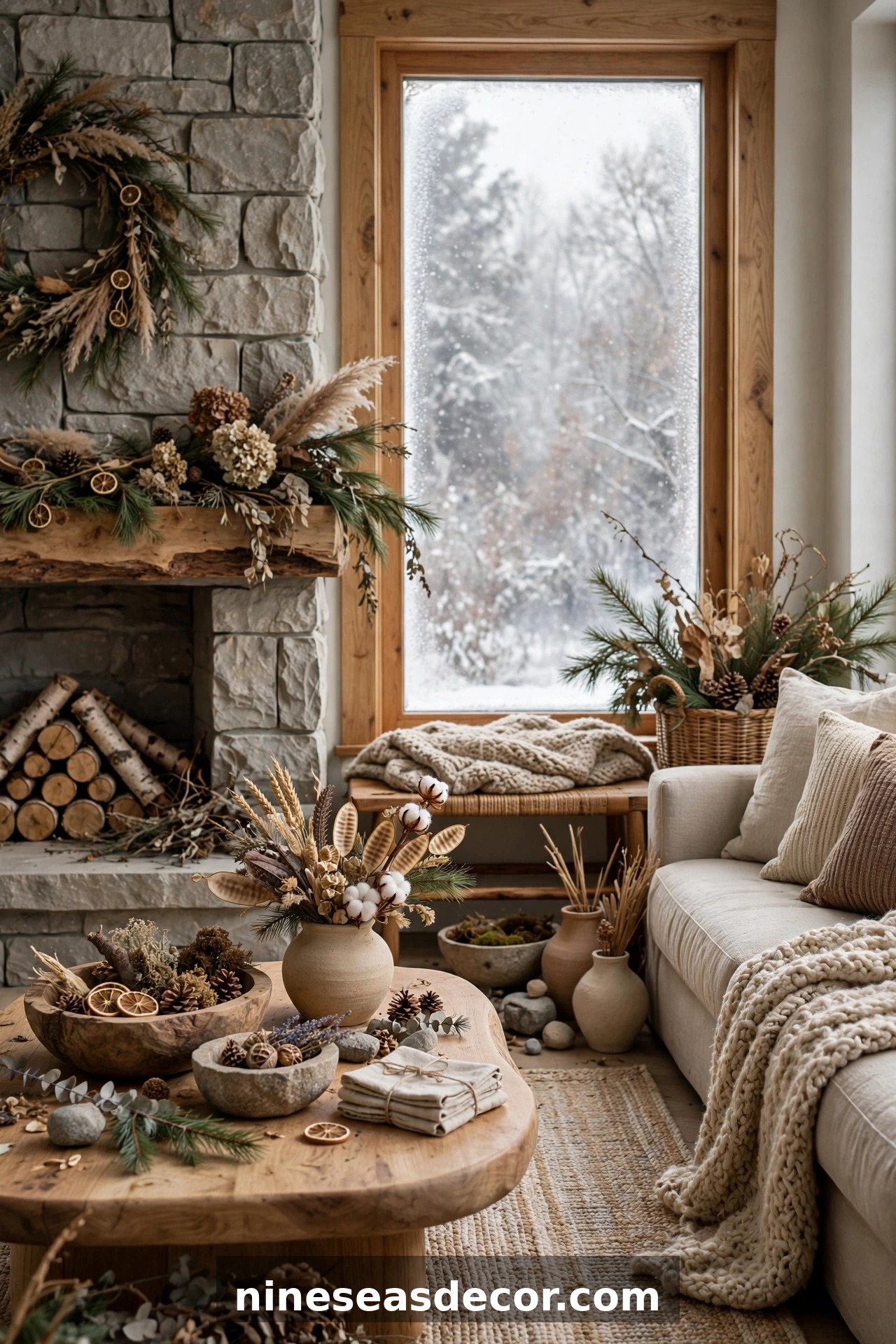
One of the most powerful but often overlooked aspects of winter home decor is the use of natural and organic elements to bring the outdoors inside. This might seem counterintuitive since winter is the season when the natural world looks its bleakest outside. But that’s exactly why bringing controlled, curated natural elements into your home feels so grounding and meaningful during these months. It’s a visual and psychological reminder that life continues, that there’s beauty in dormancy, and that nature in all its forms belongs in your living space.
The specific natural elements that work best for winter interiors share common characteristics: they tend toward neutrals, tawny golds, and deep greens. They have interesting textures without being overly colorful or summery. And they hold their visual appeal for weeks without significant maintenance. Think dried botanicals, evergreen branches, pinecones, raw wood, river stones, and preserved moss.
DRIED BOTANICALS AND BRANCH ARRANGEMENTS
Dried botanical arrangements have been trending for several years now, and in 2026 they remain one of the most elegant and cost effective ways to add organic winter texture to any room. Dried pampas grass in a tall ceramic vase, branches of preserved eucalyptus, bundles of dried lavender or wheat, and arrangements of cotton stems all photograph beautifully and last indefinitely with minimal care. For a statement floor vase in a living room corner, aim for branches or stems that reach at least two thirds the height of the wall, which in a standard 8 foot ceiling room means arrangements of 60 to 64 inches total height including the vase. Dried botanical arrangements typically cost between ($30 and $150) depending on the specific materials and whether you source them from a florist, craft store, or make them yourself.
CANDLES AND FIREPLACE STYLING
Candle styling in winter is practically a design discipline unto itself. The key is treating candles as architectural elements rather than afterthoughts. Group them in odd numbers, vary the heights dramatically within a single arrangement, and mix pillar candles with votives and taper candles for visual interest. On a mantelpiece between 48 and 72 inches wide, a winter arrangement typically includes one large 4×6 inch pillar candle as the anchor, flanked by two medium pillars and four to six votives scattered at varying heights on candle stands. For scent, winter calls for warm, spiced, and woody fragrance families: cedarwood, amber, cinnamon, clove, and sandalwood. Avoid fruity or floral scents in winter displays. Budget between ($15 and $60) for quality scented candles that burn cleanly and hold their fragrance for the full burn time.
EVERGREEN AND BOTANICAL ARRANGEMENTS BEYOND THE HOLIDAYS
Here’s a tip that changes everything for post holiday winter decor: evergreen elements are not just for Christmas. A sprig of fresh pine or a small potted rosemary topiary has absolutely nothing to do with the holidays when it’s styled in a neutral ceramic pot on a kitchen shelf or layered into a living room vignette. The same goes for small potted winter plants like amaryllis, cyclamen, and paperwhites, which bloom naturally in the coldest months and bring a quiet, elegant life to indoor spaces. A single amaryllis bulb kit costs between ($10 and $25) and produces dramatic, sculptural blooms over a period of six to eight weeks, making it one of the best value plants for winter interiors.
Room By Room Winter Decor Strategies
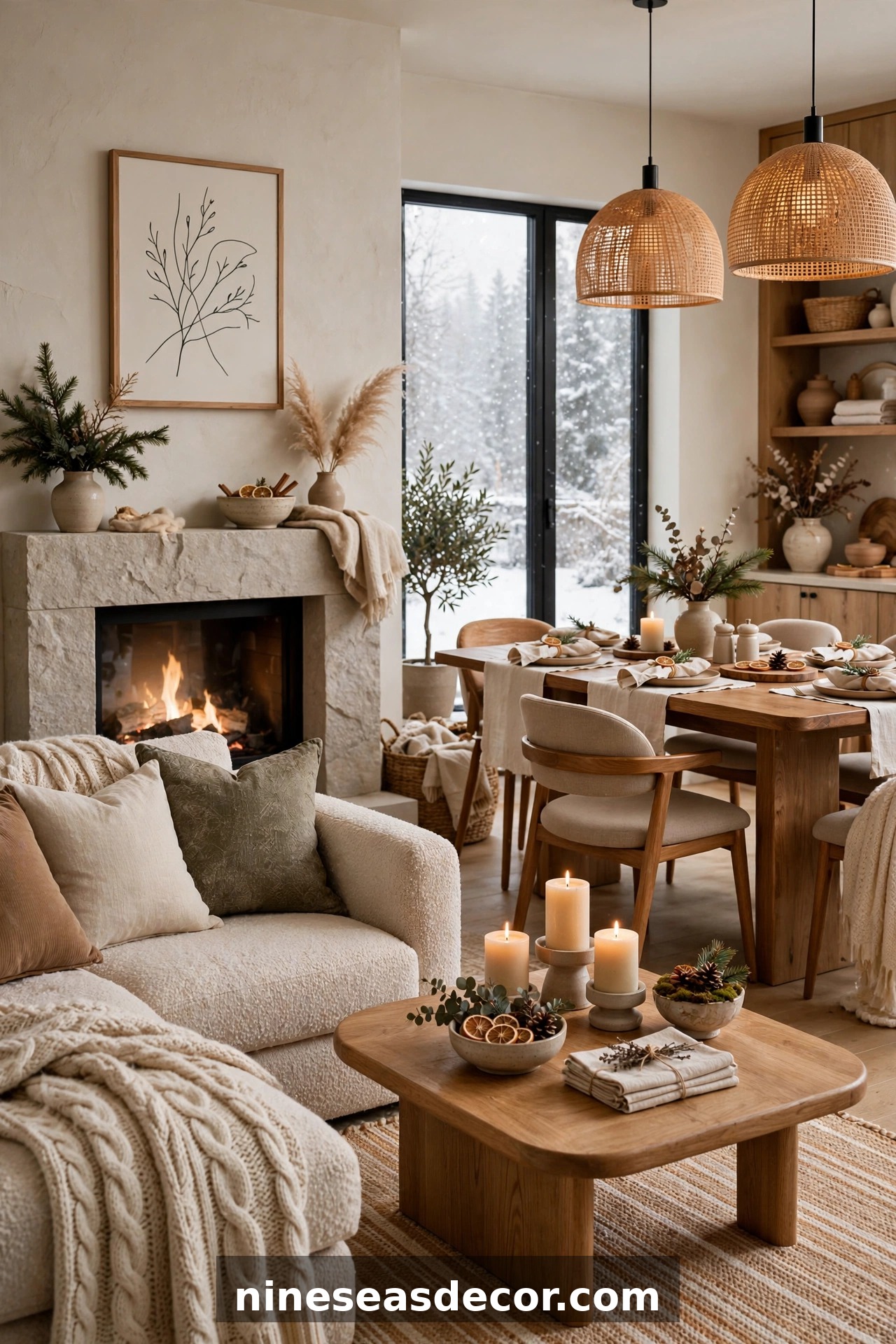
Applying winter decor principles consistently across your entire home is what separates a truly transformed winter interior from a living room that got some new throw pillows. Every room in your home has a role to play in the overall seasonal atmosphere, and each space has its own specific challenges and opportunities. Let’s walk through the rooms that matter most and talk through exactly how to approach each one.
A room by room strategy also helps you budget more effectively. Instead of wandering a home goods store and buying whatever looks nice, you enter with a specific list for each space, a clear aesthetic direction, and a realistic cost expectation. According to the National Association of Realtors 2024 Remodeling Impact Report, homeowners who approached seasonal updates with a room specific plan spent an average of 28% less while reporting higher overall satisfaction with the results compared to unplanned shoppers.
LIVING ROOM WINTER TRANSFORMATION CHECKLIST
The living room is your winter decor headquarters, and it deserves the most attention and investment. Start with the furniture arrangement. In winter, pull seating pieces 6 to 12 inches closer together than you might in summer, creating a more intimate conversation grouping that feels naturally cozy. If you have a fireplace, orient at least one primary seating piece so it directly faces the fire opening within 6 to 8 feet. Layer textiles as described earlier. Upgrade your lighting to warm bulbs between 2700K and 3000K. Add a statement floor lamp with a warm linen shade behind your sofa or in a dark corner. Introduce one large organic element, a branch arrangement, a botanical vignette, or a cluster of varied height candles on the coffee table. A complete living room winter refresh using these principles typically costs between ($200 and $600) for a room of 200 to 350 sq ft.
BEDROOM WINTER SANCTUARY DESIGN
Your winter bedroom should feel like the coziest place on earth. The goal is a space that makes you genuinely excited to retreat at the end of the day. Start with your bedding. Swap your summer duvet insert for a winter weight duvet rated at 12 to 15 tog, which is the warmth rating scale used by most quality bedding manufacturers. Layer a chunky knit throw at the foot of the bed. Add an extra set of pillows in a warm, textured fabric, velvet, boucle, or faux fur work beautifully. On your bedside tables, replace any cool toned lamps with warm amber glass or linen shade options. A small votive candle on each side table (used safely and never left unattended) completes the sanctuary feeling. Blackout curtains in a warm tone serve double duty in the bedroom: they keep out the cold and the early morning light that disrupts sleep in rooms facing east. Total bedroom winter transformation budget: ($150 to $500).
ENTRYWAY AND MUDROOM WINTER STYLING
Your entryway sets the emotional tone for every single arrival home, and in winter it also takes the most functional abuse. Snow boots, wet coats, scarves, and hats need a home, and that functional reality doesn’t have to come at the cost of beauty. The key is a dedicated drop zone system that’s both practical and visually intentional. A wooden bench with storage, a row of hooks at 60 to 66 inches from the floor, and a durable but beautiful rug, something in a dark pattern that hides dirt, forms the functional core. Then layer in the winter aesthetic: a small evergreen arrangement on a shelf, a lantern style light fixture, a mirror with a warm wood or brass frame to bounce light around the space. Even the smallest entryway under 20 sq ft can feel intentional and welcoming with these touches. Budget between ($100 and $350) for a full entryway winter styling project.
Budget Planning and Shopping Strategy For Winter Decor
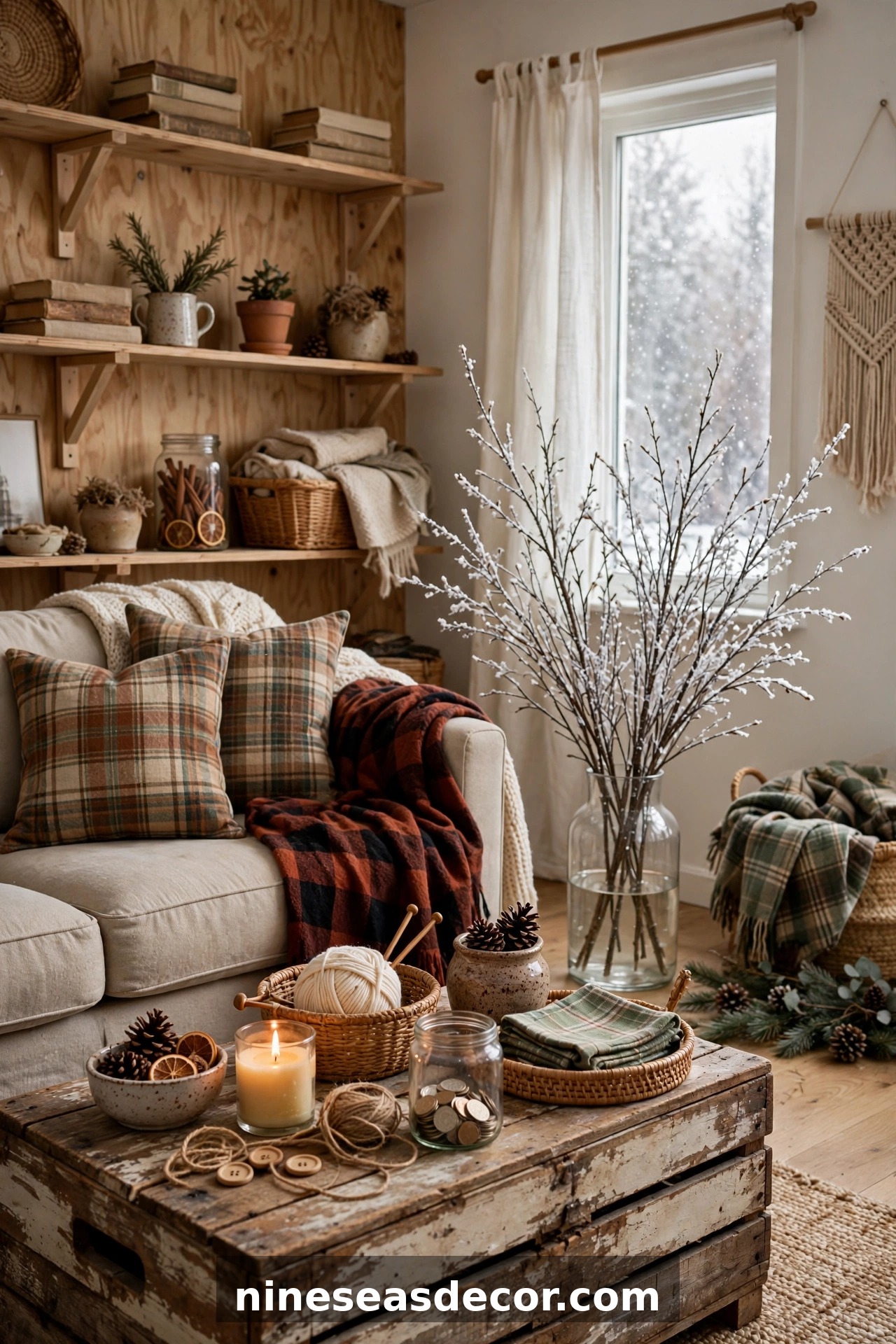
Let’s talk money, because this is where a lot of well intentioned winter decor projects fall apart. People either vastly underbudget (buying cheap pieces that look terrible within a month) or they overbuy (impulse purchasing every beautiful thing in the store and ending up with a cluttered, incoherent result). The sweet spot is a tiered budget approach that allocates your spending across investment pieces, midrange purchases, and affordable accents in a deliberate ratio.
The framework I recommend: spend 50% of your budget on investment pieces that will serve you for multiple winters (quality rugs, curtains, durable throw blankets, lighting fixtures). Spend 30% on midrange seasonal items that you’ll rotate annually (pillows, smaller decorative objects, candles, botanicals). Reserve 20% for affordable accent pieces that you can swap out or replace without guilt (votives, small seasonal prints, inexpensive greenery).
WHERE TO SHOP FOR THE BEST WINTER DECOR VALUE
Knowing where to shop for winter home decor in 2026 is as important as knowing what to buy. For investment pieces like rugs and curtains, I consistently recommend Pottery Barn, Restoration Hardware, and Crate and Barrel for quality you can count on, with rugs ranging from ($200 to $1,500) and curtain panels from ($60 to $200 each). For midrange seasonal pieces, Target’s Threshold and Studio McGee lines, HomeGoods, and World Market offer genuinely beautiful options at accessible prices, with throw pillows between ($20 and $50) and candles between ($15 and $35). For affordable accents and dried botanicals, Michaels, Amazon, and even your local farmers market during late fall harvest season offer tremendous value. Don’t overlook Facebook Marketplace and thrift stores for vintage lanterns, interesting vessels, and wooden objects that add authentic character at a fraction of retail prices.
BUILDING A REUSABLE WINTER DECOR COLLECTION
The smartest winter decor strategy is one that gets smarter and more beautiful every year. Each winter, invest in a few quality pieces that you’ll store carefully and reuse. Over three to four winters, you’ll have built a genuinely impressive collection without ever spending more than ($300 to $500) in any single season. The pieces that earn their permanent place in the winter decor collection are quality candle holders and lanterns (these never go out of style), a classic chunky knit throw in a neutral like cream or oatmeal, a set of velvet pillows in a deep jewel tone, a statement ceramic or wooden vase for botanicals, and a good set of warm toned bulbs for all your light fixtures. Store everything in labeled bins at the end of the season and you’ll thank yourself the following November when you open them up to a curated collection that’s ready to deploy immediately.
TOTAL BUDGET BENCHMARKS BY HOME SIZE
For concrete planning purposes, here are the total winter decor budgets I typically see for different home sizes. A studio or one bedroom apartment under 700 sq ft can be beautifully transformed for winter for ($200 to $500) total. A two bedroom home between 900 and 1,400 sq ft typically requires ($400 to $900) for a comprehensive seasonal update. A three to four bedroom home between 1,800 and 2,800 sq ft generally calls for a budget of ($700 to $1,800). And for larger homes over 3,000 sq ft with multiple entertaining spaces, budget between ($1,500 and $4,000) for a cohesive whole home winter transformation. These numbers assume you’re starting relatively fresh. If you’re building on an existing seasonal collection, expect to spend 30 to 40% less each subsequent year.
Frequently Asked Questions
WHEN SHOULD I PUT UP WINTER HOME DECOR AFTER THE HOLIDAYS?
The ideal time to transition from holiday decor to winter decor is within the first week of January, specifically between January 2nd and January 7th. This timing aligns with when most households take down their Christmas decorations, and making the swap immediately prevents that empty, post holiday slump feeling. The key is to have your winter decor pieces ready in advance, ideally boxed and labeled separately from your holiday storage, so the transition takes hours rather than days. Winter decor should stay up through the end of February, giving you a full six to eight week window of intentional seasonal styling. In regions with late winters, particularly the Northeast and Midwest where cold weather can persist through mid March, many homeowners extend their winter styling all the way to the first week of March before transitioning to early spring decor.
WHAT IS THE DIFFERENCE BETWEEN WINTER DECOR AND CHRISTMAS DECOR?
Christmas decor is a subset of winter decor, but the two are not interchangeable. Christmas decor is specifically tied to the holiday and typically includes symbols like Christmas trees, Santa imagery, nativity scenes, specifically red and green color combinations, and overtly holiday themed ornaments and textiles. Winter decor, by contrast, is seasonal rather than holiday specific. It draws from the broader visual language of the winter season: cold weather textures like chunky knits and velvet, warm color palettes of amber and earth tones, natural elements like pine branches and dried botanicals, and atmospheric lighting through candles and warm bulbs. Winter decor works from November through February without referencing any specific holiday, making it inclusive, longer lasting, and more versatile. The investment in non holiday winter decor also stretches further since you can use it across a three to four month window rather than the typical four to six week Christmas decorating season.
HOW DO I MAKE MY HOME FEEL COZY IN WINTER WITHOUT SPENDING A LOT OF MONEY?
You can create a genuinely cozy winter home atmosphere for as little as ($50 to $100) by focusing on the highest impact changes first. Start with lighting: swap your existing bulbs for warm white options in the 2700K range, which costs between ($15 and $30) for a multipack, and make a commitment to using only lamps and candles after dark. Next, add a single quality throw blanket in a warm texture for ($25 to $50) from Target or HomeGoods. Rearrange your existing furniture to create a more intimate grouping, pulling seating pieces 6 to 10 inches closer together and orienting them toward a focal point. Finally, gather natural elements from outdoors, pine branches, interesting stones, or dried grasses, and arrange them in a vessel you already own. These four changes alone will transform the feel of your space without requiring a significant financial investment, and they reflect the same core principles used in much larger budget transformations.
WHAT ARE THE BEST PLANTS FOR WINTER HOME DECOR IN 2026?
The best winter houseplants for 2026 interiors combine visual impact with realistic care requirements for the darker, drier conditions that indoor environments face during winter months. Amaryllis is the undisputed star of winter botanical decor, producing dramatic blooms in red, white, and pink over six to eight weeks from a bulb that costs between ($10 and $25). Paperwhite narcissus are similarly impactful and bloom in three to four weeks from planting, filling a room with a delicate fragrance. For longer term green presence, ZZ plants and snake plants thrive in the low light conditions of winter interiors and require watering only every two to four weeks. Pothos in trailing arrangements on shelves and bookshelves adds softness and life. For a more dramatic statement, a fiddle leaf fig or olive tree in a 10 to 14 inch ceramic pot works beautifully in a bright corner and costs between ($40 and $120) depending on size and source.
HOW DO I CHOOSE THE RIGHT AREA RUG FOR WINTER DECOR?
Choosing the right winter area rug comes down to four factors: size, material, pile height, and color. For size, the foundational rule is that all primary furniture legs should sit on the rug in a seating arrangement, which typically means a minimum 8×10 foot rug for a standard living room of 12×14 feet or larger. Undersized rugs are the most common rug mistake I see, and they make a room feel disconnected and smaller than it actually is. For winter specifically, choose materials with softness and warmth: wool, viscose