Understanding Kitchen Layouts
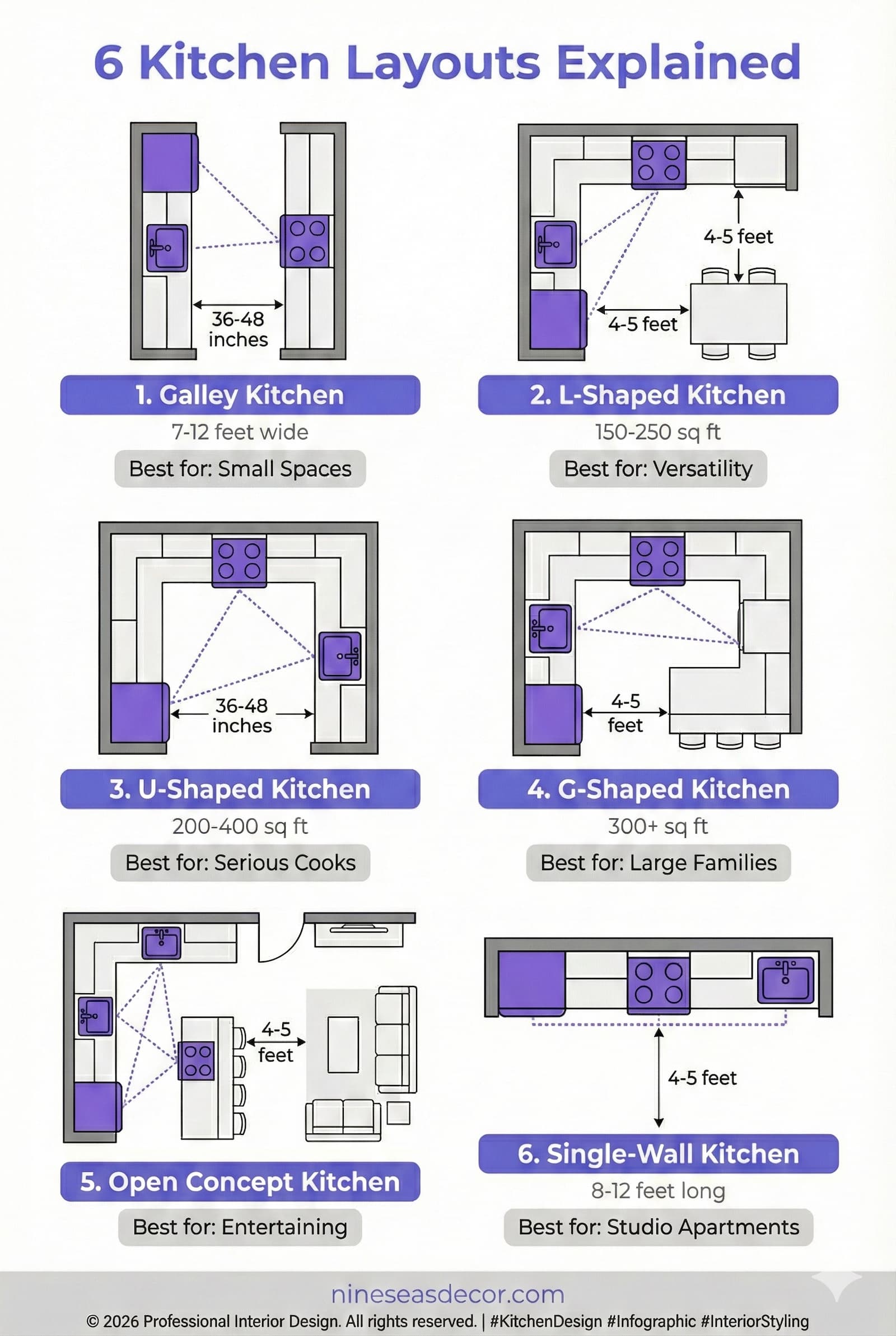
The layout of your kitchen determines how efficiently you can move and work within the space. The classic “work triangle” conceptconnecting the sink, stove, and refrigerator remains relevant, with modern designs expanding to include additional work zones for multiple cooks.
Galley Kitchen: Maximum Efficiency for Tight Spaces
Best for: Small spaces (7-12 feet wide), studio apartments, single cooks
Key benefit: Compact work triangle, maximum efficiency
The galley kitchen features two parallel walls of cabinets and appliances, creating an efficient corridor for meal preparation. This layout is favored by professional chefs for its exceptional efficiency everything is within arm’s reach. For homeowners with limited square footage, a galley kitchen can pack surprising functionality into a narrow space. The key is maintaining 4-5 feet of clearance between the two walls to allow comfortable movement and prevent the space from feeling cramped.
L-Shaped Kitchen: The Versatile Favorite
Best for: 150-250 square feet kitchens, families wanting island space
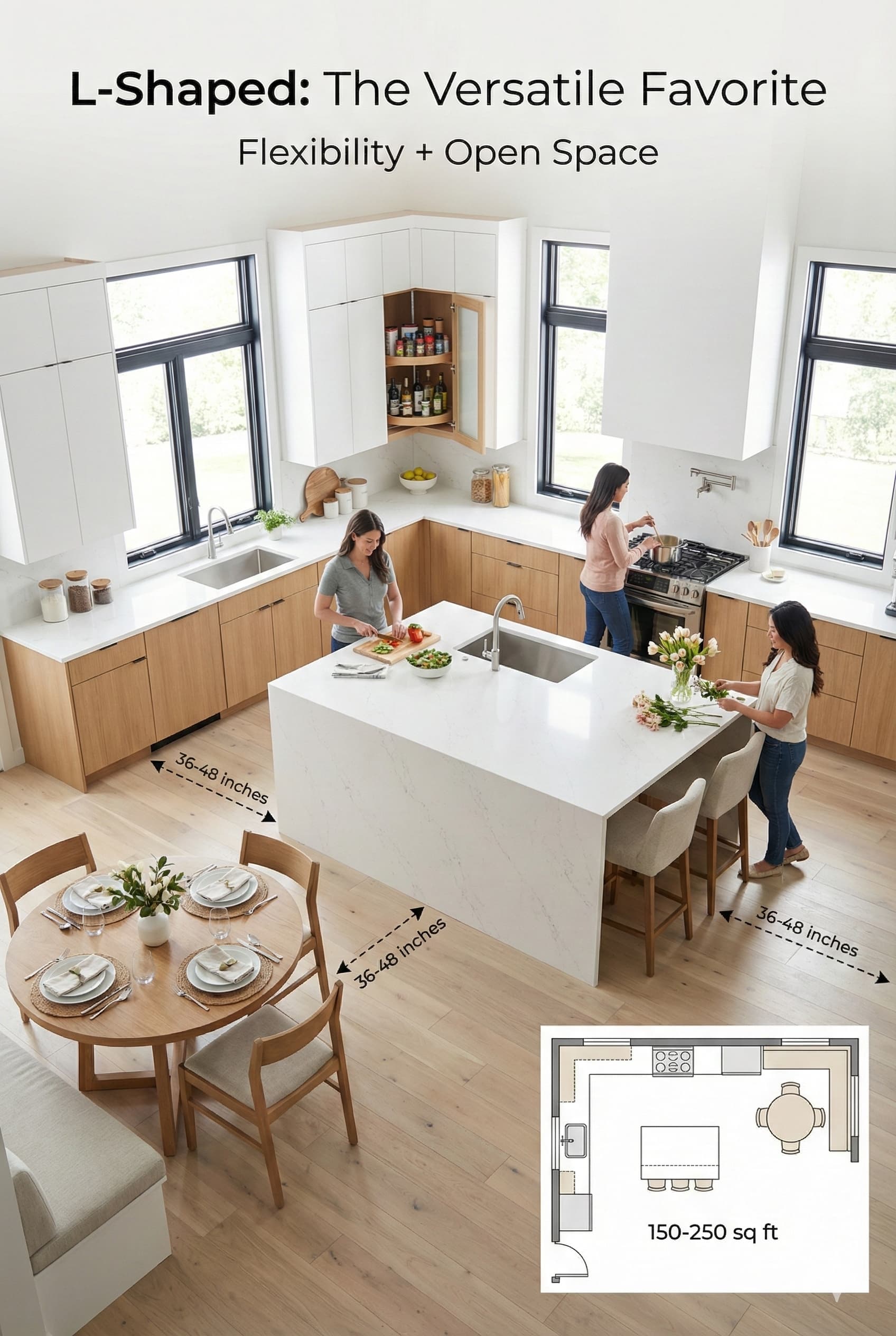
Key benefit: Flexibility, open floor area, allows multiple cooks
The L-shaped configuration positions cabinets and appliances along two perpendicular walls, leaving the remaining area open for a kitchen island, dining table, or easy flow into adjacent rooms. This is one of the most popular layouts because it works well in both small and medium-sized kitchens. The corner where the two walls meet typically requires a lazy Susan or pull-out system to maximize accessibility. Multiple people can work comfortably without crowding, making it ideal for families.
U-Shaped Kitchen: The Serious Cook’s Dream
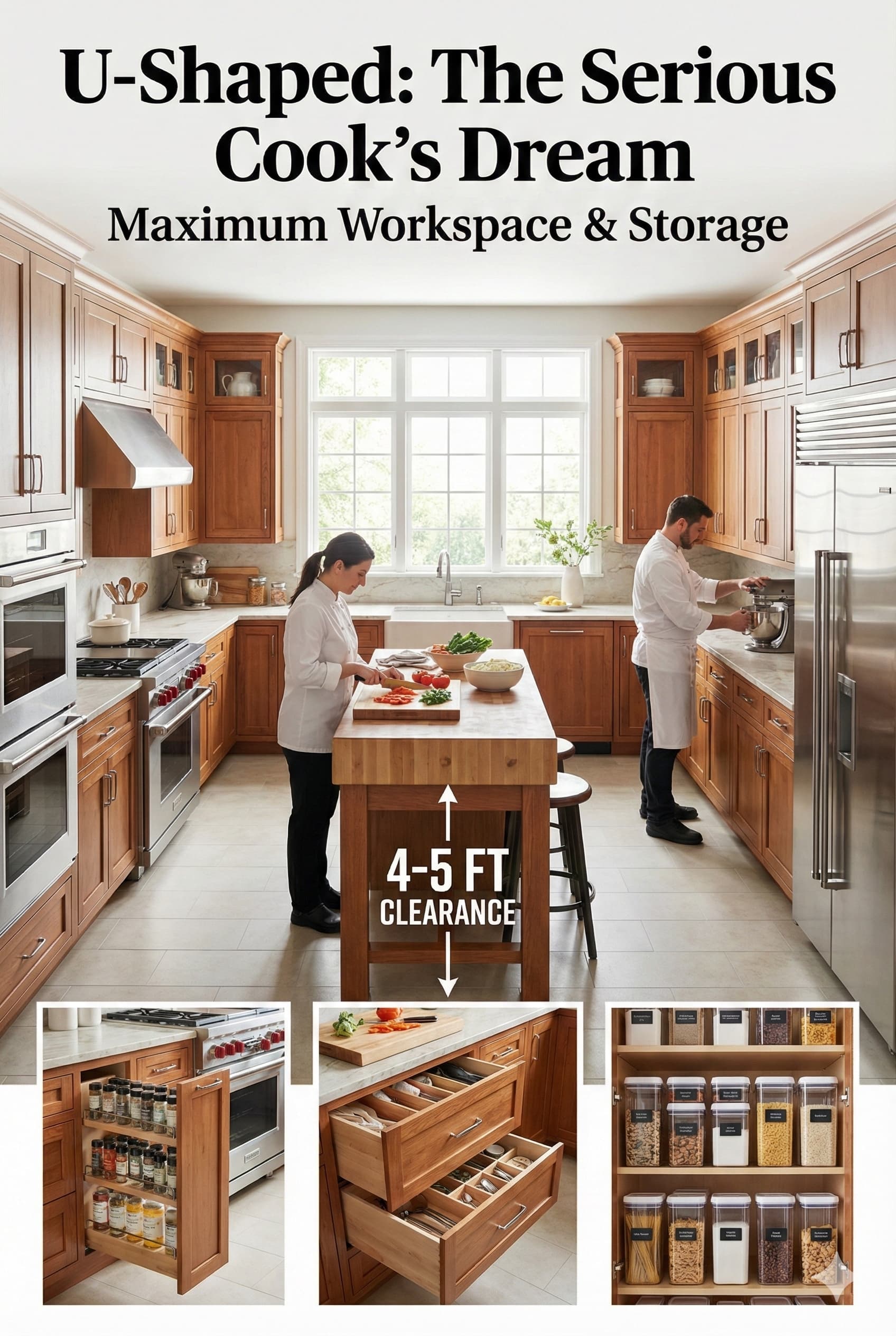 U-shaped kitchen wrapping around three walls with maximum workspace perfect for serious cooks
Best for: 200-400 square feet, serious cooks, multiple people cooking
Key benefit: Maximum workspace and storage, three walls of counters
The U-shaped kitchen wraps cabinetry and countertops around three walls, providing maximum workspace and storage. Everything is within a few steps, making this layout highly efficient for serious home cooks. This configuration works best in medium to large kitchens with adequate floor space you’ll need 4-5 feet of clearance in the center to prevent the space from feeling cramped. Some U-shaped kitchens add an island in the center for even more prep space.
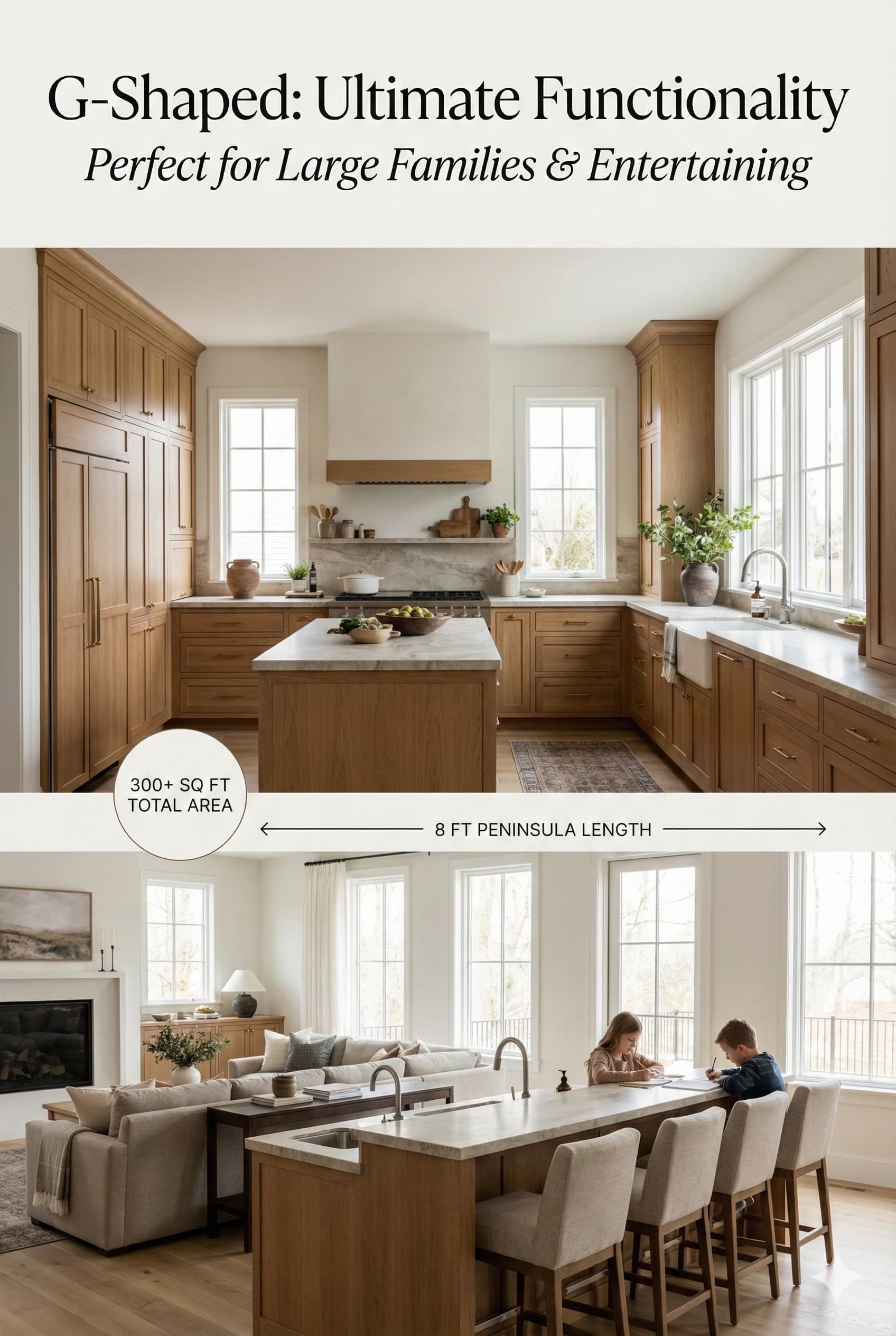
Kitchen: Ultimate Functionality for Large Spaces
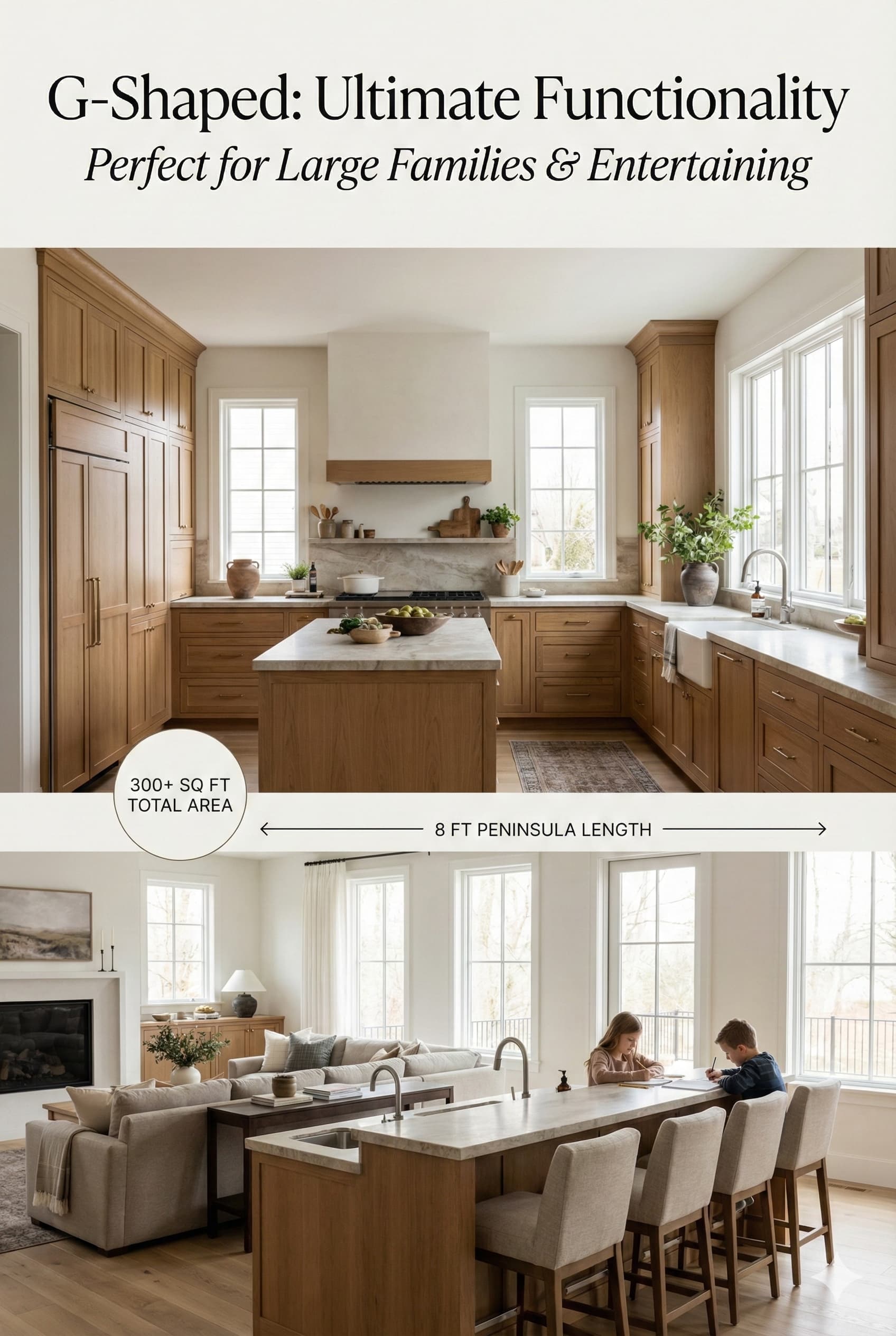 Contemporary modern kitchen showcasing efficient layout and 2026 design trends
Best for: 300+ square feet, large families, entertainers
Key benefit: Multiple work zones, peninsula with breakfast bar
The G-shaped kitchen adds a peninsula to the U-shape, creating even more workspace and storage while partially separating the kitchen from adjacent living spaces. The peninsula often includes a breakfast bar with seating where kids can do homework or guests can chat with the cook. This layout offers the most storage and counter space of any configuration and is perfect for large families who love to cook and entertain.
Open Concept Kitchen: Social Butterfly Central
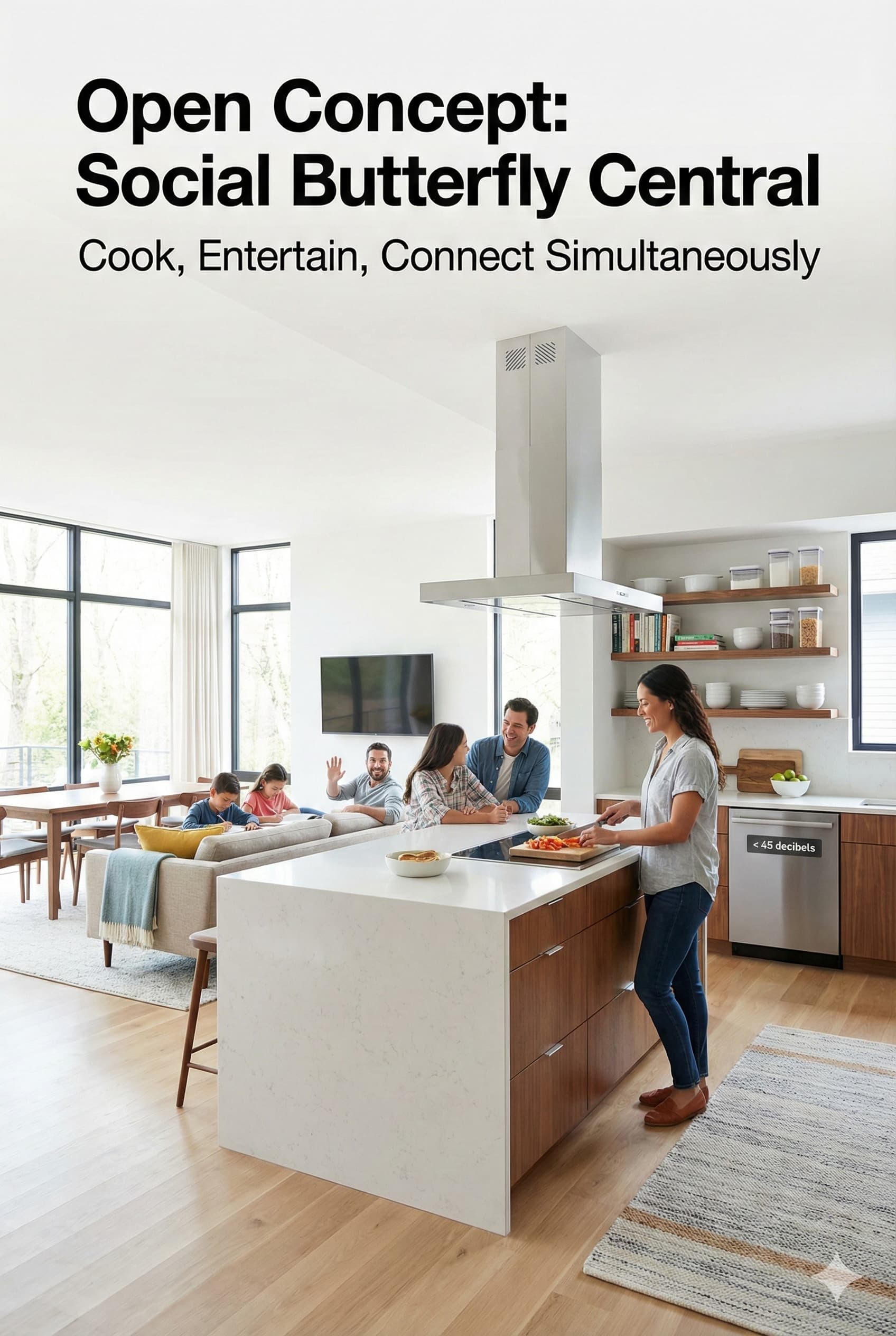 Open concept kitchen flowing seamlessly into living room with island creating social cooking space
Best for: Families who entertain, parents supervising kids, modern homes
Key benefit: Enhanced social interaction, floods space with light
Open concept kitchens eliminate walls between the kitchen and adjacent living or dining rooms, creating one large, flowing space. The cook can interact with family and guests, supervise children’s homework, or watch TV while preparing meals. This layout requires more attention to organization since the kitchen is always visible, and you’ll want quiet appliances dishwashers rated under 45 decibels are ideal. A large island often creates subtle separation while maintaining the open feel.
Single-Wall Kitchen: Space-Saving Simplicity
 Space-saving single-wall kitchen with everything on one 8-12 foot wall perfect for small spaces
Best for: Studio apartments under 600 square feet, tiny homes, basement kitchenettes
Key benefit: Space efficiency, occupies 8-12 feet of one wall
The single-wall kitchen aligns all appliances, sink, and cabinets along one wall, typically 8-12 feet long. This ultra-efficient layout frees up the entire rest of the room for living, dining, or sleeping areas making it perfect for studio apartments and tiny homes. Maximize storage by extending cabinets to the ceiling and choosing compact appliances (24-inch dishwashers, 30-inch ranges, under-counter refrigerators). A rolling cart or portable island can provide additional prep space when needed.
Maximizing Kitchen Storage
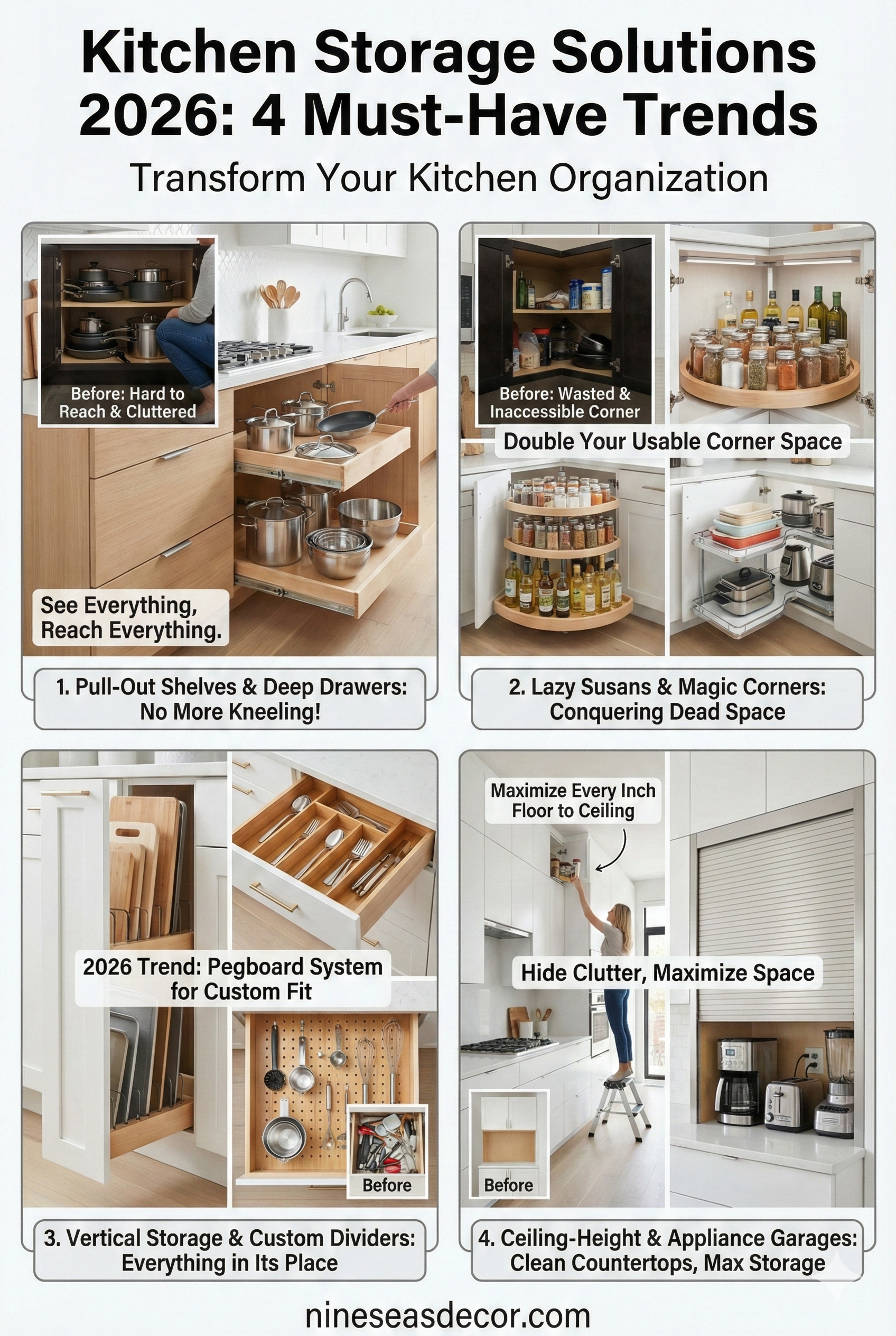 Complete guide to 2026 kitchen storage trends in organized collage format
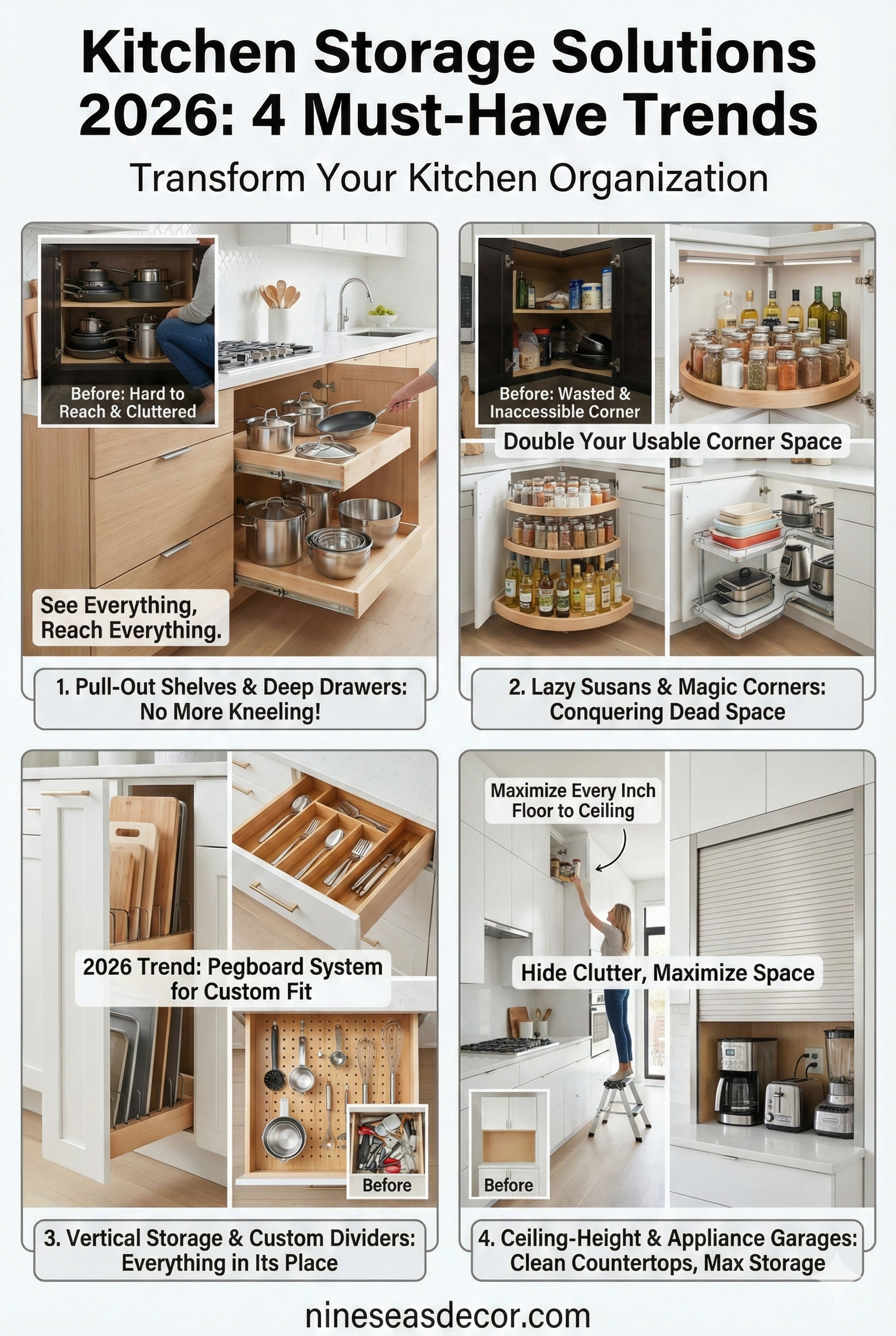
Storage is consistently the top concern for homeowners, and smart organization can transform even a small kitchen into a highly functional space. Modern storage solutions go far beyond traditional cabinets and drawers.
Pull-Out Shelves & Deep Drawers: The Accessibility Revolution
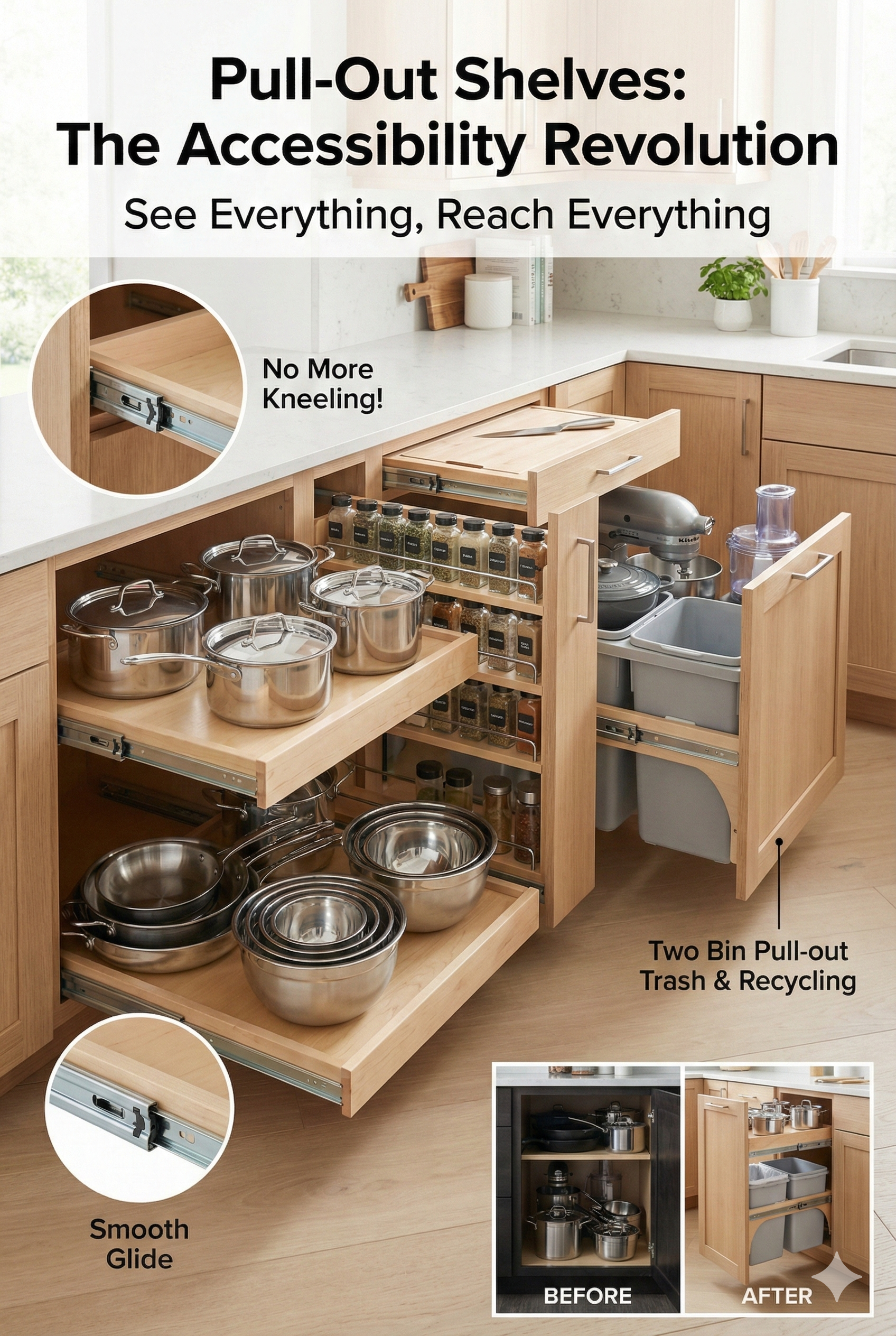 Modern pull-out shelves with ball-bearing slides making all cookware accessible without kneeling
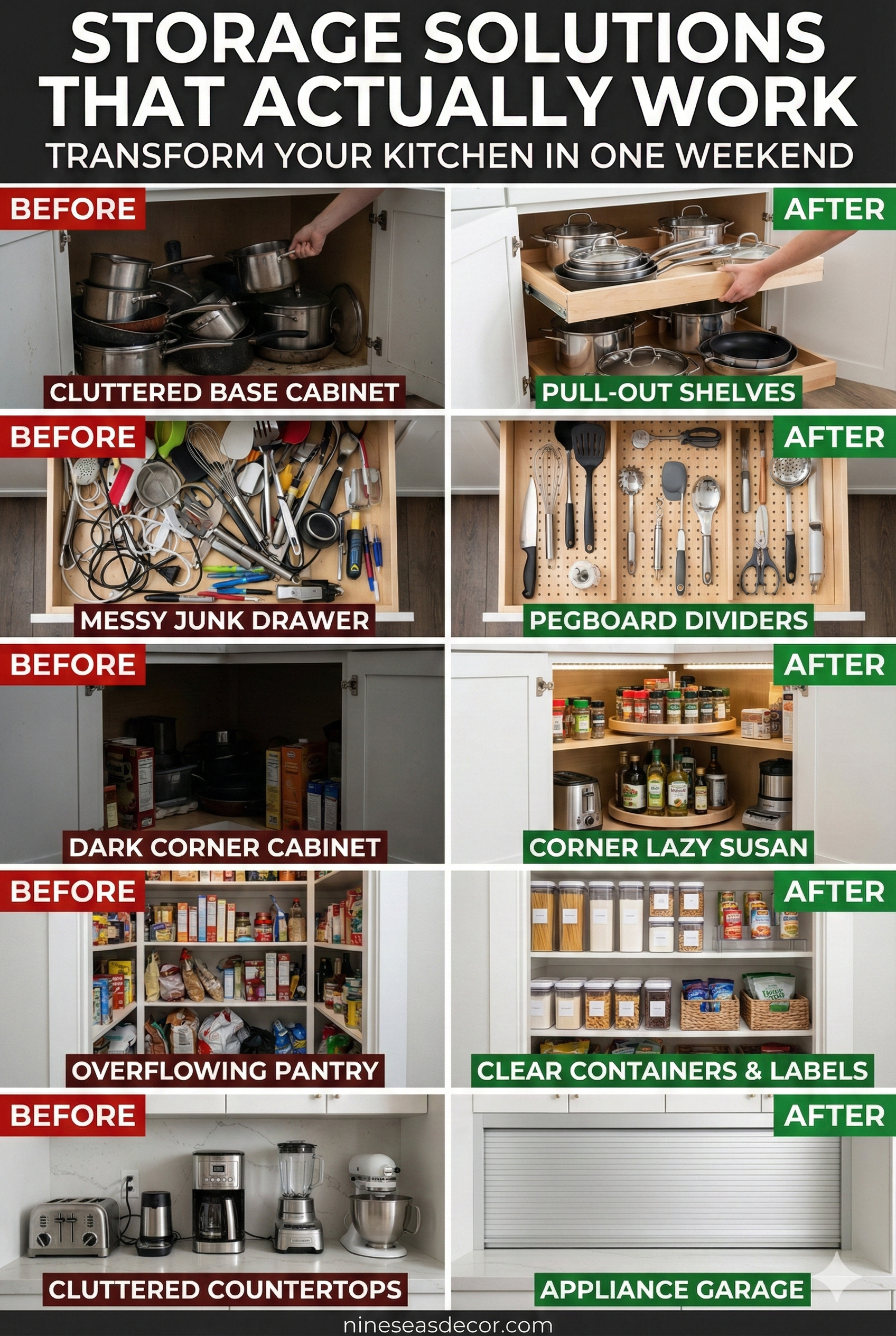
Say goodbye to kneeling and digging through dark base cabinets. Pull-out shelves on ball-bearing slides bring everything into full view and within easy reach. Deep drawers have largely replaced traditional base cabinets in modern kitchens looking down into a drawer to grab a pot or mixing bowl is far easier than reaching into a cabinet. Innovations include narrow spice rack pull-outs (3-6 inches wide) that fit between appliances, pull-out cutting boards built into cabinetry, and pull-out trash and recycling bins that hide mess behind cabinet doors.
Lazy Susans & Corner Solutions: Conquering Dead Space
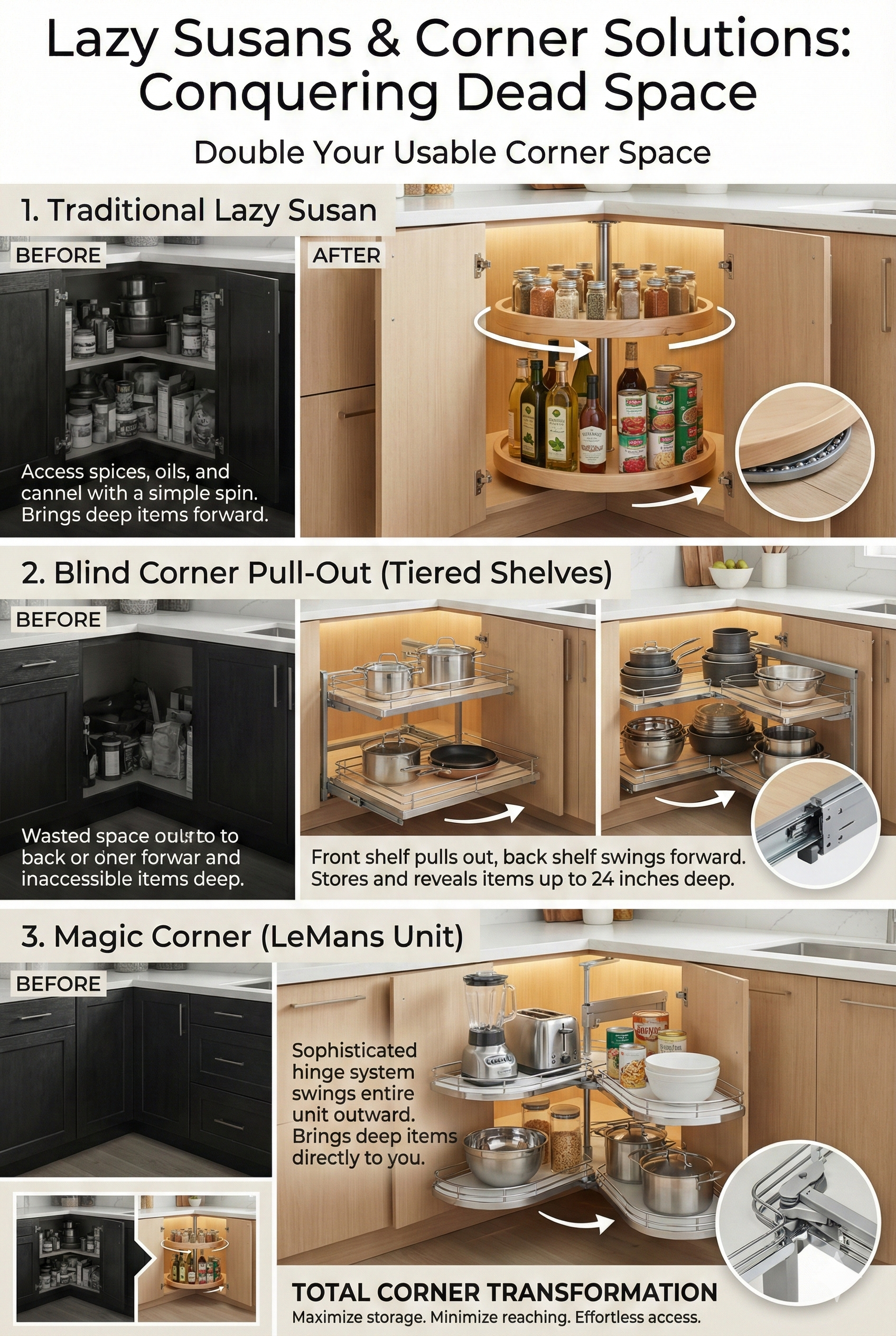 Corner cabinet solutions with lazy Susan and magic corner systems maximizing typically wasted space
Corner cabinets are notorious black holes where items disappear into darkness. Lazy Susans rotating circular shelves solve this by bringing everything from deep corners with a simple spin. Blind corner pull-outs feature tiered shelves on glides that pull forward and swing out. Magic corner units (also called LeMans corners) use sophisticated hinge systems to bring items from 24 inches deep to your fingertips. These solutions can effectively double your usable corner space.
Vertical Storage & Drawer Dividers: Everything in Its Place
 Kitchen drawer organization with vertical dividers and 2026 pegboard system keeping everything accessible
Vertical tray dividers create thin slots (1-2 inches apart) where you can store baking sheets, cutting boards, and serving platters upright grab one like selecting a book from a shelf. Adjustable drawer dividers create custom compartments for utensils, gadgets, and tools, ending junk drawer chaos. The 2026 trend: pegboard systems inside drawers with moveable pegs you configure for your specific tools. Vertical knife blocks safely store knives inside drawers. Vertical lid organizers solve Tupperware chaos by keeping lids separate from containers and standing upright.
Ceiling-Height Cabinets & Hidden Storage: The Space You’re Missing
 Floor-to-ceiling cabinets, toe-kick drawers, and appliance garages maximizing all available kitchen storage
Stop wasting the 12-18 inches between standard cabinet tops and ceilings extend cabinets all the way up! This eliminates dust-collecting gaps and provides storage for seasonal items like holiday dishes and serving platters. Toe-kick drawers utilize the typically wasted 4-inch space beneath base cabinets for flat items like baking sheets and placemats. Appliance garages feature roll-up (tambour), flip-up, or pocket doors that hide toasters, blenders, and coffee makers, keeping countertops clear. Modern pantry systems with pull-out baskets, integrated LED lighting, and specialized storage for cereal boxes, wine bottles, and canned goods make even narrow 18-24 inch pantries incredibly functional.
Choosing Kitchen Colors and Styles
L-shaped kitchen with cabinets on two perpendicular walls offering flexibility and open space for island
Kitchen color schemes set the mood and can make spaces feel larger, brighter, or more intimate depending on your choices. White and light colors remain popular for their ability to reflect light and create an open, airy feeling. Two-tone kitchens combining white upper cabinets with darker lower cabinets or a contrasting island add visual interest while maintaining brightness. For those seeking drama, navy, charcoal, or forest green cabinets create sophisticated, moody spaces. Natural wood tones bring warmth and work beautifully in both modern and traditional designs.
Kitchen Lighting Design
Open concept kitchen flowing seamlessly into living room with island creating social cooking space
Proper kitchen lighting combines three distinct types: ambient lighting for overall illumination, task lighting for work areas, and accent lighting for visual interest. Recessed ceiling lights or flush-mount fixtures provide ambient lighting. Under-cabinet LED strips illuminate countertops for food prep. Pendant lights over islands add style while focusing light where you need it. Consider dimmer switches to adjust lighting for different activities bright for cooking, softer for entertaining.
Kitchen Island Design
U-shaped kitchen wrapping around three walls with maximum workspace perfect for serious cooks
A kitchen island can transform your space by adding storage, counter area, seating, and visual impact all in one element. Size matters experts recommend at least 36-48 inches of clearance around the island for comfortable traffic flow. Standard island height is 36 inches matching base cabinets, but many homeowners add a bar extension at 42 inches for comfortable seating with bar stools.
Kitchen Budget Planning
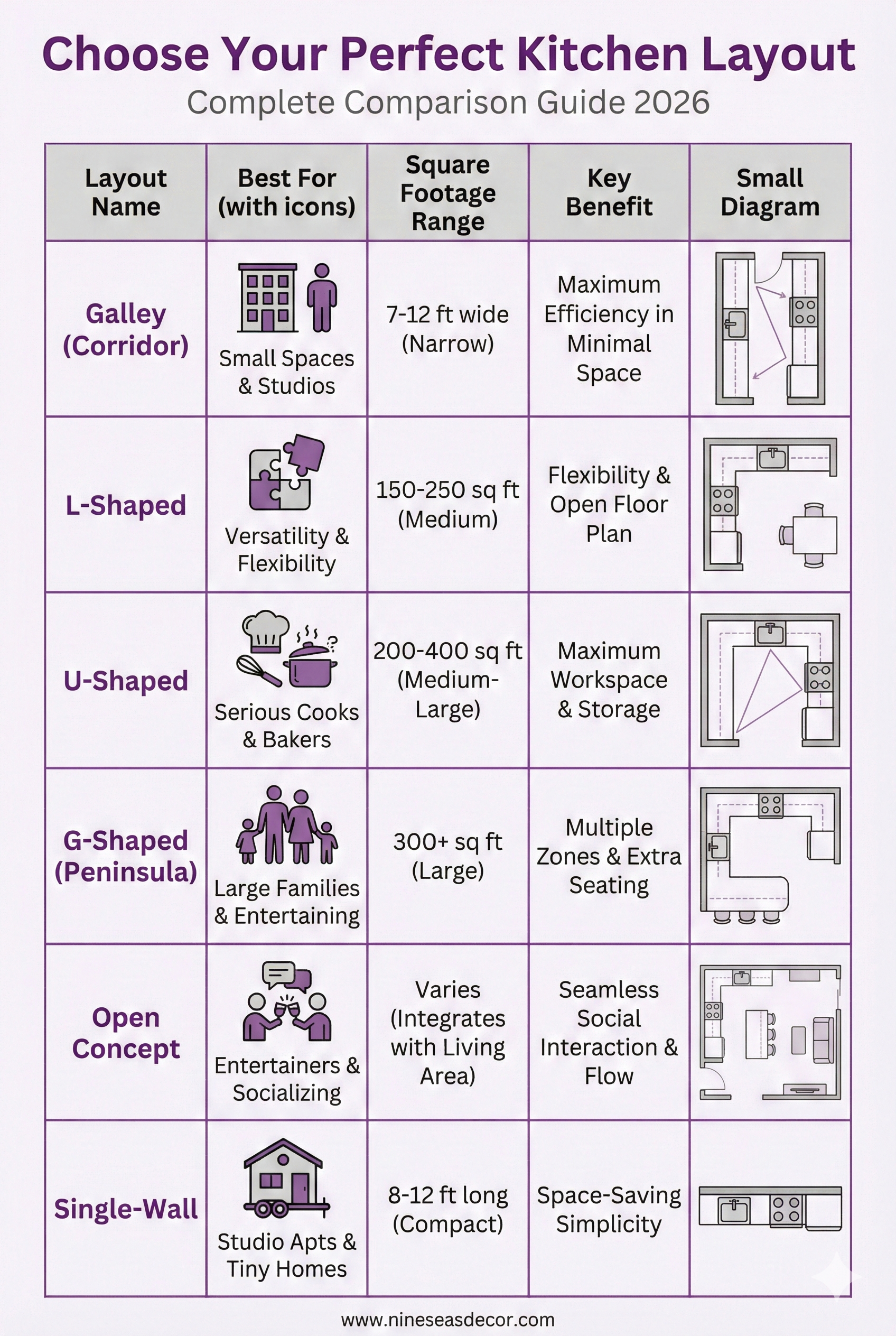 Easy comparison chart for all 6 kitchen layouts with square footage and best for categories
Understanding kitchen remodel costs helps you plan realistically and make informed decisions about where to invest your money.
Budget Remodel: $5,000-$15,000
Focus on cosmetic updates like painting cabinets, new hardware, updated lighting, and affordable countertops. DIY work keeps costs down.
Mid-Range Remodel: $25,000-$60,000
Includes new stock or semi-custom cabinets, mid-grade countertops (quartz or granite), new appliances, updated flooring, and professional installation.
Upscale Remodel: $70,000-$150,000+
Features custom cabinets, premium countertops (marble, quartzite), high-end appliances, structural changes, and designer finishes.
Budget Allocation Guidelines
Professional designers typically recommend allocating your budget as follows:
• Cabinets: 35-40% (largest expense)
• Labor/Installation: 20-25%
• Countertops: 10-15%
• Appliances: 10-15%
• Flooring: 5-10%
• Lighting & Fixtures: 5-10%
• Other (sink, faucet, hardware): 5-10%
These percentages provide a starting point, but adjust based on your priorities.
Where to Save Money
- Paint existing cabinets instead of replacing (saves $10,000-$30,000)
• Choose stock cabinets over custom
• Select mid-grade countertops (quartz over marble)
• Keep existing layout (moving plumbing and electrical is expensive)
• Do some work yourself (painting, installing hardware, simple tile work)
• Shop for gently used or floor-model appliances
• Time your remodel during off-season (winter) for better contractor rates
Where to Splurge for Best ROI
- Quality cabinets (you’ll use them every day for 20+ years)
• Durable countertops in high-use areas
• Professional installation of cabinets and countertops
• Good ventilation system (range hood)
• Quality faucet (cheap ones fail quickly)
• Adequate lighting
Where to Save Money
- Keep the existing layout. Moving plumbing, gas lines, or structural walls adds $5,000-$15,000+ to costs.
- Choose stock or semi-custom cabinets rather than fully custom. Stock cabinets from quality manufacturers look excellent at half the price.
- Consider quartz over marble. Quartz costs 30-50% less, requires no sealing, and resists stains better.
- DIY what you can safely handle: painting, installing hardware, simple backsplash work.
Where to Splurge
- Quality cabinets. These define your kitchen’s look and you interact with them daily. Solid wood construction with dovetail joints lasts decades.
- Professional installation. Poorly installed cabinets, countertops, or tile look terrible no matter the material quality.
- Quality faucet and sink. You use these constantly—cheap fixtures fail quickly and frustrate daily.
Always add 10-20% contingency for unexpected issues. Opening walls often reveals problems like outdated wiring, plumbing leaks, or water damage that must be addressed. Better to budget for surprises than be caught short.
Kitchen Trends 2026
 Contemporary modern kitchen showcasing efficient layout and 2026 design trends
Stay current with the latest kitchen design trends while ensuring your choices have lasting appeal.
Color & Finish Trends
- Warm whites and creams replacing stark white
• Two-tone cabinets (dark lowers, light uppers)
• Navy blue, forest green, and charcoal gaining popularity
• Natural wood tones, especially oak and walnut
• Matte black hardware and fixtures
• Mixed metal finishes (brass + black, chrome + gold)
Material & Surface Trends
- Quartz remains #1 countertop choice (low maintenance, durable)
• Terrazzo making comeback for counters and backsplashes
• Large format tile (12×24 or larger) for backsplashes
• Waterfall edge islands (countertop extends to floor)
• Textured cabinet doors (fluted, shaker with details)
• Statement range hoods as focal points
Technology & Smart Features
- Induction cooktops overtaking gas (faster, safer, more efficient)
• Built-in coffee systems
• Touchless faucets
• Smart refrigerators with interior cameras
• Under-cabinet outlets with USB charging
• Motion-sensor cabinet lighting
Organization & Storage Trends
- Appliance garages with charging stations
• Dedicated coffee/beverage stations
• Pot filler faucets at stove
• Pull-out spice racks integrated into cabinetry
• Oversized pantries with organizational systems
• Drawer organizers and dividers (everything has a place)
Working with Kitchen Professionals
 Three best kitchen layouts for small spaces with measurements and space-maximizing strategies
A successful kitchen renovation requires coordinating multiple professionals. Understanding who does what and when to hire them prevents costly mistakes and timeline delays.
Color & Finish Trends
- Warm whites and creams replacing stark white
• Two-tone cabinets (dark lowers, light uppers)
• Navy blue, forest green, and charcoal gaining popularity
• Natural wood tones, especially oak and walnut
• Matte black hardware and fixtures
• Mixed metal finishes (brass + black, chrome + gold)
Material & Surface Trends
- Quartz remains #1 countertop choice (low maintenance, durable)
• Terrazzo making comeback for counters and backsplashes
• Large format tile (12×24 or larger) for backsplashes
• Waterfall edge islands (countertop extends to floor)
• Textured cabinet doors (fluted, shaker with details)
• Statement range hoods as focal points
Technology & Smart Features
- Induction cooktops overtaking gas (faster, safer, more efficient)
• Built-in coffee systems
• Touchless faucets
• Smart refrigerators with interior cameras
• Under-cabinet outlets with USB charging
• Motion-sensor cabinet lighting
Organization & Storage Trends
- Appliance garages with charging stations
• Dedicated coffee/beverage stations
• Pot filler faucets at stove
• Pull-out spice racks integrated into cabinetry
• Oversized pantries with organizational systems
• Drawer organizers and dividers (everything has a place)
Working with Kitchen Professionals
Knowing when to hire professionals and how to work with them effectively can make the difference between a smooth remodel and a stressful experience.
When to Hire a Kitchen Designer
Consider hiring a professional kitchen designer if you:
• Are doing a full remodel (not just cosmetic updates)
• Need to reconfigure the layout or move plumbing/electrical
• Want custom cabinetry
• Have an awkward space or unique challenges
• Are investing $30,000+ in the project
• Want professional renderings and detailed plans
Good designers pay for themselves by preventing costly mistakes, getting trade discounts on materials, and maximizing your space.
Choosing a Contractor
Essential steps:
1. Get 3-5 detailed written quotes
2. Check licenses and insurance
3. Ask for recent references and actually call them
4. Visit completed projects if possible
5. Verify they are experienced specifically with kitchens
6. Ensure clear payment schedule (never pay everything upfront)
7. Get everything in writing (timeline, materials, costs, warranty)
Red flags: No license/insurance, pressure for immediate decisions, request for full payment upfront, vague contract, no references.
Questions to Ask Contractors
- How many kitchen remodels have you completed in the past year?
• Can I see photos of recent work and speak with those clients?
• Who will be the on-site supervisor?
• Do you handle all permits and inspections?
• What is your typical timeline for a project like mine?
• How do you handle unexpected issues or changes?
• What is your payment schedule?
• What warranty do you provide on labor?
• Will you provide a detailed contract?
Typical Project Timeline
Planning & Design: 2-6 weeks
Getting permits: 2-4 weeks
Ordering materials: 4-12 weeks (custom cabinets take longest)
Demolition: 1-3 days
Rough plumbing/electrical: 3-7 days
Drywall/Painting: 3-5 days
Cabinet installation: 2-5 days
Countertop templating & installation: 7-14 days
Appliance & fixture installation: 1-2 days
Final touches: 1-2 days
Total: 8-16 weeks from start to finish for a complete remodel. Expect your kitchen to be unusable for 4-6 weeks during active construction.
Creating Your Dream Kitchen
Designing your ideal kitchen involves balancing aesthetics, functionality, and budget. The most successful kitchens prioritize how you actually live—not just how spaces look in magazines. Start by honestly assessing your cooking habits, storage needs, and how your family uses the space.
Take time to plan carefully. Visit showrooms to see materials in person, as photos never capture true colors and textures. Measure your space multiple times. Create a realistic budget with 10-20% contingency. Choose a layout that supports your workflow, maximize storage with modern solutions, layer your lighting properly, and invest in quality where it matters most.
Remember that kitchen design is personal—trust your instincts while considering professional advice. Trends come and go, but a well-designed kitchen that reflects your style and supports your lifestyle will bring you joy for decades.
Ready to start your kitchen transformation? Take it one step at a time, focus on quality over trends, and create a space that truly works for you.