
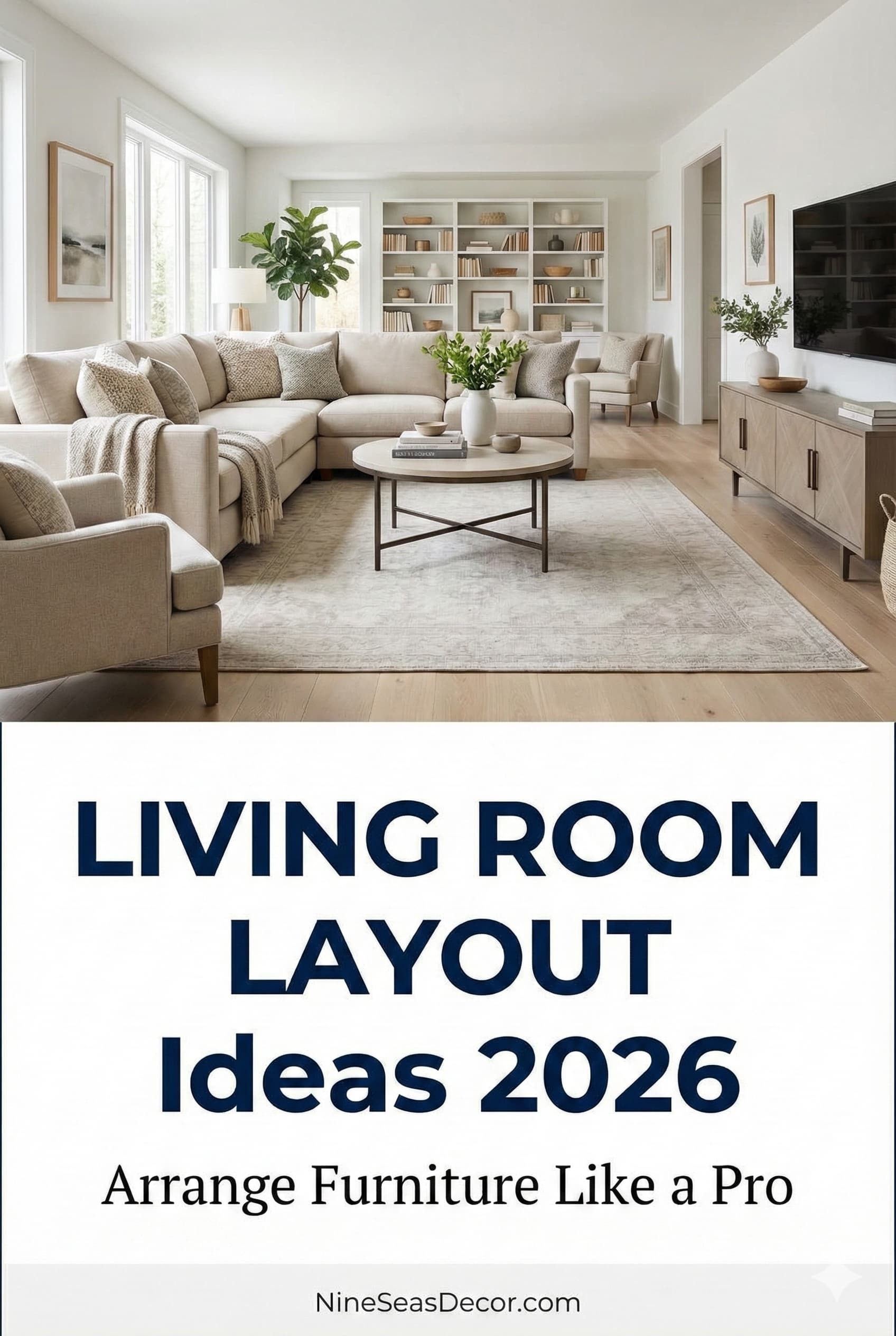
The living room has evolved from a formal, rarely-used parlor into the true gathering space of the home where families relax, entertain guests, watch movies, play games, and create lasting memories together. Yet despite spending countless hours in this central space, many homeowners struggle with the fundamental question of how to arrange furniture in a way that feels both comfortable and visually appealing.
Whether you’re working with a spacious open concept living room measuring 400+ square feet or a compact apartment living room of just 150 square feet, understanding professional living room layout principles will help you create a space that’s both beautiful and highly functional for your lifestyle. The right layout can make a cramped room feel spacious, transform an awkward space into a welcoming retreat, or turn an underutilized room into the heart of your home.
Research on professional interior design projects reveals that successful living room spaces consistently share common functional elements. They have clear focal points that anchor the room, comfortable conversation areas where people naturally gather, smooth traffic flow that allows easy movement, and smart furniture placement that maximizes both function and style. These principles apply regardless of room size, architectural style, or design aesthetic.
This guide covers six professional living room layout types with specific spacing measurements and functional zone strategies. Content includes symmetrical arrangements, L-shaped configurations, conversation circles, floating furniture concepts, multi-zone divisions, and TV-centered designs applicable to various room dimensions.
Professional layout principles adapt to specific spaces, furniture dimensions, and functional requirements rather than requiring exact replication of template designs.
The layout of your living room determines how efficiently the space flows and how comfortably multiple people can gather, relax, and interact. Unlike kitchens with their work triangle, living rooms center around creating conversation areas, establishing focal points, and ensuring smooth traffic flow through the space. Professional designers rely on six fundamental layout types, each solving different spatial challenges and supporting different lifestyle needs.
Choosing the right layout depends on your room dimensions, how many people regularly use the space, whether you entertain frequently, and your primary activities. A family that watches TV together every evening needs different furniture arrangements than a book lover who wants cozy reading nooks or empty nesters who host dinner parties. Understanding these core layout types gives you vocabulary for discussing your space and framework for making intentional choices.
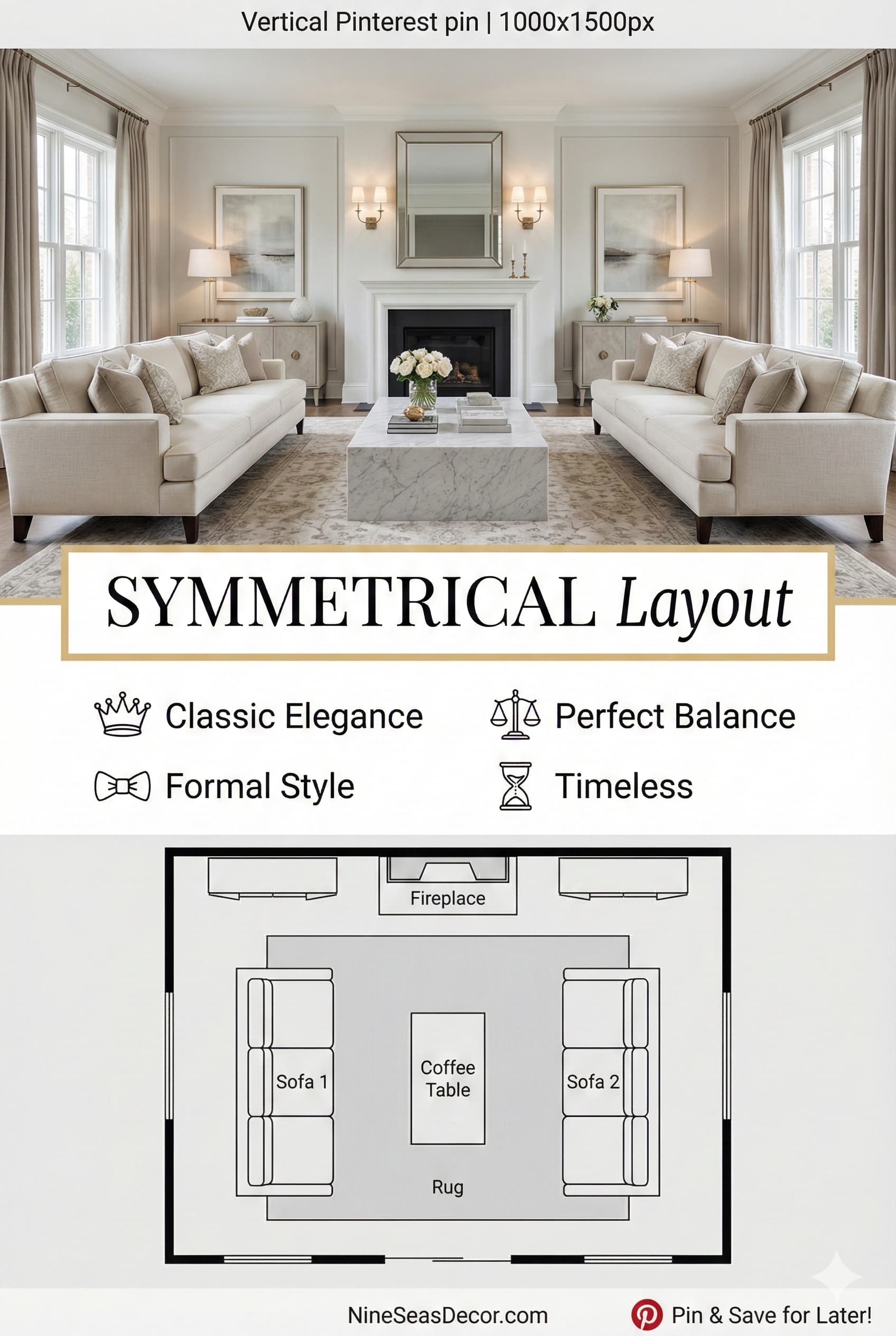
The symmetrical living room layout arranges furniture in matching pairs around a central focal point, typically a fireplace, large window, or entertainment center. This creates a sense of order, formality, and timeless elegance that never goes out of style. This layout functions effectively in traditional living rooms measuring 200 to 350 square feet, formal living rooms, sitting rooms that serve as conversation spaces, and homes with architectural features like fireplaces or built-in bookcases that anchor the design.
Symmetrical arrangements provide inherent visual balance and create calming visual effects in living spaces. The human eye finds symmetry naturally pleasing and restful, making these spaces feel sophisticated without being stuffy. Two identical sofas facing each other across a coffee table, matching accent chairs flanking a fireplace, or paired table lamps on matching side tables all contribute to this balanced aesthetic. This layout particularly suits rooms with strong architectural symmetry, such as centered windows, fireplaces, or doorways that create natural axes.
Create successful symmetrical layouts by identifying your room’s natural center point. In rooms with fireplaces, this becomes the obvious anchor. Without architectural features, create a focal point using a large piece of art, a mirror, or the TV. Arrange furniture in balanced pairs extending from this center. For example, place two sofas of equal size facing each other with a coffee table between them, add matching side tables with identical lamps at each sofa end, and position two accent chairs flanking the fireplace or focal wall.
Maintain consistent spacing on both sides for true symmetry. If your right-side sofa sits 24 inches from the wall, the left-side sofa should mirror this exactly. If you place a floor lamp beside the right accent chair, add a matching one beside the left chair. This precision creates the calm, organized feeling that makes symmetrical layouts so appealing. Professional designers recommend grounding symmetrical layouts with a centered area rug that anchors the furniture arrangement and helps define the conversation zone.
The rug should be large enough that sofa and chair front legs rest on it, ideally 8 by 10 feet minimum for most living rooms, creating a cohesive, intentional feeling rather than furniture floating aimlessly around the room’s perimeter. While perfect symmetry creates the strongest impact, near-symmetry also performs optimally. You might use two sofas of the same style in different fabrics or colors, or balance a sofa with a loveseat plus chair on the opposite side as long as the visual weight feels equivalent.
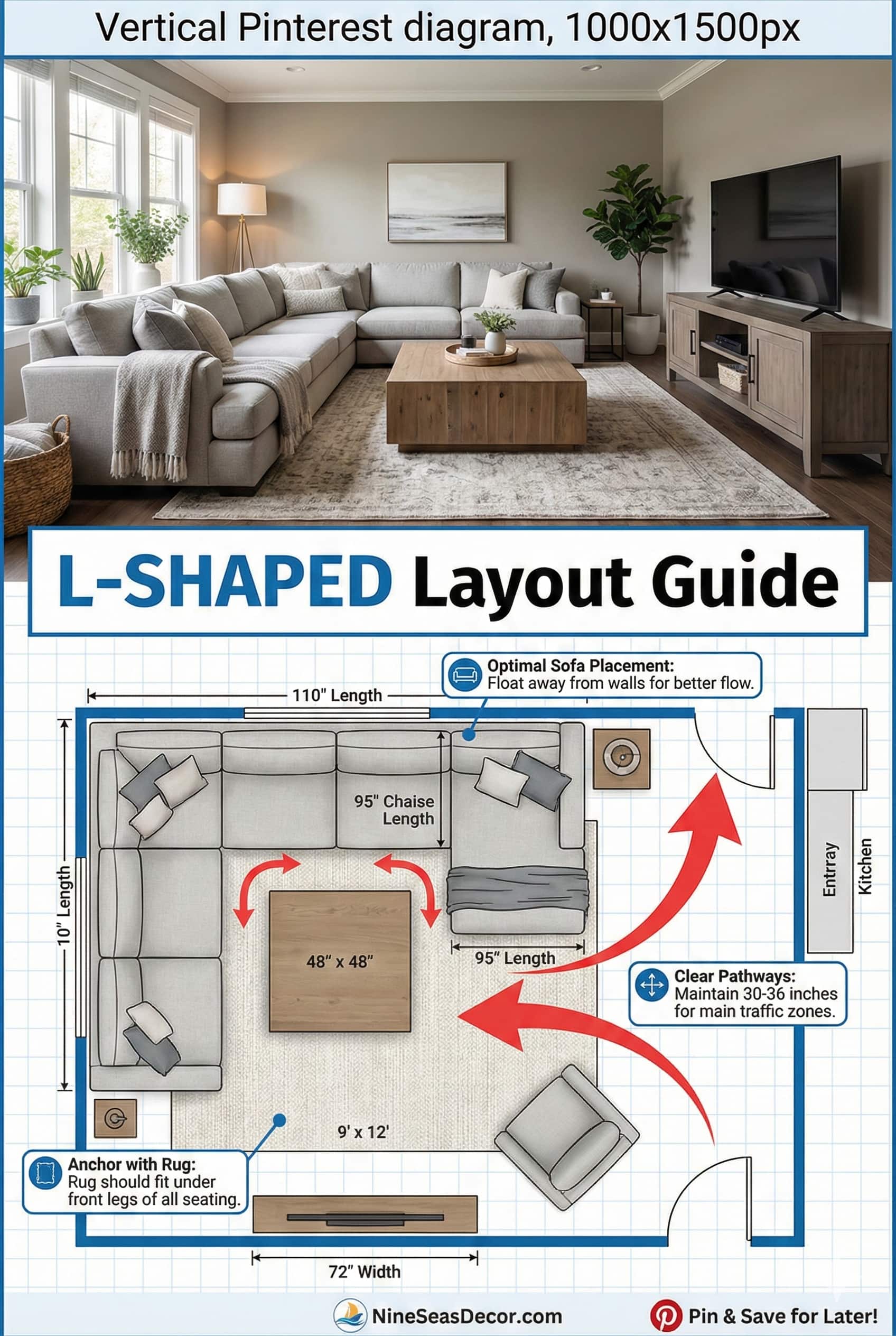
An L-shaped living room layout positions a sectional sofa or two perpendicular seating pieces to form an L-shape, typically anchored in a corner. This creates a natural conversation area while leaving substantial floor space open. This layout shines in open concept living rooms measuring 250 to 400 square feet where the living area flows into dining or kitchen spaces, family rooms where TV viewing and conversation both matter, and corner spaces or rooms with angled walls that make traditional parallel arrangements awkward.
L-shaped arrangements provide versatile functionality for multiple room configurations and uses.. They efficiently use corner space that might otherwise go unused, accommodate larger groups for entertaining with ample seating wrapped around the conversation zone, and naturally separate the living room from adjacent spaces in open floor plans without requiring walls or dividers. The L-configuration creates an inviting, inclusive feeling where everyone can see and interact with each other easily, unlike linear arrangements where end seats feel isolated.
Position L-shaped layouts with the corner anchored in an actual room corner or floating in the space to define zones in open plans. The key is ensuring both legs of the L receive equal attention. Avoid making one side significantly longer than the other unless the room shape demands it. For example, in a square room measuring 16 by 16 feet, you might use a sectional with 96-inch and 84-inch legs creating balanced proportions. In a rectangular room measuring 14 by 20 feet, a 108-inch long side with 72-inch short side works better.
Ensure at least 36 inches of clearance on the open sides for comfortable walking paths. People should be able to move around the furniture without squeezing or feeling trapped. Position the coffee table at the center of the L for easy access from all seating positions, typically 14 to 18 inches from the sofa edge allowing enough space to set down drinks while maintaining comfortable legroom when sitting.
Many homeowners add a chaise lounge at one end of their L for comfortable lounging and napping. If your sectional includes a chaise, position it on the side away from main traffic paths so people walking through don’t need to navigate around extended legs. Consider floating the L-shaped arrangement away from walls in large rooms rather than pushing it into a corner, using the backs of sofas to define spaces and creating opportunity for console tables or shelving behind the seating.
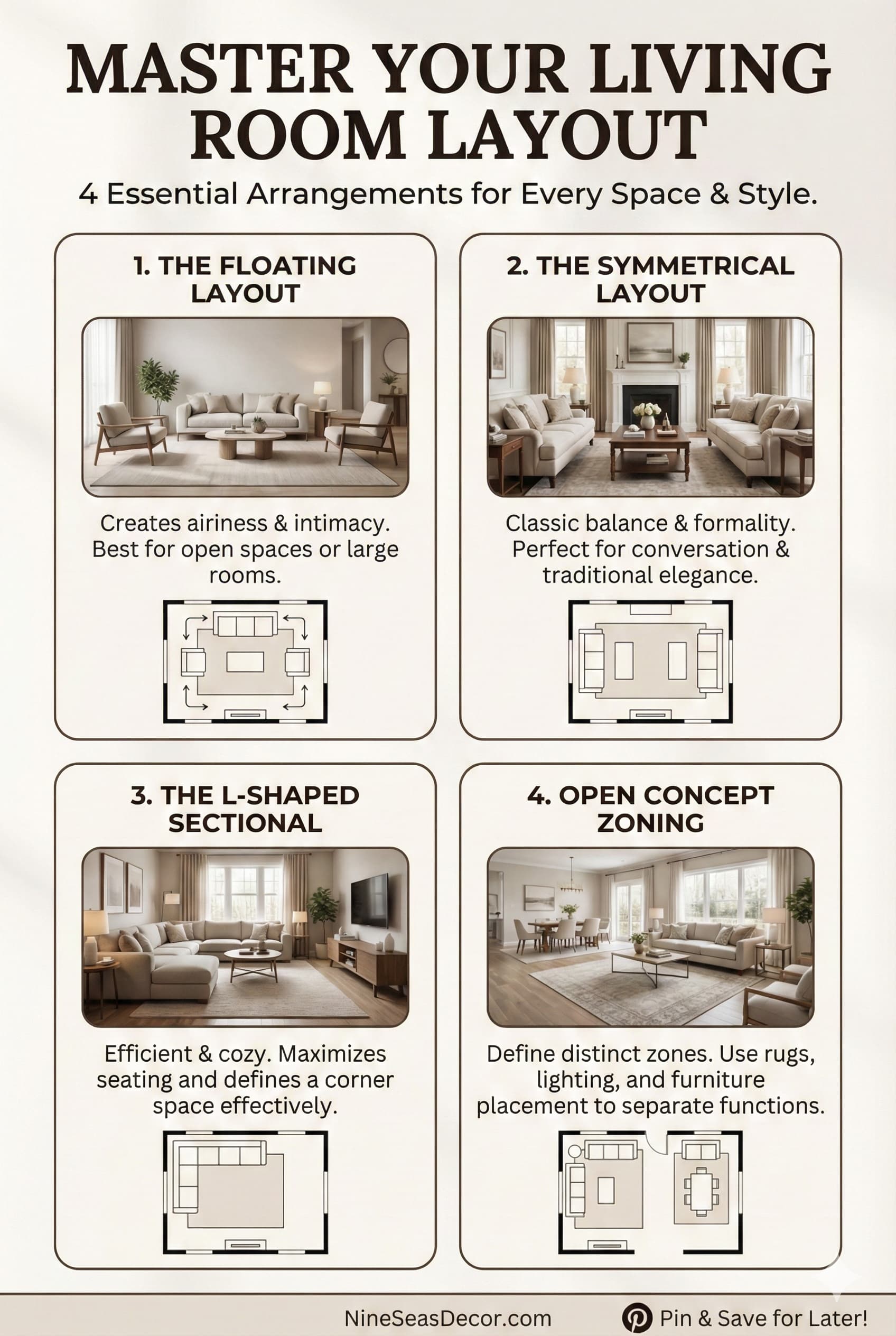
The conversation circle layout arranges all seating including typically a sofa and two or more accent chairs facing inward toward a central coffee table or ottoman. This creates an enclosed, intimate space specifically designed for face-to-face interaction. This layout is ideal for small living rooms under 200 square feet where furniture must be carefully positioned, book clubs or regular gathering spaces where conversation takes priority, homes without TVs in the living room where entertainment focuses on interaction, and formal sitting rooms designed primarily for hosting guests rather than casual family use.
Conversation circles facilitate face-to-face interaction and direct eye contact among all participants. No one is stuck at an awkward angle or unable to make eye contact with others. All seating faces the center creating direct sight lines between participants. This arrangement facilitates face-to-face communication without visual distractions from entertainment screens or peripheral activities.. The circular configuration creates psychological closeness even in physically spacious rooms, making guests feel welcomed and included.
Anchor conversation circles with a round or oval coffee table that reinforces the circular flow and provides a visual center point. The round shape eliminates the head and foot positions of rectangular tables, maintaining the democratic feeling where no seat ranks above others. Choose a table measuring 36 to 48 inches in diameter for most conversation circles, large enough to be useful without overwhelming the space or creating awkward reaching distances.
The seating should be close enough for comfortable conversation, typically 6 to 8 feet apart maximum, but far enough that people don’t feel crowded or awkward. This distance allows normal speaking volumes without shouting while maintaining appropriate personal space. If your sofa and chairs sit more than 8 feet apart, conversation becomes strained as people unconsciously raise voices to compensate for distance.
This layout also functions effectively with a fireplace as the focal point, creating a cozy gathering spot reminiscent of ancestral gathering around fires. Position the seating circle so the fireplace sits at one point on the circle’s edge rather than in the center where it would interfere with coffee table placement. Add a small round area rug beneath the seating and table, typically 8 feet in diameter, to visually connect the pieces and define the intimate zone within the larger room.
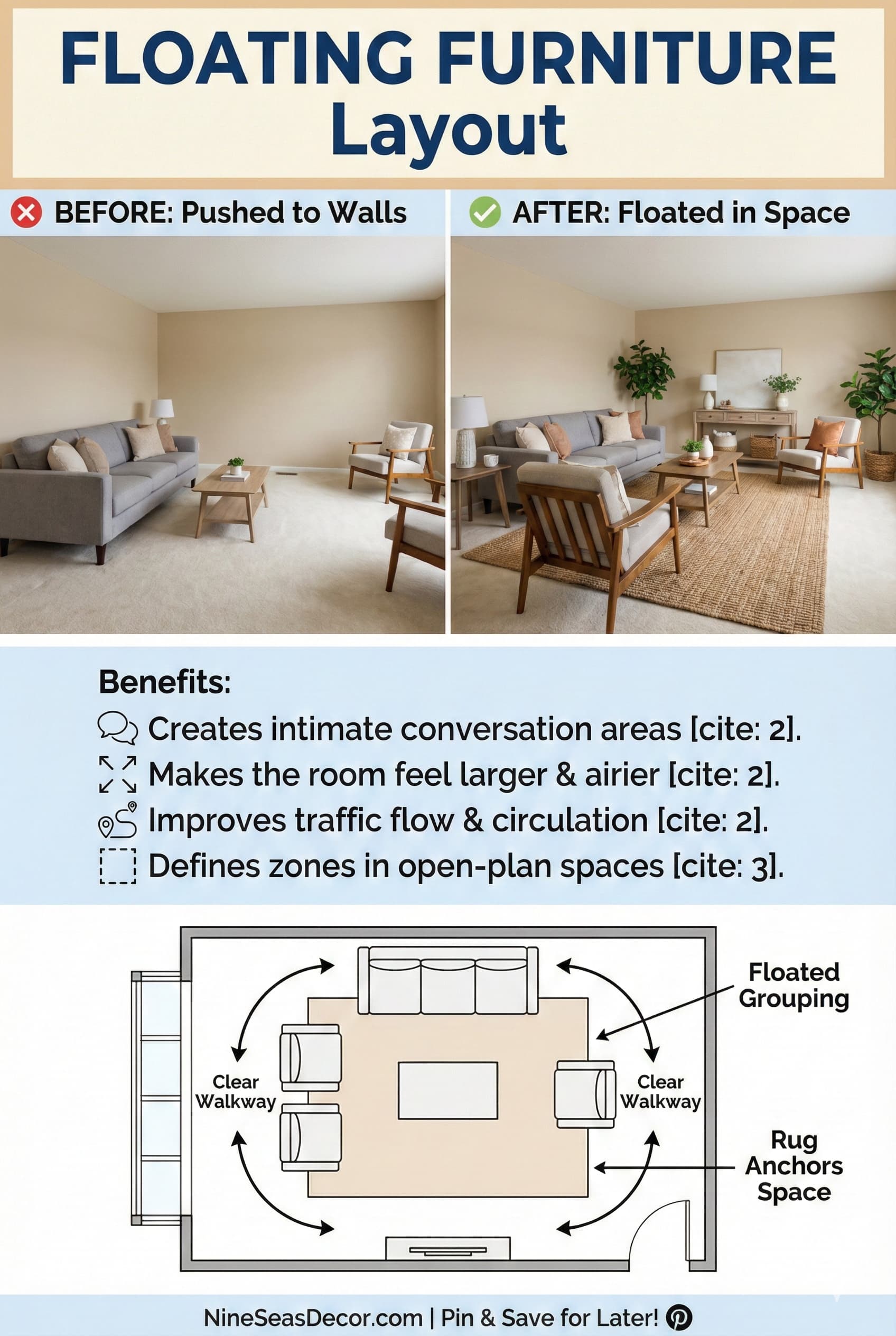
Floating furniture layouts position sofas and chairs away from walls into the room’s center, creating distinct zones while maintaining generous walking space around the perimeter. This layout configuration excels in large living rooms measuring 400 square feet or more where wall-hugging furniture creates sparse uncomfortable arrangements, open concept floor plans requiring living area definition without walls while maintaining visual flow to adjacent spaces, and contemporary homes emphasizing clean lines and intentional negative space as design elements.
Floating arrangements create intimate conversation zones within large open spaces by centralizing seating groups. Grouping furniture in the center produces comfortable conversation zones with appropriate scale for human interaction rather than attempting to furnish entire massive rooms to walls where people sit distant from each other. This layout allows creating multiple zones within one large room, such as a floating seating group for conversation in one area, a reading nook with chair and lamp in another, and a desk space along a wall, all within the same room but clearly defined by furniture placement.
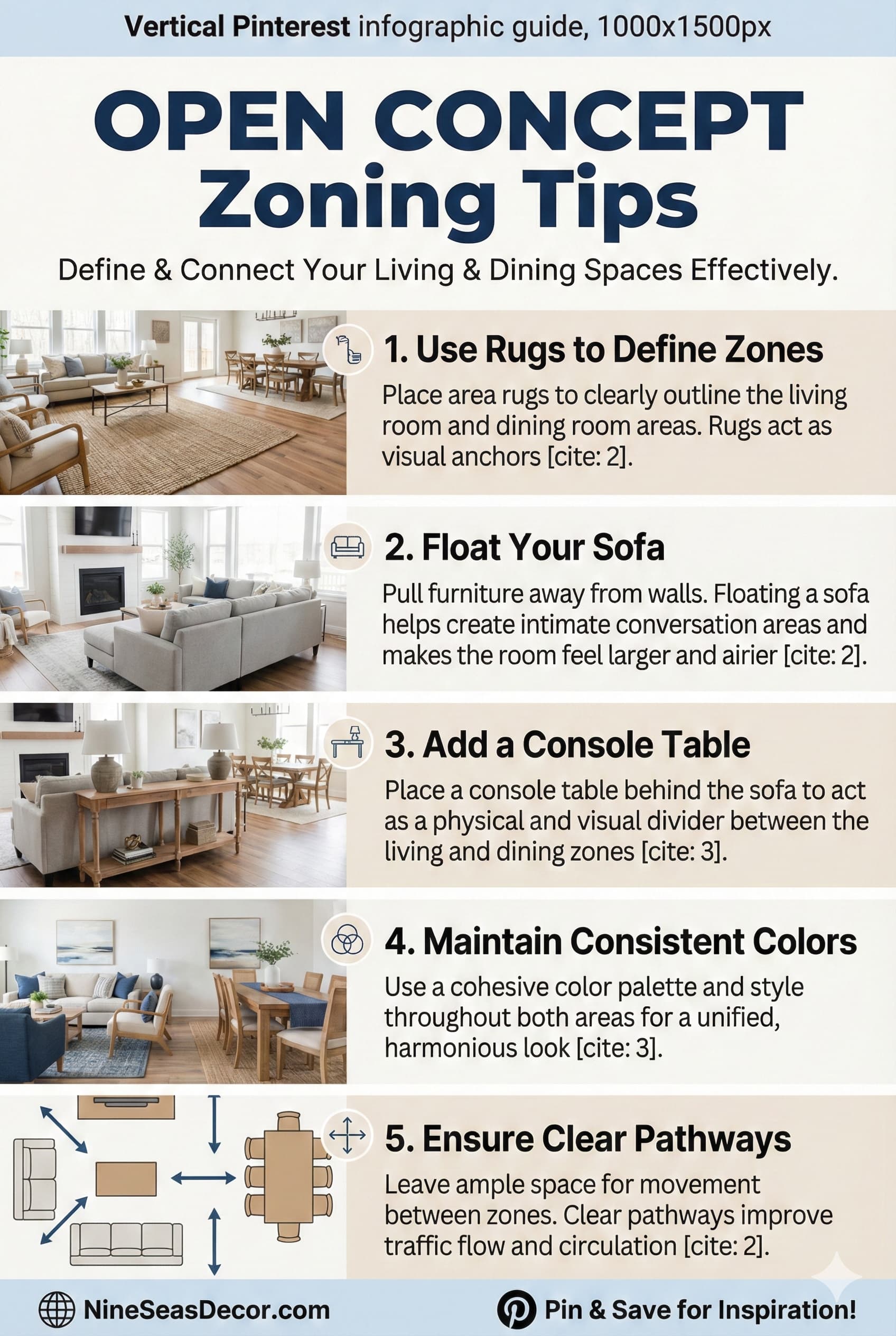
Multi-zone layouts divide single living rooms into multiple functional areas using furniture placement, rugs, and lighting rather than walls. Each zone serves distinct purposes like TV watching, reading, working, or playing while maintaining visual connection to the unified space. This layout works perfectly in large living rooms over 350 square feet with enough space for multiple distinct areas, combination living-dining spaces where one room serves multiple functions, and homes where individual family members have different needs requiring separate zones for peaceful coexistence.
Multi-zone layouts provide flexibility for simultaneous activities by dividing single rooms into distinct functional areas. Multiple smaller zones within one room provide optimized functionality for specific activities rather than single-purpose configurations with limited versatility.. A family can watch TV in one zone while another person reads in a second zone and a third person works on a laptop in a desk area, all sharing the same room without constant conflict. This layout maximizes large rooms that otherwise feel empty or underutilized.
Define zones using area rugs that create visual boundaries. Each zone gets its own appropriately sized rug connecting the furniture in that grouping. For example, an 8 by 10 foot rug anchors the TV watching zone with sofa and chairs, a 5 by 7 foot rug defines a reading nook with chair and ottoman, and a small 3 by 5 foot rug grounds a desk area. The different rug sizes and placements clearly communicate that these are separate spaces even without walls dividing them.
Arrange furniture to create natural pathways between zones maintaining at least 36 inches of clearance for comfortable walking. The zones should feel distinct but not completely isolated. Position seating so someone in one zone can see and potentially converse with people in other zones if desired, maintaining family connection even when pursuing different activities. This differs from using walls or screens that completely separate spaces.
Lighting becomes crucial in multi-zone layouts since each area needs appropriate task lighting for its function. The TV zone might have dim ambient lighting plus a floor lamp for general illumination, the reading zone needs a bright reading lamp beside the chair, and the desk area requires focused task lighting. This layered lighting approach allows customizing each zone’s brightness independently based on the activity happening there rather than lighting the entire large room uniformly.
Maintain visual cohesion across zones using consistent color schemes, furniture styles, and material palettes preventing the space from feeling chopped up or decorated by multiple people with different tastes. The zones should feel like intentional parts of one thoughtful whole rather than random collections of furniture that happened to end up in the same room.
TV-centered layouts organize all seating facing or angled toward the television as the room’s primary focal point. This is the most popular layout in American homes where TV watching dominates living room use. This layout suits family rooms where media consumption is the primary activity, living rooms in homes where the TV truly is the focal point of gathering, and spaces where architectural features like fireplaces compete with TV requiring intentional decisions about which takes precedence.
TV-centered layouts optimize viewing angles, distances, and sight lines for all seating positions. in the room. When arranged correctly, all seats offer comfortable viewing angles, appropriate distances from the screen, and good sight lines without neck strain or reflection glare. This matters enormously for rooms where families spend hours watching together daily. The key is treating the TV like the focal point it actually is rather than trying to hide it or arrange around other features no one actually uses.
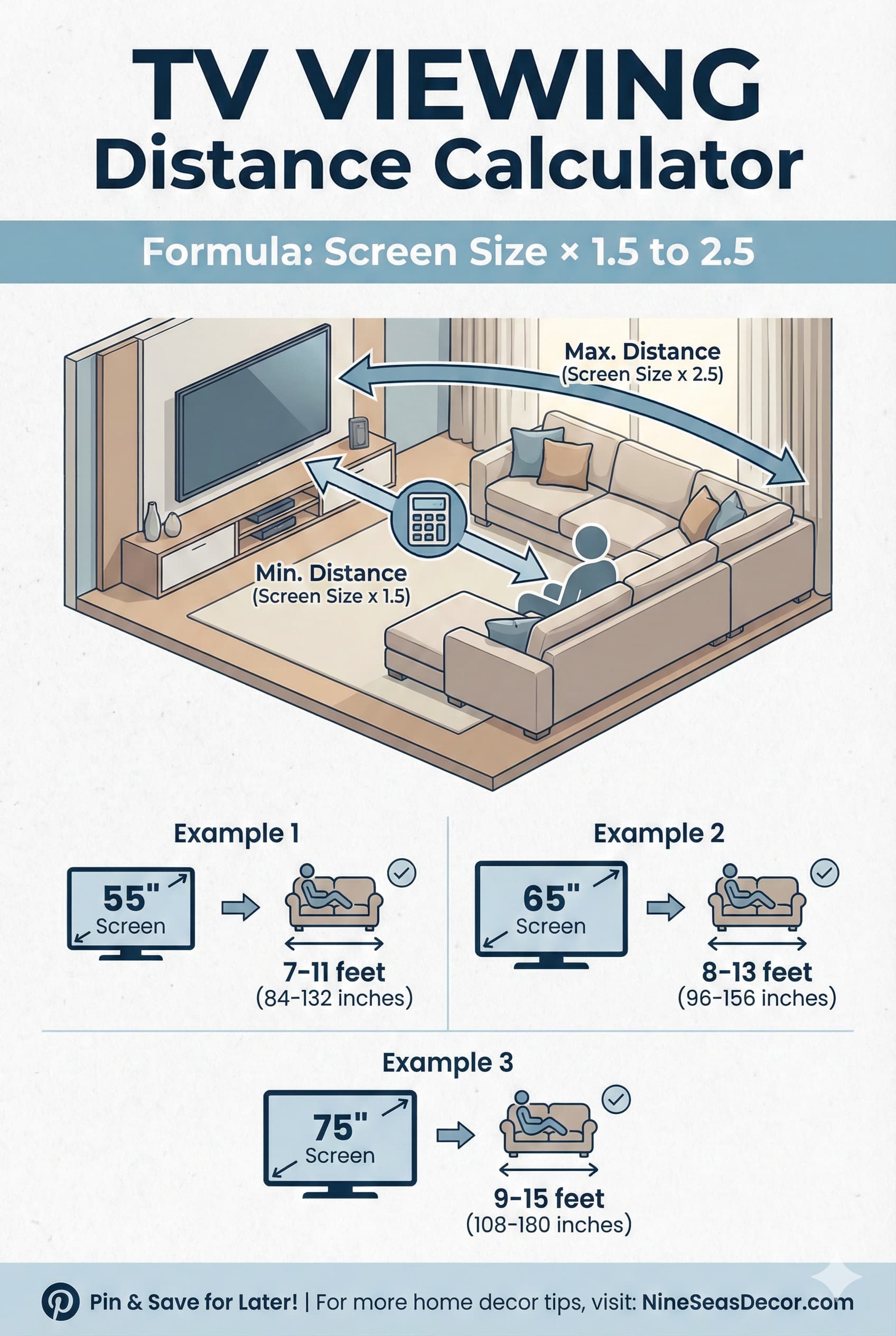
Position the sofa directly facing the TV as the prime viewing spot, centered on the screen for best experience. Calculate proper viewing distance using the formula: screen diagonal (in inches) multiplied by 1.5 to 2.5 equals ideal viewing distance in inches. For a 65-inch TV, that means 97.5 to 162.5 inches or roughly 8 to 13.5 feet away. Position your sofa within this range for comfortable viewing without pixelation or eye strain.
Add seating at 30 to 45-degree angles to the TV rather than perpendicular. Perpendicular seating forces uncomfortable neck turning for extended viewing. Angled positions allow watching while still feeling part of the conversation group. Consider recliners or chairs with ottomans for comfortable extended viewing, and ensure side seating isn’t positioned where it blocks primary viewers’ sight lines to the screen.
Prevent glare by avoiding windows directly behind the TV or opposite it where bright light reflects off the screen. If your room configuration forces these placements, invest in blackout curtains or blinds allowing you to control natural light during daytime viewing. Mount the TV at appropriate height with the center of the screen at seated eye level, typically 42 to 48 inches from the floor for most sofas and chairs. Too high and viewers crane necks uncomfortably, too low and the viewing angle feels awkward.
Seating arrangements determine how many people your living room comfortably accommodates and how natural conversation flows when gathering. Professional designers aim for sufficient seating for regular household members plus a few guests, typically 6 to 10 total seats in family homes. This approach provides adequate entertaining capacity without excessive furniture that remains unused during typical daily activities.
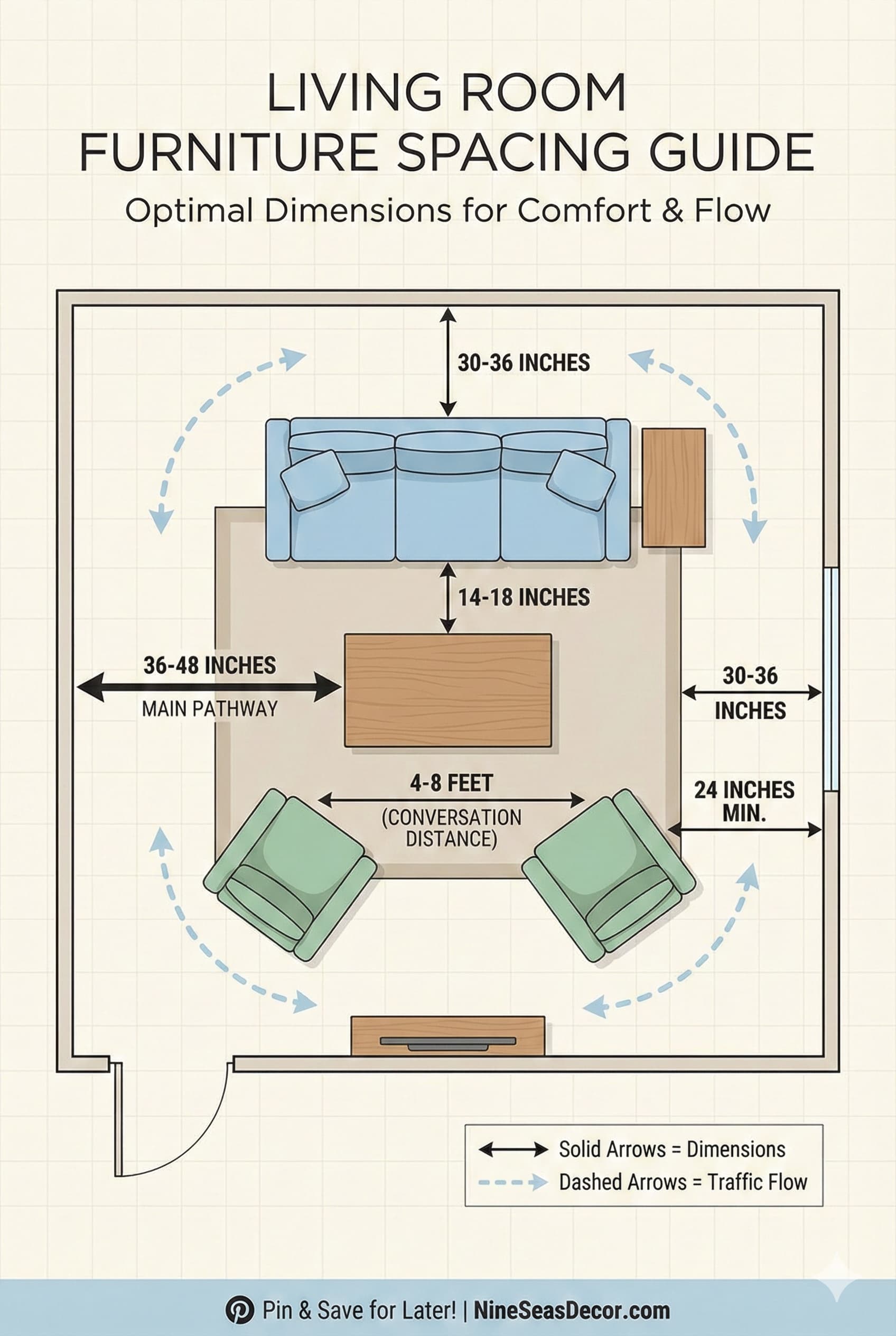
The most successful seating arrangements create intimate conversation distances. Research shows that comfortable conversation happens when people sit 4 to 8 feet apart. Closer feels invasive, farther requires raised voices and feels disconnected. Arrange your primary seating group within this range. Your sofa and the chairs or sofa opposite should sit roughly 7 to 8 feet apart with the coffee table between them maintaining conversation-friendly distance while accommodating the table.
Sofas form the foundation of most living room seating arrangements as the largest, most expensive piece that usually stays in place longest. Standard sofa sizes include 72-inch twins (tight for two adults), 84-inch fulls (comfortable for two, cozy for three), and 96-inch queens (comfortable for three). Measure your space carefully before buying a sofa, ensuring at least 30 to 36 inches of clearance on all sides for comfortable movement.
Sectionals provide extensive seating in one piece, perfect for large families or frequent entertainers. L-shaped sectionals typically range from 100 to 120 inches on the long side with 72 to 96 inches on the short side. U-shaped sectionals add another seating section creating massive seating capacity but requiring 300+ square feet to avoid overwhelming the room. Ensure your doorways and stairways accommodate sectional pieces for delivery, as these large items sometimes won’t fit through standard 32-inch doors.
Accent chairs add seating, personality, and flexibility to layouts. Unlike sofas that typically stay put for years, chairs easily move for different arrangements or additional seating when entertaining. Position chairs at 30 to 45-degree angles to sofas rather than parallel or perpendicular for the most versatile, conversation-friendly placement. This angling creates triangular seating arrangements that feel more intimate and inclusive than rigid parallel rows.
Loveseats measuring 48 to 72 inches long work perfectly in small living rooms where full sofas overwhelm or as secondary seating in larger rooms paired with a primary sofa. Position loveseats perpendicular to sofas forming L-shapes or across from sofas creating parallel conversation groups. Their smaller size provides important flexibility in tight spaces while still offering real seating comfort unlike shallow decorative benches.
Ottomans serve triple duty as footrests, extra seating when needed, and coffee tables when topped with trays. This versatility makes them valuable in small spaces or multi-functional rooms. Choose ottomans measuring 16 to 20 inches high matching your sofa seat height for comfortable footrest use. Round ottomans measuring 36 to 42 inches in diameter work beautifully as coffee table alternatives in conversation circle layouts, while rectangular ottomans suit traditional parallel seating arrangements.
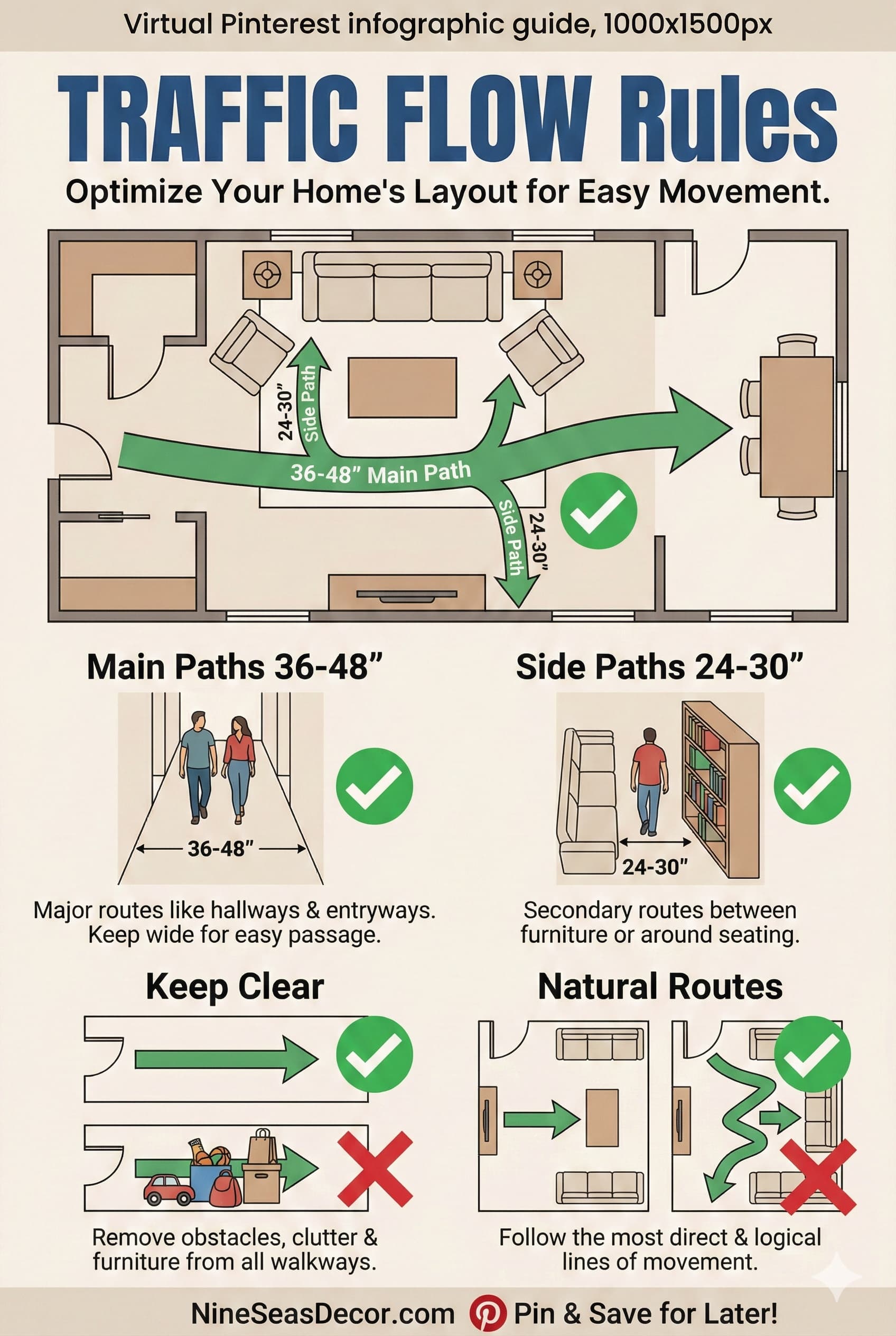
Traffic flow determines how easily people move through your living room without bumping into furniture, squeezing through tight gaps, or feeling like they’re navigating obstacle courses. Professional designers follow specific spacing guidelines ensuring comfortable circulation while maximizing usable floor space. Understanding these measurements transforms awkward, cramped rooms into spaces that breathe and function beautifully.
| Measurement Type | Recommended Distance |
|---|---|
| Main Walkways | 36 – 48 inches |
| Secondary Pathways | 24 – 30 inches |
| Coffee Table to Sofa | 14 – 18 inches |
| Between Furniture Pieces | 10 – 12 inches |
| Furniture from Walls | 3 – 6 inches |
| Storage Cabinet Clearance | 48 – 60 inches |
Main walkways through rooms require 36 to 48 inches of clearance minimum. These are the paths people use to move from one room entrance to another, crossing through the living room to reach other parts of the home. If your living room sits between the front door and kitchen, ensure that primary pathway maintains adequate width even when furniture defines distinct zones. Consider these walkways as roads through your space that must remain clear and functional.
Secondary pathways between furniture pieces need 24 to 30 inches minimum clearance. These are the routes people take to reach seating, access windows, or move between different zones within the room rather than passing through to other rooms. For example, the space between your coffee table and sofa is a secondary pathway where people edge past to sit down, so 24 to 30 inches allows this movement without contorting or bumping shins.
Coffee tables should sit 14 to 18 inches from sofa and chair edges providing enough space to stretch legs comfortably while keeping the table within easy reach for setting down drinks and remote controls. Less than 14 inches feels cramped with knees hitting the table edge when sitting, more than 18 inches requires awkward reaching making the table less functional. This measurement applies whether using traditional coffee tables or ottoman alternatives.
Side tables position best within arm’s reach of seating, typically touching or just inches from sofa and chair arms. These tables serve lamps and drinks that need easy access from a seated position, so placing them farther away defeats their purpose. Table heights should approximately match your sofa arm height, usually 24 to 27 inches tall, allowing easy reach without straining up or down.
Leave 10 to 12 inches minimum between furniture pieces that don’t intentionally touch. For example, if you have two accent chairs near each other but not pushed together, 10 to 12 inches of breathing room prevents them from appearing crowded while not wasting valuable floor space with excessive gaps. This principle applies to sofas and chairs, chairs and side tables, and other adjacent but separate pieces.
Position furniture at least 3 to 6 inches away from walls unless you’re intentionally pushing pieces flush against walls for space-saving in small rooms. This slight gap prevents that pushed-up, cramped feeling while protecting walls from scuffs and damage. In larger rooms, pulling furniture farther from walls creates more sophisticated, intentional layouts rather than the border-hugging arrangements that make rooms feel smaller than they are.
Allow 48 to 60 inches clearance in front of storage cabinets, media consoles, and shelving units so doors and drawers can open fully without hitting other furniture. Measure your cabinet doors and drawers when open, adding a few extra inches for comfortable access.
Common layout errors include media console drawers that cannot open fully due to insufficient clearance from coffee tables or adjacent furniture.
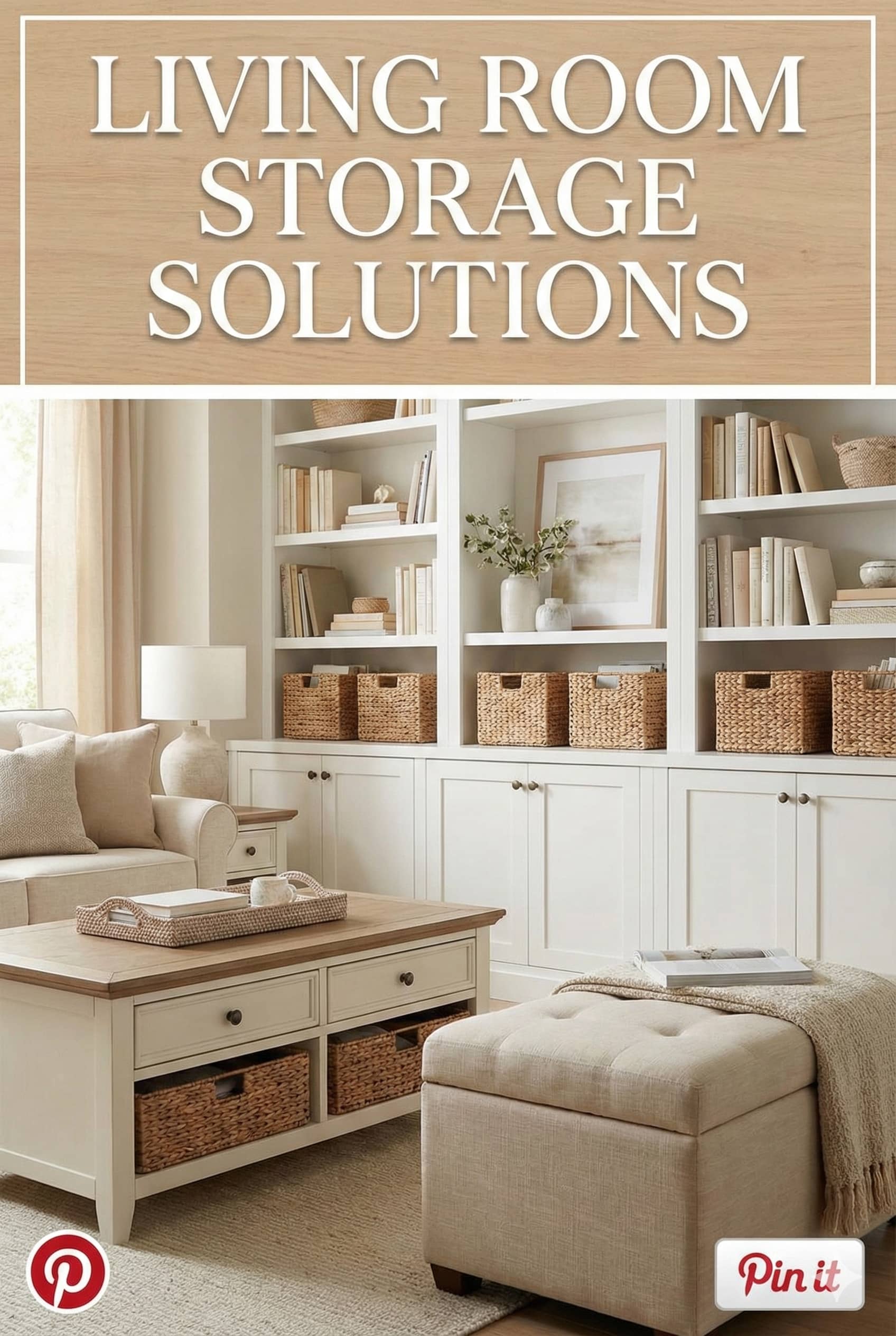
Storage consistently ranks among the top concerns in living room design. Even spacious rooms feel cluttered without smart organization systems, while well-planned small living rooms feel calm and functional. Effective storage maximizes organizational capacity for books, media, décor, games, blankets, and household items while maintaining clear surfaces and preserving aesthetic appeal regardless of floor space dimensions.
Built-in storage offers the most efficient, custom-fitted organization for living rooms, utilizing awkward spaces like alcoves, chimney breasts, and wall niches that freestanding furniture can’t address. Floor-to-ceiling built-in bookcases flanking fireplaces or filling entire walls create dramatic architectural interest while providing massive storage capacity, typically 30 to 50 cubic feet per 8-foot section. These custom installations typically cost $2,000 to $8,000+ depending on size and finish quality, but they add significant perceived value to homes.
Design built-in bookcases with adjustable shelving spaced 10 to 15 inches apart vertically, allowing flexibility for various book heights and decorative objects. Include 12 to 14 inches of depth accommodating most hardcover books and display items without protruding awkwardly. Add cabinet bases with doors in the bottom 24 to 30 inches for hiding less attractive items like board games, electronics, or kids’ toys. Paint built-ins in crisp white for classic elegance or match wall colors for integrated appearances.
Media consoles combine TV storage with equipment organization and display space. Modern consoles measure 48 to 80 inches wide and 24 to 30 inches tall, sized to support TVs while providing proportional visual balance. Choose consoles with cable management features, ventilation for electronic equipment, and adjustable shelves accommodating different component sizes. Ensure the console width equals or exceeds your TV width preventing top-heavy appearances where large TVs balance precariously on too-small stands.
Coffee tables with storage add hidden capacity exactly where you need it. Lift-top coffee tables reveal large compartments perfect for storing throw blankets, magazines, and remote controls out of sight but easily accessible. Tables with drawers, shelves, or baskets underneath similarly expand storage while maintaining clean living room aesthetics. Choose tables with substantial storage capacity rather than shallow decorative options measuring actual interior dimensions before buying.
Storage ottomans serve triple duty as footrests, extra seating, and hidden storage. The flip-top design reveals interior space perfect for blankets, pillows, or toys that need homes but not permanent display. Storage ottomans measuring 36 by 36 inches or larger provide meaningful storage capacity rather than tiny decorative volumes. Position storage ottomans within easy reach of seating so stored items remain genuinely accessible not decorative but impractical solutions.
Bookshelves and freestanding shelving units provide flexible storage that moves when you do unlike built-ins. Standard bookcases measure 60 to 84 inches tall, 24 to 48 inches wide per section, and 10 to 14 inches deep. Style bookcases using the rule of thirds: one-third books, one-third decorative objects, and one-third negative space. This prevents overwhelming jam-packed appearances while maintaining organization’s visual calm.
Decorative baskets and bins organize small items while adding texture and warmth to living rooms. Group two to three baskets in varying sizes on lower shelves, beneath coffee tables, or beside seating storing everything from throw blankets to children’s toys to magazines and newspapers. Natural materials like seagrass, water hyacinth, or woven rattan add organic warmth, while felt or fabric bins suit contemporary spaces.
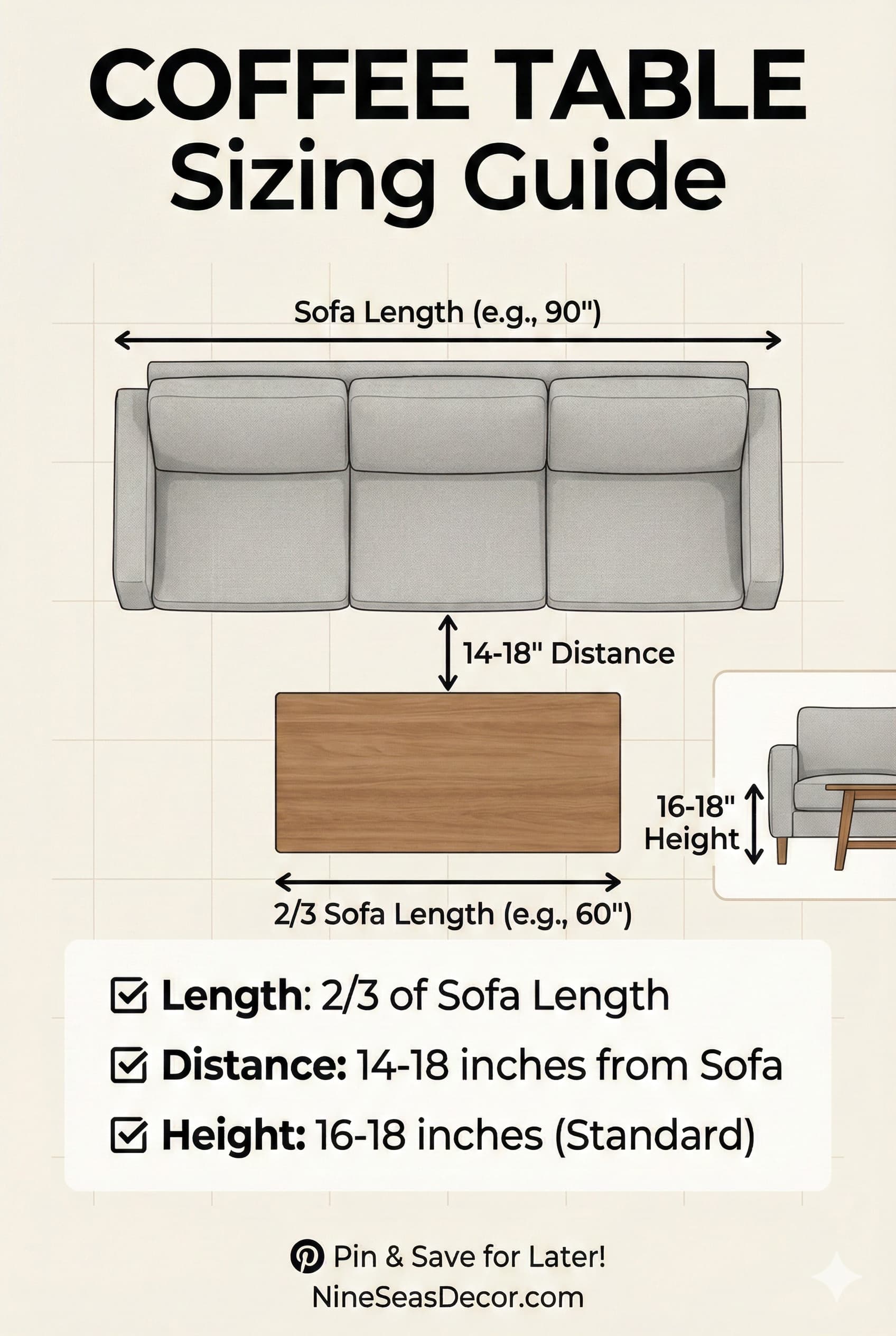
The coffee table serves as the functional and visual center of most living room layouts, anchoring seating arrangements while providing essential surface space for drinks, books, remote controls, and decorative displays. Choosing the right size, shape, height, and style dramatically impacts both the room’s functionality and aesthetic success. A perfectly proportioned coffee table makes the entire layout feel intentional and complete, while the wrong choice creates awkward spacing, blocked traffic flow, or visual imbalance.
Coffee table size should relate directly to your sofa length following the two-thirds rule. The table length should measure approximately two-thirds of your sofa length for proportional balance. For an 84-inch sofa, choose a coffee table measuring about 54 to 60 inches long. Smaller tables look insignificant and provide insufficient surface space, while oversized tables overwhelm the seating arrangement and block movement. This guideline ensures your coffee table feels substantial enough to anchor the space without dominating it.
Height matters tremendously for both comfort and aesthetics. Standard coffee tables measure 16 to 18 inches tall, aligning with typical sofa seat cushion heights of 17 to 19 inches. This allows comfortable reaching from a seated position without straining up or bending down awkwardly. Some contemporary designs sit lower at 12 to 14 inches creating modern floor-hugging aesthetics, while others rise to 20 inches functioning almost like cocktail tables. Test the height relative to your seating before buying, sitting on your sofa and miming setting down a drink to ensure the ergonomics work.
Shape selection depends on your seating arrangement and traffic patterns. Rectangular coffee tables suit traditional parallel seating groups, their linear forms echoing sofa lines and fitting naturally in the space between facing pieces. Round coffee tables measuring 36 to 42 inches in diameter work beautifully in conversation circle layouts, their circular forms reinforcing the intimate gathering dynamic while eliminating sharp corners that cause bruised shins in tight spaces. Square tables measuring 36 by 36 inches or 40 by 40 inches suit L-shaped sectionals, their symmetry complementing the two-sided seating configuration. Oval tables combine rectangular functionality with rounded safety, perfect for families with young children prone to table corner collisions.
Material and style should coordinate with your overall living room design while considering practical durability needs. Wood coffee tables suit traditional, farmhouse, and transitional spaces offering warmth and timeless appeal in finishes from light oak to dark walnut. Glass-top tables create visual lightness perfect for small spaces where solid surfaces would feel heavy, though they show fingerprints and require frequent cleaning. Metal and acrylic tables deliver contemporary edge and industrial style. Upholstered ottoman coffee tables add softness and safety while providing hidden storage, though they require trays for stable drink and book surfaces.
Consider practical storage features when selecting your coffee table. Tables with lower shelves, drawers, or lift-top mechanisms add valuable organization exactly where you need it most. Store remote controls, magazines, coasters, and throw blankets within arm’s reach of seating maintaining tidy surfaces while keeping essentials accessible. However, ensure storage features don’t compromise the table’s primary function. Drawers that stick, shelves so low you can’t reach items easily, or lift-tops so heavy they’re impractical reduce rather than enhance functionality.
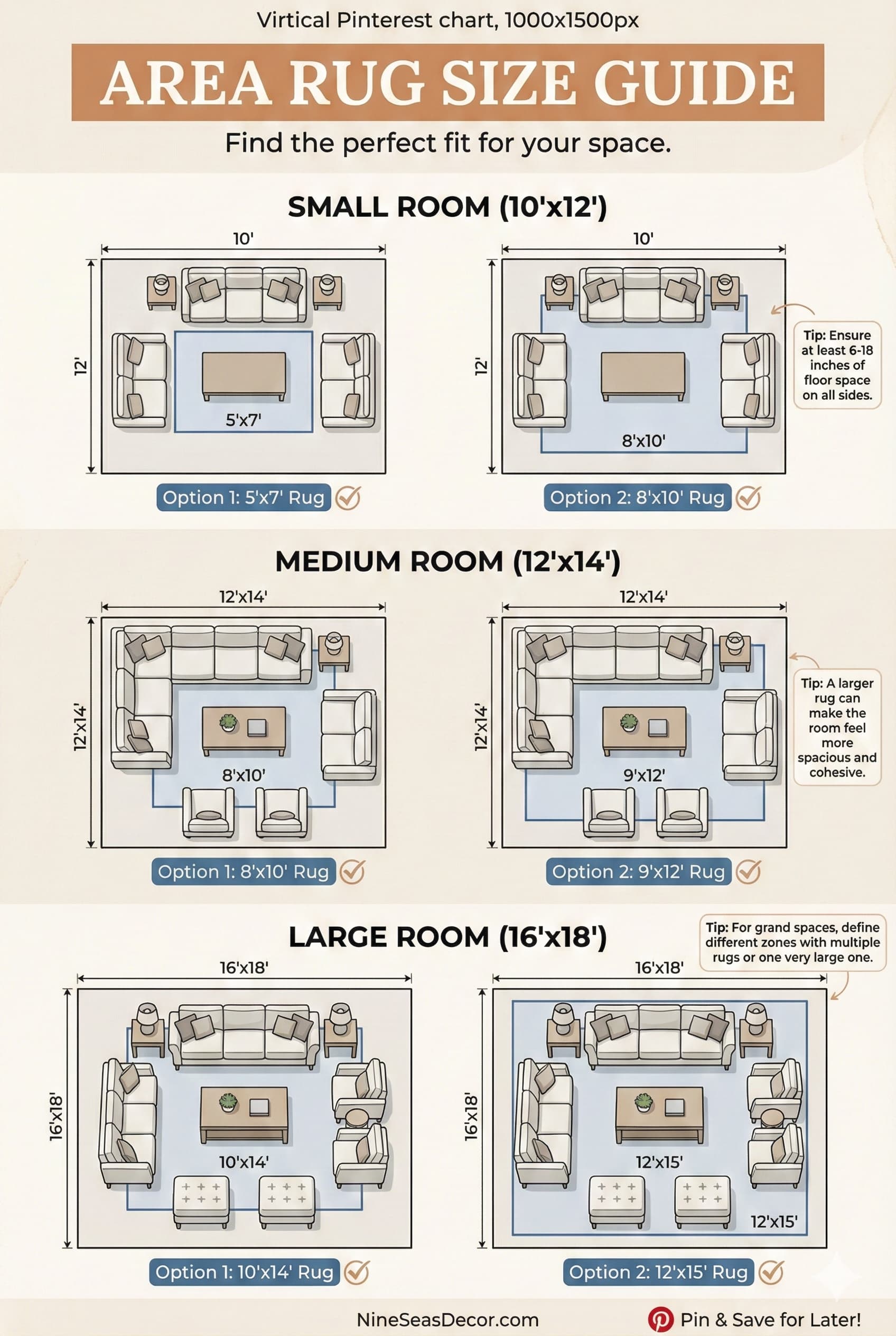
Area rugs define living room zones, anchor furniture arrangements, add warmth and texture underfoot, absorb sound in echo-prone rooms, and protect flooring from furniture wear. Yet rug selection ranks among the most common mistakes homeowners make, choosing sizes too small for their spaces, positioning them incorrectly, or selecting colors and patterns that fight rather than complement their rooms. Understanding professional rug placement and sizing guidelines ensures your rug enhances rather than detracts from your carefully planned layout.
The golden rule of rug sizing states that all furniture front legs should rest on the rug, or ideally all four legs of every piece. This creates a cohesive, intentional seating group that feels unified and grounded rather than pieces floating disconnected around the room. For most living rooms, this requires minimum 8 by 10-foot rugs, with many spaces needing 9 by 12-foot or even 10 by 14-foot options. Measure your furniture arrangement carefully before shopping, adding 12 to 24 inches beyond your seating perimeter to ensure adequate coverage.
In standard living room layouts measuring 12 by 14 feet to 14 by 16 feet, 8 by 10-foot rugs work well for smaller furniture groupings while 9 by 12-foot rugs better suit standard sofas and chair arrangements. Larger rooms measuring 16 by 18 feet or bigger typically need 10 by 14-foot or 12 by 15-foot rugs properly anchoring substantial furniture groups. Don’t automatically choose smaller rugs to save money. Undersized rugs make rooms feel disjointed and actually emphasize their small size rather than helping them feel larger as many assume.
Rug placement relative to walls matters enormously. In medium to large living rooms, maintain 12 to 24 inches of bare floor between rug edges and walls creating a floor frame that makes rooms feel larger and more intentional. This exposed floor border keeps proportions balanced and prevents that crowded edge-to-edge carpeted appearance. In very small rooms under 150 square feet, you might bring rugs closer to walls with just 6 to 12 inches of exposed floor, or even use wall-to-wall carpets or large rugs that nearly fill the space.
Rug orientation should complement your room shape and furniture arrangement. In rectangular rooms, orient rectangular rugs to follow the room’s long axis, their length running parallel to the longest walls. In square rooms, square rugs maintain symmetry, or slightly rectangular rugs measuring 8 by 10 feet still work. For L-shaped furniture arrangements, position square or rectangular rugs to accommodate both legs of the L with equal coverage rather than favoring one side.
Layering rugs adds visual interest and defines multiple zones within one room. Place smaller accent rugs atop larger neutral base rugs creating textural depth and pattern mixing while maintaining the practical coverage of the larger foundation piece. This technique particularly suits eclectic and bohemian design styles where layered patterns contribute to the collected, personal aesthetic.
Material selection impacts both aesthetics and practicality. Wool rugs deliver durability, stain resistance, and natural beauty perfect for high-traffic living rooms, though they cost more than synthetic alternatives. Synthetic rugs in nylon, polyester, or polypropylene offer budget-friendly options with easy cleaning and fade resistance suitable for casual family spaces with children and pets. Natural fiber rugs in jute, sisal, or seagrass add organic texture and eco-friendly credentials though they show stains more readily and feel rougher underfoot. Cotton rugs work well in low-traffic spaces offering softness and washability though they wear faster than wool or synthetics.
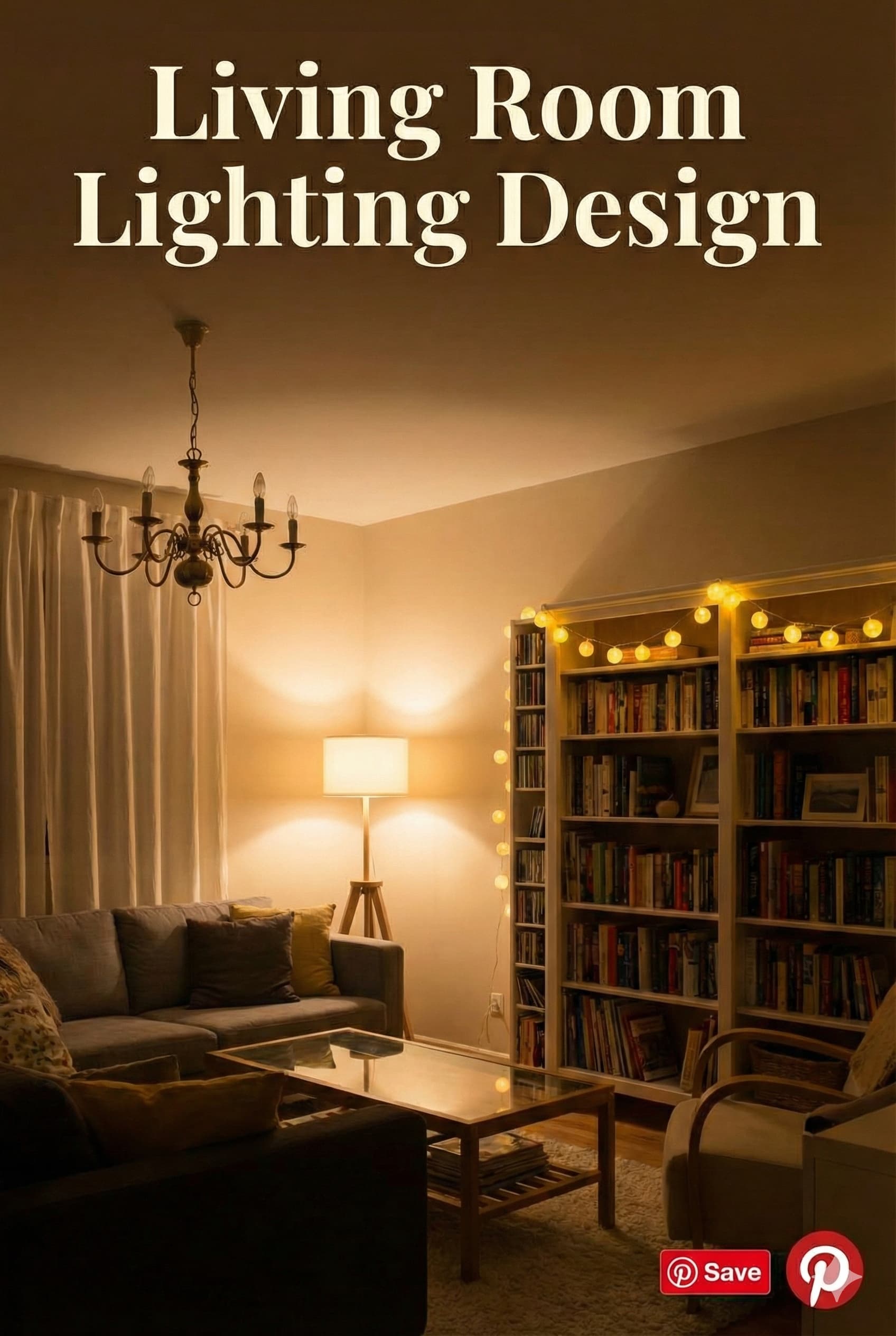
Lighting transforms living rooms more dramatically than nearly any other design element. It affects how colors appear, how large or cozy spaces feel, what activities are comfortable at different times of day, and the overall mood and atmosphere of the room where your family spends the most time. Professional lighting design layers three distinct types of light creating flexible, functional, beautiful illumination adapting to different activities and times of day rather than relying on single overhead fixtures that create flat, one-dimensional lighting.
Ambient lighting provides overall illumination filling the room with general light, typically from overhead fixtures like chandeliers, recessed lights, flush-mount ceiling lights, or track lighting. This foundational layer ensures you can safely navigate the room and see everything clearly, though it shouldn’t be the only light source or rooms feel flat and institutional. Calculate ambient lighting needs using the formula: room square footage multiplied by 1.5 equals total watts needed. For a 200-square-foot living room, that’s 300 watts total ambient lighting, which translates to roughly 3,000 to 4,000 lumens with modern LED bulbs.
Install dimmer switches on all ambient lighting. This single upgrade, typically costing $15 to $30 per switch, transforms rigid one-level lighting into flexible illumination you can adjust from bright for cleaning to dimmed for movie nights. Modern LED-compatible dimmers eliminate the buzzing and flickering that plagued older models. Dimming also extends bulb life significantly while reducing energy consumption, paying for the upgrade through savings over time.
Task lighting provides focused illumination for specific activities including reading, working on laptops, hobbies, or crafts. This typically comes from floor lamps beside sofas or chairs, table lamps on side tables, or desk lamps in work areas. These directed light sources prevent eye strain during close-up work while creating intimate pools of light adding warmth and coziness to the overall room atmosphere. Position reading lamps 40 to 42 inches from the floor to the bottom of the lampshade when placed beside seating, directing light over your shoulder onto pages without glare.
Use LED bulbs producing 450 to 800 lumens, roughly equivalent to 40 to 60-watt incandescent bulbs, for comfortable reading light without excessive brightness. For desk areas or hobby spaces in living rooms, choose adjustable task lamps with articulating arms directing light exactly where needed. Modern LED desk lamps with color temperature controls let you switch between cool white light for detailed work and warm light for relaxed activities.
Accent lighting highlights architectural features, artwork, plants, or collections, adding visual interest and depth to rooms while drawing attention to favorite elements. This includes picture lights above artwork, uplights behind plants or in room corners, LED strip lights beneath cabinets or along shelving, and small spotlights in bookcases. Accent lighting typically provides the least overall illumination but contributes enormously to sophisticated, layered lighting schemes that professional designers create.
Layer these three lighting types throughout your living room rather than relying on single central fixtures. A well-lit 200-square-foot living room might include recessed ceiling lights providing ambient illumination, a floor lamp beside the sofa for reading, table lamps on end tables for additional task light and ambiance, and a picture light above artwork for accent. This gives you tremendous flexibility adjusting lighting levels for different times of day and activities. Morning cleaning might use all lights at full brightness, afternoon reading just the floor lamp beside your chair, evening TV watching only table lamps dimmed low, and dinner party entertaining all lights at medium creating warm atmosphere.
Choose warm white LED bulbs measuring 2700K to 3000K for most residential living rooms. This color temperature mimics the warm glow of traditional incandescent bulbs creating inviting, comfortable atmospheres rather than the cold institutional feeling of cool white or daylight bulbs better suited to offices and hospitals. If you want adjustable options, smart LED bulbs allow changing color temperatures via smartphone apps, providing flexibility to adjust lighting mood seasonally or for different occasions.
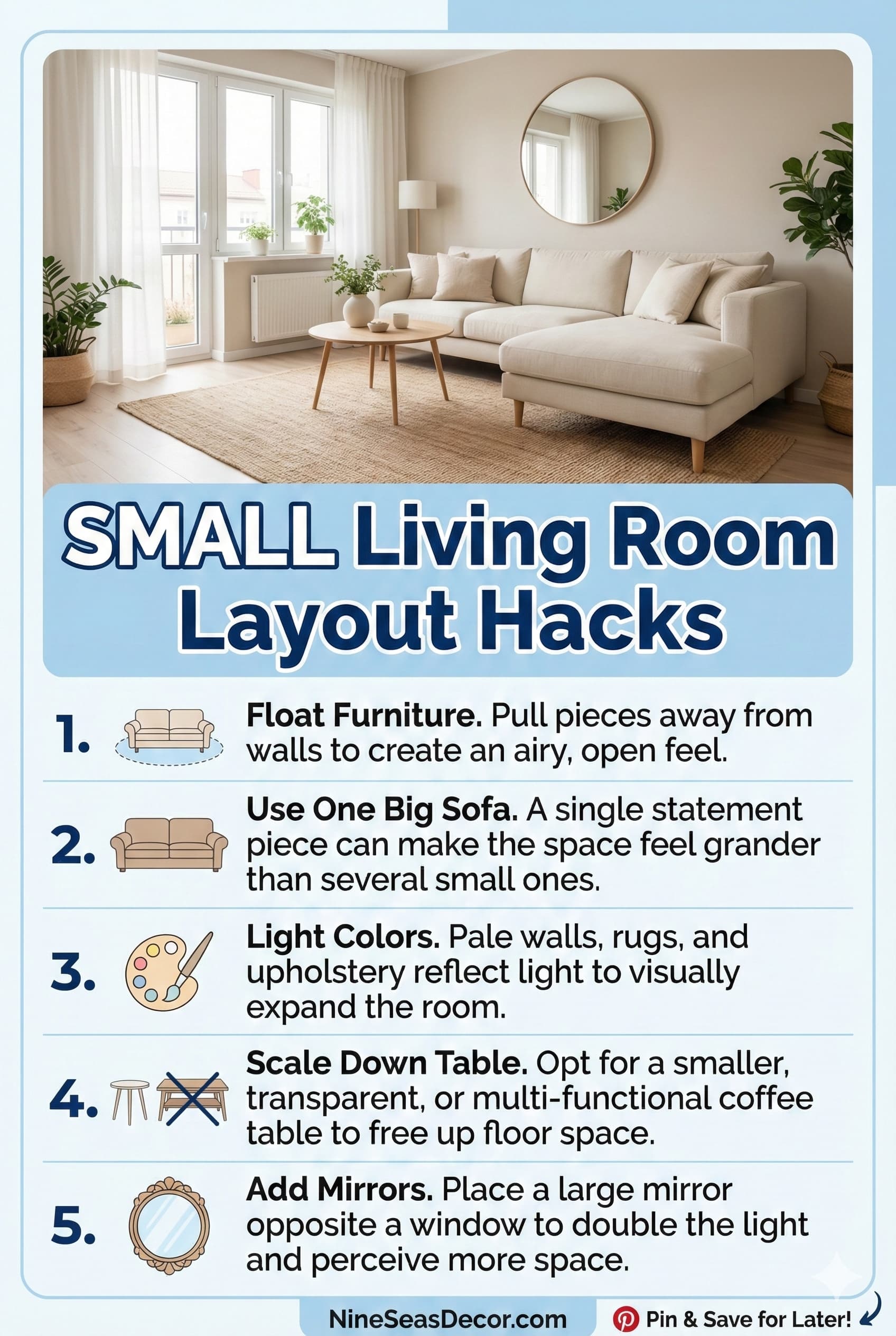
Small living rooms measuring under 200 square feet present unique layout challenges requiring strategic furniture selection, clever arrangement, and intentional design choices maximizing every inch while avoiding cluttered, cramped feelings. The secret to successful small living room layouts isn’t cramming in miniature furniture but rather choosing appropriately scaled pieces, arranging them intelligently, and using design tricks that make spaces feel larger than their actual measurements.
Furniture selection dramatically impacts small spaces. Choose one substantial sofa or sectional as your primary seating rather than multiple small pieces that fragment the limited space. A 72 to 84-inch sofa provides real comfortable seating while reading as a single significant piece rather than collection of small chairs making rooms feel cluttered. Pair this with one or two armless accent chairs or a small loveseat perpendicular to the sofa forming an L-shape that defines the seating area while leaving traffic paths clear.
Consider sectionals carefully in small spaces. While some designers advise against them, appropriately sized sectionals can actually work beautifully in small rooms by efficiently using corner space that standard sofas and chairs can’t address. Choose compact sectionals measuring approximately 75 inches on each leg rather than sprawling 100+ inch monsters. Position them in corners with the backs defining the seating zone boundary, using the space behind for narrow console tables or floor lamps.
Avoid pushing all furniture against walls despite the instinct to maximize floor space. Floating furniture slightly away from walls, even just 3 to 6 inches, makes rooms feel larger and more intentional than border-hugging arrangements that emphasize the small perimeter. This seems counterintuitive but actually works because the eye reads the negative space around furniture as breathing room rather than focusing on the limited square footage.
Scale down coffee table size or eliminate it entirely in very tight spaces under 120 square feet. Use nesting tables that tuck away when not needed, small round tables measuring 30 to 36 inches in diameter, or upholstered ottomans serving as both footrests and table surfaces when topped with trays. These alternatives provide essential function while consuming less visual and physical space than standard rectangular coffee tables.
Choose light colors for walls, furniture, and rugs in small living rooms. Whites, light grays, soft beiges, and pale blues reflect more light making rooms feel more spacious and airy than dark colors that absorb light and advance visually making walls feel closer. This doesn’t mean sterile all-white rooms, but rather keeping the large surfaces (walls, sofa, rug) light while adding color and personality through smaller accent pieces like pillows, throws, and artwork.
Maximize vertical space with tall narrow bookcases and shelving rather than low wide pieces that consume valuable floor space. Floor-to-ceiling shelving draws eyes upward making ceilings feel taller while providing substantial storage capacity in minimal footprint. Choose open shelving or glass-front cabinets maintaining visual lightness rather than solid closed cabinets that appear heavy and oppressive in small rooms.
Mirrors strategically positioned amplify light and create the illusion of expanded space. Place large mirrors opposite windows reflecting natural light throughout the room and creating the impression of additional windows opening the space. Leaning a large floor mirror against a wall provides similar benefits with flexibility to reposition as needed. However, avoid mirror overload where multiple mirrors create disco ball effects that feel chaotic rather than spacious.
Maintain clear traffic flow even in tight quarters. Ensure main pathways remain at least 30 inches wide, sacrificing seating capacity if necessary to prevent maze-like navigation through the room. Better to have fewer comfortable seats in an accessible room than many seats no one can reach without squeezing past obstacles. Define the primary traffic path through your space and arrange furniture respecting this flow rather than blocking it.
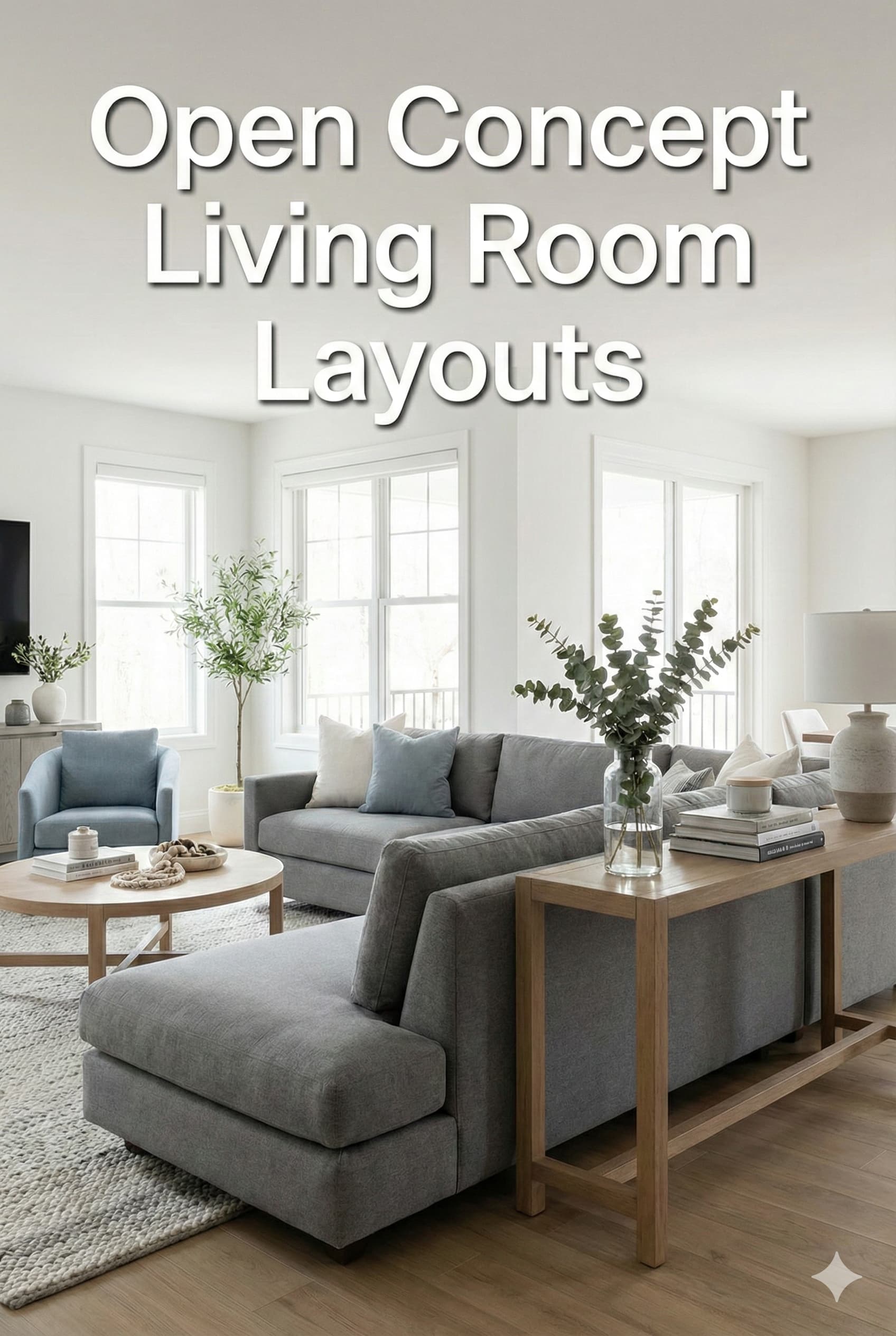
Open concept living rooms that flow seamlessly into dining areas or kitchens present unique layout challenges and opportunities. These spaces require defining the living zone clearly while maintaining visual connection to adjacent areas, creating cohesive design that works as one large space while supporting distinct functions. Successfully designed open concept layouts feel spacious and connected while avoiding the bowling alley appearance where everything blends into one undefined expanse.
Define the living zone using area rugs that create clear visual boundaries. The rug should encompass all living room furniture with front legs or ideally all four legs of each piece resting on it, clearly communicating “this is the living area” separate from dining or kitchen zones. Choose rugs at least 8 by 10 feet, and often 9 by 12 feet or larger in spacious open concepts, ensuring adequate size to visually anchor substantial furniture groupings.
Arrange furniture to create subtle boundaries without walls. Float your sofa or sectional in the space with the back facing the dining area or kitchen, using the sofa back as a visual divider defining where living space ends and other zones begin. Add a console table behind the sofa reinforcing this boundary while providing useful surface space for lamps, books, and decorative objects. The console creates a logical endpoint to the living zone without requiring walls or screens that would close off the open feeling.
Maintain consistent color palettes and design styles throughout open concept spaces preventing disjointed appearances where each zone looks decorated by different people with conflicting tastes. If your living room features gray sofas and warm wood tones, continue these materials into the adjacent dining area through gray dining chairs and a matching wood table. This doesn’t mean identical colors everywhere but rather harmonious palettes that flow logically from zone to zone.
Consider sightlines carefully when arranging open concept layouts. Someone seated on your living room sofa will see directly into dining and kitchen areas, so ensure these views are pleasant rather than featuring messy counters, cluttered tables, or unattractive appliance backs. Position furniture so primary seating angles away from work zones or toward attractive focal points like fireplaces or windows creating the best possible views from comfortable seats.
Use consistent flooring throughout open concept spaces maintaining the unified feeling that makes these layouts so appealing. Wall-to-wall hardwood, luxury vinyl plank, or large-format tile flowing continuously from living through dining to kitchen emphasizes the spacious connected quality. If you want to define zones through flooring, use one continuous hard surface throughout while varying rug sizes and placements in different areas rather than changing flooring materials which chops up the space visually.
Lighting becomes even more critical in open concepts where single overhead fixtures can’t adequately illuminate 400+ square feet of combined space. Layer lighting throughout with different fixtures in each zone providing appropriate illumination for different functions. The living zone might feature floor and table lamps for ambient and task light, the dining zone a chandelier for dramatic focal point, and the kitchen recessed lights for functional work light. Ensure lighting levels and color temperatures coordinate across zones so the space reads as cohesive when all lights are on.
Balance openness with privacy. While open concept layouts emphasize connection, families still sometimes need visual or acoustic separation between zones. Consider lightweight solutions like tall plants, open shelving units, or decorative screens that partially divide spaces without solid walls. These elements allow maintaining the open aesthetic while creating subtle boundaries when you want dinner party entertaining in the dining room separate from kids playing in the living area.
Creating beautiful, functional living room layouts doesn’t require unlimited budgets. Strategic budget allocation prioritizes essential high-impact items while identifying appropriate cost-saving opportunities for accessories and decorative elements.. Understanding typical costs and creating intentional plans prevents overspending on impulse purchases while ensuring you have funds for the pieces that genuinely transform your space.
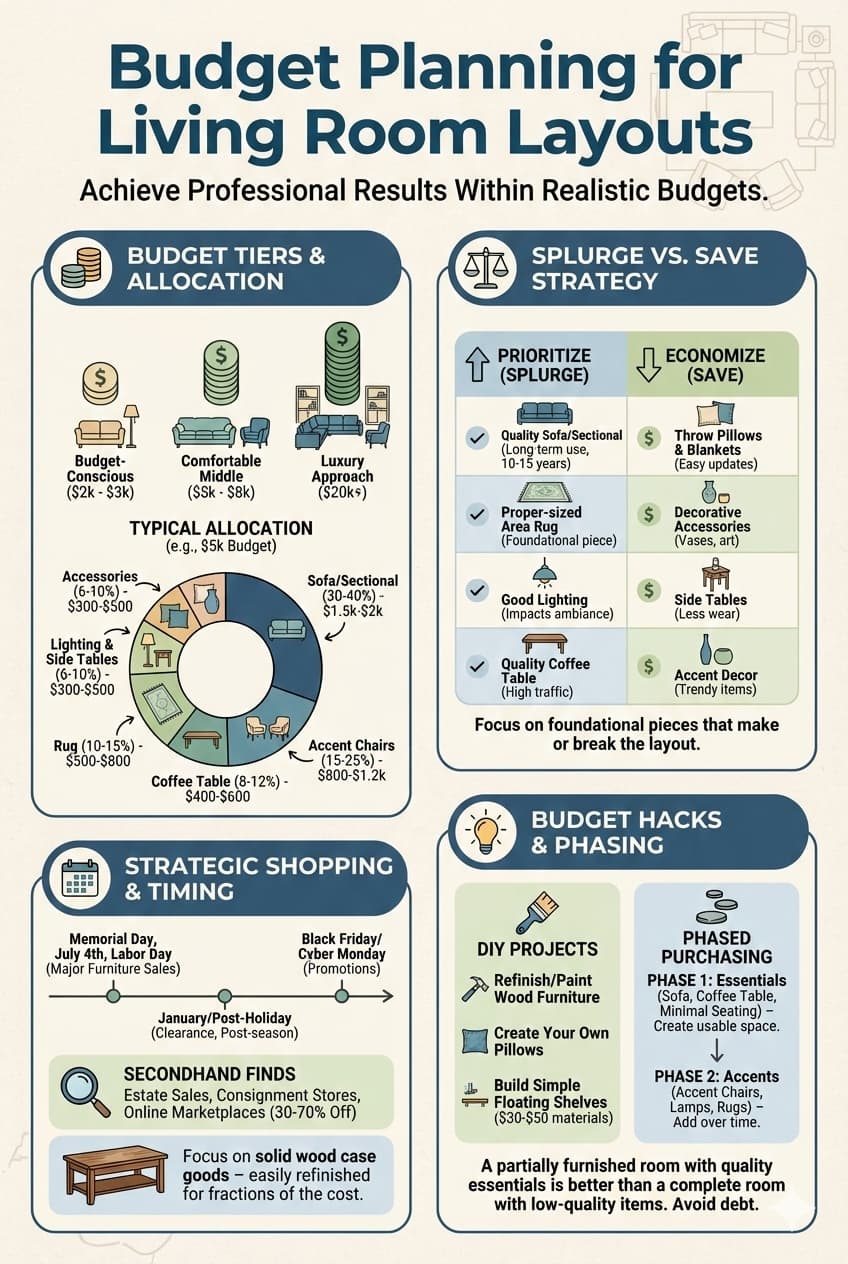
National average costs for completely furnishing living rooms range from $3,000 to $15,000 depending on room size, furniture quality, and design complexity. Budget-conscious approaches using affordable retailers and strategic secondhand finds might furnish a small living room for $2,000 to $3,000, while luxury approaches with custom furniture and designer services easily exceed $20,000. Most homeowners find the $5,000 to $8,000 range achieves comfortable middle ground with quality pieces that last while avoiding extreme budget or luxury extremes.
Allocate your furniture budget proportionally by category. Typically, the sofa or sectional consumes 30 to 40% of total furniture spending as the largest, most impactful piece. A $5,000 total budget might allocate $1,500 to $2,000 for the sofa, $800 to $1,200 for accent chairs (two at $400 to $600 each), $400 to $600 for the coffee table, $300 to $500 for side tables and lamps, $500 to $800 for the area rug, and $300 to $500 for accessories and final touches.
Prioritize spending on items you use most and pieces that most impact the room’s success. Invest in the best sofa you can afford since families spend hours on it daily and quality options last 10 to 15 years versus cheap sofas requiring replacement in 3 to 5 years. Similarly, prioritize a proper-sized area rug, good lighting, and quality coffee table since these foundational pieces make or break the layout. Save money on purely decorative items like throw pillows, blankets, and accessories that easily change and update affordably.
Shop sales strategically timing major purchases around predictable retail cycles. Memorial Day, July 4th, and Labor Day sales offer substantial discounts on furniture with retailers clearing inventory for new collections. Post-holiday sales in January and after-Christmas periods provide excellent values as retailers liquidate seasonal inventory. Black Friday and Cyber Monday increasingly include furniture in promotions, though quality and selection may be better during traditional furniture sale periods.
Consider quality secondhand options for substantial savings without sacrificing style. Estate sales, Craigslist, Facebook Marketplace, and consignment stores offer gently used furniture at 30 to 70% discounts off retail prices. Focus secondhand shopping on solid wood case goods like coffee tables, side tables, and bookcases that easily refinish or paint rather than upholstered pieces where fabric condition and cleanliness raise concerns. A $1,200 new coffee table might cost $300 to $500 used, saving hundreds while offering the same functionality.
DIY projects save money while adding personalized character. Refinish or paint secondhand wood furniture giving it new life for fraction of replacement costs. Create your own throw pillows from designer fabric remnants. Build simple floating shelves for $30 to $50 in materials versus $200+ for manufactured options. However, avoid DIY on upholstered pieces or items requiring specialized skills where amateur results look cheap and detract rather than enhance your space.
Phase purchasing when budget limitations prevent furnishing rooms completely immediately. Start with essential functional pieces including the sofa, coffee table, and minimal seating creating a usable space. Add accent chairs, lamps, and rugs in following months as budget allows. This prevents both the temptation to compromise on quality essentials and the trap of going into debt furnishing homes all at once. A partially furnished room with excellent core pieces surpasses a completely furnished room with low-quality everything.
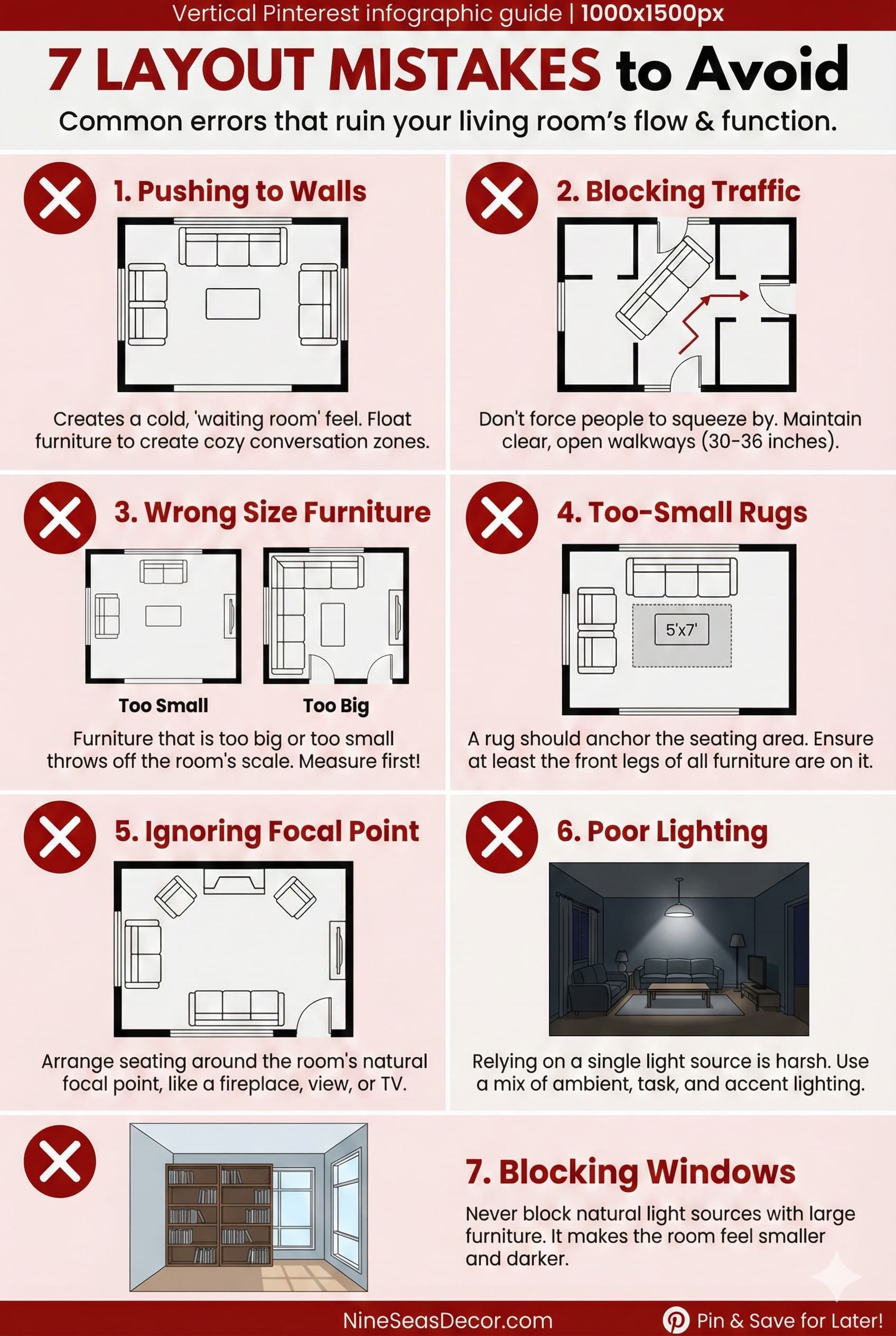
Pushing all furniture against walls represents the single most common layout mistake in average homes. While this might seem to maximize floor space, it actually makes rooms feel smaller and less inviting than intentional arrangements with furniture floated away from walls. The resulting border-hugging arrangement emphasizes the room’s perimeter, highlights the limited square footage, and creates awkward conversation distances as people perch on walls’ edges rather than gathering in comfortable central groups.
Choosing furniture too large or too small for the space ranks close behind as a frequent error. Oversized sectionals overwhelming small rooms, tiny loveseats lost in large spaces, massive entertainment centers dwarfing seating areas, or undersized rugs leaving furniture floating disconnected all result from not measuring carefully and understanding proper scale relationships. Measure your space meticulously, create scaled floor plans on graph paper or digital tools, and verify measurements in stores or online specifications before buying.
Ignoring traffic flow when arranging furniture creates frustrating navigation challenges where people constantly squeeze between pieces, bump into sharp corners, or make awkward detours to reach seats. Main pathways need 36 to 48 inches clearance, while secondary routes between furniture require 24 to 30 inches minimum. Plan your primary traffic path first, arrange furniture respecting this flow, and test by actually walking through before committing to the layout.
Blocking windows with furniture wastes valuable natural light and architectural features while making rooms feel dark and closed off. Unless absolutely necessary due to severe space constraints, keep sofas and tall pieces away from windows allowing light to flow freely throughout the room. Low-profile pieces like ottomans and small tables can sit beneath windows without blocking light, but avoid placing sofa backs directly in front of windows where they interrupt both the view and the light.
Neglecting lighting planning until after furniture arrives creates inadequate illumination and limits flexibility. Homeowners realize too late that their sofa sits far from outlets, no lamps reach reading chairs, or overhead fixtures cast shadows exactly where they need light. Plan lighting concurrently with furniture arrangements, ensuring each seating area has appropriate task lighting within easy reach and ambient lighting provides overall illumination without creating harsh shadows or dark corners.
Using too many small pieces rather than fewer substantial items creates cluttered, disjointed appearances particularly problematic in small spaces. single quality full-size sofa provides superior results compared to and two accent chairs than five small insubstantial chairs scattered around the perimeter. The single sofa reads as intentional anchor piece while multiple small pieces appear haphazardly collected without cohesive plan. This applies similarly to accessories, artwork, and decorative objects where fewer quality pieces outperform numerous mediocre items.
Forgetting about doors, drawers, and cabinet clearances when positioning furniture results in cabinet doors that can’t open, stuck drawers, or awkward maneuvering required to access storage. Media console doors need 48 to 60 inches clearance to swing fully open without hitting coffee tables. Cabinet drawers require similar space to extend completely. Check these clearances in your floor plan before finalizing furniture positions, adjusting as needed to maintain access.

Hi, I’m Sophia Rose. I believe every home tells a story. At Nine Seas Decor, I share creative ideas, budget-friendly tips, and modern trends to help you turn your living space into a sanctuary. Let’s make your home beautiful, one corner at a time!