
Transform your cozy living room in 2026 with expert tips on layered textures, warm lighting, furniture layouts, and color palettes. Real costs and measurements included.
cozy-living-room-2026
You walk into your living room after a long day and something feels off. The furniture is fine, the paint is okay, and the TV is mounted perfectly, but the room just feels cold. Sterile. Like a hotel lobby that nobody actually lives in. Yeah, I’ve seen this mistake a thousand times, and I can tell you right now that the problem almost never comes down to one big thing. It’s the accumulation of small missed opportunities that separates a living room you tolerate from a cozy living room you genuinely love spending time in.
According to a 2023 study published in the Journal of Environmental Psychology, people who describe their homes as “warm” and “cozy” report 43% lower stress levels and significantly higher overall life satisfaction scores compared to those who describe their homes as “functional” but lacking in warmth. That number should stop you in your tracks. Your living room is not just a room. It is a physiological and psychological experience, and designing it with intention pays dividends in your actual mental health every single day.
This guide is going to walk you through everything you need to know about creating a genuinely cozy living room in 2026. We are covering furniture layout principles, layered lighting strategies, color palettes and paint codes, textile and texture layering, smart storage solutions, and the finishing touches that professional designers use to make a room feel like it was made just for you. We are also including real measurements, real costs, and real product recommendations so you are not left guessing.
I’m Sophia Rose, and I’ve been writing about home decor for NineSeasDecor.com long enough to know that the best living rooms are never accidental. They are intentional. I’ve visited hundreds of homes, consulted with dozens of interior designers, and tested these principles in real spaces ranging from a cramped (10×12 foot) city apartment to a sprawling (20×30 foot) suburban great room. What you’re about to read is the distilled result of all of that experience, updated for 2026 trends and budgets.
Understanding The Foundation Of A Cozy Living Room
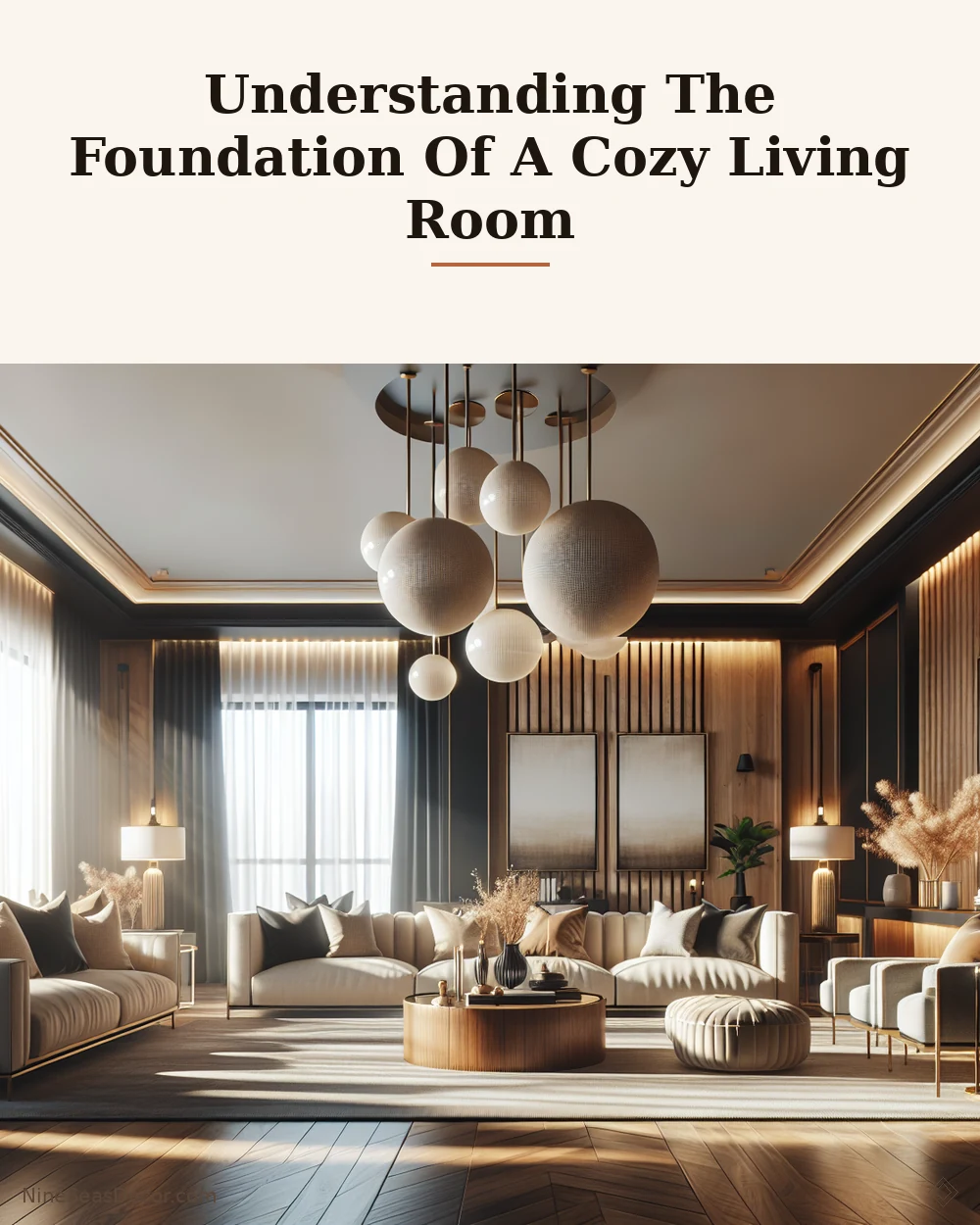
Before you buy a single throw pillow or repaint a single wall, you need to understand what coziness actually is from a design standpoint. This is where most homeowners go wrong. They treat coziness as a style, something you buy at Target or find on Pinterest, but it’s really a feeling that emerges from the relationship between several design elements working in harmony. The technical term designers use is hygge, a Danish and Norwegian concept that describes a quality of coziness and comfortable conviviality that engenders a feeling of contentment and well-being. In practice, it means your room needs to feel safe, warm, human scaled, and sensory rich all at the same time.
The scale of your furniture relative to your room is the single most important foundational element. A (15×20 foot) living room with a tiny loveseat pushed against the wall will never feel cozy no matter how many candles you light. Conversely, a (10×12 foot) room stuffed with an oversized sectional will feel claustrophobic rather than intimate. Getting this ratio right is everything.
According to the National Kitchen and Bath Association (NKBA) 2024 Design Trends Report, human scaled furniture groupings and conversation focused layouts ranked as the top two features homeowners requested in living room redesigns, surpassing even technology integration for the first time in five years. That tells you something important about where design priorities are heading in 2026.
THE PSYCHOLOGY OF WARMTH IN INTERIOR DESIGN
Understanding why certain rooms feel warm while others feel cold is genuinely fascinating science. Our brains are wired to associate certain visual and tactile cues with safety and comfort, things like soft rounded shapes, warm color temperatures, visible texture, and layered light sources. These cues trigger the parasympathetic nervous system, the part of your brain responsible for rest and relaxation. When your living room activates these cues successfully, you literally feel your body relax when you walk in. When it fails to activate them, the room feels wrong even if you can’t articulate why. Designers refer to this as sensory comfort design, and it’s the invisible framework behind every great cozy space. The goal is to engage at least three senses simultaneously: sight through warm colors and soft shapes, touch through varied textures, and even smell through natural materials and subtle scents.
MEASURING YOUR SPACE BEFORE ANYTHING ELSE
I cannot stress this enough. Grab a tape measure before you do anything else. You need to know your room’s exact dimensions, ceiling height, window placement, and door swing radius. A standard comfortable living room starts at (12×15 feet), with most suburban living rooms falling between (15×20 feet) and (18×24 feet). Your main sofa should leave at least (18 inches) of clearance on either side for traffic flow, and there should be (36 to 48 inches) between the sofa and the coffee table for comfortable leg room. The rug size is another critical measurement. In a (15×20 foot) room, you need at minimum a (8×10 foot) rug, and a (9×12 foot) rug is often better. Getting these numbers right before you shop will save you enormous amounts of money and frustration.
ESTABLISHING YOUR COZY DESIGN INTENT
Once you know your measurements, the next step is defining your design intent. Cozy doesn’t mean just one style. You can have a cozy modern living room, a cozy rustic living room, a cozy maximalist living room, or a cozy minimalist living room. What unifies all of them is intentionality. Ask yourself: who uses this room and how? A family with young children needs different coziness solutions than a couple who entertains frequently. A remote worker who also relaxes in the living room needs different lighting and furniture configurations than someone who only uses the space on weekends. Write down your answers before you shop. This exercise alone will save you thousands of dollars in purchases that look great online but don’t fit your actual life. Your design intent statement should be one or two sentences that you can refer back to every time you’re tempted by a shiny distraction.
Choosing The Perfect Color Palette For A Cozy Living Room
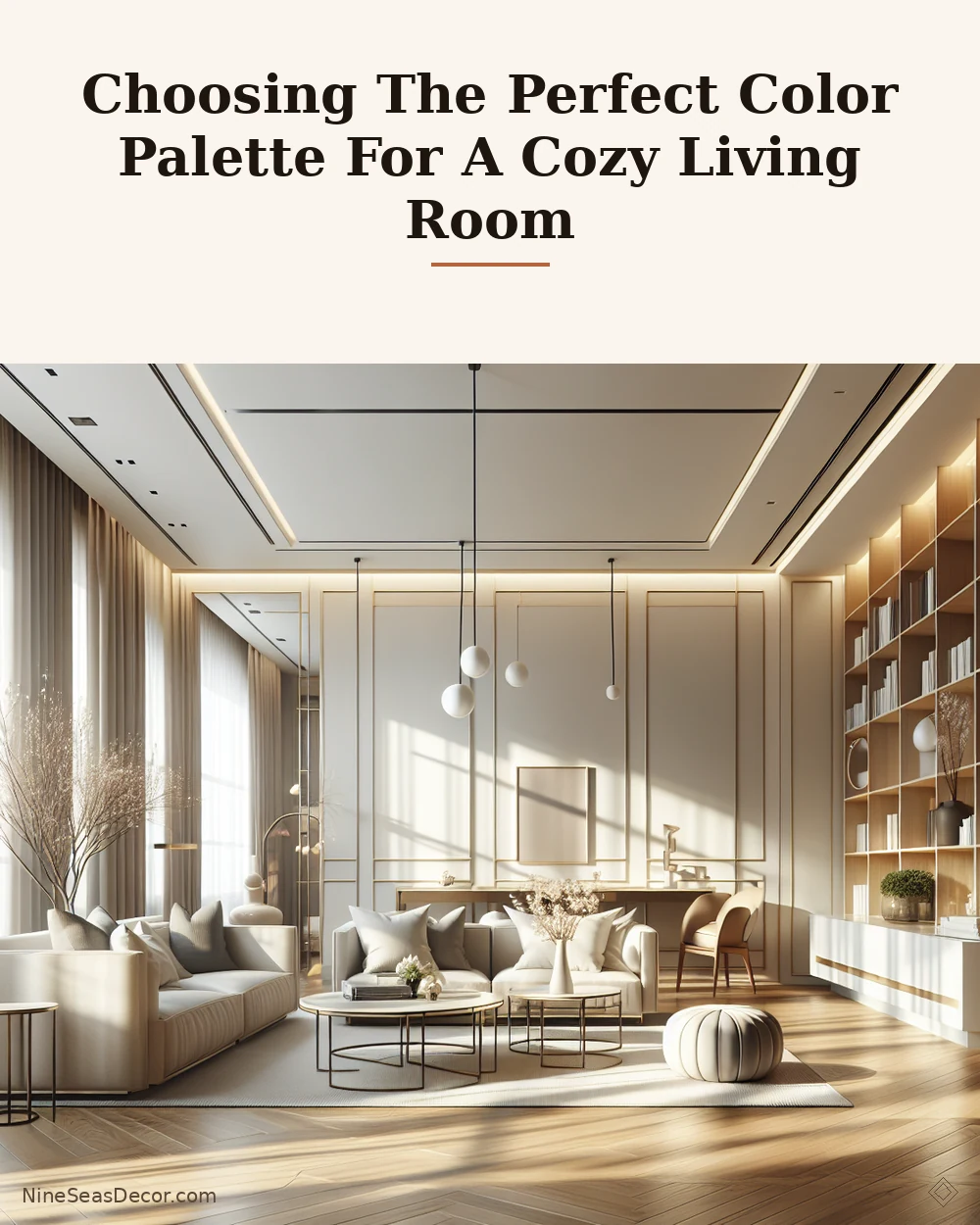
Color is your most powerful and most affordable tool for creating coziness. A gallon of paint costs ($45 to $75) and can completely transform how a room feels. The key is understanding that warm colors are not just reds and oranges. Warm color means any color with warm undertones, and this includes certain greens, certain blues, and a huge range of neutrals. The mistake I see constantly is homeowners choosing a “greige” they loved on the swatch and discovering it looks lavender or green on their walls because of undertone conflicts with their specific light conditions.
The most reliably cozy paint colors in 2026 lean into warm earth tones, deep jewel tones for accent walls, and creamy off whites that read as ivory rather than stark white. Sherwin Williams Accessible Beige (SW 7036) continues to dominate as a top performer in living rooms because its warm beige undertone works in almost every light condition. For something richer, Sherwin Williams Antique White (SW 6119) creates an incredibly warm, enveloping feeling. If you’re leaning toward a moodier cozy aesthetic, Benjamin Moore Newburyport Blue (HC 157) or Benjamin Moore Kendall Charcoal (HC 166) deliver stunning depth.
WARM NEUTRAL PAINT COLORS THAT ALWAYS WORK
Let’s talk specifics because vague color advice is useless. For a foolproof warm neutral palette, start with Sherwin Williams Accessible Beige (SW 7036) on your main walls. This color has warm yellow and gray undertones that read as a sophisticated sand in most lighting. Pair it with trim in Sherwin Williams Alabaster (SW 7008), which is a creamy off white that enhances the warmth of the wall color without going yellow. For a slightly deeper version, Benjamin Moore Pale Oak (OC 20) is a perennial favorite that works beautifully in rooms with both natural and artificial light. If your room lacks natural light, go warmer and deeper, something like Benjamin Moore Muslin (OC 12) or Sherwin Williams Antique White (SW 6119). These colors cost the same per gallon as any other paint, roughly ($45 to $75) per gallon for premium quality, but they perform significantly better in low light living rooms than their cooler counterparts.
ACCENT WALLS AND DEEPER TONES FOR DRAMA
An accent wall is one of the easiest ways to add coziness to a living room that feels too plain. The key is choosing a wall that your eye naturally lands on when entering the room, typically the wall directly across from the main entry point. For a cozy, enveloping effect, consider Benjamin Moore Newburyport Blue (HC 157), a deep, complex navy with warm undertones that photographs beautifully and creates an incredible sense of depth. Another stunning option is Sherwin Williams Rookwood Dark Green (SW 2809), which brings an organic, forest like quality to the room that pairs magnificently with warm wood tones and brass hardware. For those who love a truly dramatic cozy space, Benjamin Moore Black Beauty (2128 10) used on a single accent wall creates a sophisticated cave like intimacy that is genuinely extraordinary. Budget approximately ($200 to $400) for a single accent wall including paint, primer, and supplies.
USING COLOR TEMPERATURE IN TEXTILES AND ACCESSORIES
Your wall color is only the beginning. Color temperature in textiles and accessories is equally important for achieving a cozy color story. Warm tones repeat throughout the room in your throw pillows, rugs, curtains, and decorative objects. This repetition is what creates visual cohesion and warmth. A simple rule I follow is the 60 30 10 rule: 60% of your color should be your dominant neutral (walls, large furniture), 30% should be a secondary color (rug, curtains, secondary seating), and 10% should be an accent color (throw pillows, artwork, small decor items). When all three levels share warm undertones, the room naturally feels cozy regardless of the specific hues you choose. Terracotta, rust, caramel, olive, cream, and warm white work together harmoniously and are among the most popular cozy living room color combinations in 2026.
Furniture Layout Strategies For Maximum Coziness
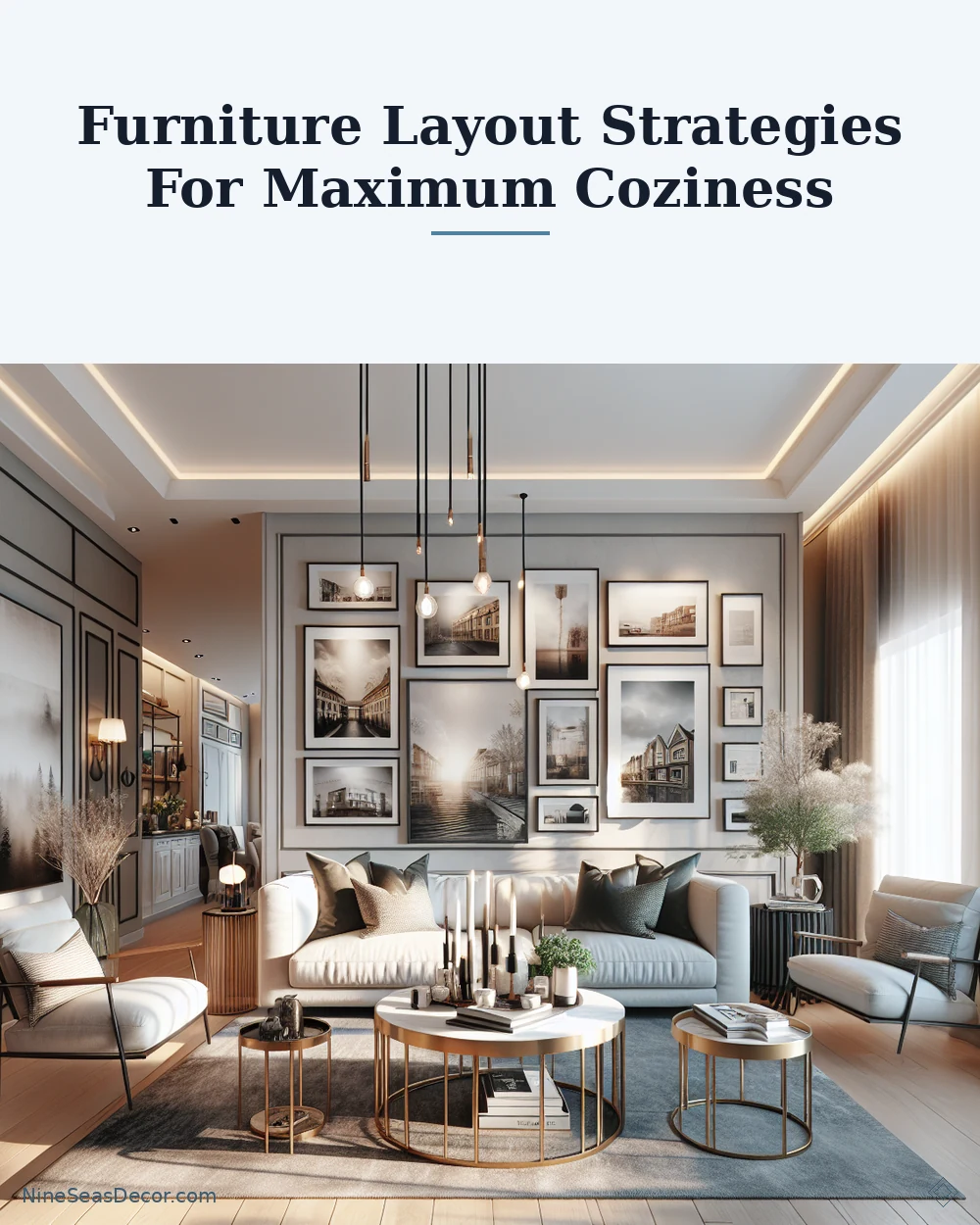
I’ve walked into living rooms where everything was expensive and beautiful and still felt deeply uncomfortable because the furniture was arranged all wrong. Furniture layout is the skeleton of your cozy living room, and getting it wrong undermines every other design decision you make. The most common mistake is what I call the “racetrack” layout, where all the furniture is pushed against the walls with a big empty space in the middle. This feels institutional, not cozy. Humans are naturally drawn to intimate groupings where they can make comfortable eye contact with the people they’re with.
The floating furniture arrangement, where your main seating group is pulled away from the walls and arranged around a central focal point, is the gold standard for cozy living rooms. In a (15×18 foot) room, your sofa might sit (18 to 24 inches) away from the wall, with a loveseat or two accent chairs facing it across a coffee table, creating a conversation zone that feels complete and intimate. According to a 2024 Houzz survey of over 125,000 US homeowners, living rooms with conversation focused furniture groupings received 71% higher “comfort” ratings from guests and family members compared to wall hugging arrangements.
THE CONVERSATION TRIANGLE: YOUR LAYOUT BLUEPRINT
Professional designers use a concept called the conversation triangle to create functional and cozy seating arrangements. The idea is simple. Your three main seating pieces, typically a sofa and two accent chairs or a sofa, loveseat, and accent chair, should form a rough triangle when viewed from above. The distance between any two seating pieces should be no more than (8 feet) for comfortable conversation without raised voices, and no less than (3.5 feet) to avoid feeling cramped. The coffee table sits at the center of this triangle, ideally at the same height as your sofa seat cushion (approximately 16 to 18 inches tall) and positioned (15 to 18 inches) from the sofa edge. This distance is important. Too close and it’s a shin hazard, too far and it becomes useless. These specific measurements create the physical conditions for coziness at a neurological level, our brains interpret close, accessible groupings as safe and social.
ANCHOR RUGS AND THEIR CRITICAL ROLE IN LAYOUT
Your area rug is the anchor of your furniture arrangement and one of the most important purchases you’ll make for a cozy living room. The most common sizing mistake is going too small. In a (15×20 foot) living room, a (5×8 foot) rug looks like a bath mat and actually makes the room feel smaller and less connected. The minimum rug size for a standard living room is (8×10 feet), with (9×12 feet) being ideal for rooms in the (15×20 foot) range. All front legs of your main seating furniture should sit on the rug, this visually anchors the entire conversation group and creates a room within a room effect that is central to coziness. Budget ($300 to $1,200) for a quality (8×10 foot) rug in wool or wool blend construction. Avoid polypropylene rugs for cozy living rooms as they lack the warmth, depth, and texture that natural fibers provide.
SECONDARY SEATING AND THE IMPORTANCE OF VARIETY
A truly cozy living room offers variety in seating options. Not everyone wants to sit the same way at the same time. A single large sectional, while comfortable, offers only one seating experience. The most inviting living rooms include a main sofa (the anchor), one or two accent chairs for flexibility, and at least one ottoman or pouf for casual, low seated comfort. Chaise lounges and window seats (if your architecture allows) add even more variety and are among the most beloved seating elements in cozy spaces. Budget for secondary seating at ($300 to $1,500) per accent chair depending on quality and style, and ($150 to $600) for a quality pouf or ottoman. The investment in variety pays off in how the room actually gets used. When people have options for how to sit, they relax more deeply and stay longer, and that’s the entire point.
Layered Lighting: The Secret Weapon Of Cozy Spaces
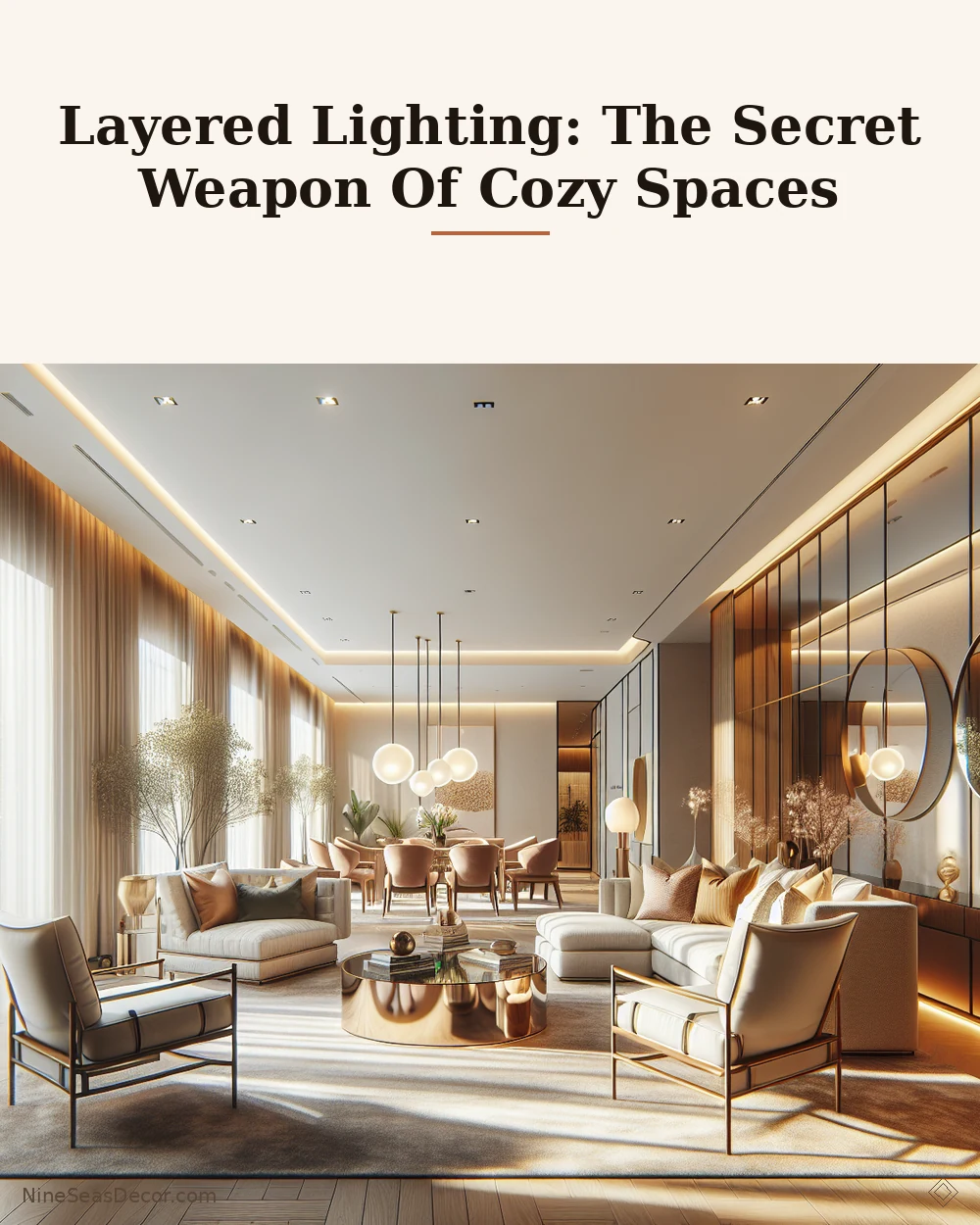
If there is one thing that separates amateurs from professionals in living room design, it is layered lighting. I say this in almost every article I write because it is that important and that consistently overlooked. Overhead lighting alone, especially a single centered ceiling fixture, is the single greatest enemy of coziness. It creates harsh, even illumination that flattens the room and makes everyone look terrible. Cozy lighting is layered, warm, and directional, creating pools of light that draw the eye around the room and make the space feel intimate regardless of its size.
A proper layered lighting plan includes three distinct layers: ambient lighting (your overall illumination, ideally dimmed), task lighting (for reading and specific activities), and accent lighting (for creating mood and highlighting features). Each layer should be on a separate switch or dimmer so you can mix and match them for different occasions and times of day. Installing dimmers on your existing lights costs ($50 to $150 per switch including installation) and is one of the highest return on investment upgrades you can make to a living room.
CHOOSING THE RIGHT BULB TEMPERATURE FOR COZINESS
Color temperature in lighting is measured in Kelvin (K), and it has an enormous impact on how cozy a room feels. Bulbs in the 2700K to 3000K range emit warm white light that mimics the golden glow of incandescent bulbs and creates an immediately cozy atmosphere. Bulbs in the 4000K to 5000K range emit cool white or daylight tones that are great for task work but actively destroy coziness when used in living spaces. Yet I constantly see homeowners installing 5000K LED bulbs throughout their homes because they were on sale or came pre installed in a fixture. Do not do this. Replace every bulb in your living room with a 2700K LED bulb. A pack of six to eight good quality warm LEDs costs ($15 to $30) and the transformation can be genuinely startling. Combined with dimmers, warm bulbs create an incredibly inviting evening atmosphere at essentially zero cost.
LAMPS, SCONCES, AND ACCENT LIGHTING STRATEGIES
Floor lamps and table lamps are the workhorses of a cozy lighting scheme. You need at least three to four light sources beyond your overhead fixture to properly layer a living room. A classic arrangement includes two table lamps flanking the sofa (on end tables approximately 24 to 28 inches tall, with lamp bases around 24 to 30 inches tall so the bottom of the shade sits at roughly eye level when seated), one arc floor lamp positioned over a reading chair, and one or two smaller accent lamps on bookshelves or console tables. Candles and LED candles add another layer of warmth at eye and table level. String lights draped along bookshelves or in planters add a magical quality that photographs beautifully and feels incredibly cozy in person. Budget ($200 to $800) for a complete lamp refresh including two table lamps, one floor lamp, and supplementary accent lighting.
FIREPLACE LIGHTING: REAL AND SIMULATED OPTIONS
Nothing creates coziness as immediately and effectively as a fireplace. If you have a real wood burning or gas fireplace in your living room, you are already ahead. Make it the focal point of your furniture arrangement and lean into it completely. If you don’t have a fireplace, the good news is that the market for electric fireplace inserts and freestanding electric fireplaces has exploded in quality and realism over the past five years. A quality electric fireplace with realistic flame simulation costs ($300 to $1,500) and can be installed in an existing non functioning fireplace opening or used as a freestanding piece. The visual impact is significant, and many units include infrared heating that adds actual warmth to the room. For the most convincing look, choose units with three dimensional flame effects and ember beds rather than flat screen simulations. Combined with a hearth rug in a natural fiber like wool or jute, even a simulated fireplace creates a powerful cozy anchor for the entire room.
Textile And Texture Layering For A Cozy Living Room
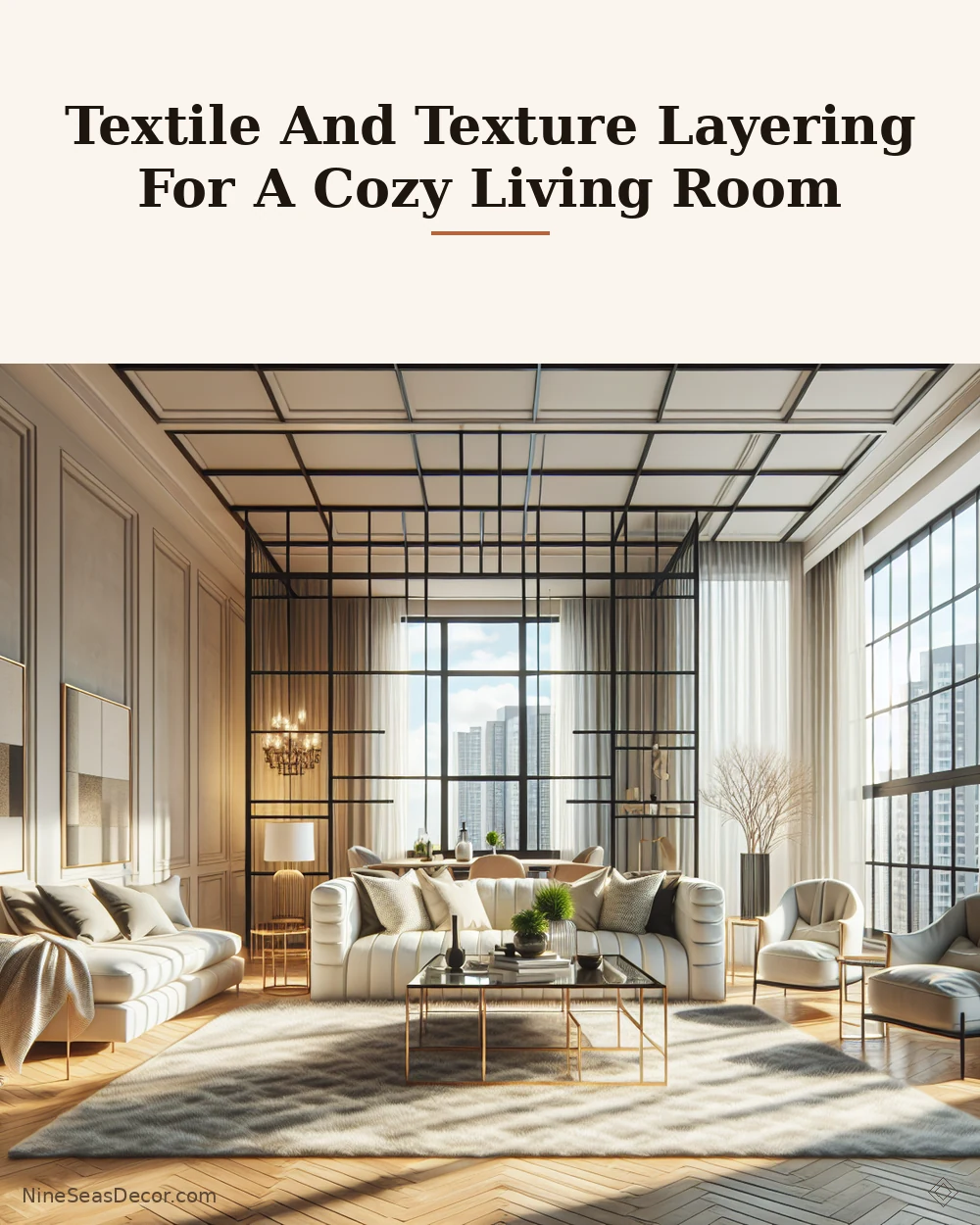
Here is where the magic really happens, and also where the biggest mistakes get made. Texture layering is the practice of combining multiple tactile materials in a single space to create visual depth, warmth, and sensory richness. A room with only one or two textures, say a smooth leather sofa on a flat weave rug, feels cold and incomplete no matter how beautiful the individual pieces are. A room with five or six distinct textures layered together feels rich, complex, and deeply inviting.
The goal is what designers call textural contrast: combining smooth and rough, soft and hard, matte and shiny, natural and processed. Think chunky knit throw against a smooth linen sofa, rough jute rug under a silky velvet accent chair, natural wood coffee table topped with polished ceramic vessels. These contrasts create visual interest that the eye finds endlessly engaging, which is a core component of the feeling we identify as cozy. According to a 2022 study in the Journal of Interior Design, rooms with high textural variety were rated as 58% more comfortable and 72% more “homey” by test subjects compared to rooms with low textural variety.
THE ESSENTIAL THROW PILLOW AND BLANKET STRATEGY
Throw pillows and blankets are the most accessible and most impactful textural elements in a living room, and there is a right way and a wrong way to use them. The right way involves mixing at least three different fabric types (say, velvet, linen, and a chunky knit), varying the scale of your pillow patterns (large scale, small scale, and solid), and keeping your color story consistent with warm undertones throughout. A standard sofa in a cozy living room typically carries five to seven throw pillows in varying sizes (20×20 inch, 18×18 inch, and a 12×20 inch lumbar pillow). Each accent chair should have one to two pillows. Budget ($25 to $85) per quality decorative pillow and ($60 to $200) for a beautiful throw blanket in a natural fiber like cashmere blend, wool, or cotton waffle weave. Avoid polyester throws as they lack the visual warmth and breathability of natural fibers.
RUGS, CURTAINS, AND WINDOW TREATMENTS FOR WARMTH
Window treatments are massively underrated for coziness. Bare windows make a room feel exposed and cold, even in daytime. Floor to ceiling curtains hung from a rod mounted (4 to 6 inches) above the window frame and extending (6 to 12 inches) beyond the window on each side dramatically increase the visual warmth and sense of enclosure in a living room. Choose curtains in a linen, velvet, or heavy cotton blend in a warm tone that complements your wall color. For a room with Sherwin Williams Accessible Beige (SW 7036) walls, consider ivory linen curtains for a light airy cozy feel or deep terracotta velvet for a more dramatic, moody cozy aesthetic. Curtain costs range from ($80 to $300) per panel for quality ready made options, with custom curtains running ($200 to $600) per panel. The investment in proper window treatments pays back enormously in how the room looks and feels.
NATURAL MATERIALS: WOOD, STONE, WOVEN FIBERS, AND PLANTS
Natural materials are the foundation of any truly cozy living room. Our brains are hard wired to find natural materials comforting and beautiful because we evolved surrounded by them. In a living room context, this means incorporating solid wood furniture or wood accents (coffee table, side tables, shelving), natural stone or terracotta in decorative objects, woven natural fiber rugs (jute, sisal, wool, seagrass), and live plants. Even a single large plant, say a fiddle leaf fig or a pothos in a beautiful ceramic pot, adds an organic warmth that no synthetic material can replicate. Wood toned furniture in warm honey, walnut, or oak finishes costs ($300 to $2,500) for quality side and coffee tables. Live plants start at ($15 to $150) for impressive specimens. The combination of these natural elements creates what designers call biophilic coziness, a deep, instinctive feeling of comfort rooted in our relationship with the natural world.
Smart Storage And Decluttering For A Cozy Feel
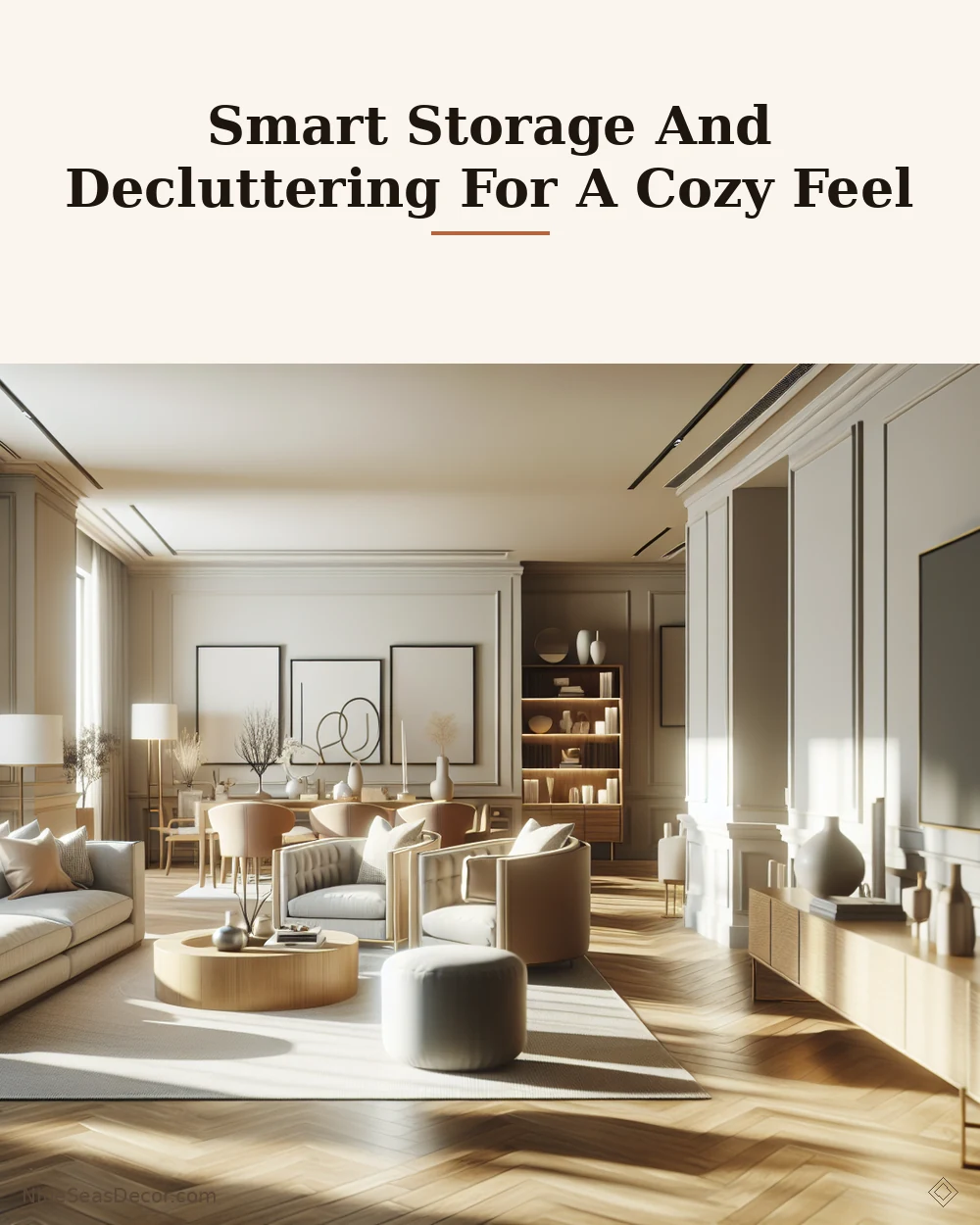
Clutter is the enemy of coziness. I want to be very clear about this because it trips up so many people. There is a difference between a room that is visually rich and one that is simply messy. Cozy rooms are curated and intentional. Every object has a place, and every surface has breathing room. The difference is not the number of objects but the degree of intentionality and organization behind them. A bookshelf with artfully arranged books, objects, and plants feels cozy and lived in. The same bookshelf with random objects stuffed in haphazardly feels chaotic and stressful. Smart storage is what allows you to have the warmth and personality of a collected home without the visual noise of an unorganized one.
Built in storage flanking a fireplace or running along an entire wall is the gold standard for living room storage because it uses vertical space efficiently and looks intentional and architectural. A custom built in unit running (12 to 16 linear feet) typically costs ($3,000 to $8,000) installed, while IKEA Billy bookcase hacks using the same footprint can achieve a similar look for ($800 to $2,500) in materials. For rooms without the budget or architecture for built ins, media consoles with enclosed storage, ottomans with storage interiors, and baskets and bins in natural materials provide excellent concealed storage.
THE CURATED BOOKSHELF: PERSONALITY WITHOUT CHAOS
A well styled bookshelf is one of the most powerful tools for creating a cozy, personal living room. The technique professional stylists use is called bookshelf vignette styling. Start by removing everything from the shelf. Then replace approximately 60% of the shelf capacity with books, arranged both vertically and horizontally (stacked books create visual variety and allow you to use them as pedestals for objects). Use the remaining 40% for decorative objects, plants, and personal items, grouping objects in odd numbers (three or five) for a naturally balanced look. Vary the height of objects to create a dynamic silhouette. The key is negative space. Leave some areas deliberately empty or sparse. This breathing room is what separates a styled shelf from a stuffed one, and it is counterintuitively what makes the whole arrangement feel richer and more considered.
HIDDEN STORAGE SOLUTIONS FOR A TIDY COZY ROOM
The most cozy living rooms appear effortlessly relaxed, but there is usually serious hidden storage infrastructure behind that appearance. Ottomans with interior storage (typically 18×18 to 24×24 inches) provide a place for remote controls, throw blankets, board games, and children’s toys that might otherwise create clutter. A quality storage ottoman costs ($150 to $600) and does double duty as a footrest, extra seating, and coffee table surface when topped with a tray. Basket storage in natural materials like seagrass, wicker, or woven cotton is another powerful tool. A set of three matching baskets tucked under a console table or inside a bookshelf costs ($60 to $200) and can swallow an enormous amount of visual clutter while actually adding to the room’s textural warmth. The rule is simple: everything that doesn’t contribute to the cozy aesthetic needs a designated hidden home.
MANAGING CABLES AND TECHNOLOGY FOR A SERENE LOOK
Technology is necessary in most living rooms, but exposed cables and electronic clutter are profoundly un cozy. Cable management is one of those things that takes an afternoon and makes a permanent difference to how relaxed a room feels. Use cable raceways or cord concealers (available for $15 to $50 at hardware stores) to bundle and hide cables running down walls or along baseboards. Consider a media console with cable management cutouts, which routes cables internally and keeps the front face clean. If your television is wall mounted, running cables in wall is the most professional solution and costs ($100 to $300) for a licensed electrician to create an in wall cable management system. For smart home devices and charging stations, a charging station drawer or box keeps the inevitable tangle of phone cables and remotes completely out of sight.
Finishing Touches That Make A Cozy Living Room Feel Complete
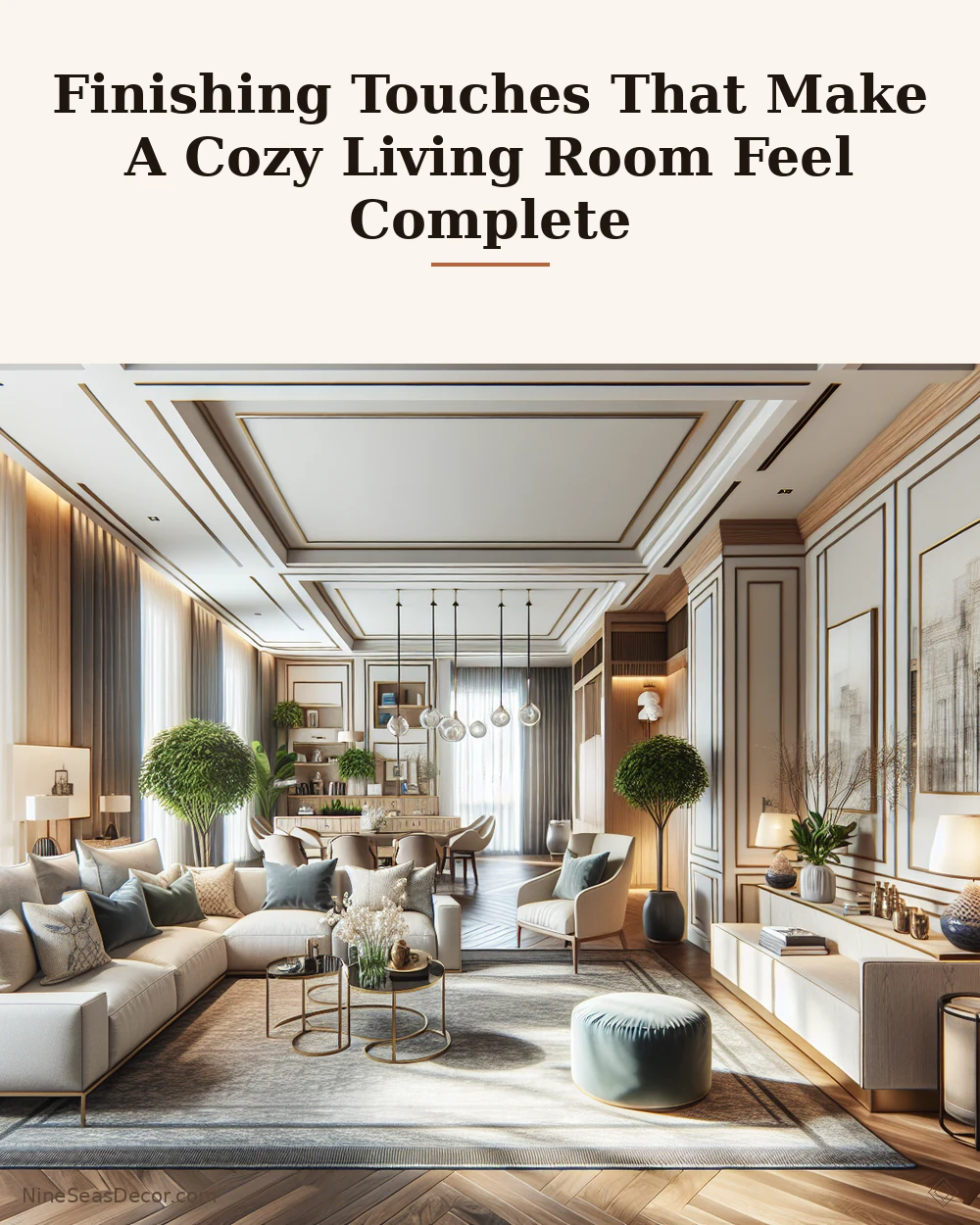
The difference between a well furnished room and a truly cozy living room often comes down to the finishing touches, the small scale, personal, sensory details that signal to your brain and body that this is a place made for human comfort and joy. These are the elements that are hardest to systematize because they are deeply personal, but there are principles that guide the most successful cozy finishing touches across many different personal styles.
Scent is the most underused tool in home design and one of the most powerful. Our olfactory system is directly connected to the limbic system, the emotional center of the brain, which means smell triggers emotional and physical responses faster and more viscerally than any other sense. A living room that smells subtly of warm vanilla, sandalwood, cedar, or beeswax candles will register as cozy before a person even processes any visual information about the room. Candles are the classic solution. Soy or beeswax candles in warm fragrance families cost ($20 to $85) and burn for (40 to 80 hours). Reed diffusers provide a consistent low level scent and cost ($25 to $60). The key is subtlety: you want a whisper of warmth, not an overwhelming wave.
PERSONAL OBJECTS AND THE WARMTH OF INDIVIDUALITY
The most cozy rooms in the world share one quality: they look lived in by real humans with real histories and interests. Personal objects, family photographs in thoughtfully curated gallery walls, inherited pieces mixed with new purchases, collections of objects that reflect genuine interests, are what separate a cozy home from a cozy hotel room. The hotel is technically comfortable but it lacks the human warmth of the specific and personal. When styling your living room, resist the temptation to buy an entirely matching set of generic decorative objects. Instead, mix a few meaningful personal items into your styled vignettes. A favorite book, a souvenir from a meaningful trip, a piece of art made by someone you love. These objects cost nothing to incorporate but contribute enormously to the feeling that this room belongs to specific, beloved people. According to the National Association of Realtors (NAR) 2024 Profile of Home Buyers and Sellers, homes staged with personal and authentic character elements received offers averaging 6.3% higher than identically priced homes staged in a generic, depersonalized style.
PLANTS AND ORGANIC ELEMENTS FOR LIVING WARMTH
Indoor plants bring something to a living room that no other decorative element can replicate: actual life. The movement of leaves in air currents, the rich green and brown tones, the organic irregular shapes, all of these contribute to a sense of aliveness and warmth that is almost universally perceived as cozy. For living rooms, the most effective plant choices combine visual impact with practical low maintenance care. A large fiddle leaf fig in a (10 to 14 inch) pot makes a dramatic statement and costs ($50 to $150). A sculptural snake plant in a beautiful ceramic pot is virtually indestructible and costs ($20 to $80). Trailing pothos on a high shelf or bookcase adds a lush, organic quality and costs just ($8 to $25). Cluster plants in groups of three for maximum visual impact, mixing heights and leaf shapes for variety. Even fresh cut flowers in a simple vase, refreshed weekly for ($10 to $30), add enormous warmth to a living room vignette.
SEASONAL UPDATES: KEEPING COZINESS FRESH ALL YEAR
One of the smartest things I’ve learned from professional interior designers is the practice of seasonal living room refreshes. A cozy living room in January feels different from a cozy living room in August, and adjusting your accessories seasonally keeps the room feeling intentional and fresh without a full redesign. The trick is to invest in a core of permanent pieces (sofa, rug, main lighting, curtains, furniture) that work year round, and then rotate a secondary layer of accessories seasonally. In autumn and winter, bring in heavier textiles (chunky knit throws, velvet pillows), warmer colors (rust, burgundy, deep green), more candles, and richer textures. In spring and summer, swap to lighter linens, fresher greens and blues, more plants, and lighter window

Hi, I’m Sophia Rose. I believe every home tells a story. At Nine Seas Decor, I share creative ideas, budget-friendly tips, and modern trends to help you turn your living space into a sanctuary. Let’s make your home beautiful, one corner at a time!