
Discover the best small living room ideas for 2026. Expert tips on layout, furniture, color, and storage to maximize every square foot of your space.
small-living-room-ideas-2026
Let’s be honest. You’ve stood in your living room, looked around at the cramped furniture, the awkward dead corners, and the sofa that somehow makes the whole room feel like a storage unit, and you’ve thought “there has to be a better way.” Yeah, I’ve seen this mistake a thousand times. Homeowners pour money into new furniture or a fresh coat of paint without ever addressing the root problem: they’re treating a small living room like it’s a large one. The result is a space that feels suffocating, cluttered, and impossible to relax in, no matter how nice the individual pieces actually are.Here’s what the research actually tells us. According to a 2023 study published in the Journal of Environmental Psychology, spatial perception in residential interiors is heavily influenced by furniture scale, color temperature, and light distribution. Homeowners who addressed all three of these factors simultaneously reported significantly higher comfort levels and perceived their rooms as up to 30% larger than rooms with identical square footage that had not been optimized. That’s not a small number. That’s the difference between a room you avoid and a room you genuinely love spending time in.
This guide is going to walk you through everything you need to know about making a small living room work harder, look bigger, and feel like a real sanctuary. We’re covering furniture selection and placement, color strategy, lighting techniques, storage solutions, layout planning, and the finishing touches that pull everything together. Whether your living room is a tight (10×12 feet) urban apartment space or a more modest (12×16 feet) suburban room that just never came together, these ideas apply directly to your situation.
I’m Sophia Rose, and I’ve been writing about home decor for NineSeasDecor.com long enough to have tested these principles in real homes, with real budgets, and real families. I’m not pulling ideas from a design textbook. I’m sharing what actually works when you’re standing in a room with (150 sq ft) of floor space and a pile of IKEA boxes. I’ve also compiled insights from the National Kitchen and Bath Association, Houzz research reports, and leading environmental design journals so you’re getting advice that’s grounded in both experience and evidence.
Understanding Your Small Living Room Layout Before You Buy Anything
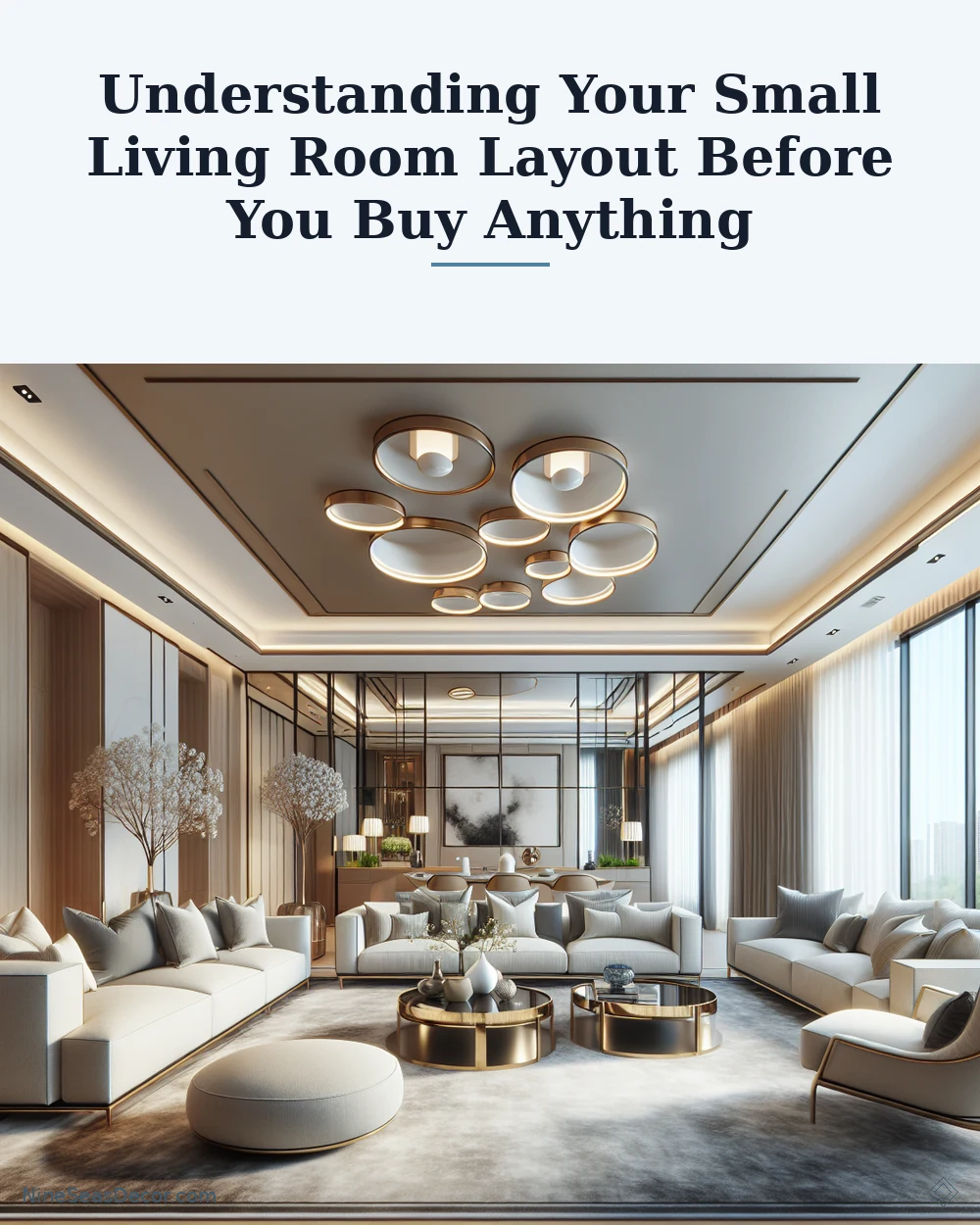
Before you order a single throw pillow or slap a new paint color on the walls, you need to get serious about your room layout. This is the step that most homeowners skip entirely, and it’s exactly why so many small living rooms feel chaotic and cramped even after a “refresh.” The layout is the foundation. Everything else is decoration.
Start by measuring your room precisely. Grab a tape measure and write down the exact dimensions, including the location of every door swing, every window sill, every outlet and switch, and every architectural quirk like bay windows or fireplace protrusions. A typical small living room in a US home runs between (10×12 feet) and (13×15 feet). That gives you somewhere between (120 sq ft) and (195 sq ft) to work with, which is genuinely workable if you approach it strategically.
According to the National Kitchen and Bath Association (NKBA) 2024 Design Trends Report, one of the most common layout errors in small living spaces is blocking natural traffic flow paths. The NKBA recommends a minimum of (36 inches) of clear walkway through any living area, with (42 to 48 inches) being the comfortable ideal. When furniture crowds these pathways, the room doesn’t just look small. It physically feels stressful to move through.
The three most effective layout strategies for small living rooms are the floating furniture arrangement, the parallel seating layout, and the L-shaped configuration. Floating furniture means pulling sofas and chairs away from the walls by (6 to 12 inches), which counterintuitively makes rooms feel larger by creating breathing room and depth. The parallel layout works well in narrow rooms (under 11 feet wide), placing seating on two facing walls. The L-shaped configuration is ideal for rooms with an open floor plan connection to a dining area.
HOW TO MEASURE AND MAP YOUR SPACE LIKE A PROFESSIONAL
Mapping your space does not require expensive software, though free tools like RoomSketcher and Planner 5D are genuinely helpful. Start with graph paper if that’s what you have. Use a scale of one square equals (1 foot) and draw your room’s exact footprint. Mark every window (noting the sill height from the floor, typically (18 to 30 inches)), every door (noting which direction it swings, since a standard interior door needs a (30 to 36 inch) clearance arc), and every electrical outlet. Once you have this map, cut out scaled paper furniture pieces before buying anything. This takes maybe an hour and saves you from the $800 sofa that doesn’t fit. Real designers do this every single time, no exceptions.
THE FURNITURE PLACEMENT RULES THAT CHANGE EVERYTHING
There are three rules I give every homeowner working with a small living room layout. Rule one: the sofa back should never block a window unless absolutely unavoidable, since windows are your primary source of natural light and perceived depth. Rule two: your coffee table should sit (15 to 18 inches) from the front edge of your sofa, close enough to reach easily, far enough to walk comfortably. Rule three: every piece of seating should have a clear sightline to the room’s focal point, whether that’s a fireplace, a TV wall, or a large window. When these three rules are followed consistently, rooms feel intentional and spacious rather than accidental and cramped.
CREATING ZONES IN A SMALL OPEN PLAN LIVING ROOM
Open plan living spaces come with a specific challenge: defining a living zone without physical walls. The most effective tool here is a well-chosen area rug. For a small living room zone within an open plan space, you want a rug that’s at least (8×10 feet), large enough that all front legs of your seating furniture sit on it. A smaller rug, say (5×7 feet), makes the zone feel disconnected and actually shrinks the perceived size of the space. Beyond rugs, you can use consistent lighting zones, a low bookshelf used as a room divider, or a subtle change in paint color or wallpaper on one wall to signal “living area starts here.”
Choosing Furniture That Actually Fits: Scale, Proportion, and Multifunctionality
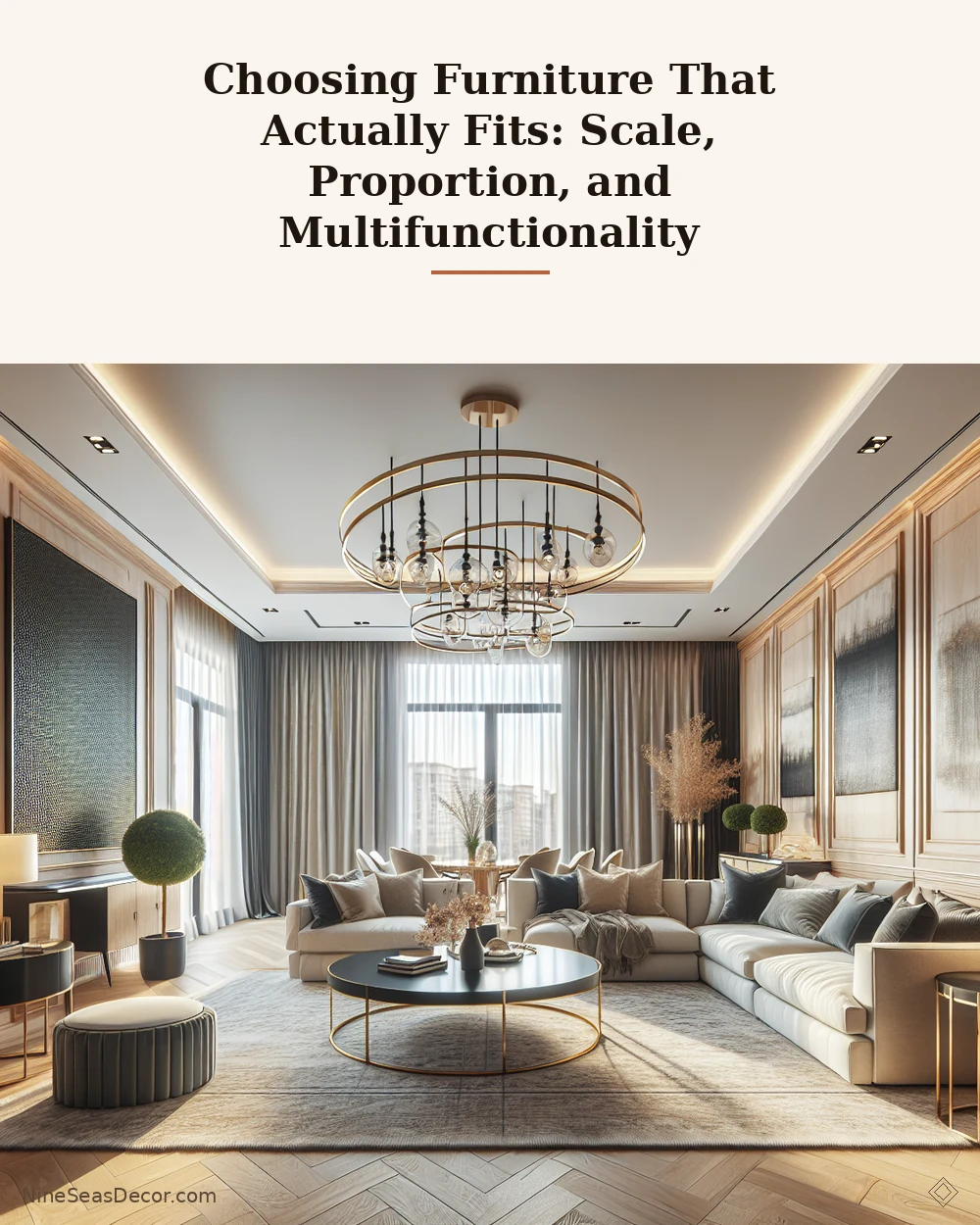
Furniture scale is where small living room projects most often go catastrophically wrong. I’ve walked into rooms where a perfectly lovely homeowner has purchased a sectional sofa that seats eight people and crammed it into a (12×14 foot) room. The sofa takes up (80%) of the floor space, there’s no room for a coffee table, and somehow the homeowner is surprised that the room feels tiny. Yeah, this is the mistake. The furniture isn’t wrong. The scale is wrong.
For a small living room, your primary seating piece, typically a sofa or loveseat, should not exceed (84 inches) in length for rooms under (200 sq ft). In rooms between (120 and 150 sq ft), a loveseat at (54 to 72 inches) is usually the smarter choice. Pair it with one or two armless accent chairs rather than a full second sofa, and you’ll have comparable seating capacity with dramatically more visual and physical breathing room.
According to the 2024 Houzz Interior Design Trends Study, homeowners in the United States are increasingly prioritizing multifunctional furniture, with 61% of surveyed respondents saying they actively sought furniture pieces that served more than one purpose during their most recent living room update. This trend is being driven directly by shrinking average living room sizes in new construction homes, which have decreased from an average of (330 sq ft) in 2005 to approximately (250 sq ft) in 2024.
The good news is that the multifunctional furniture market has genuinely caught up with demand. You can now find beautifully designed pieces that are also hardworking.
THE BEST SOFA STYLES FOR SMALL LIVING ROOMS
For small spaces, look for sofas with exposed legs rather than a solid skirted base that goes to the floor. Legs (4 to 6 inches) high create visual space beneath the sofa, making the floor feel larger and allowing light to travel under the piece. Tight back sofas (without loose back cushions) tend to have a slimmer profile and read as less bulky. The track arm style, where the arm is narrow and squared rather than rounded and rolled, saves (3 to 5 inches) on each side compared to traditional rolled arms. That’s up to (10 inches) of extra length recovered on a (72 inch) sofa. Colors that work particularly well in small spaces include light neutrals, soft blues, and warm greiges. For upholstery, consider Sherwin-Williams Accessible Beige (SW 7036) as a paint match reference when selecting sofa fabric tones.
COFFEE TABLES, SIDE TABLES, AND THE POWER OF TRANSPARENCY
Here’s a trick that professional designers use constantly in small living rooms: choose a glass or acrylic coffee table. A transparent lucite or tempered glass coffee table takes up zero visual weight in a room. You see straight through it to the floor and the furniture beyond, which makes the room read as significantly more open. Sizes between (36 and 48 inches) in length work well for most small living room configurations. If you prefer the warmth of wood or metal, opt for a nesting table set instead of a single large table. Two or three nesting tables can be spread out when you need them and tucked together when you don’t, reclaiming (8 to 12 square feet) of floor space instantly. Prices for quality nesting table sets run ($150 to $600) depending on material and brand.
STORAGE OTTOMANS, BUILT INS, AND HIDDEN STORAGE SOLUTIONS
Every piece of furniture in a small living room should earn its keep by doing at least two jobs. A storage ottoman serves as a coffee table, extra seating, and a storage chest simultaneously. For a (16×20 inch) ottoman used as a coffee table, add a small tray on top to create a stable surface for drinks and books. Built in shelving flanking a fireplace or TV wall can add enormous storage capacity without consuming any additional floor space. A standard built in bookcase measuring (12 inches deep, 84 inches tall, and 24 to 36 inches wide) holds an extraordinary amount of books, decor, and media equipment while costing between ($800 and $2,500) depending on whether you hire a carpenter or use IKEA BILLY bookcase hacks, which run significantly less at ($200 to $600) for a comparable installation.
Color Strategy: Paint Colors That Make Small Living Rooms Feel Larger
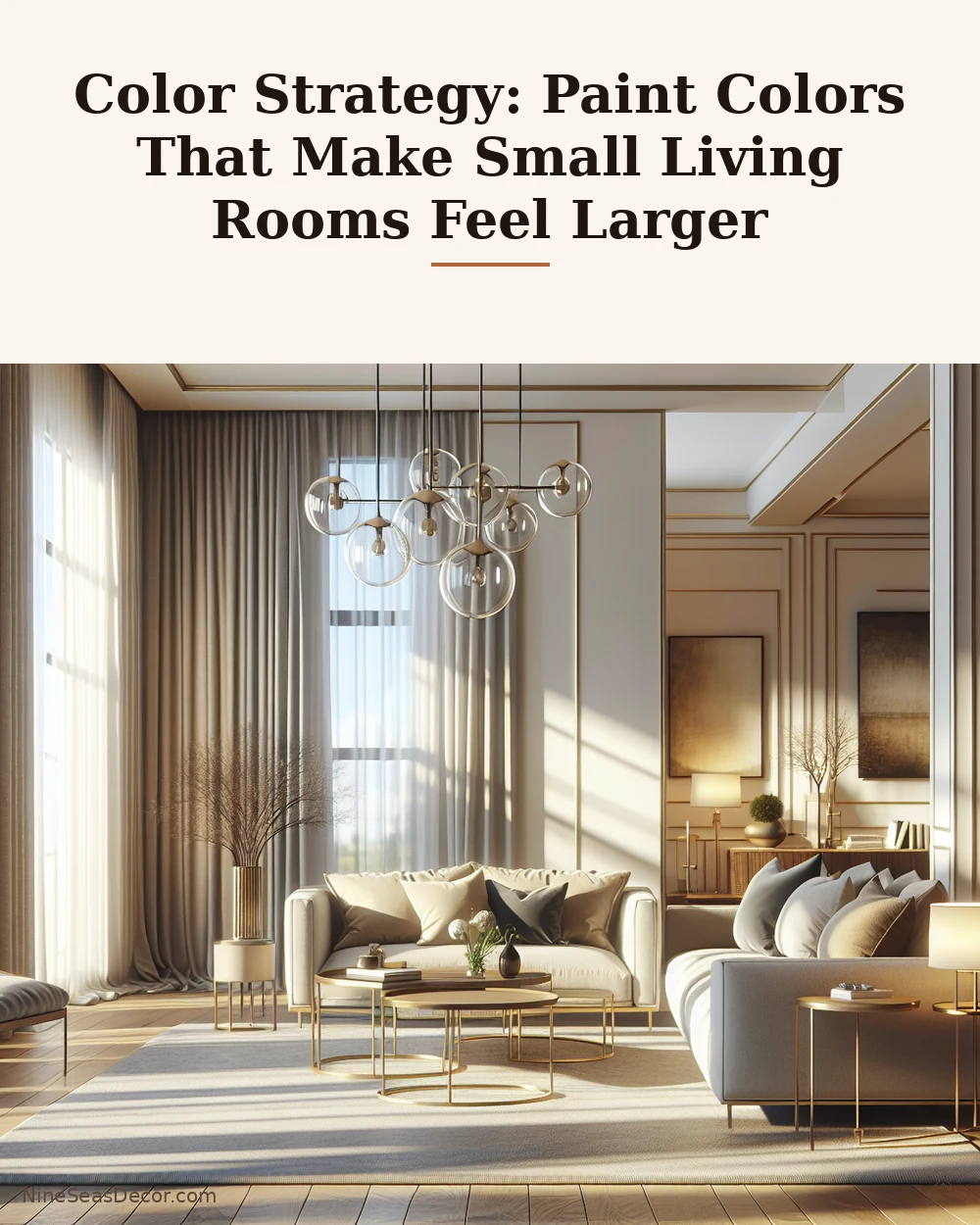
Color is one of the most powerful tools you have for transforming the perception of space in a small living room, and it’s also one of the most frequently misunderstood. The old rule was simple: paint everything white and the room will feel bigger. That advice isn’t wrong exactly, but it’s incomplete, and applying it without nuance often produces rooms that feel cold, clinical, and strangely flat rather than open and inviting.
The truth is more interesting. Light reflectance value (LRV) matters more than whether a color is technically light or dark. LRV is measured on a scale of 0 (absolute black) to 100 (pure white). For small living rooms, you generally want wall colors with an LRV of (55 or higher) to maximize how much light bounces around the room. But some deeper colors, used strategically, can actually create perceived depth and dimension that make a room feel larger than a flat white would.
The technique is called monochromatic layering. You choose one base color and use it in multiple values and finishes throughout the room. Paint the walls in a light version of the color, choose upholstery in a mid-tone version, and use decor accents in the deepest version. This creates a sense of depth and intentionality that reads as sophisticated and spacious rather than cramped.
THE BEST SPECIFIC PAINT COLORS FOR SMALL LIVING ROOMS IN 2026
After years of recommending paint colors to readers and seeing the results in real homes, here are my top picks for small living rooms in 2026. Sherwin-Williams Accessible Beige (SW 7036) remains a perennial favorite with an LRV of 58, warm enough to feel inviting, light enough to open a room up beautifully. Benjamin Moore Pale Oak (OC-20) with an LRV of 69 reads as a warm almost neutral that photographs beautifully and works with wood tones, metals, and textiles equally well. For something more dramatic without sacrificing light, Sherwin-Williams Upward (SW 6239), a soft blue with strong grey undertones, creates remarkable perceived depth. Benjamin Moore Chantilly Lace (OC-65) with an LRV of 92 is the true white option when you want maximum brightness without any pink, yellow, or grey cast.
ACCENT WALLS AND CEILING COLOR TRICKS FOR SMALL SPACES
Two underused color tricks can dramatically change how a small living room feels. First, painting the ceiling a slightly lighter version of the wall color (rather than standard white) makes the ceiling appear to recede, adding perceived height. In a room with (8 foot ceilings), this can make the space feel like it has (9 or even 10 foot ceilings) visually. Second, painting a far accent wall, the wall you see directly when you enter the room, in a slightly deeper tone draws the eye forward and creates a sense of depth that lengthens the room. For a room painted in Sherwin-Williams Accessible Beige (SW 7036) on three walls, try Sherwin-Williams Darning Needle (SW 9174) on the accent wall for a perfectly calibrated tonal contrast.
WHEN TO USE BOLD COLOR IN A SMALL LIVING ROOM
Bold color in a small living room is absolutely possible and often spectacular when executed correctly. The key is using deep color on all four walls and the ceiling simultaneously, a technique called color drenching. When the entire room is wrapped in one rich color, the walls seem to dissolve and the space feels intimate and intentional rather than small and confined. This works particularly well with deep greens like Sherwin-Williams Jasper Stone (SW 9132), warm navies, and complex terracotta tones. The trick is keeping furniture and textiles relatively light to maintain contrast. Color drenching projects typically cost ($400 to $900) in paint and labor for an average small living room of (150 sq ft), which makes it one of the highest impact and most affordable transformations available.
Lighting Strategies That Visually Expand Your Small Living Room
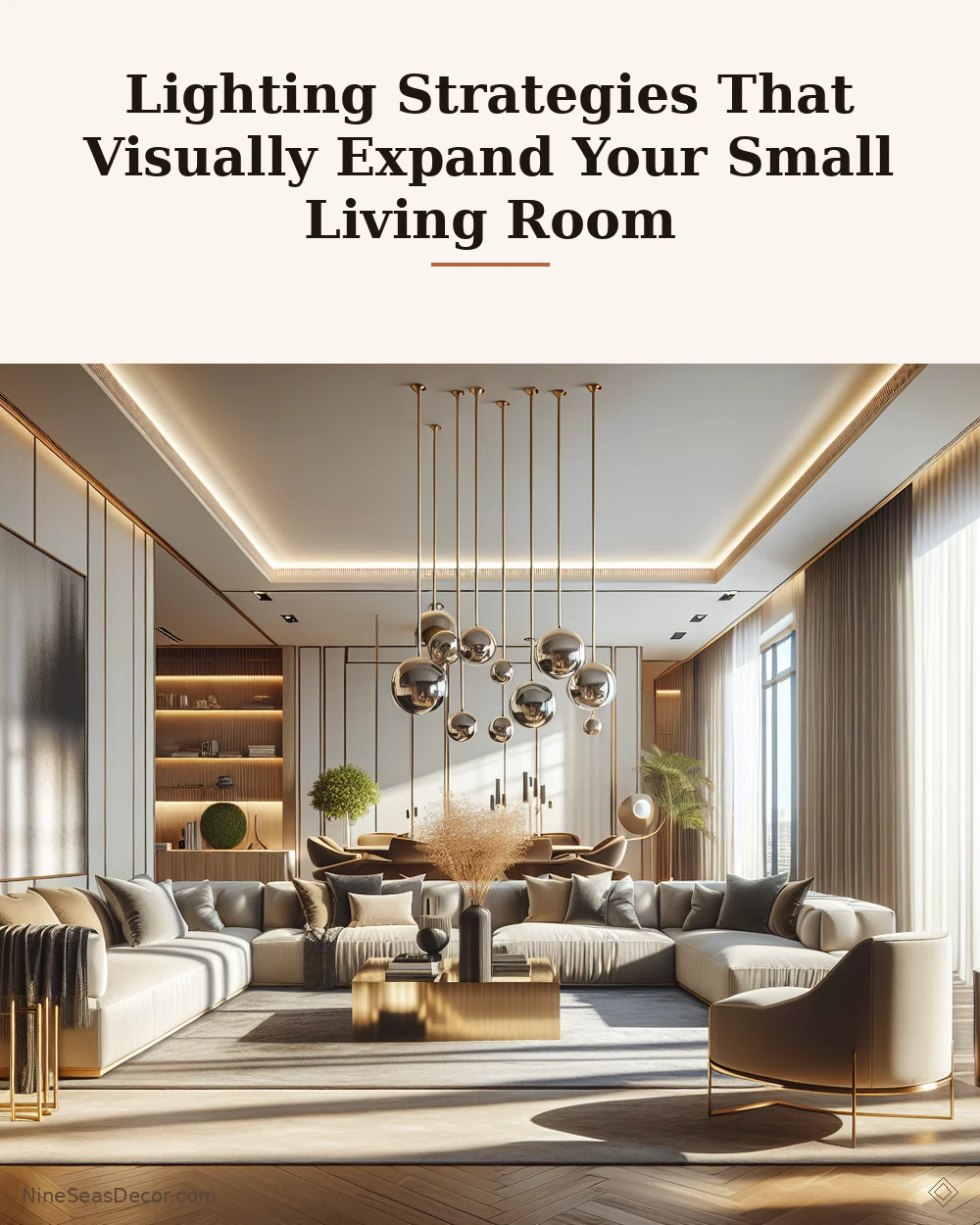
Lighting might be the most underestimated element in small living room design, which is genuinely surprising given how dramatically it affects the perception of space. A small living room with excellent layered lighting will always feel larger and more luxurious than a room twice its size lit by a single overhead fixture. I’ve walked into (250 sq ft) living rooms that felt expansive and airy, and (400 sq ft) rooms that felt like caves. The difference was almost entirely lighting.
The principle that governs good small space lighting is called layered lighting design. It involves three distinct categories working together: ambient lighting (overall illumination), task lighting (focused light for specific activities like reading), and accent lighting (decorative light that adds depth and dimension). Most small living rooms have only ambient lighting, usually a single ceiling mounted fixture or recessed lights, and that’s exactly why they feel flat and small.
AMBIENT LIGHTING OPTIONS FOR LOW CEILING SMALL LIVING ROOMS
Many small living rooms, particularly in older homes and apartments, have (8 foot) or even (7.5 foot) ceilings, which rules out elaborate chandelier installations. For these spaces, flush mount ceiling fixtures and recessed lighting are your primary ambient sources. Recessed lights should be spaced (4 to 6 feet) apart for even coverage and positioned (2 feet) from walls to wash the walls with light rather than creating a pool of light in the center of the room. Wall washing is critical because lit walls appear to recede, making the room feel wider. Budget for recessed lighting installation runs ($200 to ($400) per light including electrical work, with a typical small living room needing (4 to 6) fixtures for a total cost of ($800 to $2,400).
FLOOR LAMPS, TABLE LAMPS, AND ACCENT LIGHTING PLACEMENT
Floor lamps placed in corners of a small living room serve two purposes simultaneously. They illuminate a dark corner that would otherwise look like dead space, and they draw the eye upward toward the ceiling, adding perceived height to the room. An arc floor lamp that extends over a seating area is particularly useful in small rooms because it provides task lighting without requiring a side table. Table lamps at (24 to 30 inches) tall work best on side tables, and in small rooms, consider using matching lamps on both ends of a sofa to create symmetry and perceived width. For accent lighting, LED strip lights placed behind a TV console, under floating shelves, or inside built in bookcases add depth and a warm glow that makes the entire room feel more spacious. LED strip kits run ($25 to $80) for a standard installation.
MAXIMIZING NATURAL LIGHT IN A SMALL LIVING ROOM
No artificial lighting strategy outperforms good natural light management. For small living rooms, start with window treatments. Heavy drapes hung at ceiling height (even on windows that sit at (36 inches) from the floor) make windows appear taller and let in maximum light. Mount curtain rods (4 to 6 inches) above the window frame and extend the rod (6 to 10 inches) beyond each side of the frame. This allows drapes to stack off the window glass entirely when open, maximizing the light opening. Choose sheer linen or cotton curtains in white or off-white tones to diffuse light softly rather than blocking it. Mirror placement is equally critical. A large mirror (at least (24×36 inches)) placed directly opposite a window reflects natural light deep into the room, effectively doubling the perceived brightness. Mirrors cost anywhere from ($80 for a basic frameless option to ($600 or more for a statement framed piece.
Smart Storage Solutions for Small Living Rooms
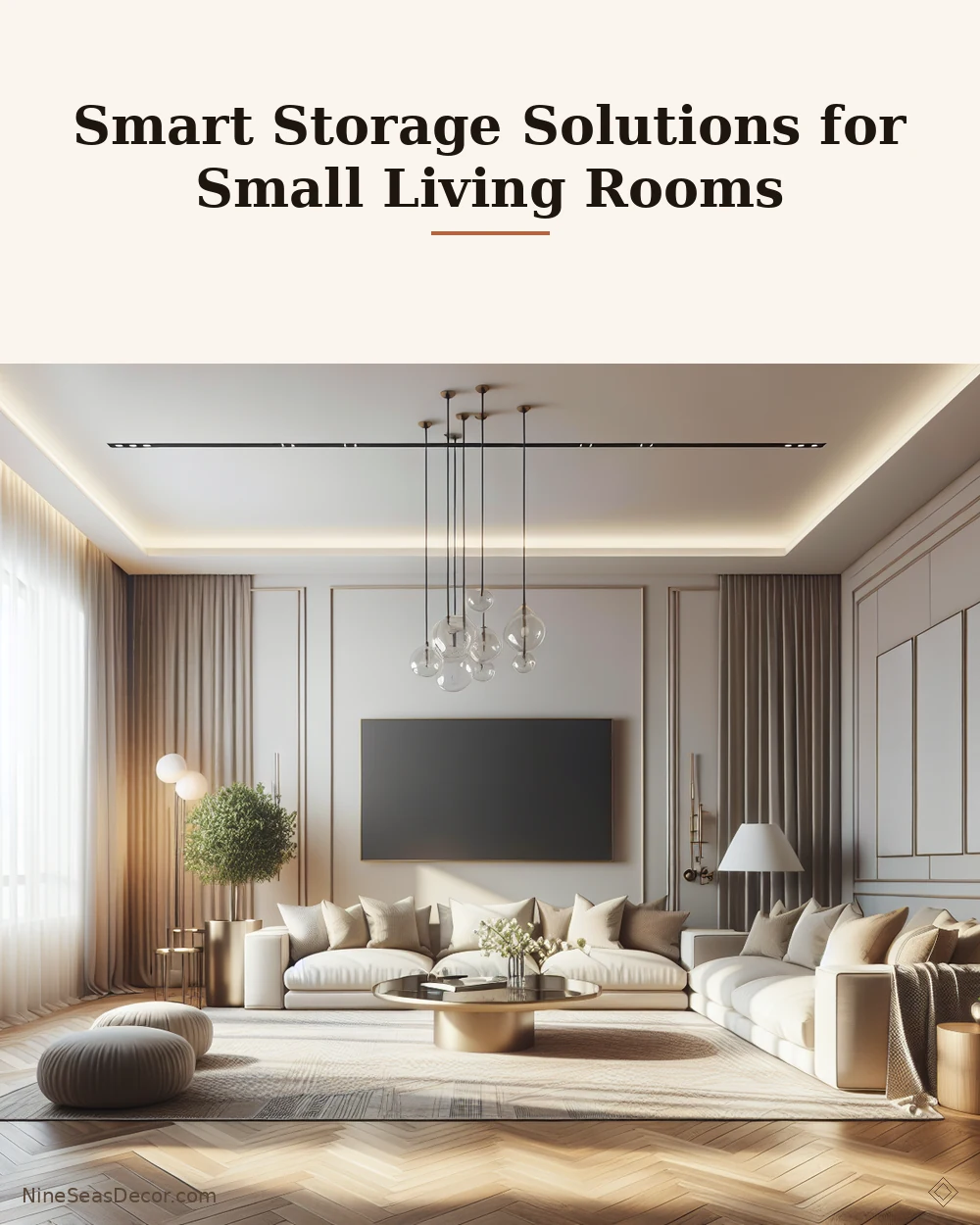
Storage in a small living room is not about cramming more stuff into less space. It’s about making storage invisible, intentional, and integrated into the design so that the room feels curated rather than cluttered. According to a 2022 survey conducted by Houzz, 73% of homeowners who completed a small living room renovation listed “not enough storage” as their primary complaint before the renovation, while only 18% listed it as a concern after addressing built-in and multifunctional storage solutions. The transformation happens when you stop treating storage as an afterthought and start planning it as a design feature.
The most effective storage strategies for small living rooms operate on the principle of vertical expansion. Your walls extend from the floor to the ceiling, typically (8 to 10 feet). Most homeowners use only the bottom (3 to 4 feet) of that vertical space, leaving an enormous amount of storage real estate completely unused. Thinking vertically is the single biggest mindset shift that separates a well-organized small living room from a chaotic one.
BUILT IN SHELVING AND WALL MOUNTED STORAGE SYSTEMS
Built in shelving is the gold standard for small living room storage because it uses wall depth (typically (4 to 12 inches)) rather than floor space. A floor to ceiling built in unit flanking a TV or fireplace can provide (40 to 80 linear feet) of shelving in a (12×14 foot) room without consuming a single square foot of additional floor area. Professional custom built-ins cost ($1,500 to $5,000) for a typical installation. IKEA BILLY bookcase systems cost ($400 to $1,200) for a comparable floor-to-ceiling setup and can be customized with doors, glass fronts, and integrated lighting. Floating wall shelves are a more budget-friendly option at ($15 to $30 per linear foot) installed, and they work particularly well in echelon arrangements (shelves staggered at different heights) that add visual interest while providing storage.
HIDDEN STORAGE AND FURNITURE DOUBLES
The most elegant storage solutions in small living rooms are the ones you don’t notice at all. Hidden storage furniture includes storage ottomans (which hold blankets, remotes, and board games while doubling as coffee tables and extra seating), sofa tables with drawers, media consoles with enclosed cabinet doors (which hide electronics, cables, and media equipment behind a clean face), and window seat benches with lift-up storage underneath. A window seat bench spanning a (72 inch) window provides roughly (18 cubic feet) of enclosed storage, enough to hold seasonal items, extra bedding, or a significant toy collection. Custom window seat builds cost ($800 to $2,500) while flat pack options run ($300 to $700).
DECLUTTERING STRATEGIES SPECIFICALLY FOR SMALL LIVING ROOMS
No amount of clever storage design overcomes genuine excess stuff. For a small living room to feel spacious and calm, the visual load must be managed actively. The rule I apply to decorative items on open shelving is the rule of three: group objects in odd numbers of three, vary height and scale within each group, and leave at least (30 to 40%) of each shelf surface completely empty. That empty space is not wasted. It’s breathing room, and it makes everything around it look more intentional and valuable. For art on walls, choose one to three larger pieces over a collection of small frames. In a (12×14 foot) room, a single piece of art at (36×48 inches) makes a stronger, more spacious statement than eight small prints crowding a wall.
Decorating and Styling a Small Living Room: The Finishing Touches
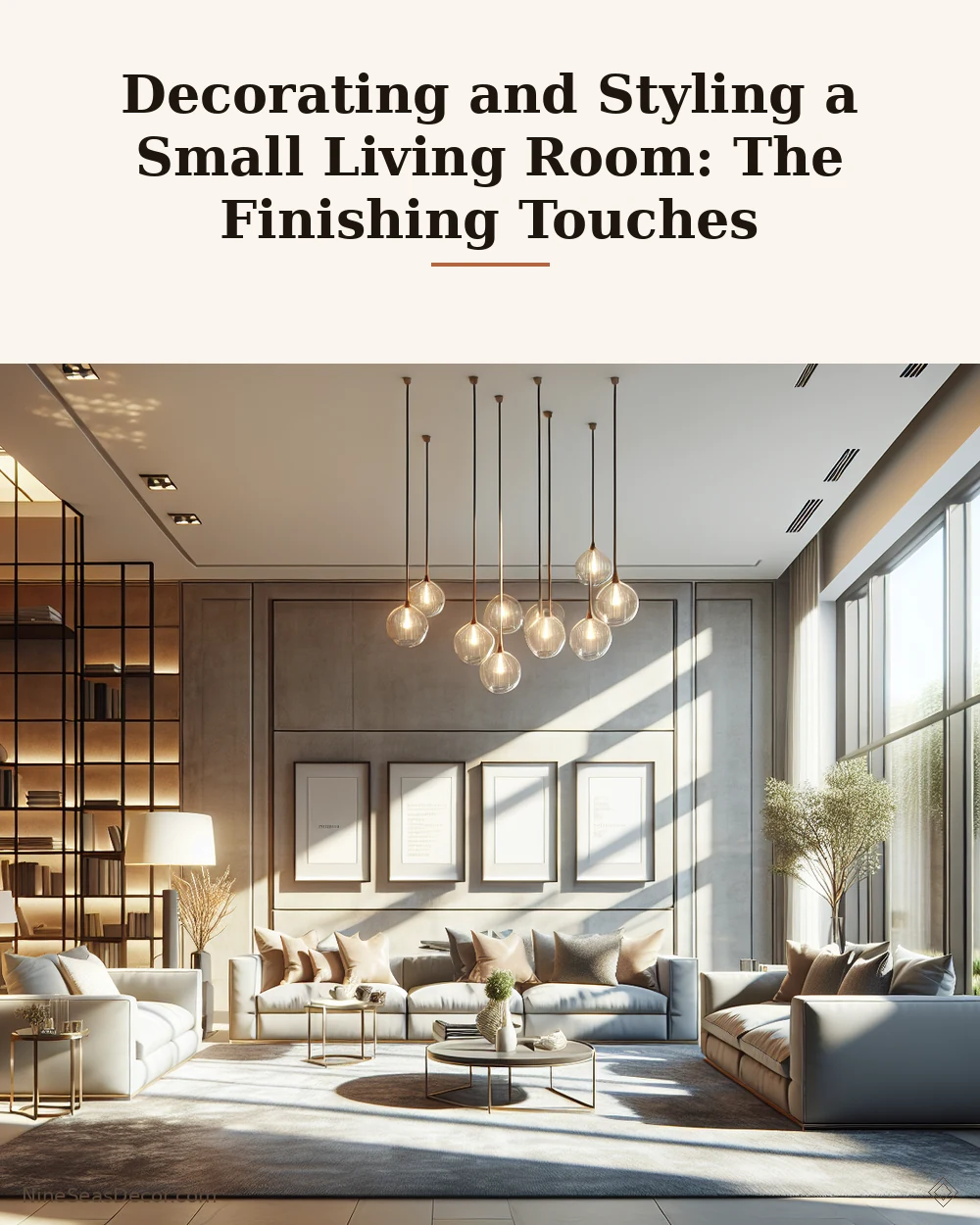
You’ve addressed layout, furniture scale, color, lighting, and storage. Now we get to the fun part: the styling and decorating decisions that give your small living room its personality and finish. This is where homeowners sometimes undo all the good work they’ve done by over-accessorizing, under-accessorizing, or making choices that don’t scale correctly for the room. Getting the finishing touches right is what separates a magazine-worthy small living room from one that just looks “okay.”
The guiding principle for styling a small living room is intentional restraint. Every item in the room should be chosen deliberately, scaled appropriately, and earn its visual weight by contributing to the overall harmony of the space. This doesn’t mean your room needs to be minimal or cold. It means everything that’s there should be there for a reason.
AREA RUGS: SIZING, PLACEMENT, AND PATTERN CHOICES
An area rug that’s too small is one of the most common mistakes I see in small living rooms. In a (12×15 foot) living room, the minimum rug size should be (8×10 feet). The front legs of all seating furniture should sit on the rug, anchoring the conversation area and defining the zone. A rug where only the coffee table sits, with all furniture legs floating on bare floor around it, makes the seating arrangement look disconnected and actually makes the room appear smaller. For pattern choices, diagonal or chevron patterns in a rug can visually elongate a room by directing the eye along the longer axis. Solid rugs or very subtle textures like jute or sisal maintain a calm visual floor plane that doesn’t compete with other design elements. Quality area rugs in appropriate sizes run ($200 to $1,200) for synthetic options and ($600 to $4,000) for natural fiber or wool rugs.
MIRRORS AS DECORATIVE AND FUNCTIONAL DESIGN TOOLS
We touched on mirrors in the lighting section, but their decorative role deserves its own discussion. A large mirror is arguably the single highest-impact piece of decor you can add to a small living room. Beyond reflecting light, a well-placed mirror creates the illusion of an additional room or view, essentially doubling the perceived depth of the space. Lean a large floor mirror (at least (24×72 inches)) against a wall opposite the primary window for maximum effect. Alternatively, a gallery wall of mixed mirrors, combining different frames and shapes in a cohesive arrangement, adds both visual interest and light-reflective surface area. Avoid placing mirrors where they reflect a cluttered corner or a blank wall. The mirror should reflect the best-looking part of the room, since that’s what doubles in the viewer’s perception.
TEXTILES, PLANTS, AND PERSONAL TOUCHES THAT ADD WARMTH WITHOUT CLUTTER
Warmth and personality in a small living room come from textiles and organic elements, not from accumulating more objects. Two to three well-chosen throw pillows (scaled at (18×18 or 20×20 inches) for a standard sofa) add color and texture without visual noise. A single throw blanket draped casually over one sofa arm adds lived-in warmth. For plants, one or two statement plants (a fiddle leaf fig, monstera, or olive tree in the (3 to 5 foot) height range) make far more impact than six small plants scattered around. Large-scale plants also draw the eye upward, adding perceived height to the room. Stylish planters run ($40 to $200) and a quality indoor tree costs ($80 to $250) from most garden centers or online retailers. Combined, these organic additions make a small living room feel like a curated, alive, and genuinely welcoming space.
Frequently Asked Questions
WHAT IS THE BEST PAINT COLOR FOR A SMALL LIVING ROOM TO MAKE IT LOOK BIGGER?
The best paint colors for making a small living room appear larger are those with a high light reflectance value (LRV) of (55 or above), warm undertones, and the ability to coordinate easily with wood tones and textiles. My top recommendations include Sherwin-Williams Accessible Beige (SW 7036) with an LRV of 58, Benjamin Moore Pale Oak (OC-20) with an LRV of 69, and Benjamin Moore Chantilly Lace (OC-65) with an LRV of 92 for maximum brightness. The key technique is monochromatic layering, using the same color family in multiple tones throughout the room to create depth without visual fragmentation. A gallon of quality interior paint costs ($65 to $95) from Sherwin-Williams or Benjamin Moore, and a full room paint job including labor runs ($400 to $900) for a standard (150 sq ft) living room.
WHAT SIZE RUG SHOULD I USE IN A SMALL LIVING ROOM?
In a small living room, the single most important rug rule is to size up rather than down. For rooms between (120 and 180 sq ft), the minimum recommended rug size is (8×10 feet). For rooms between (180 and 250 sq ft), a (9×12 foot) rug is more appropriate. The front legs of your sofa and all accent chairs should sit on the rug surface, anchoring the furniture arrangement and defining the seating zone. A rug smaller than (6×9 feet) in a living room almost always makes the space feel smaller and the furniture arrangement look disconnected. According to interior design research published in the Journal of Environmental Psychology, properly scaled floor coverings are among the most impactful single changes homeowners can make to improve perceived room size. Quality rugs in appropriate sizes cost ($200 to $4,000) depending on material.
HOW DO I MAKE A SMALL LIVING ROOM FEEL COZY WITHOUT FEELING CLUTTERED?
Making a small living room feel cozy and clutter-free simultaneously comes down to choosing warmth through texture and layering rather than through accumulating objects. Focus on (2 to 3) quality throw pillows in complementary tones, one soft throw blanket, a single large area rug with tactile texture like wool or jute, and one or two statement plants in beautiful containers. Layer your lighting with (3 to 4) light sources at different heights rather than relying on one overhead fixture. Use warm-toned bulbs in the (2700 to 3000 Kelvin) range throughout. Keep open shelving at (30 to 40%) empty to avoid visual overload. The goal is what designers call edited coziness: the feeling of warmth and comfort without the visual noise of too many competing elements. Budget ($500 to $1,500) for a complete textile and accessory refresh.
WHAT FURNITURE SHOULD I AVOID IN A SMALL LIVING ROOM?
Several furniture types consistently make small living rooms feel more cramped and should be avoided or approached with extreme caution. Large sectional sofas over (100 inches) in length overwhelm rooms under (200 sq ft) and eliminate traffic flow. Bulky rolled-arm sofas with skirted bases to the floor add visual weight and block light at floor level. Oversized coffee tables over (50 inches) in a small seating arrangement leave less than the recommended (15 to 18 inch) clearance for movement. Tall armoires or bookcases over (84 inches) that don’t extend to the ceiling create an awkward visual gap that makes ceilings look lower. Dark solid wood furniture in large pieces can make a small room feel heavy and dim, especially if natural light is limited. Instead, opt for furniture with exposed legs, transparent materials like glass and acrylic, and light or natural wood finishes.
HOW MUCH DOES IT COST TO FULLY REDESIGN A SMALL LIVING ROOM?
The cost of a small living room redesign varies enormously depending on scope, but here are realistic budget ranges for US homeowners in 2026. A DIY refresh covering new paint, updated textiles, new lighting, and rearranged existing furniture costs ($500 to $2,000). A mid-range renovation adding new sofa and accent chairs, area rug, coffee table, lighting upgrades, and storage additions typically runs ($5,000 to $12,000). A full professional redesign with an interior designer, custom furniture, built-in storage, new lighting installation, and complete styling costs ($15,000 to $35,000) for a typical small living room of (150 to 200 sq ft). According to the 2024 NAR Remodeling Impact Report, living room renovations recoup approximately 67% of their cost in home resale value, making even mid-range investments worthwhile for homeowners planning to sell within (3 to 5 years).
HOW DO I CHOOSE THE RIGHT SIZE SOFA FOR A SMALL LIVING ROOM?
Choosing the right sofa size for a small