
bathroom-storage-ideas-2026
Let’s be honest. You’ve opened that bathroom cabinet exactly once too many times, watched three bottles of shampoo tumble into the sink, and thought “there has to be a better way.” Yeah, I’ve seen this mistake a thousand times. Homeowners invest thousands of dollars into beautiful tile work, stunning vanities, and designer fixtures, then completely forget to plan for functional bathroom storage. The result is a gorgeous bathroom that functions like a cluttered closet. Towels draped over doors, products lined up along the edge of the tub, and a cabinet under the sink that’s basically a black hole where hair dryers go to die. It doesn’t have to be this way. Whether you’re working with a tiny powder room at (35 sq ft) or a sprawling master bathroom at (120 sq ft), smart storage planning changes everything about how your bathroom feels and functions every single morning.According to a 2023 study published in the Journal of Environmental Psychology, individuals who reported living in organized, clutter-free home environments experienced measurably lower cortisol levels and rated their overall home satisfaction (23% higher) than those living in disorganized spaces. That’s not a small number. Your bathroom is often the first room you enter in the morning and the last room you’re in at night. When it’s chaotic and cluttered, that stress compounds daily. When it’s organized and thoughtfully designed, those quiet morning moments become genuinely restorative. Bathroom organization isn’t just an aesthetic preference. It’s a measurable quality of life improvement that affects your mood, your productivity, and even your stress hormones.This guide covers everything you need to know about bathroom storage ideas in 2026. We’re talking about solutions for every budget from a ($25) tension rod hack to a ($3,000 to $8,000) custom built-in storage system. You’ll find ideas for small bathrooms, large bathrooms, shared family bathrooms, and luxurious master suites. We cover over-toilet storage, vanity organization, shower storage solutions, linen closet alternatives, and the latest trends in built-in cabinetry. Every recommendation comes with real measurements, real costs, and real product guidance so you’re never left guessing.
I’m Sophia Rose, and I’ve been writing about home decor and interior design for NineSeasDecor.com for over a decade. I’ve toured hundreds of renovated bathrooms, spoken directly with National Kitchen and Bath Association (NKBA) certified designers, and helped thousands of readers transform their most frustrating rooms into their favorite ones. The advice in this guide isn’t pulled from a generic listicle. It comes from real projects, real mistakes, and real solutions that actually work in American homes in 2026. Let’s get into it.
Understanding Your Bathroom Storage Needs Before You Buy Anything
Here’s the mistake I see constantly. People see a beautiful floating shelf on Instagram, order it immediately, hang it in their bathroom, and then realize it holds exactly four things and their bathroom has forty things. Smart bathroom storage planning starts with assessment, not shopping. Before you spend a single dollar, you need to understand exactly what you’re storing, how much space you actually have, and how your household uses the bathroom on a daily basis. A single person’s bathroom has completely different storage demands than a bathroom shared by two kids under ten.
Start by doing a full bathroom inventory audit. Pull everything out from under the sink, off the shelves, out of the drawers, and lay it all on the floor or your bed. Categorize items into groups: daily use items like toothbrushes, face wash, and deodorant; weekly use items like hair masks and exfoliants; monthly or occasional items like first aid supplies and extra razors; and bulk backup stock like extra shampoo and toilet paper. According to the National Kitchen and Bath Association (NKBA) 2024 Design Trends Report, the average American bathroom contains between (85 and 120 individual items), yet most standard bathroom storage solutions are designed for roughly (40 to 60 items). That gap explains so much frustration.
Once you’ve inventoried everything, measure your available space precisely. Note your ceiling height, the dimensions of the wall beside your vanity, the space above your toilet (typically (24 to 30 inches) of usable wall space), and the square footage under your sink (usually around (12 to 18 inches deep) and (24 to 36 inches wide)). These numbers will guide every purchase decision you make. A recessed medicine cabinet requires (3.5 to 5 inches) of wall depth. An over-toilet storage tower needs at least (26 to 32 inches) of horizontal clearance. Getting these measurements right before purchasing saves you multiple return trips and a lot of frustration.
CALCULATING YOUR ACTUAL STORAGE VOLUME
Most homeowners think about storage in terms of “more shelves” without thinking about actual cubic storage volume. A more useful way to assess your needs is to calculate the total volume of what you’re storing and compare it to what your current storage provides. Daily use items should live within arm’s reach of where you use them, ideally in a (12 to 18 inch) zone around the sink or mirror. Backup items can live in higher cabinets, deep under-sink organizers, or in a hallway linen closet. When you think in terms of accessibility zones rather than just shelf space, your entire bathroom becomes more functional. This mental model, borrowed from professional organizers, can help you identify dead zones in your bathroom that could become valuable storage real estate without a single renovation.
IDENTIFYING YOUR BATHROOM STORAGE STYLE
Your storage style preference matters enormously for long-term success. Some people thrive with open shelving where everything is visible and accessible. Others feel calmer with concealed cabinet storage where clutter is hidden behind closed doors. Research from Houzz’s 2024 Bathroom Trends Study found that (68%) of homeowners who chose concealed storage reported feeling their bathroom was more relaxing, while homeowners with open shelving rated their bathroom as (40%) easier to maintain day-to-day. Neither approach is objectively better. The best approach is the one that matches your personality, your cleaning habits, and your household’s actual behavior. A family with young children, for example, often benefits from a hybrid approach with locked lower cabinets and open upper shelves for adult items.
Over-Toilet Storage Solutions That Don’t Look Like an Afterthought
The space above your toilet is one of the most consistently underutilized areas in any bathroom. We’re talking about a zone that typically offers (24 to 30 inches wide) and (48 to 60 inches of vertical height) from the tank top to the ceiling. In a (50 sq ft) bathroom, that’s genuinely significant real estate. The problem is that most over-toilet storage solutions on the market look cheap, wobbly, or completely disconnected from the rest of the room’s design. But 2026 has brought some genuinely beautiful options that feel intentional rather than like an apology for not having enough storage.
The most popular and effective approach right now is the built-in over-toilet niche. This involves framing out the wall above the toilet to create recessed shelving between the studs. The result is seamless, integrated storage that doesn’t protrude into the room at all. Cost runs ($400 to $1,200) depending on your location and the complexity of the framing. If your bathroom walls are exterior walls or contain plumbing, this approach may not be feasible, but in most cases interior bathroom walls are perfect candidates. The finished look is completely custom, and you can paint the interior of the niche a contrasting color like Benjamin Moore Black Raspberry (2072-20) for a dramatic effect, or match your wall color like Sherwin-Williams Accessible Beige (SW 7036) for a seamless, spa-like feel.
For renters or homeowners who don’t want to open walls, freestanding ladder shelves and over-toilet shelf units have improved dramatically in quality. Look for units with an adjustable base to accommodate different toilet tank heights, a minimum shelf depth of (8 to 10 inches), and solid wood or high-density MDF construction. Budget around ($80 to $350) for a quality freestanding unit. Avoid units under ($60). In my experience, they’re unstable, the shelves bow within six months, and they end up in a landfill.
USING OVER-TOILET SPACE FOR DECORATIVE STORAGE
Here’s a design truth that took me years to fully appreciate. Decorative storage is still storage. A set of beautiful woven baskets on an over-toilet shelf holds just as many rolled towels as a plastic bin, but it transforms the room aesthetically. Rattan baskets, glazed ceramic canisters, and linen fabric bins in neutral tones add texture and warmth while keeping clutter completely hidden. The rule I follow is the (70/30 rule). Fill (70%) of your visible over-toilet shelving with functional storage items styled to look beautiful, and leave (30%) as open, breathable negative space. This prevents the shelving from looking like a storage dump while still maximizing function. Group items in odd numbers (3 or 5 objects per shelf) for the most visually balanced and intentional look.
OVER-TOILET CABINET OPTIONS AND WHAT THEY COST
If open shelving feels too high-maintenance for your lifestyle, an over-toilet cabinet with doors is absolutely worth the investment. These units enclose your storage completely, hiding everything behind a clean facade. Quality options from brands like IKEA’s HEMNES series, Home Depot’s Hampton Bay line, or custom cabinet makers range from ($150 to $2,500) depending on material, finish, and whether the unit is freestanding or wall-mounted. Wall-mounted over-toilet cabinets require installation into wall studs, which means you need to locate studs accurately and use appropriate (3-inch) cabinet screws for secure mounting. Always check that the bottom of a wall-mounted cabinet clears the toilet tank by at least (6 to 8 inches) to allow for the tank lid to be removed during plumbing maintenance. This detail is missed surprisingly often.
Vanity and Under-Sink Storage Transformations
The under-sink cabinet is simultaneously the most used storage space and the most disorganized space in the average American bathroom. I know this because I’ve asked hundreds of readers to send me photos of their under-sink cabinet “before” organizing, and the pattern is always the same. Products piled on top of products, a tangle of hair appliance cords, random cleaning supplies mixed with skincare, and approximately three things that don’t belong in a bathroom at all. The good news is that transforming this space requires no renovation, minimal expense, and just a few hours of focused work.
The single most impactful change you can make to an under-sink cabinet is adding a two-tier sliding drawer organizer. The plumbing under most bathroom sinks creates an awkward obstacle in the middle of the cabinet, but a U-shaped or split organizer works around this pipe perfectly. These organizers cost ($25 to $65) and are available at Target, Amazon, and The Container Store. They effectively double your usable under-sink storage by creating a second level above the first. Pair this with stackable clear bins on the sides of the pipe for items like backup soap and cleaning products, and you’ve transformed a chaotic cabinet into a genuinely functional space.
For bathrooms with a pedestal sink or wall-mounted sink, under-sink cabinet storage isn’t available, and you need to think creatively. A slim rolling cart that fits beside the toilet or between the sink and wall can fill this gap beautifully. These carts, typically (5 to 6 inches wide and 24 to 30 inches tall), offer multiple tiers of storage in a footprint smaller than a sheet of paper. Cost ranges from ($35 to $120) for quality options. Pair a rolling cart with a wall-mounted magnetic strip for bobby pins and metal accessories, and you’ve created a surprisingly comprehensive storage system without any cabinetry at all.
UPGRADING YOUR VANITY DRAWERS WITH ORGANIZERS
If your vanity has drawers, you are sitting on enormous organizational potential that most homeowners completely squander by tossing items in loose. Drawer dividers and organizers transform a junk drawer into a precision storage system. Bamboo expandable drawer dividers (($18 to $40 per drawer) accommodate any drawer size and create defined zones for different product categories. Daily use items go in the top drawer closest to the sink. Makeup and skincare tools go in the middle drawer. Backup and less-used items go in the bottom drawer. This zone-based approach to drawer organization means you never have to dig for anything. Everything has a specific location, and putting items back becomes as natural as getting them out. Measure your drawer interior precisely before buying organizers. Standard bathroom vanity drawers are typically (18 to 24 inches wide and 16 to 20 inches deep), but there’s significant variation between manufacturers.
ADDING PULL-OUT SHELVES TO EXISTING CABINETS
One of the most transformative and underrated bathroom cabinet upgrades you can make is installing pull-out cabinet shelves inside your existing vanity cabinet. These shelves slide smoothly out on drawer slides, bringing everything in the back of the cabinet to the front instantly. No more kneeling on the floor and reaching blindly into the back of a dark cabinet. Pull-out shelf kits are available at home improvement stores for ($30 to $80 per shelf), or you can hire a carpenter to build custom ones for ($150 to $300 per cabinet). The installation requires measuring your cabinet interior precisely, cutting the shelf to fit around any plumbing, and attaching the drawer slides to the cabinet sides. It’s a (2 to 3 hour) DIY project for someone comfortable with basic tools, or a quick professional job if you’d rather not deal with it yourself.
Shower and Bathtub Storage Ideas That Stay Clean and Organized
The shower is where bathroom organization goes to die for most families. Products accumulate on the tub ledge, shower floor, and a sad rusty wire caddy hanging from the showerhead. Products fall constantly, mildew builds up underneath wet bottles, and finding your specific shampoo in a lineup of eight similar bottles takes genuine effort at 7 AM. Yeah, I’ve seen this mistake a thousand times. The good news is that shower storage has evolved dramatically, and 2026 offers solutions that are genuinely elegant, functional, and mildew resistant.
The gold standard for shower storage in 2026 is the built-in shower niche. These recessed shelves are framed into the shower wall during construction or renovation, tiled to match the shower surround, and provide completely waterproof, permanent storage. A standard shower niche is typically (12 inches wide by 24 inches tall) or (12 by 12 inches), recessed (3.5 to 4 inches) into the wall. Cost for a professionally installed, tiled shower niche runs ($200 to $600) when included as part of a larger tile job. If you’re adding one to an existing shower, that cost rises to ($400 to $1,500) including demo and retiling. It’s an investment, but a shower niche adds genuine resale value and completely transforms the organization of your shower space.
For those who aren’t renovating, tension rod corner shelves, magnetic shower walls, and adhesive shower caddies have all improved substantially. The key is selecting products specifically rated for wet environments with rustproof stainless steel or aluminum construction. Adhesive caddies need to be mounted on a completely clean, dry surface with Command-style waterproof adhesive strips rated for at least (7 to 10 pounds) per mounting point. Allow a full (72 hour) cure time before loading the caddy with products. This detail is almost always skipped, and it’s why adhesive caddies fall off the wall at 6 AM and shatter your favorite conditioner bottle.
ORGANIZING SHOWER PRODUCTS BY USER AND FREQUENCY
In a shared shower, product organization by user is a genuine game changer. Assign each person in the household their own dedicated shower shelf or caddy section. Color-coded caddies, labeled baskets, or simply designated zones on a multi-tier shelf eliminate the daily frustration of searching through a shared pile of products. For families with children, a lower shower shelf at (30 to 36 inches from the floor) puts kids’ products within their reach independently, which also encourages responsibility and shortens shower time. Adults’ products can live on the upper shelf at (48 to 60 inches from the floor). Keep daily use products on the most accessible shelf and shaving supplies on a dedicated magnetic strip or suction cup holder at the appropriate height for each user.
SHOWER BENCH AND LEDGE STORAGE INTEGRATION
If your shower includes a built-in bench or a significant tub ledge, you’re sitting on storage potential that most homeowners completely overlook. A standard shower bench at (17 to 19 inches high) creates a natural surface for products, but without organization, it quickly becomes a flat surface pile. Adding small waterproof trays or sectioned organizers to the bench surface defines product zones and keeps everything tidy. For freestanding tubs, a tub caddy that spans the tub width is a beautiful and functional solution. Quality tub caddies in matte black stainless steel or brushed gold finish run ($45 to $180) and add a genuinely luxurious feel to the space. Look for adjustable width caddies that fit tub widths of (28 to 36 inches) and include slots for a book, a glass, a candle, and product bottles.
Wall-Mounted Storage, Floating Shelves, and Vertical Space Solutions
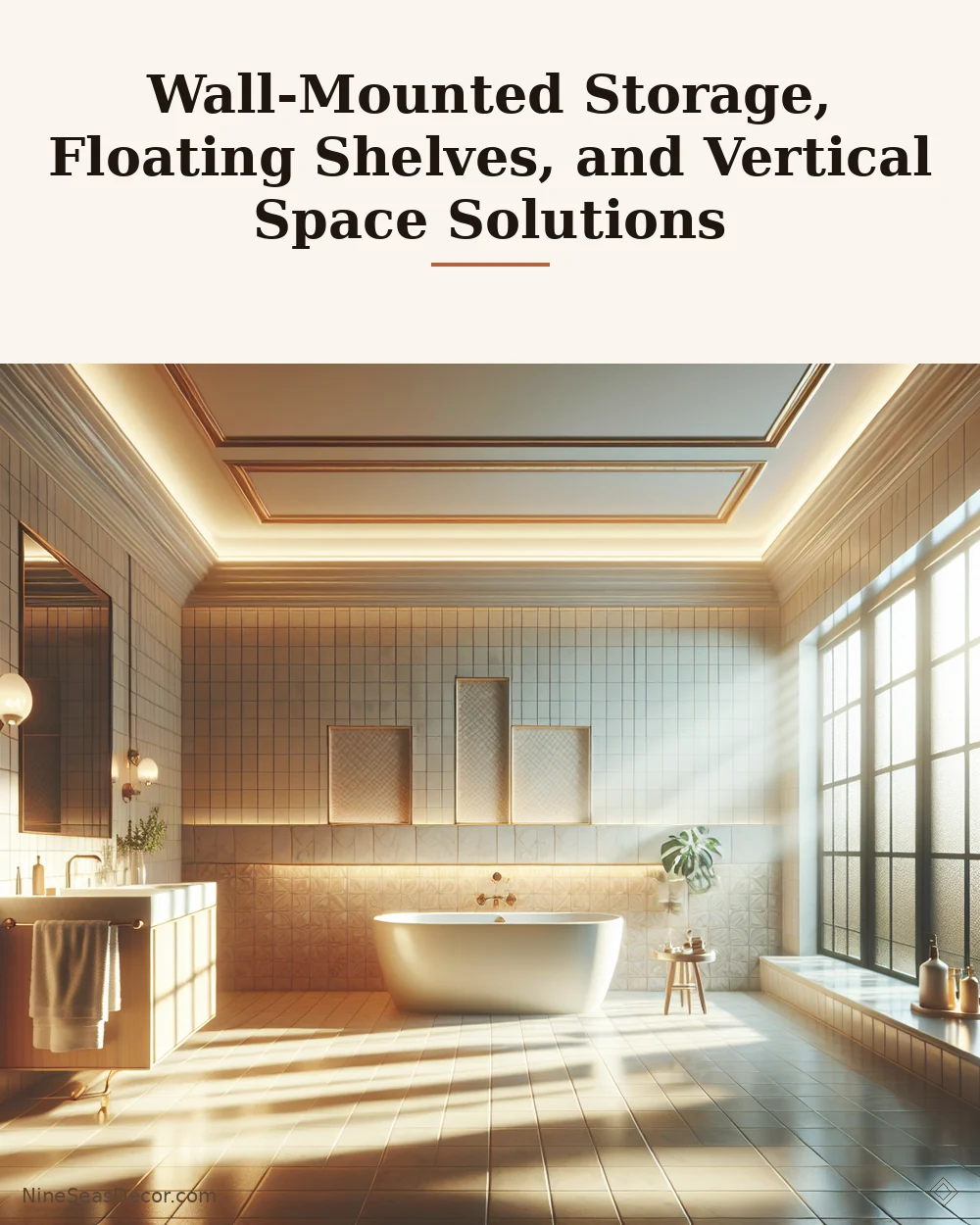
If there’s one principle that professional designers apply to small bathroom storage that homeowners consistently miss, it’s this. Go vertical. Most bathrooms have (8 to 9 feet) of ceiling height, and we typically use the bottom (24 to 36 inches) of that wall space. Everything above eye level is dead space in most people’s bathrooms. According to a 2024 report from the National Association of Realtors (NAR) Remodeling Impact Report, bathroom storage improvements that maximize vertical wall space recover an average of (67%) of their cost at resale, making them among the highest ROI bathroom investments available. That’s significant justification for investing in real, quality wall storage solutions.
Floating shelves are the most versatile and affordable way to add vertical storage to a bathroom. A set of three staggered floating shelves in (4 inch by 24 inch) or (5 inch by 30 inch) dimensions can hold an enormous amount of product, decor, and towels while adding genuine design interest to a blank wall. The key is proper installation. Every floating shelf in a bathroom must be anchored into wall studs using (2.5 to 3 inch wood screws) or, if studs aren’t available, toggle bolts rated for at least 50 pounds in drywall. A floating shelf loaded with product bottles, a diffuser, and a plant can easily reach (15 to 25 pounds). Never anchor a loaded bathroom shelf with standard plastic drywall anchors alone. I’ve seen the aftermath of this decision, and it’s not pretty.
For a cohesive, designed look, paint floating shelf interiors or back panels a contrasting accent color. Benjamin Moore Hale Navy (HC-154) behind white shelves creates a stunning nautical feel. Sherwin-Williams Honeydew (SW 6428) creates a fresh, spa-like atmosphere. Sherwin-Williams Urbane Bronze (SW 7048) adds warmth and sophistication. Cost for quality floating shelves runs ($15 to $60 per shelf) for solid wood or MDF options, or ($80 to $250 per shelf) for live-edge or custom millwork options.
PEGBOARDS AND WALL GRIDS FOR FLEXIBLE BATHROOM STORAGE
Pegboard wall storage has made a massive comeback in bathroom design, and I’m completely here for it. A (24 by 36 inch) painted pegboard panel mounted on bathroom wall studs creates an infinitely customizable storage surface for ($20 to $60) in materials. Add pegboard hooks, small shelves, baskets, and rail systems to hold everything from hair tools to skincare bottles to hand towels. The beauty of pegboard is its flexibility. As your storage needs change, you rearrange the hooks and accessories rather than installing new shelving. Paint your pegboard to match your bathroom wall for a seamless look, or go bold with Sherwin-Williams Oceanside (SW 6496) for a dramatic focal point. Install the board (1 inch off the wall) using spacers to allow hooks to slide in from the top, and mount it into studs for maximum weight capacity of (50 to 75 pounds).
TALL STORAGE TOWERS AND FREESTANDING CABINETS
When wall space is limited or you prefer not to make holes, a tall freestanding storage tower is an excellent alternative. These floor-to-ceiling units stand (60 to 72 inches tall) with a footprint of just (12 to 15 inches deep by (18 to 24 inches wide). That’s a remarkably small floor footprint for the amount of storage they provide. Quality bathroom storage towers in solid wood, MDF with lacquer finish, or metal and glass construction run ($120 to $600). Position a tower in an unused corner, beside the vanity, or in an empty wall nook for maximum spatial efficiency. The key is ensuring the tower is anti-tip anchored to the wall, especially in households with children or in earthquake-prone regions. A loaded tower can weigh (40 to 80 pounds) and poses a serious safety risk if it tips.
Linen Storage and Towel Organization in the Bathroom
Towel storage is one of those seemingly simple problems that quietly makes or breaks a bathroom’s functionality and appearance. A beautifully styled stack of rolled towels in an open cabinet or a perfectly hung set of hand towels can elevate a bathroom from basic to boutique. A pile of damp towels draped over the shower door accomplishes the opposite. The challenge is that towels are bulky, they need to dry between uses, and most bathrooms don’t have enough dedicated space for them. Solving this problem requires a combination of smart storage planning and thoughtful towel display strategies.
The most functional approach to bathroom towel storage is layered. In-use towels need to be on hooks or bars where they can air dry fully between uses. Clean backup towels need to be stored in a dry, closed or semi-open location. Guest towels and special occasion linens can live outside the bathroom entirely in a nearby linen closet. For in-use towels, a double towel bar at (24 to 36 inches wide) provides space for two bath towels to dry fully flat. Mount bars at (48 inches from the floor) for adult use, or (36 inches from the floor) in children’s bathrooms. A towel hook rail with (5 to 7 hooks) spaced (4 to 5 inches apart) provides the most hooks-per-wall-inch and works beautifully for families.
For storing clean folded or rolled backup towels, a ladder towel rack leaning against the wall is both functional and decorative. These come in natural teak, bamboo, black metal, and brushed nickel finishes to suit any bathroom aesthetic. A (6-rung ladder rack) holds (6 to 8 bath towels) in a (15 by 63 inch) footprint and costs ($45 to $180). Alternatively, a woven basket on the floor beside the tub holding rolled towels is a classic spa-inspired storage move that costs as little as ($20) and looks like it belongs in a five-star hotel.
BUILT-IN LINEN STORAGE AND MEDICINE CABINET UPGRADES
If you’re planning a bathroom renovation or already have a medicine cabinet that’s undersized, this is the upgrade with the highest daily impact. A recessed medicine cabinet that spans (24 to 36 inches wide and (36 to 48 inches tall) with internal shelving provides an enormous amount of concealed daily-use product storage in a footprint that takes up zero floor space. Full-size recessed medicine cabinets from brands like Robern, Kohler, or House of Antique Hardware run ($300 to $2,500) depending on size, lighting, and interior features. A quality medicine cabinet alone can eliminate the need for additional shelving in a small bathroom, keeping the space feeling open and uncluttered while hiding everything behind a mirror that also makes the room feel larger.
CREATIVE TOWEL DISPLAY IDEAS THAT DOUBLE AS DECOR
The best towel storage solutions do double duty as decorative elements. Rolled towels in a glass cylinder vase, stacked monogrammed towels on an open shelf, or folded towels in a vintage wooden crate all function as genuine towel storage while contributing to the bathroom’s overall aesthetic. The trick is maintaining these displays. Rolled towels should be rolled tightly and uniformly to a (4 to 5 inch) diameter before placing in a display. Folded shelf towels work best in groups of three to five with all edges facing the same direction. Choose towels in two complementary colors that match your bathroom palette. A combination of crisp white and a soft accent color like sage, blush, or navy creates a pulled-together look that feels intentional and designed rather than accidental.
Budget Bathroom Storage: Maximum Impact for Minimum Spend
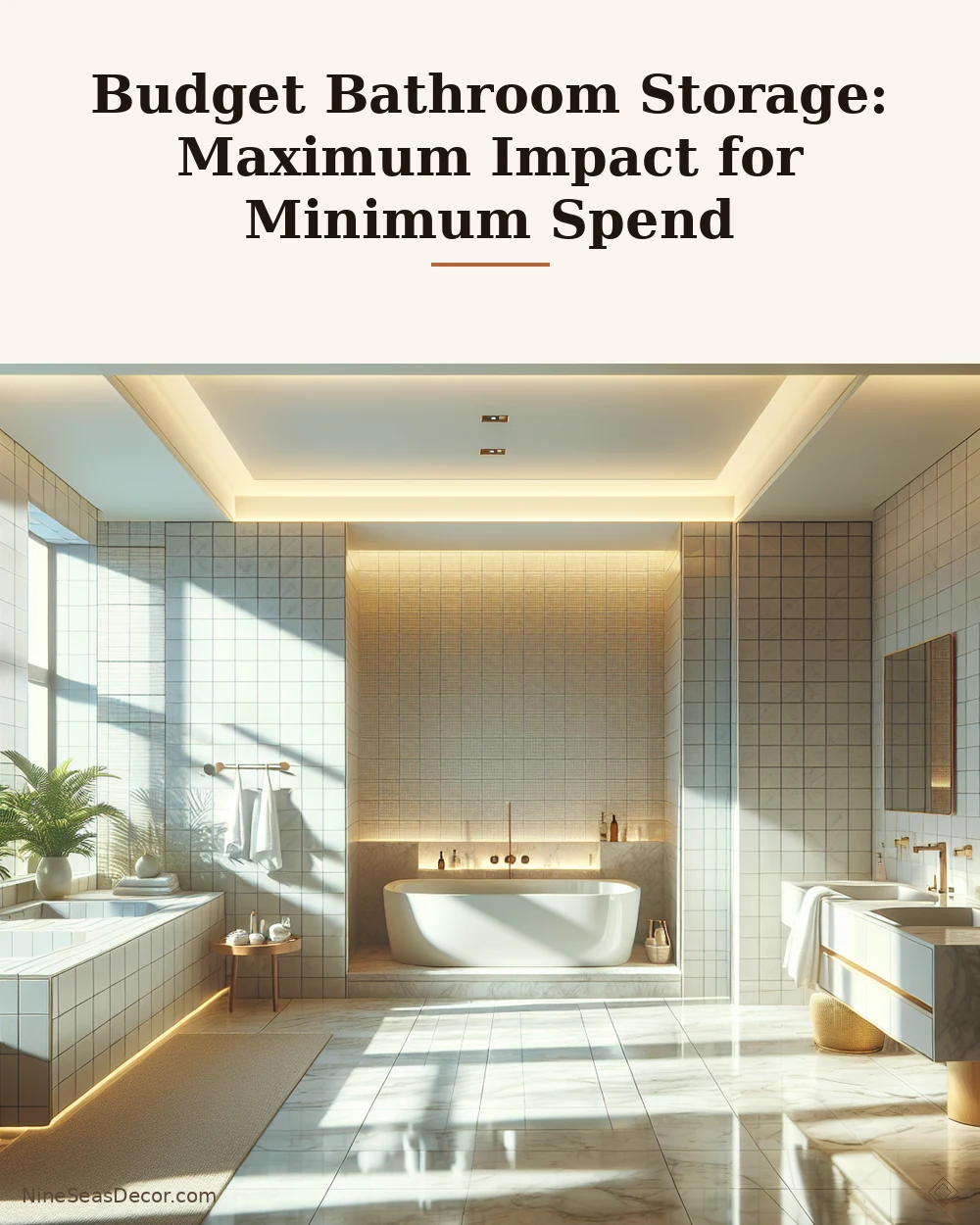
You absolutely do not need a big budget to transform your bathroom storage. Some of the most impactful bathroom organization improvements cost less than ($50). The key is knowing which investments genuinely move the needle versus which purchases look promising online and disappoint in real life. I’ve wasted more money than I care to admit on clever-looking organizers that didn’t survive six months of real bathroom use. Here’s what actually works at every price point.
At the ($0 to $30) range, the best moves are decluttering (which costs nothing and is always the most impactful first step), tension rods inside cabinets to create hanging storage for spray bottles (($5 to $12)), magnetic strips for bobby pins and tweezers mounted inside cabinet doors (($8 to $15)), and adhesive command hooks for hairdryers, curling irons, and hand towels (($4 to $20)). These micro-investments collectively transform storage function in a single weekend afternoon without drilling a single hole or spending a significant amount.
At the ($30 to $150) range, the best investments are a two-tier under-sink organizer (($25 to $65)), matching storage bins that replace mismatched containers on open shelves (($20 to $50) for a set of five), a bamboo drawer organizer set (($25 to $45)), and a wall-mounted toothbrush and cup holder to clear counter space (($15 to $40)). At this price point, you can completely transform the organization of a standard bathroom without touching the walls in any permanent way.
DIY BATHROOM STORAGE PROJECTS WORTH DOING
Some of the most beautiful bathroom storage solutions are genuinely DIY-able for homeowners with basic tool skills. A DIY floating shelf made from a ((1 by 8 inch pine board)) cut to length, sanded smooth, painted or stained, and mounted with floating shelf brackets costs ($15 to $35) in materials versus ($60 to $150) for a retail equivalent. A DIY pegboard storage panel painted in an accent color and mounted above the toilet costs ($25 to $45) in materials. A DIY crate shelf made from two stacked wooden crates from a craft store, sanded and sealed with waterproof polyurethane, creates a charming rustic storage tower for ($30 to $50). The waterproof sealant step is non-negotiable in a bathroom. Unsealed wood will warp, swell, and eventually rot in the humidity of a regularly used bathroom. Use at minimum (two coats) of moisture-resistant sealant on any natural wood in a bathroom environment.
WHEN TO INVEST IN PROFESSIONAL BATHROOM STORAGE SOLUTIONS
There are situations where the DIY or off-the-shelf approach genuinely cannot match what a professional custom storage solution provides. If your bathroom is oddly shaped, has non-standard dimensions, or if you’re planning a full renovation anyway, investing in custom-built cabinetry is almost always worth it. Custom bathroom cabinetry ranges from ($1,500 to $8,000) depending on scope, materials, and your location in the US. This investment pays back in two ways. First, it perfectly fits your specific space, using every available inch without awkward gaps or wasted corners. Second, quality custom cabinetry with soft-close hardware, full-extension drawer slides, and durable finishes will outlast any off-the-shelf alternative by decades. The NKBA 2024 Cost vs. Value Analysis confirms that bathroom cabinetry upgrades recoup an average of (72%) of their cost in home resale value, making them among the smarter financial investments

Hi, I’m Sophia Rose. I believe every home tells a story. At Nine Seas Decor, I share creative ideas, budget-friendly tips, and modern trends to help you turn your living space into a sanctuary. Let’s make your home beautiful, one corner at a time!