
small-bathroom-ideas-2026
Let me be completely honest with you. I have walked into hundreds of small bathrooms over my career and the number one complaint I hear from homeowners is always the same. “It feels like a closet with a toilet in it.” Sound familiar? Whether you are dealing with a powder room squeezed under a staircase, a full bathroom in an older home that was clearly designed by someone who had never actually used a bathroom, or a guest bath that makes your visitors feel vaguely claustrophobic, the struggle is absolutely real. But here is the thing I tell every single client who walks through my door looking defeated. Small does not have to mean cramped, dark, or depressing. It just means you need a smarter strategy.According to a 2024 study published in the Journal of Environmental Psychology, spatial perception in small rooms is influenced far more by lighting, color temperature, and visual flow than by actual square footage. Researchers found that homeowners who applied targeted design principles to rooms under (50 sq ft) reported feeling their spaces were up to 40% larger than the measured dimensions. That is a massive psychological shift, and it happens without knocking down a single wall. This is the science behind why some tiny bathrooms feel luxurious and others feel like a punishment.
In this comprehensive guide, I am going to walk you through everything you need to know about transforming a small bathroom in 2026. We are covering layout optimization, smart storage solutions, color palettes and paint codes, tile strategies, fixture selection, lighting design, and budget planning. I have included real measurements, real costs, and real product recommendations because vague advice helps nobody. Whether your bathroom is a tight (35 sq ft) half bath or a slightly more generous (75 sq ft) full bath, there is something in here for you.
I have spent over twelve years writing about interior design for NineSeasDecor.com, and I have collaborated with licensed interior designers, certified bathroom specialists, and NKBA certified professionals to bring you information you can actually use. I have personally tested many of these strategies in my own (40 sq ft) bathroom renovation two years ago, and I will be sharing those real world lessons throughout this guide. No filler, no fluff, just practical expert advice that gets results.
Understanding Your Small Bathroom: Layout And Space Planning Fundamentals
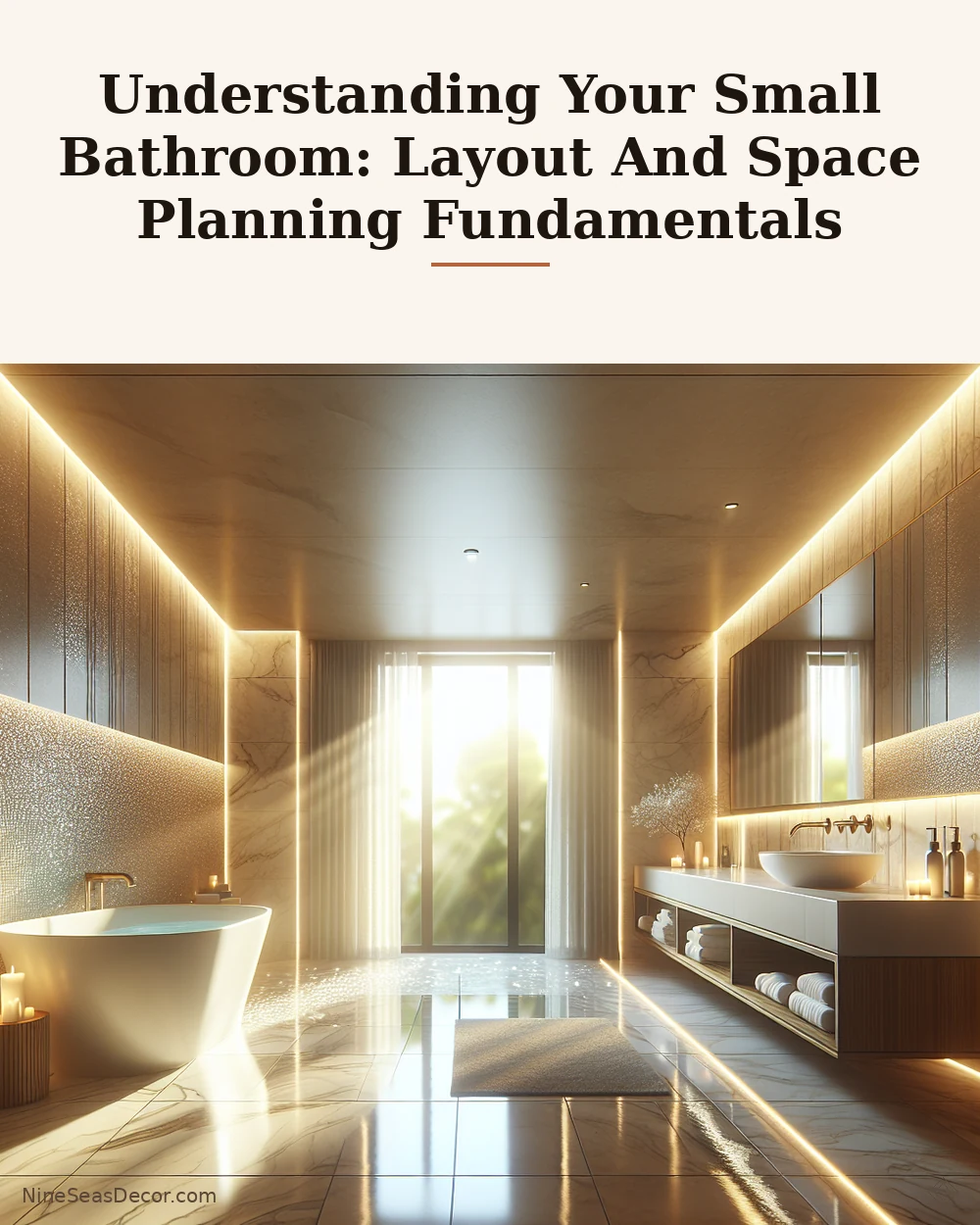
Before you buy a single tile or choose a single paint color, you need to understand your space. Yeah, I have seen this mistake a thousand times. Homeowners get excited, they fall in love with a vanity on Pinterest, they order it without measuring, and then it sits in their garage for three months while they figure out what to do. Do not be that person. Space planning is the single most important step in any bathroom renovation, and it is even more critical when you are working with limited square footage.
The National Kitchen and Bath Association (NKBA) publishes detailed guidelines for bathroom clearances that every designer references. For a functional small bathroom, you need a minimum of (21 inches of clear floor space) in front of a toilet, (15 inches) from the toilet centerline to any side wall or obstruction, and (24 inches) of clear floor space in front of a sink. A shower needs a minimum of (36×36 inches) of interior space, though (36×48 inches) is significantly more comfortable. These are the non-negotiables, the measurements you build everything else around.
According to the NKBA 2024 Bathroom Design Guidelines, homeowners who create a detailed floor plan before purchasing any fixtures save an average of ($1,200 to $2,800) in returns, restocking fees, and contractor change orders. That is money staying in your pocket simply by doing your homework first. I always recommend using free tools like RoomSketcher or Planner 5D to create a digital layout before committing to anything physical.
MEASURING YOUR BATHROOM CORRECTLY
Grab a tape measure and a notepad, because this is where real renovations begin. Measure your bathroom from wall to wall at (floor level), at (counter height), and at (ceiling height), because walls are rarely perfectly plumb, especially in older homes. Note the exact location of your rough plumbing, including the drain, supply lines, and any vent stacks. Moving plumbing is the single biggest cost driver in a bathroom renovation, typically adding ($500 to $3,500) per plumbing relocation depending on your region. Record the location of electrical outlets, light fixtures, and the exhaust fan. Measure your door swing and note whether it opens in or out. In a (35 to 50 sq ft) bathroom, a door that swings inward can eliminate (6 to 8 sq ft) of usable floor space, which is enormous when you have so little to work with. A pocket door or barn door is often a game changing upgrade in these situations.
THE BEST LAYOUTS FOR TINY BATHROOMS
For bathrooms under (50 sq ft), the most efficient layout keeps the toilet and sink on the same wall or adjacent walls to minimize plumbing runs. A one wall layout, where all fixtures line up along a single wall, is the most plumbing-friendly option and works well in narrow bathrooms that are (5 feet wide or less). For slightly wider spaces, an L-shaped layout with the shower in one corner and the vanity and toilet along the adjacent wall maximizes floor space in the center of the room. If you are considering a wet room design, where the shower has no enclosure and the entire room is waterproofed, you can eliminate the visual barrier of a shower door entirely, making a (40 sq ft) bathroom feel remarkably open and spa-like.
WHEN TO CONSIDER RECONFIGURING YOUR LAYOUT
Sometimes the best thing you can do for a small bathroom is rethink the layout entirely. If your current floor plan has the toilet directly facing the door, guests are greeted with an unwelcoming view every time they enter. If your vanity is blocking natural light from a window, you are fighting your own room. Reconfiguring a bathroom layout typically costs ($1,500 to $5,000) in plumbing and carpentry work depending on complexity, but the improvement in livability and resale value can be dramatic. According to the National Association of Realtors (NAR) 2024 Remodeling Impact Report, a bathroom renovation recovers an average of 71% of its cost at resale, making it one of the highest return renovation categories in the home. If your bathroom layout is genuinely dysfunctional, the investment in reconfiguration pays off in daily quality of life long before you ever sell the house.
Color Psychology And Paint Selection For Small Bathrooms
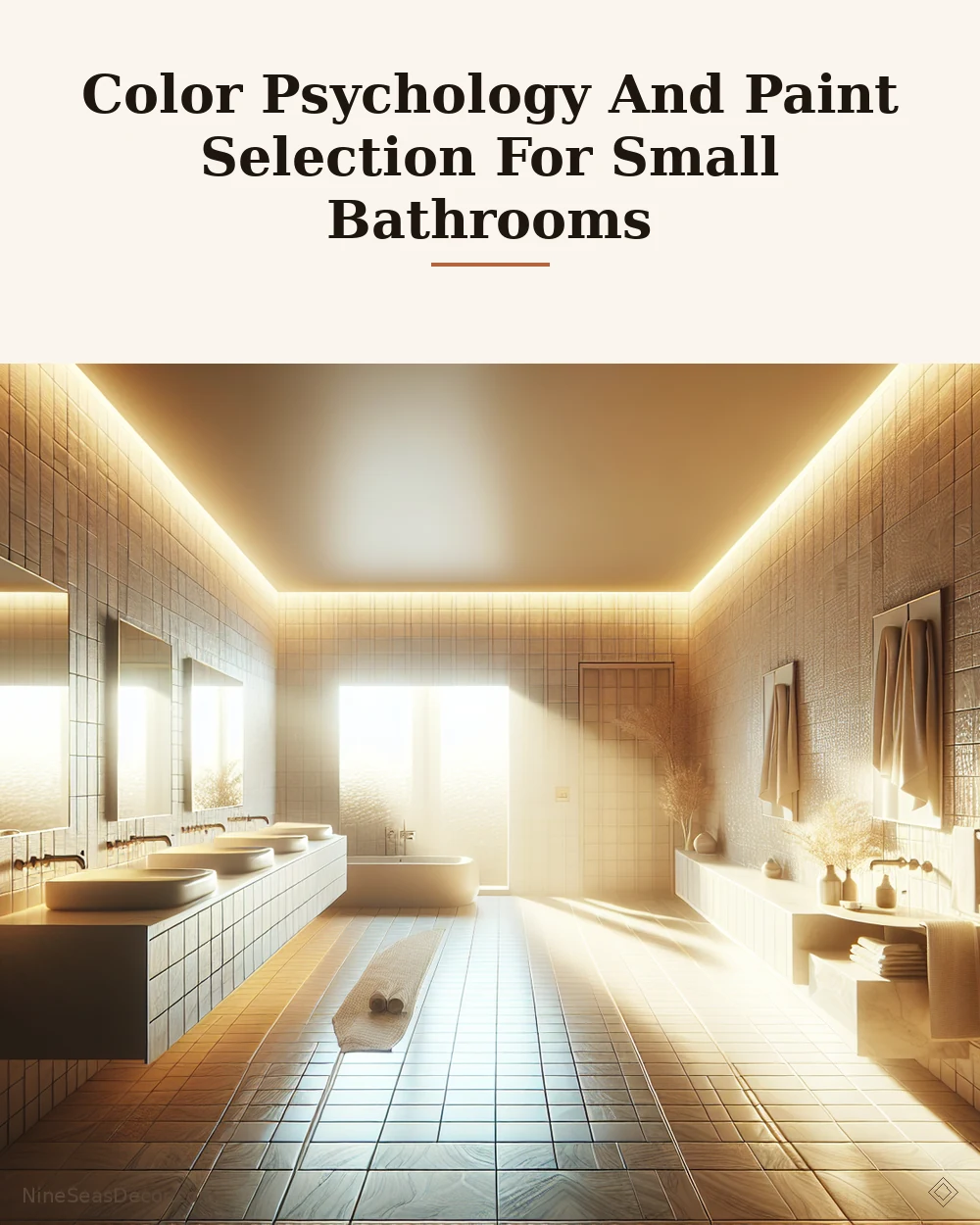
Color is the most powerful and most affordable tool in your small bathroom transformation toolkit. A gallon of paint costs ($40 to $80) and can completely change how a room feels. But choosing the wrong color, or applying the right color the wrong way, can make a small bathroom feel even more compressed. Let me share exactly what works and what does not, based on both design science and my own hard earned experience.
The conventional wisdom says to use light colors in small spaces, and that is broadly correct but it is also oversimplified. The real principle is about light reflectance value, or LRV. Colors with an LRV above 65 reflect enough light to visually expand a space. Colors below that threshold, even if they are technically “light,” can absorb light and make a room feel heavier. Every major paint brand publishes LRV values on their color cards and websites.
According to a 2023 survey by Houzz, white and off-white remain the most popular bathroom paint colors for small spaces, with 62% of respondents choosing a color with an LRV above 70 for their most recent bathroom renovation. However, the survey also noted that deep moody tones are gaining traction as a counterintuitive but effective strategy for small bathrooms, particularly when paired with abundant lighting and reflective surfaces.
TOP PAINT COLORS FOR SMALL BATHROOMS IN 2026
Here are my absolute favorite paint color recommendations for small bathrooms this year, with specific codes so you can pull them at the paint counter. For a bright and airy look, Sherwin-Williams Alabaster (SW 7008) is flawless. It is a soft warm white with an LRV of 82 that feels clean without feeling sterile. Benjamin Moore White Dove (OC-17) is another top pick with an LRV of 83.16, and it has a slightly creamy quality that works beautifully with warm wood vanities. For a spa-inspired neutral, Sherwin-Williams Accessible Beige (SW 7036) is a perennial favorite that pairs well with virtually any fixture color. Benjamin Moore Revere Pewter (HC-172) brings warmth and sophistication to a small bathroom when used on a single accent wall while keeping the remaining walls lighter. For the bold and brave, Benjamin Moore Hale Navy (HC-154) in a small bathroom with white fixtures and abundant lighting creates a jewel box effect that feels luxurious rather than small.
USING COLOR STRATEGICALLY TO ALTER PERCEPTION
Here is where color gets really interesting, and most homeowners never think about this. You do not have to paint every wall the same color. In a (5×8 foot bathroom), painting the ceiling the same color as the walls, or even slightly lighter, creates a cocooning effect that actually makes the room feel more intentional and designed rather than cramped. Painting the back wall a slightly deeper shade while keeping the side walls lighter draws the eye forward and can make a narrow bathroom feel wider. Using a semi-gloss or high-gloss finish on walls, rather than the flat or eggshell finish popular in other rooms, maximizes light reflection in a bathroom and is also more resistant to moisture and mildew. The sheen level of your paint is doing as much work as the color itself in a small bathroom.
THE CASE FOR DARK AND MOODY SMALL BATHROOMS
I know this sounds counterintuitive, but hear me out. A fully committed dark bathroom can feel dramatically more sophisticated than a poorly executed light one. The key is total commitment and strategic lighting. When you paint walls, ceiling, and trim all in the same deep color, like Sherwin-Williams Tricorn Black (SW 6258) or Benjamin Moore Black Beauty (2128-10), the boundaries of the room disappear. Combined with (3 to 4 strategically placed light sources), a large mirror, and metallic or glossy finishes, a dark small bathroom can look like a five-star hotel room. This approach works particularly well in powder rooms that are used primarily by guests, where the drama makes a memorable impression rather than a daily frustration. Budget approximately ($150 to $300) for a full dark bathroom paint project including primer and supplies.
Smart Storage Solutions That Do Not Sacrifice Style
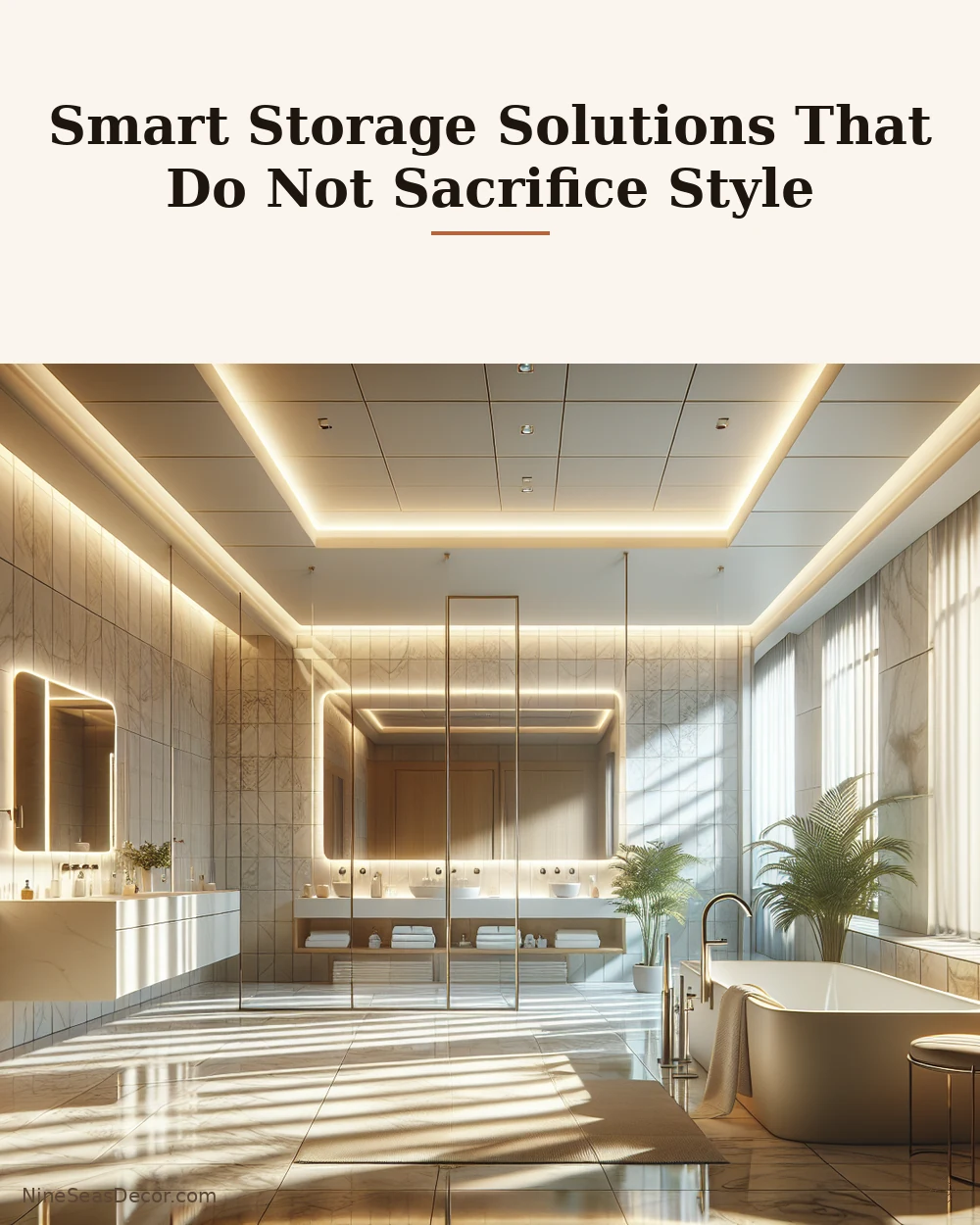
Storage is where small bathroom design gets genuinely challenging. You need to store towels, toiletries, cleaning supplies, medications, hair tools, and about forty seven other things that accumulate in bathrooms, and you need to do it in a space that might be (35 to 60 sq ft). The answer is not just buying more organizers from the container store. The answer is rethinking how you use every single plane in the room, including walls, the space above the toilet, inside cabinet doors, and even the ceiling.
The 2024 Houzz Bathroom Trends Study found that (78% of homeowners) who undertook a small bathroom renovation ranked storage as their top priority, above aesthetics and above comfort features. That tells you everything about how central this issue is to daily bathroom functionality. The good news is that 2026 has brought some genuinely innovative storage solutions that are both functional and beautiful.
VERTICAL STORAGE STRATEGIES THAT MAXIMIZE WALL SPACE
In a small bathroom, your walls are your best friends. Recessed medicine cabinets are one of the smartest investments you can make, because they add (4 to 6 inches of storage depth) without projecting into your floor space at all. A quality recessed medicine cabinet runs ($200 to $600) and can store an enormous amount of daily essentials behind a mirror that also serves double duty in visually expanding the room. Above the toilet is perpetually underutilized space. A floating shelf unit or over the toilet cabinet mounted at (6 to 12 inches above the tank) can add (15 to 20 sq ft of storage surface area) in a space that is otherwise completely wasted. Open floating shelves at (8 to 10 inch depths) feel less visually heavy than closed cabinets and keep your most attractive items on display.
VANITY STORAGE OPTIMIZATION TECHNIQUES
Your vanity cabinet is probably the largest single storage unit in your bathroom, and most people use only about (40% of its capacity) efficiently. Installing pull-out drawer organizers, tiered shelf inserts, and door-mounted organizers inside existing cabinets can effectively double their storage capacity without any construction. If you are replacing your vanity, choose one with drawer stacks rather than a single open cabinet, because drawers are dramatically more space efficient than a cabinet where items pile up in the back and disappear forever. A 36-inch vanity with four drawers stores far more than a (36-inch vanity) with a single door cabinet. For very small bathrooms under (35 sq ft), a pedestal sink gives you more visual space but eliminates cabinet storage entirely. In this case, a mirrored wall cabinet and a stylish freestanding storage tower can compensate effectively at a cost of ($150 to $400) total.
HIDDEN AND BUILT-IN STORAGE IDEAS
The most impressive small bathroom storage solutions are the ones you do not see at first glance. Recessed niches built between wall studs create shower storage that is completely flush with the wall, eliminating the visual clutter of hanging caddies and corner shelves. A standard stud bay is (14.5 inches wide) and you can go (3.5 to 4 inches deep) without touching any structural elements, which is enough depth for shampoo bottles and soap. A single shower niche costs approximately ($200 to $800) installed depending on tile material and labor rates in your area. Built-in bench seating in a larger shower can incorporate storage underneath, and a hollow toe-kick drawer built into the base of a vanity captures that (3.5 inch) gap between the cabinet bottom and the floor, perfect for flat items like hair straighteners and extra soap bars.
Tile Strategies That Visually Expand Small Bathrooms
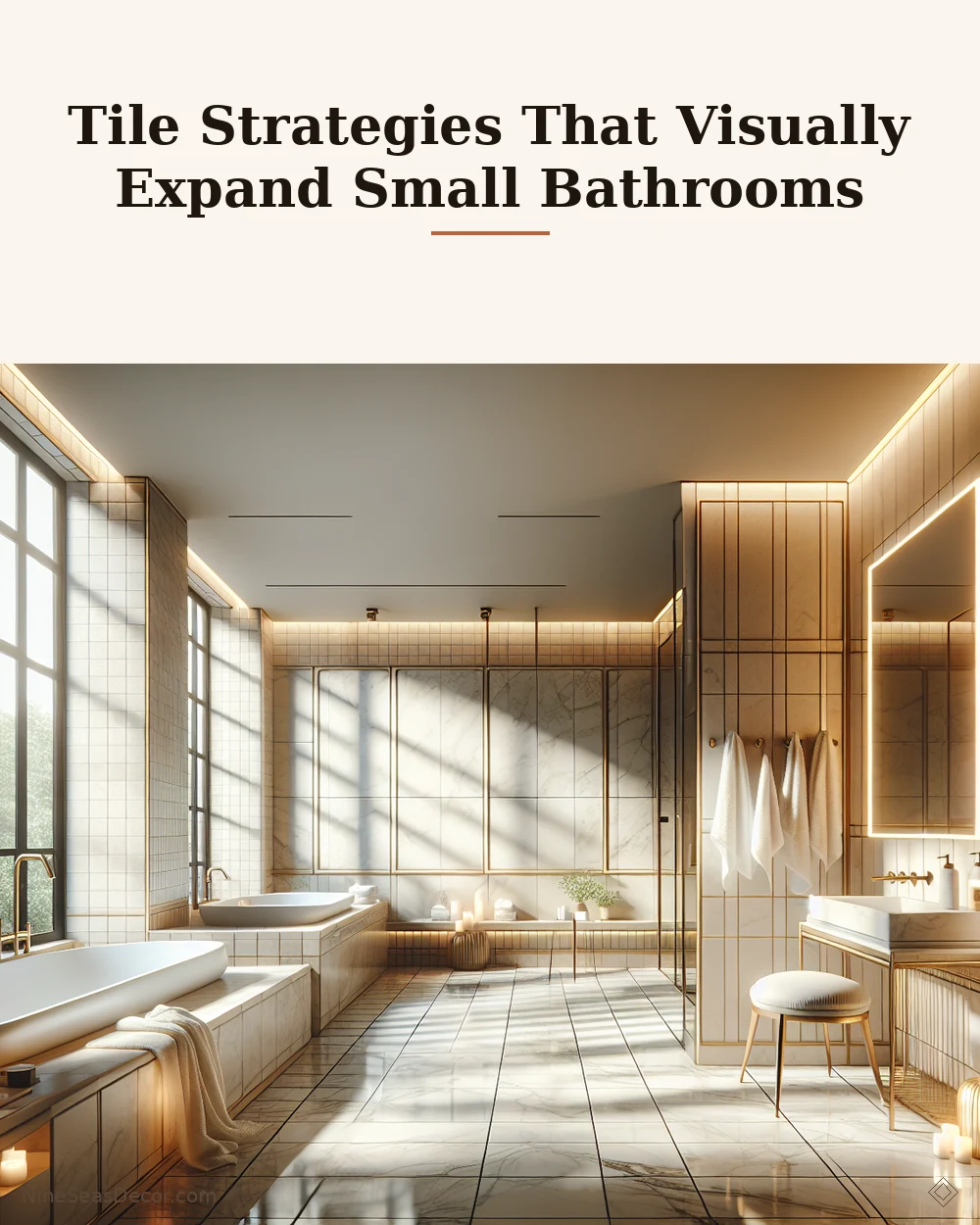
Tile selection has an outsized impact on how large or small a bathroom feels, and the decisions you make here will be literally set in stone for the next fifteen to twenty years. So getting this right matters enormously. The good news is that the rules for tile in small bathrooms are relatively clear once you understand the underlying principles of visual continuity and scale.
The most important principle is this. Fewer grout lines mean a larger looking space. Every grout line is a visual interruption, a horizontal or vertical line that the eye reads as a boundary. Using large format tiles in a small bathroom reduces the number of grout lines dramatically and creates a more seamless, expansive visual field. According to tile industry data published by the Tile Council of North America (TCNA) in their 2024 installation guidelines, 12×24 inch tiles or larger are now the most commonly specified format for small bathroom floors and walls precisely because of this visual expansion effect.
LARGE FORMAT TILE SELECTION AND INSTALLATION TIPS
For a (40 to 60 sq ft bathroom), consider 24×24 inch porcelain tiles on the floor and 12×24 or 24×48 inch tiles on the walls. The larger the tile relative to the room, the more expansive the space feels, up to a point. For rooms under (35 sq ft), (12×24 inch tiles) strike the best balance between scale and proportionality. Installing floor tiles diagonally at 45 degrees is a classic trick that draws the eye along the diagonal, which is the longest dimension in any rectangular room, making the space feel more generous. Continuous tile from floor to wall, meaning using the same tile material on both surfaces, is an incredibly powerful visual expansion technique. When the floor and lower walls are the same tile, the room reads as one unified surface rather than two competing elements. Budget approximately ($8 to $25 per sq ft) for quality porcelain large format tiles, plus ($6 to $12 per sq ft) for professional installation.
USING SUBWAY TILE AND PATTERN CREATIVELY
The humble subway tile has been a bathroom staple since the early 1900s, and it remains incredibly relevant in 2026 because it is versatile, affordable, and genuinely timeless. Standard (3×6 inch subway tiles) installed in a vertical stack bond pattern rather than the traditional horizontal running bond will make a low-ceilinged bathroom feel taller instantly. Installing subway tile all the way to the ceiling rather than stopping at a traditional (36 to 54 inch wainscot height) is another powerful strategy, costing approximately ($300 to $600) more in additional tile and labor but dramatically increasing the visual height of the room. Grout color selection matters enormously here. Matching your grout color to your tile color, called a tonal grout approach, minimizes the visual interruption of the grout lines and reinforces that expansive seamless look. Contrasting grout makes the grid pattern more prominent, which can be a deliberate design choice but works against the goal of visual expansion.
SPECIAL TILE TECHNIQUES FOR POWDER ROOMS AND ACCENT WALLS
A powder room under (25 sq ft) is actually the perfect opportunity to be bold with tile in a way that would feel overwhelming in a larger space. Because the room is so small and typically used briefly by guests, you can commit to a statement tile that would be exhausting in a full bathroom. Zellige tiles, handmade Moroccan cement tiles, or bold geometric patterns all work beautifully in a powder room context. For a full bathroom where you live every day, I recommend using a statement tile as an accent wall, specifically the wall behind the vanity or the interior shower wall, while keeping the remaining surfaces in a more subdued complementary tile. This gives you visual interest without visual fatigue. Quality statement tiles can run ($15 to $60 per sq ft) or more, but because you are only tiling a single wall of (20 to 35 sq ft), the total investment is manageable.
Fixtures And Fittings That Maximize Small Bathroom Functionality
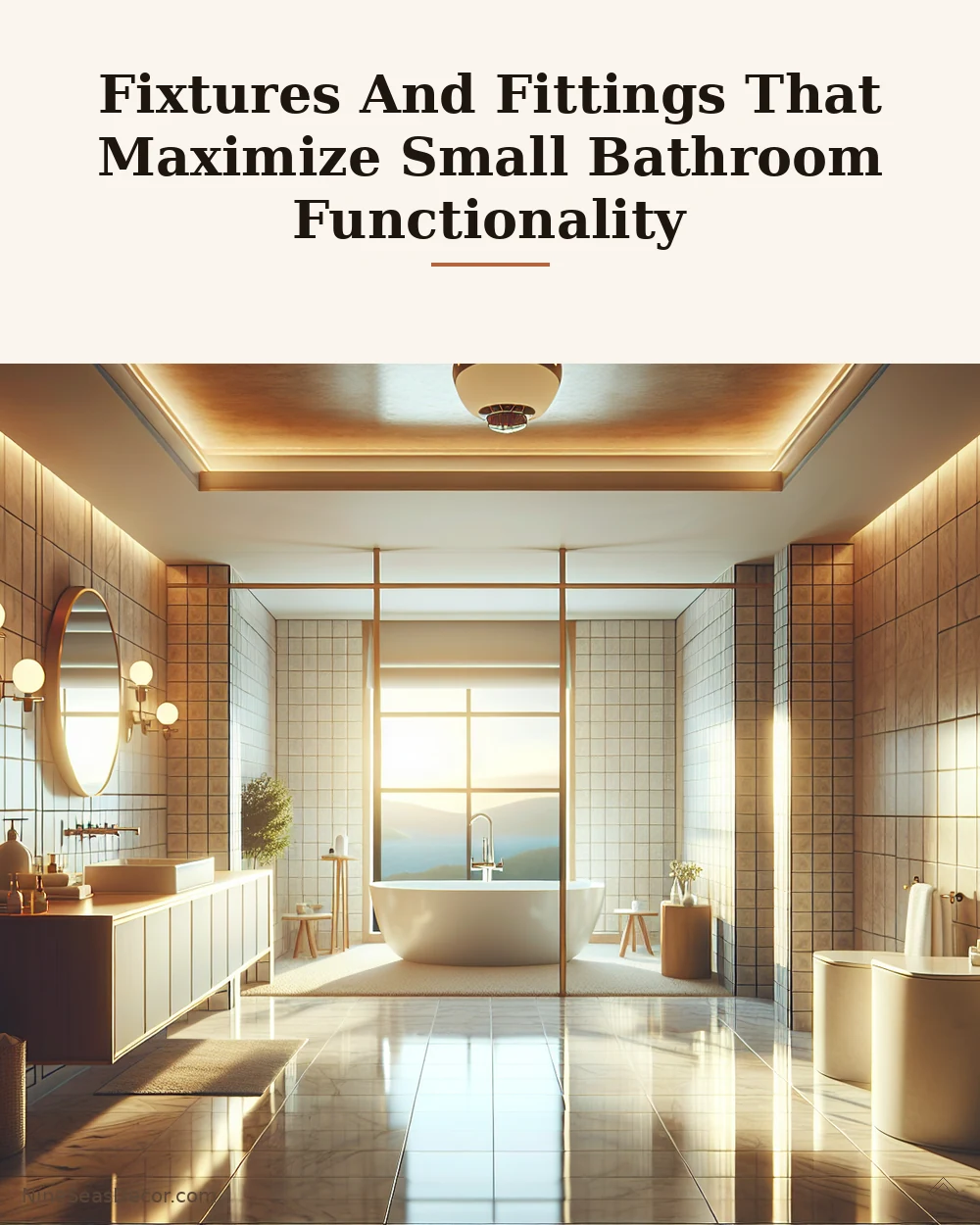
Choosing the right fixtures for a small bathroom is about far more than aesthetics. Every fixture you install has a physical footprint, a visual weight, and a functional impact on how the room works day to day. The goal is to choose fixtures that perform all their functions beautifully while minimizing the physical and visual space they occupy. This is where the most exciting innovations in bathroom design are happening right now in 2026.
The wall-hung toilet is perhaps the single most transformative fixture choice for a small bathroom. By mounting the toilet directly to the wall with the tank concealed inside the wall cavity, you eliminate the floor footprint of the tank entirely and float the toilet bowl above the floor. This creates (12 to 15 inches of additional visible floor space) under and around the toilet, which makes the room feel significantly larger. A quality wall-hung toilet system including the in-wall carrier frame, the concealed cistern, the toilet bowl, and the flush plate runs ($800 to $2,500) installed, which is more than a traditional floor-mounted toilet but the spatial and aesthetic gains are substantial.
CHOOSING THE RIGHT VANITY SIZE AND STYLE
For bathrooms under (50 sq ft), a floating vanity is almost always the better choice over a floor-mounted one. Mounting your vanity (15 to 18 inches off the floor) exposes the floor underneath, creating a visual sense of spaciousness that adds perceived depth to the room. A floating vanity also makes cleaning the floor dramatically easier, which is a quality of life benefit that homeowners consistently underestimate until they have it. For very narrow bathrooms under (5 feet wide), consider a corner vanity sized (24×24 inches) that tucks into a corner and frees up the center of the room. For rooms that can accommodate it, a (30 to 36 inch vanity) with drawers provides the best balance of surface space and storage in a small bathroom. Avoid vanities over (48 inches) in a bathroom under (60 sq ft) as they will dominate the space and create dangerous clearance issues.
SHOWER OPTIONS FOR SMALL BATHROOMS
If you have a bathtub in a small bathroom that you never use, removing it and replacing it with a larger shower is almost always the right call. A (36×36 inch shower stall) takes up (9 sq ft) while a standard bathtub occupies (13 to 15 sq ft). That difference of (4 to 6 sq ft) in a (40 sq ft bathroom) is enormous. A tub to shower conversion typically costs ($1,500 to $5,000) depending on tile selection and plumbing complexity. For the shower enclosure itself, a frameless glass shower door or a walk-in shower with no door is far superior to a framed shower door in a small bathroom. The framing of a traditional shower door creates visual boundaries that chop up the space, while frameless glass allows the eye to travel continuously through the entire room. A quality frameless glass shower enclosure runs ($600 to $2,500) depending on size and hardware finish.
FAUCETS, HARDWARE, AND THE IMPACT OF METALLIC FINISHES
Hardware and faucet selection is often treated as an afterthought, but in a small bathroom these details punch above their weight visually. Matte black hardware is having a genuine moment in 2026 and creates crisp graphic contrast against white or light colored tiles and fixtures. Brushed gold and unlacquered brass add warmth and an organic quality that softens a room dominated by hard tile and glass surfaces. Polished chrome remains the most light reflective hardware finish available and is ideal when maximizing reflected light is a priority. Whatever finish you choose, commit to it throughout the room. Using the same metal finish on your faucet, towel bars, toilet paper holder, light fixtures, and mirror frame creates a coordinated look that feels intentional and sophisticated. Mixing metals can work beautifully but requires design experience to pull off. Hardware sets for a small bathroom typically run ($100 to $400) for quality pieces from brands like Moen, Delta, or Kohler.
Lighting Design: The Most Underrated Small Bathroom Upgrade
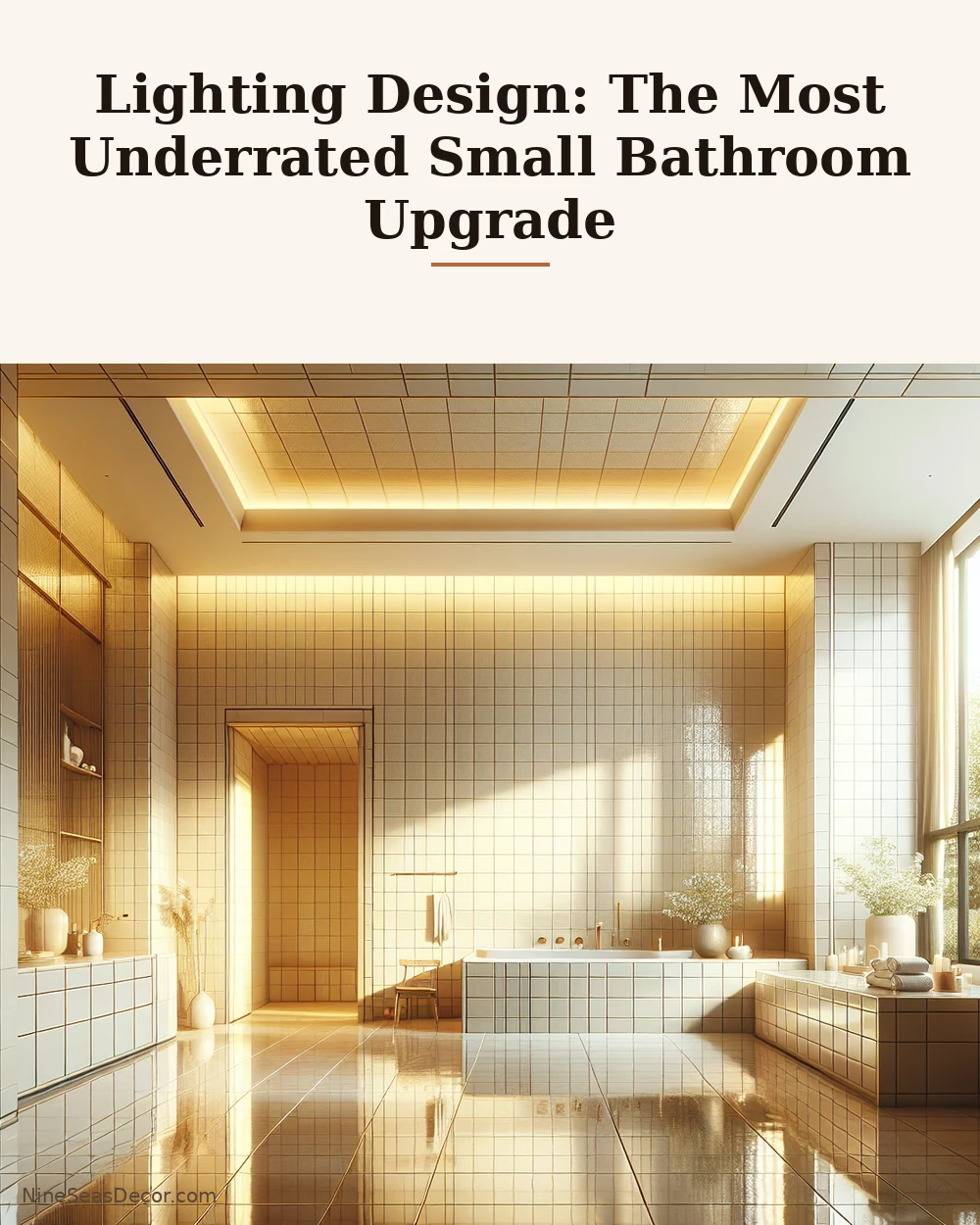
If I had to pick one single upgrade that delivers the most dramatic improvement in a small bathroom for the least cost, it would be lighting. Not a new vanity, not new tile, not even a fresh coat of paint. Lighting. The difference between a well-lit small bathroom and a poorly lit one is the difference between a space that feels adequate and one that feels genuinely luxurious. Yet most homeowners spend ($50 to $100) on a single overhead fixture and call it done, then wonder why their bathroom still feels dingy and small.
A properly designed small bathroom uses layered lighting with minimum three separate light sources serving three distinct purposes. Ambient lighting provides overall illumination. Task lighting provides bright, shadow-free light for grooming activities at the vanity. Accent lighting adds depth, drama, and the perception of spaciousness. According to research published in the LEUKOS: The Journal of the Illuminating Engineering Society in 2023, spaces with three or more light sources are perceived as (25 to 35% larger) than identical spaces with a single overhead light source, even when total light output is the same.
VANITY LIGHTING: THE MOST CRITICAL LIGHT IN ANY BATHROOM
The single most common lighting mistake in small bathrooms is relying on a light mounted above the mirror for task lighting. An overhead light at the vanity casts shadows downward across the face, creating unflattering shadows under the eyes, nose, and chin. The correct approach is to light the face from the sides, either with wall sconces flanking the mirror at (60 inches from the floor to center), or with a full width lighted mirror or Hollywood style vanity strip that provides light from above and sides simultaneously. For a small bathroom, a backlit LED mirror running ($150 to $600) accomplishes both the task lighting and the mirror function in a single slim profile fixture that projects only (1 to 2 inches) from the wall. Many current models also incorporate a color temperature adjustment feature, allowing you to dial between warm (2700K) and cool (5000K) light depending on whether you want a spa-like evening glow or bright daylight for detailed grooming.
USING LIGHTING TO CREATE THE ILLUSION OF SPACE
Beyond the vanity, strategic lighting placement can make a small bathroom feel genuinely larger. Installing recessed lighting in the shower, specifically rated for wet locations with a minimum IP65 rating, illuminates what is often the darkest corner of a small bathroom and makes the shower feel like an extension of the room rather than a dark cave. LED strip lighting installed under a floating vanity at ($30 to $80) for a (36-inch run) creates a floating effect that emphasizes the gap between the vanity and the floor, reinforcing that sense of spaciousness. Toe-kick lighting along the base of a vanity or built-in cabinets is particularly effective at night, providing a soft glow that eliminates the need for harsh overhead lights during midnight bathroom visits. All bathroom lighting must be rated for damp or wet locations depending on proximity to water sources, and all circuits within (6 feet of a water source) must be protected by a GFCI breaker per the National Electrical Code.
NATURAL LIGHT STRATEGIES FOR SMALL BATHROOMS
Nothing beats real natural light for making a small bathroom feel wonderful, but many bathrooms have limited window access due to privacy concerns or position within the home. If you do have a window, maximize it by keeping the window treatment minimal, a simple waterproof Roman shade or frosted window film provides privacy without blocking light entirely. If your bathroom has no window at all, a solar tube or sun tunnel can be installed in the roof above the bathroom to pipe natural daylight into the space at a cost of ($750 to $2,500) installed. This solution works beautifully for single-story homes or bathrooms directly below roof space. For a more modest intervention, replacing a solid bathroom door with one incorporating a frosted glass panel insert allows borrowed light from adjacent hallways or bedrooms to filter into the bathroom, maintaining privacy while improving the overall light quality.
Budget Planning: What A Small Bathroom Renovation Really Costs In 2026
Let us talk money, because this is where a lot of people get blindsided. The internet is full of articles claiming you can remodel a bathroom for ($1,500) with a weekend of hard work. And yes, a very superficial refresh involving paint and new hardware might approach that number. But a genuine renovation that addresses layout, fixtures, tile, and lighting? The numbers are quite different, and knowing them in advance keeps you from making compromised decisions midway through a project.
According to the 2024 Cost vs. Value Report published by Remodeling Magazine, the national average for a midrange bathroom remodel is ($24,000 to $32,000). For a small bathroom under 50 sq ft, costs typically run somewhat lower, but not dramatically so, because a significant portion of bathroom renovation costs are in labor and plumbing, which do not scale proportionally with square footage. A plumber charges the same travel time and setup costs whether your bathroom is (40 sq ft) or (100 sq ft).
BREAKING DOWN SMALL BATHROOM RENOVATION COSTS BY CATEGORY
Here is a realistic breakdown of where money goes in a small bathroom renovation in 2026. Demolition and disposal runs ($300 to $800) for a small bathroom. Plumbing labor and materials average ($1,500 to $6,000) depending on whether you are moving fixtures or just replacing in kind. Tile materials and installation for a (40 to 60 sq ft bathroom) runs ($1,500 to $5,000) depending on tile selection and complexity. A quality vanity runs ($400 to $2,500) for the cabinet, ($200 to $800) for the countertop and sink, and ($150 to $400) for the faucet. A toilet costs ($200 to $800) for the fixture plus ($150 to $300) to install. Shower or tub installation ranges from ($800 to $5,000) depending heavily on tile selection and glass door

Hi, I’m Sophia Rose. I believe every home tells a story. At Nine Seas Decor, I share creative ideas, budget-friendly tips, and modern trends to help you turn your living space into a sanctuary. Let’s make your home beautiful, one corner at a time!