
bathroom-design-2026
Let me be honest with you. I have walked through hundreds of bathrooms over the course of my career, and the single most common mistake I see homeowners make is starting with the wrong thing. They fall in love with a gorgeous freestanding tub on Pinterest, order it immediately, and then realize their bathroom is only (60 square feet) and the tub physically cannot fit through the door. It happens more than you would ever believe, and it costs people thousands of dollars in returns, restocking fees, and contractor time. The truth is that bathroom design is one of the most technically demanding rooms in your home, and skipping the planning phase is almost always a recipe for regret.Here is what the research actually tells us. According to a 2023 study published in the Journal of Environmental Psychology, people who spend time in well-designed, aesthetically intentional bathrooms report measurably lower cortisol levels and higher overall wellbeing scores compared to those using purely functional spaces. That is a remarkable finding, and it confirms what designers have suspected for years. Your bathroom is not just a utility room. It is a daily ritual space, and how it looks and feels has a direct impact on your mental health. Investing in thoughtful bathroom design is not a luxury, it is genuinely good for you.
This guide covers everything you need to create a bathroom you will love in 2026. We are talking about layout planning, fixture selection, tile and material choices, lighting design, color palettes, storage solutions, and of course, real costs so you can budget intelligently. Whether you are tackling a full gut renovation, a cosmetic refresh, or somewhere in between, every section of this article is designed to give you actionable, specific information rather than vague inspiration.
I am Sophia Rose, and I have been writing about home design for NineSeasDecor.com for over a decade. I have interviewed licensed contractors, plumbers, tile installers, and interior designers across the United States. Everything in this guide is grounded in professional expertise, current research, and the kind of hard-won knowledge that only comes from watching a lot of renovations go both spectacularly right and painfully wrong. Let us get into it.
Understanding Bathroom Layout And Space Planning
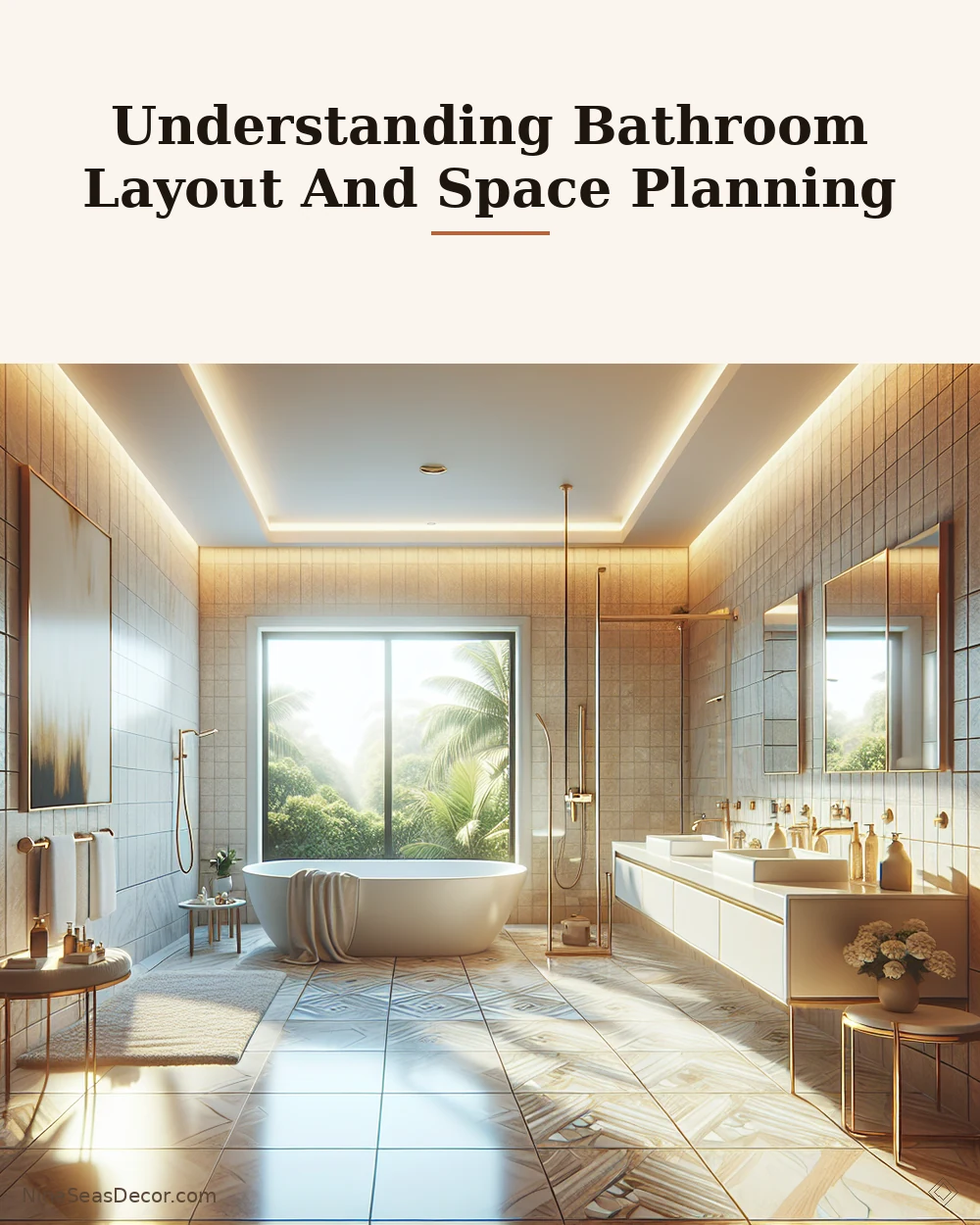
Before you buy a single tile or pick a paint color, you need to understand your bathroom layout. This is the single most important step in the entire design process, and it is the one most homeowners rush through. The layout determines where your plumbing rough-ins are located, which dictates where your toilet, sink, and shower or tub can realistically go. Moving plumbing is expensive, often ranging from ($2,500 to $7,000) depending on your home’s configuration and local labor rates, so working with your existing plumbing locations whenever possible is a smart financial decision.
According to the National Kitchen and Bath Association (NKBA) 2024 Design Guidelines, there are specific clearance requirements that every bathroom must meet for both comfort and code compliance. You need a minimum of 30 inches of clear floor space in front of the toilet, at least 15 inches from the toilet centerline to any side wall or obstruction, and a minimum 21-inch clearance in front of all fixtures. These are minimums, and honestly, I always recommend going bigger whenever the space allows.
The most common bathroom layouts in American homes are the single-wall layout, the parallel layout, and the L-shaped layout. Each has advantages depending on your square footage and fixture priorities. Understanding which layout you are working with helps you make smarter decisions about every element that follows.
MEASURING YOUR BATHROOM CORRECTLY
You cannot design a bathroom without accurate measurements, and I mean accurate. Do not estimate. Grab a quality tape measure and write everything down. Measure the total room dimensions, noting the location of every door, window, and existing plumbing chase. A typical full bathroom in a US home runs between (40 and 100 square feet), while a master bathroom can range from (100 to 200+ square feet). A half bathroom or powder room typically falls between (18 and 35 square feet). Knowing your exact square footage helps you determine which fixtures are realistic, how much tile you will need (always order 10 to 15 percent extra for cuts and waste), and what kind of ventilation your space requires. Ceiling height matters too. Standard ceilings are (8 feet), but many older homes have lower ceilings at (7 feet), which affects your choices for tall storage units and certain shower configurations.
WORKING WITH THE PLUMBING TRIANGLE
Professional designers talk about the plumbing triangle, which refers to the relationship between the toilet, sink, and shower or tub. Keeping these three elements close together on shared walls minimizes the amount of new plumbing required, which directly reduces your renovation cost. When you move a toilet even (5 to 10 feet) from its existing rough-in, you are potentially adding ($1,500 to $3,000) to your plumbing bill alone. The ideal scenario is redesigning around your existing wet wall, which is the wall where your main plumbing stack runs. Ask your plumber to identify this wall before you finalize any design decisions. It is a conversation that takes (15 minutes) and can save you thousands of dollars.
LAYOUT TYPES FOR DIFFERENT BATHROOM SIZES
Different room sizes call for different approaches to fixture placement. For bathrooms under (50 square feet), a single-wall layout with a corner shower and wall-mounted sink maximizes floor space and makes the room feel larger. For bathrooms between (50 and 100 square feet), a tub-shower combo on one wall with the toilet and vanity on adjacent walls creates a balanced, functional triangle. For larger bathrooms above (100 square feet), you have the luxury of separating the tub and shower, adding a double vanity, and incorporating a private water closet. Each decision you make at the layout stage creates a cascade of downstream choices, so take your time here and consider consulting with a certified bath designer (CBD), a credential issued by the NKBA.
Choosing The Right Fixtures For Your Bathroom Design
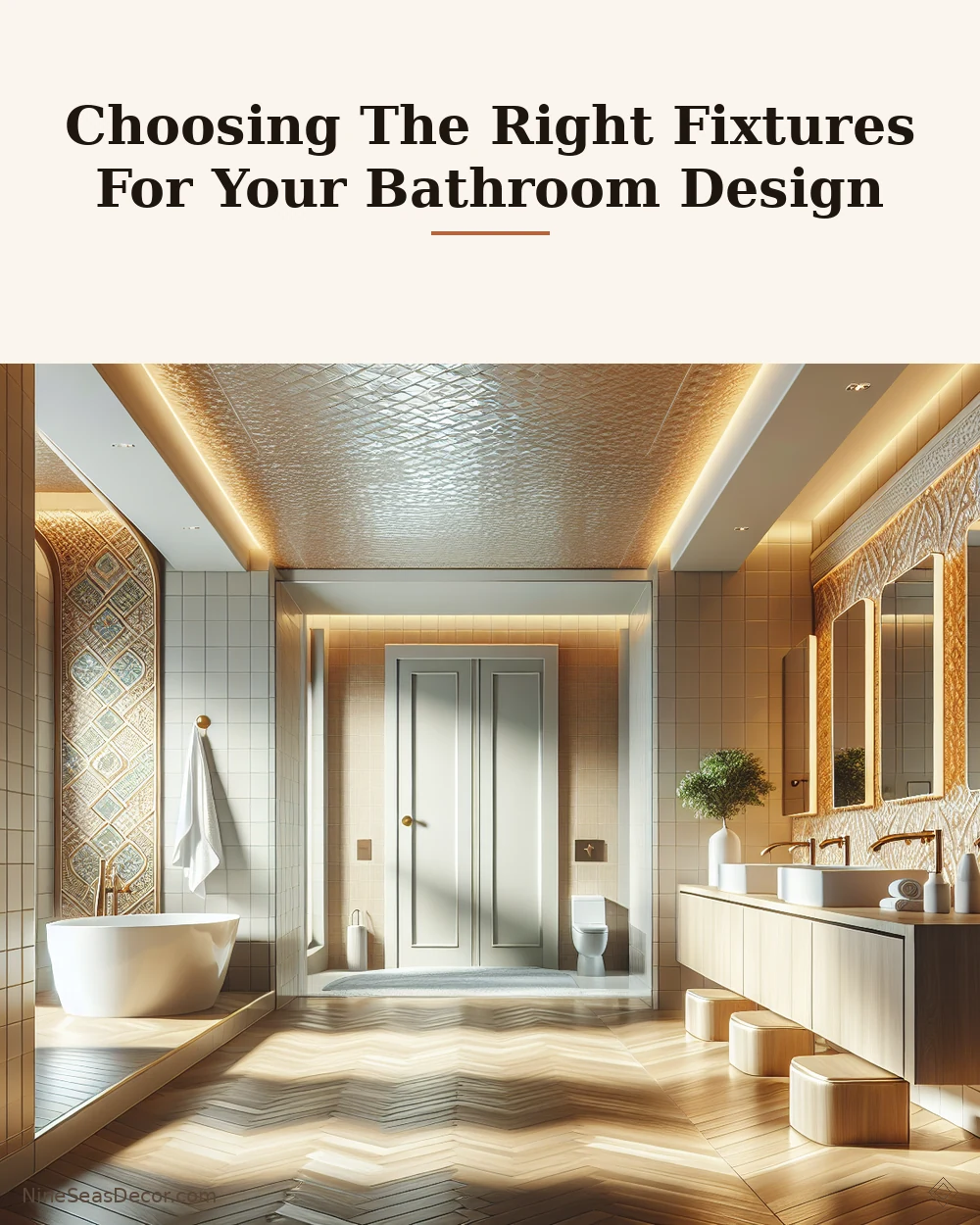
Once your layout is locked in, fixture selection is the next major decision. And here is where the fun really begins, because the market for bathroom fixtures in 2026 is extraordinary. We are seeing a massive shift toward smart fixtures, water-efficient technology, and sculptural designs that treat functional items as works of art. But excitement can lead to overspending, so let us talk about both inspiration and budget realities.
According to the Houzz 2024 Bathroom Trends Study, freestanding bathtubs remain the most desired feature in master bathroom renovations, requested by 52 percent of homeowners planning a remodel. However, the same study found that only 31 percent of those homeowners actually installed one, largely because of space and cost constraints. A quality freestanding tub runs anywhere from ($800 to $5,000+) for the tub alone, and installation including plumbing modifications can add another ($500 to $2,000). These are real numbers you need to factor in from the start.
Fixture finishes are another area where design choices have a major impact on the overall look and feel of your bathroom. The dominant finishes in 2026 are matte black, brushed nickel, unlacquered brass, and champagne bronze. Mixing finishes has become completely acceptable in contemporary design, though I always advise limiting yourself to no more than two finishes in a single bathroom to avoid visual chaos.
SELECTING THE RIGHT TOILET FOR YOUR SPACE
The toilet is the most used fixture in your bathroom, so do not treat it as an afterthought. In 2026, the standout choices are wall-hung toilets and elongated one-piece models. A wall-hung toilet costs between ($700 and $2,500) for the unit alone, but it saves approximately (10 to 12 inches) of floor depth compared to a floor-mounted model, which is enormous in a small bathroom. It also makes cleaning significantly easier. For budget-conscious homeowners, a quality one-piece elongated toilet in the ($300 to $800) range offers excellent performance and a sleek profile. Look for models with a WaterSense certification, which use just (1.28 gallons per flush) compared to older models that used (3.5 to 7 gallons per flush). That efficiency adds up over a year of use.
VANITY AND SINK OPTIONS EXPLAINED
Your bathroom vanity is both a functional storage unit and a major design statement. For a single vanity, standard widths run from (24 to 48 inches), while double vanities typically range from (60 to 72 inches) wide. Floating or wall-mounted vanities are enormously popular right now because they create the illusion of more floor space and have a clean, contemporary look. Prices range from ($400 for a basic model) to ($5,000 or more) for custom built work. Undermount sinks remain the most popular choice for their easy cleaning and seamless look, while vessel sinks have made a strong comeback as a bold design statement. Countertop material is equally important. Quartz is the most durable and low maintenance option, running ($55 to $120 per square foot installed), while marble is luxurious but requires sealing and careful maintenance.
SHOWER AND TUB CONFIGURATIONS
The shower is often the centerpiece of a modern bathroom design, and the options in 2026 are genuinely impressive. Curbless or zero-threshold showers are the top trend, both for their accessibility benefits and their sleek, open aesthetic. A standard shower stall should be no smaller than (36 by 36 inches), though (36 by 48 inches) is the comfortable minimum I recommend for most adults. A walk-in shower at (60 by 36 inches or larger) feels truly luxurious. Frameless glass enclosures are the preferred choice for a high-end look, typically costing ($800 to $2,500) depending on size and glass thickness. For shower systems, a thermostatic valve with separate volume controls is the gold standard, allowing precise temperature control independent of pressure, running ($400 to $1,500) for the valve system alone.
Tile Selection And Materials For Every Budget
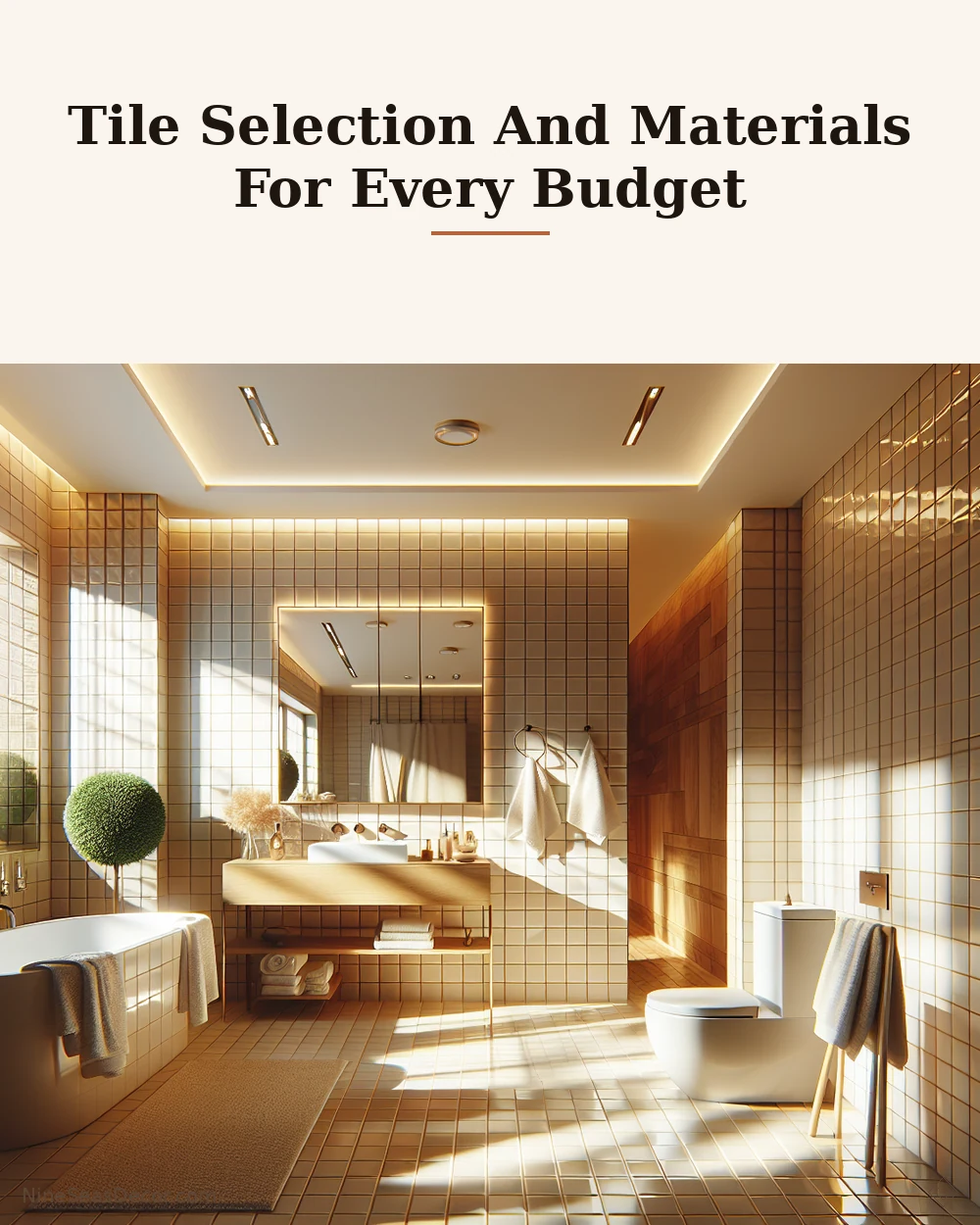
Tile is the most visually dominant material in most bathrooms, covering floors, shower walls, and often the main walls as well. Getting your tile selection right can make a modest bathroom feel like a luxury spa. Getting it wrong, and I have seen this happen, can make an expensive renovation look cheap and dated within just a few years. The key is understanding the relationship between tile size, pattern, grout color, and your overall design vision.
The most popular tile trends heading into 2026 include large format tiles in sizes like (24 by 48 inches), zellige-inspired handmade tiles, fluted or ribbed tiles, terrazzo patterns, and classic subway tile in updated sizes and finishes. The large format tile trend is particularly significant because fewer grout lines create a cleaner look and make small spaces feel significantly larger. For floor tile, you need to ensure your selection has a coefficient of friction (COF) rating of 0.42 or higher for wet areas. This is a safety requirement, not just a recommendation.
Material costs vary enormously. Ceramic tile starts at ($1 to $3 per square foot), porcelain tile runs ($3 to $10 per square foot), natural stone like marble or travertine costs ($8 to $25+ per square foot), and specialty handmade tiles can reach ($30 to $60 per square foot) or more. Add installation costs of ($8 to $15 per square foot) for standard installations, more for complex patterns like herringbone or mosaic work.
FLOOR TILE CHOICES THAT LAST
Your bathroom floor tile needs to balance beauty, safety, and durability. In 2026, the most popular choices for bathroom floors are matte porcelain, textured stone-look tiles, and encaustic cement tiles for a more eclectic look. I want to address a common misconception. Bigger tiles are not always harder to install on floors. Modern large format porcelain at (24 by 24 inches) or (24 by 48 inches) can look absolutely stunning on bathroom floors and actually reduces grout maintenance. Grout color matters enormously on floors. A matched grout (same tone as the tile) creates an elegant, seamless look, while a contrasting grout adds graphic definition. For practical maintenance, I always recommend a stain-resistant epoxy grout or a standard cement grout treated with a quality grout sealer applied every (12 to 18 months).
SHOWER WALL TILE DESIGN STRATEGIES
Your shower tile is where you can really express your design personality, and it is also where mistakes can be the most visually obvious. The classic approach is using a single tile throughout the entire shower for a clean, cohesive look. A more dynamic approach uses a field tile for the main walls and a feature tile as an accent on the back wall or in a niche. Shower niches deserve special attention. A recessed niche sized (12 by 24 inches) or (12 by 36 inches) built into the shower wall provides practical storage without adding visual clutter. For grout joints in shower walls, go as small as possible. A (1/16 inch joint) on rectified porcelain creates an almost seamless, contemporary look, while larger joints of (1/4 to 1/2 inch) suit more rustic or handmade tile styles.
ALTERNATIVE MATERIALS BEYOND TILE
While tile dominates bathroom surfaces, the growing interest in alternative wall materials is worth discussing. Porcelain slab panels, essentially large format porcelain cut to custom sizes, can cover an entire shower wall with just (one or two pieces), creating a truly seamless look. These slabs can measure (60 by 120 inches) or larger and run ($15 to $40 per square foot) for material alone. Waterproof shiplap or PVC wall panels have become a popular, budget-friendly alternative for non-shower walls, running just ($3 to $8 per square foot). Venetian plaster is having a significant moment in 2026 bathrooms as well, offering a beautifully textured, artisanal look on walls outside the shower zone. It is applied in multiple thin coats and sealed for moisture resistance, costing around ($8 to $18 per square foot) installed.
Bathroom Lighting Design That Actually Works
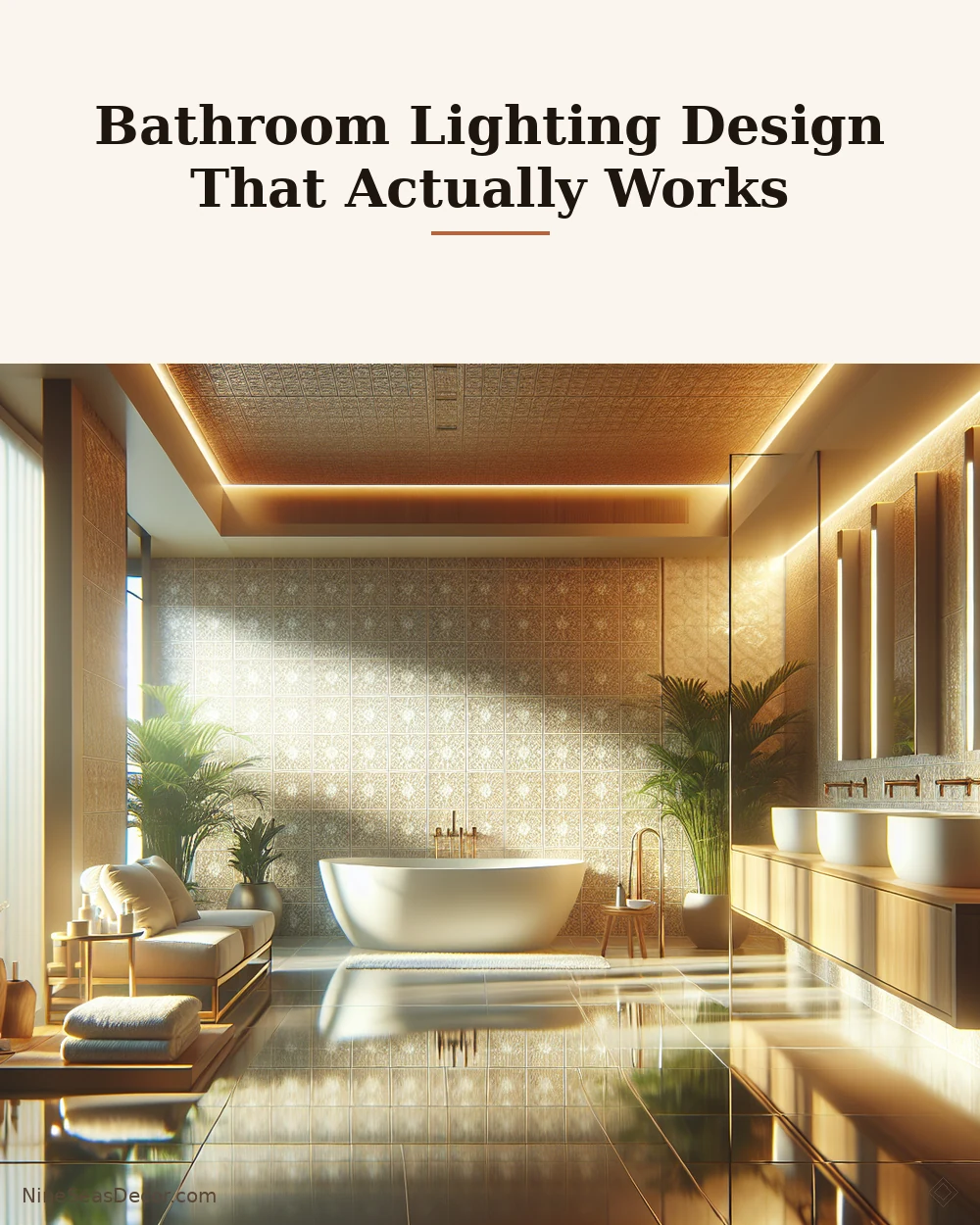
If there is one area where homeowners consistently underinvest in their bathroom design, it is lighting. A single ceiling fixture is almost never sufficient for a well-designed bathroom. Think about it. You use your bathroom for tasks that require clear, accurate light including applying makeup, shaving, and evaluating your appearance before heading out the door. Poor lighting does not just look bad. It actually impairs your ability to perform these tasks effectively.
The gold standard for bathroom lighting involves layering three types of light. Ambient lighting provides overall illumination, typically through a ceiling-mounted fixture or recessed lights. Task lighting is the critical one, positioned specifically to illuminate your face at the mirror without casting shadows. Accent lighting adds depth and drama, highlighting architectural features, artwork, or the texture of a beautiful tile wall. Together, these three layers create a bathroom that functions perfectly and looks extraordinary.
According to a 2022 report from the Illuminating Engineering Society (IES), vertical lighting positioned on either side of a mirror at face height (approximately 60 to 65 inches from the floor) eliminates the unflattering shadows created by overhead lighting alone. This is the single most impactful lighting change you can make in a bathroom, and it costs surprisingly little to implement.
VANITY LIGHTING THAT FLATTERS
For vanity lighting, the two best configurations are side-mounted sconces flanking the mirror, or a long horizontal bar light mounted above the mirror. Side sconces should be positioned with their centers at approximately (60 to 65 inches above the floor) and spaced (36 to 40 inches apart) for a standard single vanity. Look for fixtures that emit light in the (2700K to 3000K color temperature range) for the most flattering, natural-looking light. This is labeled as warm white on most packaging. Avoid cool white or daylight bulbs at (4000K to 6500K) near mirrors. They wash out skin tones and create a clinical feel that nobody wants at (7 in the morning). Budget for quality vanity fixtures. Decent sconces start at ($80 to $200 each), while statement fixtures can run ($300 to $800 each).
RECESSED LIGHTING AND DIMMER SWITCHES
Recessed downlights work beautifully as ambient lighting in bathrooms, but placement matters. Avoid placing recessed lights directly above the mirror, as this creates harsh, unflattering shadows under the eyes. Instead, position them in a grid pattern across the ceiling, keeping them at least (18 to 24 inches away from mirror-facing walls). Use (4-inch trim recessed lights) rather than the larger (6-inch) versions in bathrooms. They look more refined in a smaller space. Every light circuit in your bathroom should be on a dimmer switch. This is non-negotiable in my opinion. The ability to drop your bathroom lighting to (10 to 20 percent brightness) for an evening bath is the difference between a relaxing ritual and an interrogation room experience. LED-compatible dimmers run just ($20 to $60 each) and are one of the highest-return investments in bathroom design.
SPECIALTY LIGHTING FEATURES FOR 2026
The lighting innovations coming out of 2025 and into 2026 are genuinely exciting. LED mirror lighting, where the light source is built directly into the mirror frame or backlit behind a floating mirror, is now the dominant choice in contemporary bathroom design. These integrated LED mirrors range from ($150 to $1,500) and often include features like color temperature adjustment, dimming controls, and even anti-fog heating elements. Shower lighting is another area seeing innovation. Recessed shower lights with IP65 or IP67 waterproof ratings are now widely available in both warm and adjustable color temperatures. In larger, more indulgent bathroom projects, under-vanity LED strip lighting creates a floating effect and adds a beautiful ambient glow at night, running just ($30 to $80 per linear foot installed).
Color Palettes And Paint Selection For Bathrooms
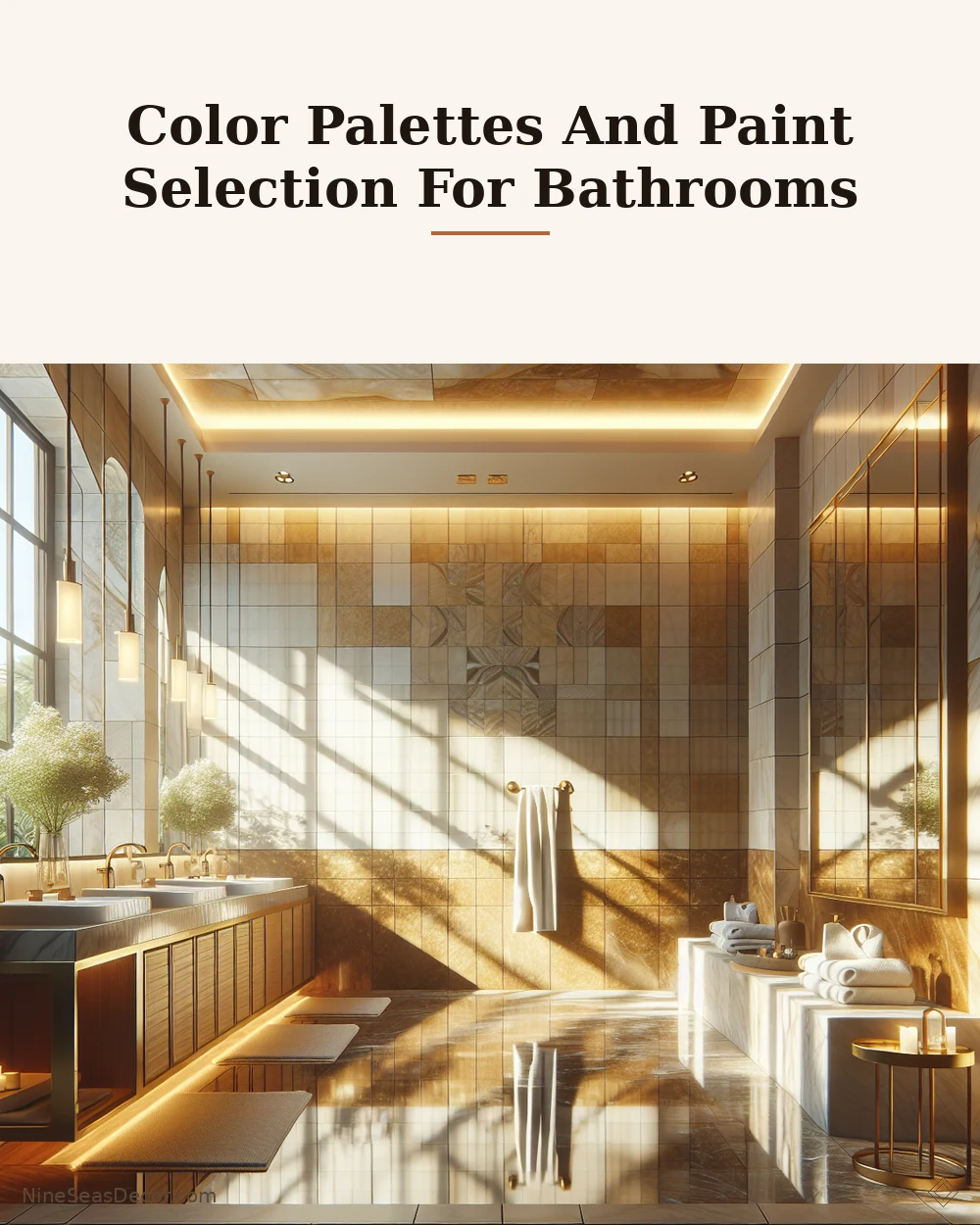
Color is one of the most emotionally powerful tools in your bathroom design arsenal, and in 2026 we are seeing a fascinating split between two dominant directions. On one side, there is the ongoing love affair with warm neutrals and earthy tones. Creamy whites, warm taupes, terracotta, and dusty sage are everywhere. On the other side, a growing number of homeowners are going bold, embracing deep navy blues, rich forest greens, and dramatic charcoal grays to create moody, intimate bathroom spaces.
The key principle to understand about bathroom color selection is that bathrooms are usually smaller spaces with limited natural light, which means color behaves differently here than in other rooms. A color that looks soft and serene on a large living room wall can feel oppressive in a (50 square foot) bathroom with a single window. I always recommend ordering actual paint samples and living with them for at least (48 to 72 hours) in your specific bathroom before committing.
For paint, always use a bathroom-specific paint formulation with mildew resistance and a satin or semi-gloss sheen. These finishes resist moisture, wipe clean easily, and hold up to the humidity cycles that destroy flat paint within months. Budget ($45 to $75 per gallon) for a quality interior bathroom paint.
WARM NEUTRAL PALETTES THAT WORK IN 2026
The warm neutral trend shows no sign of fading, and for good reason. These colors create a spa-like atmosphere that feels both timeless and deeply current. My top recommendations for 2026 include Sherwin-Williams Accessible Beige (SW 7036), a versatile warm greige that works beautifully with both warm and cool metal finishes. Benjamin Moore White Dove (OC-17) is the perfect warm white for bathrooms with limited natural light. For something with more warmth and depth, consider Sherwin-Williams Antique White (SW 6119) or Benjamin Moore Pale Oak (OC-20). If you want to dip into the earthy trend without full commitment, Sherwin-Williams Accessible Beige (SW 7036) paired with warm wood tones and unlacquered brass fixtures creates a bathroom that feels genuinely luxurious. These colors work especially well with natural stone tile, warm-toned wood vanities, and linen or rattan accents.
BOLD AND DRAMATIC COLOR CHOICES
For the homeowner willing to embrace color, the rewards in a bathroom are extraordinary. Deep, saturated walls create an intimate, jewel-box feeling that is genuinely unlike any other room in the house. Benjamin Moore Newburyport Blue (HC-155) is a sophisticated navy that pairs beautifully with crisp white fixtures and unlacquered brass hardware. Sherwin-Williams Cascades (SW 7623) is a moody, desaturated blue-green that creates an incredible spa-like atmosphere. For a more earthy dramatic option, Benjamin Moore Wrought Iron (2124-10), a near-black with subtle green undertones, creates a bathroom that feels both sophisticated and cozy. When going bold on walls, balance with lighter elements. White or cream grout, bright white fixtures, and ample lighting prevent the space from feeling dark and closed in. Remember, you can always add a bold color with confidence in a bathroom because it is a small space. If you decide you hate it after (two years), repainting a bathroom costs just ($200 to $600) for a professional paint job.
TILE AND PAINT COLOR COORDINATION
One of the trickiest parts of bathroom color planning is coordinating your paint with your tile, which often has its own complex undertones. Pure white subway tile almost always has a slight undertone, either cool blue-gray or warm cream. Choosing a wall paint that fights against that undertone creates a jarring, unresolved look. The solution is to pull a small chip of your tile and bring it with you to the paint store. Hold potential paint samples against the tile chip in natural light and in the artificial light you will use in your bathroom. These are different exercises because natural and artificial light render colors very differently. Warm LED lighting at 2700K will make cool tiles look slightly warmer, while bright white (4000K) lighting makes everything look cooler. Getting these elements in dialogue with each other before you commit saves enormous headaches down the line.
Bathroom Storage Solutions And Organization Design
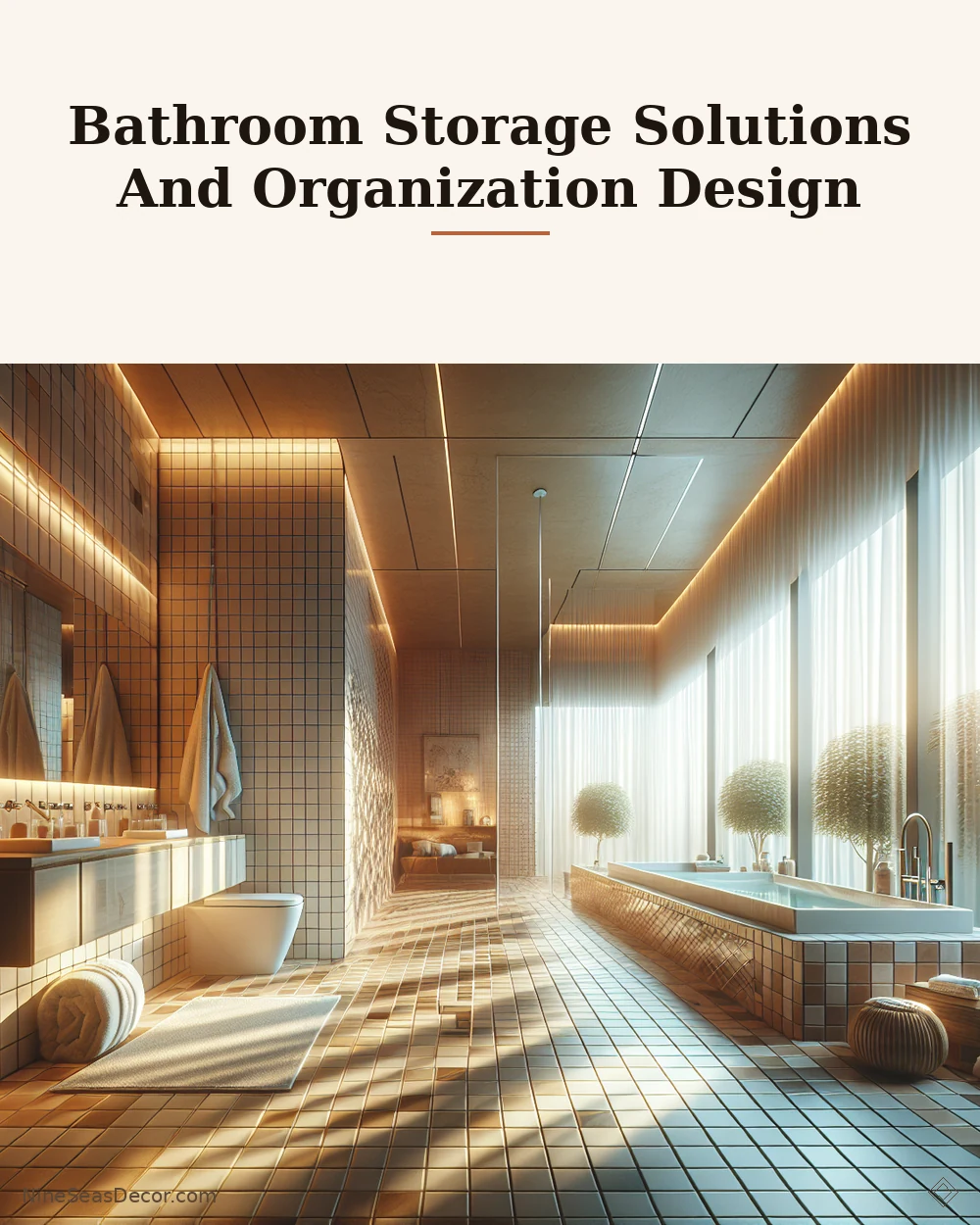
Beautiful design means nothing if your bathroom is constantly cluttered, and let me tell you, bathroom storage is one of the areas where American homes are most underserved. The average American bathroom contains over (30 individual personal care products), according to a survey by the American Cleaning Institute, and yet most bathrooms are designed with storage capacity for maybe half that amount. Smart storage design is not just about adding more cabinets. It is about designing storage that is accessible, organized, and visually clean.
The best approach to bathroom storage planning follows a simple hierarchy. First, identify everything that needs to live in the bathroom. Second, categorize it by frequency of use. Daily use items need to be most accessible. Monthly use items can go in deeper or higher storage. Third, assign each category to a specific storage type, and then design the storage to fit those needs. This sounds obvious but almost nobody does it before their renovation, which is why so many beautifully designed bathrooms end up covered in products with nowhere to go.
VANITY STORAGE MAXIMIZATION STRATEGIES
Your bathroom vanity is your primary storage workhorse, and maximizing it starts at the design stage. For a (36-inch single vanity), you have approximately (2.5 to 3.0 cubic feet) of interior storage. That sounds like a lot until you factor in plumbing. Drawer vanities almost always outperform door-and-shelf vanities in terms of accessible storage. Drawers allow you to see and reach everything without crouching and digging. A drawer organizer system using inserts sized to your specific drawers costs just ($20 to $60) and completely transforms how usable that space is. For the vanity under-sink area, consider a two-door vanity with pull-out shelves or a lazy Susan inside a corner vanity. These modifications cost relatively little but dramatically increase usable storage. Tall linen towers flanking a vanity add substantial vertical storage in the ($300 to $800) range for quality freestanding or semi-built-in units.
CREATIVE STORAGE SOLUTIONS FOR SMALL BATHROOMS
In a small bathroom, every inch of wall space is a storage opportunity. Recessed medicine cabinets are one of the highest-value storage additions in small bathrooms, providing (4 to 6 inches) of depth without projecting into the room. A quality (30 by 30-inch) recessed medicine cabinet with interior lighting runs ($200 to $600). Over-toilet storage units utilize the dead space above the toilet, typically (24 to 27 inches) wide and (60 to 72 inches) tall, providing significant storage for towels, toiletries, and supplies. Floating shelves at (10 to 12 inches deep) installed above the toilet or beside the vanity add storage and decorative display space without eating into floor area. For shower organization, a built-in shower niche is always preferable to a hanging caddy, and a (12 by 24-inch niche) costs just ($100 to $200) extra during the tile installation phase.
LINEN AND TOWEL STORAGE DESIGN
Towel storage is a specific challenge in bathroom design because towels need to both dry properly and look neat. The minimum recommendation is (24 inches of towel bar space per person) using the bathroom regularly. For a couple sharing a master bathroom, that means at least (48 inches) of combined towel bar space, ideally spread across different walls for proper air circulation. Heated towel rails are one of my favorite bathroom upgrades, providing both a storage solution and a genuine luxury experience. Electric models that hardwire into the wall run ($150 to $500) for the unit, and installation adds another ($100 to $300). Hydronic versions connected to your home’s hot water system cost more but provide ongoing warmth without adding to your electric bill. For extra towels and linens, a built-in linen closet within or adjacent to the bathroom is ideal, but where that is not possible, a free-standing armoire or a tall ladder shelf at (72 to 80 inches tall) works beautifully in bathroom design.
Bathroom Remodel Costs And Budgeting For 2026
Let us talk about the numbers in real, honest terms, because I see too much vague advice online that does not help anyone actually plan a renovation. Bathroom remodel costs in 2026 vary enormously based on scope, location, materials, and whether you are moving plumbing. But I can give you reliable ranges based on industry data that will help you build a realistic budget.
According to the 2024 Remodeling Magazine Cost vs. Value Report, a midrange bathroom remodel averages ($25,251) nationally and returns approximately (66.7 percent) of that cost at resale. An upscale bathroom remodel averages ($79,982) and returns about (36.7 percent) at resale. This is important data because it tells you something surprising. Midrange renovations deliver much better return on investment than ultra-luxury ones, which means you do not have to spend a fortune to add significant value to your home.
Labor typically represents (40 to 60 percent) of total bathroom renovation costs, which is why getting multiple contractor quotes is so important. In high-cost-of-living cities like New York, San Francisco, or Boston, labor rates can push total project costs (30 to 50 percent higher) than the national average. In lower-cost markets, you may come in well below average.
BUDGET BREAKDOWN BY PROJECT SCOPE
A cosm

Hi, I’m Sophia Rose. I believe every home tells a story. At Nine Seas Decor, I share creative ideas, budget-friendly tips, and modern trends to help you turn your living space into a sanctuary. Let’s make your home beautiful, one corner at a time!