
small-bedroom-ideas-2026
Let’s be honest for a second. You walk into your bedroom, look around at the cramped corners, the furniture that barely fits, and the clutter spilling out from every direction, and you wonder how anyone is supposed to actually relax in here. I hear this constantly from readers and clients alike. A small bedroom can feel like a punishment rather than a sanctuary, and that frustration is completely valid. Whether you’re working with a (100 sq ft) guest room, a (120 sq ft) primary bedroom in a city apartment, or a (90 sq ft) kids’ room that needs to do triple duty, the challenge is real and the struggle is universal. But here is the thing I always tell people: small does not have to mean cramped, dark, or hopeless. It just means you need a smarter plan.According to a 2023 study published in the Journal of Environmental Psychology, individuals who sleep in well-organized, visually calm bedroom environments report up to 42% lower stress levels and significantly better sleep quality than those in cluttered or poorly arranged spaces. That research hit me hard when I first read it, because it confirms what designers have always known intuitively. The way your bedroom looks and functions directly impacts how you feel, sleep, and recharge. In small spaces, this connection between design and wellbeing is even more pronounced, because every single inch is doing emotional and functional work simultaneously.This guide covers everything you need to know about transforming a small bedroom in 2026, from smart furniture choices and space-saving storage strategies to color psychology, lighting tricks, vertical design techniques, and budget-friendly updates that make a massive visual impact. I have pulled together the latest design trends, real product recommendations, actual paint codes, and honest cost breakdowns so you can make informed decisions rather than expensive mistakes. Whether you’re renting and can’t knock down walls or you own your home and are ready for a full renovation, there is something here for every situation and every budget.
I have been writing about interior design for NineSeasDecor.com for years, and I have personally consulted on dozens of small bedroom transformations across the country. I have made mistakes, seen what works, and watched homeowners go from defeated to absolutely delighted by their spaces. The advice in this article is not theoretical. It comes from real rooms, real budgets, and real people who needed solutions that actually held up over time. So let’s dig in and turn that tiny bedroom into the retreat you deserve.
Understanding Your Small Bedroom: Layout Planning And Space Assessment
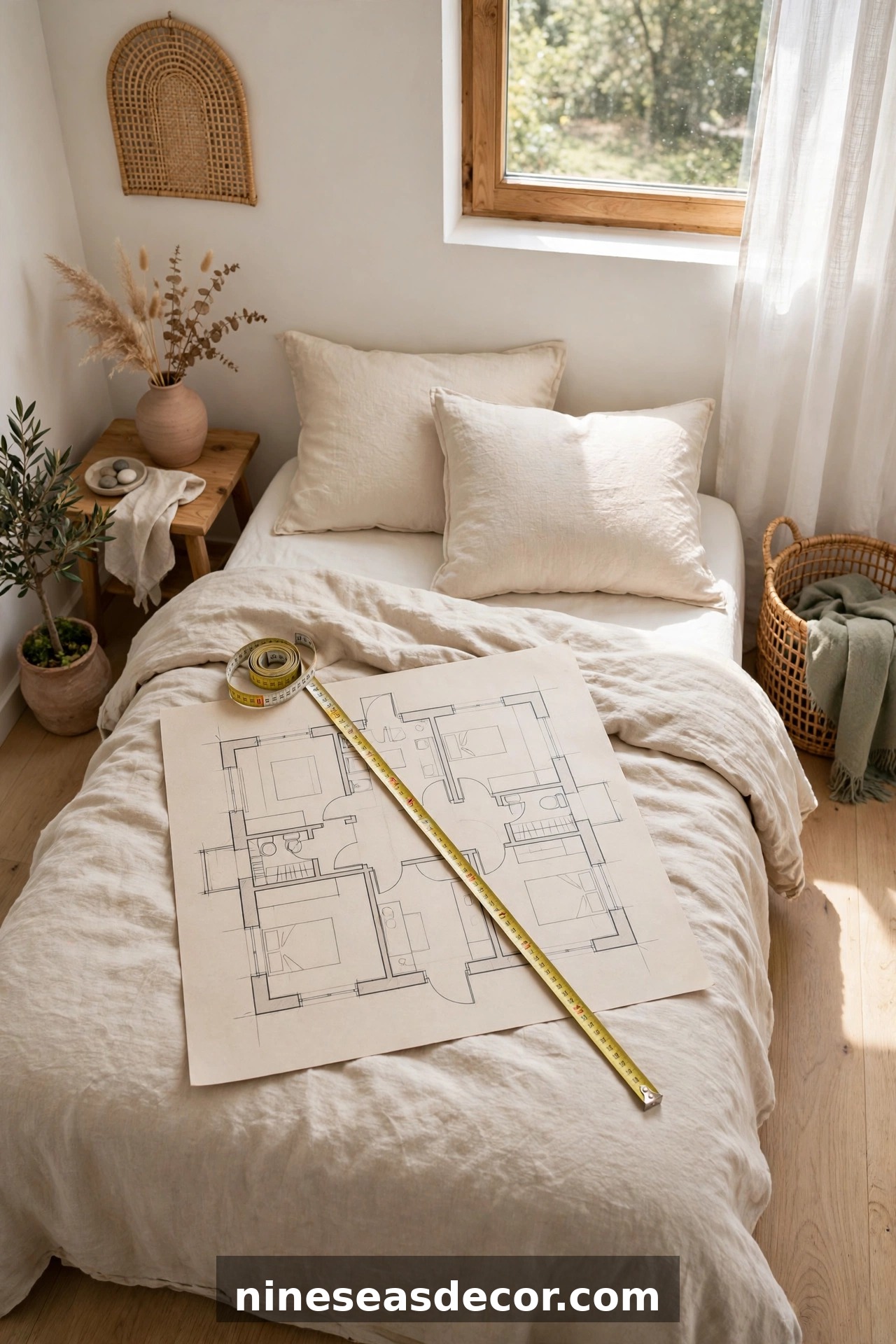
Before you buy a single piece of furniture or open a single paint can, you need to understand exactly what you are working with. This sounds obvious, but you would be shocked how many people skip this step entirely and end up with a gorgeous nightstand that blocks the closet door or a bed frame that makes the room feel like a hallway. Layout planning is the single most important thing you can do for a small bedroom, and getting it right before you spend any money will save you enormous frustration and cost.
Start by measuring everything precisely. Get the total square footage, note every door swing, every window placement, every outlet location, and every heating or cooling vent. Sketch it out on graph paper or use a free tool like RoomSketcher or Floorplanner. According to the National Kitchen and Bath Association (NKBA), proper space planning before purchasing furniture reduces return rates and dissatisfaction by over 50%. Even though NKBA focuses primarily on kitchens and baths, their spatial planning principles apply directly to small bedroom design, and that statistic speaks volumes.
For a primary bedroom, the minimum recommended clearance around a queen bed is (24-36 inch clearance) on each walkable side. In a (10×10 foot) room, that leaves very little wiggle room, which is why furniture scale and placement strategy matter so much. In a (10×12 foot) space, you have more flexibility but still need to be intentional.
HOW TO MEASURE AND MAP YOUR BEDROOM
Start with a tape measure and a sharp pencil. Measure wall to wall in both directions, then note the exact placement of doors including which way they swing, windows including the sill depth, closet openings, and any architectural features like radiators, built-in shelves, or sloped ceilings. Write down every measurement twice. Mark the locations of electrical outlets and light switches because these affect furniture placement more than people realize. A floor plan sketch at even a rough scale of one inch equals one foot gives you a working document you can test ideas against. Try placing your bed footprint in different orientations on the sketch before moving any actual furniture. This simple exercise takes about 30 minutes and can save you from a (full day) of frustrating heavy lifting.
CHOOSING THE RIGHT BED PLACEMENT STRATEGY
In most small bedrooms, the bed is the elephant in the room, literally. It takes up the most floor space and dictates everything else. The most common and generally best approach is placing the bed against the longest solid wall, centered if possible, to create visual balance. However, in rooms with unusual shapes or multiple door and window openings, a corner placement can actually free up significantly more usable floor space. A corner bed configuration can reclaim as much as (12-18 square feet) of open floor area in a (100-120 sq ft) room, which is genuinely transformative. Avoid placing the bed directly under a window if possible, as it disrupts natural light flow and can create uncomfortable drafts. The goal is always to create clear, logical traffic pathways of at least (24 inches) wide from the door to the bed and from the bed to the closet.
WORKING WITH AWKWARD ARCHITECTURAL FEATURES
Sloped ceilings, dormers, load-bearing walls, and oddly placed windows are common in small bedrooms, especially in older homes and converted spaces. Do not fight these features. Lean into them. A sloped ceiling over the bed becomes a cozy, intentional design moment rather than a liability when you acknowledge it with a flush-mounted fixture or a simple wood canopy. A dormer window can become a perfect reading nook with a built-in cushioned bench that doubles as storage. According to a 2022 survey conducted by Houzz, homeowners who incorporated awkward architectural features into their bedroom design rather than concealing them reported 38% higher overall satisfaction with their renovation outcomes. Embrace the quirks. They are often what makes a small space feel genuinely unique and charming rather than just a box.
Small Bedroom Furniture: Scale, Function, And Smart Choices
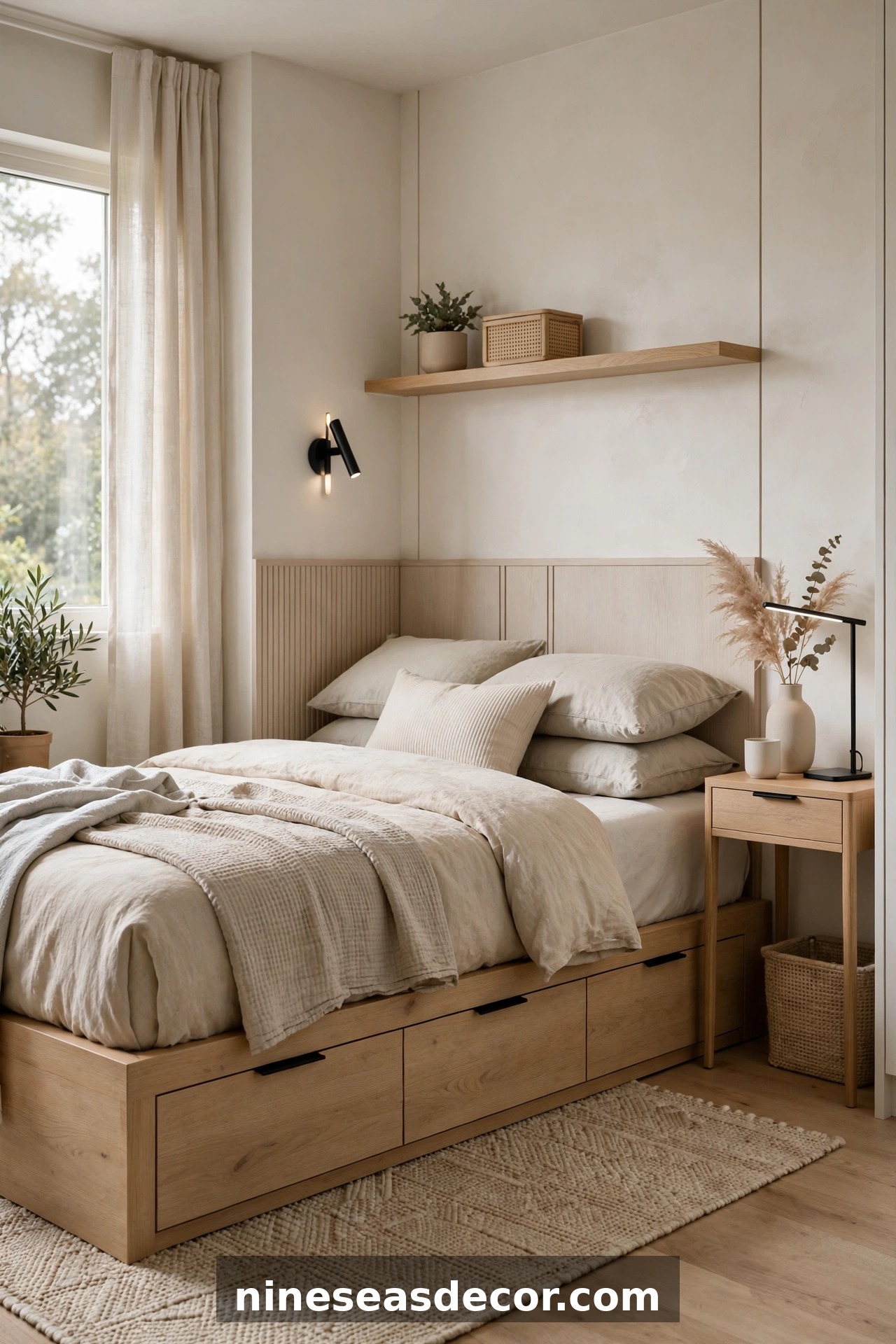
Furniture selection is where most small bedroom mistakes happen, and I say that with complete empathy because furniture shopping is genuinely confusing when you are trying to balance aesthetics, function, scale, and budget all at once. The core principle I come back to every single time is this: every piece of furniture in a small bedroom needs to earn its place. If it only does one job, it needs to be extraordinary at that one job. Ideally, every piece does two or three jobs simultaneously.
The average American spends ($2,000-$8,000) furnishing a bedroom from scratch according to 2024 data from the National Retail Federation. In a small bedroom, spending thoughtfully means prioritizing pieces that serve multiple functions, choosing appropriate scale, and selecting designs that create visual breathing room rather than visual weight. A big, dark, heavily ornate bed frame that looks stunning in a showroom can make a (100 sq ft) room feel like a cave. The same room with a low-profile platform bed in a light wood finish feels twice as large.
THE BEST BED FRAMES FOR SMALL BEDROOMS
For small spaces, the platform bed with built-in storage drawers is essentially the gold standard solution. These beds eliminate the need for a separate dresser in many cases, storing comforters, seasonal clothing, and linens in the base. A quality storage platform bed runs ($600-$2,000) depending on size and materials. For the absolute smallest rooms, a murphy bed or wall bed is worth serious consideration. Modern murphy bed systems have come a long way from the clunky fold-down cots of decades past. Today’s options from brands like Resource Furniture and Ori Living integrate seamlessly with shelving, desks, and sofas, with prices ranging from ($1,500-$5,000) for a full integrated system. In a (90-100 sq ft) studio bedroom situation, a murphy bed can reclaim nearly (35-40 square feet) of floor space during waking hours.
NIGHTSTANDS AND DRESSERS THAT DON’T OVERWHELM
Standard nightstands are (18-24 inches) wide and (24-28 inches) tall. In a small bedroom, consider downsizing to wall-mounted floating nightstands that are only (10-12 inches) deep. These create the same visual function of a nightstand without consuming floor space, and they make cleaning much easier too. For dressers, a tall narrow dresser at (18-20 inches) deep and (30-36 inches) wide uses significantly less floor space than a traditional wide dresser at (50-60 inches) wide, while offering comparable storage through vertical drawers. If the closet is deep enough, consider a built-in dresser within the closet itself, completely removing the piece from the main bedroom floor. This single move can feel like adding (20+ square feet) to the room.
MULTI-FUNCTIONAL FURNITURE SOLUTIONS
This is the category where small bedroom design gets really exciting. An ottoman with hidden storage at the foot of the bed ($150-$400) replaces a bench while hiding blankets and pillows. A desk that folds into a wall panel supports work-from-home needs without permanently occupying floor space. A bench with cubbies at the entry of the room handles shoes, bags, and overflow items without requiring a separate entryway. Even your headboard can multitask. A bookcase headboard eliminates the need for separate nightstands and provides book storage, charging stations, and decorative display space all in one footprint. According to a 2024 consumer report published by Houzz, 73% of homeowners renovating small bedrooms in 2024 prioritized multi-functional furniture over purely aesthetic pieces, a significant shift from just five years prior.
Color, Paint, And Visual Tricks To Make Small Bedrooms Feel Larger
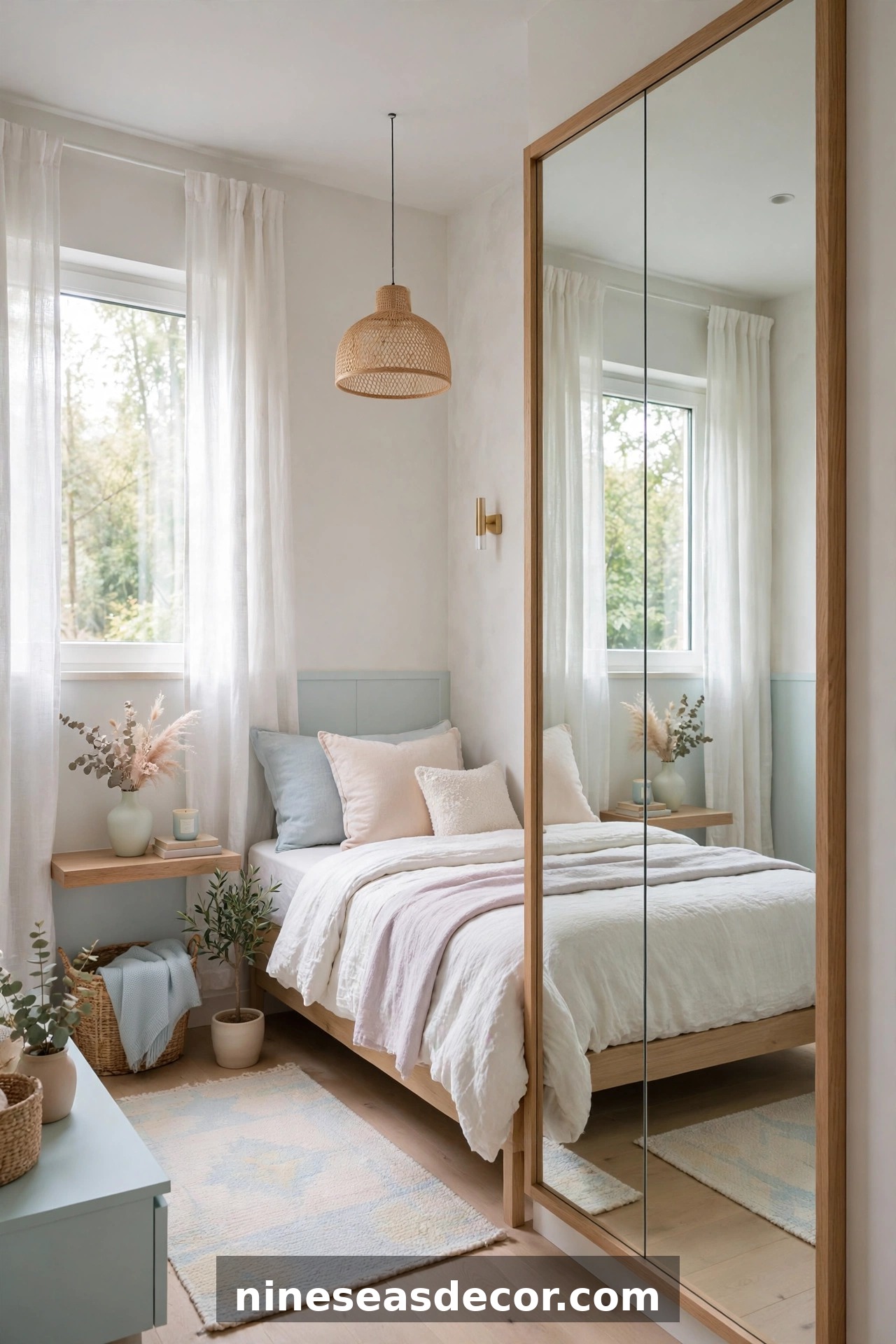
Color is probably the most powerful and most misunderstood tool in small bedroom design. I have seen people make beautifully spacious rooms feel claustrophobic with the wrong color choices, and I have seen cramped little boxes transform into elegant retreats simply through paint. The rules here are real, but they are also more nuanced than “just paint everything white.” In 2026, we are moving well beyond that one-note approach into something much more sophisticated and personally expressive.
The science behind color perception in small spaces is genuinely fascinating. Light bouncing off walls, ceilings, and floors creates the perception of depth and volume even when actual dimensions have not changed. A well-chosen paint palette can make a (100 sq ft) bedroom feel like (130 sq ft) without moving a single wall. That is not marketing fluff. That is how light and human perception actually work.
THE BEST PAINT COLORS FOR SMALL BEDROOMS IN 2026
For light and airy small bedrooms, the classic go-to colors remain reliably excellent. Sherwin-Williams Accessible Beige (SW 7036) is a warm greige that reflects light beautifully without feeling sterile. Benjamin Moore Pale Oak (OC-20) offers a similar warmth with slightly more blush undertones that feel incredibly cozy. For cooler tones, Benjamin Moore Chantilly Lace (OC-65) is the cleanest, most reflective white on the market and absolutely stunning in rooms with good natural light. If you want something with more personality, Sherwin-Williams Softened Green (SW 6177) brings a gentle, nature-inspired quality that feels both spacious and calm. These colors all have Light Reflectance Values (LRV) above 65, which means they bounce significant amounts of light around the room. Paint typically costs ($25-$65 per gallon) with most small bedrooms requiring (1-2 gallons) for two coats.
THE POWER OF MONOCHROMATIC COLOR SCHEMES
One of the most impactful and currently very trendy techniques for small bedrooms is the monochromatic approach, painting walls, ceiling, and trim all in the same color or closely related tones. When your eye cannot find a clear “stop” point where the wall ends and the ceiling begins, the room reads as larger and more cohesive. Try Benjamin Moore Hale Navy (HC-154) on walls, ceiling, and trim in a small bedroom with good lighting, and watch the room transform into a sophisticated jewel box rather than a tiny cave. This works especially well in rooms with interesting architectural details. The ceiling color should be one shade lighter than the walls to maintain an upward visual pull. Painting just the ceiling a light color while keeping walls bold is another approach that draws the eye up and adds perceived height to rooms with standard (8 foot) ceilings.
ACCENT WALLS, WALLPAPER, AND VISUAL DEPTH TECHNIQUES
The accent wall behind the bed remains one of the most effective single changes you can make in a small bedroom. A wallpapered accent wall adds pattern, depth, and personality without making the entire room feel busy. In 2026, large-scale botanical prints, textured grasscloth wallcoverings, and geometric mural wallpapers are all commanding serious attention in small bedroom design. For budget-conscious updates, peel-and-stick wallpaper has genuinely improved in quality over the past few years and costs ($2-$6 per square foot) compared to traditional wallpaper at ($5-$15 per square foot) plus installation. Mirrors are the other heavy hitter in this category. A large floor mirror or a full-length wall mirror positioned opposite a window can visually double the size of a room by reflecting both natural light and the view back into the space.
Lighting Strategies That Transform Small Bedroom Spaces
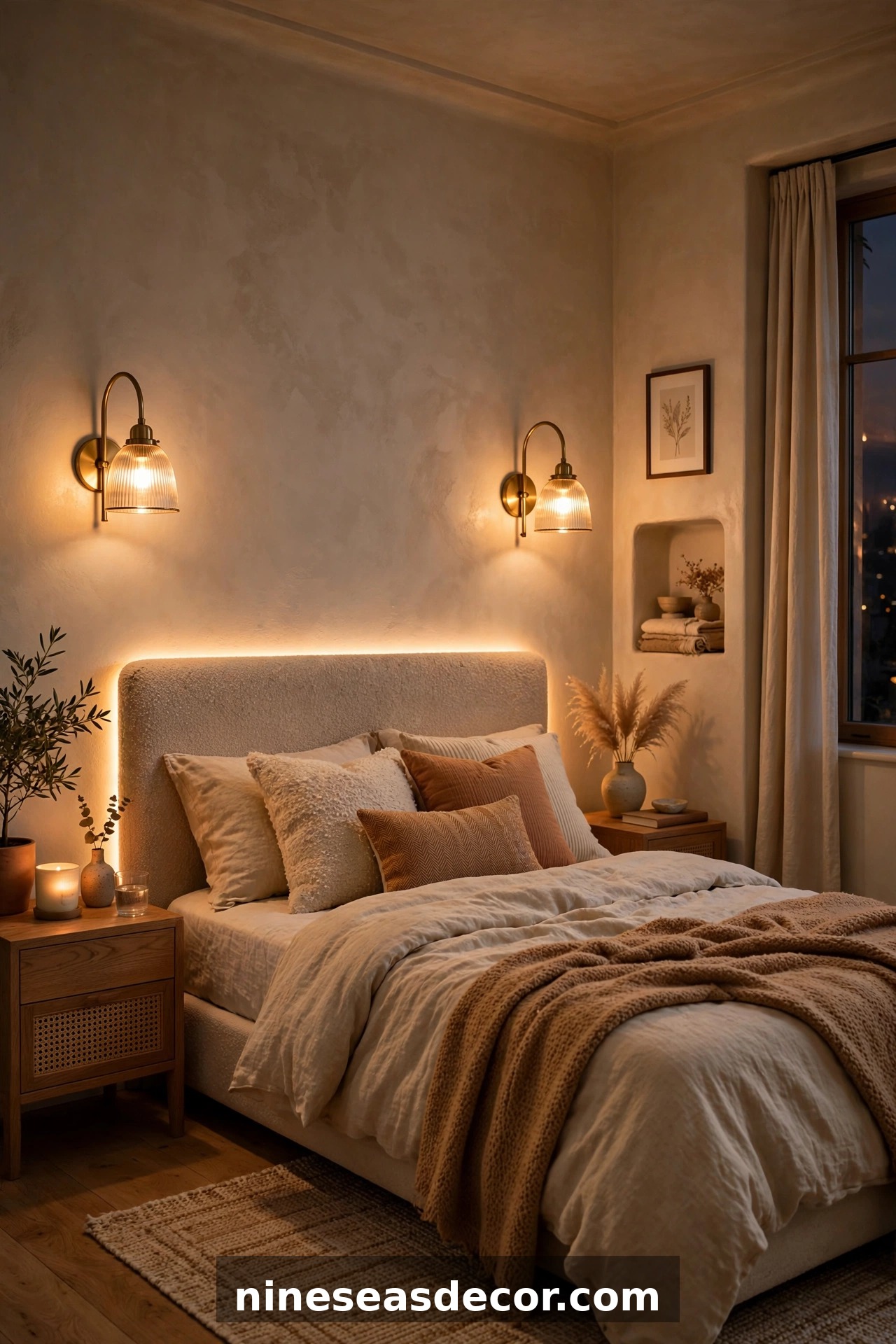
Lighting is the great equalizer in interior design. You can have perfect furniture, flawless paint, and a brilliant layout, but if the lighting is wrong, none of it will look or feel the way you want it to. In small bedrooms specifically, lighting does multiple jobs at once. It creates the illusion of space, it sets the emotional tone for rest and relaxation, it serves practical functions like reading and getting dressed, and it can highlight your design choices beautifully or completely undermine them.
The biggest lighting mistake I see in small bedrooms is relying entirely on a single overhead fixture, usually the builder-grade flush-mount ceiling light that came with the house. This creates flat, unflattering light that actually makes rooms feel smaller by eliminating shadow depth and visual dimension. A layered lighting approach using three distinct light sources always, always produces better results.
LAYERED LIGHTING: THE THREE-TIER APPROACH
The three tiers of layered lighting are ambient lighting (overall illumination), task lighting (focused light for specific activities), and accent lighting (decorative and mood-setting light). For ambient lighting in a small bedroom, a semi-flush ceiling fixture or a ceiling fan with integrated light works best because it does not drop down into the room’s vertical space the way a pendant or chandelier does. For task lighting, wall-mounted swing arm sconces on either side of the bed at (50-60 inches) from the floor are ideal because they eliminate nightstands or at least reduce their size requirement. Accent lighting includes LED strip lights under the bed frame or behind a floating shelf, a table lamp on a dresser, or backlit artwork above the headboard. A complete lighting upgrade for a small bedroom typically runs ($300-$900) for fixtures and installation.
MAXIMIZING NATURAL LIGHT IN SMALL BEDROOMS
Natural light is the most powerful tool you have for making a small bedroom feel larger and more welcoming, and many homeowners systematically block it without realizing it. Heavy, dark curtains that hang inside the window frame block significant portions of natural light even when open. Instead, install curtain rods (4-6 inches) beyond the window frame on each side and hang floor-to-ceiling curtains that start at the ceiling rather than the window top. This trick makes windows look dramatically larger and allows maximum light in when curtains are open while creating a luxurious, high-ceiling effect regardless of the actual ceiling height. Use sheer linen or cotton curtains in light, neutral tones that diffuse light softly even when closed. According to a 2023 research review in the Journal of Environmental Psychology, access to natural light in sleeping spaces is directly correlated with improved mood regulation and circadian rhythm alignment, underscoring why protecting and maximizing natural light is more than just an aesthetic choice.
SMART LIGHTING TECHNOLOGY FOR SMALL BEDROOMS
In 2026, smart lighting systems have become genuinely accessible and remarkably useful in small bedrooms. Systems like Philips Hue, Lutron Caseta, and LIFX allow you to control color temperature, brightness, and ambiance from your phone or through voice commands. This matters in small bedrooms because the right color temperature at the right time of day dramatically changes how the room feels. Warm white light at (2700-3000K) in the evening signals your body to wind down for sleep, while cooler daylight at (4000-5000K) during morning routines helps with alertness and energy. A basic smart bulb starter kit costs ($50-$150) and can be installed in minutes without any electrical work. Pairing smart bulbs with dimmer switches gives you incredibly nuanced control over the mood and perceived size of your small bedroom throughout the day.
Storage Solutions: Conquering Clutter In Small Bedrooms
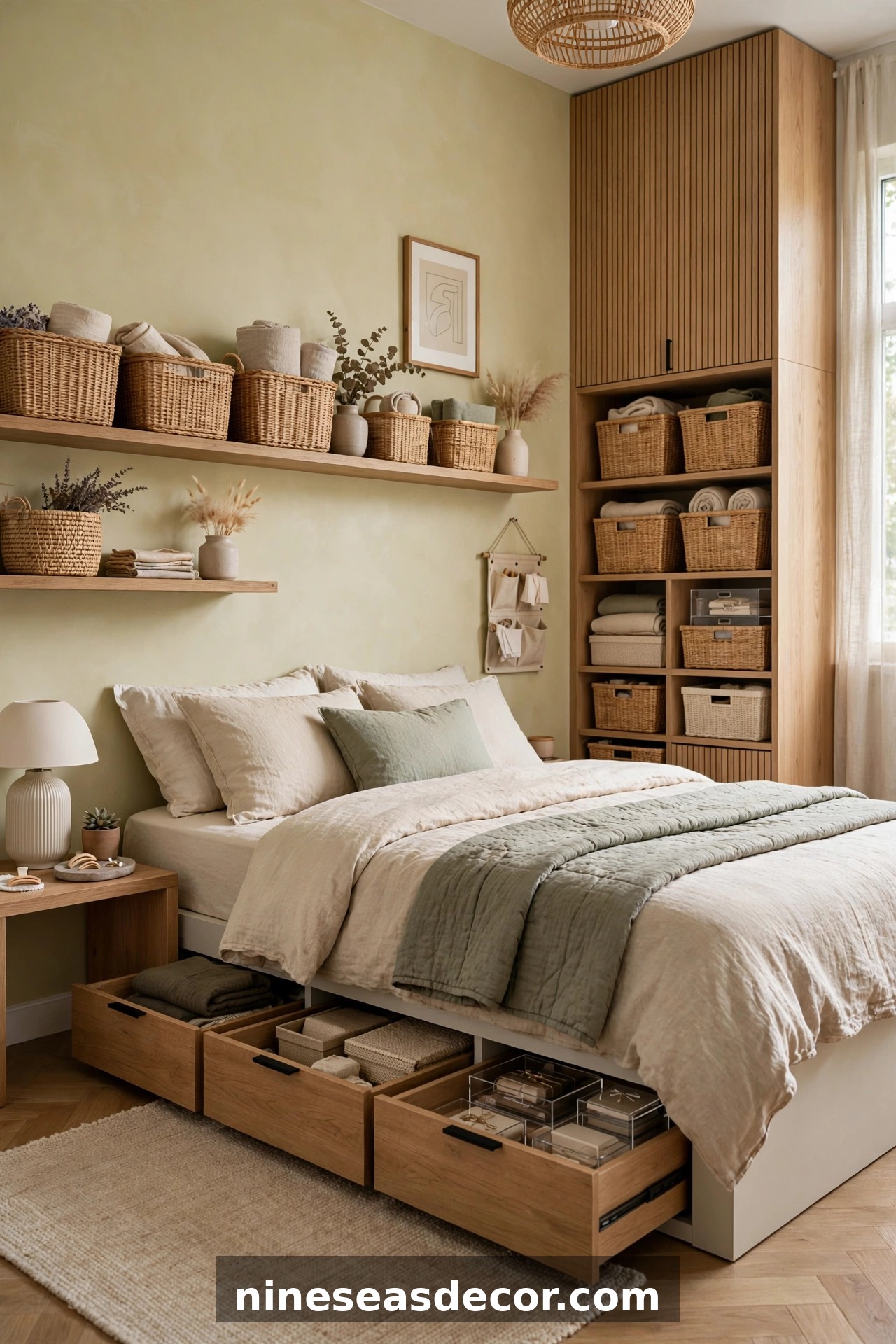
Storage is where small bedroom design either wins or loses completely. You can have the most beautifully designed room in the world, but if there is nowhere to put your clothes, shoes, books, and everyday items, the clutter will undo every single design decision you made. I am deeply passionate about storage solutions because I have seen the transformation that happens when people go from chaotic clutter to organized calm. It is not just visual. It is genuinely emotional.
The key insight I always share is this: in small bedrooms, storage needs to happen everywhere, not just in the obvious places. The space under your bed, the backs of doors, the walls above the furniture line, the corners, the closet interior, and even the ceiling in some cases are all viable storage territory when approached thoughtfully.
UNDER-BED STORAGE THAT ACTUALLY WORKS
The space under a standard bed frame represents roughly (30-40 square feet) of potential storage in a queen bed setup, and most people either waste it entirely or shove things under there in a disorganized chaos that they never access again. Make this space intentional. Invest in rolling under-bed storage bins with lids ($20-$60 per set) or flat vacuum storage bags for seasonal clothing and bedding. If you are purchasing a new bed, choose a platform bed with built-in pull-out drawers on both sides, which turns this dead zone into prime organized storage. For existing beds, bed risers ($15-$40) can increase under-bed clearance from a standard (7 inches) to (10-12 inches), accommodating taller storage containers. Label everything. The difference between functional under-bed storage and a junk graveyard is a label maker and fifteen minutes of initial organization.
VERTICAL STORAGE AND WALL-MOUNTED SOLUTIONS
In small bedrooms, your walls are underutilized real estate. Every vertical surface from (36 inches) above the floor up to the ceiling is available for shelving, hooks, and organizational systems. Floating shelves installed at (60-72 inches) high on a wall that does not have a window or door create display and storage space without consuming floor area. A full wall-to-wall floating shelf system above the doorway costs ($100-$300) in materials and provides storage for books, bins, and items you use seasonally. Pegboard panels painted to match the wall create a customizable, flexible organization system for jewelry, accessories, and small items that would otherwise pile up on surfaces. Over-door organizers on both the room door and the closet door add substantial storage capacity at essentially no cost to floor space. A set of over-door hooks runs ($10-$25) and immediately solves the perpetual problem of where to put tomorrow’s outfit, tonight’s robe, and this week’s bag.
CLOSET ORGANIZATION SYSTEMS FOR SMALL BEDROOMS
If your small bedroom has a closet, treating it as a fully optimized storage system rather than just a rod and a shelf can double or triple its effective capacity. A basic closet organization system from companies like IKEA PAX, The Container Store Elfa, or California Closets runs anywhere from ($200-$3,000) depending on size and customization level. At minimum, add a second hanging rod below the main one to double hanging capacity for shirts, jackets, and folded pants. Add drawer units or rolling carts within the closet to take dresser duties away from the bedroom floor. Use the full height of the closet with high shelves for seasonal items and rarely used boxes. A shoe rack at the closet floor keeps footwear contained and off the bedroom floor. According to a 2024 Houzz survey, homeowners who invested in closet organization systems reported an average (40%) reduction in bedroom clutter perception, with satisfaction scores notably higher in smaller homes.
Decor, Textiles, And Finishing Touches For Small Bedrooms
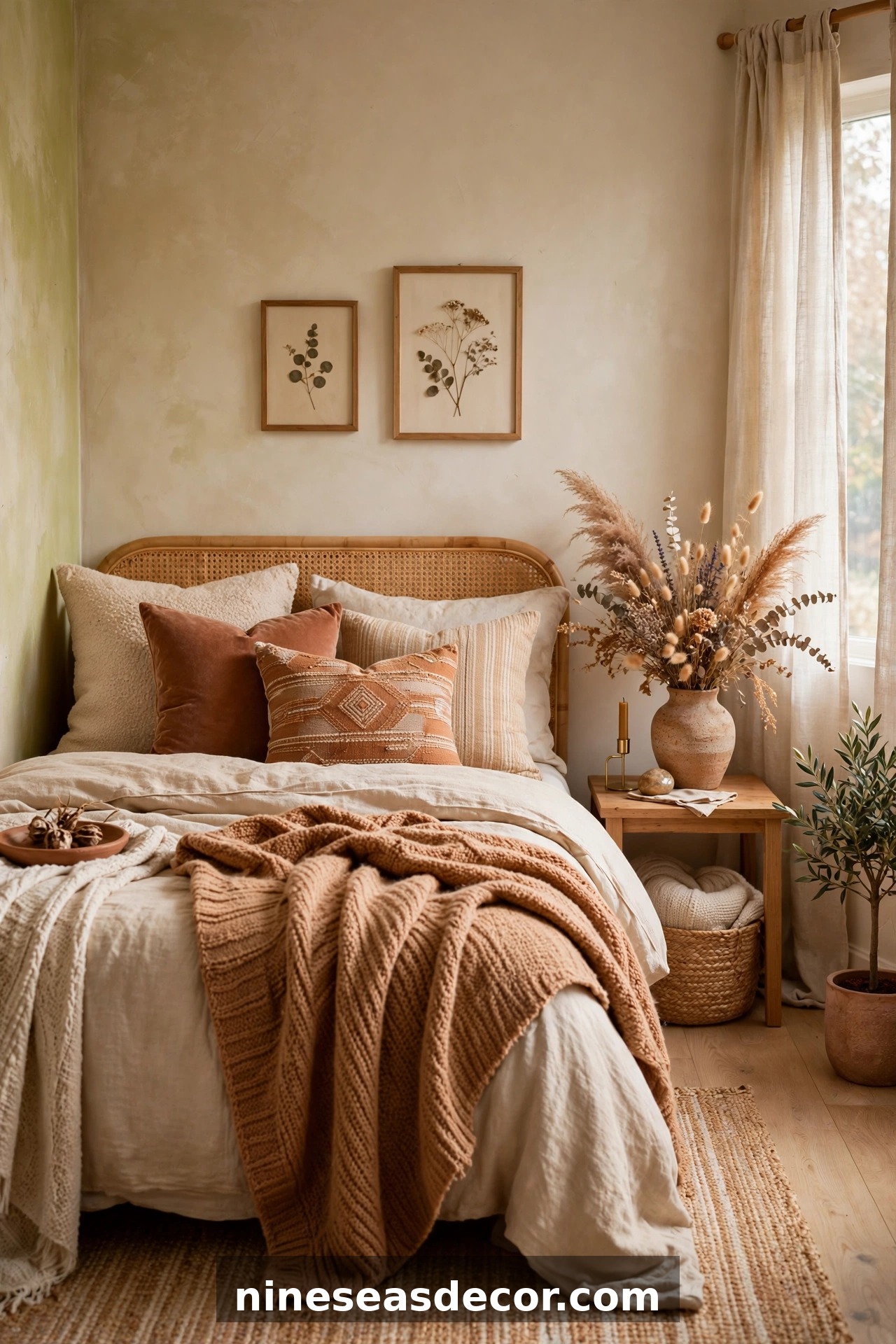
Once you have your layout sorted, your furniture chosen, your paint selected, your lighting planned, and your storage systems in place, the fun part begins. Decor and textiles are where your personality enters the room and where a functional small space becomes a genuinely beautiful, deeply personal retreat. This is also where people often go overboard, so I want to give you some clear principles alongside the inspiration.
In small bedrooms, the rule is always quality over quantity. A few beautifully chosen pieces have far more impact than a room stuffed with decorative items competing for attention. Visual simplicity is not the same as visual boring. You can have a bold, expressive, personality-filled small bedroom. You just need intentionality in your curation.
BEDDING AND TEXTILES THAT ENHANCE SMALL SPACES
Your bedding covers the largest single surface area in the room, which means it makes an enormous visual statement whether you intend it to or not. For small bedrooms, light to medium toned bedding in solid colors or simple patterns reads as calming and spacious. An all-white bedding set in crisp cotton creates a clean, hotel-like quality that makes any room feel more luxurious and larger. If you want color, introduce it through throw pillows and a folded throw blanket at the foot of the bed rather than through a bold duvet cover that dominates the entire room. For actual bedding quality, aim for 300-400 thread count cotton percale for cool sleeping or sateen weave for a softer drape. Quality bedding sets run ($80-$350) depending on brand and materials. A single beautiful textural element, like a chunky knit throw or a linen duvet, adds depth and warmth without visual complexity.
RUGS, ART, AND DECORATIVE ACCESSORIES
A bedroom rug is one of those elements that people consistently get wrong in small rooms. The most common mistake is choosing a rug that is too small. A tiny rug floating in the middle of the room actually makes the space feel smaller and more chopped up. For a queen bed in a small bedroom, use a (5×8 foot) or (6×9 foot) rug positioned so it extends (18-24 inches) beyond the sides and foot of the bed. This grounds the bed visually and makes the room feel intentionally designed. For art, choose one or two larger pieces rather than a gallery wall of small frames. A single large piece above the headboard at (30-40 inches) wide creates a focal point without visual chaos. Keep decorative accessories to a curated few: one plant, one candle grouping, one tray on the dresser. Meaningful minimalism always wins in small bedrooms.
PLANTS, MIRRORS, AND NATURAL ELEMENTS
Bringing nature into a small bedroom does something remarkable for its feel. A single potted plant on a floating shelf or the windowsill adds life, oxygen, and organic texture to the space. Best options for low-light small bedrooms include pothos, snake plants, and ZZ plants, all of which thrive in indirect light and require minimal care. Plants in ceramic pots run ($15-$80) and contribute measurably to indoor air quality. As mentioned earlier, mirrors are one of the most powerful tools in small bedroom design. Position a large framed mirror on the wall opposite your primary light source to bounce light and visually expand the space. Antique and vintage mirrors with interesting frames add character that a plain mirror cannot match and can be found at thrift stores for ($20-$80) or new at ($100-$400) depending on size and style. Natural wood elements in furniture, frames, or a simple wooden bowl bring warmth and grounding that manufactured materials simply cannot replicate.
Budget Planning And Project Timelines For Small Bedroom Makeovers
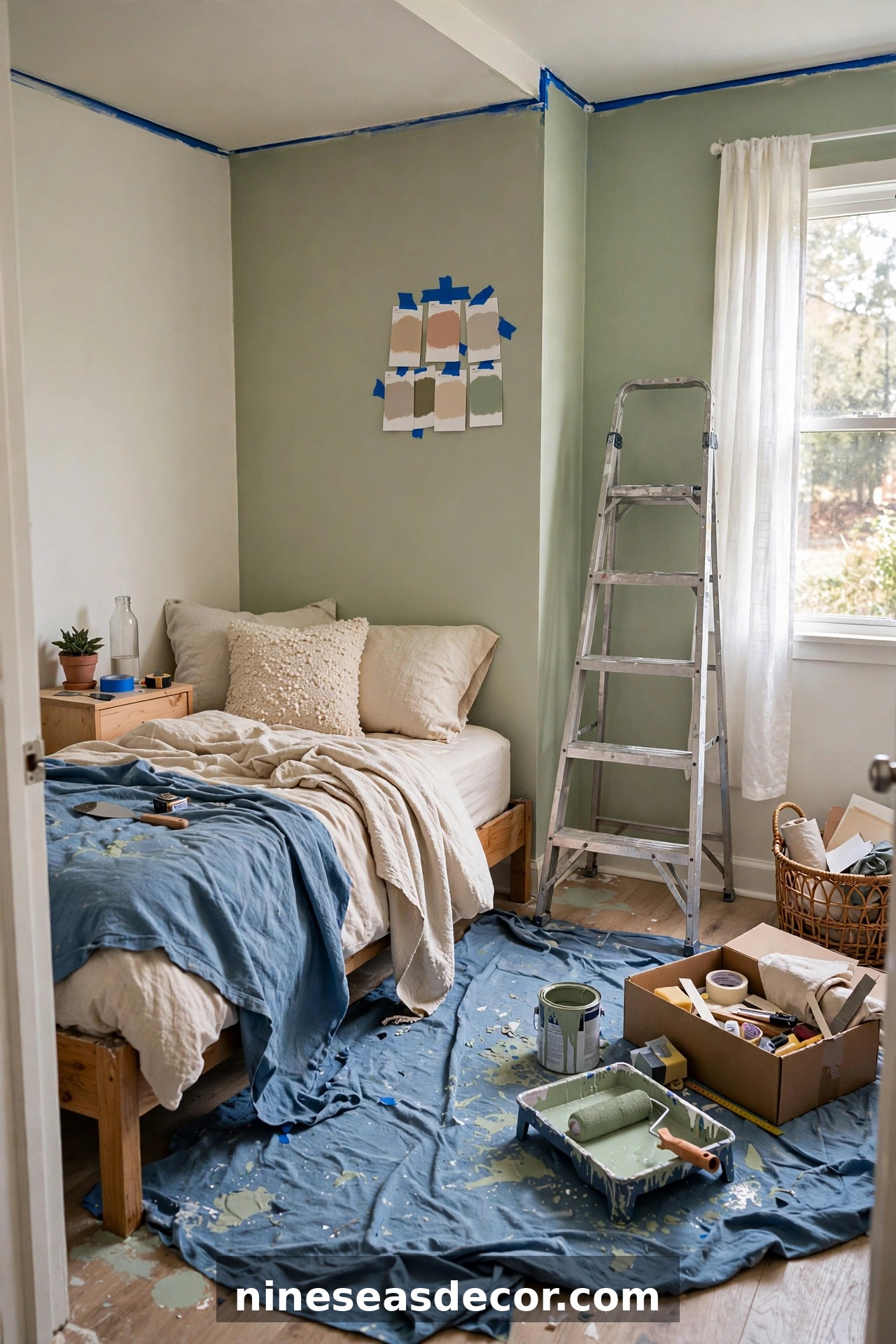
One of the most important conversations I have with readers is about realistic budgets and timelines, because going in with unclear expectations leads to frustration, abandoned projects, and expensive mistakes. A small bedroom makeover can be done beautifully for as little as ($500-$1,500) if you are strategic, or you can invest ($5,000-$15,000) or more for a complete renovation with new flooring, built-ins, and professional installation. Both approaches can produce stunning results. The key is knowing where your money has the most impact.
According to the National Association of Realtors 2024 Remodeling Impact Report, bedroom updates recover approximately 67% of their cost at resale on average, making them among the better-performing interior investments you can make. While return on investment should not be the only reason you update your bedroom, it is genuinely reassuring to know that money spent on quality materials and thoughtful design choices has lasting value.
LOW-BUDGET SMALL BEDROOM MAKEOVER ($500-$1,500)
At the lower end of the budget, focus your spending on the highest-impact items: paint, lighting, and one or two key furniture upgrades. A full bedroom paint job in a small room costs ($200-$500) for professional application or ($50-$100) in materials for a DIY approach. Swap the overhead light fixture for something more intentional at ($50-$200). Add wall-mounted sconces for ($80-$200). Buy a new set of bedding at ($100-$200). Add a single large mirror at ($60-$150). Install under-bed storage bins at ($40-$80). This approach transforms the feel of the room dramatically without touching the big-ticket items. The total investment stays between ($530-$1,230) while delivering a result that genuinely looks and feels like a thoughtfully designed space.
MID-RANGE SMALL BEDROOM RENOVATION ($3,000-$7,000)
At the mid-range budget, you can tackle furniture replacement, a closet organization system, new window treatments, better lighting, and potentially new flooring. A new storage platform bed runs ($600-$1,500). A closet system runs ($500-$1,500). New curtains and hardware at ($200-$500). A quality area rug at ($200-$600). Updated lighting throughout at ($400-$800). New flooring if needed, luxury vinyl plank at ($3-$7 per square foot) installed is one of the best investments for small bedrooms because it is durable, looks beautiful, and is available in styles that visually expand the floor plan. A professional designer consultation at ($150-$300) for a two-hour session can also be incredibly valuable at this budget level to help you make cohesive decisions before spending.
TIMELINE EXPECTATIONS FOR SMALL BEDROOM PROJECTS
Setting realistic timelines prevents the exhausting “half-finished room” situation that I see so often. A DIY paint and decor refresh can be completed in a single weekend if you prep properly and have all materials on hand before you start. A furniture replacement project including ordering, delivery, and assembly typically takes (2-4 weeks) accounting for shipping times. A full renovation including flooring, built-ins, electrical work for lighting, and closet systems typically takes (3-6 weeks) for a small bedroom with a reliable contractor. Always add a (20-30%) buffer to both budget and timeline estimates. Supply chain delays, discovery of underlying issues, and design changes mid-project are normal parts of the renovation process, not failures. According to a 2024 survey by Houzz, homeowners who built timeline buffers into their renovation planning reported 55% lower stress levels during the project and 44% fewer budget overruns.
Frequently Asked Questions
WHAT IS THE MINIMUM SIZE FOR A FUNCTIONAL SMALL BEDROOM?
The International Residential Code specifies that a bedroom must be a minimum of (70 square feet) to legally qualify as a bedroom in the United States, with at least one dimension being no less than (7 feet). However, most livable small bedrooms start at around (90-100 square feet), which is enough space to accommodate a full or queen bed with (24-inch clearance) on the sides, a small dresser or closet access, and a narrow walkway. At (70-90 square feet), you are limited to a twin or full bed configuration, which works well for children’s rooms or single-occupant guest rooms. The key to making any small bedroom functional regardless of square footage is thoughtful layout planning, appropriately scaled furniture, and maximizing vertical storage space rather than relying on floor-level solutions. With smart design, even a (90 sq ft) bedroom can feel genuinely comfortable and beautifully appointed.
WHAT PAINT COLORS MAKE A SMALL BEDROOM LOOK BIGGER?
The best paint colors for making a small bedroom look larger are those with a high Light Reflectance Value (LRV) of (65 or above). Top performing options include Benjamin Moore Chantilly Lace (OC-65) with an LRV of 92, Sherwin-Williams Alabaster (SW 7008) with an LRV of 82, and Benjamin Moore White Dove (OC-17) with an LRV of 85. For those who want color without sacrificing the sense of space, Sherwin-Williams Softened Green (SW 6177) and Benjamin Moore Sea Salt are excellent choices. The monochromatic technique of painting walls, ceiling, and trim in the same or closely related colors removes visual boundaries and makes rooms feel significantly larger and more cohesive. Paint typically costs ($25-$65 per gallon) with small bedrooms requiring approximately (1-2 gallons) for complete coverage with two coats. Finish matters too. Use eggshell or satin finish on walls for a slight sheen that bounces light without highlighting imperfections.
HOW DO YOU MAXIMIZE STORAGE IN A SMALL BEDROOM WITHOUT IT LOOKING CLUTTERED?
Maximizing storage without creating visual clutter comes down to two key principles: concealment and containment. Storage that is hidden, whether inside a platform bed base, behind closed closet doors, within ottomans, or inComplete Bedroom Design Guide 2026: Expert Ideas, Layouts & Style TipsSmall Bedroom Ideas 2026: Space-Saving Furniture, Storage Solutions & Layout Strategies

Hi, I’m Sophia Rose. I believe every home tells a story. At Nine Seas Decor, I share creative ideas, budget-friendly tips, and modern trends to help you turn your living space into a sanctuary. Let’s make your home beautiful, one corner at a time!