
bedroom-design-2026
Let me be honest with you. I walk into hundreds of bedrooms every year, and the same problem keeps showing up over and over again. Homeowners spend thousands of dollars on furniture, spend weeks picking out paint colors, and still end up with a room that just feels… off. Maybe the bed is pushed against the wrong wall. Maybe the lighting is making everything look flat and uninviting. Maybe there is so much stuff crammed into a (12×14 foot) space that the room feels more like a storage unit than a sanctuary. I have been writing about home decor for over a decade, and I can tell you with absolute certainty that great bedroom design is not about spending the most money. It is about understanding the principles that make a space feel intentional, restful, and genuinely yours.
Here is something that might surprise you. According to a 2023 study published in the Journal of Environmental Psychology, adults who reported sleeping in visually organized and thoughtfully designed bedrooms experienced up to 42% better sleep quality compared to those in cluttered or poorly designed spaces. That is not a small number. That is nearly half again the quality of rest, just from making smarter design decisions. Your bedroom is not just a room where you crash at night. It is the single space in your home that most directly affects your physical health, your mental wellbeing, and your daily performance. Getting it right matters more than almost any other room in the house.
In this guide, I am going to walk you through everything you need to know about bedroom design in 2026. We are talking furniture layout principles, color psychology, lighting strategies, storage solutions, budget planning, and the trending styles that are dominating bedrooms this year. Whether you are starting from scratch in a new build, refreshing a tired master suite, or trying to squeeze personality into a (10×10 foot) guest room, this guide has you covered with real numbers, real paint codes, and real advice.
I have been writing for NineSeasDecor.com long enough to know that our readers want practical, actionable guidance, not vague inspiration board fluff. Everything you read here is grounded in design research, industry data, and hands on experience. I have made the mistakes, consulted the experts, and tested the theories so you do not have to. Let us get into it.
Understanding Bedroom Layout Fundamentals
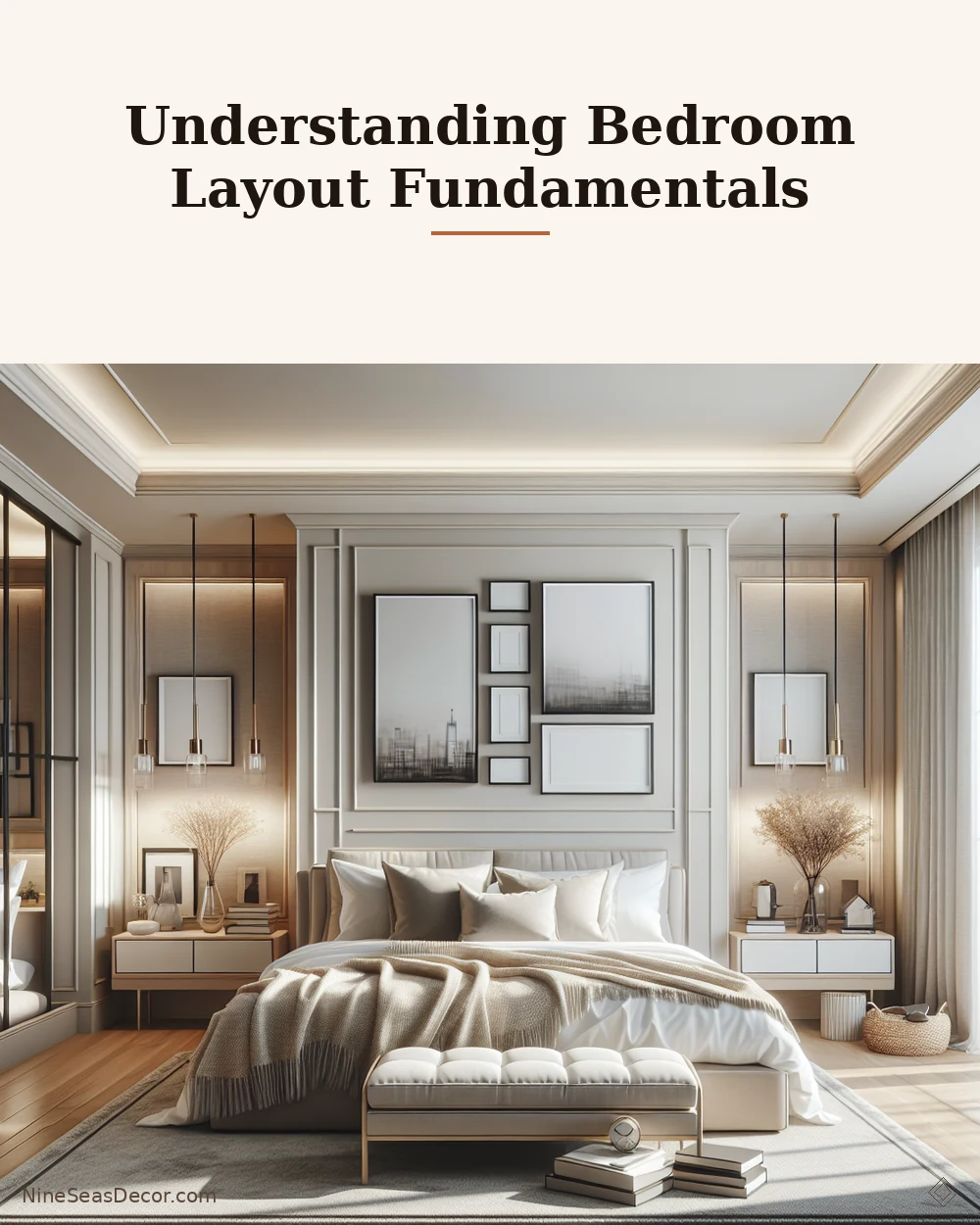
The single biggest mistake I see homeowners make is buying the furniture before planning the layout. I get it. You fall in love with a gorgeous king size bed frame at the furniture store, you buy it, you bring it home, and suddenly your (12×12 foot) bedroom looks like a furniture warehouse with a narrow walking path. Trust me, I have been there, and it is a painful lesson. Before you spend a single dollar on furniture, you need to understand your room’s dimensions and plan around the traffic flow of the space.
According to the National Kitchen and Bath Association (NKBA), the recommended minimum clearance around a bed is (24 inches) on each side and at the foot. That gives you comfortable walking room and ensures the space does not feel cramped. In a standard primary bedroom measuring (12×14 feet), a king size bed at (76×80 inches) can work beautifully, but you need to account for nightstands, a dresser, and ideally a small seating area. In tighter rooms of (10×12 feet), a queen size bed at (60×80 inches) is often the smarter choice, leaving you workable clearance without sacrificing comfort.
One thing that almost always improves a bedroom layout instantly is centering the bed on the dominant wall. This is usually the wall opposite the door or the wall flanked by windows. This placement creates a natural focal point, gives the room visual balance, and makes every other furniture decision easier. Your nightstands should be symmetrical on either side whenever possible, even if they are different styles or heights. Symmetry is one of the most powerful tools in bedroom design because it signals calm and order to the brain.
HOW TO MEASURE YOUR BEDROOM FOR FURNITURE
Before you do anything else, grab a tape measure and sketch out your room on graph paper or use a free digital tool like RoomSketcher or Planner 5D. Measure every wall, note the location of every window, door, and electrical outlet, and mark the direction the door swings. A door that swings into a (3 foot) zone can completely block your access to a dresser if you do not plan for it. Measure ceiling height too, because rooms with (9 foot ceilings) can handle taller furniture and dramatic canopy beds, while standard (8 foot ceilings) call for more proportional pieces. Once you have your dimensions, use a scale of 1 inch equals 1 foot on your sketch to test different furniture arrangements before buying anything. This simple step saves homeowners thousands of dollars in returns and regrets.
THE TRAFFIC FLOW RULE EVERY DESIGNER FOLLOWS
Traffic flow is the invisible architecture of your bedroom. It refers to the natural pathways your body takes when moving through the space, from the door to the bed, from the bed to the closet, from the closet to the bathroom. Good bedroom design honors these invisible lines. The rule is simple. Every primary pathway should be at least (36 inches wide) and secondary pathways like the space between the bed and a wall should be at least (24 inches). When furniture blocks these natural pathways, the room feels frustrating and stressful to move through, even if it looks beautiful in photos. I always tell people, a room has to work before it can look good.
CHOOSING THE RIGHT BED SIZE FOR YOUR SPACE
Choosing the right bed size is the single most impactful decision you will make in a bedroom design project. Here is a quick breakdown. A twin bed at (38×75 inches) works in rooms as small as (7×10 feet) and is ideal for children’s rooms and small guest rooms. A full bed at (54×75 inches) suits rooms of (9×12 feet) or larger. A queen bed at (60×80 inches) is the most popular size in America for good reason. It fits comfortably in rooms from (10×12 feet) upward. A king bed at (76×80 inches) really needs a room of at least (13×13 feet) to breathe properly. A California king at (72×84 inches) is ideal for taller sleepers but requires similarly generous room dimensions. Never let a salesperson tell you otherwise.
Color Psychology and Palette Selection for Bedrooms
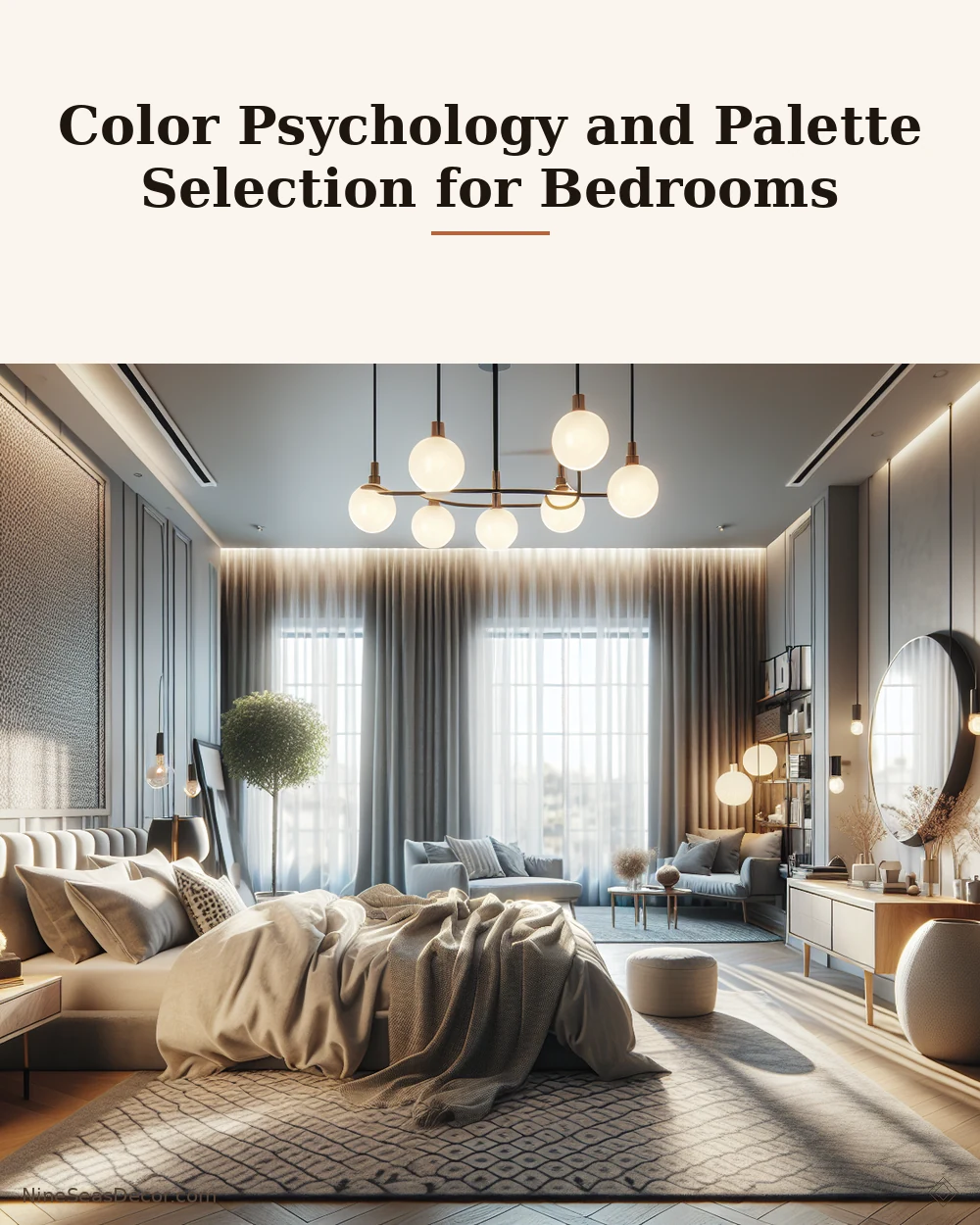
Color is doing a lot of heavy lifting in your bedroom, and most people have no idea. The colors you choose are not just aesthetic decisions. They are physiological ones. Research published in the Journal of Environmental Psychology in 2022 found that bedroom wall colors in the cool blue and soft green spectrum were associated with reduced cortisol levels and faster sleep onset compared to warmer, more saturated tones. This does not mean you have to paint your bedroom blue if you hate blue. It means you need to be thoughtful about the emotional temperature of the colors you choose.
In 2026, the dominant bedroom color trends are leaning into what designers are calling restorative naturalism. Think warm greiges, dusty sage greens, soft clay tones, and deep moody blues for accent walls. These are not the stark whites and cold grays of the early 2010s. These are colors with depth, warmth, and a connection to the natural world. They feel cozy without being heavy, sophisticated without being cold.
Some of my absolute favorite paint codes for bedrooms right now include Sherwin-Williams Accessible Beige (SW 7036), which is a warm greige that works beautifully in rooms with limited natural light. For something with a bit more personality, Sherwin-Williams Sage (SW 2860) brings in that earthy green tone that is everywhere right now. If you want something moodier for a primary bedroom, Benjamin Moore Hale Navy (HC-154) on a single accent wall behind the bed creates a dramatic, cocoon-like effect that feels incredibly sophisticated. For a soft, airy vibe, Benjamin Moore White Dove (OC-17) remains one of the most universally flattering whites I have ever recommended.
WARM VS. COOL TONES AND WHICH ROOMS THEY SUIT
The warm versus cool tone debate comes down to two things: the natural light in your room and the feeling you want to create. Rooms with north-facing windows tend to receive cooler, bluer light throughout the day. In these spaces, warm tones like Sherwin-Williams Accessible Beige (SW 7036) or Benjamin Moore Pale Oak (OC-20) will counterbalance that coolness and make the space feel inviting. South and west-facing rooms flood with warm, golden light, which means you can successfully use cooler tones like soft blues and dusty greens without the room feeling cold. When in doubt, always get a large paint sample, at least a (12×12 inch) painted swatch on the actual wall, and observe it at different times of day before committing.
CREATING A COHESIVE COLOR PALETTE
A cohesive bedroom palette typically follows the 60-30-10 rule. Your dominant color covers about 60% of the visual space, usually the walls. Your secondary color accounts for 30%, typically the bedding, upholstered headboard, or area rug. Your accent color fills the remaining 10% through throw pillows, art, lamps, and decorative objects. This formula creates visual harmony without monotony. For example, a bedroom using Sherwin-Williams Comfort Gray (SW 6205) on the walls, creamy white bedding as the secondary, and terracotta accents in the throw pillows and ceramic lamp bases is a masterclass in this principle. It feels curated and calm without being boring.
USING ACCENT WALLS EFFECTIVELY
An accent wall in the bedroom almost always works best on the wall directly behind the bed, also known as the headboard wall. This placement reinforces the bed as the room’s focal point and creates depth without overwhelming the space. In 2026, the most popular accent wall treatments include limewash paint in warm whites and plasters, wood paneling in natural oak or walnut tones, grasscloth wallpaper, and fluted wall panels. These treatments typically cost between ($300 and $1,200) for a single wall depending on material and labor, but the visual impact they deliver is extraordinary compared to the investment.
Bedroom Furniture Selection and Arrangement
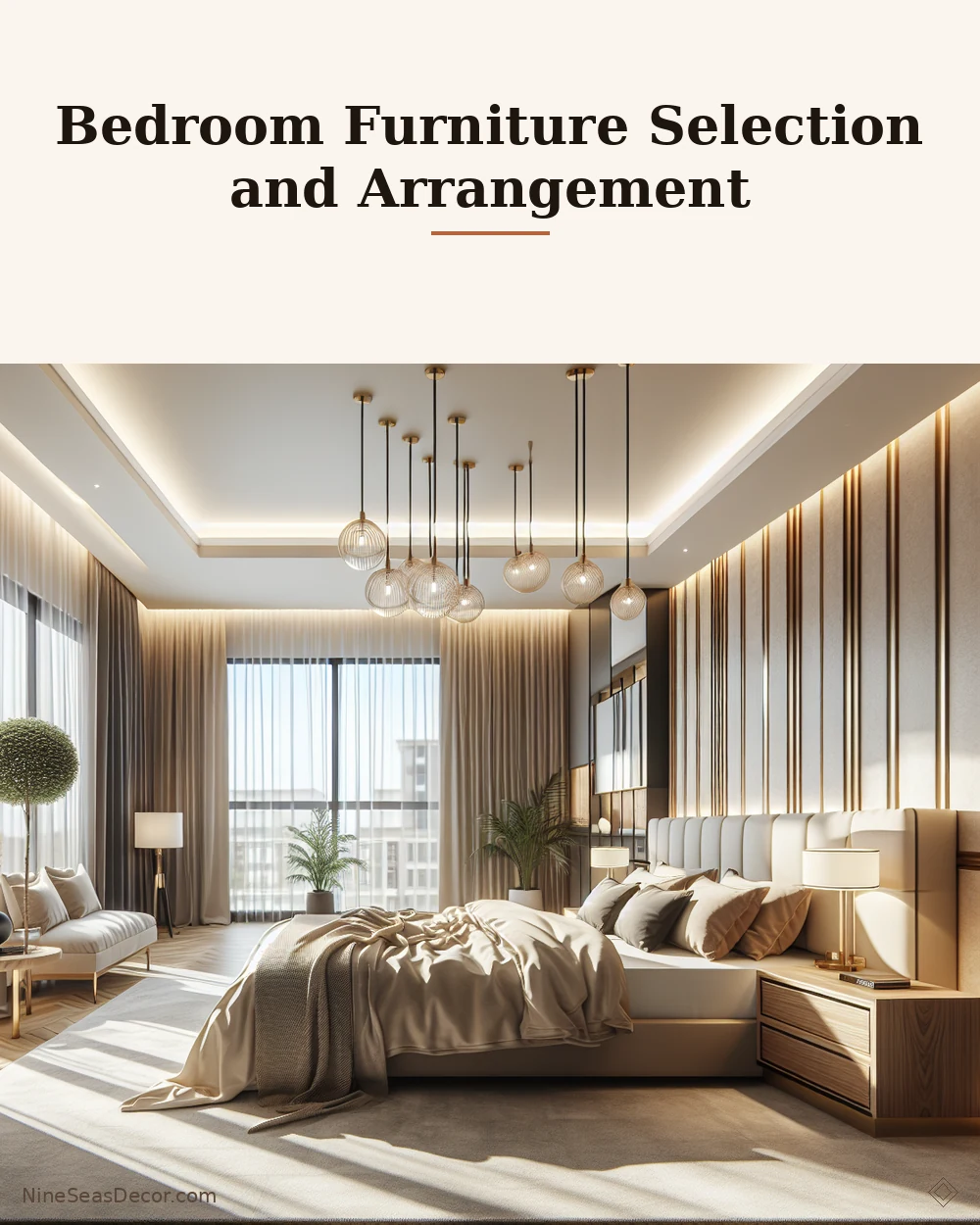
Furniture selection is where a lot of homeowners blow their budgets in the wrong places. I see people spend ($3,000) on a statement headboard and then buy the cheapest dresser they can find, and the whole room ends up feeling unbalanced. The secret is to think of your furniture as a cohesive collection, not a series of individual purchases. You do not need everything to match perfectly. In fact, matching bedroom sets are considered pretty outdated in 2026. But your pieces need to share something. Maybe it is a similar wood tone, a consistent metal finish in hardware, or a shared design language like organic shapes or clean lines.
According to a 2024 Houzz Bedroom Trends Report, 58% of homeowners who completed bedroom renovations in 2023 chose to mix furniture styles rather than purchase complete matching sets, and they reported higher satisfaction with the end result. This is the direction design has been moving for years, and it is now the mainstream approach rather than the exception.
When budgeting for bedroom furniture, a realistic breakdown for a fully furnished primary bedroom looks something like this. A quality queen bed frame with storage ranges from ($400 to $2,500). A solid dresser runs ($300 to $1,200). A pair of nightstands typically costs ($150 to $800) for the pair. A quality upholstered bench at the foot of the bed adds ($200 to $600). An accent chair for a reading corner ranges from ($300 to $1,500). A total fully furnished bedroom can realistically range from ($2,000 to $8,000) or more depending on quality and sourcing.
THE ESSENTIAL BEDROOM FURNITURE PIECES
Every functional bedroom needs a core set of furniture. The bed frame is obviously the centerpiece. In 2026, the most popular styles are upholstered platform beds in boucle and performance velvet fabrics, wood platform beds in natural walnut and oak finishes, and metal canopy frames in brass and matte black. Beyond the bed, you need at minimum one dresser or chest of drawers for clothing storage, two nightstands for bedside function, and appropriate lighting. Everything else, the bench, the accent chair, the vanity, is a bonus that depends on your room size and lifestyle needs. A room of (12×16 feet) or larger can accommodate all these elements comfortably.
NIGHTSTAND PROPORTIONS AND PLACEMENT
Nightstand height is one of those things nobody talks about but everyone notices when it is wrong. Your nightstand surface should sit within (2 to 4 inches) of your mattress top height. Most mattresses and box spring combinations sit at (25 to 28 inches) from the floor, so nightstands in the (24 to 30 inch) height range work for most setups. If you have a very high platform bed with a thick mattress, measure before you buy. Width matters too. A nightstand that is too narrow looks lost next to a king bed. Aim for a surface area of at least (18×18 inches) to comfortably hold a lamp, a glass of water, your phone, and a book. Proportions matter enormously in creating a polished look.
MAXIMIZING SMALL BEDROOM FURNITURE LAYOUTS
Small bedrooms under (120 sq ft) require a different strategic approach to furniture selection. In these spaces, multi-functional furniture is your absolute best friend. A storage bed frame with drawers underneath can eliminate the need for a separate dresser entirely, freeing up valuable floor space. Wall-mounted nightstands with no legs give the illusion of more floor space and make cleaning easier. A tall narrow dresser takes advantage of vertical space rather than eating into floor area. A floor-to-ceiling wardrobe system from brands like IKEA PAX or California Closets can cost between ($500 and $3,000) installed and completely transform storage capacity in a small room without feeling bulky. Keep furniture legs visible whenever possible, as it helps the room feel more open.
Bedroom Lighting Design Strategies
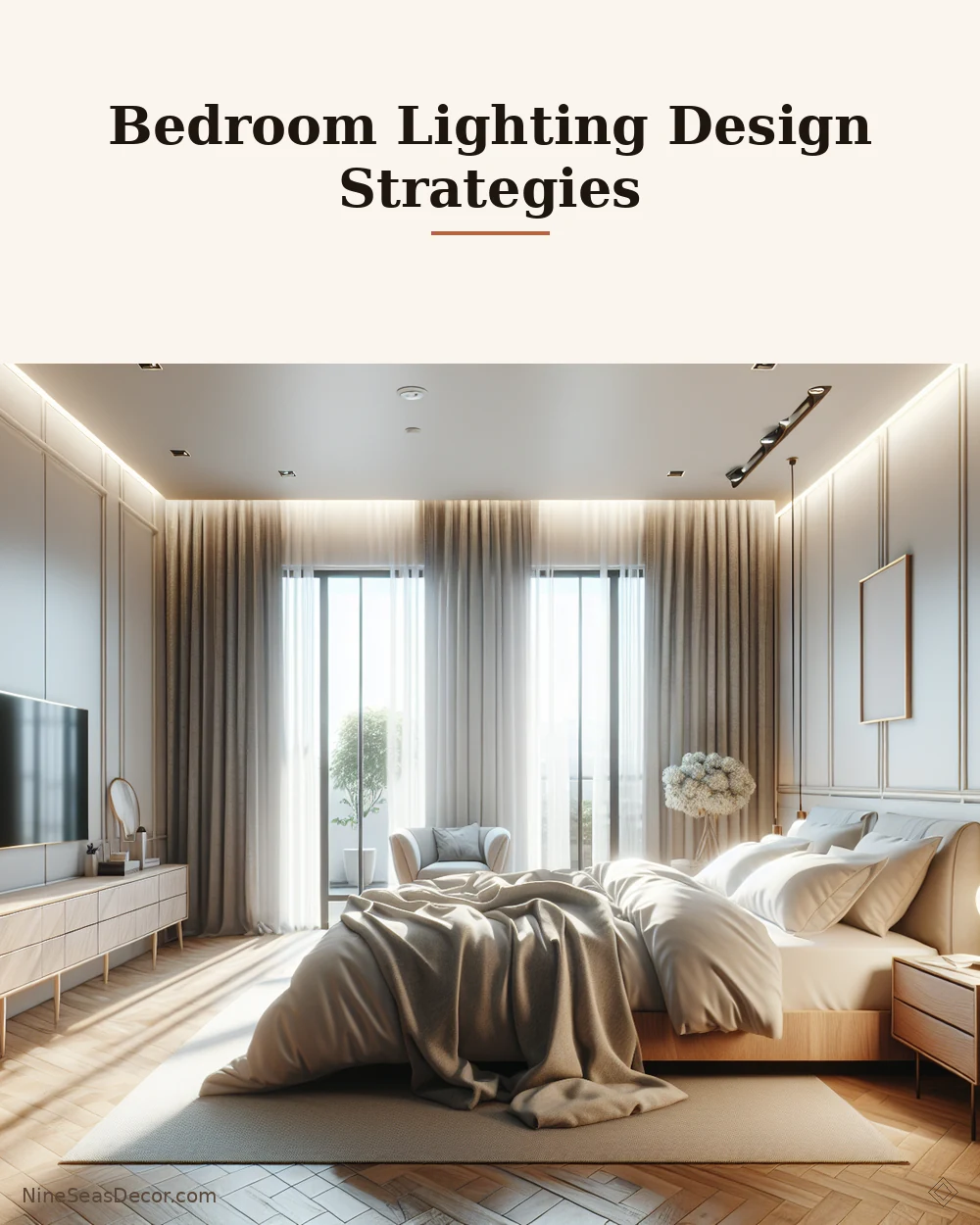
If there is one area where I see homeowners completely underinvest, it is bedroom lighting. A single overhead fixture controlled by one wall switch is not a lighting design. It is a single point of light that flattens everything in the room and makes it impossible to create atmosphere. Great bedroom lighting design operates on three distinct layers, and each layer serves a specific function.
The first layer is ambient lighting, your general overhead illumination. This can be a flush mount fixture, a chandelier, or recessed lighting. In bedrooms, I strongly recommend putting ambient lighting on a dimmer switch, which typically costs between ($15 and $60) per switch installed. Being able to dial down the overhead light in the evening is one of the most impactful quality-of-life improvements you can make in a bedroom. The second layer is task lighting, usually your bedside lamps or sconces that allow you to read without disturbing a partner. The third layer is accent lighting, which includes things like LED strip lighting under the bed, picture lights, or fairy lights woven through a canopy frame.
According to research from the American Academy of Sleep Medicine published in 2023, exposure to warm light temperatures of (2700 to 3000 Kelvin) in the two hours before sleep is associated with improved melatonin production and faster sleep onset. This is why warm, dimmable bedside lamps are not just an aesthetic choice. They are a genuine investment in your sleep health.
BEDSIDE LAMP HEIGHT AND PLACEMENT RULES
The height of your bedside lamp matters more than most people realize. The bottom of your lampshade should sit at approximately shoulder height when you are sitting up in bed, which for most adults means a total lamp height of (24 to 30 inches) from the nightstand surface. This placement allows the light to fall comfortably on your book or phone without shining directly into your eyes. If you are using wall-mounted sconces instead of table lamps, mount them at (60 to 65 inches) from the finished floor, and center them roughly (12 to 18 inches) from the edge of the mattress horizontally. Getting these measurements right makes a room look like a designer did it, and most people cannot pinpoint exactly why.
NATURAL LIGHT AND WINDOW TREATMENT STRATEGIES
Natural light management is a critical part of bedroom design that often gets treated as an afterthought. Your window treatments need to accomplish two things. They need to control light during sleeping hours and they need to look beautiful. The solution most designers reach for is layered window treatments. A blackout roller shade or blackout cellular shade mounted inside or close to the window frame handles the functional light control. A decorative linen drapery panel in a floor-length format, hung from a rod mounted (4 to 6 inches) above the window frame and extending (6 to 10 inches) beyond the window on each side, adds height, drama, and softness to the room. This combination typically costs between ($150 and $600 per window) depending on fabric choice and hardware.
STATEMENT CEILING LIGHT FIXTURES IN 2026
The statement ceiling fixture has made a massive comeback in bedroom design in 2026. After years of builders installing the most generic flush mount possible, homeowners are now investing in sculptural pendants, rattan chandeliers, and plaster ceiling fixtures that treat the overhead space as a design opportunity rather than a utility box. For rooms with (8 foot ceilings), a semi-flush mount fixture with a maximum drop of (12 inches) is the safe choice to maintain comfortable clearance. For rooms with (9 or 10 foot ceilings), a chandelier or pendant with a drop of up to (18 to 24 inches) can work beautifully. Budget between ($200 and $1,500) for a quality statement fixture that will genuinely elevate the room’s entire aesthetic.
Bedroom Storage Solutions and Organization
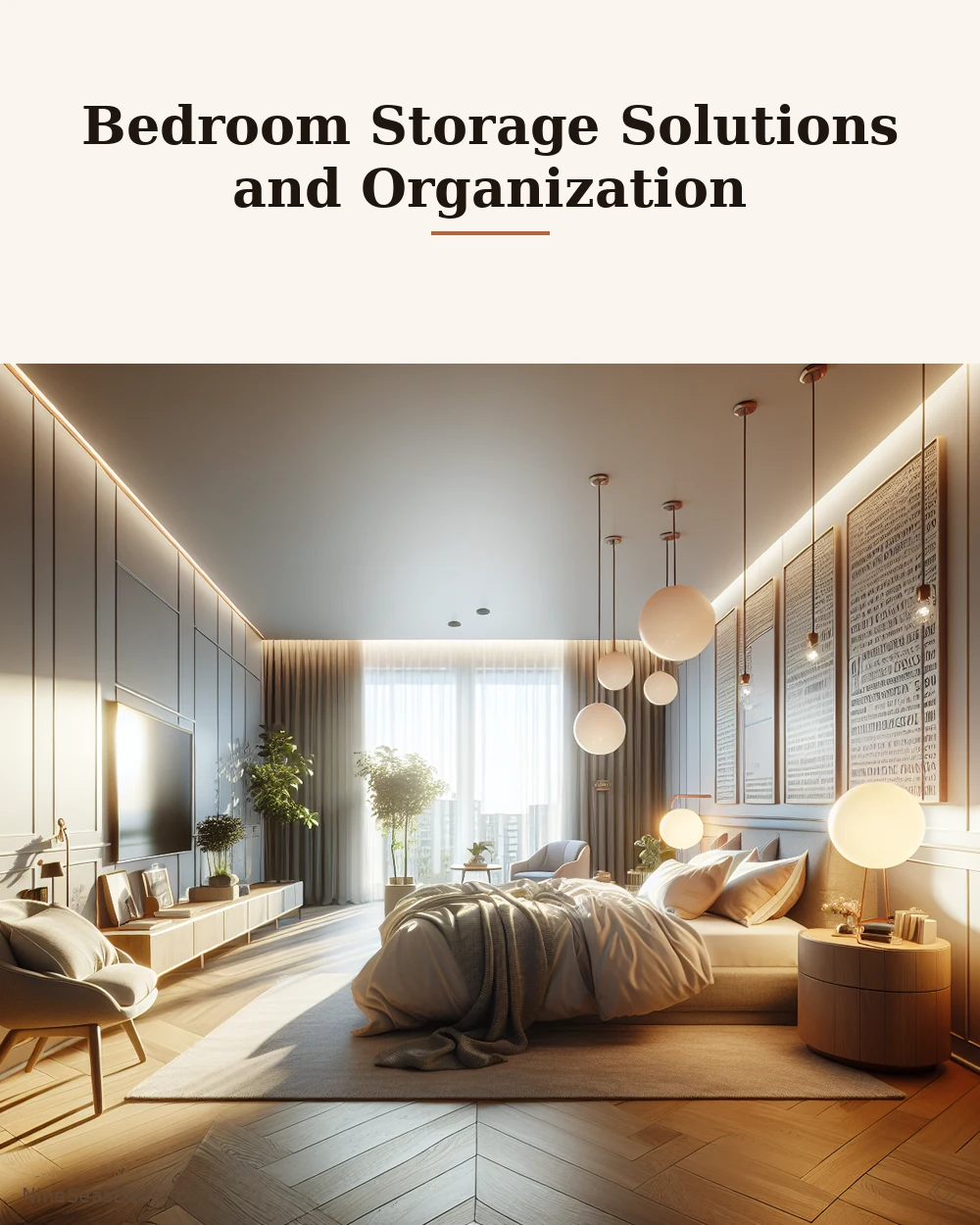
Storage in the bedroom is a topic that makes most homeowners anxious, and for good reason. According to a 2024 survey by Houzz, inadequate bedroom storage was cited by 63% of respondents as the primary source of dissatisfaction with their bedroom design. We have more stuff than our bedrooms were built to hold, and the solution is not to simply buy a bigger dresser. It requires a thoughtful, layered approach to storage that uses every dimension of the room, including the often-neglected vertical dimension.
The starting point for any bedroom storage plan should be an audit of what you actually need to store. Clothing and accessories obviously, but also linens, seasonal items, shoes, bags, books, and personal care products if you do not have adequate bathroom storage. Once you know the full scope of what needs a home, you can start assigning storage solutions to different categories.
Built-in storage is almost always the most space-efficient and visually clean solution, but it comes at a cost. A custom built-in closet system from a company like California Closets or The Container Store runs between ($1,500 and $5,000) for a typical (6 to 8 foot) reach-in closet. A full walk-in closet buildout can range from ($3,000 to $12,000) or more depending on size and material selections. For homeowners on a tighter budget, IKEA’s PAX wardrobe system at ($400 to $1,500) installed is one of the best values in the entire furniture market and is endlessly customizable.
UNDER BED STORAGE STRATEGIES
The space under your bed is one of the most underutilized storage opportunities in the entire home. A standard queen size bed with a frame height of (14 to 18 inches) off the floor provides significant storage volume, roughly (30 to 45 cubic feet) of usable space. For this to work, you need either a storage bed frame with built-in drawers, which typically adds ($200 to $600) to the cost of a standard frame, or rolling under-bed storage bins with lids to protect contents from dust. Under-bed storage works best for seasonal clothing, extra bedding, shoes, and flat items like gift wrap. Keep the contents organized in labeled fabric bins or vacuum storage bags to make retrieval easy and keep the area from becoming a chaos zone.
MAXIMIZING CLOSET SPACE WITHOUT A RENOVATION
You do not need to spend thousands on a custom closet system to dramatically improve your closet organization. Some of the most impactful changes cost under ($200). First, replace the standard single hanging rod with a double hanging system for shirts and jackets, instantly doubling your hanging capacity. Second, add a shoe rack or shoe shelving to corral footwear that tends to pile up on the floor. Third, use matching slim velvet hangers throughout at about ($20 for a pack of 50). This simple change alone makes any closet look three times more organized. Fourth, add shelf dividers to keep folded items from toppling. These small investments compound into a dramatically more functional storage system without a major renovation.
FLOATING SHELVES AND WALL-MOUNTED STORAGE
Floating shelves are one of the most versatile and affordable storage and display solutions available for bedrooms. A set of three floating shelves in a (36 to 48 inch) width, installed above a dresser or in an unused corner, can hold books, plants, candles, and decorative objects while freeing up surface space below. Most floating shelf systems cost between ($50 and $200) for the shelves themselves, plus installation. The key is getting the mounting right. Always find the wall studs and use appropriate hardware for the wall type, because shelves loaded with books and objects can pull lightweight toggle anchors right out of drywall. When installed correctly at heights of (6 to 7 feet) from the floor, floating shelves add visual interest, functional storage, and a personalized display without taking up any floor space whatsoever.
2026 Bedroom Design Trends and Styles
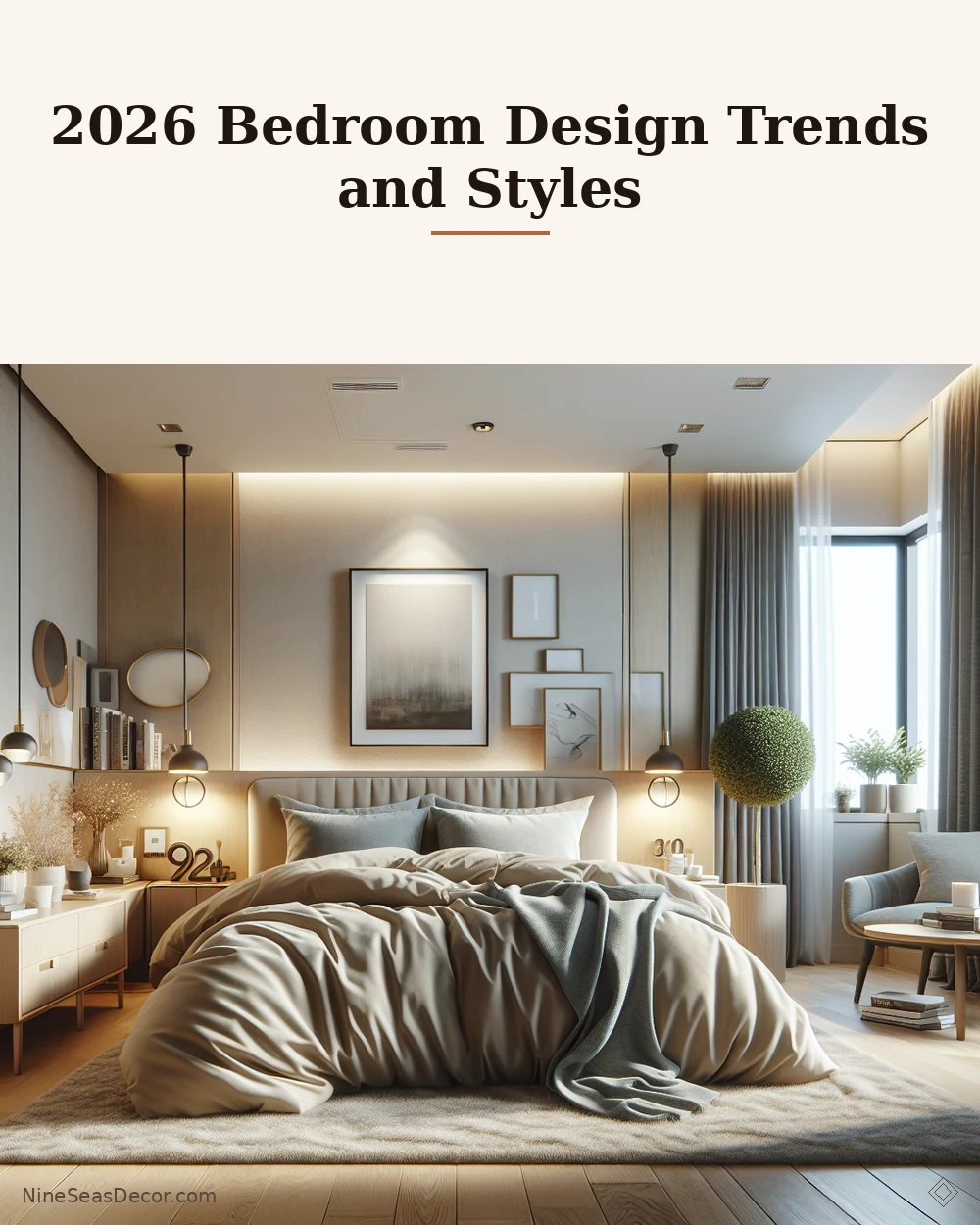
Trends in bedroom design in 2026 are being driven by a collective cultural desire for spaces that feel genuinely restorative. After years of maximalism, hustle culture, and screen saturation, people want their bedrooms to feel like actual sanctuaries. The prevailing aesthetic is what I call warm minimalism, spaces that are pared down and uncluttered but layered with natural textures and genuine warmth rather than cold austerity.
The five biggest bedroom design trends of 2026 are the following. First, organic and curved forms. Arched headboards, rounded nightstands, and curved furniture legs are replacing sharp right angles. Second, natural material mixing. Linen bedding, jute rugs, raw wood furniture, rattan accents, and stone lamp bases are being layered together to create rooms that feel tactile and grounded. Third, tonal dressing. Instead of color blocking, 2026 bedrooms are using multiple shades and textures within the same color family for a sophisticated, layered look. Fourth, biophilic design elements. Large indoor plants, botanical prints, and materials that reference the natural world are showing up in virtually every high-end bedroom renovation. Fifth, moody accent walls. Deep, saturated colors and textured wall treatments behind the bed are replacing simple paint in one color.
THE WARM MINIMALISM MOVEMENT EXPLAINED
Warm minimalism is the dominant design philosophy of 2026, and it deserves a proper explanation because it is frequently misunderstood. It does not mean empty rooms with bare floors and white walls. It means rooms where every object has been chosen intentionally, where clutter has been eliminated, and where warmth is introduced through material quality and texture rather than quantity of stuff. A warm minimalist bedroom might have a raw linen upholstered headboard, a single sculptural ceramic lamp, a handwoven jute rug over natural hardwood floors, and a handful of carefully selected objects on a floating shelf. Nothing extra. Everything meaningful. This approach requires more discipline and more confident decision-making than filling a room with decor, but the result is a space that feels genuinely restful.
BIOPHILIC BEDROOM DESIGN PRINCIPLES
Biophilic design refers to the intentional incorporation of nature-referencing elements into interior spaces to support human wellbeing. In the bedroom, this translates to a few key strategies. First, maximize natural light through appropriate window treatment choices as discussed earlier. Second, incorporate live plants. Snake plants, pothos, and peace lilies are low-light tolerant and particularly effective air-improving plants for bedrooms. Third, use natural materials throughout. Linen, cotton, wood, stone, rattan, jute, and wool all bring organic texture into the space. Fourth, introduce nature-inspired color through the palette choices we discussed earlier. Fifth, consider nature sounds through a white noise machine or a small indoor water feature for rooms that accommodate one. According to a 2023 study in the Journal of Environmental Psychology, biophilic bedroom elements were associated with a 37% reduction in self-reported stress levels among study participants.
MAXIMIZING THE PRIMARY BEDROOM RETREAT EXPERIENCE
The primary bedroom is the one space in the home where adults should feel completely free to prioritize themselves, and yet so many people treat it as the last room to receive any design attention. In 2026, the trend toward bedroom retreats is accelerating. Homeowners are adding reading nooks in unused corners using an armchair, a floor lamp, and a small side table in as little as a (4×4 foot) footprint. They are creating bedside wellness zones with a diffuser, a journal, and curated books. They are investing in premium bedding with thread counts of (400 to 800) in long-staple cotton or linen. Quality bedding from brands like Parachute or Brooklinen runs between ($150 and $500) for a complete set. This is one of the highest-return investments you can make in bedroom comfort, and it costs a fraction of a furniture purchase.
Bedroom Design Budgeting and Project Planning
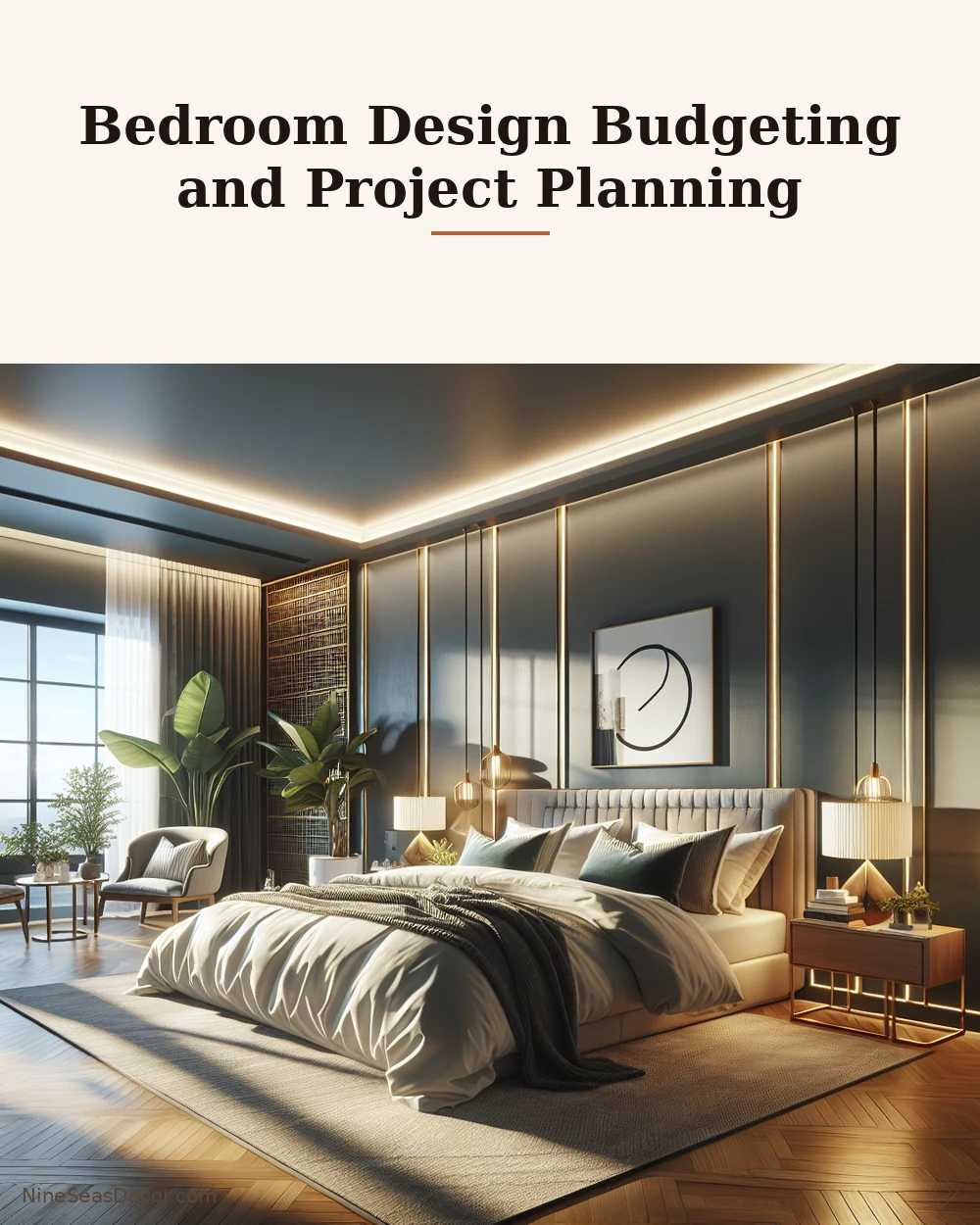
Let us talk money, because this is where the rubber meets the road. A full bedroom design project, from paint and new bedding all the way to furniture, lighting, and window treatments, can range from ($1,500 to $15,000+) depending on room size, material quality, and whether you are doing any work yourself. The good news is that smart prioritization can get you an incredible result at almost any budget point.
The framework I always recommend is to divide your budget into four categories. Foundation (50%): bed frame, mattress if needed, and primary storage. Atmosphere (25%): paint, lighting, and window treatments. Comfort (15%): bedding, pillows, and rug. Personality (10%): art, plants, and decorative objects. This allocation ensures that the most impactful and longest-lasting elements receive the most investment, while leaving room for the finishing touches that make a space feel personal.
One of the most important pieces of advice I can give is to never, ever skimp on your mattress. A quality mattress from a reputable brand like Saatva, Purple, or Tempur-Pedic ranges from ($1,000 to $4,000) for a queen size, and given that you spend roughly one-third of your life on it, the cost-per-use calculation is extraordinarily favorable. The mattress affects your sleep quality, your back health, and frankly your mood every single day. Spend what you need to spend here.
DIY VS. PROFESSIONAL DESIGN DECISIONS
Knowing when to hire a professional and when to DIY is a crucial cost-management skill in any bedroom project. Tasks that most homeowners with basic skills can confidently DIY include painting walls (saving $300 to $800 in labor), installing floating shelves, assembling flatpack furniture, hanging curtains, and styling surfaces. Tasks that are typically worth hiring out include electrical work like adding a dimmer or installing new overhead lighting, any built-in carpentry, wallpaper installation on textured or challenging walls, and custom window treatments that require precise measuring and mounting. An interior designer for a full bedroom project charges between ($75 and $250 per hour) or a flat fee of ($500 to $3,000) for a bedroom-scale project. For complex renovations or if you are struggling to pull a cohesive look together, this investment pays for itself in avoided mistakes.
WHERE TO SAVE AND WHERE TO SPLURGE
In any bedroom project, there are clear categories where spending more delivers long-lasting value and categories where budget options perform just as well. Splurge on: the mattress, quality bedding, the bed frame (it is the room’s centerpiece), and lighting fixtures (they are transformative and rarely need replacement). Save on: decorative objects and accents (shop thrift stores and antique markets for unique pieces at a fraction of retail), basic storage items like bins and hangers, and small accent furniture like benches and side tables that can come from budget retailers without compromising the overall look. One of my favorite budget tricks is to buy a simple bed frame in the ($300 to $500) range and invest in a dramatic, oversized upholstered headboard in the Complete Bedroom Design Guide 2026: Expert Ideas, Layouts & Style Tips
Small Bedroom Ideas 2026: Space-Saving Furniture, Storage Solutions & Layout Strategies