
bathroom-lighting-2026
You know that moment when you finish getting ready in the bathroom, step outside into natural light, and realize your makeup is completely off or your shave missed entire patches? Yeah, I’ve seen this mistake a thousand times. It almost always comes down to one thing: terrible bathroom lighting. Most homeowners spend thousands of dollars on gorgeous tile, beautiful vanities, and luxurious fixtures, then slap a single builder grade overhead light on the ceiling and call it a day. The result is a bathroom that looks flat in photos, feels gloomy in real life, and functionally fails you every single morning.According to a 2023 study published in the Journal of Environmental Psychology, lighting conditions in personal grooming spaces directly affect mood, self perception, and even daily confidence levels, with participants reporting up to 34% higher satisfaction in well lit grooming environments compared to poorly lit ones. That statistic might surprise you, but anyone who has wrestled with unflattering shadows under their eyes or tried to match foundation tones under a single dim bulb already knows this truth intuitively. Bathroom lighting design is not a luxury consideration. It is a functional necessity.
In this comprehensive guide, I am covering everything you need to know about bathroom lighting in 2026, from understanding the fundamentals of layered lighting to choosing the right color temperature, navigating wet zone ratings, budgeting realistically, and selecting fixtures that complement your specific design style. Whether you are planning a full bathroom renovation, refreshing an existing space, or simply trying to figure out why your current setup is not working, this guide has the answers you need.
I have spent over a decade writing about home design for NineSeasDecor.com, and in that time I have spoken with hundreds of interior designers, licensed electricians, and homeowners who have been through the full renovation journey. The advice in this article is grounded in real research, real costs, and the kind of practical wisdom that only comes from seeing what actually works in real American homes. Let’s get into it.
Understanding The Fundamentals Of Bathroom Lighting Design
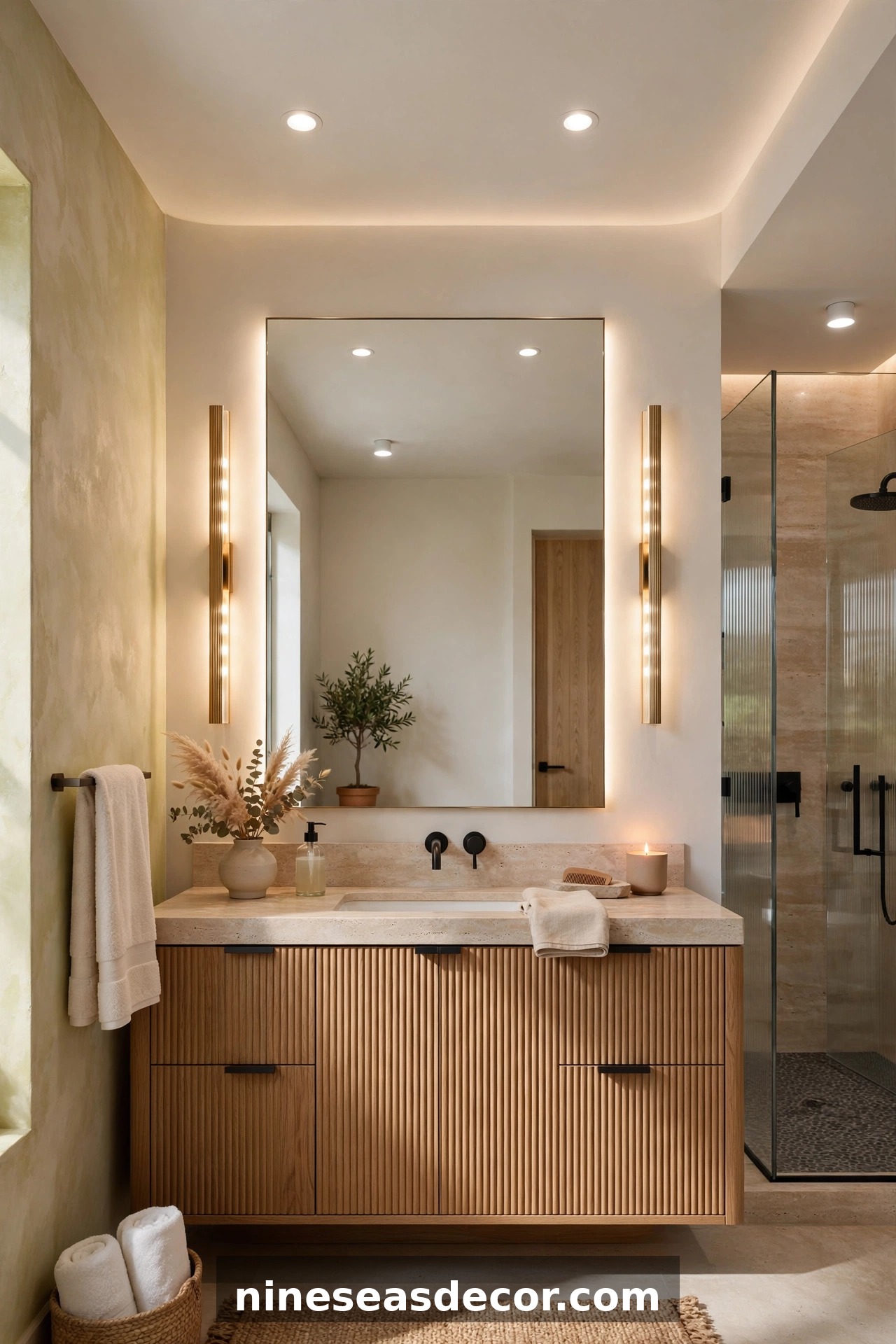
Before you can make smart choices about bathroom lighting fixtures, you need to understand the basic principles that separate a well designed lighting plan from a frustrating one. The single biggest concept to grasp is layered lighting, which means combining multiple light sources at different heights and intensities to serve different functional and aesthetic purposes. Most professional interior designers and lighting specialists follow a three layer framework: ambient lighting, task lighting, and accent lighting. When all three layers work together, the bathroom feels open, functional, and visually interesting. When one layer is missing, the whole space suffers.
Ambient lighting is your foundation. It provides the overall general illumination that fills the room and eliminates harsh shadows in corners and on floors. Think recessed ceiling lights, flush mount ceiling fixtures, or a central chandelier in a larger master bathroom. Task lighting is the layer most people get wrong. This is the focused, bright illumination positioned specifically where you perform detailed activities like applying makeup, shaving, or examining your skin. Vanity side lighting and backlit mirrors fall into this category. Finally, accent lighting adds depth, drama, and personality through decorative touches like toe kick lighting, niche lighting inside a shower, or a statement pendant over a freestanding tub.
According to the National Kitchen and Bath Association (NKBA), bathrooms that incorporate all three lighting layers score significantly higher in both functional performance ratings and aesthetic appeal assessments among homeowners surveyed in their 2024 design trends report. The NKBA also recommends a minimum of 75 to 100 lumens per square foot for adequate bathroom illumination, a benchmark that most single overhead fixtures simply cannot meet on their own. Understanding these fundamentals before you purchase a single fixture will save you money, time, and a lot of frustration.
WHAT IS LAYERED LIGHTING AND WHY DOES IT MATTER
Layered lighting is the professional approach to illuminating any interior space using multiple fixture types and light sources working in harmony rather than relying on a single overhead source. In a bathroom context, this means deliberately planning where each type of light will go before construction or renovation begins. A (60 square foot) standard bathroom might need as few as three fixtures to achieve proper layering: one recessed ambient fixture overhead, a pair of vanity sconces flanking the mirror, and a simple decorative accent near the tub or shower. Getting this layout right from the start prevents costly electrical changes later, which can run ($500 to $1,500) per additional circuit depending on your local market and existing wiring.
THE ROLE OF NATURAL LIGHT IN BATHROOM PLANNING
Natural light is the gold standard for grooming tasks, and whenever possible, your artificial lighting plan should complement and extend it rather than fight against it. If your bathroom has a window, position your vanity to take advantage of that light source by placing it on the same wall as or perpendicular to the window rather than directly opposite it. Skylights are another excellent option for interior bathrooms without exterior walls, with tubular skylights costing between ($500 and $1,200) installed and delivering surprising amounts of daylight to otherwise dark spaces. Even a (12×12 inch) tubular skylight can transform the feel of a (50 square foot) bathroom. Always consider your natural light baseline before choosing bulb brightness levels.
UNDERSTANDING LUMENS, WATTS, AND COLOR TEMPERATURE
Gone are the days when you could simply pick a 60 watt bulb and call it good. Today’s lighting landscape involves understanding lumens, which measure actual light output, and color temperature, measured in Kelvins (K), which determines whether your light appears warm, neutral, or cool. For bathroom vanity areas, most lighting designers recommend bulbs between 2700K and 3000K, which produces a warm white light that flatters skin tones without making the space feel clinical. For a (standard 5×8 foot) bathroom, aim for a total output of 4,000 to 6,000 lumens across all fixtures. Bulbs in the 4000K to 5000K range work well for task lighting in large master baths where color accuracy is critical but can feel harsh in smaller, cozier spaces.
Choosing The Right Vanity Lighting For Your Bathroom
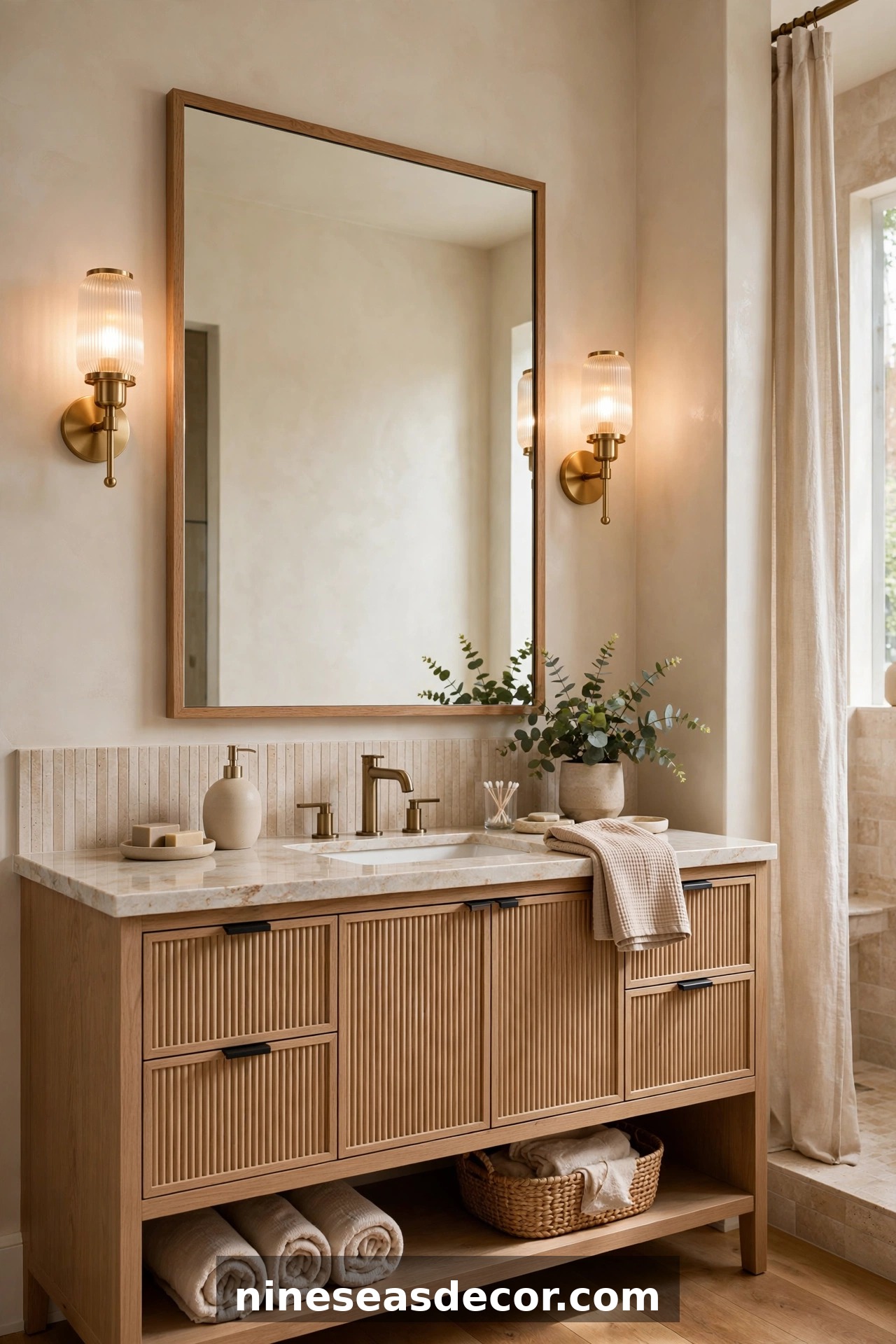
If there is one area of bathroom lighting where homeowners consistently make the most mistakes, it is the vanity. The vanity is where you spend the majority of your functional time in the bathroom, and the lighting there has more impact on your daily experience than any other fixture in the room. The classic builder grade Hollywood strip light mounted directly above the mirror is the most common setup in American homes, and it is also one of the least flattering options available. Overhead only lighting casts downward shadows under your eyes, nose, and chin, essentially recreating the effect of a flashlight held under your face. This is not the look any of us are going for at seven in the morning.
The solution that professional designers consistently recommend is side mounted vanity lighting, specifically placing fixtures at eye level on both sides of the mirror. According to Houzz’s 2024 U.S. Bathroom Trends Study, vanity side lighting was among the top five most requested lighting upgrades during bathroom renovations, with homeowners citing improved grooming accuracy as the primary motivator. When sconces are mounted at approximately 60 to 65 inches from the floor to the center of the fixture, they align with face height for most adults and eliminate the dreaded under eye shadow problem entirely.
The width of your vanity also matters enormously. For a (48 inch) single sink vanity, a pair of sconces flanking the mirror with 24 to 30 inches of spacing between them provides even, shadow free illumination. For a (72 inch or wider) double vanity, you may want to supplement side sconces with a central bar light or an overhead fixture to ensure the full surface is adequately lit. Budget for quality vanity lighting ranges widely from ($50 to $800 per fixture) depending on the style, material, and brand, with the sweet spot for most homeowners landing between ($150 and $350 per sconce) for a fixture that balances quality construction with attractive design.
HOLLYWOOD STRIP LIGHTS VERSUS SCONCES: WHICH IS BETTER
The debate between Hollywood strip lights and wall sconces really comes down to your priorities. Strip lights mounted above the mirror are easier to install because they require only one electrical box, making them a budget friendly choice at ($40 to $250) for the fixture itself. However, they cast unflattering downward light on the face. Wall sconces flanking the mirror require two electrical boxes and therefore a higher installation cost, typically ($150 to $400) in labor per side depending on whether new wiring is needed. But the functional payoff is enormous. If you are remodeling and the walls are open anyway, always wire for side sconces. If you are working with an existing bathroom, a lighted mirror or backlit mirror is an excellent compromise that requires only the existing wiring location.
BACKLIT AND LIGHTED MIRRORS AS A MODERN SOLUTION
Backlit mirrors and LED lighted mirrors have become one of the most popular bathroom upgrades of the mid 2020s, and for very good reason. These mirrors combine the reflective surface with built in edge or face lighting, eliminating the need for separate sconces entirely and creating a sleek, modern aesthetic that photographs beautifully. Quality lighted mirrors range from ($200 to $1,500) depending on size, features, and brand. Look for models with adjustable color temperature and dimming capability, since the ability to shift between warmer tones for evening relaxation and cooler tones for precise morning grooming is genuinely useful. Many models in the ($400 to $800) range now include 3000K to 5000K adjustable color temperature with a simple touch control.
COMMON VANITY LIGHTING MISTAKES TO AVOID
The most frequent vanity lighting errors I encounter are entirely avoidable. First, mounting lights too high above the mirror, anything above 78 inches from the floor essentially becomes a ceiling fixture and loses its face level functionality. Second, choosing bulbs that are too warm, specifically anything below 2700K, which makes skin look yellow and makes it nearly impossible to assess true colors. Third, using mismatched bulb types within the same fixture, which creates an uneven, buzzing appearance. Fourth, underestimating lumens: a single 800 lumen bulb on each side of a mirror is the bare minimum. Aim for 1,600 to 2,400 lumens per side for adequate grooming light. These are the details that separate a bathroom that functions beautifully from one that looks great in a magazine but frustrates you every day.
Navigating Bathroom Lighting Safety And Wet Zone Ratings
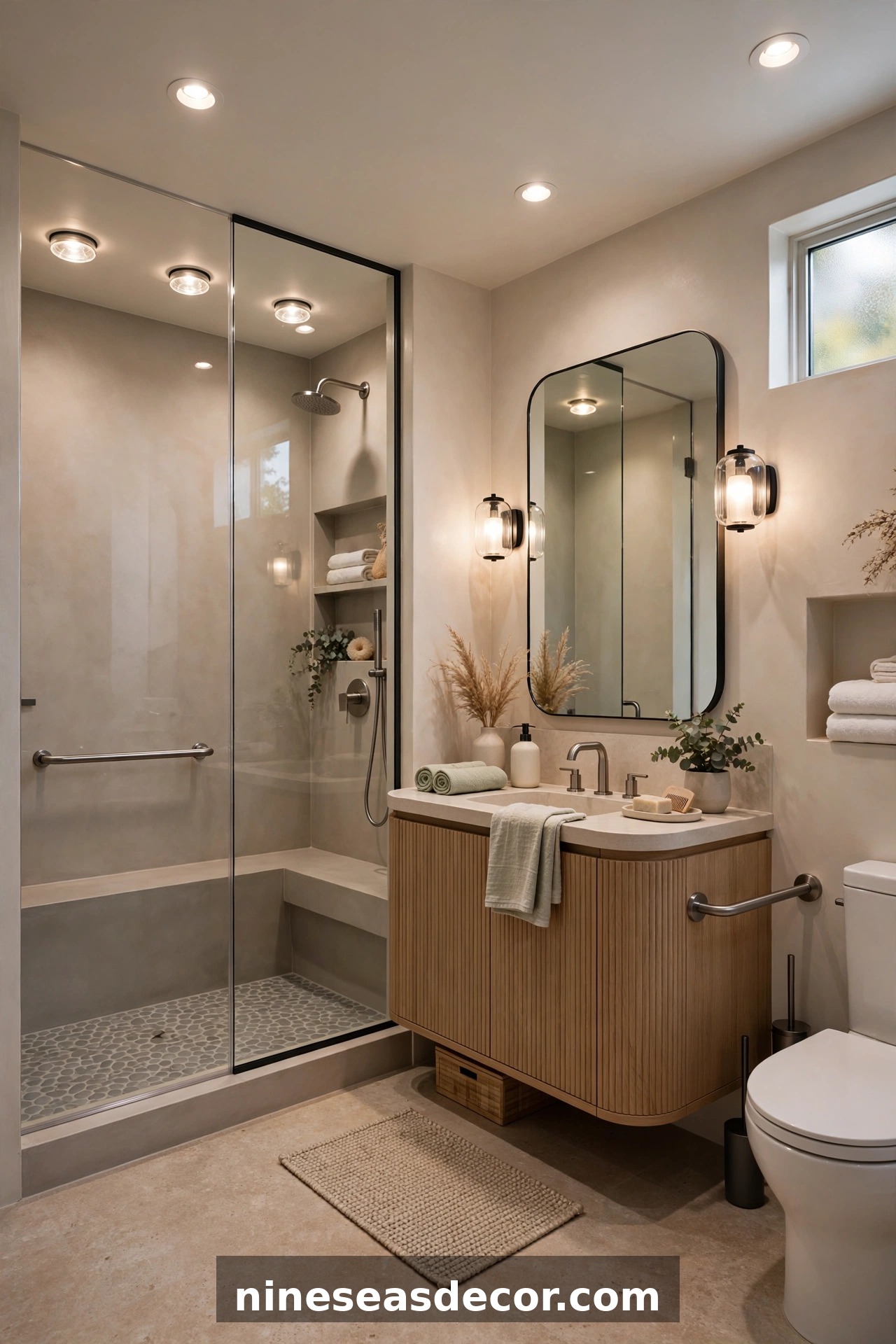
This is the section that homeowners most often skip because it feels technical and boring, but please do not skip it. Bathroom lighting safety is genuinely serious business, and getting it wrong is not just an aesthetic problem. It is a code violation and a genuine safety hazard. Bathrooms combine water, steam, and electricity in a confined space, which means the National Electrical Code (NEC) has very specific requirements about which types of fixtures can be installed where. These requirements are organized around a zone system that divides the bathroom into areas based on their proximity to water sources.
In the United States, the key ratings you need to understand are the IP (Ingress Protection) rating system and the specific UL wet location listing that fixtures must carry to be code compliant in certain bathroom zones. Zone 0 is directly inside the bathtub or shower, Zone 1 is above the tub or shower up to 7.5 feet (2.25 meters), and Zone 2 extends 24 inches (60 cm) beyond the tub or shower perimeter and from floor level up to 8 feet (2.4 meters). Any fixture within Zone 1 must carry at minimum an IP44 rating, and Zone 0 requires IP67 rated fixtures operating at 12 volts or less. Outside these zones in the general bathroom area, fixtures must be UL damp location listed at minimum because of the steam and humidity present in any bathroom environment.
Beyond fixture ratings, pay close attention to your GFCI (Ground Fault Circuit Interrupter) protection requirements. All bathroom receptacles must be GFCI protected per the NEC, and many jurisdictions also require that bathroom lighting circuits be protected. Always hire a licensed electrician for any bathroom wiring work. The average cost for a licensed electrician to install or modify bathroom lighting circuits runs ($80 to $150 per hour), with most bathroom lighting projects requiring between 3 to 8 hours of electrical work.
IP RATINGS EXPLAINED FOR BATHROOM FIXTURES
The IP rating system can seem intimidating at first but it is actually quite logical once you understand the format. The two digits after “IP” tell you two separate things: the first digit rates protection against solid particles on a scale of 0 to 6, and the second digit rates protection against moisture on a scale of 0 to 9. So an IP44 rated fixture is protected against solid objects larger than 1mm and against water splashing from any direction, making it suitable for shower adjacent areas. An IP65 rated fixture is fully dust tight and protected against low pressure water jets, making it excellent for shower ceiling applications. When shopping for recessed shower lights or bathroom ceiling fixtures near wet zones, always verify the IP rating on the product specification sheet rather than relying on marketing language alone.
WHY CEILING PLACEMENT MATTERS FOR SAFETY AND FUNCTION
Where you place fixtures on the bathroom ceiling affects both safety compliance and functional quality of light. Recessed downlights placed directly over the shower must meet wet zone requirements, while those outside the shower perimeter but within the general bathroom can often meet less stringent damp location standards. From a functional standpoint, ceiling fixtures should be positioned to avoid creating direct glare in the mirror. A common mistake is centering a recessed downlight directly above the vanity mirror, which produces the same unflattering overhead effect as a bad vanity bar. Instead, position ceiling fixtures 18 to 24 inches in front of where you stand at the vanity, so the light illuminates you from above and slightly in front rather than directly overhead.
Bathroom Lighting Styles And Fixture Types For 2026
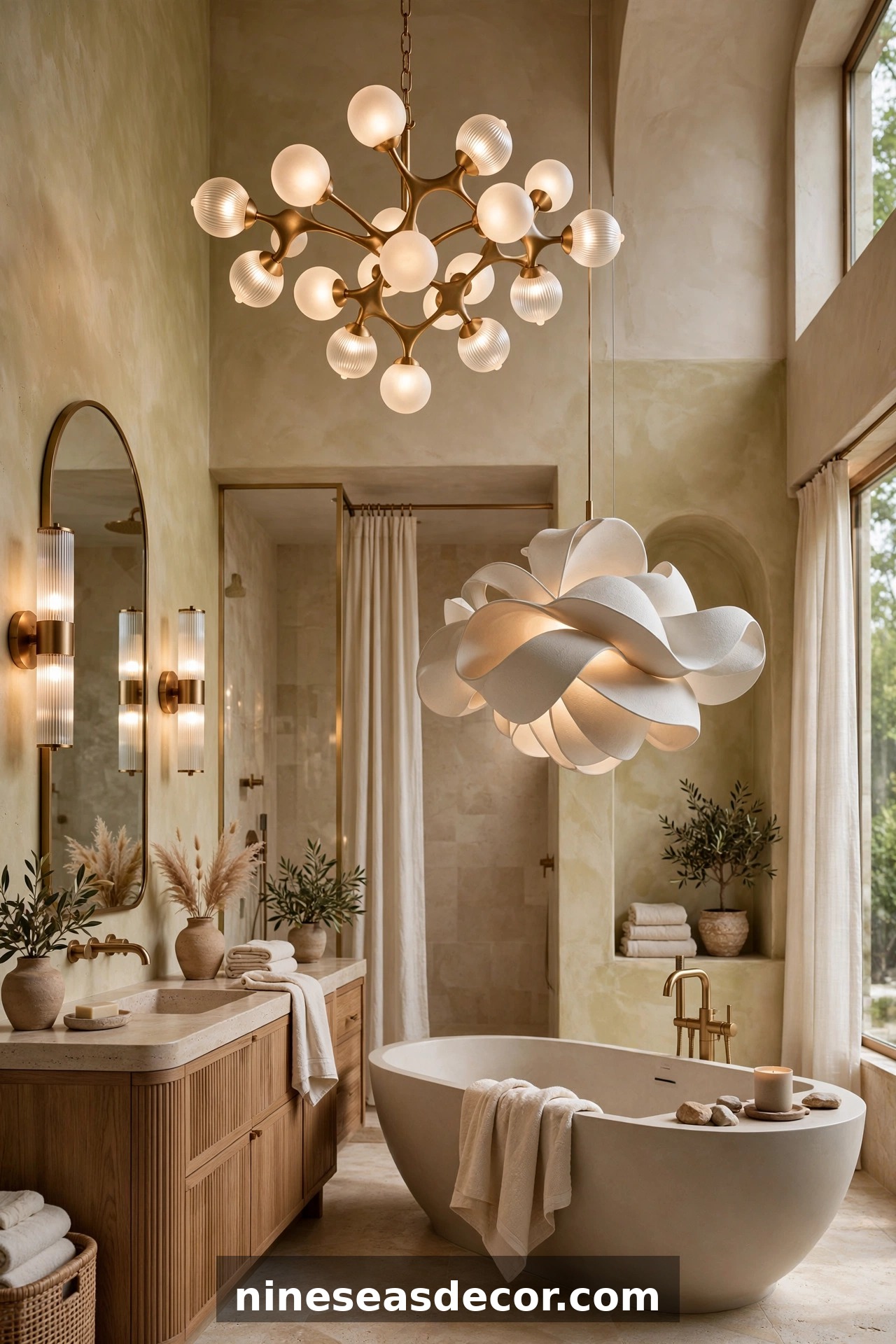
The aesthetic dimension of bathroom lighting is where things get genuinely fun, and 2026 has brought some exciting directions in design. The dominant trends this year are pulling in two directions simultaneously: on one hand, warm minimalism with clean lines, brushed metal finishes, and restrained forms that let materials shine. On the other hand, there is a strong revival of vintage and transitional styles drawing on Art Deco geometrics, unlacquered brass, and globe bulb aesthetics that feel collected rather than catalog purchased. Both directions can work beautifully in bathrooms when executed with attention to proportion and finish coordination.
Matte black fixtures remain extremely popular and have proven to have staying power beyond trend status because they coordinate with virtually every tile color and vanity finish. Brushed nickel continues to be the safe, versatile choice for traditional and transitional bathrooms. Unlacquered brass is having a significant moment, adding warmth and character to bathrooms designed around natural materials like wood vanities and stone tile. And chrome, which felt dated for much of the 2010s, is making a clean modern comeback in contemporary and European influenced bathroom designs.
According to the American Lighting Association’s 2024 Residential Lighting Report, sales of adjustable and dimmable bathroom fixtures increased by 41% between 2022 and 2024, reflecting homeowners’ growing desire for flexible, mood responsive lighting environments. This tracks with the broader wellness bathroom trend, where the bathroom is increasingly designed as a restorative retreat rather than purely a functional utility space.
PENDANT LIGHTS AND CHANDELIERS IN BATHROOM DESIGN
Pendant lights and small chandeliers in bathrooms used to feel eccentric, but they have genuinely become a mainstream design choice for master bathrooms and spa style remodels. Over a freestanding soaking tub, a single pendant or a pair of pendants hung at 60 to 72 inches from the floor to the bottom of the fixture creates a stunning focal point while adding useful ambient and accent light to that zone. For a (80 to 100 square foot) master bathroom, a small chandelier with a 16 to 20 inch diameter works well without overwhelming the space. Budget anywhere from ($200 to $3,000) for a statement tub fixture depending on style and complexity.
RECESSED LIGHTING VERSUS SURFACE MOUNT OPTIONS
The choice between recessed lighting and surface mount fixtures often comes down to ceiling height and construction constraints. Recessed downlights create a clean, uncluttered ceiling and work beautifully in bathrooms with 8 foot or higher ceilings, but they require adequate ceiling depth and proper housing for damp or wet locations. Typical recessed bathroom fixtures cost ($30 to $150 per unit) for the housing and trim, plus installation. Surface mount fixtures are easier to install and are the only viable option when ceiling depth is limited, as in condos or older homes with shallow ceiling cavities. For bathrooms with 7 to 7.5 foot ceilings, a low profile flush mount fixture in a 12 to 16 inch diameter keeps the ceiling from feeling oppressive while providing good ambient coverage.
DECORATIVE ACCENT LIGHTING IDEAS FOR 2026
Accent lighting is where personality enters your bathroom lighting plan. In 2026, the most compelling accent lighting ideas include LED strip lighting under floating vanities, which creates a beautiful hovering effect and adds useful toe kick illumination for nighttime bathroom visits without blinding you at 3am. Niche lighting inside shower niches using IP67 rated LED strips highlights beautiful tile work and adds depth to the shower interior. Cove lighting along the ceiling perimeter using warm 2700K LED strips creates a spa like glow that works wonderfully in larger master bathrooms. Budget for accent LED strip lighting runs ($3 to $15 per linear foot) for the strip itself, plus installation and a compatible driver or transformer.
Bathroom Lighting Color Temperature And Paint Pairing
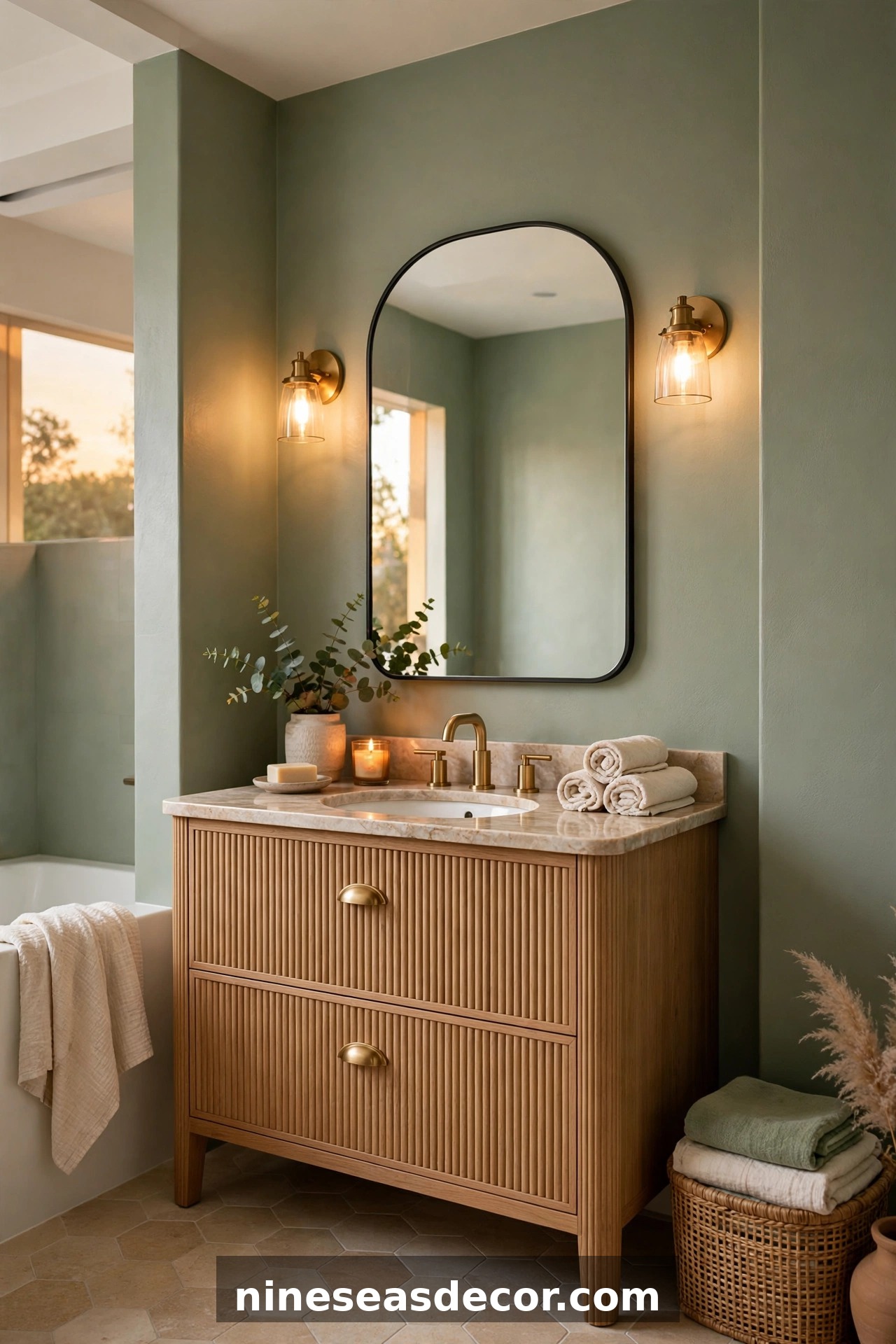
One aspect of bathroom lighting that almost never gets enough attention in design guides is the powerful relationship between light color temperature and your wall paint color. These two elements interact in ways that can either make your carefully chosen paint color look exactly as intended or transform it into something completely unrecognizable. I have walked into bathrooms painted with Sherwin Williams Accessible Beige (SW 7036), one of the most popular neutral paint colors in America, that looked almost orange under warm incandescent light and almost gray green under cool fluorescent light. The paint did not change but the light completely altered its appearance.
As a general rule, warm white light (2700K to 3000K) enriches warm toned paint colors like creams, beiges, taupes, and warm whites, making them feel cozy and inviting. It can, however, make cool toned colors like blues, grays, and greens appear muddy or dull. Neutral white light (3000K to 3500K) is the most versatile option and renders most paint colors reasonably accurately, which is why many designers use it as a default for bathrooms where flexibility matters. Cool white light (4000K and above) makes crisp whites and cool grays look their sharpest and most sophisticated but can make warm paint tones look jaundiced and unflattering.
For a bathroom painted in Benjamin Moore Chantilly Lace (OC-17), which is a pure, bright white, 3000K to 3500K lighting is ideal because it keeps the white crisp without adding an overly clinical feel. For a bathroom featuring Sherwin Williams Quietude (SW 6212), a soft spa green, warm 2700K to 3000K lighting will muddy the green undertones. Instead, opt for 3500K lighting to keep the color clean and fresh. For deep moody tones like Benjamin Moore Hale Navy (HC-154), warm 2700K lighting creates a beautiful, dramatic atmosphere that leans into the richness of the color.
HOW TO TEST LIGHTING AND PAINT TOGETHER BEFORE COMMITTING
The smartest thing you can do before finalizing both your paint color and your light bulb selection is to test them together in the actual space. Paint at least 12×12 inch sample patches on the wall and view them at different times of day under both your existing light and any new bulbs you are considering. Many home improvement stores now sell color temperature sampler packs for ($15 to $25) that include bulbs at multiple Kelvin ratings. Spend a full week living with paint samples before making a final decision. This simple step has saved countless homeowners from expensive repaints. Remember that the same paint chip you fell in love with at the hardware store was lit by specific store lighting and will look different in your bathroom under different conditions entirely.
PAINT COLORS THAT WORK WITH BATHROOM LIGHTING IN 2026
Based on what is trending in 2026 and what actually performs well under common bathroom lighting conditions, here are some top performing combinations. Sherwin Williams Egret White (SW 7570) under 3000K lighting creates a soft, clean backdrop that feels fresh without being stark. Benjamin Moore Pale Oak (OC-20) under 2700K to 3000K lighting delivers a warm, creamy feel that works beautifully in spa and transitional style bathrooms. Sherwin Williams Tradewind (SW 6218), a soft aqua, performs best under 3500K lighting that keeps the blue green tones clear and vibrant. For a bold dark bath, Benjamin Moore Wrought Iron (2124-10) under 2700K warm lighting creates an incredibly dramatic and sophisticated environment that feels luxurious and enveloping.
Planning Your Bathroom Lighting Budget And Renovation Costs
Let’s talk money, because bathroom lighting budgets vary enormously and understanding the full cost picture before you start is essential to avoiding the most common renovation regret: realizing mid project that you have run out of budget for the lighting plan you actually wanted. The total cost of a bathroom lighting upgrade or renovation depends on several variables including the size of your bathroom, the number of fixtures, whether new wiring is needed, and the quality tier of fixtures you choose.
For a simple refresh of an existing bathroom where you are replacing fixtures in existing electrical box locations without any new wiring, total costs typically run between ($300 and $1,500) including fixtures and installation labor. For a moderate upgrade that involves adding one or two new fixture locations requiring additional wiring but staying within your existing electrical panel capacity, budget ($1,500 to $4,000). For a full lighting overhaul as part of a complete bathroom renovation with multiple new circuits, smart dimming controls, and premium fixtures throughout, costs can reach ($4,000 to $12,000) for the lighting component alone in a high end master bathroom.
Fixture costs break down roughly as follows: basic recessed lights run ($30 to $100 each), mid range vanity sconces run ($100 to $350 each), premium designer sconces run ($350 to $1,200 each), lighted mirrors run ($200 to $1,500), and statement chandeliers or pendants run ($200 to $5,000+). Electrician labor in most US markets runs ($80 to $150 per hour). Smart dimmer switches add ($50 to $200 per switch) for quality units that work well with LED fixtures.
WHERE TO SPLURGE AND WHERE TO SAVE ON BATHROOM LIGHTING
My consistent advice after years of covering home renovation is to splurge on vanity lighting and save on ambient ceiling fixtures. The vanity light is the fixture you interact with most closely every single day, and its quality in terms of both aesthetics and functional light output makes a real difference. A ($300 to $500 vanity sconce pair) will serve you far better than a ($60 bar light) from a big box store. Conversely, a ($45 recessed downlight) in the shower ceiling performs virtually identically to a ($150 designer recessed fixture) because you are never going to notice the difference once it is installed and lit. Spend your money where you see and experience the fixture most directly.
THE COST OF SMART BATHROOM LIGHTING SYSTEMS
Smart bathroom lighting has moved from a luxury novelty to a genuinely useful home technology in 2026. Systems like Lutron Caseta, Philips Hue, and various Zigbee compatible smart switches allow you to control color temperature, dimming, and scheduling from your phone or voice assistants. A complete smart lighting setup for a master bathroom including smart switches, compatible fixtures, and a hub if required typically runs ($400 to $1,200) depending on the number of circuits and the platform chosen. The ability to program a gentle 2700K 30% brightness scene for middle of the night trips and a bright 3500K 100% brightness scene for morning grooming is genuinely useful and worth the investment for homeowners who care about the full experience.
Frequently Asked Questions
HOW MUCH DOES A COMPLETE BATHROOM LIGHTING UPGRADE COST IN 2026
A complete bathroom lighting upgrade in 2026 ranges from ($300 to $12,000) depending on scope and market. A simple fixture swap with no new wiring averages ($300 to $1,500) for a standard (50 to 80 square foot) bathroom. A moderate upgrade adding new sconce locations and a dimmer system runs ($1,500 to $4,000). A premium full overhaul in a large master bathroom with designer fixtures, smart controls, accent lighting, and multiple new circuits can reach ($8,000 to $12,000). Labor from a licensed electrician typically accounts for 30 to 50% of total project cost, running ($80 to $150 per hour) in most US markets. Getting at least three quotes from licensed electricians before starting any wiring work is always a smart practice.
WHAT COLOR TEMPERATURE IS BEST FOR BATHROOM LIGHTING
The best color temperature for most bathroom applications falls between 2700K and 3500K. For vanity areas where you need accurate skin tone rendering and grooming precision, 3000K is widely regarded as the sweet spot by lighting designers because it is warm enough to be flattering while cool enough to render colors accurately. For general ambient lighting in a relaxing bath or spa bathroom, 2700K creates the most soothing, warm glow. For large master bathrooms or bathrooms used heavily for detailed makeup application, 3500K provides excellent color accuracy. Avoid going above 4000K in most residential bathrooms as it creates a clinical, hospital like atmosphere that most homeowners find uncomfortable. Dimmable fixtures that span 2700K to 5000K offer the ultimate flexibility.
WHERE SHOULD VANITY LIGHTS BE POSITIONED FOR BEST RESULTS
The optimal position for vanity lighting is on both sides of the mirror at eye level, specifically with the center of the fixture between 60 and 65 inches from the floor, which aligns with face height for most adults. This side mounting position eliminates the unflattering downward shadows produced by overhead only lighting. When side sconces are not possible, a wide bar light mounted directly above the mirror should be positioned so its center is at least 75 to 78 inches from the floor, no higher or it becomes essentially a ceiling fixture. For double vanities spanning 60 inches or more, use either a sconce at each outer edge of the mirror or a combination of a central overhead bar light supplemented by side fixtures for even, shadow free coverage across the full (48 to 72 inch) vanity surface.
WHAT IP RATING DO BATHROOM LIGHT FIXTURES NEED TO HAVE
IP rating requirements for bathroom fixtures depend on their proximity to water sources. Fixtures installed directly inside a shower or bathtub (Zone 0) require IP67 rated fixtures at 12 volts maximum. Fixtures within the shower or bath surround up to 7.5 feet high (Zone 1) require a minimum of IP44 rated fixtures. Fixtures within 24 inches (60 cm) of the shower or bath perimeter up to 8 feet high (Zone 2) also require at minimum IP44 rating. Fixtures in the general bathroom area outside these wet zones must be at least UL damp location listed because bathroom steam and humidity affect all fixtures in the room. Always verify the IP rating on the manufacturer’s specification sheet and confirm compliance with your local building code, as some jurisdictions have additional requirements beyond the baseline NEC standards.
CAN I INSTALL BATHROOM LIGHTING MYSELF OR DO I NEED AN ELECTRICIAN
Whether you can install bathroom lighting yourself depends on the scope of work and your local building codes. Replacing an existing fixture in an existing electrical box location, where you are simply swapping one fixture for another with no new wiring, is within the ability of most confident DIYers and typically does not require a permit. However, running new wiring, adding new circuits, installing new electrical boxes, or any work that opens walls requires a permit in virtually all US jurisdictions and must be performed or inspected by a licensed electrician. Beyond