
bathroom-color-schemes-2026
You finally decide to refresh your bathroom, you walk into the paint store, and suddenly you are staring at approximately 1,500 color swatches wondering why this felt like a simple task twenty minutes ago. Sound familiar? I have been writing about home decor for over a decade, and I can tell you without hesitation that the bathroom is the room where most homeowners completely freeze up. It is small, it is personal, and the wrong color choice can make a perfectly good bathroom feel like a broom closet or, worse, a hospital waiting room.Here is the thing though. Color is genuinely the most powerful and most affordable tool you have when it comes to bathroom transformation. According to a 2023 study published in the Journal of Environmental Psychology, color in small enclosed spaces like bathrooms has a measurably stronger psychological effect on mood and perceived space than in larger rooms, with respondents rating their satisfaction with a space up to 52% higher when the color scheme matched their personal comfort preferences. That is not a small number. That is more than half the battle won before you even pick up a tile sample.
In this guide, I am covering everything you need to know about bathroom color schemes in 2026. We are talking trending palettes, timeless classics, room size considerations, lighting factors, paint codes you can actually walk into your local hardware store and request, and real cost breakdowns so you know exactly what you are getting into. Whether your bathroom is a tight (35 sq ft) powder room or a sprawling (120 sq ft) primary suite bath, I have got specific advice tailored to your situation.
I have personally tested and researched dozens of these color combinations in real bathroom renovations, consulted with professional interior designers, and dug into the latest data from the National Kitchen and Bath Association (NKBA) and Houzz annual design reports. This is not a listicle of pretty pictures. This is a working guide you can bookmark, print, and bring straight to your contractor or paint store. Let us get into it.
Why Bathroom Color Schemes Affect More Than Just Looks
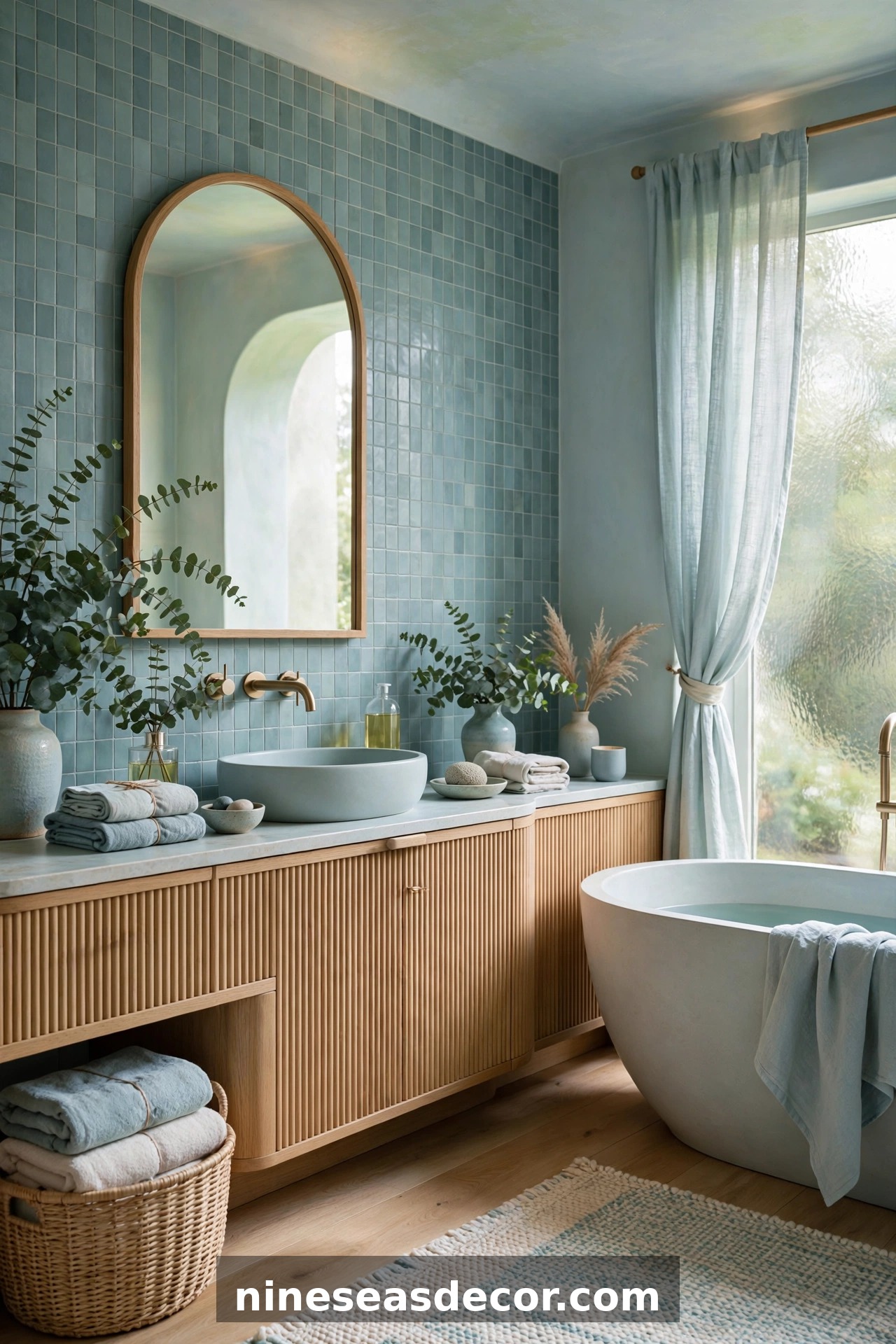
People consistently underestimate how much color influences the way a bathroom actually functions for them on a daily basis. This is not about aesthetics alone. This is about how you feel at 6:30 AM when you are getting ready for work, how relaxed you feel during a Sunday evening bath, and whether guests feel comfortable when they step into your powder room. A thoughtfully chosen bathroom color scheme does heavy psychological lifting every single day.
The size of your bathroom plays an enormous role in color selection. A (50 sq ft) bathroom with dark charcoal walls can feel dramatically cave-like and oppressive, while that same space painted in Benjamin Moore White Dove (OC-17) suddenly reads as airy and inviting. Conversely, a large primary bathroom of (100 sq ft) or more can absolutely handle deep, saturated hues without sacrificing that sense of openness. Understanding your square footage before you even open a paint deck is step one.
According to the 2024 Houzz Bathroom Trends Study, 68% of homeowners who completed bathroom renovations cited color scheme selection as the single decision they wished they had spent more time researching before committing. Paint and tile are not always easy or cheap to change after the fact. Getting it right the first time saves you real money, potentially ($500 to $3,000) in repainting, retiling, or replacing fixtures that clash with a poorly chosen palette.
Natural and artificial lighting in your bathroom will also dramatically shift how any color appears on your walls. A swatch that looks like a soft sage green under the fluorescent lights of a paint store might read almost mint under cool LED bathroom lighting, or shift toward olive under warm incandescent bulbs. Always, always test your paint colors in your actual bathroom under your actual lighting conditions before committing to a full gallon.
THE PSYCHOLOGY OF BATHROOM COLORS
Color psychology is a real and well-documented field, and it applies directly to bathroom color scheme planning. Blues and greens consistently trigger feelings of calm, cleanliness, and restoration, which is exactly why spa-inspired bathroom palettes lean so heavily into those families. Whites and off-whites signal cleanliness and clarity, making spaces feel fresh and hygienic. Warmer tones like terracotta, warm taupe, and blush create intimacy and warmth, which can feel incredibly luxurious in a primary bath. Understanding what emotion you want your bathroom to evoke before choosing your palette will cut your decision-making time in half and significantly improve your final satisfaction with the result.
HOW LIGHTING CHANGES EVERYTHING
Here is something I tell every single person who asks me about bathroom paint colors. Buy the sample pot, paint a (12×12 inch) swatch directly on your wall, and look at it at three different times of day. Morning light, afternoon light, and evening with your bathroom lights on. I have seen Sherwin-Williams Agreeable Gray (SW 7029) look like a warm greige in morning sun and shift to almost lavender under cool evening lighting in north-facing bathrooms. This is not a mistake the paint company is making. This is just physics, and it is something you need to account for before buying 3 to 5 gallons of paint at ($55 to $85 per gallon).
The Top Trending Bathroom Color Schemes for 2026
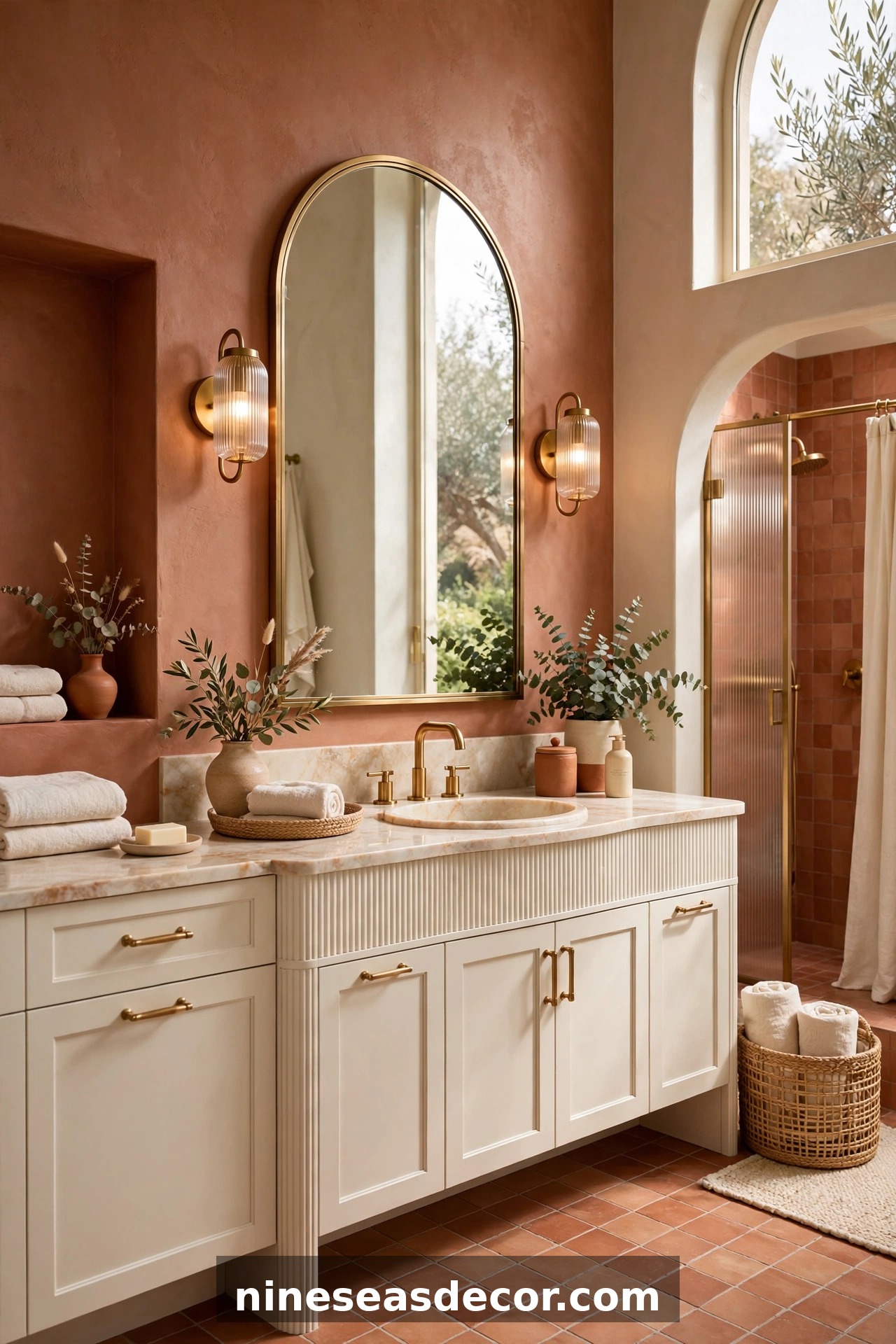
Every year I dig through the design reports, talk to contractors and designers, and spend an embarrassing amount of time on renovation platforms to figure out what is actually gaining traction in real American bathrooms. Not the fantasy bathrooms you see on design blogs with unlimited budgets, but the real bathrooms that real homeowners are renovating with real money. For 2026, several bathroom color scheme trends are standing out as both beautiful and genuinely practical.
The dominant shift I am seeing is a move away from the ultra-cool, stark white bathroom aesthetic that dominated the mid-2010s and toward warmer, more layered palettes. Homeowners are clearly hungry for bathrooms that feel cozy and personal rather than sterile and showroom-perfect. This does not mean warm colors are taking over entirely. It means the conversation has become more nuanced, with designers layering warm neutrals against cool stone tones and introducing earthy accents through tile, textiles, and hardware.
According to a 2024 report from the National Association of Realtors (NAR), bathrooms with updated, on-trend color schemes saw a 3 to 7% increase in perceived home value during appraisals compared to bathrooms with outdated or poorly executed color choices. That translates to real dollars in a home sale situation, and it is a compelling argument for investing thoughtfully in your bathroom palette.
WARM NEUTRALS AND EARTHY TONES
Warm neutral bathroom color schemes are absolutely dominating 2026 renovation projects. We are talking paint colors like Sherwin-Williams Accessible Beige (SW 7036), Benjamin Moore Pale Oak (OC-20), and Sherwin-Williams Antique White (SW 6119) paired with natural stone tile, warm wood vanities, and brushed brass or matte black hardware. This combination creates a bathroom that feels simultaneously current and timeless, which is exactly what you want if you plan to live in your home for more than five years. The earthy tone trend extends into tile choices as well, with terracotta-adjacent grout colors, travertine-look porcelain, and limewash wall treatments showing up everywhere.
DEEP MOODY BLUES AND NAVY SCHEMES
Moody bathroom color schemes anchored in deep navy, midnight blue, and forest green have moved from trend to established design staple. Colors like Benjamin Moore Hale Navy (HC-154), Sherwin-Williams Naval (SW 6244), and Benjamin Moore Newburyport Blue (HC-155) are showing up in powder rooms and primary baths alike. The key to making these work without feeling oppressive is pairing them with crisp white trim, light-reflective tile, and strategic lighting. In a powder room of (35 to 50 sq ft), a deep navy can actually feel dramatic and intentional rather than claustrophobic, especially with a large mirror and polished nickel fixtures bouncing light around the space.
SAGE GREEN AND BOTANICAL PALETTES
Sage green bathroom color schemes have earned their place as the defining bathroom color story of the mid-2020s, and they are not going anywhere in 2026. The appeal is obvious. Green connects the bathroom to nature, reads as inherently calming, and pairs beautifully with almost every metal finish. Sherwin-Williams Privilege Green (SW 6193), Benjamin Moore Dried Thyme (CSP-830), and Farrow and Ball Mizzle (No. 266) are all seeing significant search volume increases. Pair any of these with warm white subway tile, unlacquered brass fixtures, and linen towels and you have a bathroom that looks like it belongs in a boutique hotel rather than a suburban colonial.
Bathroom Color Schemes by Room Size
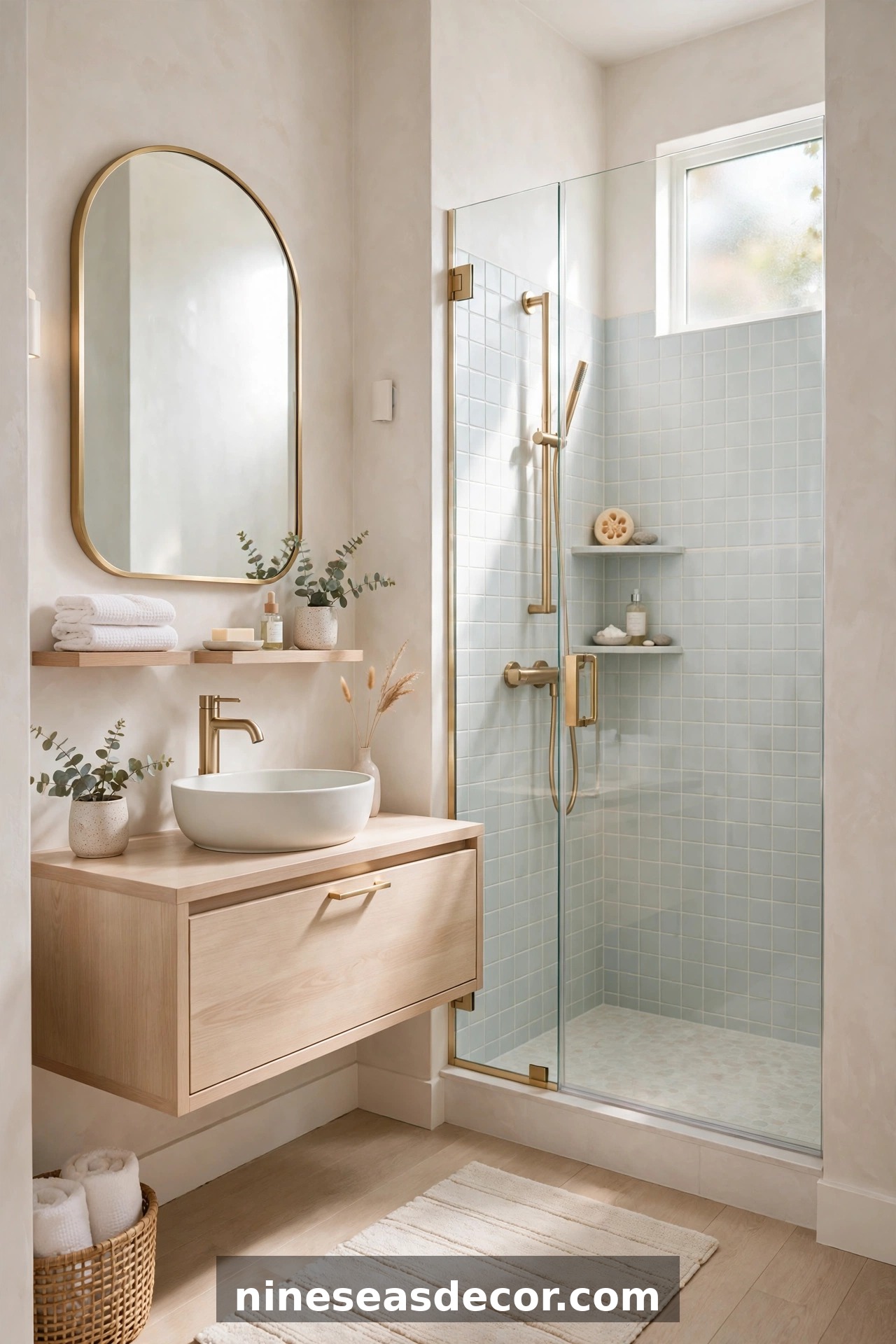
One of the most common mistakes I see homeowners make is choosing a bathroom color scheme without factoring in the actual square footage of the space. A palette that looks stunning in a (150 sq ft) primary bath might feel suffocating in a (40 sq ft) guest bathroom. Size is not a limitation, it is a design parameter, and once you start working with it instead of against it, everything gets easier.
The general rule of thumb, backed by actual design research, is that lighter, cooler colors recede visually and make small spaces feel larger, while deeper, warmer colors advance and create intimacy. But this is a guideline, not a law. I have seen brilliantly executed small bathrooms in deep plum and charcoal that felt luxurious rather than cramped, entirely because of smart lighting and reflective surfaces. The devil is always in the execution.
According to a 2023 survey published in the Journal of Interior Design, homeowners who matched their color scheme intensity to their room size reported 61% higher satisfaction with their bathroom renovation outcomes compared to those who chose colors without considering spatial proportions. That is a significant enough margin that it is worth taking seriously as you plan your project.
COLOR SCHEMES FOR SMALL BATHROOMS UNDER 50 SQ FT
For bathrooms in the (35 to 50 sq ft) range, your best friends are light-reflective paint sheens, monochromatic color schemes, and strategic use of color continuity between walls and trim. Painting your trim the same color as your walls, a technique called tone-on-tone painting, eliminates the visual choppy boundaries that make small rooms feel even smaller. Try Benjamin Moore Chantilly Lace (OC-65) on walls and trim together for a seamless, expansive effect. If you want a touch of color, keep it subtle with something like Sherwin-Williams Sea Salt (SW 6204), a soft watery blue-green that reads almost neutral in bright light. Budget for paint in a small bathroom runs approximately ($150 to $400) for materials and labor.
COLOR SCHEMES FOR MEDIUM BATHROOMS 50 TO 100 SQ FT
The (50 to 100 sq ft) bathroom is the sweet spot where you have real flexibility. You can go medium depth with colors like Sherwin-Williams Rainwashed (SW 6211) or Benjamin Moore Pale Smoke (2116-40) without worrying too much about the space closing in. This is also where two-tone color schemes start to work beautifully, pairing a slightly deeper wall color with bright white trim and ceiling to create definition without visual weight. Consider a wainscoting treatment with painted beadboard below the (36 inch) mark and a contrasting but complementary color above for a polished, intentional look that adds significant visual interest.
COLOR SCHEMES FOR LARGE PRIMARY BATHROOMS OVER 100 SQ FT
When you have got (100 sq ft) or more to work with, the design world genuinely opens up. Large primary bathrooms can handle rich, saturated colors that would overwhelm smaller spaces. Think Sherwin-Williams Urbane Bronze (SW 7048), a sophisticated warm brown gray, or Benjamin Moore Newburyport Blue (HC-155) for something cooler and more dramatic. Large bathrooms also benefit from accent wall treatments, including wallpaper, limewash, or a deeply contrasting paint color on the wall behind the freestanding tub or double vanity. Budget accordingly since a large bathroom full paint job typically runs ($600 to $1,500) for professional labor alone.
Understanding Undertones: The Secret to a Cohesive Bathroom Color Scheme
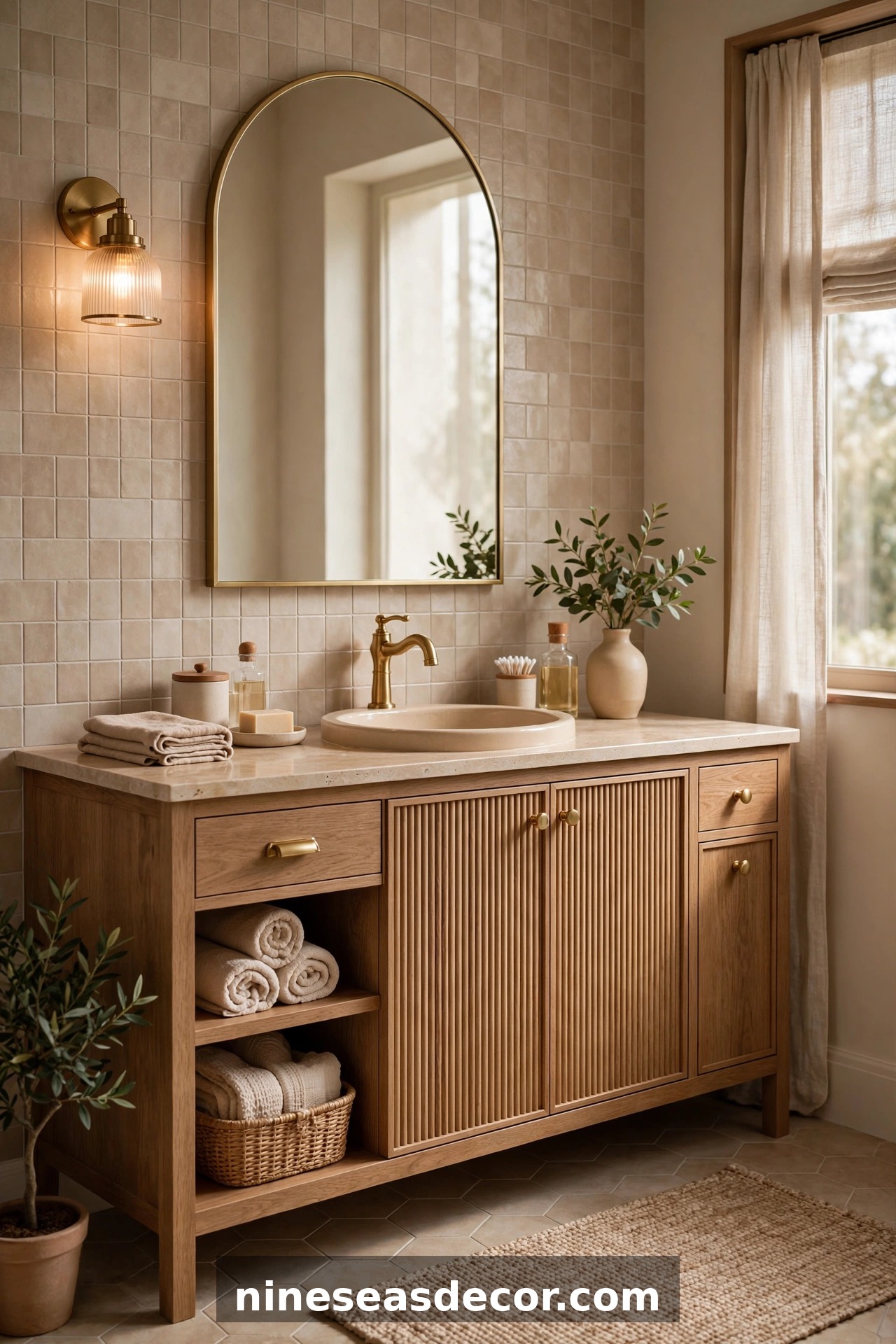
Nobody ever warned me about undertones when I started in this industry, and it is genuinely one of the most important concepts to understand before you choose any bathroom color scheme. Undertones are the subtle secondary colors that exist within every paint color, and they are the reason why “white” is never just white and “gray” is never just gray. Getting undertones wrong is how you end up with a gray paint that turns lavender on your walls, or a beige that suddenly looks pink next to your warm-toned tile.
Every color sits within a warm or cool family based on its undertones. Warm colors have undertones of red, orange, yellow, or brown. Cool colors carry undertones of blue, green, or purple. Neutral colors can swing either way depending on what surrounds them, which is why they are simultaneously the most popular choice and the most frequently botched choice in bathroom renovations.
The professional trick is to look at the darkest point of a paint chip, not the lightest. The undertone is most visible at full saturation, which means the darkest chip in a strip reveals the true undertone that will influence how that color reads on your walls at lighter values.
IDENTIFYING WARM VERSUS COOL UNDERTONES
To identify whether your preferred bathroom color leans warm or cool, hold the paint chip against a pure, cool white like Benjamin Moore Chantilly Lace (OC-65) and also against a warm white like Sherwin-Williams Antique White (SW 6119). The comparison will immediately reveal whether your color leans warmer or cooler than you thought. This matters enormously when coordinating with existing fixtures. Bright chrome fixtures read cool and pair best with cool-toned palettes. Brushed brass and unlacquered brass fixtures are inherently warm and need warm-undertoned colors to avoid clashing. Matte black is relatively neutral but leans slightly cool.
MATCHING UNDERTONES TO YOUR EXISTING FIXTURES
Before you commit to any bathroom color scheme, catalog the undertones of everything that is staying in the space. This includes your tile grout color, your vanity finish, your fixture metal tone, and even your flooring material. If your floor tile has warm cream and tan veining and your existing vanity is a honey maple, you need wall colors with warm undertones to create cohesion. Something like Sherwin-Williams Accessible Beige (SW 7036) or Benjamin Moore Manchester Tan (HC-81) will feel harmonious and intentional. A cool gray in that same bathroom will fight against every warm element and create a space that feels perpetually unsettled, even if you cannot immediately identify why.
Tile and Color: Building a Complete Bathroom Color Scheme
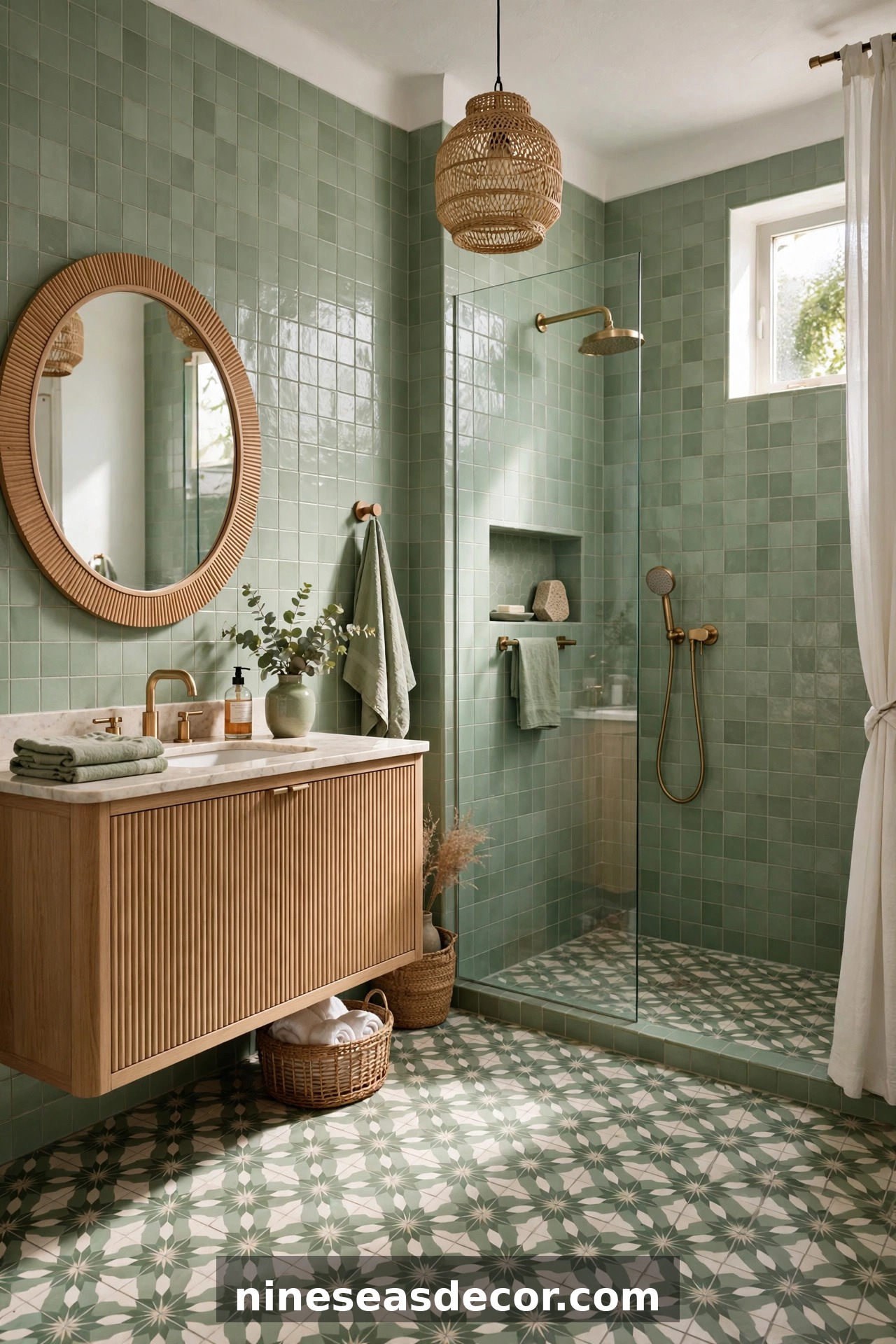
Paint is only one layer of your bathroom color scheme. In most bathrooms, tile covers an enormous percentage of the visual surface area, from floor to countertop to shower surround. The relationship between your tile selection and your paint color is arguably more important than any other pairing in the room. Getting this relationship right is what separates bathrooms that look intentionally designed from bathrooms that look like a collection of individually acceptable choices that never quite gelled.
The smartest approach is to choose your tile first and build your paint palette around it. Tile is more expensive and more permanent than paint, costing anywhere from ($3 to $30 per sq ft) for materials alone, plus ($8 to $20 per sq ft) for professional installation. Paint, by comparison, costs ($55 to $85 per gallon) and can be changed in a weekend. Always anchor your color scheme around the permanent, more expensive element and adjust the flexible, cheaper element to harmonize.
PAIRING WALL COLORS WITH WHITE SUBWAY TILE
White subway tile is the most common tile choice in American bathrooms, and for good reason. It is classic, clean, and pairs with virtually any wall color. But here is where undertones matter again. If your white subway tile has a cool, bright white tone, warm paint colors will clash slightly at the grout lines. If your tile leans cream or ivory, cool gray wall colors will make the tile look dingy by comparison. The safest approach with bright white subway tile is to go with either a crisp cool-toned color like Sherwin-Williams Interesting Aqua (SW 6220) or a very warm creamy neutral like Benjamin Moore White Dove (OC-17) that does not fight the tile’s own undertone. Grout color also plays a role, with light gray grout on white subway tile creating a slightly more contemporary grid pattern versus bright white grout for a more seamless look.
WORKING WITH NATURAL STONE AND MARBLE TILE
Natural stone and marble tile introduce multiple undertones simultaneously because stone is not a single color. Carrara marble, for example, features white backgrounds with cool gray veining and occasional warm beige and gold tones. Building a bathroom color scheme around Carrara means you can pull either the cool gray veining or the warmer background tone as your dominant wall color. Pulling the cool direction gives you something like Benjamin Moore Gray Owl (OC-52) for a serene, spa-like result. Pulling the warmer direction with something like Sherwin-Williams Accessible Beige (SW 7036) creates a warmer, more enveloping atmosphere. Both work. The choice comes down to the mood you want to create and which fixtures and accessories you are pairing with the stone.
Accent Colors and the Art of the Bathroom Color Palette
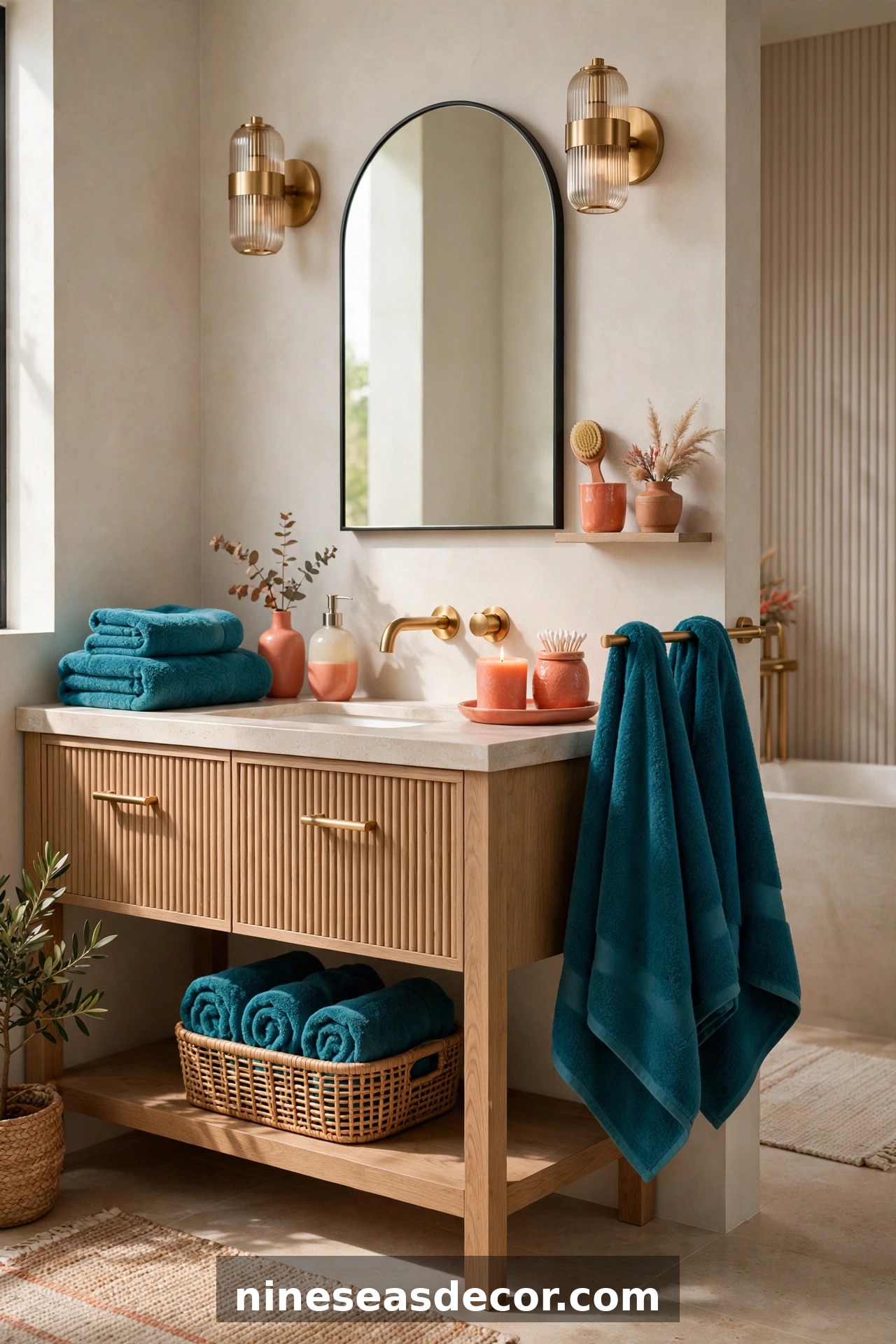
A truly successful bathroom color scheme is rarely just one color. It is a curated palette of three to five tones that work together to create a cohesive visual story. The most reliable framework for building this palette is the classic 60-30-10 rule, where your dominant color covers 60% of the visual space, your secondary color covers 30%, and your accent color brings in the final 10%. In a bathroom context, this might look like warm white walls as the dominant, warm wood vanity as the secondary, and brushed brass fixtures as the accent.
The accent color is where you get to have fun and introduce personality into the space without overwhelming it. Accent colors in a bathroom come through towels, artwork, plants, cabinet hardware, shower curtains, and small decorative objects. The beauty of keeping accent colors in accessories rather than permanent fixtures is that you can update your bathroom color scheme seasonally or as trends evolve without any demolition required.
USING HARDWARE AND FIXTURES AS ACCENT COLORS
Metal hardware and fixtures are one of the most underutilized accent color tools in bathroom design. Brushed gold and unlacquered brass read as warm amber tones that add richness to any neutral or cool palette. Matte black hardware is a graphic, high-contrast accent that sharpens the look of light-colored walls and white tile. Polished nickel and chrome are classic cool silver tones that reinforce clean, serene aesthetics. The key rule is to stay consistent with your metal finish throughout the bathroom. Mixing two or more metal finishes reads as unintentional rather than eclectic in a small space. Budget for a complete hardware refresh including towel bars, toilet paper holder, and robe hooks typically runs ($200 to $800) depending on brand and finish quality.
PLANTS AND TEXTILES AS LIVING COLOR ACCENTS
Plants and textiles are the most flexible and budget-friendly way to introduce accent color into your bathroom color scheme. A cluster of pothos, ferns, or snake plants in textured ceramic pots adds organic green tones that instantly warm up cool-toned bathrooms and reinforce nature-inspired palettes. Towels in a thoughtfully chosen accent color, dusty rose against sage green walls, rust orange against warm white tile, navy against soft gray, can completely change the atmosphere of a bathroom without a single drop of paint. Change your towels and your bathroom effectively has a new personality. Budget for a quality set of accent towels runs ($40 to $120) for a set of four, which is genuinely the cheapest design update available.
The Best Paint Finishes for Bathroom Color Schemes
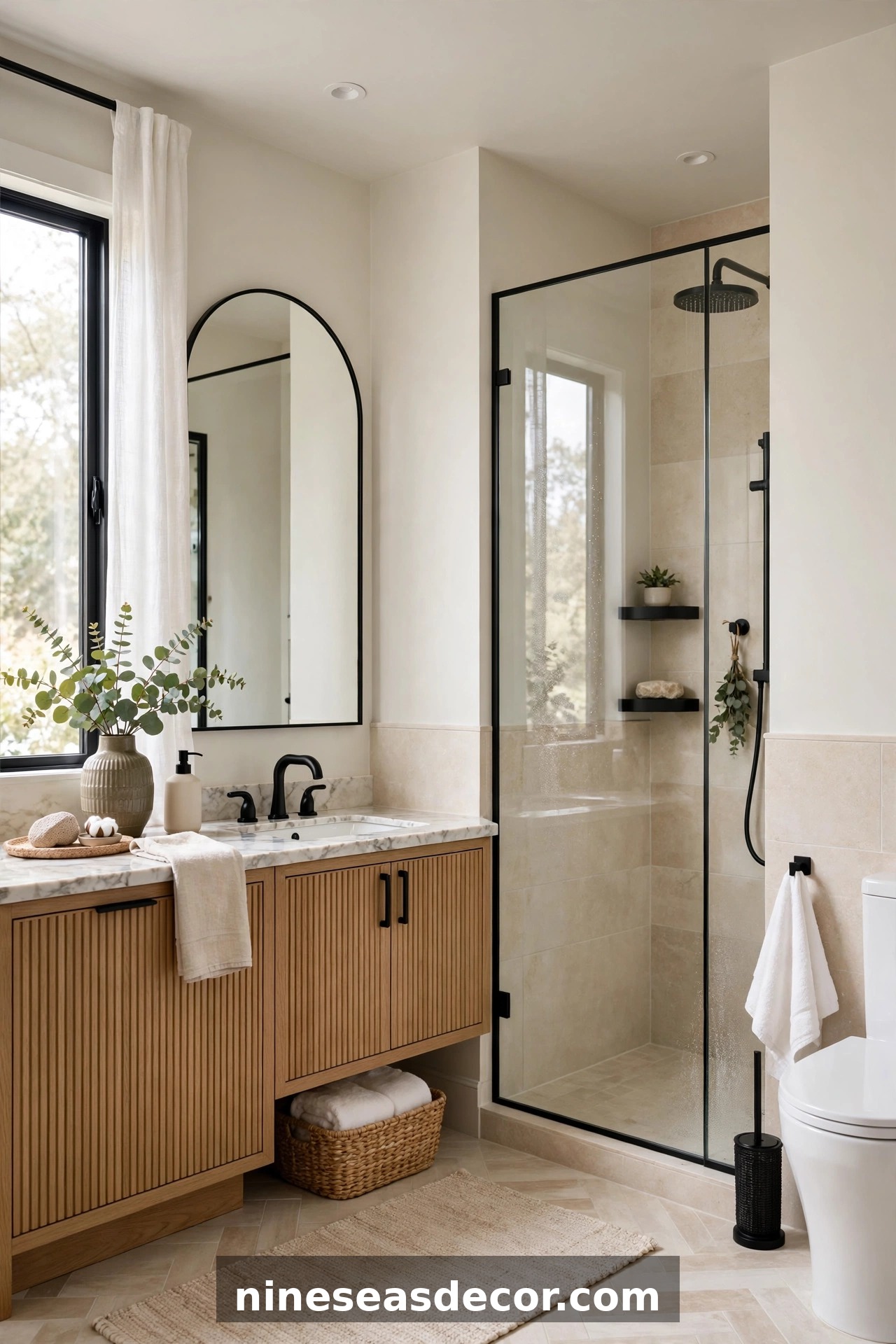
Choosing the right paint finish is as important as choosing the right color, especially in a bathroom where moisture, steam, and humidity are constant variables. The wrong finish on a bathroom wall will peel, bubble, and show every water splash and fingerprint within months. The right finish will look beautiful for years and clean up effortlessly with a damp cloth.
The bathroom environment demands paints specifically formulated for high-moisture spaces, or at minimum, a finish level that resists moisture penetration. Flat and matte finishes, while beautiful in bedrooms and living rooms, are generally not recommended for bathroom walls because they absorb moisture and are difficult to clean. Most professional painters and designers recommend a satin or eggshell finish for bathroom walls and a semi-gloss finish for trim and cabinetry.
SATIN VERSUS EGGSHELL FOR BATHROOM WALLS
The debate between satin and eggshell finish for bathroom walls is real and worth understanding. Eggshell finish has a very subtle, low-level sheen that is slightly more reflective than flat but still soft and matte-looking from a distance. It handles moisture reasonably well and resists scrubbing better than flat paint. Satin finish has a noticeably higher sheen level that bounces light more actively and resists moisture, mildew, and cleaning far more effectively. The tradeoff is that satin shows wall imperfections and brush marks more readily than eggshell. For a well-prepped, smooth bathroom wall, satin is the professional choice. For a bathroom with older, less-than-perfect walls, eggshell may be the more forgiving option. Premium bathroom-specific paints like Benjamin Moore Aura Bath and Spa at approximately ($75 to $95 per gallon) are specifically formulated to handle bathroom humidity regardless of sheen level.
SPECIALTY PAINT TREATMENTS FOR BATHROOM WALLS
Beyond standard latex paint, specialty paint treatments are having a significant moment in bathroom design. Limewash paint, a technique using a diluted lime-based wash to create a soft, antiqued texture, adds incredible depth and organic warmth to bathroom walls. Brands like Portola Paints offer limewash products that approximate the traditional European technique at approximately ($80 to $120 per gallon), covering roughly (250 to 400 sq ft) depending on application technique. Venetian plaster is a more labor-intensive option that creates a polished, stone-like surface with subtle color variation, typically costing ($8 to $15 per sq ft) installed professionally. Both of these treatments add texture alongside color, creating a visual richness that flat paint simply cannot replicate.
Frequently Asked Questions
WHAT ARE THE MOST POPULAR BATHROOM COLOR SCHEMES FOR 2026?
The most popular bathroom color schemes for 2026 include warm neutral palettes anchored in colors like Sherwin-Williams Accessible Beige (SW 7036) and Benjamin Moore Pale Oak (OC-20), deep moody blues and navies like Benjamin Moore Hale Navy (HC-154) and Sherwin-Williams Naval (SW 6244), and sage green botanical schemes featuring Sherwin-Williams Privilege Green (SW 6193). According to the 2024 Houzz Bathroom Trends Study, warm neutrals currently represent the largest single color category in completed bathroom renovations, accounting for approximately 34% of all surveyed projects. These palettes are popular because they photograph well, appeal broadly to buyers, and create a timeless quality that will not feel dated within five to seven years. For maximum resale value alignment, the National Association of Realtors recommends neutral and nature-inspired palettes over bold or highly personalized color choices.
WHAT COLOR MAKES A SMALL BATHROOM LOOK BIGGER?
The most effective colors for making a small bathroom under (50 sq ft) look bigger are light, cool-toned, and high-reflectance. Benjamin Moore Chantilly Lace (OC-65), Sherwin-Williams Sea Salt (SW 6204), and Benjamin Moore White Dove (OC-17) are among the top-performing options for visually expanding a small bathroom. The technique of painting walls, ceiling, and trim the same color, or very close tones, eliminates visual boundaries that chop up small spaces. Using a satin or semi-gloss finish enhances light reflection further. Mirrors are your other best friend in a small bathroom, with a properly positioned mirror of (24 to 36 inches wide) effectively doubling the perceived visual depth of the space. Keep accessories and textiles light-toned as well to reinforce the airy quality of the pale wall color.
HOW MUCH DOES IT COST TO REPAINT A BATHROOM?
The cost to repaint a bathroom varies significantly based on room size, prep work required, paint quality, and whether you hire a professional or DIY the project. For a small bathroom of (35 to 50 sq ft), a DIY repaint using premium paint typically costs ($100 to $250) for materials including paint, primer, painter’s tape, and brushes or rollers. Professional painting labor for a small bathroom typically adds ($200 to $500) depending on your region and the complexity of the space, bringing the total professional repaint to approximately ($300 to $750). For a larger primary bathroom of (100 sq ft) or more, professional painting labor alone can run ($600 to $1,500), with premium paint brands like Benjamin Moore Aura Bath and Spa adding approximately ($75 to $95 per gallon) to material costs.
SHOULD BATHROOM WALLS AND CEILING BE THE SAME COLOR?
Painting bathroom walls and ceiling the same color is a design technique called color drenching or enveloping color, and it is highly effective in bathrooms both small and large. In small bathrooms under (50 sq ft), matching wall and ceiling color removes the visual border that makes rooms feel truncated, creating a seamless, expansive quality. In larger primary baths of (80 to 150 sq ft), a fully color-drenched space in a rich tone like Sherwin-Williams Urbane Bronze (SW 7048) or a soft sage creates an immersive, spa-like cocoon effect that feels genuinely luxurious. The one caveat is sheen. Most designers recommend painting the ceiling in a slightly less shiny finish than the walls, using eggshell on walls and flat on the ceiling, to prevent the ceiling from looking reflective in an unflattering way under overhead lighting.
WHAT ARE THE BEST BATHROOM COLORS FOR RESALE VALUE?
According to a 2024 report from the National Association of Realtors (NAR), bathrooms with updated, neutral-to-nature-inspired color schemes consistently outperform dated or boldly personalized bathrooms in buyer perception and appraised value. The best bathroom colors for resale value in 2026 lean toward versatile, broadly appealing neutrals and soft nature-inspired tones. Specific recommendations include Sherwin-Williams Accessible Beige (SW 7036), Benjamin Moore Gray Owl (OC-52), Benjamin Moore Pale Oak (OC-20), and Sherwin-Williams Sea Salt (SW 6204). Bathrooms with these palettes have seen an estimated 3 to 7% increase in perceived value during buyer walkthroughs. Avoid highly saturated colors, bold patterns, or extremely trendy palettes if resale within the next three to five years is a priority, as these choices narrow your buyer pool significantly.
HOW DO I CHOOSE A BATHROOM COLOR SCHEME IF I HAVE NO NATURAL LIGHT?
Choosing a bathroom color scheme for a windowless or very low natural light bathroom requires a different strategy than a light-filled space. The instinct to go very light is correct, but the specific tone matters enormously under artificial light. Cool whites and very cool grays can look stark, sterile, and even slightly greenish under warm incandescent or LED lighting. Instead, opt for warm whites and creamy off-whites like Benjamin Moore White Dove (OC-17) or Sherwin-Williams Antique White (SW 6119) that complement warm bulb tones rather than fighting them. Upgrade your lighting simultaneously, replacing overhead fixtures with warm (2700K to 3000K) LED bulbs and adding vanity side lighting if possible. A quality vanity light upgrade costs approximately ($100 to $400) for the fixture plus ($75 to $150) for electrical installation, and it will do more for your bathroom color scheme than any paint choice alone.
CAN I USE DARK COLORS IN A SMALL BATHROOM?
Yes, absolutely. Dark colors in small bathrooms can be executed beautifully with the right supporting elements, and this is a question I get almost every week. The key to making a dark bathroom color scheme work in a (35 to 60 sq ft) space is strategic contrast and lighting. Paint the walls a deep, rich color like Sherwin-Williams Naval (SW 6244) or Benjamin Moore Black Ink (2127-20), but keep trim, ceiling, and fixtures bright white to prevent the space from feeling airless. Install strong overhead and vanity lighting to compensate for the light absorption of dark walls, budgeting ($200 to $600) for lighting upgrades. Use a large mirror of (24 to 48 inches) to reflect light and visually double the space. According to a 2023 survey in the Journal of Environmental Psychology, participants rated dark-colored small rooms with excellent lighting as equally comfortable and spacious as light-colored rooms with average lighting, confirming that lighting quality, not color alone, determines the success of a dark palette