
bedroom-color-schemes-2026
You painted your bedroom a gorgeous, bold color you saw on Pinterest, spent a whole weekend rolling it on, and then… you couldn’t sleep. The room felt off. Maybe too energizing, maybe too cold, or maybe it just didn’t match anything else in the space. Sound familiar? Yeah, I’ve seen this mistake a thousand times. Choosing bedroom color schemes feels like it should be simple, but there are so many variables that can turn a dream room into a design regret. The wrong color can make a (10×12 foot) bedroom feel like a closet, or make a (14×16 foot) master suite feel cold and unwelcoming. The stakes are higher than most people realize, and the decisions you make at the paint store ripple through every pillow, bedspread, and piece of furniture you own.Here’s what the science actually says. According to a 2023 study published in the Journal of Environmental Psychology, bedroom color saturation and hue directly influence sleep latency and perceived restfulness, with participants in rooms painted in low-saturation cool tones falling asleep an average of 12 minutes faster than those in highly saturated warm environments. That’s a significant impact from a can of paint that costs ($35-$75). Color is not just an aesthetic decision in the bedroom. It is a physiological one. Your nervous system responds to the colors surrounding you during sleep, and understanding that relationship is the foundation of every recommendation I’m going to make in this guide.
This article covers everything you need to make confident, informed decisions about bedroom color palettes. We’re talking specific paint codes from Sherwin-Williams, Benjamin Moore, and Behr, real-world color combinations that work in different lighting situations, guidance for small bedrooms versus large master suites, tips for accent walls, and complete color scheme breakdowns by style, from modern minimalist to maximalist eclectic. I’ll also walk you through how to handle tricky situations like north-facing rooms, rooms with almost no natural light, and spaces shared by partners with completely different taste preferences.
I’ve spent over a decade writing about interior design for NineSeasDecor.com, and I’ve personally consulted on hundreds of bedroom makeovers. I’ve tested these color combinations in real rooms, spoken with professional color consultants, and followed the research coming out of design and psychology programs across the country. My goal is always to give you the kind of advice you’d get from a friend who actually knows what they’re talking about, not a generic listicle that recycles the same five beige options. Let’s get into it.
Why Bedroom Color Schemes Matter More Than You Think
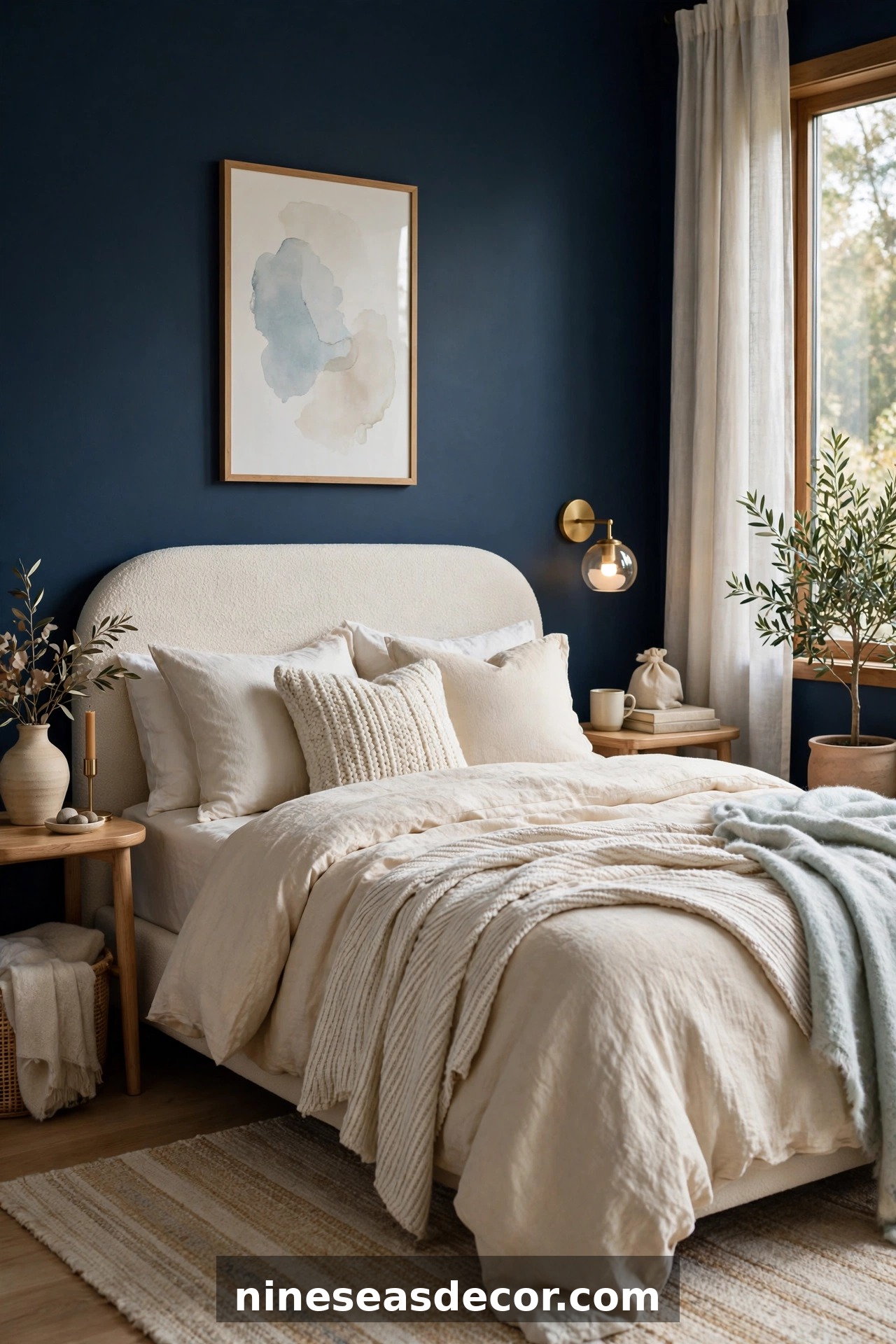
Most homeowners treat bedroom paint color as the last decision they make, something they pick after the furniture is already in place and the budget has been mostly spent. That’s completely backwards. Your color scheme should be the first anchor decision in any bedroom design project, because every other element, your bedding, your curtains, your furniture finishes, your flooring choice, either harmonizes with or fights against that foundational color. When you pick color last, you’re essentially decorating in reverse, and the results tend to feel disjointed even if every individual piece is beautiful.
The psychological impact of bedroom colors is well documented. According to the American Sleep Foundation, over 40% of American adults report regular sleep difficulties, and environmental stressors including lighting and color environment are cited as contributing factors in a meaningful percentage of those cases. Investing in the right color palette is not a luxury, it’s part of creating a bedroom that actually functions as a restorative space. A bedroom should feel like a retreat, not an extension of your living room or home office, and color is the single fastest, most affordable way to achieve that transformation.
The good news is that getting this right doesn’t require a massive budget. A full bedroom repaint including primer, two coats of wall paint, and a ceiling color typically runs ($300-$900) in materials, depending on room size and paint quality. Hiring a professional painter for a standard (12×14 foot) bedroom averages ($400-$700) in labor. That’s a ($700-$1,600) total investment that can completely change how you feel about your home. Compare that to a new bedroom set running ($2,000-$8,000) and it becomes obvious why color should come first.
THE SCIENCE OF COLOR AND SLEEP QUALITY
Color psychology in the bedroom is not guesswork. Research consistently shows that cool hues like soft blues, muted greens, and gentle lavenders promote the production of melatonin, the hormone that regulates your sleep cycle. Warm, saturated colors like deep reds, bright oranges, and hot pinks stimulate the nervous system, raising heart rate and alertness, which is exactly what you don’t want at bedtime. The key is not to avoid warm colors entirely, but to choose muted, grayed-down versions of warm tones if you prefer them. A dusty rose at low saturation behaves very differently than a fire engine red in terms of its psychological impact. Understanding this distinction opens up your options considerably and frees you from feeling like you’re forced into blues and grays forever.
HOW LIGHTING TRANSFORMS BEDROOM COLOR
Here’s a truth that surprises almost every homeowner I talk to. The color on your wall is never just the color in the can. Natural light direction, the type of artificial lighting you use, and even the colors of adjacent rooms all shift how a paint color reads in your specific space. A north-facing bedroom receives cool, indirect light all day, which means warm colors will look muddy and cool colors will look downright icy. A south-facing bedroom floods with warm golden light that makes most colors look richer and more vibrant. Always test a (12×12 inch) paint swatch on your actual wall and observe it at three different times: morning light, afternoon light, and under your standard evening artificial lighting. This step alone prevents the majority of color regret situations I hear about from readers.
The Best Bedroom Color Schemes for 2026
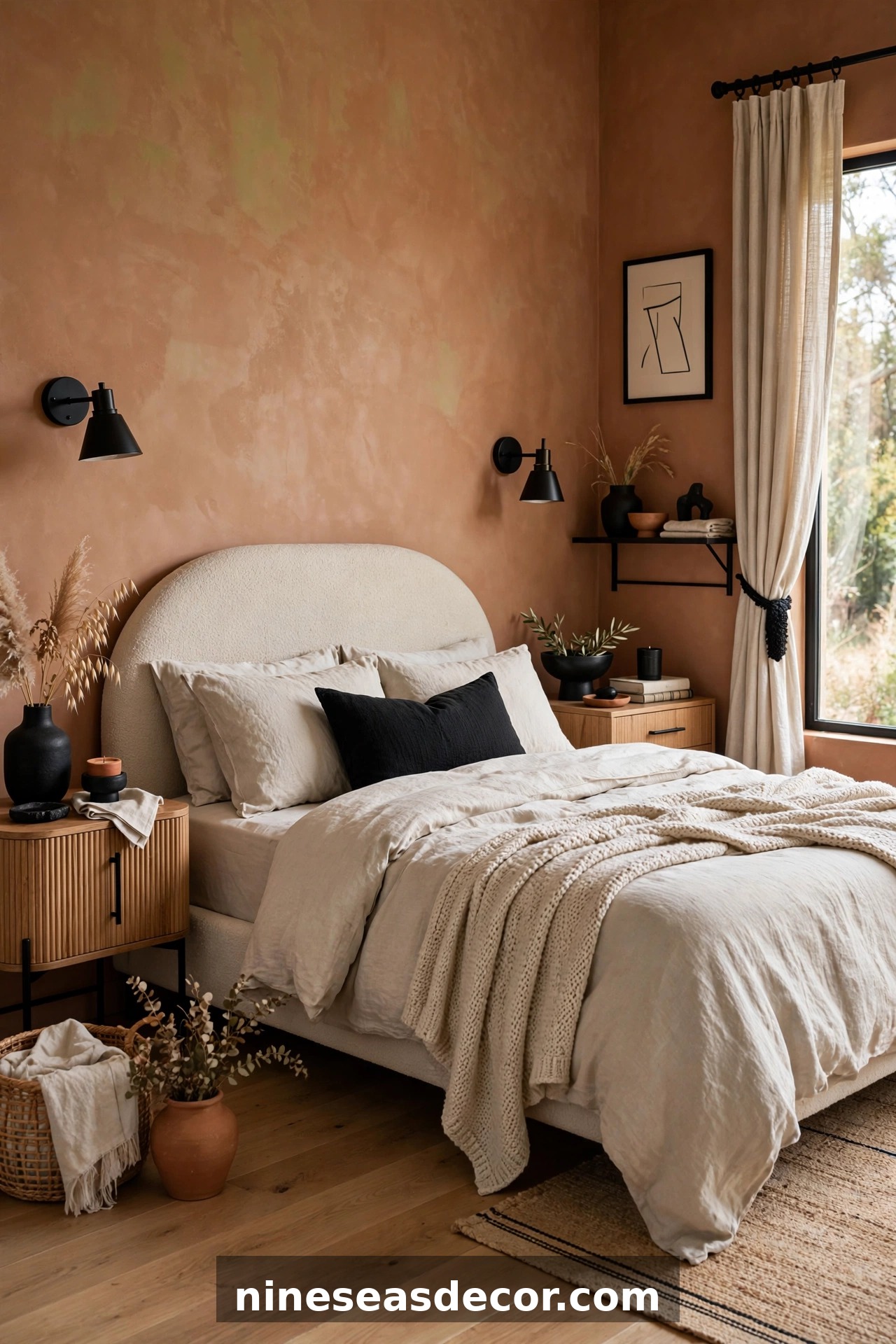
Trends in bedroom color design for 2026 are moving away from the stark all-white and gray palettes that dominated the 2010s and early 2020s. Homeowners are hungry for warmth, character, and rooms that feel genuinely personal rather than staged for resale. According to the 2025 Houzz Bedroom Trends Report, searches for earthy and organic bedroom color palettes increased by 78% year over year, with terracotta, warm sage, and deep teal leading the list of most-requested colors in professional consultations. That doesn’t mean you have to follow trends blindly. The best bedroom color scheme is always the one that makes you feel genuinely at ease in your own space. But knowing where the design world is heading helps you make choices that will feel fresh and considered rather than dated.
The most successful bedroom color palettes in 2026 share a few common characteristics. They lean into nature-inspired hues, they incorporate tonal layering rather than stark contrast, and they pair wall colors with intentional choices in trim, ceiling, and soft furnishings. Gone are the days of picking one paint color and calling it done. Today’s most beautiful bedrooms use color as a full-room system, from the fifth wall (your ceiling) down to the baseboards.
WARM NEUTRAL SCHEMES THAT FEEL ANYTHING BUT BORING
Warm neutrals are having a serious moment, and for good reason. Colors like Sherwin-Williams Accessible Beige (SW 7036), Sherwin-Williams Antique White (SW 6119), and Benjamin Moore Pale Oak (OC-20) create a cocooning warmth that feels universally restful without leaning too trendy. The trick is layering. Paint your walls in Accessible Beige (SW 7036), use a slightly deeper tone like Sherwin-Williams Toasted Coconut (SW 6124) on a single accent wall, and pull in natural textures like linen, jute, and raw wood to build dimension. This kind of tonal warm neutral scheme works beautifully in bedrooms ranging from (100 sq ft) to (400 sq ft) and reads consistently across north-facing and south-facing rooms. Budget for ($40-$65 per gallon) for premium paint in these shades.
COOL AND CALMING BLUE-GREEN PALETTES
Blue-green color schemes remain one of the strongest performers for bedroom design because they sit at the intersection of two psychologically restorative hues. Benjamin Moore Newburyport Blue (HC-155) is a soft, muted blue-green that works brilliantly in both coastal and transitional interiors. Pair it with crisp white trim in Benjamin Moore Chantilly Lace (OC-17), warm wood furniture, and cream or linen bedding for a bedroom that feels like a high-end boutique hotel. For something slightly more dramatic, Sherwin-Williams Oceanside (SW 6496) is a rich teal that acts almost like a jewel tone neutral, grounding a room without feeling heavy when balanced with plenty of white and natural light. These palettes work best in bedrooms with at least (one window) and work exceptionally well when ceiling height is (9 feet or above).
DEEP AND MOODY SCHEMES FOR DRAMATIC BEDROOMS
Dark bedroom color schemes have moved from design risk to mainstream darling. A bedroom wrapped in Sherwin-Williams Urbane Bronze (SW 7048), Benjamin Moore Black Horizon (2131-10), or Farrow and Ball Hague Blue feels extraordinarily intimate and luxurious. The key to making deep colors work in a bedroom is ensuring you have adequate lighting layers, at minimum one overhead fixture, two bedside lamps, and ideally a dimmer system. Deep colors also require higher quality paint with better hide and color depth, so budget ($55-$85 per gallon) for these shades and expect to apply a full tinted primer coat first. In rooms smaller than (120 sq ft), test these colors carefully as they can feel compressing without proper lighting.
Color Schemes by Bedroom Style
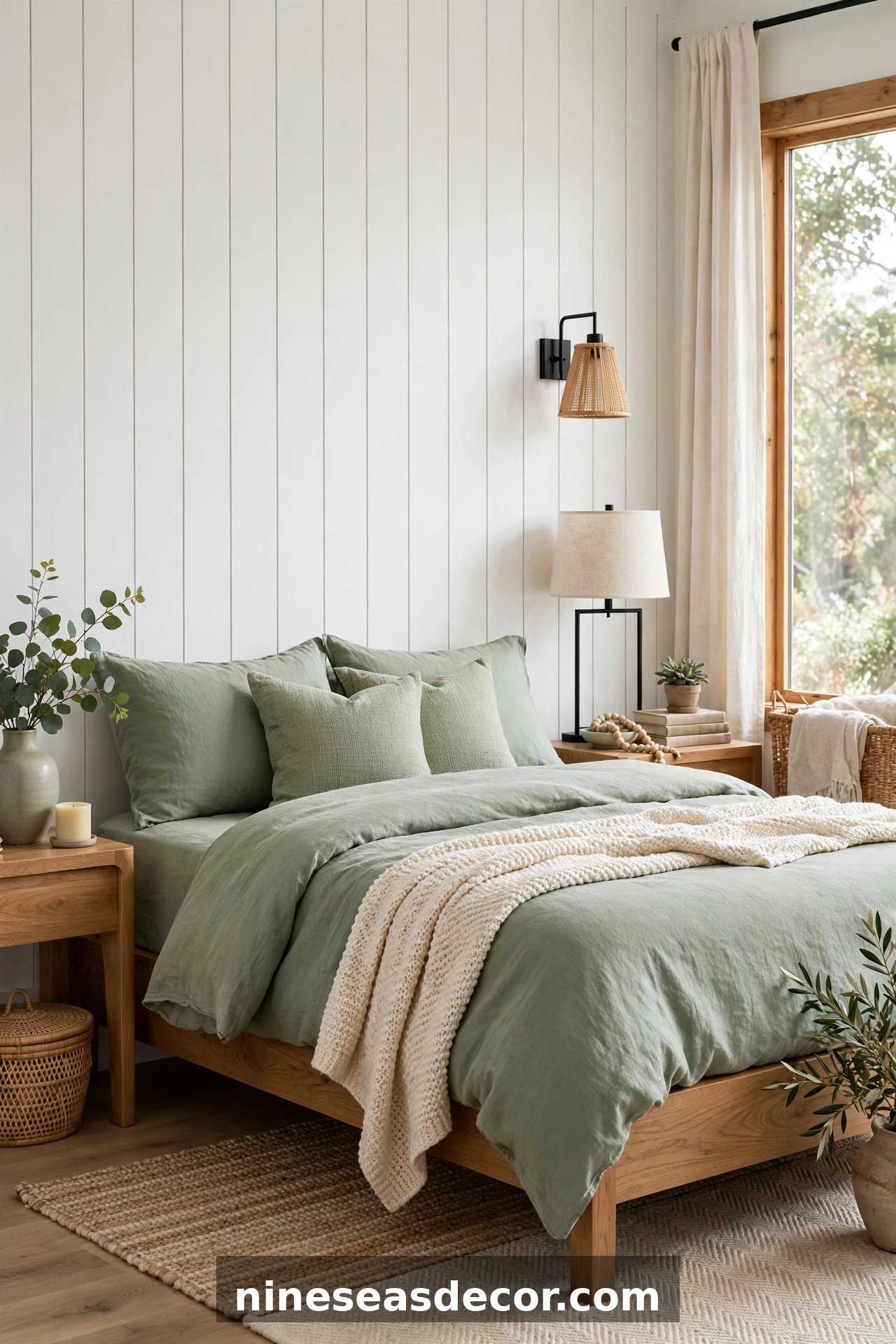
Matching your bedroom color palette to your overall design aesthetic is what separates a cohesive, intentional room from one that just has nice individual pieces. I can’t tell you how many beautiful rooms I’ve seen fall flat because the color scheme belonged to a completely different design sensibility than the furniture and textiles. A mid-century modern bedroom calls for different color logic than a farmhouse bedroom, even if both might use a similar shade of warm white on the walls. Style context matters, and understanding how to apply color within your chosen aesthetic will elevate your results dramatically.
According to a 2024 survey conducted by the National Association of Realtors, bedrooms with cohesive, style-appropriate color schemes received an average of 23% more positive feedback in buyer evaluations compared to bedrooms with mismatched or trend-only color choices. Whether you’re decorating for resale or purely for your own enjoyment, the harmony between style and color pays dividends.
MODERN MINIMALIST BEDROOM COLOR PALETTES
Modern minimalist bedrooms thrive on restraint. The most successful minimalist color schemes use no more than three colors, typically a dominant neutral, a secondary tone, and one accent. Think Sherwin-Williams Pure White (SW 7005) on walls and ceiling, Light French Gray (SW 0055) on bedding and upholstered elements, and a single black or charcoal accent in hardware and frames. The goal is visual quiet, which supports both sleep and the clean aesthetic. Avoid anything with too much undertone complexity in a minimalist room, as competing undertones are the enemy of this style. Keep trim and ceiling in the same white or near-white family and let textures like matte plaster, brushed steel, and smooth linen do the heavy lifting.
FARMHOUSE AND COTTAGECORE BEDROOM PALETTES
Farmhouse and cottagecore bedrooms invite layered warmth and a sense of lived-in comfort. Color palettes in this style lean toward dusty botanicals, creamy whites, and faded vintage tones. Benjamin Moore Pale Celery (2029-50) is a dreamy, muted sage that reads as an almost-neutral with green undertones, perfect for this style. Pair it with Benjamin Moore White Dove (OC-17) on trim and a warm honey wood floor stain, and you’ve got a room that feels like it was styled by someone with excellent taste and a grandmother with beautiful old furniture. For a softer, more romantic version, try Sherwin-Williams Dusty Miller (SW 9048), a lavender-tinged gray that pairs beautifully with vintage florals and natural linen textures in (any room size from 100 to 300 sq ft).
MAXIMALIST AND ECLECTIC BEDROOM COLOR APPROACHES
Maximalist bedrooms are not about chaos. They’re about abundance and personality, which means color choices need to be even more intentional, not less. The most successful eclectic color schemes start with one anchoring bold color and then pull complementary or analogous tones from it rather than throwing in unrelated hues. Sherwin-Williams Jewel (SW 6692), a deep emerald green, makes an extraordinary anchor color in a maximalist bedroom. Pair it with touches of aged brass, jewel toned velvet in plum or sapphire, patterned textiles that incorporate mustard and cream, and botanical art prints. The result is rich and layered without feeling chaotic. In maximalist rooms, plan to spend ($800-$2,500) on textiles alone, as this style requires generous layering of pillows, throws, and curtains to feel right.
Bedroom Color Schemes for Small Spaces
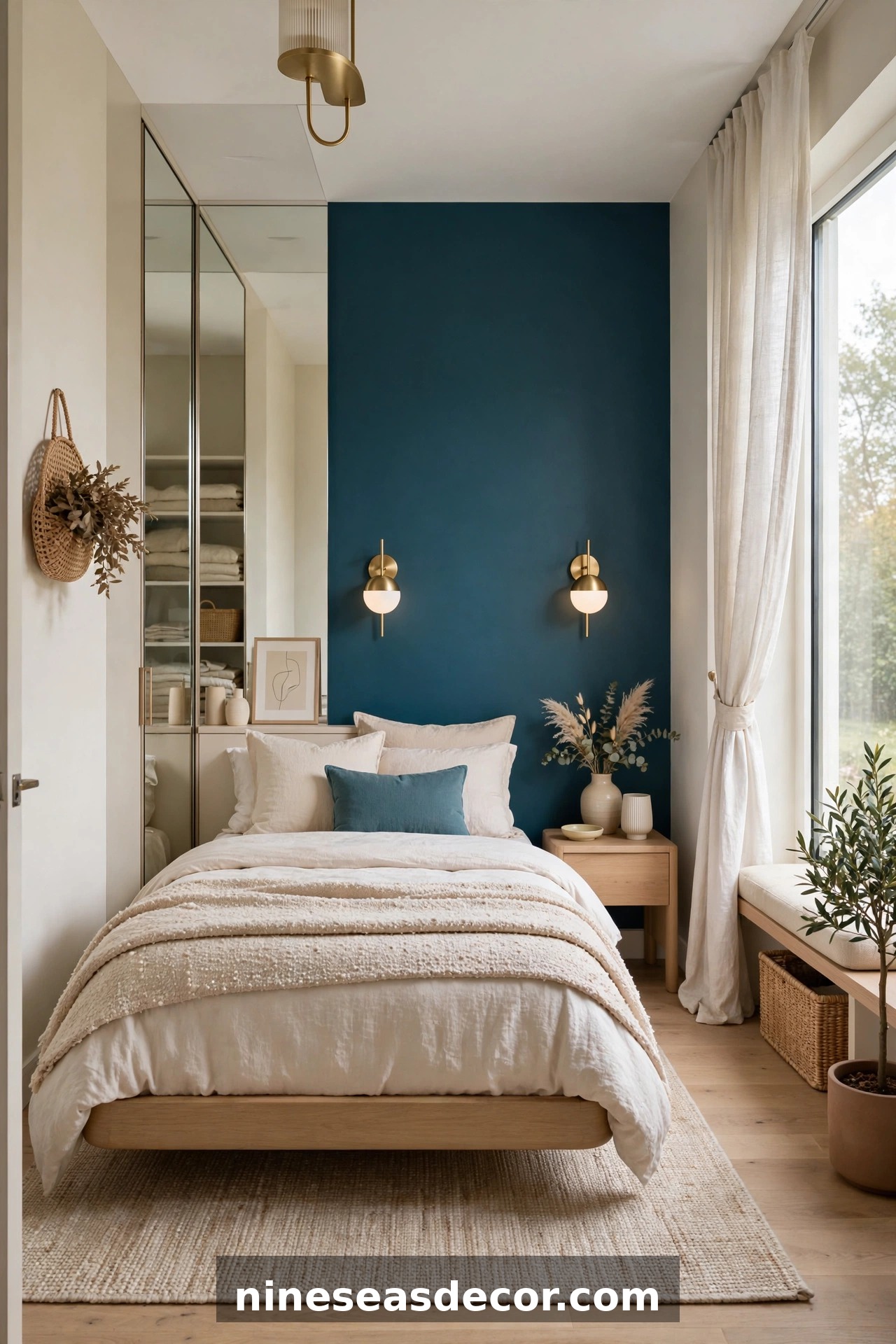
Designing color schemes for small bedrooms requires a slightly different set of rules, but please hear me out when I say this: small does not automatically mean light. Yeah, I’ve heard the “paint it white to make it look bigger” advice a thousand times, and while it’s not wrong exactly, it’s incomplete. The real goal in a small bedroom is not to make it look bigger, it’s to make it feel right. A (10×10 foot) bedroom painted a deep, enveloping color with great lighting can feel like a chic jewel box rather than a cramped afterthought. The approach you choose depends entirely on what feeling you want to create.
That said, there are proven techniques for using color to optimize small bedroom spaces. Understanding how value (lightness vs darkness), saturation, and undertone interact with physical dimensions gives you real design leverage in tight quarters.
LIGHT AND AIRY SCHEMES FOR ROOMS UNDER 150 SQ FT
For rooms under (150 sq ft), light colors genuinely do help by reducing the visual weight of walls and keeping the eye moving freely around the space. The key is to avoid stark, blue-toned whites which can feel clinical in small spaces. Instead, reach for warm, creamy whites with slight yellow or pink undertones. Sherwin-Williams Navajo White (SW 6126) and Benjamin Moore White Heron (OC-57) are both exceptional choices that feel expansive without feeling sterile. In a room this small, painting the ceiling the same color as the walls (a technique called color drenching) actually makes the room feel larger by eliminating the visual break at the ceiling line. This approach works especially well in rooms with (8-foot ceilings) where the standard white ceiling can feel oppressively close.
STRATEGIC ACCENT COLORS IN COMPACT BEDROOMS
Small bedrooms can absolutely incorporate accent colors without feeling overwhelmed. The strategy is to use your bold color in (one controlled area), either a single accent wall behind the headboard, on built-in shelving, or inside a closet. An accent wall in a bold color like Behr Blueprint (S510-5), a classic mid-tone blue, creates visual depth and personality without surrounding the occupant in stimulating color. Keep the remaining three walls in a soft, complementary neutral and use the accent color again in small doses through pillows and art. This approach creates a (cohesive color story) that feels intentional and professionally designed while keeping the overall room feeling open. Budget ($50-$120) for a single accent wall repaint including supplies.
Master Bedroom Color Schemes That Feel Luxurious
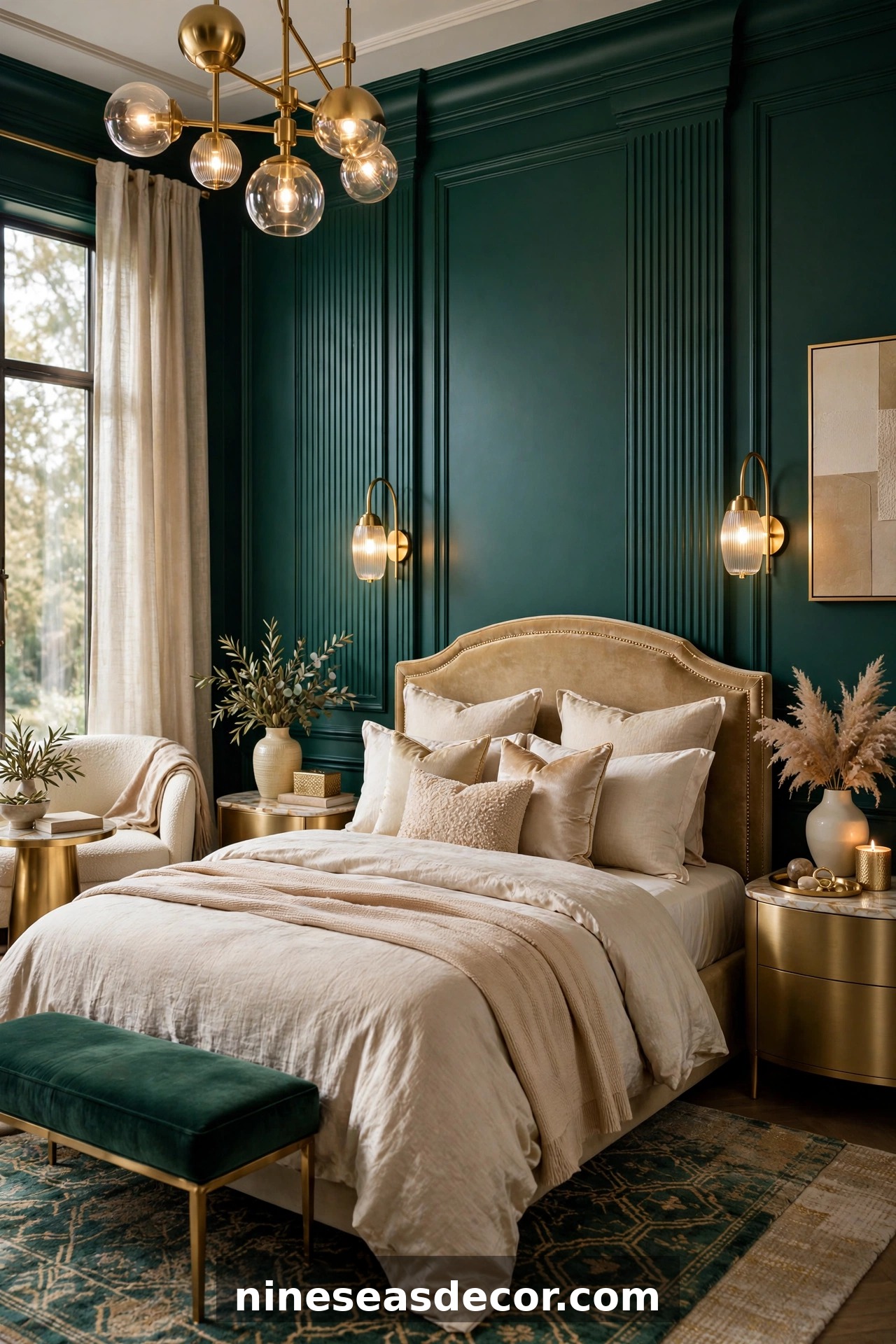
The master bedroom deserves a higher level of color consideration than any other room in the house. This is your personal sanctuary, the room you begin and end every day in, and the space most associated with your own comfort, intimacy, and rest. According to a 2024 study published in the Journal of Interior Design, homeowners who invested in intentional, research-backed color choices for their master bedrooms reported 67% higher satisfaction with their overall home environment compared to those who chose colors based purely on trends. That’s a staggering number that underscores how deeply personal this decision really is.
Master bedroom color schemes in (rooms of 200 sq ft or larger) have the luxury of supporting more complex, layered palettes. You can run a deeper wall color, afford more visual weight in furniture and textiles, and create genuine drama without the space feeling cramped. This is where the most exciting color decisions happen.
ROMANTIC AND INTIMATE MASTER BEDROOM PALETTES
For a master bedroom that feels genuinely romantic and intimate, the color sweet spot sits in deep dusty tones rather than bright, saturated ones. Think Sherwin-Williams Antique Red (SW 0015) in a very muted, brownish version, or Benjamin Moore Smoky Taupe (HC-75), a complex greige with enough warmth to feel sensual without being aggressively dark. Dusty rose remains one of the most reliably romantic bedroom colors when handled correctly. Benjamin Moore Pink Bliss (2093-70) is a soft, barely-there pink that reads almost as a warm white in natural light but blooms beautifully under warm artificial lighting in the evening. Pair any of these tones with velvet textiles, warm brass hardware, and layered lighting at (18-24 inch) eye level from bedside lamps for maximum intimacy.
GENDER-NEUTRAL MASTER BEDROOM SCHEMES FOR SHARED SPACES
One of the most common challenges I hear from couples is finding a color scheme that works for both partners. One wants soft and feminine, one wants cool and masculine, and neither wants to feel like they’re sleeping in the other person’s room. The solution is almost always found in sophisticated neutrals with intentional depth. Sherwin-Williams Requisite Gray (SW 7023) is a medium-toned gray with just enough warmth to feel inviting without leaning feminine. Benjamin Moore Revere Pewter (HC-172), though it’s had its moment as a cliché, is genuinely one of the most universally flattering bedroom neutrals ever developed. It works in north and south-facing rooms, reads warm under incandescent light and balanced under daylight, and pairs beautifully with both warm wood tones and cool metal accents. Build gender-neutral warmth by incorporating a mix of textures rather than leaning on color alone.
How to Build a Complete Bedroom Color Scheme From Scratch
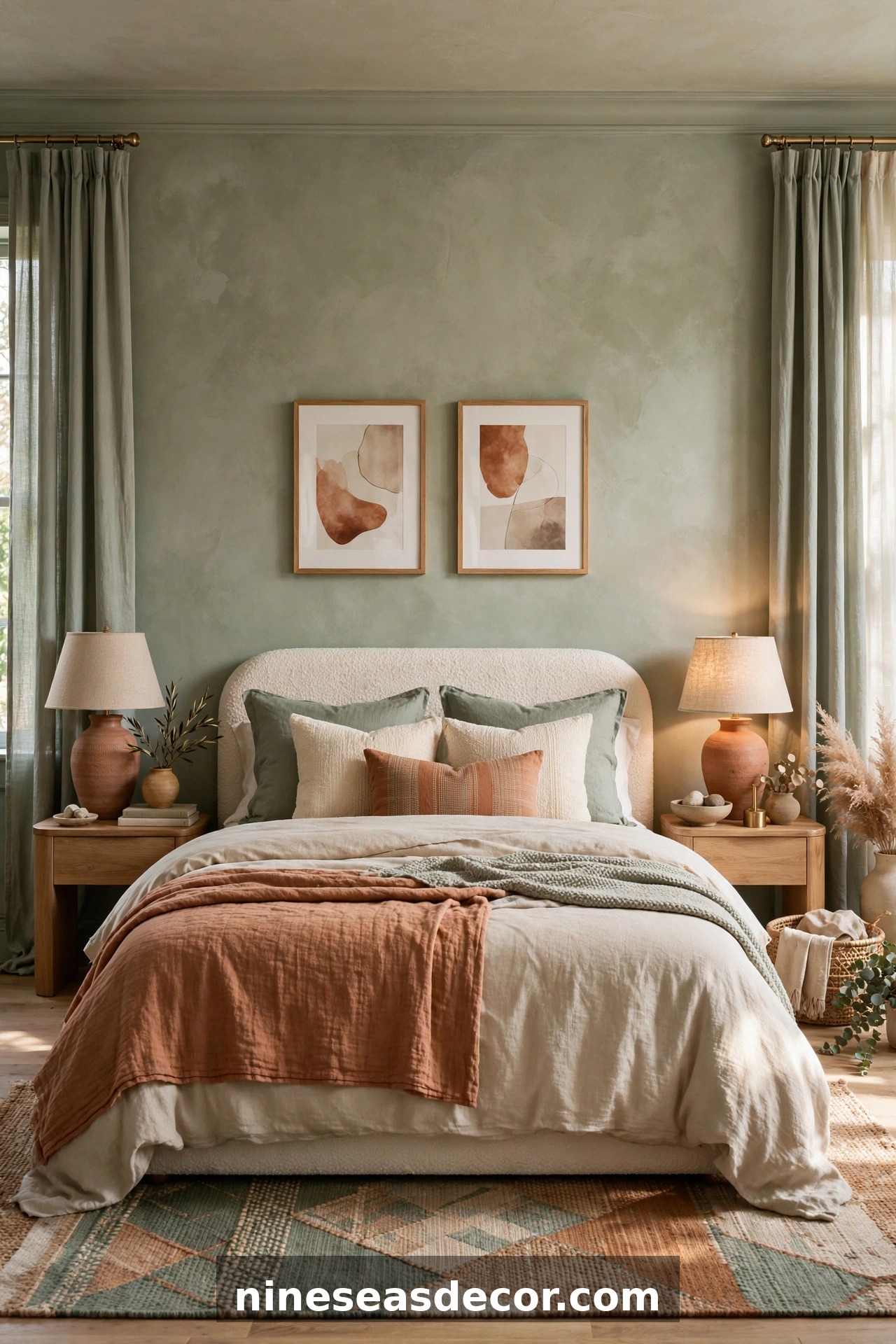
Understanding beautiful colors in theory is one thing. Actually building a complete bedroom color scheme from scratch, including walls, trim, ceiling, textiles, and accents, is a whole different skill set. This is where most homeowners get stuck, not because they don’t have good taste, but because they don’t have a systematic process. A good color scheme building process removes the guesswork and gives you a framework that leads to cohesive, beautiful results every time.
The process I recommend to every reader at NineSeasDecor.com follows a (five-step sequence): establish your dominant color (60%), choose your secondary color (30%), select your accent color (10%), confirm undertone harmony across all three, and finally test everything together in your actual lighting conditions before committing. This 60-30-10 rule is the backbone of professional interior color work and it applies equally whether you’re working with a ($500 budget) or a ($15,000 bedroom renovation).
CHOOSING YOUR DOMINANT WALL COLOR FIRST
Your dominant wall color sets the emotional temperature of the entire room, so it deserves the most deliberation. Start by identifying the fixed elements you’re keeping, your flooring, any existing furniture you love, and your window treatments. These fixed elements contain undertones that your wall color must harmonize with. A warm oak floor (yellow-orange undertone) will clash with a cool gray wall that has blue or purple undertones. Pull the undertone from your fixed elements and choose a wall color that speaks the same undertone language. Then purchase (3-4 large paint samples) at (12×18 inches) or larger. Peel and stick samples are worth the extra cost. Live with them for a full (72 hours) before making your final decision. Expect to spend ($5-$10 per sample swatch).
LAYERING SECONDARY COLORS AND ACCENTS
Once your wall color is confirmed, building the rest of your bedroom color scheme becomes significantly easier. Your secondary color (the 30% element) lives in your largest textiles: your duvet cover, your upholstered headboard, and your window curtains. This color should be visually harmonious with your wall color, either a lighter or darker value of the same hue, a complementary tone, or an analogous neighbor on the color wheel. Your accent color (the 10% element) appears in throw pillows, artwork frames, a single lamp base, or decorative objects. Keep accent color deployment disciplined. Repeat each accent color at least (3 times) in the room to create visual rhythm rather than random spotting. Budget ($200-$600) for quality textiles in your secondary and accent colors if you’re starting from scratch.
Common Bedroom Color Mistakes and How to Avoid Them
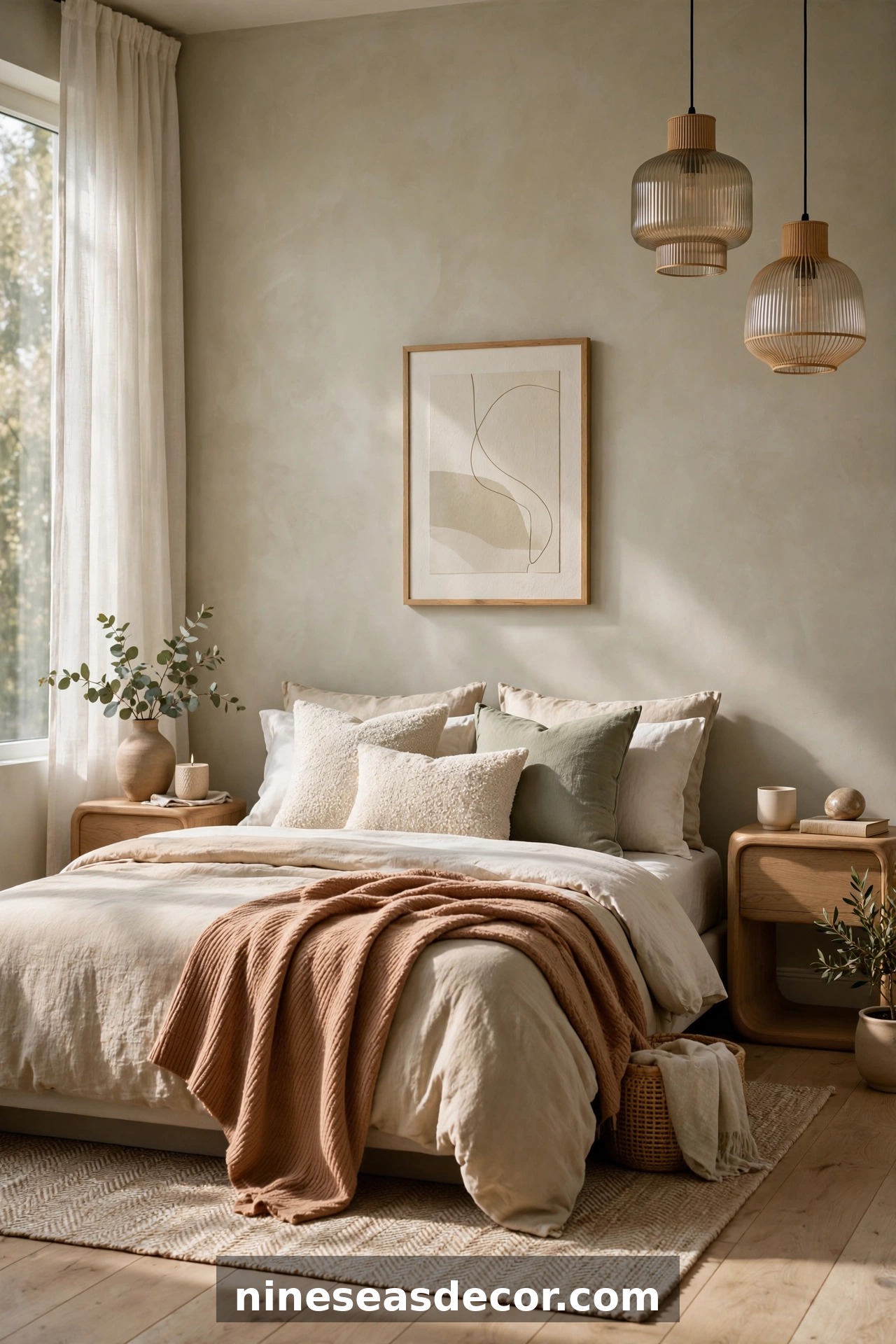
Even experienced decorators make predictable mistakes with bedroom color schemes. Knowing what to watch for is half the battle. These are the errors I see most consistently, and they’re entirely avoidable once you know what to look for. The most expensive color mistake you can make isn’t buying the wrong paint, it’s buying the right paint in the wrong finish, or failing to account for how your specific room’s architecture will interact with your color choice.
IGNORING UNDERTONES AND PAYING THE PRICE
Undertone mismatch is the single most common cause of the “something feels off” problem in bedroom design. Undertones are the hidden secondary colors that live within a paint color and only reveal themselves under certain lighting or next to certain materials. A beige with a pink undertone will look peachy and warm next to natural wood but will suddenly look clownish next to a cool gray carpet. A gray with a purple undertone will look sophisticated next to white trim but sickly next to a yellow-toned oak floor. Always identify the undertone of your proposed wall color by looking at it next to a known reference: a pure white for cool undertones and a warm cream for warm undertones. This (5 minute test) saves countless hours of regret.
CHOOSING PAINT FINISH THAT FIGHTS YOUR WALLS
Paint finish selection in bedrooms is often treated as an afterthought, but it dramatically affects both the appearance and the mood of your color choice. Flat and matte finishes absorb light and make colors look deeper and more velvety, which is ideal for bedrooms but less forgiving of wall imperfections. Eggshell finishes offer a slight sheen and are the most popular bedroom choice because they balance washability with soft light reflection. Satin finishes are better suited for trim and woodwork than walls in the bedroom, as they can create a distracting reflectiveness in a space designed for rest. For accent walls in deep, dramatic colors, always choose flat or matte finish to maximize the richness and depth of the color. Expect to pay ($5-$15 more per gallon) for premium matte formulas that resist scuffing.
Frequently Asked Questions
WHAT ARE THE BEST BEDROOM COLORS FOR SLEEP IN 2026?
The best bedroom colors for sleep are consistently found in the cool, low-saturation spectrum, specifically soft blues, muted greens, and gentle lavenders. According to research published in the Journal of Environmental Psychology, blue-toned rooms were associated with the longest sleep durations among all tested color groups. Specific paint recommendations include Sherwin-Williams Sleepy Blue (SW 9136), which is a soft, dusty periwinkle-meets-gray that promotes calm, and Benjamin Moore Quiet Moments (AF-780), a muted aqua-gray that consistently ranks among the top designer picks for sleep-supportive bedrooms. If you prefer warmer tones, choose highly grayed-down versions like Sherwin-Williams Dusty Miller (SW 9048). Avoid colors with saturation levels above 50% on the HSB scale, as high saturation in any hue is stimulating to the nervous system regardless of whether the color is warm or cool. Budget ($35-$75 per gallon) for premium formulas in these shades.
HOW MUCH DOES IT COST TO REPAINT A MASTER BEDROOM IN 2026?
Repainting a standard master bedroom in 2026 involves costs on two fronts: materials and labor. For a (14×16 foot) master bedroom with (9-foot ceilings), you can expect to use (2-3 gallons) of wall paint at ($35-$75 per gallon), plus (1 gallon) of ceiling paint at ($30-$55), and (1 quart) of trim paint at ($20-$35). Total material costs run ($130-$290) for a DIY project. If you hire a professional painter, labor rates for a master bedroom average ($400-$700) depending on your region, condition of walls, and number of colors involved. Complex projects with an accent wall, dark color requiring extra coats, or significant wall repair can push costs to ($900-$1,400) for professional labor. Always get (3 quotes) from local painters and verify that the quote includes primer, repair of minor imperfections, and cleanup. Total professional project budgets typically land in the ($600-$1,600) range for most master bedrooms.
SHOULD BEDROOM WALLS AND CEILING BE THE SAME COLOR?
Using the same color on bedroom walls and ceiling, a technique called color drenching, is one of the most powerful tools in bedroom design and it’s more widely applicable than most homeowners realize. In small bedrooms (under 150 sq ft) or rooms with (8-foot ceilings), color drenching removes the visual line where walls meet ceiling, which makes the space feel more expansive and enveloping. In larger master suites, color drenching creates extraordinary intimacy and a hotel-like quality that feels genuinely luxurious. The technique works best with mid to deep tones rather than very light colors. If you want to try a modified version, paint the ceiling the same color as the walls but in a flat finish while using eggshell on the walls. This creates subtle variation that reads as intentional and sophisticated. Sherwin-Williams Oceanside (SW 6496) and Benjamin Moore Hale Navy (HC-154) are among the most popular choices for full color drench bedrooms.
WHAT BEDROOM COLORS WORK BEST FOR NORTH-FACING ROOMS?
North-facing bedrooms present a specific design challenge because they receive only cool, indirect light throughout the day, which makes cool colors feel icy and can make even neutral tones feel flat and gray. The solution is to choose warm-toned paint colors that counterbalance the cool light quality. Sherwin-Williams Accessible Beige (SW 7036), Benjamin Moore White Dove (OC-17), and Sherwin-Williams Antique White (SW 6119) are reliable performers in north-facing rooms. You can also embrace the cool light with colors specifically designed to look beautiful in it, like Farrow and Ball Elephant’s Breath, a sophisticated warm gray that handles north light beautifully. Avoid cool grays with blue or purple undertones in north-facing rooms as they will look actively cold. Also invest in warm-toned light bulbs in the (2700K-3000K) range to supplement natural light and keep the room feeling inviting throughout the day and evening.
HOW DO I CREATE A TWO-TONE BEDROOM COLOR SCHEME?
A two-tone bedroom color scheme uses two distinct colors in a deliberate, structured way to add visual interest and sophistication. The most common approach is the chair rail split, where the upper (two-thirds) of the wall is painted in a lighter tone and the lower (one-third) is painted in a deeper, coordinating shade. In a bedroom with (9-foot ceilings), this split typically happens at (30-36 inches) from the floor or at an existing chair rail. Another popular approach is the headboard wall treatment, where the wall behind your bed is painted a deeper or contrasting color from the remaining three walls. For a harmonious two-tone scheme, choose colors from the same color family (like a light sage and a deep forest green), or use analogous colors that sit next to each other on the color wheel. Keep undertone consistency between your two colors to ensure they feel related rather than random. Material costs for a two-tone paint project add approximately ($40-$80) to a standard single-color repaint.
WHAT ACCENT WALL COLORS ARE TRENDING FOR BEDROOMS IN 2026?
Accent wall trends for bedrooms in 2026 are moving decisively away from the single bold color painted on a flat wall toward more textured and dimensional treatments. That said, in terms of actual color choices, the most in-demand accent wall colors include Sherwin-Williams Profound Brown (SW 7542), a complex, almost-black brown with incredible depth, Benjamin Moore NewbuComplete Bedroom Design Guide 2026: Expert Ideas, Layouts & Style TipsSmall Bedroom Ideas 2026: Space-Saving Furniture, Storage Solutions & Layout Strategies