
bathroom-tile-ideas-2026
Let me be honest with you. I have walked into hundreds of bathrooms over my career as a home decor writer, and the number of tile choices that made me wince is genuinely staggering. Homeowners spend weeks scrolling Pinterest, bookmark fifty different tile boards, and then walk into a tile showroom completely overwhelmed and end up grabbing whatever the salesperson points them toward. The result? A bathroom that feels disconnected, dated before it even dries, or just plain wrong for the space. It happens constantly, and it does not have to happen to you.Here is what the research actually tells us about bathroom design decisions. According to a 2023 study published in the Journal of Environmental Psychology, the visual texture and pattern of surfaces in small enclosed spaces like bathrooms directly influences perceived room size, stress levels, and overall comfort. Homeowners who made deliberate, informed tile choices reported measurably higher satisfaction with their bathrooms compared to those who selected tiles based on price alone. That is not a small finding. That is a confirmation that tile choice genuinely matters for your wellbeing, not just your home’s curb appeal.This guide covers everything you need to make a confident, beautiful bathroom tile decision in 2026. We are talking floor tile ideas, shower tile designs, accent wall strategies, grout color choices, trending tile materials, small bathroom tile tricks, and the real costs you should budget for before you ever walk into a showroom. I have broken this down section by section so you can jump straight to whatever challenge you are facing right now.Why trust me on this? I am Sophia Rose, senior writer for NineSeasDecor.com, and I have spent over a decade covering home decor trends, interviewing professional tile installers, touring showrooms from New York to Los Angeles, and yes, making a few tile mistakes in my own home that I am definitely not going to let you repeat. Everything in this guide is grounded in real data, real costs, and real design principles that work in actual American homes.
Understanding The Basics Of Bathroom Tile Selection
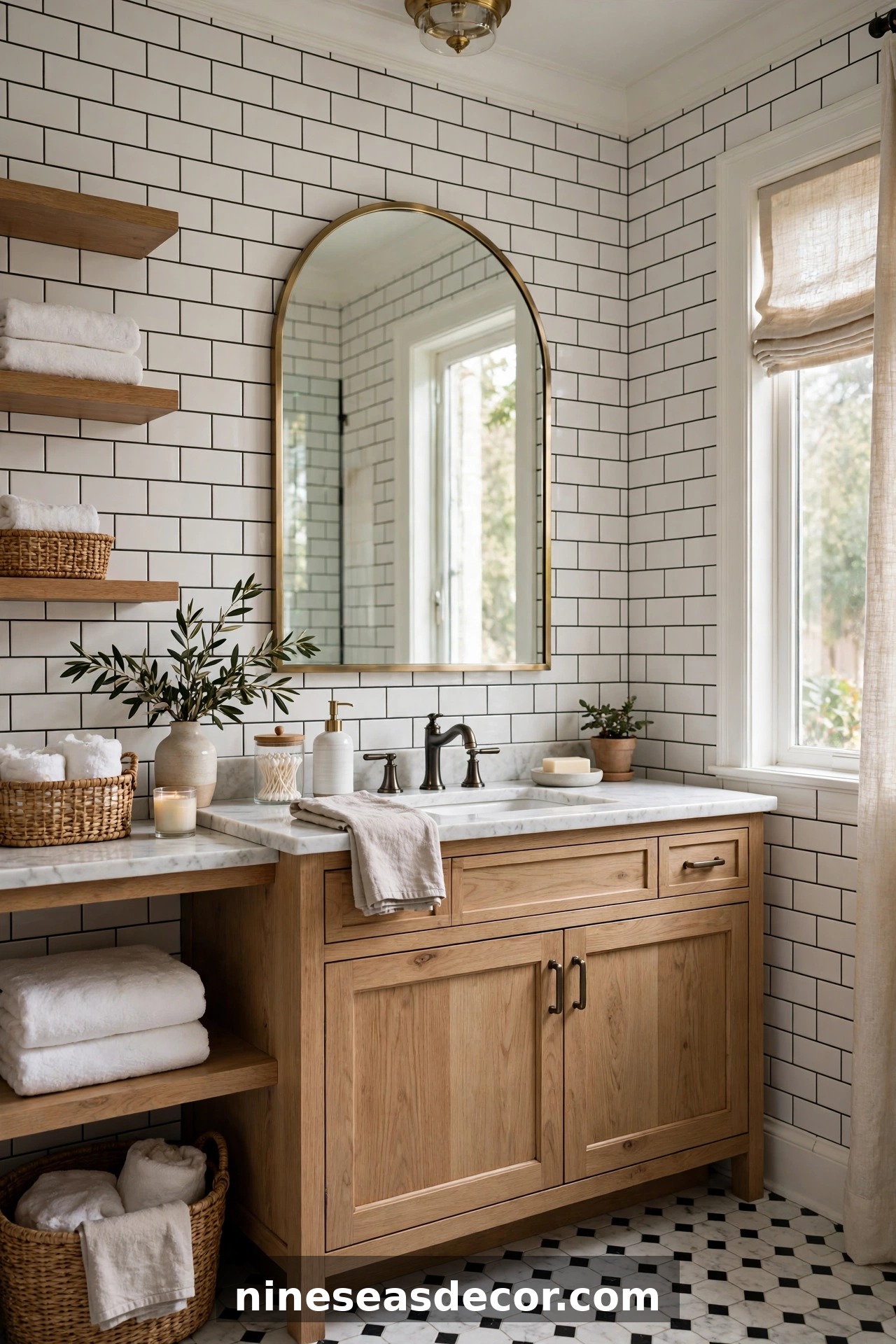
Before you fall in love with a specific tile, you need to understand the framework that makes a tile choice succeed or fail. Yeah, I have seen this mistake a thousand times. Someone picks a gorgeous large format tile for a (5×7 foot) bathroom, and suddenly the space feels like a parking garage. Or they choose a delicate mosaic tile for a shower floor and spend every weekend scrubbing the approximately (200 grout lines) per square foot. Understanding the basics saves you from both of these nightmares.
The first question is always function. A bathroom floor tile needs a slip resistance rating (also called a coefficient of friction rating) of at least 0.60 for wet areas, according to the American National Standards Institute. This eliminates a huge portion of gorgeous tiles immediately, which is why your designer or installer keeps steering you away from that perfect polished marble you found. Wall tiles have no such restriction, which is why you see polished, glossy, and delicate tiles used beautifully on shower walls but never responsibly on shower floors.
The second question is scale. The tile size should relate proportionally to the size of your bathroom. As a general principle, tiles larger than (12×24 inches) in a bathroom smaller than (50 sq ft) tend to overwhelm the space. In contrast, tiny (1×1 inch) penny tiles in a (100 sq ft) master bathroom can feel fussy and visually chaotic. The sweet spot for most American bathrooms falls in the (4×12 inch) to (12×24 inch) range, giving you flexibility without visual conflict.
Budget is the third pillar. Ceramic tile starts as low as ($1-$3 per square foot), while premium natural stone like quartzite or marble can reach ($25-$60 per square foot) or more. Before you get emotionally attached to anything, know your number.
THE DIFFERENCE BETWEEN CERAMIC, PORCELAIN, AND NATURAL STONE
Understanding your tile material options is non-negotiable. Ceramic tile is baked clay with a glazed surface, priced between ($1-$8 per square foot), and is the most forgiving in terms of DIY installation. Porcelain tile is a denser, harder version of ceramic, fired at higher temperatures, priced between ($3-$15 per square foot), and far more water resistant, making it the industry standard recommendation for bathroom floors. Natural stone tile including marble, travertine, slate, and quartzite adds genuine luxury but demands sealing every (12 to 18 months) and costs between ($10-$60 per square foot). According to the National Kitchen and Bath Association (NKBA), porcelain tile accounts for over 68% of all bathroom tile installations in the US, largely because of its durability and versatility. Choose your material based on your maintenance tolerance, not just aesthetics.
HOW TO CALCULATE HOW MUCH TILE YOU NEED
This is where homeowners consistently underorder and then face a nightmare scenario when their original tile batch is discontinued. Here is the real formula. Measure your square footage by multiplying length times width for each surface area you are tiling. Add (10-15%) for waste and cuts on straight layouts. Add (15-20%) for diagonal or herringbone layouts because those cuts waste significantly more material. For a standard (5×8 foot) bathroom floor, that is (40 sq ft) plus waste, meaning you should order at least (46-48 sq ft) minimum. Always order from the same dye lot to ensure color consistency across your entire installation.
The Hottest Bathroom Tile Trends For 2026
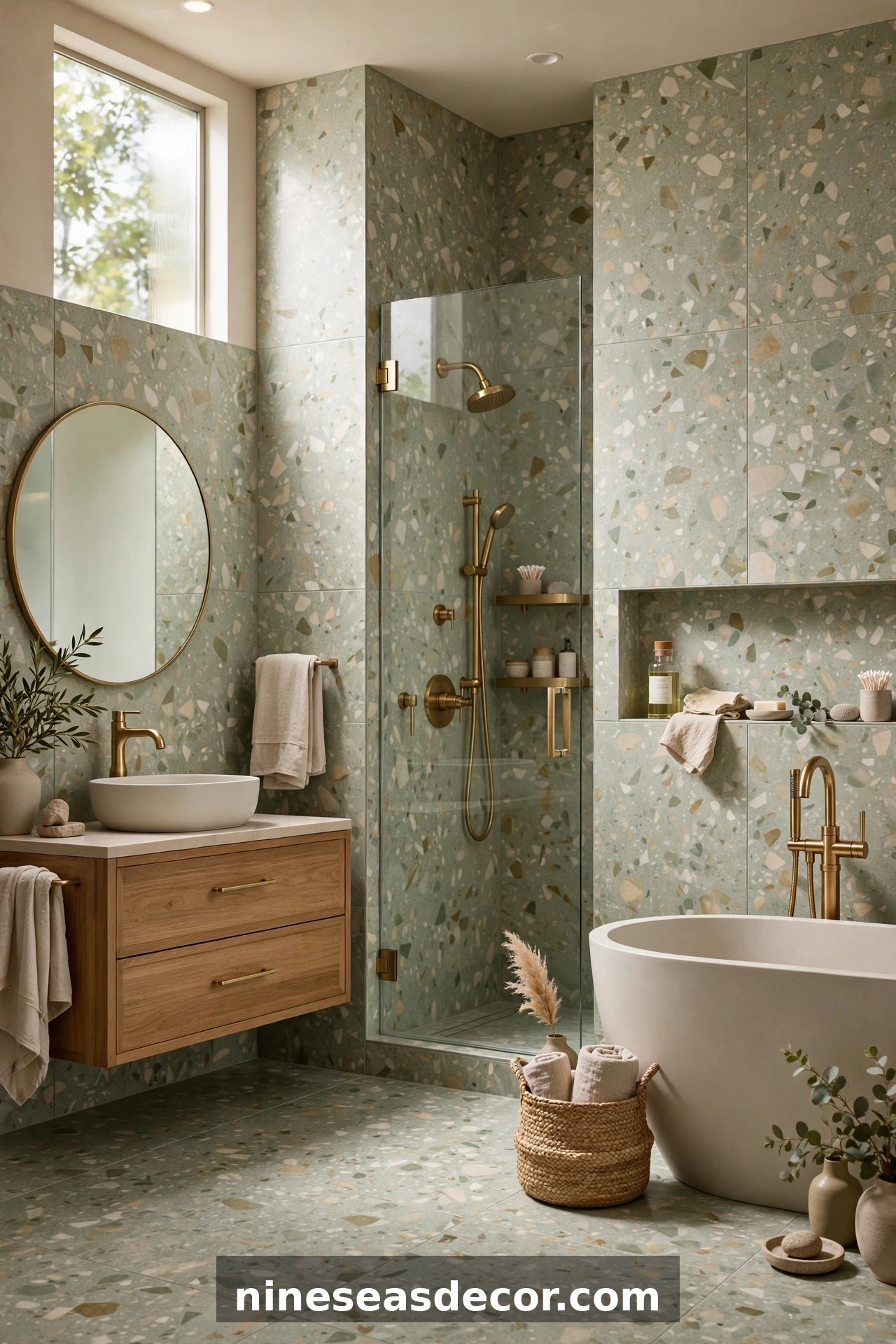
Every year the tile industry evolves, and 2026 is bringing some genuinely exciting shifts away from the all-white everything aesthetic that dominated the 2010s. The 2025 Houzz Bathroom Trends Study reported that homeowners are increasingly moving toward warmer tones, textured surfaces, and mixed material combinations rather than single-material, single-color approaches. This is great news for anyone who found the all-white bathroom look a little sterile and cold.
The biggest shift I am seeing in 2026 is the embrace of zellige tile, a handmade Moroccan clay tile with an irregular, slightly uneven surface that catches light beautifully. It comes in rich jewel tones like deep teal, terracotta, and forest green, and it adds warmth and artistry that no factory-produced tile can replicate. Expect to pay ($8-$25 per square foot) for authentic zellige, though domestic reproductions are available starting around ($4-$10 per square foot).
Fluted tile is another dominant 2026 trend, with its vertical ridged surface adding architectural dimension to bathroom walls without any artwork or accessories needed. I am particularly fond of using (4×12 inch) fluted ceramic tiles in a soft warm white on a full bathroom wall behind a freestanding tub. It reads as sophisticated without trying too hard.
Large format porcelain slabs sized (24×48 inches) or even (48×48 inches) are growing in residential bathrooms as the cost of these tiles has come down considerably. They create a seamless, spa-like look with dramatically fewer grout lines, making cleaning significantly easier.
EARTHY TONES AND WARM NEUTRALS DOMINATING 2026
The cool gray palette that ruled bathroom design for over a decade is officially stepping aside. In 2026, warm earthy tones are taking center stage. We are talking sandy beiges, terracotta oranges, warm taupes, and creamy off-whites. If you are painting your bathroom to complement your new tile, consider Sherwin-Williams Accessible Beige (SW 7036) or Benjamin Moore Pale Oak (OC-20) for walls that harmonize beautifully with warmer tile palettes. These tones pair brilliantly with travertine-look porcelain, warm wood-look tile, and the handmade zellige tiles I mentioned. According to data from the Journal of Interior Design’s 2024 residential trends analysis, warm neutral color schemes in bathrooms showed a (34%) increase in selection frequency compared to cool gray palettes over a two year period.
BOLD PATTERN TILES MAKING A COMEBACK
Encaustic cement tiles and geometric patterned tiles are having a genuine revival in 2026, and honestly I could not be happier about it. These tiles, featuring bold geometric patterns in two or three colors, bring personality and history to bathroom floors in a way that solid tiles simply cannot. The most popular formats are (8×8 inch) and (12×12 inch) squares. Costs range from ($5-$30 per square foot) depending on whether you choose authentic hand-poured cement tiles or porcelain reproductions. The key to using bold pattern tile successfully is restraint. Use them on the floor only, keep walls neutral, and limit pattern tile to one defined zone rather than every surface.
Shower Tile Ideas That Elevate Your Daily Routine
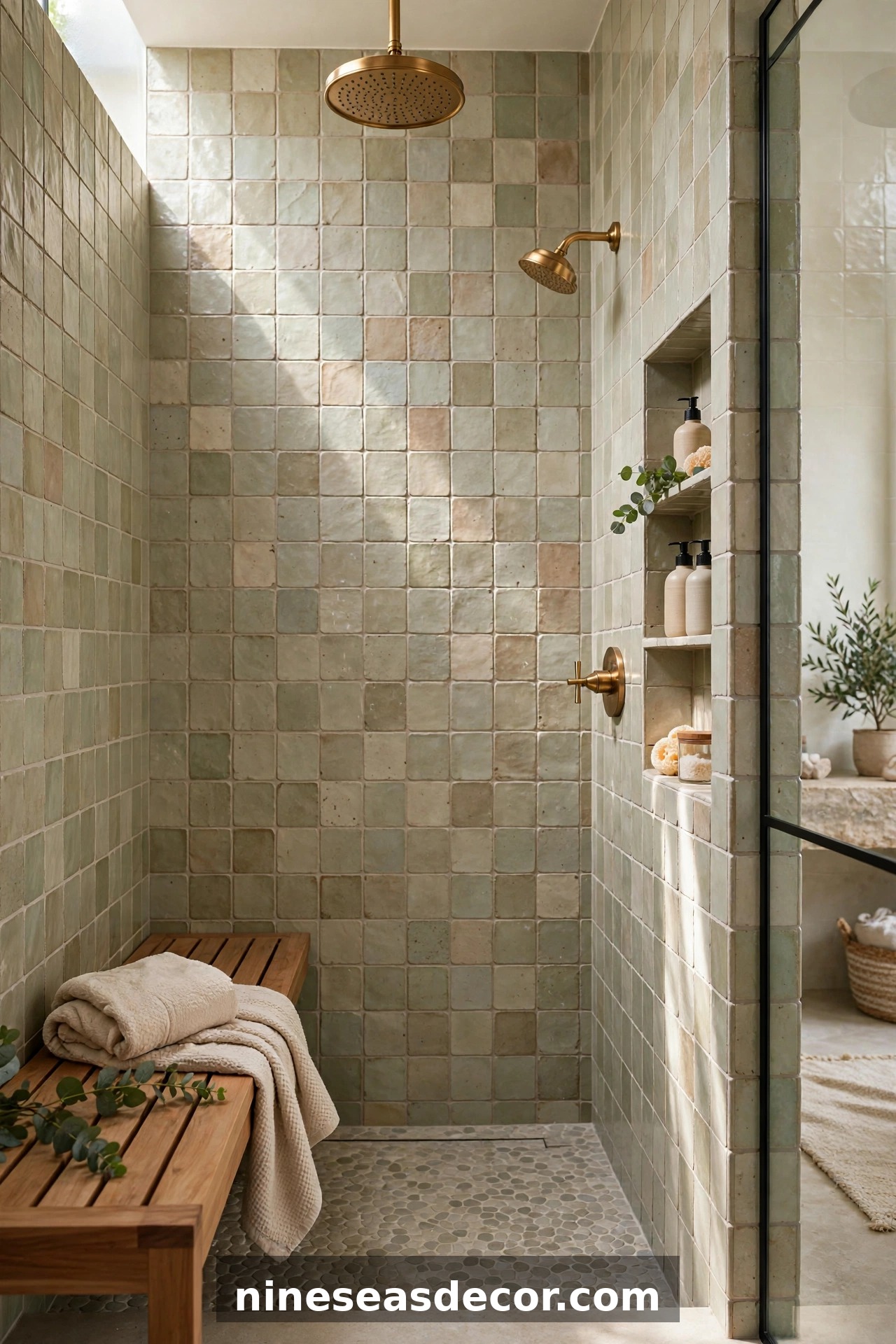
The shower is the tile centerpiece of any bathroom design. It is the largest continuous tiled surface in most bathrooms and the area where your investment is most visible and most impactful on daily life. I cannot emphasize enough how much a well-designed shower changes how you feel about your entire bathroom. Get this right, and every morning starts better.
For shower design, you are typically dealing with three distinct surfaces, the shower floor, the shower walls, and potentially a shower niche or bench. Each surface has different functional requirements and different aesthetic opportunities. The classic approach is to use the same tile on all three surfaces for a seamless, spa-like look. The more contemporary approach uses two complementary tiles, a textured or smaller format tile on the floor for grip, and a larger, more refined tile on the walls for visual impact.
Subway tile remains the most popular shower wall tile in America, and there is good reason for that. The classic (3×6 inch) format, originally from the New York City subway system, is affordable (starting at $2 per square foot), easy to install, and works with nearly every design style from farmhouse to modern. In 2026, the trend is toward larger subway formats like (4×12 inches) or even (4×16 inches) in a stacked vertical layout rather than the traditional horizontal brick pattern. This elongates the shower wall visually and feels distinctly more current.
For shower floors, mosaic tile in (1×1 inch) or (2×2 inch) format remains the gold standard because the high number of grout lines provides superior slip resistance. Pebble tile sheets in (12×12 inch) mesh-mounted format are another gorgeous option, priced around ($8-$20 per square foot), and they bring a natural spa element to any shower floor.
CREATING A STUNNING SHOWER ACCENT WALL
A shower accent wall or feature wall is one of the highest impact, relatively lower cost upgrades you can make to a shower design. The concept is simple. You select one wall, typically the back wall directly facing the shower entry, and treat it with a more decorative, dramatic, or luxurious tile than the rest of the shower. Budget between ($300-$1,500) extra for the feature wall tile versus your standard wall tile, and the visual payoff is enormous. Popular choices for feature walls include book-matched marble slabs, zellige tiles, bold geometric mosaic, or textured 3D tiles. Keep the remaining three walls in a simple, complementary tile that does not compete. The key rule: one star, supporting cast only.
WALK-IN SHOWER TILE LAYOUT STRATEGIES
For walk-in showers measuring (36×36 inches) at minimum to the more luxurious (60×36 inch) or larger formats, your tile layout direction matters enormously. Horizontal tile layouts make a shower feel wider. Vertical tile layouts make it feel taller. Diagonal layouts add dynamism but waste (15-20%) more tile in cuts. For showers with standard (8 foot) ceiling heights, I almost always recommend a vertical tile orientation on the walls to maximize the sense of height. For showers with low ceilings under (7.5 feet), horizontal layouts trick the eye into perceiving the walls as further apart. Also consider whether your grout lines align with your fixtures. Tile-to-fixture alignment is a professional installer detail that separates polished results from amateur ones.
Bathroom Floor Tile Ideas For Every Style And Budget
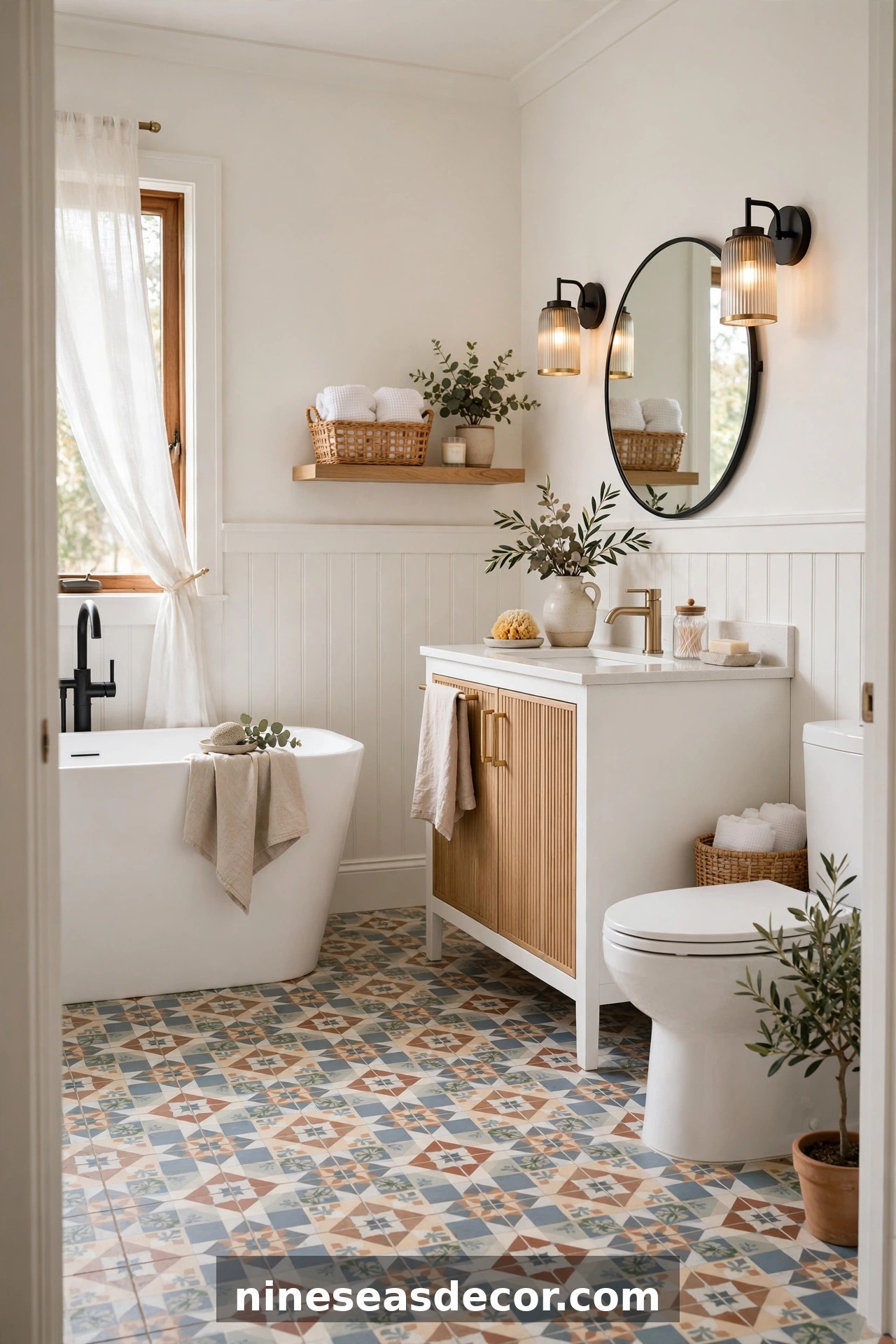
Your bathroom floor is the foundation of your entire design scheme. It sets the tone before anything else registers, it bears the most physical abuse of any tiled surface, and it is the hardest surface to change once installed. Getting the bathroom floor tile right is, without question, the most important tile decision you will make in this project.
The good news is that 2026 offers more beautiful, durable, and affordable bathroom floor tile options than any previous era of home design. The bad news is that more options means more decisions, and more decisions means more opportunities to choose wrong. Let me give you a clear framework.
For small bathrooms under (50 sq ft), think (4×4 inch) to (12×12 inch) tiles. Anything larger starts to look mismatched with the scale of the room, and larger tiles in small rooms actually require more cuts, increasing waste and installation cost. Light colored floor tiles visually expand a small bathroom. White, cream, pale gray, and light taupe floor tiles all make small bathrooms feel more spacious and airy.
For medium bathrooms between (50-100 sq ft), the sweet spot is (12×12 inch) to (18×18 inch) tiles. This is where you can start experimenting with more interesting formats like (12×24 inch) rectangles in a staggered offset layout.
For large master bathrooms over (100 sq ft), go bold. Large format tiles at (24×24 inches) or (24×48 inches) look genuinely spectacular in generous floor plans and create that high end spa environment that makes a master bath feel like a genuine retreat.
HERRINGBONE AND CHEVRON FLOOR PATTERNS IN 2026
Herringbone pattern has been trending for several years, but it is not going anywhere in 2026, it is simply evolving. Traditional herringbone uses (3×6 inch) or (4×8 inch) rectangular tiles laid in a classic V-pattern. The 2026 evolution uses wider format tiles like (4×12 inches) in herringbone for a more dramatic, contemporary take on the classic pattern. Budget an additional ($3-$6 per square foot) in installation costs for herringbone versus straight-lay installation, as it requires significantly more precision and time. Chevron pattern is herringbone’s cleaner, more geometric cousin, requiring specially cut parallelogram-shaped tiles that meet at perfect points. It costs more but produces a strikingly polished result. Both patterns work beautifully in warm wood-look porcelain tiles, which are dominating floor tile sales in 2026.
WOOD LOOK PORCELAIN TILE FOR BATHROOM FLOORS
Wood look porcelain tile has genuinely solved one of interior design’s oldest dilemmas: the desire for warm wood floors in moisture-heavy spaces where real wood warps and buckles. Modern printing technology has made wood look porcelain virtually indistinguishable from real hardwood at a glance, and it performs infinitely better in bathrooms. Prices range from ($2-$12 per square foot) depending on quality and realism of the print. The most convincing options from manufacturers like Marazzi, MSI, and Daltile feature slight surface texture variation, random pattern repeats, and color variation that mimics real wood grain. Standard format is (6×36 inches) or (8×48 inches). Grout the joints narrow at (1/16 inch to 1/8 inch) with a closely matching grout color to maximize the wood-floor illusion.
Small Bathroom Tile Ideas That Make Tiny Spaces Feel Huge
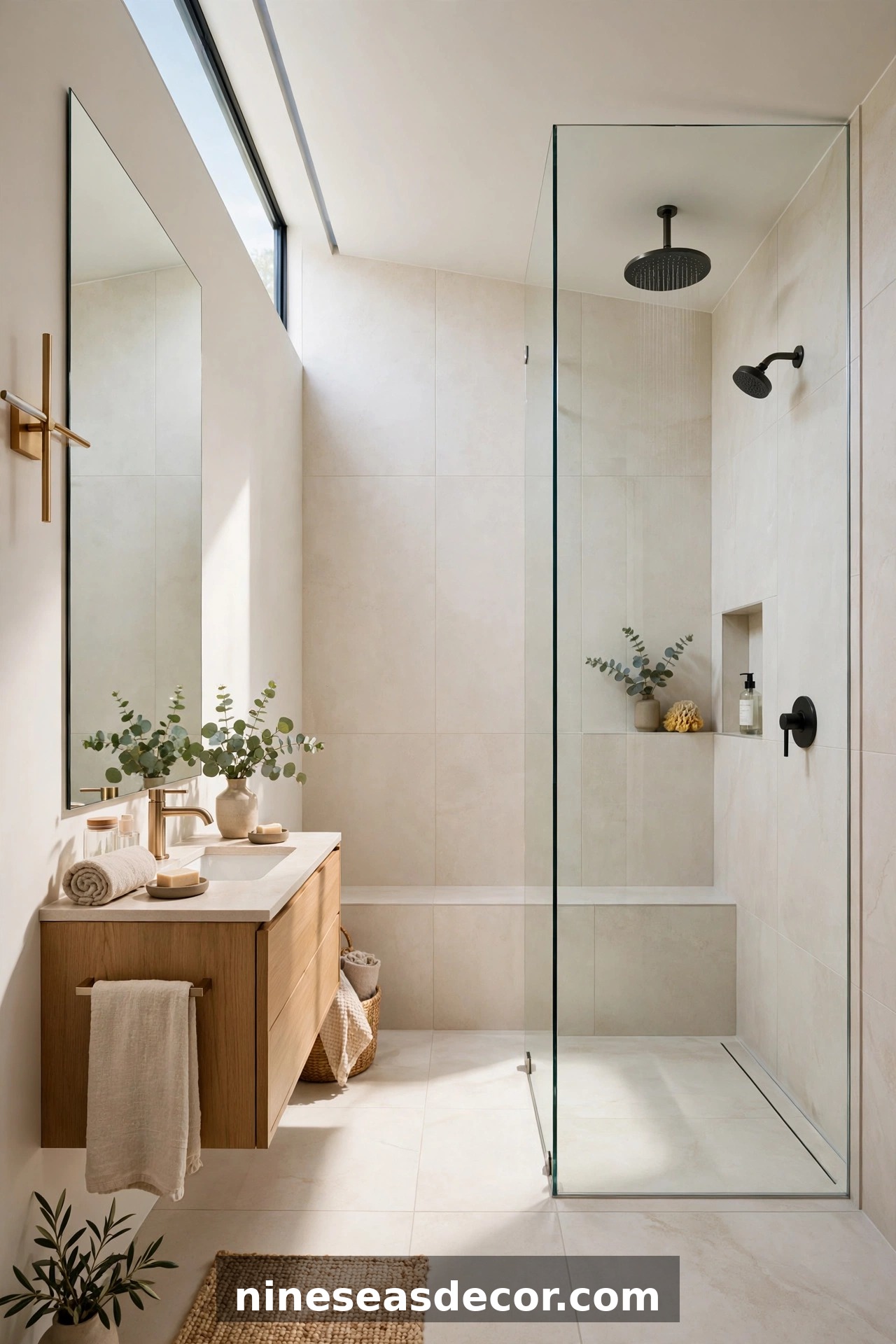
Small bathrooms present a unique design challenge, and tile choice is your single most powerful tool for either solving or amplifying that challenge. I want to be really specific here because generic advice like “use light colors” only gets you so far. According to a 2022 study published in the Journal of Environmental Psychology, the perceived size of a room is influenced not just by color brightness but by the directional orientation of pattern lines and the scale of surface textures relative to room dimensions. In practical terms, this means the direction your tile runs and the size of your tile pattern directly affects how big your small bathroom feels.
The most impactful trick for a small bathroom is to eliminate the visual boundary between floor and wall by using the same tile on both surfaces. This is called a tone-on-tone approach, and it works by removing the horizontal line where the floor meets the wall, which is the line your brain uses to measure how small the room is. Use the same tile in the same color on the floor and lower wall and watch the room expand visually.
Another powerful strategy is to run tiles on the diagonal at a (45 degree) angle to the walls. Yes, this wastes more material, but the diagonal lines draw the eye to the corners of the room and make the floor feel wider. It is a trick professional designers use in entry halls and small bathrooms all the time, and it works.
Vertical tile orientation on bathroom walls in small spaces is another height-maximizing strategy. Running (3×12 inch) tiles vertically on the walls draws the eye upward and makes ceilings feel higher than they are.
MIRROR TILES AND REFLECTIVE SURFACES FOR SMALL BATHROOMS
Glossy tile finishes and glass mosaic tiles are particularly valuable in small bathrooms because their reflective surfaces bounce light around the room, creating the illusion of more space and better illumination. Glass subway tiles in (3×6 inch) format are available for ($8-$20 per square foot) and can transform a dark, cramped bathroom into something that feels genuinely bright and airy. Pair them with Benjamin Moore White Dove (OC-17) on the ceiling and upper walls for maximum light reflection. Mirror tile panels are a more dramatic option, used strategically on one wall to effectively double the perceived room size. Keep in mind that glossy and glass tiles show water spots more readily and require more frequent cleaning than matte finish tiles.
HALF WALL TILE STRATEGIES FOR SMALL BATHROOMS
Full floor-to-ceiling tile in a small bathroom can sometimes feel like a cave, particularly in bathrooms with low ceilings under (8 feet). A half wall tile approach, tiling from the floor to approximately (48-54 inches) up the wall, then transitioning to paint above, is a classic strategy that adds design interest while keeping the upper walls light and airy. The transition line is called a chair rail, and you can mark it with a decorative border tile, a simple pencil liner tile, or simply a clean grout line where tile meets paint. This approach reduces your tile budget by approximately (30-40%) compared to full height tiling while still providing the moisture protection and visual interest that tile delivers. For the paint above the tile line, Sherwin-Williams Egret White (SW 7570) provides a warm, creamy complement to most tile palettes.
Grout Color: The Most Underestimated Bathroom Tile Decision
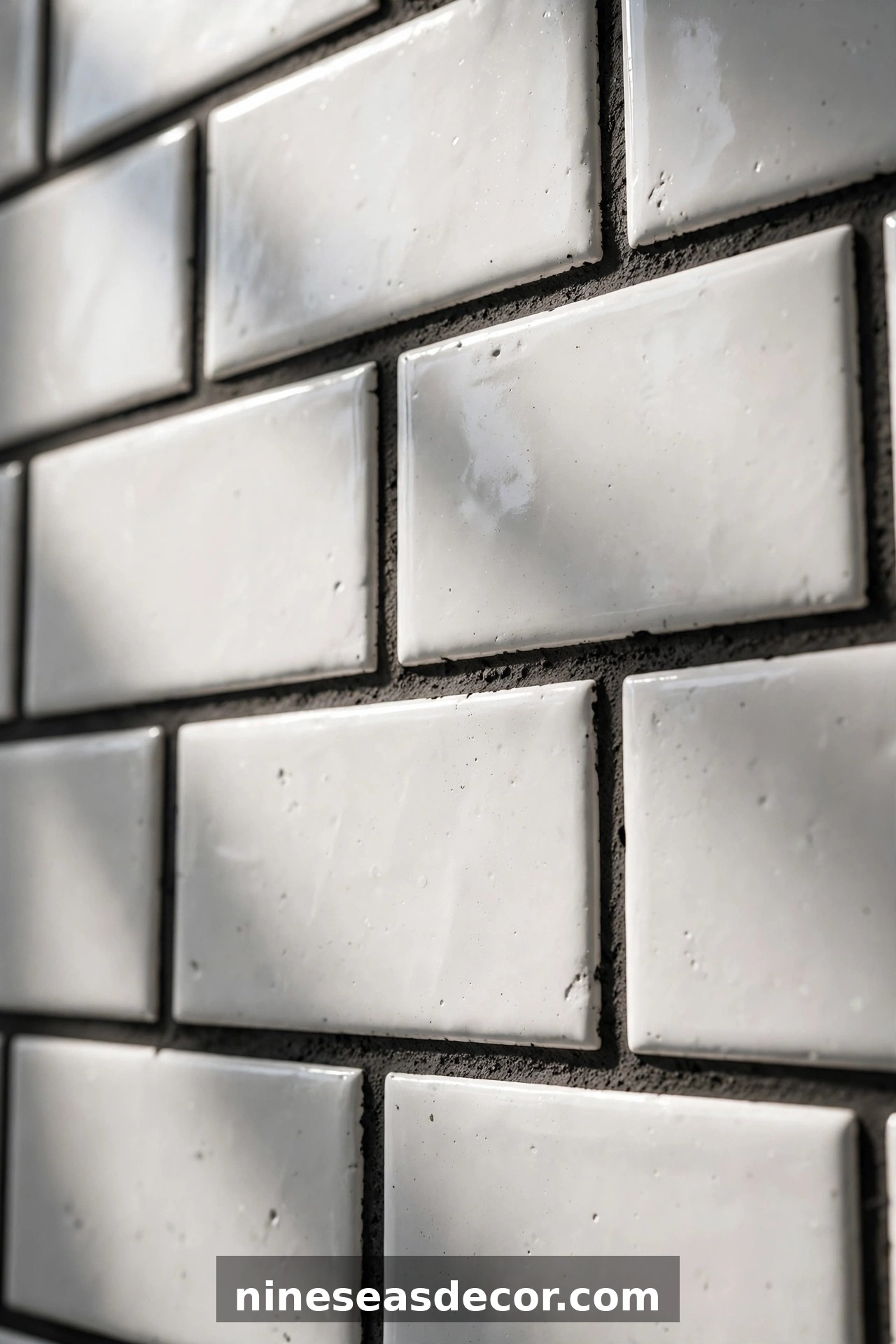
I will say this plainly: grout color can make or break your entire tile installation. I have seen absolutely beautiful tile choices ruined by the wrong grout color, and I have seen mediocre tiles elevated significantly by a smart grout choice. This is not a detail to leave until the last minute or defer entirely to your installer.
There are three fundamental approaches to grout color selection. The first is matching grout, where you choose a grout color that closely matches the body color of your tile. This approach makes the grout lines disappear visually, creating a seamless surface that emphasizes the tile itself. It works beautifully with large format tiles where you want a continuous, uninterrupted surface effect.
The second approach is contrasting grout, where you deliberately choose a grout color that stands out against the tile. Classic examples include white subway tile with dark charcoal grout, or black hex tile with white grout. Contrasting grout celebrates and emphasizes the tile pattern, making the layout geometry a deliberate design feature.
The third approach is complementary grout, a middle ground where the grout is neither matching nor strongly contrasting but rather a harmonious tone that adds subtle warmth or depth without making the joints disappear entirely. This is often the most forgiving and beautiful option.
Grout maintenance is also a practical consideration. Light grout shows staining more visibly in high traffic or moisture-heavy areas. Epoxy grout, priced at ($30-$50 per bag) versus ($10-$20 per bag) for standard cement grout, is significantly more stain and moisture resistant and is worth the investment in shower applications.
TRENDING GROUT COLORS FOR 2026
The all-white grout era is giving way to much more interesting options. Warm putty grout in tones matching Sherwin-Williams Accessible Beige (SW 7036) is enormously popular in 2026, particularly paired with travertine-look porcelain or zellige tiles. Charcoal and dark gray grout continues its strong run, particularly with white and cream tiles where the contrast creates a graphic, modern look. Terra cotta colored grout is an emerging choice for 2026, complementing the earthy tile tones dominating the trend landscape. For a truly bold statement, black grout with white or cream tiles creates a striking graphic tile treatment that photographs beautifully and wears surprisingly well. Whatever you choose, order (10-15%) more grout than you calculate needing because batch color variations in grout are real and frustrating to match later.
HOW TO KEEP GROUT LOOKING CLEAN LONG TERM
Grout sealing is the single most important maintenance step most homeowners skip. Unsealed cement grout in a bathroom is essentially a sponge for moisture, soap, mildew, and staining. Seal all cement grout within (48 to 72 hours) of installation cure time and reseal every (12 to 24 months) depending on traffic and moisture exposure. A quality penetrating grout sealer like Aqua Mix Sealer’s Choice Gold costs approximately ($30-$50) for a (24 oz) bottle, which is enough for an average bathroom. For ongoing cleaning, avoid bleach-based products on colored grout as they accelerate fading. A simple mixture of warm water and a pH-neutral cleaner applied weekly is genuinely sufficient to keep grout looking fresh for years.
Bathroom Tile Costs: Real Numbers For Real Budgets
Let me give you the honest breakdown that most home improvement sites dance around. Bathroom tile projects in the US in 2026 range from as little as ($500-$1,500) for a simple DIY floor tile refresh to ($15,000-$30,000) for a complete primary bathroom renovation with premium materials and professional installation throughout. Knowing where your project falls on that spectrum before you start shopping will save you enormous frustration.
The 2024 Remodeling Cost vs. Value Report published by Remodeling Magazine noted that bathroom remodels consistently deliver one of the strongest returns on investment of any home improvement project, averaging a (70-71%) return on cost at resale for midrange renovations. That means a ($10,000) bathroom tile renovation adds approximately ($7,000-$7,100) in home value on average, making it financially justifiable in addition to the lifestyle benefits.
Here is how the costs break down realistically. Tile material costs run ($1-$60 per square foot) as discussed. For an average (50 sq ft) bathroom floor plus (200 sq ft) of wall tile in a standard bathroom renovation, you are looking at approximately ($600-$5,000) in tile materials alone at the low to mid range.
Professional tile installation costs ($10-$25 per square foot) nationally, though metro areas like New York, San Francisco, and Los Angeles run ($20-$40 per square foot). Complex layouts like herringbone, mosaic, or diagonal patterns add ($3-$8 per square foot) to installation costs. Tile removal, if you are replacing existing tile, adds ($2-$5 per square foot) to the project.
WHERE TO SPLURGE AND WHERE TO SAVE ON BATHROOM TILE
Smart bathroom tile budgeting is about strategic allocation, not uniform cost reduction. My consistent recommendation: spend your tile budget on the surfaces with the highest visual impact and save on the hidden or less visible surfaces. The shower feature wall and the bathroom floor are your high impact zones, splurge there. The sides of the shower, the area behind the toilet, and the lower sections of walls behind furniture are low visibility areas where budget ceramic tile at ($1-$3 per square foot) works perfectly well and no one will ever notice the difference. This approach can cut your overall tile material budget by (25-35%) while preserving the visual quality of your finished bathroom entirely. According to the NKBA 2024 Design Trends Report, the most impactful single tile investment is the shower floor and feature wall combination, cited by 73% of professional kitchen and bath designers surveyed.
DIY VERSUS PROFESSIONAL TILE INSTALLATION COSTS
DIY tile installation is achievable for motivated homeowners but comes with real caveats. The materials you need beyond the tile itself include cement board backer ($1-$2 per sq ft), thinset mortar ($20-$40 per bag), a tile wet saw rental ($50-$80 per day), tile spacers, grout, and sealer, adding approximately ($2-$5 per square foot) in materials to your tile cost even on a DIY project. The actual labor saving is real at ($10-$25 per square foot), but a poorly installed tile floor that requires removal and reinstallation ends up costing significantly more than hiring a professional from the start. For flat, simple floor layouts in small bathrooms, DIY is realistic for an experienced home improvement enthusiast. For shower installations, diagonal layouts, or any work involving waterproof membrane installation, please hire a professional. Water damage behind poorly installed shower tile is genuinely one of the most expensive home repairs imaginable, ranging from ($5,000-$25,000) for remediation.
Frequently Asked Questions
HOW MUCH DOES IT COST TO TILE A BATHROOM IN 2026?
The total cost to tile a bathroom in 2026 depends significantly on bathroom size, tile material selection, and whether you hire a professional or go DIY. For a small (50 sq ft) bathroom, budget between ($1,500-$4,000) for materials and professional installation using mid-range ceramic or porcelain tiles. A medium bathroom of (80-100 sq ft) with quality porcelain tile and professional installation typically runs ($3,000-$8,000). A large master bathroom of (150+ sq ft) with premium materials including natural stone or large format porcelain slabs can reach ($10,000-$25,000) or more. Material costs alone range from ($1-$60 per square foot) depending on tile type, while professional installation adds ($10-$40 per square foot) depending on your geographic location and layout complexity. Always get a minimum of three contractor quotes before committing.
WHAT IS THE BEST TILE FOR A SMALL BATHROOM FLOOR?
For small bathrooms under (50 sq ft), the best floor tile choices prioritize light color, appropriate scale, and slip resistance. Porcelain tiles in (4×4 inch) to (12×12 inch) formats in light cream, warm white, or soft gray tones are the most universally successful option. Penny tiles in (1 inch) format in white or cream work beautifully and provide excellent slip resistance with their naturally high grout-to-tile ratio. Light warm travertine-look porcelain in (12×12 inch) format adds texture and warmth without overwhelming a small space. Avoid tiles larger than (18×18 inches) in bathrooms under (50 sq ft) as they require more cuts and can feel disproportionate. Running whatever tile you choose on a (45 degree) diagonal adds approximately ($3-$5 per square foot) to installation cost but can make a small bathroom floor feel noticeably larger.
WHAT TILES ARE TRENDING IN BATHROOMS FOR 2026?
The dominant bathroom tile trends for 2026 include zellige tiles in jewel tones and warm terracotta ($8-$25 per square foot), fluted or ribbed tiles in warm neutrals for accent walls, large format porcelain slabs in (24×48 inch) or larger formats for a seamless spa effect, wood look porcelain in (6×36 inch) plank format for bathroom floors, and bold geometric encaustic cement tiles ($5-$30 per square foot) making a strong comeback on bathroom floors. Warm earthy tones including sandy beige, terracotta, warm taupe, and creamy off-white are replacing the cool grays that dominated the previous decade. Grout color trends include warm putty tones, charcoal contrasts, and even terra cotta colored grout to complement warm tile palettes. According to the 2025 Houzz Bathroom Trends Study, searches for zellige tile specifically increased by over (210%) compared to the previous year.
HOW DO I CHOOSE GROUT COLOR FOR BATHROOM TILE?
Choosing grout color comes down to three strategic approaches. Matching grout (color closely aligned with your tile) minimizes the visibility of grout lines and creates a seamless surface effect, best for large format tiles where you want an uninterrupted look. Contrasting grout (significantly darker or lighter than the tile) celebrates the tile pattern and grid, best for subway tiles, hex tiles, and geometric patterns where the layout itself is a design feature. Complementary grout (harmonious but not identical to the tile) offers the most forgiving middle ground. Practically speaking, always test grout colors by purchasing small quantities and applying sample patches before committing to your entire bathroom. Also consider maintenance. Light grout shows staining faster and requires more frequent cleaning. Epoxy grout at ($30-$50 per bag) is significantly more stain resistant than standard cement grout at ($10-$20 per bag) and is worth the investment in shower and high-moisture applications.
CAN I TILE OVER EXISTING BATHROOM TILE?
Yes, you can tile over existing bathroom tile in certain conditions, and doing so saves the ($2-$5 per square foot) demolition and disposal cost. However, there are important requirements. The existing tile must be firmly adhered with no loose, hollow-sounding, or cracked tiles. The existing surface must be flat and level because new tile will amplify any existing irregularities. Tiling over existing tile adds thickness to the floor, which can create issues with door clearance, as standard interior doors need (5/8 inch to 3/4 inch) clearance under the door when new tile is installed. It can also create transitions to adjacent flooring that

Hi, I’m Sophia Rose. I believe every home tells a story. At Nine Seas Decor, I share creative ideas, budget-friendly tips, and modern trends to help you turn your living space into a sanctuary. Let’s make your home beautiful, one corner at a time!