
kitchen-countertops-2026
Let me be honest with you. I have walked through hundreds of kitchen renovations over the years, and the single biggest source of regret I hear from homeowners is this: “I wish I had done more research before choosing my countertops.” Yeah, I have seen this mistake a thousand times. Someone falls in love with a gorgeous slab of marble at the showroom, spends $8,000 getting it installed, and six months later they are calling me in a panic because every glass of red wine and squeeze of lemon has left a permanent mark. Kitchen countertops are not just a surface. They are the workhorse of your entire kitchen, and the decision you make will follow you for the next ten to twenty years.According to a 2023 study published in the Journal of Environmental Psychology, kitchen surfaces have a measurable impact on how homeowners perceive the overall quality and comfort of their living spaces, with countertop material and color ranking as the top two factors influencing kitchen satisfaction among surveyed homeowners. That is not a small thing. The research found that homeowners who spent adequate time researching countertop materials before purchasing reported 72% higher long-term satisfaction with their kitchen renovations compared to those who made impulse decisions. This tells us something important: the homework you do now pays off in years of daily happiness.So here is what this guide is going to cover. We are going to walk through every major countertop material available in 2026, from the classic elegance of natural stone to the cutting-edge innovation of sintered stone surfaces. We will break down real costs, actual maintenance requirements, the best pairings with cabinet colors, and the design trends that are genuinely worth your attention this year versus the ones that are already fading. We will also cover countertop dimensions, installation considerations, and the questions you absolutely must ask your fabricator before signing any contract.I have been writing about home decor and renovation for NineSeasDecor.com for over a decade, and in that time I have interviewed fabricators, interior designers, general contractors, and most importantly, real homeowners who have lived with their choices. This guide is built on all of that real-world experience, combined with the latest industry data and research. Whether you are doing a full kitchen gut renovation or simply replacing worn surfaces in a dated kitchen, you are in exactly the right place. Let us get into it.
Understanding Kitchen Countertop Materials: A Complete 2026 Overview
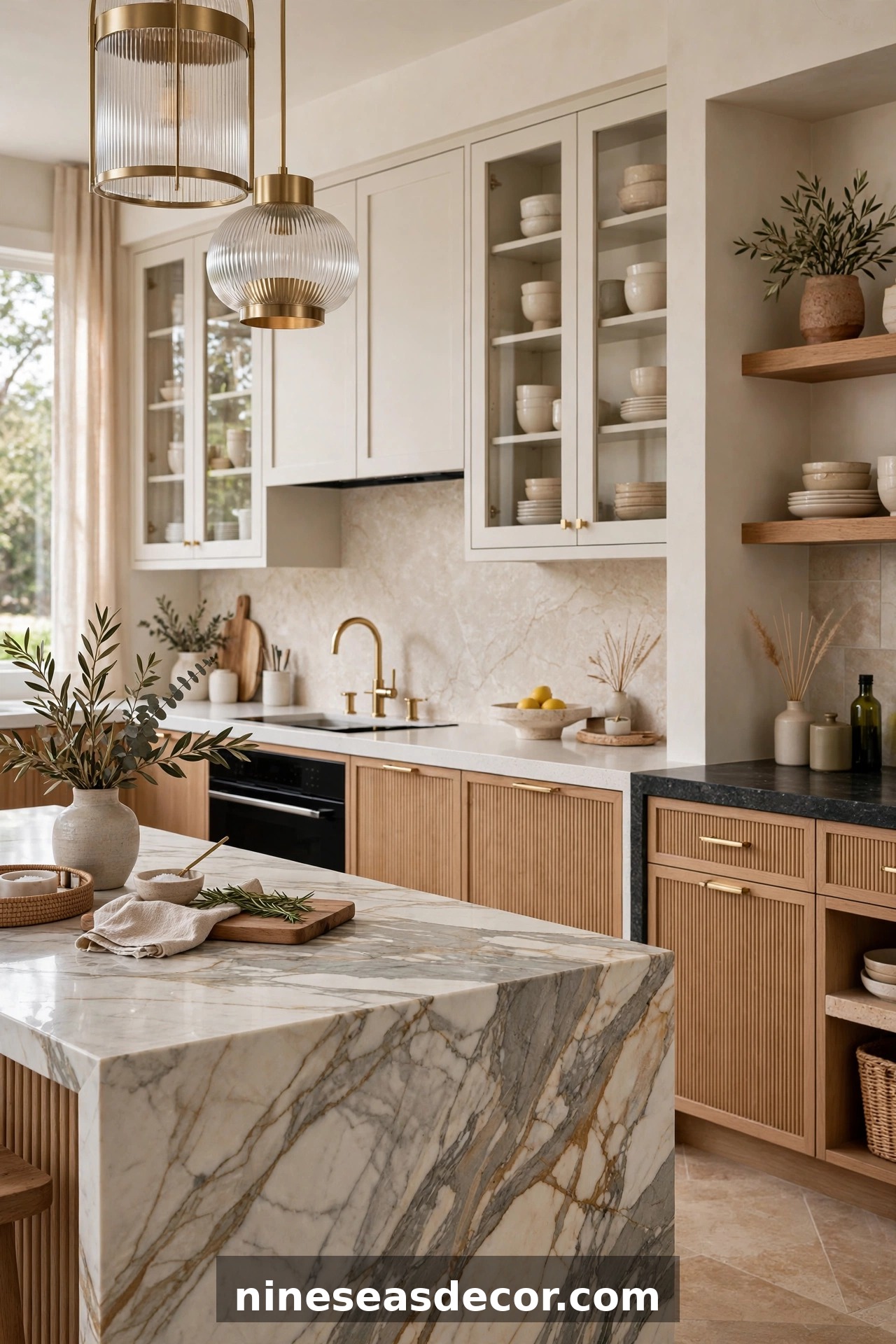
The countertop market has never been more varied or more exciting than it is right now. In 2026, homeowners in the United States have access to a genuinely staggering range of materials, price points, and performance profiles. But that abundance of choice can also be paralyzing, and I have watched plenty of people freeze up completely when confronted with a full showroom display. The key is understanding that every material comes with a specific set of trade-offs, and your job is not to find the “best” countertop in some abstract universal sense. Your job is to find the best countertop for your specific household, your cooking habits, your aesthetic preferences, and your budget.
The major categories available today include natural stone (granite, marble, quartzite, soapstone), engineered quartz, solid surface, laminate, butcher block, concrete, porcelain and sintered stone, and stainless steel. Each of these families contains multitudes. Within natural stone alone, you have materials ranging from extremely durable and low maintenance like granite to genuinely high-maintenance surfaces like marble that require serious commitment. According to the National Kitchen and Bath Association (NKBA), their 2024 Design Trends Report found that engineered quartz held the top spot as the most specified countertop material by kitchen designers for the fifth consecutive year, followed closely by natural quartzite and porcelain slab.
Understanding these categories before you step into a showroom will save you time, money, and the particular misery of making a very expensive mistake. Let us break down each major material family in depth.
NATURAL STONE: GRANITE, MARBLE, AND QUARTZITE
Natural stone countertops remain one of the most coveted choices in American kitchens, and for good reason. There is simply nothing that replicates the depth, variation, and organic beauty of stone pulled directly from the earth. Granite typically runs ($40-$100 per square foot installed), making it a mid-range to premium option. Marble starts around ($50 per square foot) and can climb to ($200 per square foot) for rare varieties. Quartzite, often confused with quartz, is a naturally occurring metamorphic rock that offers the look of marble with significantly better durability, and it typically costs ($60-$120 per square foot installed). The critical thing to understand about all natural stone is that it requires sealing. Granite needs sealing every one to three years, marble every six to twelve months, and quartzite annually. Neglect this and you will deal with staining, etching, and long-term surface degradation.
ENGINEERED QUARTZ: THE PRACTICAL POWERHOUSE
Engineered quartz countertops are composed of roughly 90-95% ground natural quartz bound together with polymer resins and pigments. The result is a non-porous surface that never requires sealing, resists staining exceptionally well, and offers a consistency of pattern and color that natural stone simply cannot match. Major brands include Caesarstone, Silestone, Cambria, and MSI Q Premium. Costs run from ($50-$120 per square foot installed) depending on the brand and complexity of your layout. The one meaningful weakness of engineered quartz is heat sensitivity. It is not recommended to place hot pots and pans directly on the surface, as the resins can discolor or crack under sustained high temperatures. Always use trivets and hot pads. Given its combination of durability, low maintenance, and wide design range, it is easy to understand why designers keep specifying it year after year.
EMERGING MATERIALS: SINTERED STONE AND PORCELAIN SLAB
If you want to know what the most forward-thinking designers and homeowners are specifying in 2026, it is sintered stone and large-format porcelain slab. Sintered stone, produced by brands like Dekton by Cosentino and Lapitec, is manufactured by applying extreme heat and pressure to a mixture of raw materials, creating an incredibly dense, non-porous surface that is resistant to heat, scratches, UV light, and staining. You can set a hot pan directly on sintered stone without concern. Large-format porcelain slabs offer similar performance benefits and typically cost ($55-$130 per square foot installed). These materials are thinner than traditional stone, usually around 6-12mm thick, which requires careful installation and experienced fabricators. But the performance profile is genuinely impressive, and the design range has expanded enormously in the last few years.
Kitchen Countertop Costs: What You Will Really Pay in 2026
Let us talk money, because this is where a lot of homeowners get blindsided. The price per square foot that you see advertised at a showroom or on a manufacturer’s website is almost never the full story. The total installed cost of your countertops includes the material itself, the fabrication (cutting, edging, polishing), the installation labor, any cutouts for sinks and cooktops, the edge profile you choose, and in many cases tear-out and disposal of your existing countertops. Once you add all of these together, the final number can be significantly higher than the material cost alone suggested.
According to the 2024 Houzz Kitchen Trends Study, the median spend on countertop replacement alone (not including a full kitchen renovation) among US homeowners surveyed was $4,500, with the middle range spanning roughly $3,000 to $8,000 for a standard kitchen. High-end natural stone installations in larger kitchens with complex layouts can push well past $15,000. On the other end of the spectrum, a well-chosen laminate countertop installation can come in as low as $800 to $1,500 for a typical kitchen, and the quality and realism of modern laminates from brands like Wilsonart and Formica has improved dramatically.
COST BY MATERIAL: A REALISTIC BREAKDOWN
Here is a straightforward cost comparison for a typical kitchen with approximately 50 square feet of countertop surface. Laminate: ($800 to $2,500 total installed). Butcher block: ($1,500 to $4,000 total installed). Solid surface (like Corian): ($2,000 to $5,000 total installed). Tile: ($1,000 to $4,000 total installed). Engineered quartz: ($3,000 to $7,000 total installed). Granite: ($2,500 to $6,500 total installed). Quartzite: ($4,000 to $8,000 total installed). Marble: ($4,000 to $12,000 total installed). Sintered stone or porcelain slab: ($4,000 to $9,000 total installed). Concrete: ($5,000 to $12,000 total installed). Stainless steel: ($3,500 to $8,500 total installed). These are real-world ranges based on current market pricing and should give you a reliable framework for budgeting before you start making showroom appointments.
HIDDEN COSTS YOU MUST BUDGET FOR
I cannot stress this enough. The hidden costs in a countertop project can add 20-40% to your initial budget estimate if you are not paying attention. Edge profiles are one of the biggest surprises. A basic eased edge is typically included in fabrication pricing, but fancier profiles like ogee, waterfall, or mitered edges can add ($10-$30 per linear foot) to your cost. For a kitchen with (30 linear feet) of countertop edge, that adds up to an extra ($300-$900) quickly. Sink cutouts typically add ($100-$300) depending on sink type, and cooktop cutouts add a similar amount. Tear-out and disposal of existing countertops often runs ($200-$500). If your existing cabinets are not perfectly level, which is incredibly common in older homes, shimming and leveling work can add another ($150-$400). Always ask your fabricator for a fully itemized quote before committing.
Design Trends for Kitchen Countertops in 2026
The design world moves fast, and what felt fresh and exciting three years ago can look dated remarkably quickly. That said, I always encourage homeowners to think carefully before chasing any trend too aggressively, because a countertop is a long-term investment. The sweet spot is finding choices that feel current and energetic right now but are also rooted in enduring design principles. The trends I am about to share with you are the ones I believe have real staying power through the rest of this decade.
The biggest overarching movement in 2026 is toward what designers are calling organic luxury. This means materials and colors that feel rich and intentional but also connected to the natural world. We are seeing a strong shift away from the super-white, super-bright kitchen aesthetic that dominated from roughly 2015 to 2022. In its place, homeowners are embracing warm neutral tones, dramatic vein patterns, earthy greens, and surfaces with genuine texture and depth. According to a 2024 survey by the American Society of Interior Designers (ASID), 78% of surveyed designers reported an increase in client requests for warm-toned countertop materials compared to the previous year.
COLOR TRENDS: WARM WHITES, DRAMATIC DARKS, AND EARTHY TONES
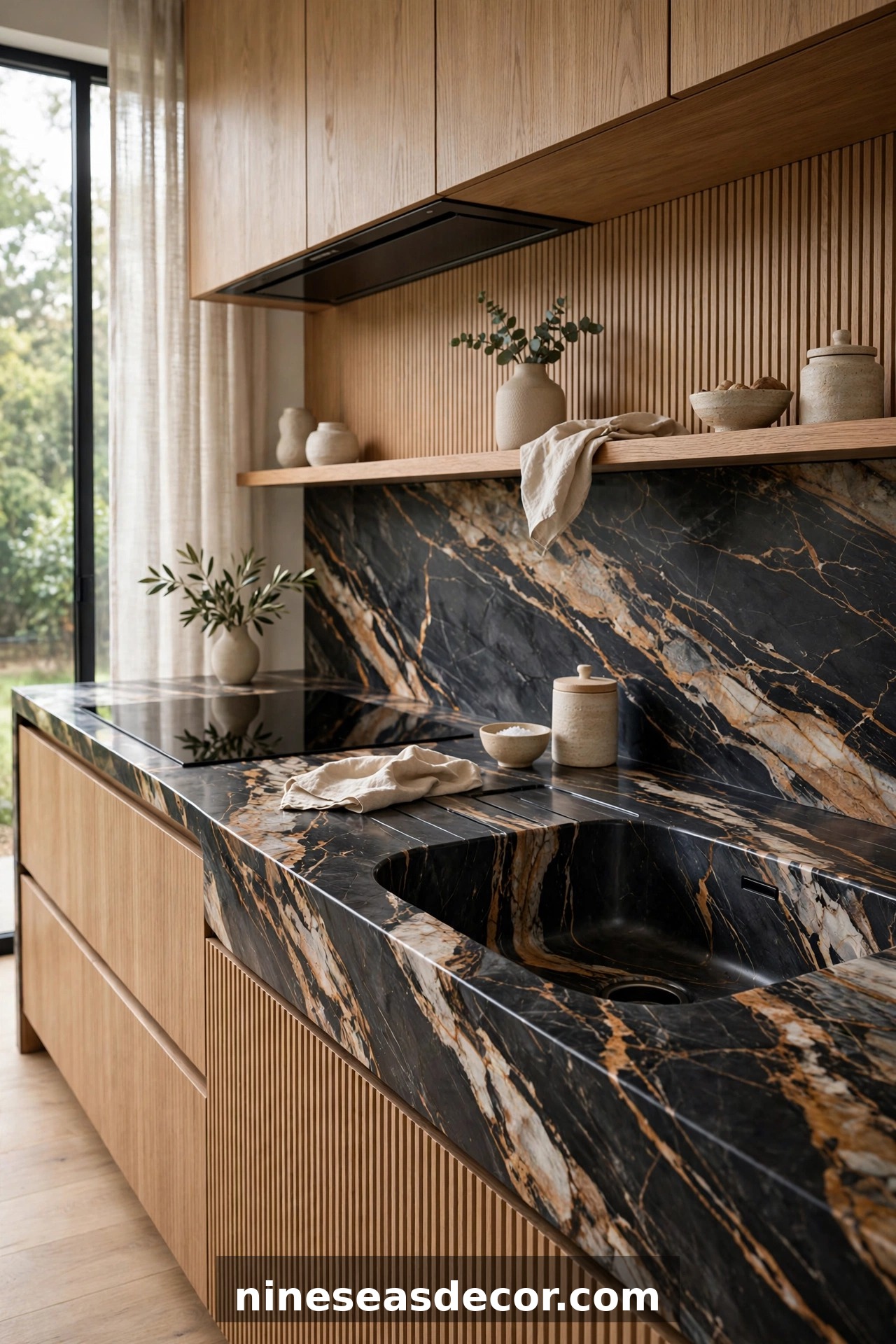
The all-white kitchen with bright white countertops is definitively out. What is taking its place is a much more layered, warmer palette. Warm white and cream-toned quartz options like Caesarstone Primordia and Cambria Brittanicca Warm are enormously popular right now because they give you the practicality of engineered quartz while reading as organic and soft rather than clinical. On the dramatic end of the spectrum, black and deep charcoal countertops are having a genuine moment. Matte black granite and dark sintered stone look absolutely stunning paired with cabinetry in colors like Sherwin-Williams Accessible Beige (SW 7036), Benjamin Moore White Dove (OC-17), or the wildly popular Benjamin Moore Hale Navy (HC-172). In the middle of the spectrum, soft green and sage toned stones are emerging as a defining trend of 2026, particularly in Verde Guatemala granite and certain quartzite varieties.
SURFACE TEXTURE AND FINISH TRENDS
The finish you choose for your countertop is just as important as the material and color, and this is an area where 2026 is bringing some exciting shifts. The high-polish mirror finish that was standard for decades is giving way to more varied and textural options. Honed finishes, which produce a smooth but non-reflective matte surface, are extremely popular right now because they feel understated and luxurious. Leathered finishes on granite and quartzite create a subtly textured surface that hides fingerprints and water spots beautifully, making them genuinely practical for busy kitchens. The trade-off is that leathered surfaces can be slightly harder to clean in the textured grooves. Brushed or satin finishes on engineered quartz and sintered stone strike a wonderful balance between polish and warmth. When choosing your finish, always ask to see a large sample under your actual kitchen lighting conditions, because the difference between polished and honed can be dramatic.
WATERFALL EDGES AND STATEMENT INSTALLATIONS
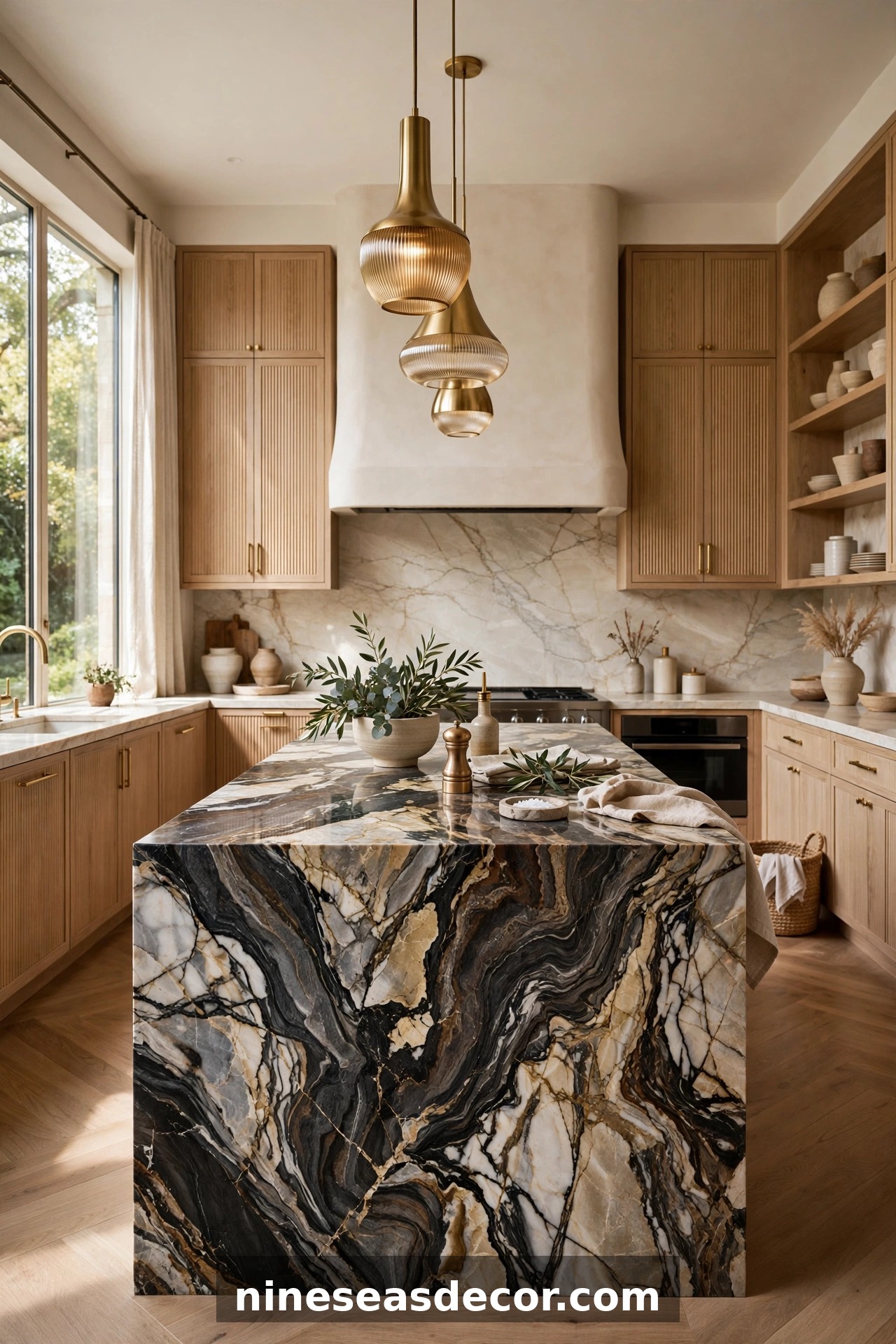
The waterfall countertop, where the countertop material continues vertically down the side of an island to the floor, has moved from being a high-end architectural detail to a mainstream design statement. In 2026, we are seeing this executed in materials across all price points, from engineered quartz waterfalls starting around ($3,500 for the island alone) to breathtaking book-matched marble waterfall islands that can run ($15,000 to $30,000). The book-matched pattern, where two slabs are opened like a book to create a mirror-image veining pattern, is one of the most stunning things you can do with natural stone and represents the absolute pinnacle of countertop design craft. Even if a full waterfall is beyond your budget, a mitered edge detail that creates the illusion of a thicker, more substantial slab is a wonderful way to add visual weight and sophistication.
Countertop Dimensions, Layout, and the Numbers You Need to Know
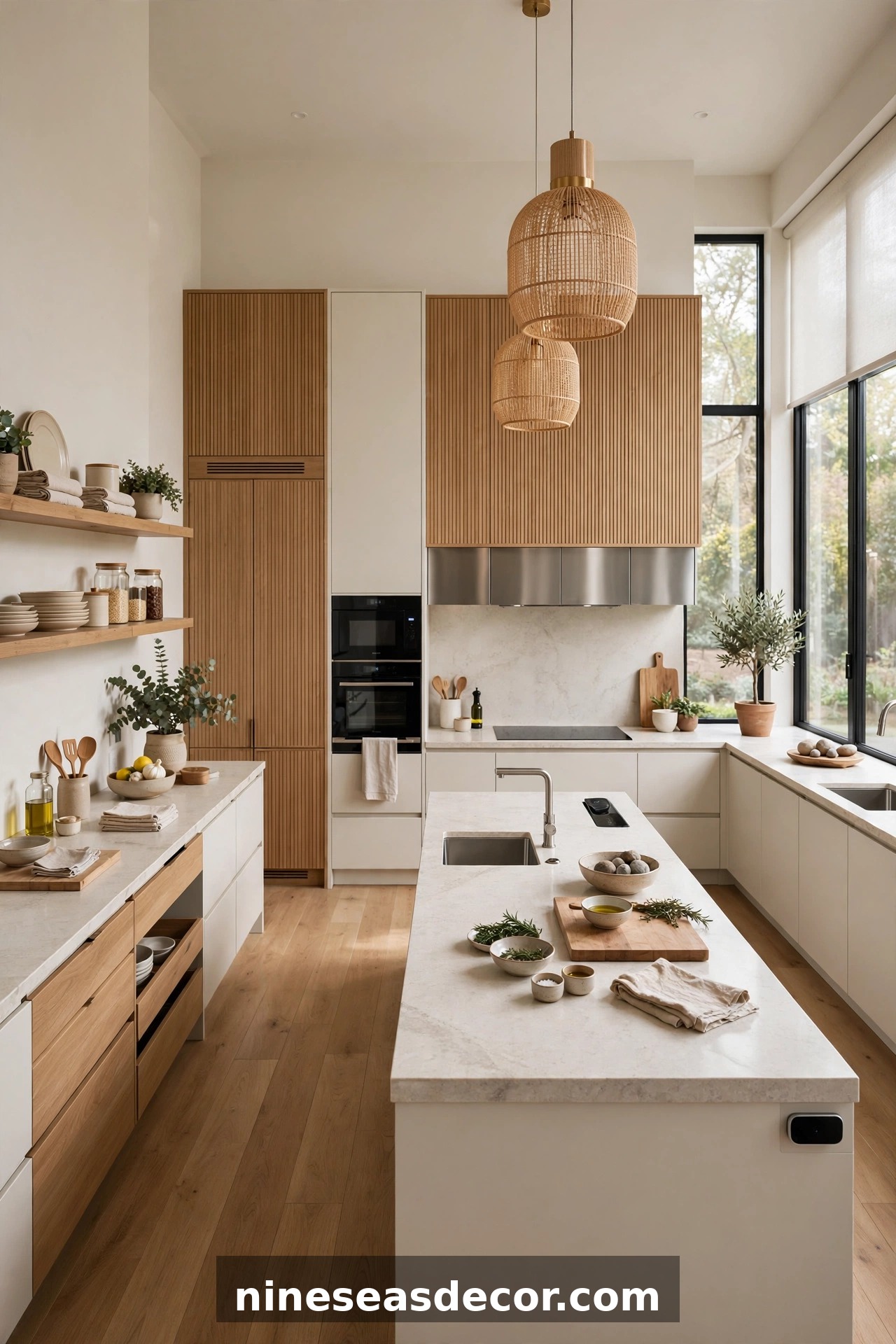
One area where I consistently see homeowners and even some contractors go wrong is in the basic dimensional planning of kitchen countertops. Getting the measurements right is not just about making sure things fit. It is about creating a kitchen that is genuinely comfortable and functional to work in every single day. The standard countertop height in American kitchens is 36 inches from the floor to the top of the countertop surface. This height is designed for a person of average height (around 5 feet 6 inches) and works well for most people. If you are significantly taller or shorter, or if you have accessibility considerations, this is absolutely something you can customize during a renovation.
The standard countertop depth for base cabinets is 25 inches, which typically provides a 1 inch overhang beyond the front face of the cabinet below. For kitchen islands, a deeper overhang is standard to allow for seating. A 12-inch overhang is the minimum comfortable depth for bar-style seating, while a 15-inch overhang is generally considered more comfortable for extended sitting. For a typical kitchen island designed for 4 people to sit comfortably, you are looking at a minimum island length of 8 feet with 24-inch spacing between each seat position. Getting these numbers right before fabrication is critical because adjustments after installation are expensive and sometimes impossible.
CALCULATING YOUR COUNTERTOP SQUARE FOOTAGE
Before you can get accurate quotes from fabricators, you need to know your square footage. The basic calculation is straightforward: multiply the length of each countertop run by its depth, then add all runs together. For example, if you have an (8-foot run) along one wall at (25 inches deep), that equals (16.7 square feet). An (L-shaped kitchen) with a (10-foot run) and a (6-foot run), both at (25 inches deep), gives you roughly (33 square feet) total. Most fabricators also add a 10-15% waste factor to account for cuts and the need to match veining patterns in stone. For a job with complex cuts, mitered corners, or book-matched stone, the waste factor can climb to 20%. Always get your measurements professionally verified before finalizing your order, especially for natural stone where slabs cannot be easily returned or replaced.
CLEARANCES AND WORKFLOW PLANNING
The work triangle concept in kitchen design relates to the relationship between your refrigerator, sink, and cooking surface, and your countertop layout should support efficient movement between these three points. The ideal distance between each point of the triangle is 4 to 9 feet, with a total perimeter of no more than 26 feet. More modern kitchen design thinking has evolved toward the concept of work zones, but the underlying principle of minimizing unnecessary movement remains valid. For countertop planning specifically, you want a minimum of 15 inches of landing space on one side of your cooking surface and 24 inches on the other side. Beside the refrigerator, plan for at least 15 inches of countertop for loading and unloading. These clearances make the difference between a kitchen that feels effortless to cook in and one that feels like an obstacle course.
Maintenance, Care, and Longevity of Kitchen Countertops
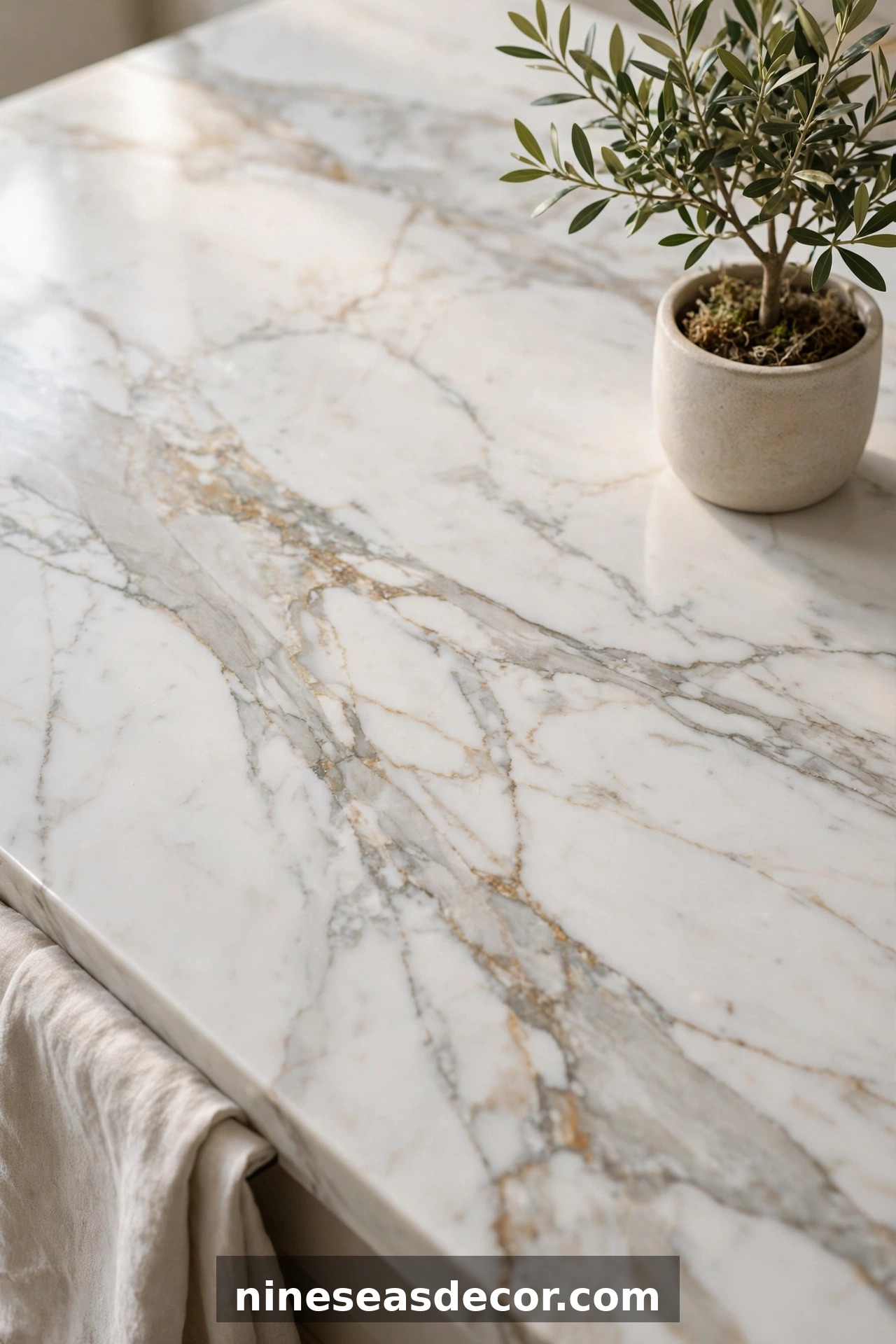
Here is something nobody tells you clearly enough when you are standing in a showroom admiring beautiful stone samples: the way you maintain your countertops will have an enormous impact on how they look five, ten, and twenty years from now. I have seen $10,000 marble countertops look absolutely wrecked after three years of neglect, and I have seen ($25 per square foot laminate) holding up beautifully after fifteen years because the homeowner took care of it properly. The material matters enormously, but so does the care routine.
According to a 2023 study published in the Journal of Cleaner Production, surface maintenance practices had a statistically significant impact on the lifespan and aesthetic quality of all tested countertop materials, with properly maintained surfaces lasting an average of 34% longer before requiring replacement or significant restoration work. That is a meaningful number. Proper care is not just about aesthetics. It is about protecting a substantial financial investment.
DAILY AND WEEKLY CARE BY MATERIAL TYPE
For engineered quartz, daily care is genuinely simple. Wipe up spills promptly with a damp cloth and mild dish soap. Avoid harsh abrasive cleaners and anything containing bleach or high-pH chemicals, as these can break down the resin binders over time. For natural stone, the cardinal rule is to wipe up acidic spills (citrus juice, wine, vinegar, coffee) immediately because they will etch the surface even on sealed stone. Use only pH-neutral stone cleaners, never vinegar-based or citrus-based products. For butcher block, food-grade mineral oil should be applied monthly for the first year and quarterly thereafter. This keeps the wood hydrated and prevents cracking. Concrete countertops need to be resealed every one to three years depending on use level and sealer type. Stainless steel should be cleaned with the grain using a mild stainless cleaner to avoid scratching. Laminate is the most forgiving of all. Basic soap and water is genuinely all it needs.
SEALING NATURAL STONE: WHAT YOU NEED TO KNOW
Sealing natural stone countertops is one of those tasks that most homeowners either forget entirely or do incorrectly. A proper seal creates a barrier that slows the absorption of liquids and stains, but it does not make the stone impervious, and it needs to be reapplied on schedule. The simple test to know if your stone needs sealing is the water bead test: drop a few tablespoons of water on the surface and wait 15 minutes. If the water beads up on the surface, your seal is still effective. If the water darkens the stone or is absorbed into it, it is time to reseal. Use a penetrating impregnating sealer specifically formulated for your stone type. Products like StoneTech BulletProof Sealer or Aqua Mix Sealer’s Choice Gold are widely available and well-regarded. Apply the sealer to a clean, dry surface, let it penetrate for the manufacturer’s recommended time (usually (3 to 5 minutes)), wipe off the excess, and allow (24 hours) of cure time before using the surface heavily.
Choosing the Right Countertop for Your Kitchen Style and Lifestyle
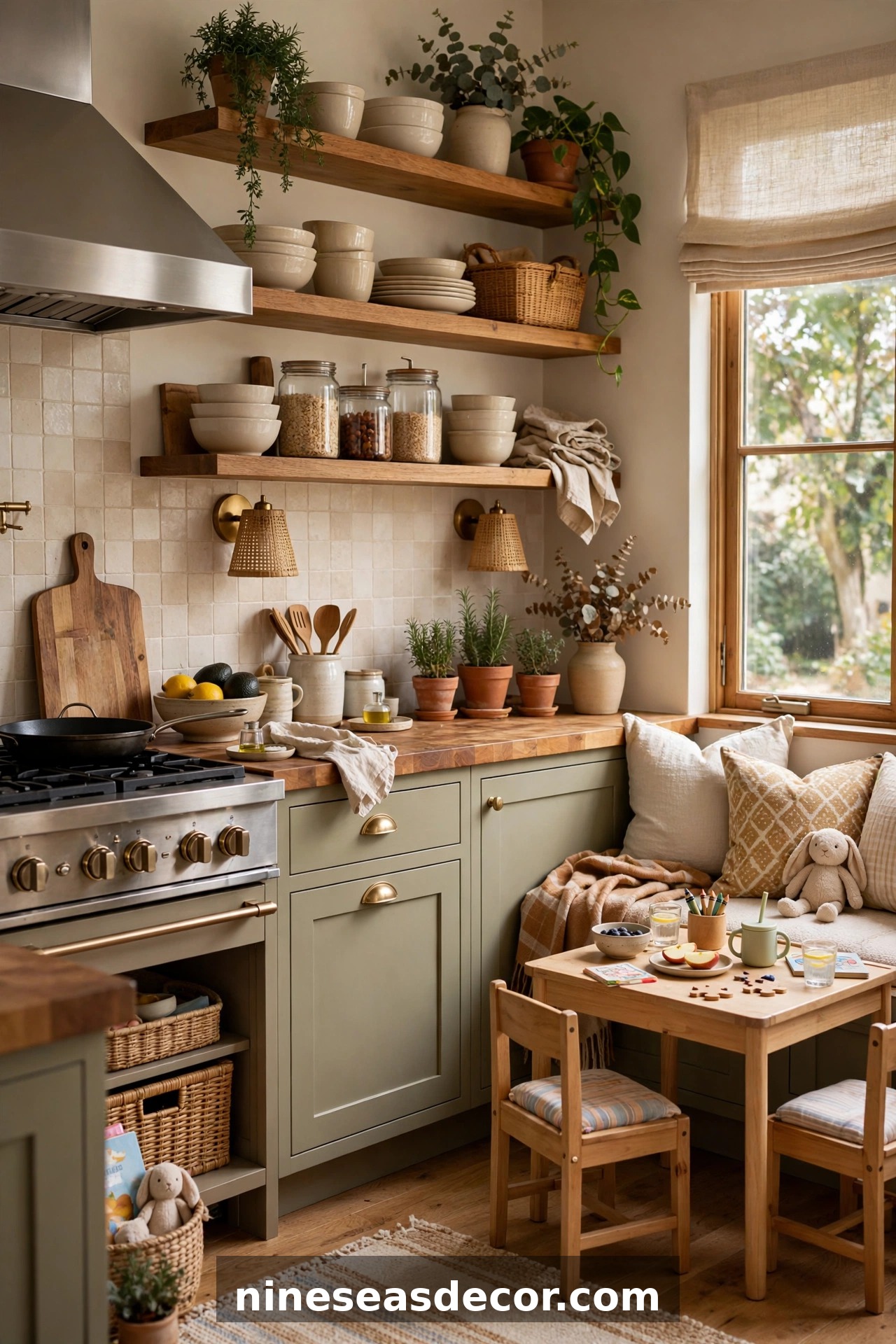
Choosing a countertop is not just a material decision. It is a lifestyle decision. And this is where I want you to be honest with yourself, because the kitchen of your dreams on Pinterest may not be the right kitchen for how you actually live. If you have three kids under ten, a dog, and a household where the kitchen sees heavy daily use including homework sessions, craft projects, and marathon meal prep, a high-maintenance marble countertop is going to make you miserable. On the other hand, if you are an empty nester who entertains occasionally and treats your kitchen almost as a showpiece, that same marble might be a perfect choice.
Think about these questions honestly before committing. How often do you cook? Do you tend to be careful about cleaning up spills immediately, or do things sit for a while? Do you have kids or pets who are hard on surfaces? Is the kitchen primarily a functional workspace or more of a social and aesthetic centerpiece in your home? Are you planning to sell the home in the next five years, in which case broad market appeal matters more than personal preference? A 2024 report from the National Association of Realtors (NAR) found that kitchen renovations including countertop upgrades had an average return on investment of 67-72% of project cost at the time of home sale, making them one of the stronger home improvement investments available.
BEST COUNTERTOPS FOR BUSY FAMILY KITCHENS
For high-traffic, high-demand family kitchens, the materials that consistently perform best are engineered quartz, granite, and sintered stone. Of these, I give the slight edge to engineered quartz for most families because the combination of stain resistance, durability, and zero sealing requirement makes it genuinely low-stress to own. Look specifically for quartz in a mid-tone color with some movement or pattern in it, because pure white and very light toned quartz will show every crumb, watermark, and fingerprint under certain lighting conditions. Colors like Caesarstone Turbine Grey or Cambria Brittanicca Gold offer beauty without requiring you to be obsessive about cleanliness. For countertop areas that see a lot of cutting and food prep, consider a secondary butcher block section, perhaps on a kitchen island, which adds warmth and gives you a dedicated cutting area that protects your main countertop surfaces.
BEST COUNTERTOPS FOR DESIGN-FORWARD LUXURY KITCHENS
If you are building or renovating a luxury kitchen where aesthetics and design impact are the primary drivers, the world is genuinely your oyster. Book-matched natural quartzite in dramatic varieties like Taj Mahal quartzite or Super White quartzite creates an absolutely breathtaking installation and offers significantly better durability than marble. For those who truly want marble and understand the maintenance commitment, varieties like Calacatta Borghini and Statuario Venato are among the most beautiful natural materials on earth. On the modern and architectural end of the spectrum, full-slab sintered stone in a large-format installation, particularly with a waterfall island detail, creates a sleek and sophisticated look that photographs beautifully and performs flawlessly. Pair dark sintered stone with cabinetry in Sherwin-Williams Urbane Bronze (SW 7048) for one of the most striking and contemporary kitchen color combinations available right now.
BEST COUNTERTOPS FOR BUDGET-CONSCIOUS RENOVATIONS
Budget limitations should not mean settling for a kitchen that looks tired or cheap, and in 2026 the options for beautiful countertops at accessible price points are genuinely impressive. Modern laminate countertops from brands like Wilsonart and Formica now come in extraordinarily realistic stone-look patterns that would genuinely fool most casual observers. At ($15-$25 per square foot installed), they represent remarkable value. Tile countertops have made a strong design comeback, particularly large-format subway tile and zellige-style tile in handmade looks that feel artisanal and curated. The grout lines require some attention to maintenance, but a high-quality epoxy grout minimizes this concern significantly. Finally, entry-level granite has become surprisingly affordable as supply chains have matured, and you can find installed granite in standard colors for as little as ($35-$45 per square foot) if you shop strategically and are flexible about color choices.
Working With Fabricators and Installers: How to Get the Best Results
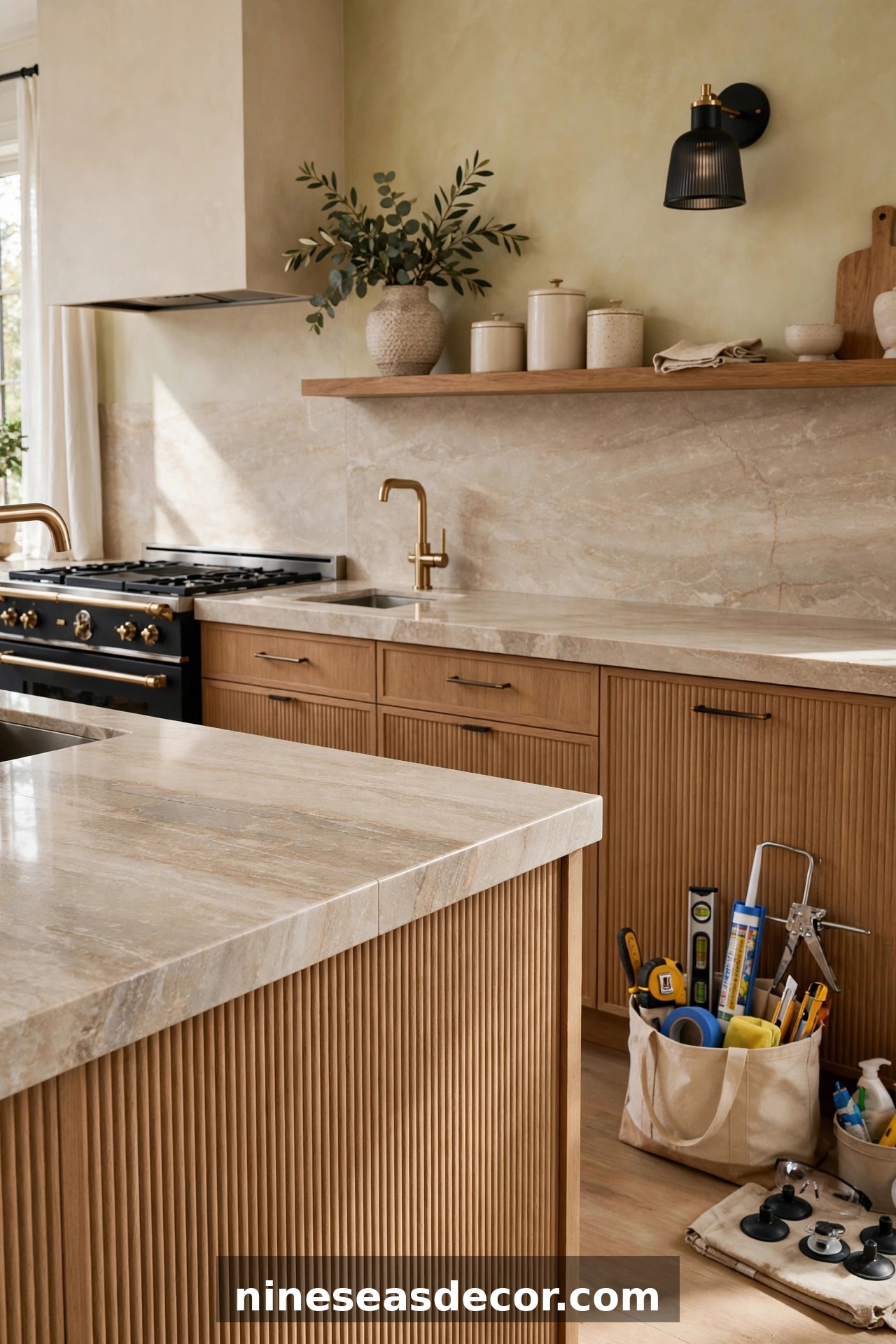
You can choose the most beautiful countertop material in the world, but if the fabrication and installation are poor, the result will disappoint you. I cannot overstate how much the skill of your fabricator matters, particularly for natural stone and sintered stone where the material is unforgiving of errors. A poorly executed seam in a granite installation, or a cooktop cutout that is not perfectly squared, will bother you every single day. So let us talk about how to choose well and what to expect from the process.
The fabrication and installation process typically takes two to four weeks from the time you finalize your slab selection to the time your new countertops are installed. The fabricator will come to your home to create a precise template of your cabinet layout, either using a physical cardboard template or, increasingly, a digital laser template system that creates a highly accurate (within 1/32 of an inch) digital map of your space. This template is then used to program CNC cutting equipment for precise fabrication. The actual installation day typically takes 4 to 8 hours for a standard kitchen, though complex projects with many pieces, difficult access, or heavy slabs can take longer.
QUESTIONS TO ASK YOUR FABRICATOR BEFORE SIGNING
Before you sign any contract with a countertop fabricator, ask these specific questions. How many years of experience do they have with your specific material? Can they provide references from recent similar jobs? How do they handle seams, and where will the seams fall in your layout? What edge profiles are included in the base price and which cost extra? What is their warranty policy on fabrication defects? Do they carry liability insurance? What is their process if a slab is damaged during installation? How long after templating will installation occur? Getting clear, confident answers to all of these questions before signing will protect you enormously. The NKBA recommends getting a minimum of three quotes from different fabricators before committing, and I strongly agree with that guidance.
UNDERSTANDING SEAMS AND WHERE THEY MATTER
Countertop seams are the joined edges where two pieces of material meet, and they are an unavoidable reality in most kitchen installations because standard stone slabs are typically (55-65 inches wide) and most kitchen countertop runs are longer than that. The skill with which seams are executed varies enormously between fabricators. A well-done seam in solid-colored quartz can be nearly invisible. A seam in heavily veined natural stone will always be visible to some degree, and the best fabricators will work with you to position seams where they are least obtrusive and to align veining across the seam as closely as possible. Never, ever agree to a seam in the middle of a cooktop cutout or sink area, as water infiltration at these points is a recipe for long-term damage. Ask to see your slab layout drawing before fabrication begins so you know exactly where every seam will fall.
Frequently Asked Questions
HOW MUCH DO KITCHEN COUNTERTOPS COST TO INSTALL IN 2026?
The cost of kitchen countertop installation in 2026 varies widely depending on material choice, kitchen size, and regional labor rates. For a typical kitchen with approximately (50 square feet) of countertop surface, you can expect to pay anywhere from ($800 to $2,500) for laminate, ($3,000 to $7,000) for engineered quartz, and ($4,000 to $12,000) for premium natural stone like marble or exotic quartzite. According to the 2024 Houzz Kitchen Trends Study, the median US homeowner spent $4,500 on countertop replacement projects. Always request fully itemized quotes that include fabrication, installation labor, edge profiles, cutouts for sinks and appliances, and tear-out of existing surfaces. Budget an additional 15-20% contingency for unexpected complications, which are common in renovation projects, particularly in older homes where cabinet leveling or structural surprises can add to the total cost.
WHAT IS THE MOST DURABLE KITCHEN

Hi, I’m Sophia Rose. I believe every home tells a story. At Nine Seas Decor, I share creative ideas, budget-friendly tips, and modern trends to help you turn your living space into a sanctuary. Let’s make your home beautiful, one corner at a time!