
living-room-color-schemes-2026
You know that feeling when you paint your living room a color you were absolutely certain about, and then the paint dries and suddenly everything looks completely wrong? Yeah, I’ve seen this mistake a thousand times. Homeowners walk into a paint store, fall in love with a chip under fluorescent lighting, bring it home, roll it onto the walls, and end up staring at a room that feels nothing like the cozy, stylish space they imagined. The color is either too dark, too cold, too overwhelming, or just plain boring. It happens more than you’d think, and it’s one of the most frustrating and expensive mistakes in home decorating.Here’s what the research actually says about color and our living spaces. According to a 2023 study published in the Journal of Environmental Psychology, color choices in residential living spaces directly influence mood, perceived room size, and even social interaction patterns among household members. Homeowners who selected colors based on lighting conditions and existing furniture reported nearly 42% higher satisfaction with their finished rooms compared to those who chose colors based on paint chips alone. That statistic should make you pause before you pick up that brush.This guide is going to walk you through everything you need to know about living room color schemes in 2026, from the hottest trending palettes to the timeless combinations that never go out of style. We’re covering neutral color schemes, bold accent walls, two-tone combinations, earthy tones, and even the science behind why certain colors make your living room feel larger or cozier. I’ll give you real paint codes, real cost estimates, and real advice based on years of writing about home decor.
I’m Sophia Rose, and I’ve spent the last decade covering interior design trends, color theory, and home renovation for NineSeasDecor.com. I’ve toured hundreds of professionally designed homes, interviewed interior designers from New York to Los Angeles, and yes, I’ve made my own color mistakes along the way. Everything in this guide comes from real experience, real research, and a genuine obsession with helping homeowners create spaces they actually love walking into every single day.
Understanding The Science Behind Living Room Color Schemes
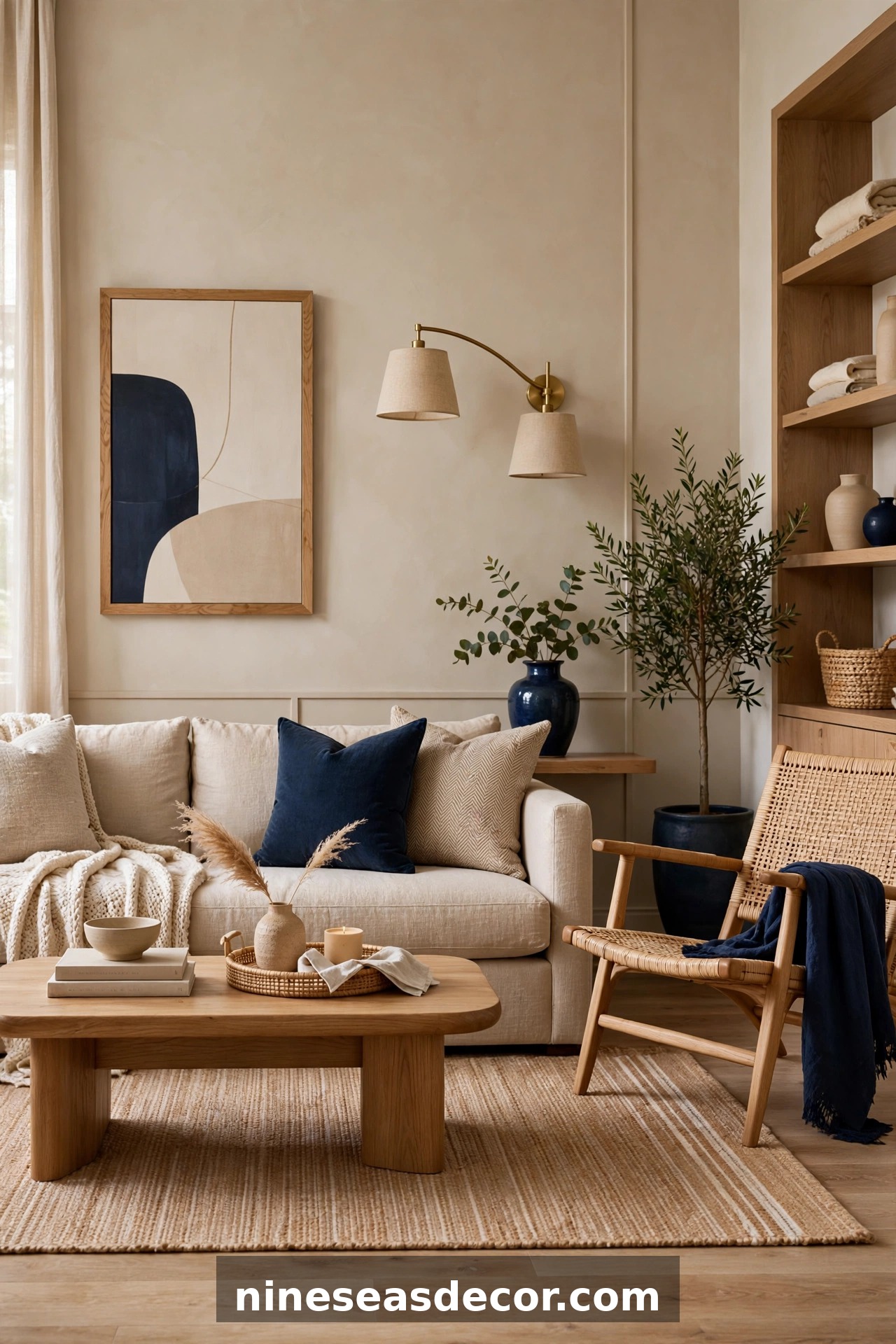
Before we dive into specific palettes and paint codes, let’s talk about why color psychology matters so much in your living room specifically. Unlike a bedroom (which is mostly used for sleeping) or a kitchen (which is task-focused), the living room is your home’s social hub. It’s where you entertain guests, unwind after work, watch movies with your family, and spend lazy Sunday mornings. The colors you choose here have to do a lot of heavy lifting emotionally and functionally.
According to research published by the American Psychological Association in 2022, warm colors like reds, oranges, and warm yellows stimulate conversation and energy, making them excellent for social spaces. Meanwhile, cool blues and greens promote calm and relaxation. Neither is inherently better, the key is understanding what you actually want your living room to feel like on a daily basis. A family with young kids who constantly entertain might make totally different choices than a single professional who wants a quiet sanctuary.
The concept of undertones is also critical and massively overlooked. Every paint color has an undertone, whether it’s pink, green, yellow, or blue, and those undertones react dramatically to your room’s specific lighting. A gray that looks sophisticated in the store might turn lavender in your north-facing living room. A beige that looks warm in afternoon sun might look sickly and yellow under your evening LED lighting. This is why I always recommend buying sample pots (which cost around $5 to $10 each) and painting large swatches, at least (12×12 inches), directly on your walls before committing to a full gallon.
THE ROLE OF NATURAL LIGHT IN COLOR SELECTION
Natural light direction is probably the single most important factor homeowners ignore when choosing living room paint colors. A south-facing living room receives warm, golden light throughout most of the day, which means cool colors like soft blues and greens will look balanced and beautiful. A north-facing room receives cooler, more indirect light, which can make already-cool colors look downright depressing. If your living room faces north, you’ll generally want to lean into warm neutral tones and creamy whites rather than stark or cool shades. Rooms measuring (15×20 feet) or larger also have more flexibility with darker shades because the square footage prevents the space from feeling closed in.
HOW ROOM SIZE AFFECTS YOUR COLOR CHOICES
The relationship between room dimensions and color is not just a designer myth. Lighter colors genuinely do make spaces feel larger, and darker colors genuinely do make spaces feel smaller and more intimate. For a small living room under (200 sq ft), sticking to a light value palette with colors in the 70 to 90 lightness range is a smart strategy. For larger living rooms over (400 sq ft), you have much more creative freedom to experiment with deep, saturated colors that create drama and visual interest. The ceiling height matters too. Rooms with ceilings under (8 feet) benefit enormously from ceiling colors that are a shade or two lighter than the walls, which visually draws the eye upward and makes the room feel taller.
UNDERSTANDING UNDERTONES AND PAINT FINISHES
Paint finish is another overlooked element of any successful living room color scheme. For most living room walls, a matte or eggshell finish is the standard recommendation because it hides imperfections and creates a soft, sophisticated look. Eggshell, which has a very slight sheen, is more durable and wipeable than flat matte, making it ideal for high-traffic living rooms with kids or pets. Expect to pay ($2.50 to $6.00 per square foot) for professional painting including labor and materials, or around ($30 to $80 per gallon) for premium paint if you’re doing it yourself. For a standard (15×18 foot) living room with (9-foot ceilings), you’ll typically need (2 to 3 gallons) for two coats of wall paint.
The Most Popular Living Room Color Schemes for 2026
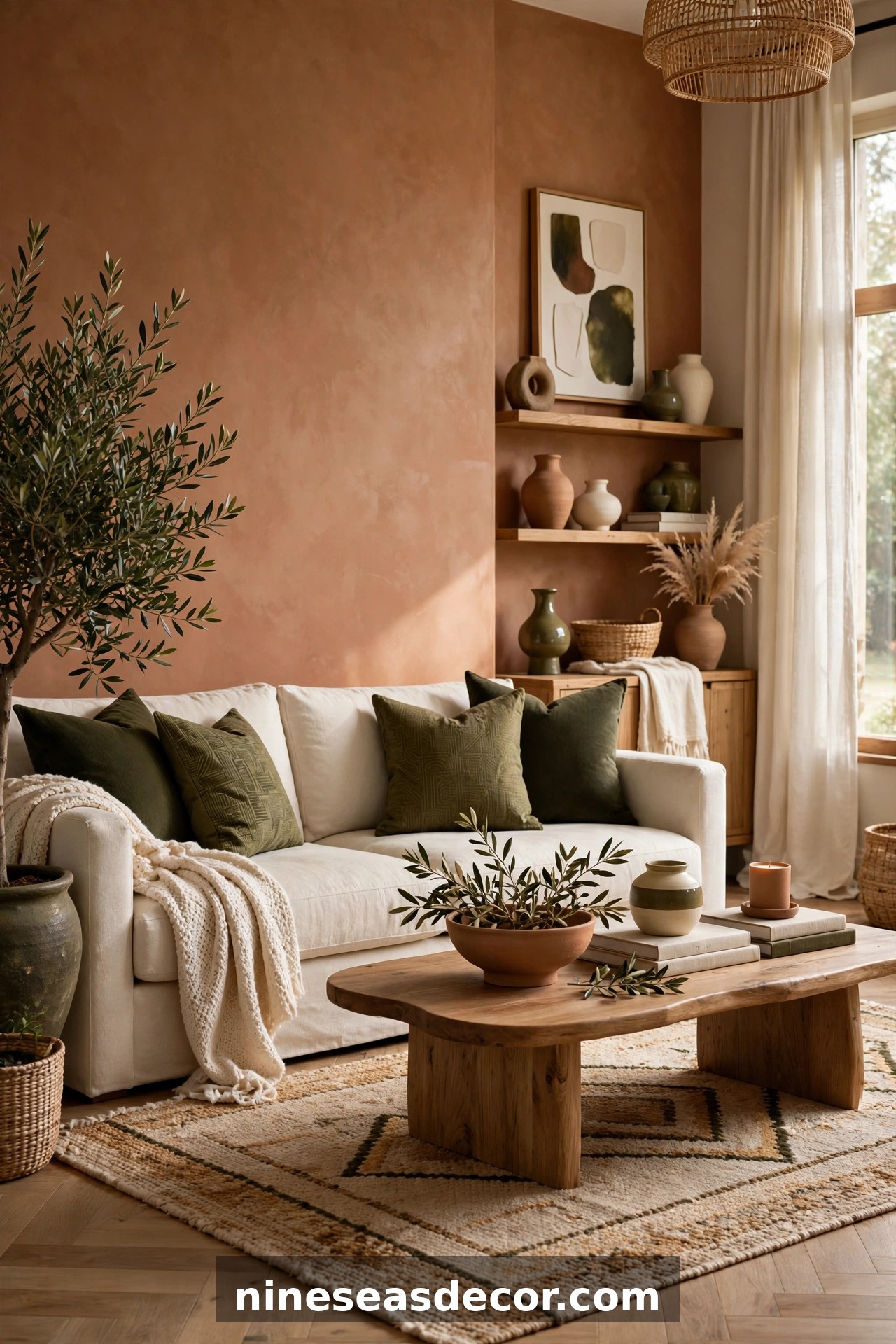
Every year brings shifts in the design conversation, and 2026 is no exception. According to the Houzz 2025 US Houzz & Home Study, homeowners are moving away from the all-white, minimalist aesthetic that dominated the 2010s and early 2020s, and moving toward warmer, more layered, and more personal color stories. The data showed that warm earth tones, terracotta palettes, and moody deep greens were among the top requested colors for living room renovations, with warm greige combinations maintaining their perennial popularity across all age groups and home styles.
The big shift in 2026 is what designers are calling quiet luxury color, a sophisticated approach that uses rich but understated tones, think deep warm whites, aged linens, dusty sages, and soft taupes, rather than loud or trendy colors. This approach photographs beautifully, ages gracefully, and works across multiple furniture styles. It’s not boring minimalism, it’s considered, intentional warmth. The best part? These palettes tend to be extremely livable and won’t look dated in three years the way some trend-driven choices inevitably do.
WARM NEUTRAL SCHEMES: THE FOREVER SAFE BET
Warm neutral color schemes remain the most consistently popular choice for American living rooms, and honestly, there’s a very good reason for that. They work with virtually any furniture style, they photograph well for real estate listings, and they create an immediate sense of calm and comfort. The gold standard of warm neutrals right now is Sherwin-Williams Accessible Beige (SW 7036), a perfect greige that reads warm without going too yellow. Pair it with trim in Sherwin-Williams Pure White (SW 7005) and you have one of the most foolproof living room combinations available. Another excellent option is Benjamin Moore Pale Oak (OC-20), which has a beautiful rosy undertone that feels incredibly sophisticated. Budget around ($200 to $600) for paint materials for a standard living room in this palette range.
MOODY DEEP GREENS: THE 2026 STATEMENT COLOR
If warm neutrals are the reliable sedan of living room colors, then deep moody greens are the sports car. And in 2026, a lot of homeowners are ready to make that trade. Colors like Sherwin-Williams Cascades (SW 6468) and Benjamin Moore Hunter Green (2041-10) are having an absolute moment right now, and for good reason. Deep greens create an incredibly cozy, enveloping atmosphere in living rooms, especially when paired with natural wood tones, warm brass hardware, and cream or ivory upholstery. These colors work best in living rooms with at least (12 feet) of ceiling height or rooms with abundant natural light through large windows. The contrast between deep green walls and bright white trim in Benjamin Moore Chantilly Lace (OC-65) is nothing short of spectacular.
TERRACOTTA AND WARM EARTH TONES
The terracotta trend that started picking up steam in 2022 and 2023 has fully matured into a sophisticated design movement rather than a passing fad. Modern terracotta in living rooms isn’t the orange-heavy Southwest aesthetic of the 1990s. It’s a refined, dusty, almost mineral-toned warmth that feels both ancient and completely contemporary. Sherwin-Williams Cavern Clay (SW 7701) is the poster child of this movement, and it pairs beautifully with warm whites, natural linen textures, and dark wood furniture. For a softer take on the warm earth palette, try Benjamin Moore Moroccan Spice (2171-20) or Sherwin-Williams Burnished Brandy (SW 7526). These colors feel especially alive in living rooms that receive warm afternoon light through west-facing windows.
Timeless Two-Tone and Complementary Color Schemes
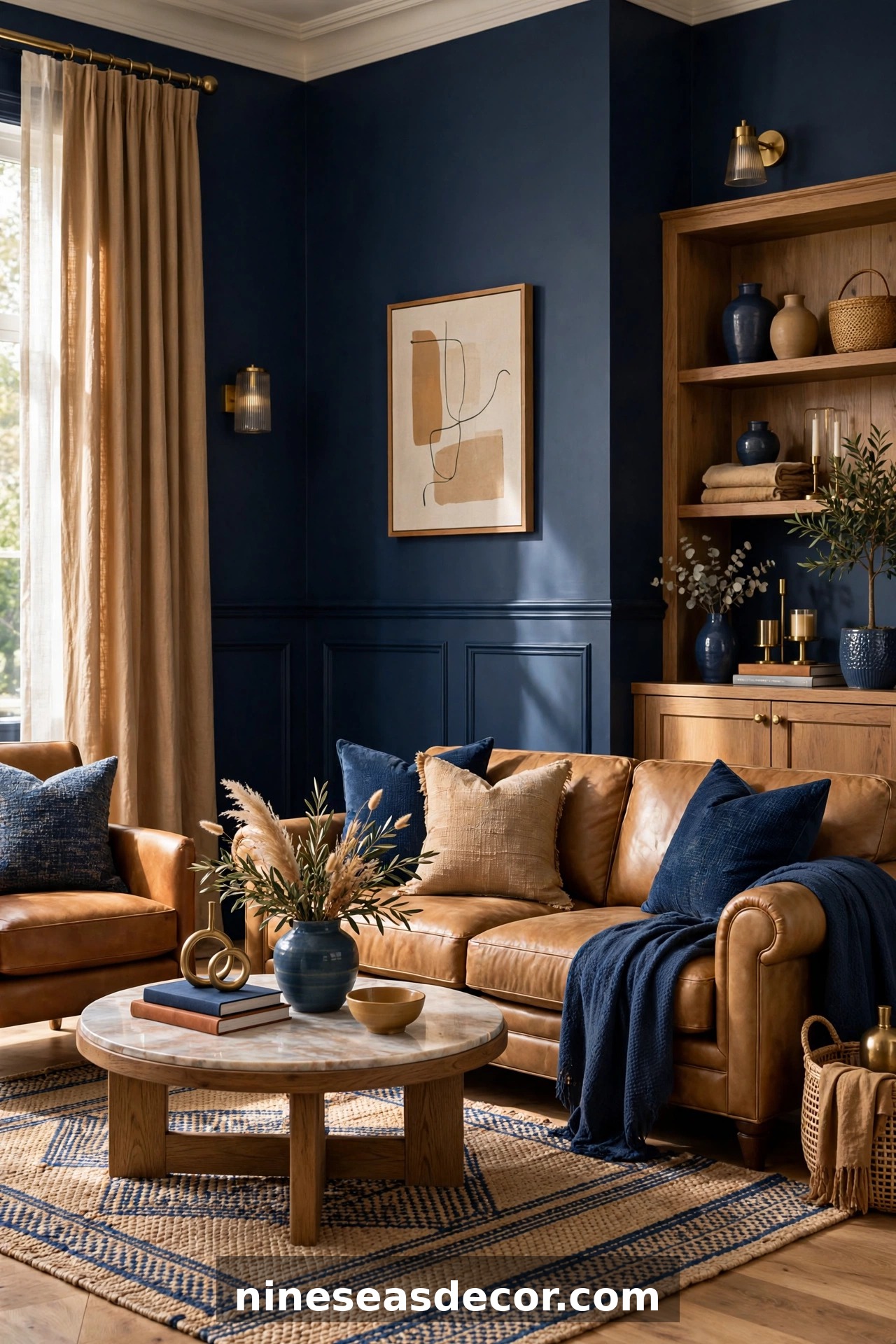
One of the most powerful and underused strategies in living room design is the two-tone color scheme. This approach involves using two distinct but harmonious colors in the same space, typically one on the walls and one as an accent through furniture, rugs, or a single feature wall. When done well, a two-tone scheme creates visual depth and sophistication that a single-color room simply can’t achieve. When done poorly, it looks chaotic and unintentional. The difference is almost always in understanding color relationships on the color wheel.
The classic approach to a complementary color scheme uses colors that sit directly opposite each other on the color wheel. Navy blue and warm orange. Forest green and terracotta red. Deep plum and golden yellow. These combinations create high visual energy and drama, which is exciting in a living room context when handled with restraint. The key word there is restraint. You don’t want equal amounts of both complementary colors fighting for attention. Instead, use roughly an 80/20 split where one color dominates the walls and larger furniture pieces, and the complementary color appears in accents, throw pillows, artwork, and smaller decorative objects.
NAVY AND WARM WHITE: THE CLASSIC COMBINATION
The combination of navy blue and warm white is one of those eternally elegant pairings that transcends trends completely. For the walls, consider Benjamin Moore Hale Navy (HC-154), which is a sophisticated, slightly warm navy that avoids looking cold or corporate. Pair it with trim in Benjamin Moore White Dove (OC-17) for a combination that feels both classic and completely fresh. In a living room with standard (8-foot ceilings), navy works best as an accent wall behind the main sofa rather than on all four walls, which can feel overpowering in smaller spaces under (250 sq ft). Larger rooms measuring (350 sq ft) or more can absolutely handle navy on all four walls, especially when balanced with light-colored furniture, natural wood floors, and plenty of warm artificial lighting. Budget around ($800 to $2,500) to have this color scheme professionally executed including paint and labor.
SAGE GREEN AND WARM CREAM: THE SOPHISTICATED SOFT PALETTE
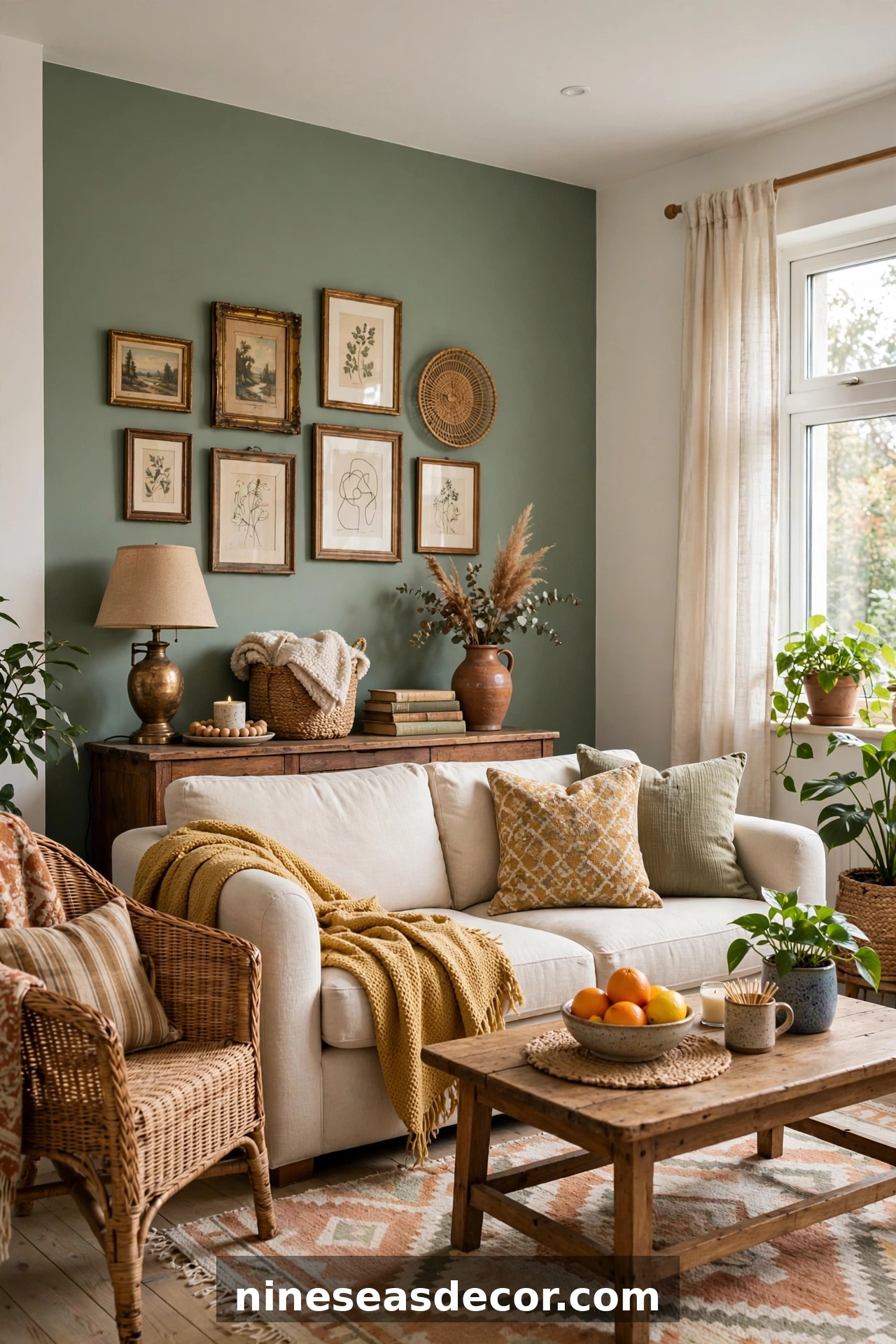
Sage green paired with warm cream is the ultimate sophisticated soft palette for 2026, and I genuinely can’t say enough good things about this combination. Sherwin-Williams Privilege Green (SW 6193) is a muted, dusty sage that reads as both green and gray depending on the light, giving it remarkable versatility. Pair it with walls in the warm cream of Sherwin-Williams Antique White (SW 6119) or use sage on all four walls with cream furniture and natural fiber rugs. This combination feels simultaneously earthy and refined, casual and elegant. It works in farmhouse-style homes, mid-century modern spaces, traditional interiors, and even contemporary lofts. The natural texture elements like linen upholstery, jute rugs, and raw wood that pair with this scheme add depth and tactile interest without adding visual noise.
WARM GRAY AND BLUSH: THE REFINED MODERN PALETTE
For homeowners who want something softer and more feminine without going full pink, the combination of warm gray and blush accents delivers extraordinary sophistication. Start with Sherwin-Williams Agreeable Gray (SW 7029) on the walls, which is consistently one of the best-selling paint colors in America for good reason. It’s a perfect warm gray that avoids the cool, clinical feeling of pure gray while still reading as neutral. Introduce blush through larger furniture pieces like a velvet sofa in a dusty rose tone, accent pillows, and artwork featuring warm pink tones. The result is a living room that feels luxurious, current, and welcoming without being overtly trendy. Add in brushed gold hardware and warm walnut wood tones for a complete look that photographs beautifully.
Bold and Dramatic Living Room Color Schemes
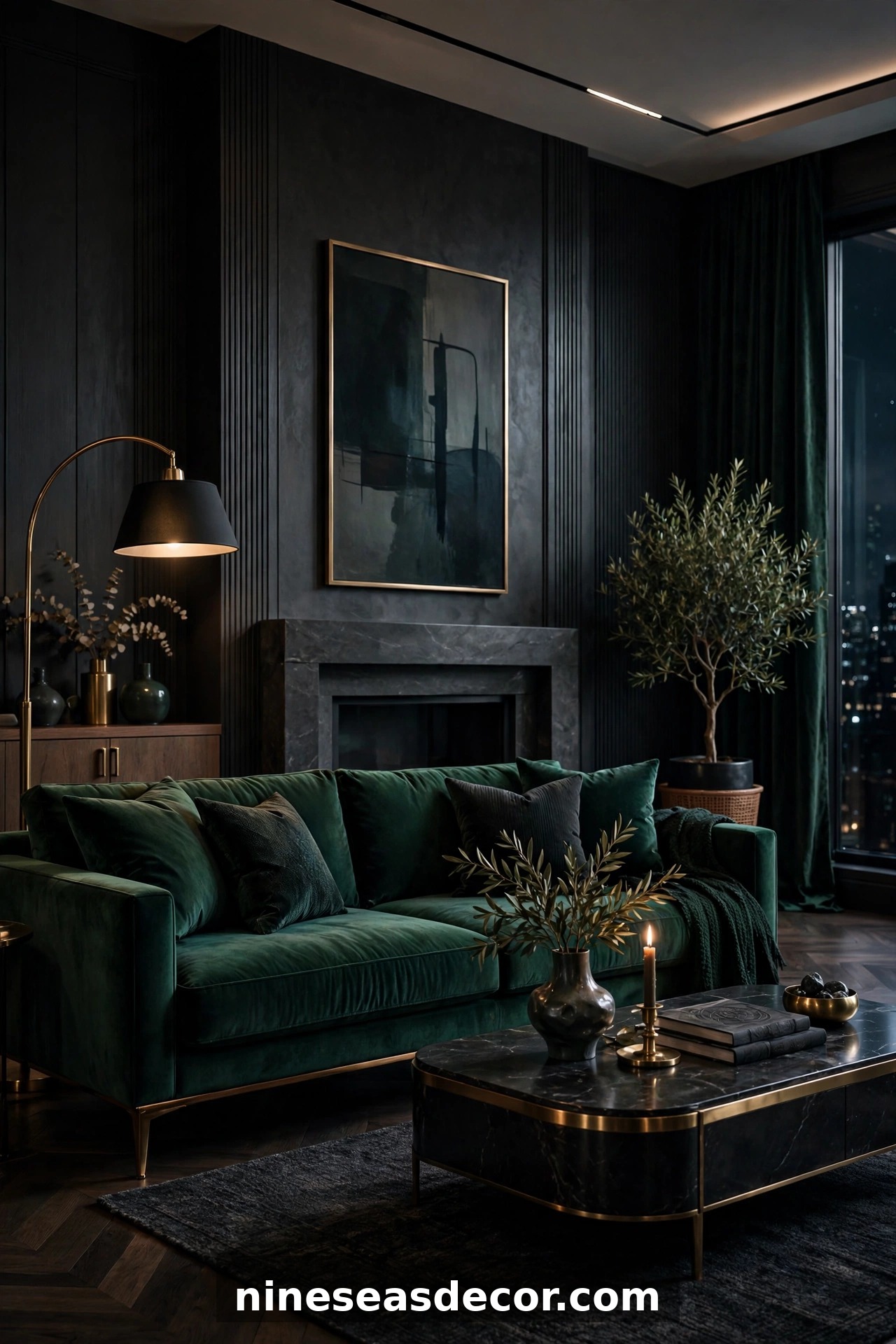
Let’s talk about the homeowners who are done playing it safe. Maybe you’ve lived with beige walls for a decade and you’re ready to make a statement. Maybe you’ve seen enough Instagram feeds full of the same agreeable grays and you want something that actually reflects your personality. Bold, dramatic living room color schemes are not for the faint of heart, but when executed with intention and knowledge, they create some of the most memorable and genuinely stunning living rooms I’ve ever seen.
The key distinction between bold and chaotic is intentionality. Every bold color choice needs to be anchored by something, whether that’s the architecture of the room, the style of the furniture, or a clear color story that connects all the elements. A deep burgundy living room needs the right lighting, the right flooring, and the right furniture to look like a sophisticated wine bar rather than a cave. A rich cobalt blue room needs crisp white accents and natural materials to prevent it from feeling overwhelming. These choices require more planning but pay off enormously when done right.
DEEP BURGUNDY AND RICH JEWEL TONES
Deep burgundy and jewel tone schemes are making a serious comeback in 2026 after years of being dismissed as too traditional or too heavy. Modern interpretations of this palette are anything but stuffy. Think Sherwin-Williams Merlot (SW 6333) on three walls with the fourth wall in a deep forest green like Sherwin-Williams Rookwood Sash Green (SW 2809), tied together with warm brass light fixtures, cream upholstered furniture, and a vintage-style Persian rug. This kind of jewel-toned maximalism feels rich and layered in a way that minimalist schemes simply cannot replicate. For homeowners considering this direction, I recommend starting with a (10×12 foot) room or smaller first, like a formal sitting room or study, before committing to a full-size main living room transformation.
ALL-BLACK AND DARK DRAMATIC SCHEMES
Painting your living room black sounds terrifying to most homeowners, and I get it. But hear me out, because a well-executed dark living room scheme is one of the most dramatic and sophisticated things you can do with your walls. Benjamin Moore Onyx (2133-10) and Sherwin-Williams Tricorn Black (SW 6258) are both beautiful options that look rich and deep rather than flat and harsh. The secret to making dark walls work in a living room is contrast and lighting. You need warm light sources at multiple levels, including floor lamps, table lamps, and ideally some form of uplighting, paired with furniture and textiles in creamy whites, warm caramels, and natural wood tones. Large mirrors measuring at least (24×36 inches) or larger are also essential for bouncing light around the space. This is definitely an investment approach, expect to spend ($3,000 to $8,000) on the full transformation including paint, lighting upgrades, and new accessories.
COBALT BLUE AND CRISP WHITE: THE HIGH-CONTRAST STATEMENT
The cobalt blue and white combination is a high-contrast, high-impact living room scheme that works especially well in homes with Mediterranean, coastal, or eclectic design styles. Benjamin Moore Cobalt Blue (2067-10) is an intensely saturated, rich blue that makes an absolutely unforgettable statement on a feature wall or in a smaller living room with great natural light. Pair it with crisp white trim in Benjamin Moore Chantilly Lace (OC-65), white or cream upholstered furniture, and natural wood accents to prevent the scheme from feeling like a corporate lobby. For best results in a standard (12×15 foot) living room, use cobalt on a single accent wall behind the primary seating area, and keep the remaining three walls in a soft warm white. The visual impact is substantial without being overwhelming.
Living Room Color Schemes for Specific Room Challenges
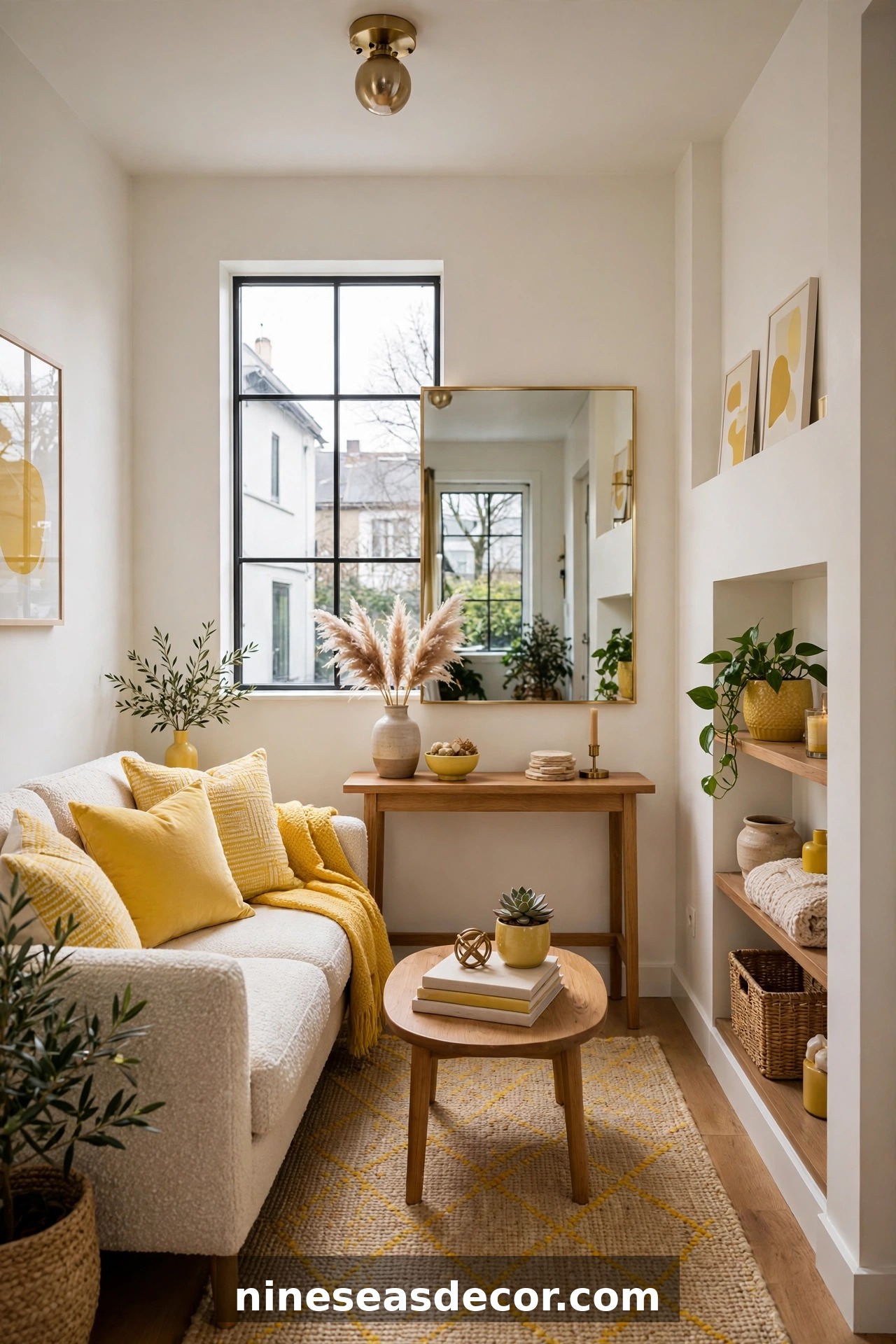
Real life isn’t perfectly designed. Most of us are working with living rooms that have awkward proportions, low ceilings, limited natural light, or architectural quirks that make standard color advice less than helpful. According to the National Kitchen and Bath Association (NKBA) 2024 Design Trends Report, over 60% of homeowners report that their living rooms have at least one significant architectural challenge that affects their decorating decisions, whether it’s low ceilings, small square footage, or an awkward open-plan layout that connects to other rooms.
Understanding how to use color strategically to address these challenges is genuinely one of the most practical skills you can develop as a homeowner and decorator. Color can’t change your floor plan, but it absolutely can change how you perceive your floor plan, and that perception shift can be the difference between a room that feels cramped and frustrating and one that feels cozy and intentional.
COLOR SCHEMES FOR SMALL LIVING ROOMS UNDER 200 SQ FT
For small living rooms measuring (200 sq ft) or less, the conventional wisdom says to go light and bright, and that wisdom is largely correct. The best strategy for small spaces is a monochromatic light scheme where walls, ceiling, and trim are all in very similar light tones, creating a seamless envelope that eliminates visual interruptions and makes the room feel expansive. Try Sherwin-Williams Alabaster (SW 7008) on the walls with Benjamin Moore White Dove (OC-17) on the trim for a warm, layered white look that doesn’t feel sterile. The (36-inch minimum) of clearance around major furniture pieces becomes especially critical in small living rooms, so keeping the color palette open and airy helps compensate visually for tight traffic patterns. Avoid dark accent walls in rooms under (200 sq ft) as they tend to make the space feel even more compressed.
COLOR SOLUTIONS FOR LOW-CEILING LIVING ROOMS
Low ceiling living rooms with heights of (7 to 8 feet) present a specific challenge that color can help address significantly. The primary strategy is using vertical visual tricks through color contrast. Paint the ceiling a noticeably lighter color than the walls, ideally two to three shades lighter, to create the illusion of height. If your walls are in Sherwin-Williams Agreeable Gray (SW 7029), consider painting the ceiling in Sherwin-Williams Ceiling Bright White (SW 7007) to maximize the perceived height. Another powerful strategy is using vertical stripe wallpaper or painting vertical color blocks on one wall to draw the eye upward. Avoid horizontal color banding at chair rail height in low-ceiling rooms, as it visually cuts the wall in half and makes ceilings feel even lower. For a full ceiling and wall treatment in this approach, budget around ($500 to $1,500) for professional painting.
OPEN-PLAN LIVING ROOM COLOR FLOW STRATEGIES
Open plan living spaces that connect the living room to a dining room or kitchen present one of the most common color challenges I encounter. The question is always: do you use one consistent color throughout, or do you use different colors for each zone? The answer depends on your specific layout, but the general rule is that open plan spaces under (600 sq ft) combined benefit from a single unified palette, while larger open plans can support color zoning where subtly different tones define different functional areas. The key to successful color zoning in open plans is using colors that share the same undertone family so they feel connected even while reading as distinct. For example, a warm sage in the living area flowing into a warm cream in the dining area, both with yellow-green undertones, will feel harmonious even though they’re clearly different colors.
Practical Tips for Executing Your Living Room Color Scheme
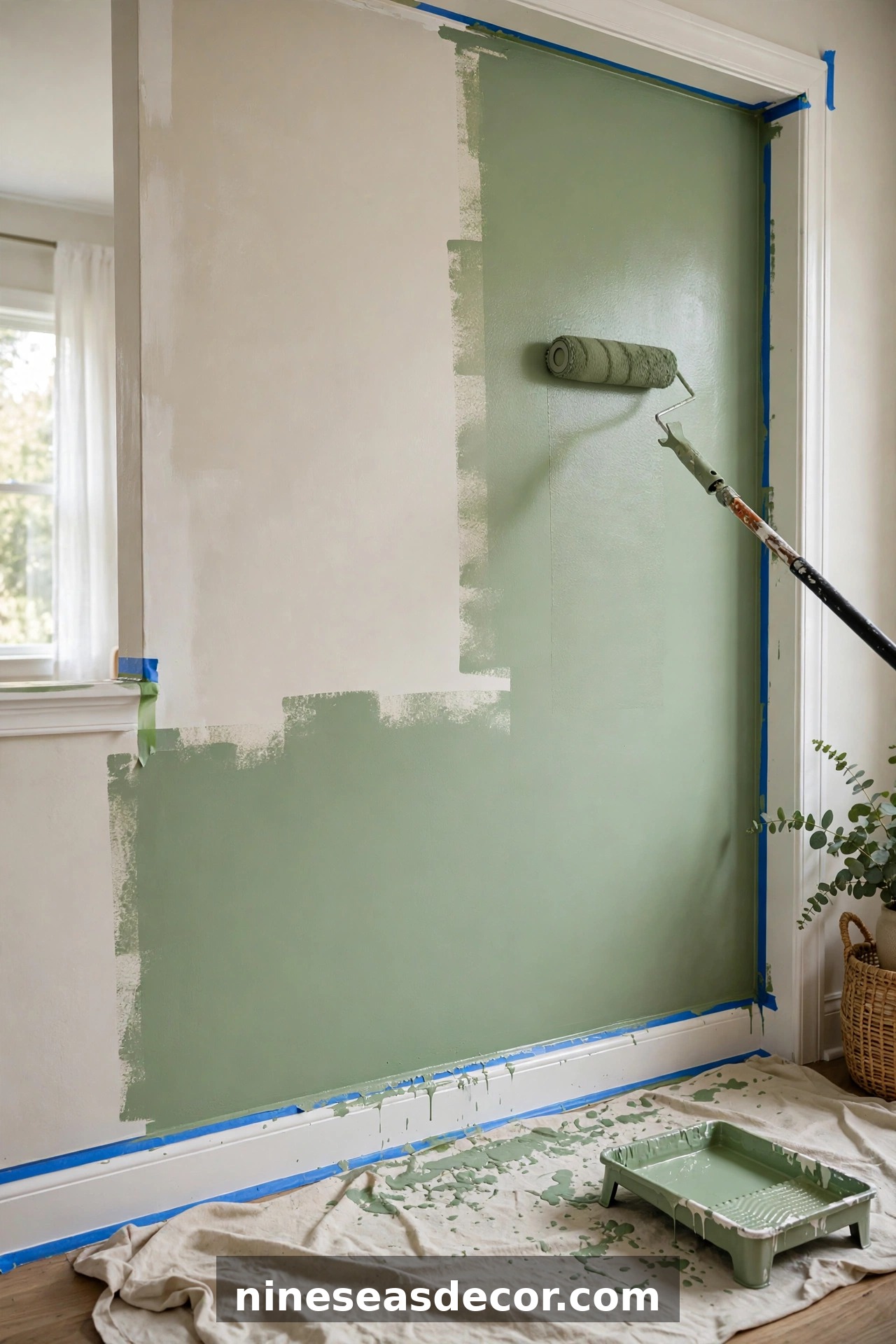
Choosing the right colors is only half the battle. Execution makes an enormous difference between a professional-looking result and a DIY project that’s just a little bit off. I’ve been in gorgeous rooms with perfect color choices that looked mediocre because of poor preparation, wrong sheen choices, or inadequate primer. And I’ve been in rooms where the colors weren’t particularly special but the execution was so flawless that the whole space felt polished and deliberate. Execution is everything.
The practical side of implementing a living room color scheme involves understanding the full scope of what “color” actually means in a room. It’s not just the wall paint. It’s the flooring tone, the furniture upholstery, the rug, the window treatments, the artwork, the decorative objects, and even the plants. A holistic approach to color considers all of these elements as parts of a single conversation rather than separate decisions made in isolation.
TESTING COLORS BEFORE COMMITTING
The single most important practical tip I can give you about living room color schemes is this: always test before you commit. Buy sample pots of your top two or three color choices, which typically cost ($5 to $10 each) at most paint retailers, and paint large swatches directly on your actual walls. The swatches should be at minimum (18×24 inches), bigger is even better. Leave them up for at least (48 to 72 hours) and observe them at different times of day: morning light, afternoon light, evening under your artificial lights. Take photos with your smartphone and compare. This simple ($20 to $30) testing process has saved countless homeowners from ($400 to $2,000) repainting mistakes. Never, under any circumstances, make a final color decision based solely on a paint chip held up under store lighting.
WORKING WITH EXISTING FURNITURE AND FLOORING
Here’s a reality check: most homeowners aren’t starting from scratch. You have a sofa, you have flooring, you have existing fixed elements that aren’t going anywhere, and your new color scheme has to work with all of them. The professional approach is to identify the undertones in your existing major pieces first. Look at your hardwood floors under natural light: are they orange, red, yellow, or gray in tone? Look at your sofa fabric: is it warm or cool? These fixed elements form the foundation of your color constraints, and your wall colors should complement them rather than fight them. If you have medium-toned oak floors with orange undertones, warm taupes and creams will feel harmonious, while cool grays will create an awkward clash. If you have gray-toned furniture and cool-toned flooring, leaning into a blue, green, or cool neutral palette makes much more sense.
CREATING A COMPLETE COLOR PALETTE BOARD
Before you buy a single gallon of paint, create a physical color palette board. This is something professional interior designers do on every single project, and it’s a practice that makes an enormous difference in the final result. Gather actual paint chips, fabric swatches from your furniture, flooring samples, and small pieces of any materials you’re considering. Arrange them together on a white piece of poster board and step back. Look at them together in your actual living room light. This physical representation of your intended scheme reveals clashes and harmonies that are impossible to see when evaluating elements separately. According to a 2024 study published in the Journal of Interior Design, homeowners who created full palette boards before beginning a color project reported 67% higher satisfaction with their finished rooms compared to those who made individual color decisions in isolation throughout the process.
Budget Planning for Your Living Room Color Transformation
Let’s talk money, because every color scheme decision eventually comes down to budget. The great news about refreshing your living room through color is that it’s one of the highest return on investment projects you can do in your home. The National Association of Realtors reported in their 2024 Remodeling Impact Report that interior painting projects recoup an average of 107% of their cost in perceived home value, making it one of the best investments a homeowner can make. Even if you never plan to sell, the transformation in how you feel about your space after a well-executed color refresh is extraordinary relative to the dollars spent.
DIY painting costs for a standard living room measuring (12×15 feet) with (9-foot ceilings) will typically run between ($150 to $500) depending on paint quality, number of coats, and whether you need primer. Professional painting costs for the same room will run between ($800 to $2,500) depending on your region, the complexity of the work, and surface preparation needs. Premium designer-grade paints like Farrow and Ball or Fine Paints of Europe can run ($110 to $150 per gallon) but deliver truly exceptional depth of color that is noticeable even to untrained eyes. For most homeowners, a high-quality paint line like Sherwin-Williams Emerald or Benjamin Moore Aura, both in the ($65 to $85 per gallon) range, delivers outstanding results without the premium designer price point.
BUDGETING FOR PAINT, SUPPLIES, AND LABOR
Breaking down a complete living room color project budget properly helps avoid the unpleasant surprise of running out of money halfway through. For a (15×20 foot) living room, here’s a realistic breakdown: primer ($30 to $60 for two gallons), wall paint ($130 to $250 for two gallons of quality paint at two coats), trim paint ($35 to $60 for one gallon), supplies including rollers, brushes, tape, drop cloths, and trays ($50 to $100), and professional labor if you’re not DIYing ($600 to $1,800). Total DIY cost: ($245 to $470). Total professional cost: ($845 to $2,270). Factor in an additional ($200 to $500) if significant wall repairs like patching, skim coating, or texture work are needed before painting can begin. These are real numbers from real projects, not ballpark estimates.
WHEN TO HIRE A PROFESSIONAL COLOR CONSULTANT
Sometimes the decision paralysis is real, and no amount of reading articles or looking at Pinterest boards gets you closer to a decision. That’s when a professional color consultant is worth every penny. Color consultants typically charge ($150 to $400) for a (2 to 3 hour) in-home consultation where they assess your lighting, existing furnishings, architectural features, and personal preferences to recommend a complete, cohesive color scheme. Many paint retailers like Sherwin-Williams offer free or low-cost color consultations in-store or virtually. The investment in a professional consultation almost always pays for itself by preventing costly repainting mistakes, and the confidence that comes from having an expert validate your choices before you pick up a brush is genuinely priceless.
Frequently Asked Questions
WHAT ARE THE MOST POPULAR LIVING ROOM COLOR SCHEMES FOR 2026?
The most popular living room color schemes for 2026 include warm earth tones anchored by terracotta and clay colors like Sherwin-Williams Cavern Clay (SW 7701), deep moody greens like Benjamin Moore Hunter Green (2041-10), sophisticated warm neutrals like Sherwin-Williams Agreeable Gray (SW 7029) and Benjamin Moore Pale Oak (OC-20), and the emerging quiet luxury palette of warm whites paired with dusty sage accents. According to the Houzz 2025 US Houzz and Home Study, warm earth tones and nature-inspired colors saw a (35%) increase in interest among homeowners planning living room updates in 2025 and 2026. Budget between ($150 to $500) for a DIY color refresh or ($800 to $2,500) for professional painting in a standard (12×15 foot) living room.
HOW DO I CHOOSE A LIVING ROOM COLOR SCHEME THAT WORKS WITH MY EXISTING FURNITURE?
The most effective approach to selecting a living room color scheme that works with existing furniture is to first identify the undertones of your major fixed elements. Look at your sofa, rugs, and flooring in natural daylight and determine whether they run warm (orange, yellow, red tones) or cool (blue, gray, green tones). Your wall colors should share the same undertone family to create visual harmony. For example, a warm beige sofa pairs beautifully with warm neutrals like Sherwin-Williams Accessible Beige (SW 7036), while a cool gray sectional works better with cooler tones like Sherwin-Williams Misty (SW 6232). Create a physical palette board with actual paint chips and fabric swatches before purchasing any paint, a step that costs almost nothing but can save you from a ($400 to $1,500) repainting mistake.
WHAT COLORS MAKE A SMALL LIVING ROOM LOOK BIGGER?
For small living rooms under (200 sq ft), the most effective colors for making the space feel larger are light, warm neutrals applied in a near-monochromatic scheme where walls, trim, and ceiling are all in closely related tones. Sherwin-Williams Alabaster (SW 7008), Benjamin Moore White Dove (OC-17), and Sherwin-Williams Accessible Beige (SW 7036) are all excellent choices. Using the same color family on walls and ceiling with minimal contrast eliminates visual breaks that make a room feel compartmentalized. Avoid dark accent walls in rooms under (200 sq ft) as they create a visual barrier that makes the space feel compressed. Large mirrors measuring at minimum (24×36 inches) placed strategically to reflect natural light will amplify the effect of your light color scheme significantly.
HOW MUCH DOES IT COST TO REPAINT A LIVING ROOM IN 2026?
The total cost to repaint a living room in 2026 depends on room size, paint quality, and whether you hire professionals or do it yourself. For a standard (15×18 foot) living room with (9-foot ceilings), a DIY repaint including primer, paint, and allLiving Room Design Guide 2026: Complete Layout, Decor & Style IdeasLiving Room Layout Ideas 2026: Arrange Furniture Like a Pro (Guide)Living Room Color Schemes 2026 | Transform Your Space

Hi, I’m Sophia Rose. I believe every home tells a story. At Nine Seas Decor, I share creative ideas, budget-friendly tips, and modern trends to help you turn your living space into a sanctuary. Let’s make your home beautiful, one corner at a time!