
living-room-no-overhead-light-2026
You moved into your new place, flipped the wall switch, and… nothing happened. No overhead light. No ceiling fixture. Just a blank expanse of white ceiling staring back at you while you stood there holding a lamp you hadn’t unpacked yet. Yeah, I’ve seen this mistake a thousand times, where homeowners panic the moment they realize their living room has absolutely no overhead lighting, assuming they’re stuck with a dim, depressing space forever. Let me stop you right there, because that assumption is completely wrong, and honestly, some of the most beautifully lit living rooms I’ve ever styled had zero ceiling fixtures to begin with.Here’s what most people don’t realize. The absence of a central ceiling fixture is not a design flaw. It’s actually an invitation to do something far more sophisticated. According to a 2023 study published in the Journal of Environmental Psychology, rooms lit with multiple lower light sources at varied heights create measurably higher perceived comfort and relaxation scores than rooms with a single overhead source. Participants in the study rated layered lighting environments as significantly more welcoming and emotionally restorative, which is exactly what you want your living room to feel like after a long day. So your “problem” might actually be your greatest design opportunity.
In this guide, I’m going to walk you through everything you need to know about designing a living room with no overhead light. We’ll cover layered lighting strategies, the right floor lamp placements, how to use plug-in sconces and table lamps effectively, smart lighting upgrades, paint color choices that maximize light, and real budget breakdowns so you know exactly what you’re getting into. I’ve organized this so you can jump to the section most relevant to your situation, whether you’re renting and can’t touch the walls or you own your place and want a more permanent solution.
I’ve been writing about home design for over a decade here at NineSeasDecor.com, and I’ve consulted on dozens of living room lighting projects across a range of budgets from ($200) to ($15,000) and everything in between. Everything I share here is grounded in both design research and real-world project experience. No fluff, no vague advice, just practical guidance you can actually use this weekend if you want to.
Why Living Rooms Often Lack Overhead Lighting (And Why It’s Not Your Fault)
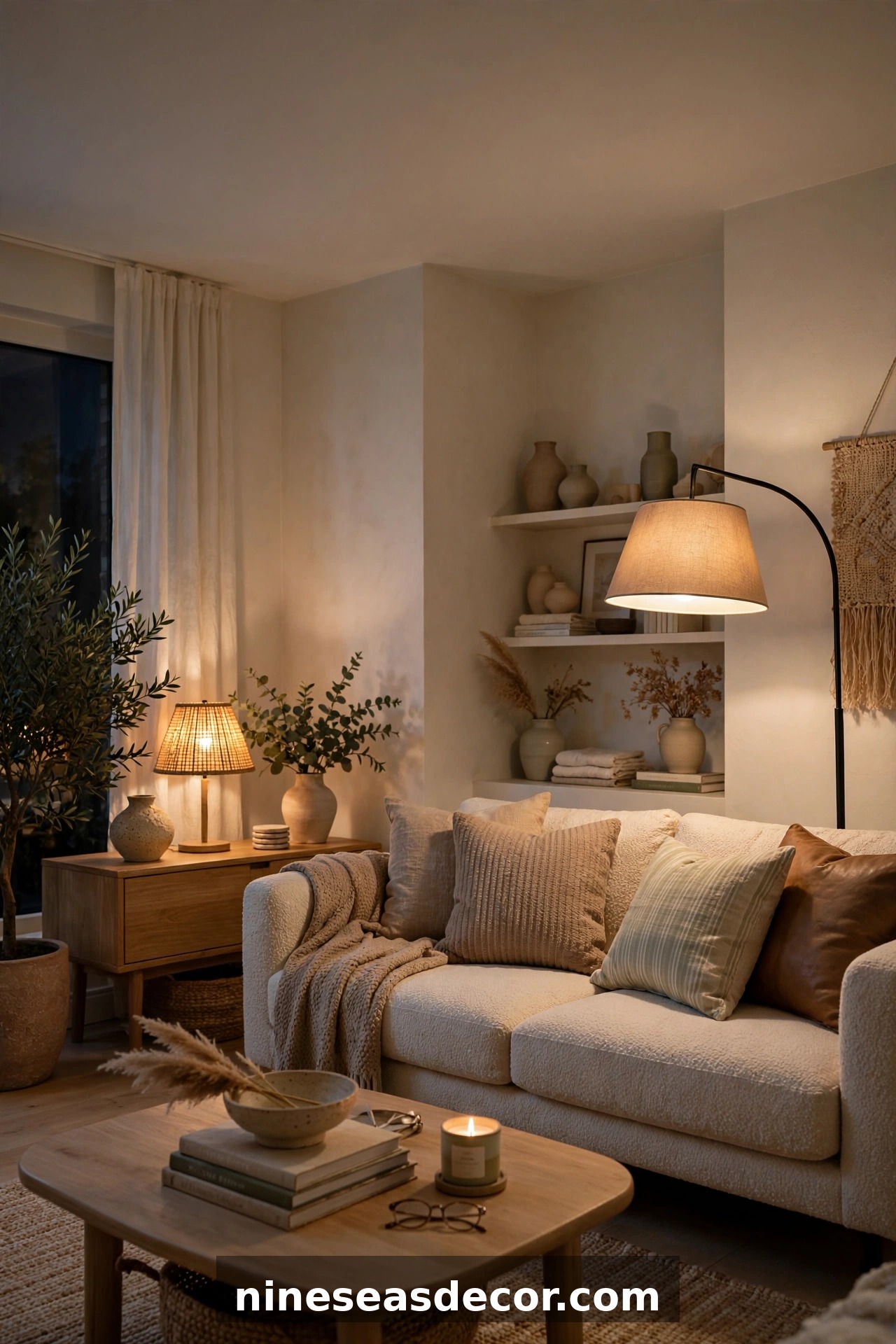
Before we dive into solutions, let’s talk about why so many living rooms across the United States have this exact situation. Understanding the “why” helps you make smarter decisions about your fix. A huge number of American homes built before the 1970s were constructed during an era when wall outlets were the expected source for living room lighting, not ceiling fixtures. Builders assumed homeowners would use floor lamps and table lamps, so they installed switched outlets, those are the outlets controlled by a wall switch, instead of ceiling boxes. This was actually standard practice for decades and remains extremely common in apartments, condos, and older single-family homes across the Northeast and Midwest especially.
According to the National Kitchen and Bath Association (NKBA) 2024 design trends report, approximately 41% of US living rooms in homes built before 1980 rely entirely on portable lighting rather than hardwired ceiling fixtures. That’s an enormous number of homeowners navigating this exact challenge. The good news is that the design industry has responded with a stunning array of solutions that, frankly, look better than a basic ceiling fixture anyway.
If you’re a renter, you’re also likely dealing with lease restrictions that prohibit installing new hardwired fixtures without landlord approval. And even if you own your home, running new electrical wiring through finished ceilings is a project that costs ($800 to $3,500) depending on your home’s construction and local labor rates. That’s a significant spend before you’ve even bought a single light fixture. So whether you’re renting or owning, whether you’re working with a tight budget or have room to invest, layered portable lighting is almost always the smarter, more design-forward approach.
THE SWITCHED OUTLET SITUATION
Here’s one of the most underused features in a living room no overhead light scenario: the switched wall outlet. If you flip your wall switch and one of your outlets turns on and off with it, congratulations, you have a switched outlet. This is your best friend. Plug a floor lamp or a table lamp into that outlet, and suddenly your wall switch controls your room lighting just like an overhead fixture would. According to the Electrical Safety Foundation International, switched outlets were installed in approximately 60% of living rooms built between 1940 and 1975. If you haven’t identified yours yet, plug a lamp into each outlet and flip your switch. You’ll find it fast.
WHY THIS IS ACTUALLY A DESIGN ADVANTAGE
Overhead lighting, particularly a single centered ceiling fixture, creates flat, harsh illumination that designers actually try to avoid. It throws unflattering downward shadows, creates a “interrogation room” effect, and does nothing to highlight your furniture, art, or architectural details. Layered lighting, which combines ambient, task, and accent sources at multiple heights, is what professional designers specify in virtually every high-end project. When you don’t have an overhead fixture to rely on, you’re forced to layer correctly from the start. That’s a genuinely better outcome for your space, and you’ll thank yourself later.
The Three-Layer Lighting Framework for Rooms Without Ceiling Fixtures
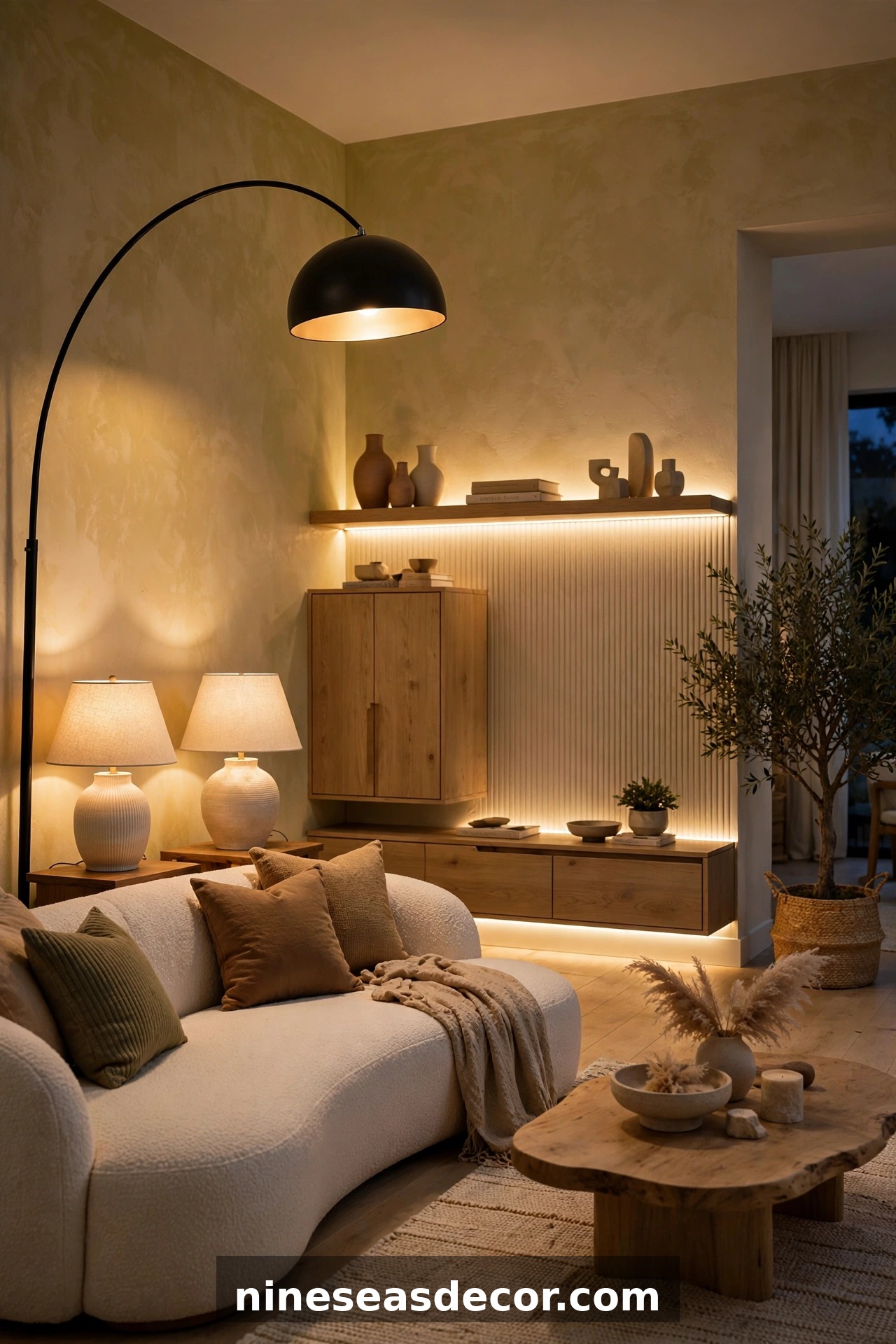
Every well-lit living room, overhead fixture or not, relies on what lighting designers call the three-layer lighting framework. This is the foundational concept you need to understand before you buy a single bulb. Miss one of these layers and your room will feel “off” in a way you might not be able to put your finger on. Nail all three and your space will look like it was designed by a professional, because it essentially was.
The three layers are ambient lighting (the overall fill light for the room), task lighting (focused light for reading, working, or activities), and accent lighting (decorative and directional light that highlights features). In a room with overhead lighting, the ceiling fixture typically handles ambient light while other sources handle task and accent. Without a ceiling fixture, you need to be more strategic and intentional about how you build ambient light from the floor and walls up.
According to a 2024 Houzz Lighting Trends Report, homeowners who implemented all three layers of lighting in their living spaces reported 73% higher satisfaction with their room’s overall atmosphere compared to those using only one or two types. That’s a staggering difference, and it costs far less than most people assume to achieve it properly.
BUILDING YOUR AMBIENT LAYER WITHOUT A CEILING FIXTURE
Your ambient layer is the base fill light that makes the room navigable and comfortable. In a living room with no overhead light, you build this layer using upward-facing floor lamps, torchiere lamps, and indirect lighting sources that bounce light off your ceiling and walls. A good torchiere floor lamp with a (300 to 400 watt equivalent LED) can throw enough diffused light upward to effectively illuminate a (15×18 foot) room. Place two of these in opposite corners of your room and you’ve created a warm, even ambient base. Budget for ($80 to $350 per lamp) for quality options that don’t look like hospital equipment.
BUILDING YOUR TASK AND ACCENT LAYERS
Your task layer handles specific functional needs: reading beside the sofa, illuminating a desk area, or lighting a dining spot in a combined living and dining room. Adjustable arc floor lamps work beautifully here, positioned to arc over a sofa or chair with the head angling down at a (45 to 60 degree) angle toward the reading surface. For accent lighting, think picture lights over artwork, LED strip lighting behind the TV console, table lamps on bookcases and sideboards, and plug-in wall sconces that add visual interest at eye level. This layer is where your personality comes through most clearly, and it’s also where you can start very affordably, with quality options beginning at ($25 to $150) per accent source.
The Best Lamp Types and Placements for a Living Room With No Overhead Light
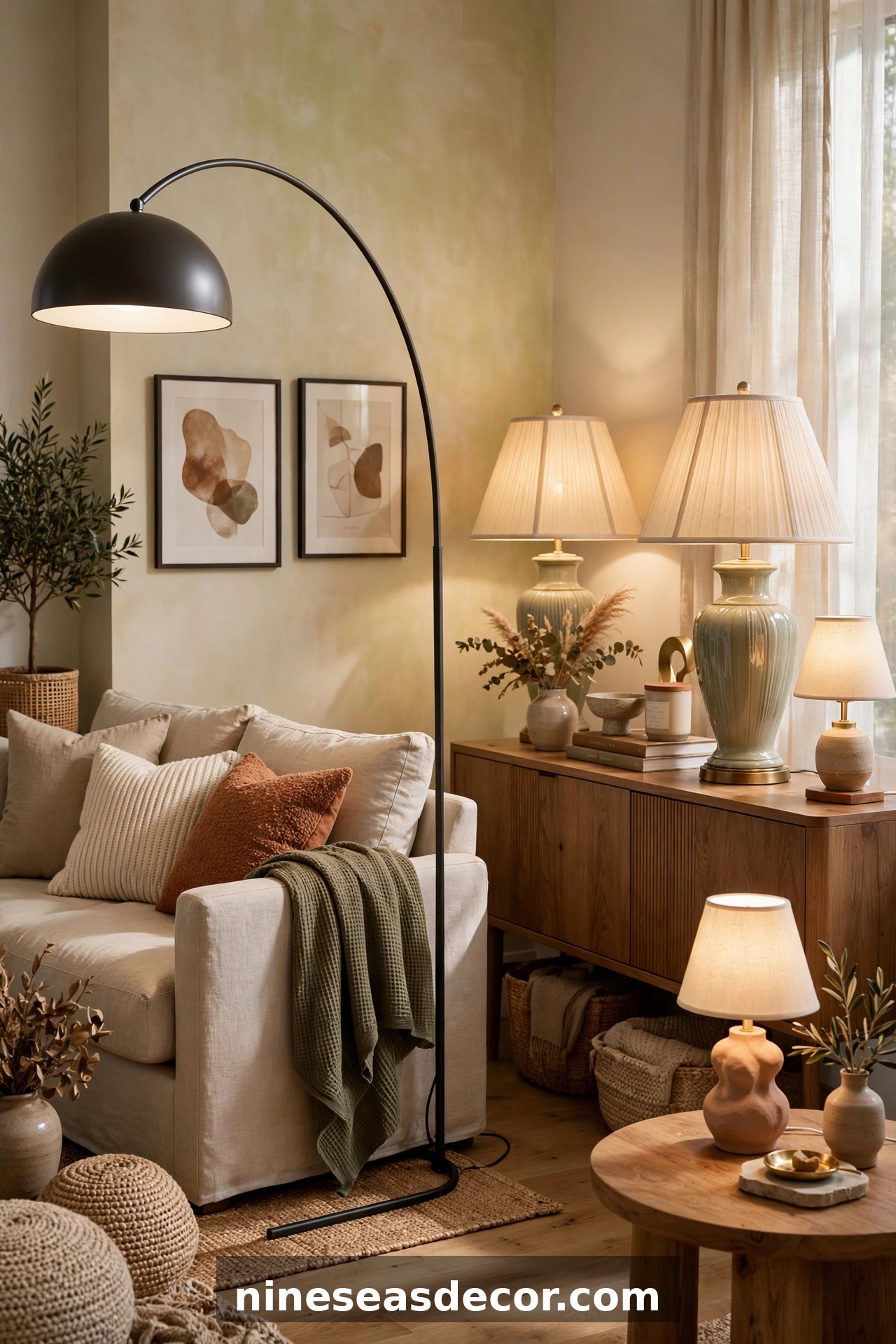
Now let’s get specific about the actual fixtures you should be considering and exactly where to put them. This is where I see the most mistakes, not in what people buy but in where they put it. Placement is everything when you’re working without overhead lighting. A great lamp in the wrong spot does almost nothing for your room. A modest lamp in exactly the right position can transform the entire space.
For a standard (12×15 foot) living room, the sweet spot is typically five to seven light sources at varying heights. I know that sounds like a lot, but most of these are small table lamps and accent sources that cost very little individually. The goal is to eliminate dark corners and create an even warmth throughout the space without any single harsh bright spot.
The National Lighting Bureau recommends that living room lighting achieve a minimum of (10 to 20 foot-candles) of general illumination for comfortable use, with (30 to 50 foot-candles) at task areas like reading chairs. This gives you a measurable target rather than guesswork.
FLOOR LAMP PLACEMENT RULES THAT ACTUALLY WORK
The most reliable placement for a primary floor lamp in a no-ceiling-fixture living room is in the back corner diagonally opposite from your main entry point into the room. This position throws light across the greatest area and eliminates the darkest corner simultaneously. Your second floor lamp should go on the opposite side of your main seating arrangement, creating a cross-lighting effect that fills in shadows. If you have an arc floor lamp for reading, it should be positioned so the arc extends over the shoulder of your primary reading position, with the lamphead roughly (5 to 6 feet) above floor level. Never put a floor lamp directly behind a sofa because the light ends up on the back of the sofa rather than in the room.
TABLE LAMP HEIGHT AND PLACEMENT SECRETS
Table lamp height is one of those things that sounds fussy but makes an enormous visual difference. The standard rule is that when you’re seated next to a table lamp, the bottom of the lampshade should be roughly at eye level, which for most people sitting on a standard (18-inch) seat height sofa works out to a total lamp-plus-table height of approximately (58 to 64 inches). If your lamp is too tall, the bulb glares directly into seated guests’ eyes. Too short and the light pools only on the table surface. For console tables and bookshelves, smaller lamps in the (18 to 24 inch) height range work well as accent sources rather than primary ambient contributors.
PLUG-IN SCONCES AS GAME CHANGERS
If I had to name the single most underused solution in the living room no overhead light category, it would be plug-in wall sconces. These beauties mount on your wall using just a few screws (landlord-friendly in most cases, just patch the holes when you leave), and a cord cover or fabric-wrapped cord runs down the wall to an outlet. They look hardwired to anyone who walks in the room. Positioned at (60 to 66 inches) from the floor, plug-in sconces add that critical mid-height lighting layer that bridges your floor lamps and table lamps. Quality options range from ($45 to $280 per sconce), and a pair flanking your sofa or console creates a symmetry that immediately makes the room look professionally designed.
Smart Lighting Upgrades That Transform No-Fixture Living Rooms
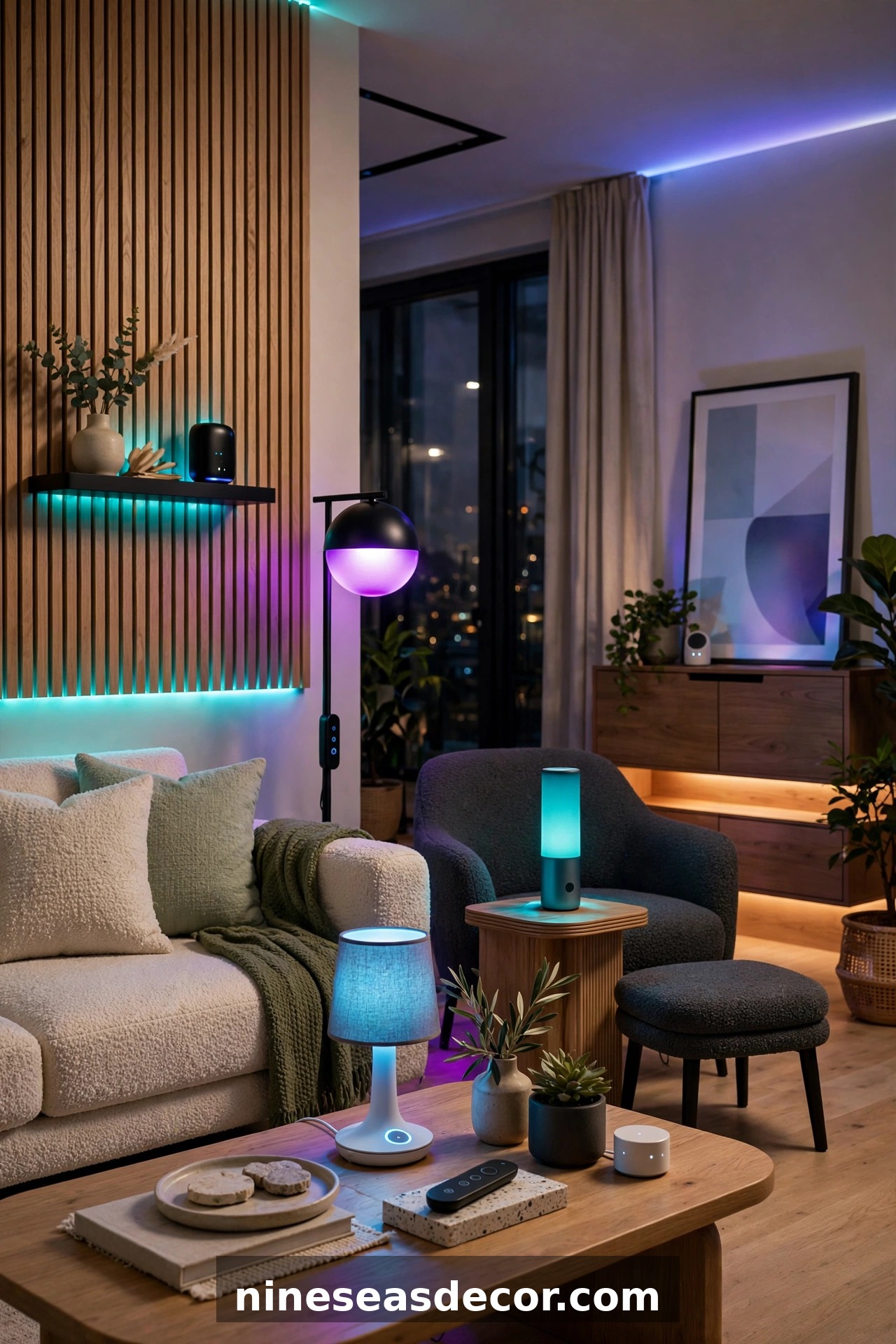
We’re living in an era where smart lighting technology has made the no-overhead-fixture situation genuinely easier to manage than ever before. If you’re frustrated by having to walk around and turn on five different lamps every time you enter the room, smart plugs and smart bulbs completely solve that problem at a fraction of the cost of rewiring your electrical system.
A smart plug costs between ($10 and $35) per outlet and allows you to control any lamp via your phone, a voice assistant, or even a battery-powered wall switch that you stick anywhere on your wall. That last option, the battery-powered smart switch, is the closest thing you’ll find to a real wall switch experience without any electrical work at all. Products like the Lutron Caséta system work with Pico remote controls that mount magnetically on any wall surface and control your smart plugs with genuine switch-like responsiveness.
CREATING LIGHTING SCENES FOR DIFFERENT MOODS
One of the best advantages of smart lighting in a no overhead light living room is the ability to create and recall lighting scenes. A “movie night” scene might turn on only your accent lamps at low brightness with a warm (2700K color temperature). A “bright day” scene brings up all your floor lamps to full intensity at a cooler (3000K). An “entertaining” scene hits a comfortable middle ground across all sources. You can switch between these scenes with a single voice command or tap, which is frankly more intuitive and atmospherically responsive than any single ceiling fixture ever could be. Google Home, Amazon Alexa, and Apple HomeKit all support multi-device scenes across different lamp brands with the right smart plugs.
LED STRIP LIGHTING AND INDIRECT GLOW TECHNIQUES
LED strip lighting has evolved dramatically in the past few years and now represents one of the most versatile tools in the no-overhead-light toolkit. Placed along the top of a bookcase or entertainment unit to throw light upward toward the ceiling, behind a TV to reduce eye strain and add ambient glow, or along the underside of a floating shelf, LED strips create indirect ambient light that can actually contribute meaningfully to your room’s overall brightness. Choose strips with a color rendering index (CRI) of 90 or above for light that makes your furnishings look their natural color. Budget between ($30 and $120) for a quality (16-foot roll) that covers most living room accent applications, and look for strips rated at (2700K to 3000K) for warm, livable light rather than the harsh blue-white options common in gaming setups.
Paint Colors and Wall Treatments That Maximize Light in Fixture-Free Rooms
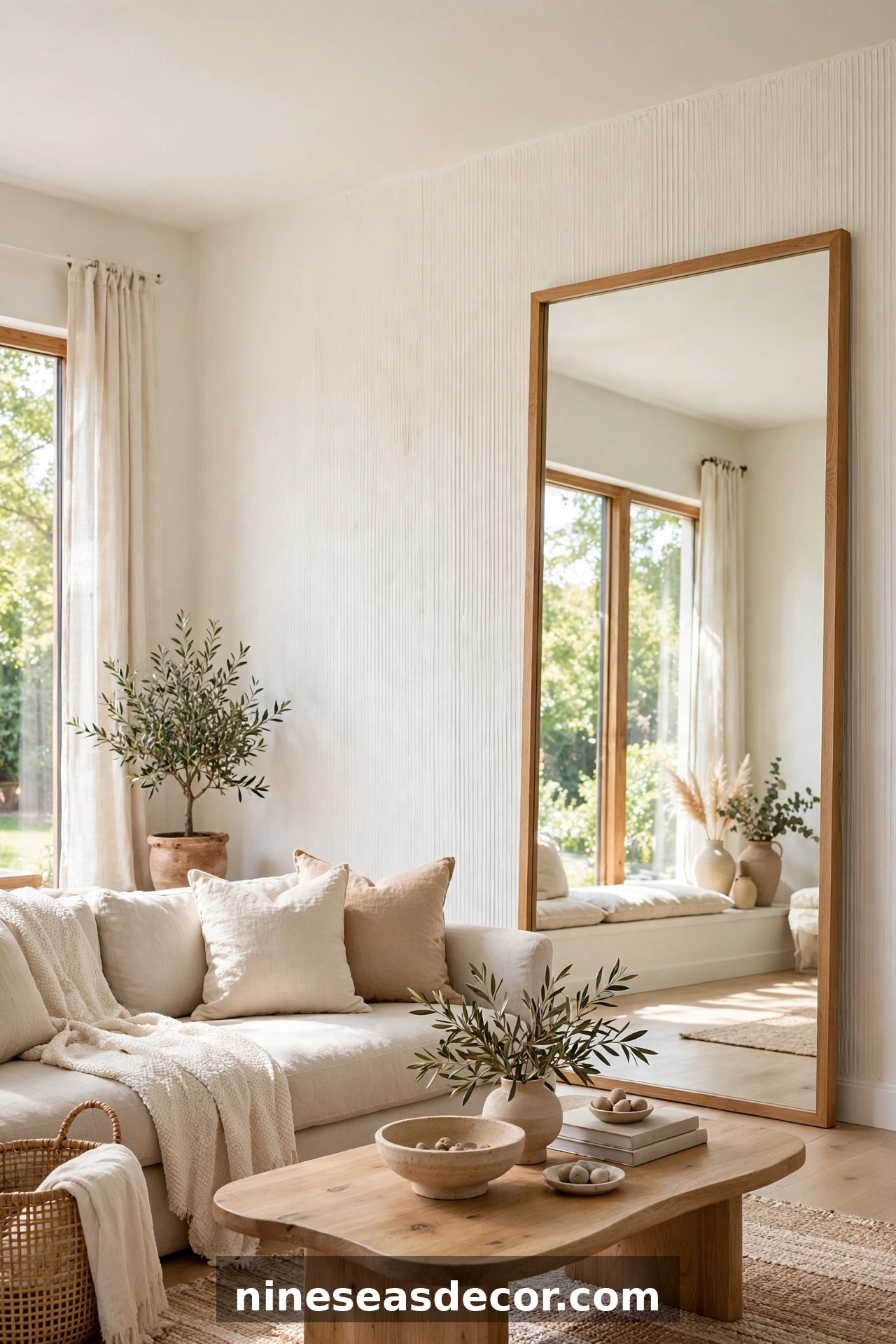
Your lighting strategy doesn’t exist in isolation. The colors and surfaces in your room dramatically affect how your portable light sources perform. A room painted in a dark, matte color absorbs a huge percentage of the light your lamps produce. A room with light reflective surfaces bounces and amplifies that same light, making the space feel significantly brighter with the exact same fixtures. This is free performance optimization for your lighting setup, and far too many people skip it.
The measurement that matters here is Light Reflectance Value (LRV), a number from 0 to 100 that tells you how much light a paint color reflects. For a living room with no overhead lighting, I recommend choosing paints with an LRV of 65 or higher for your walls and ceiling. This single decision can make your existing lamps feel like they have 30% more output, without spending a dollar on additional fixtures.
According to a 2022 study in the LEUKOS: The Journal of the Illuminating Engineering Society of North America, rooms with high-LRV paint colors required up to 35% less artificial lighting to achieve the same perceived brightness as identically lit rooms with lower-LRV colors. That’s a compelling case for choosing your paint thoughtfully before you invest heavily in additional fixtures.
TOP PAINT COLORS FOR LOW-LIGHT LIVING ROOMS
Let’s get specific about actual colors. Sherwin-Williams Accessible Beige (SW 7036) is one of my most-recommended options for living rooms without overhead lighting. It has an LRV of approximately 58, which is on the warmer end but still highly reflective, and it photographs beautifully under warm lamp light. For something crisper, Sherwin-Williams Alabaster (SW 7008) has an LRV of 82 and creates an incredibly bright, airy feeling. On the Benjamin Moore side, White Dove (OC-17) with an LRV of 83.16 and Pale Oak (HC-111) with an LRV of approximately 68 are perennial favorites for exactly this scenario. For ceilings specifically, painting in Benjamin Moore Chantilly Lace (OC-65) or a simple flat white with an LRV above 85 maximizes how much light bounces back into the room from your upward-facing lamps.
MIRRORS AND REFLECTIVE SURFACES AS LIGHTING MULTIPLIERS
A well-placed large mirror in a living room with no overhead lighting is effectively a free light source. Position a (36×48 inch or larger) mirror on the wall opposite your primary floor lamp, and you double the visual reach of that lamp’s light immediately. The mirror reflects both the lamp itself and the illuminated wall behind it, creating depth and brightness that the lamp alone cannot achieve. Metallic accent pieces, glass-fronted cabinets, glossy throw pillows, lacquered furniture surfaces, and even glass coffee tables all contribute to this light multiplication effect. Budget ($50 to $800) for a quality large mirror depending on frame style, or thrift shop one and repaint the frame for under ($30) total.
Budget Breakdowns: What It Really Costs to Light a Living Room Without Overhead Fixtures
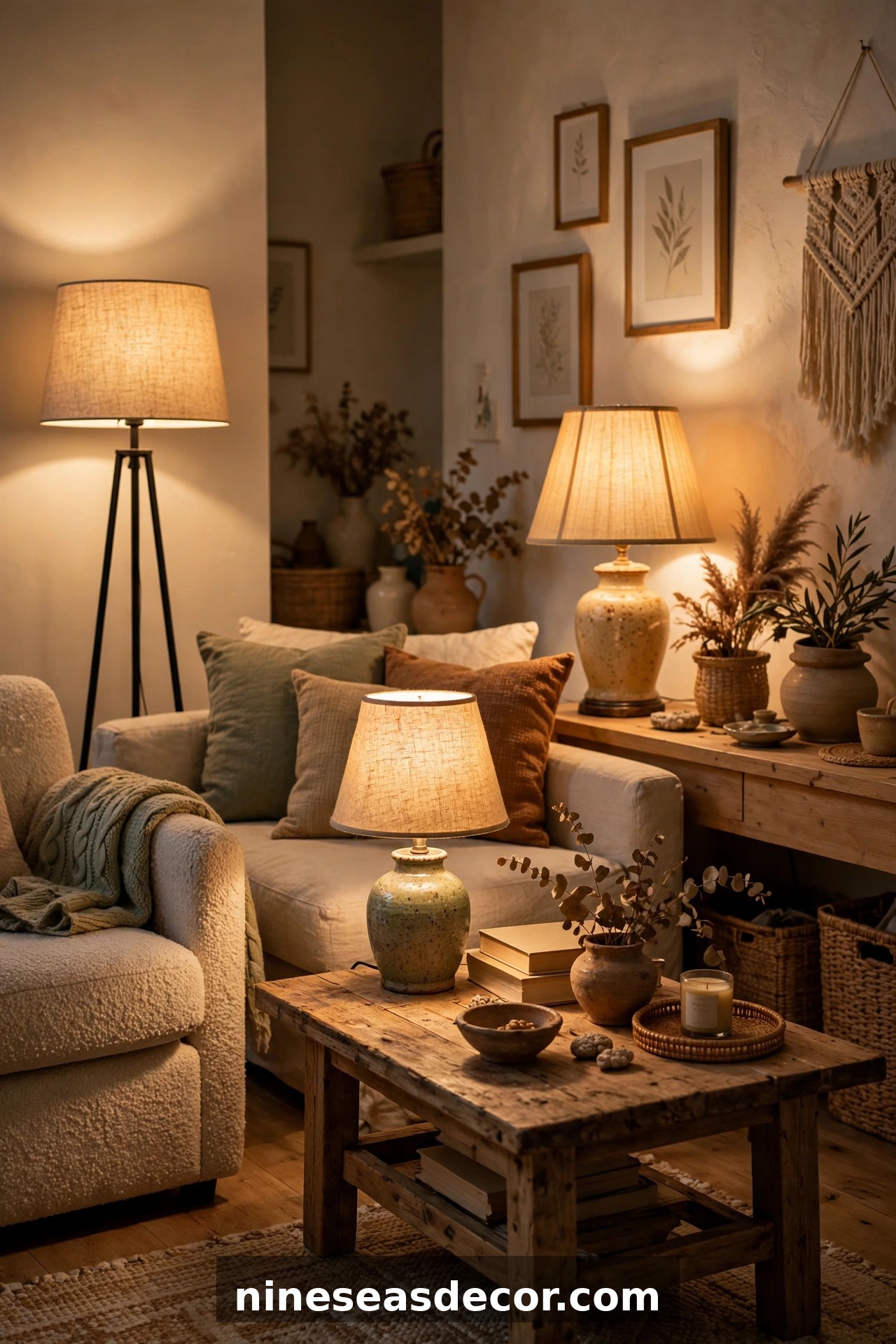
Let’s talk money. One of the most common questions I get is “how much will this actually cost?” and I love answering it because the range is genuinely wider than most people expect, in both directions. You can create a beautifully layered lit living room for as little as ($150 to $300) if you shop smart, or invest up to ($3,000 to $5,000) for truly high-end fixtures that anchor the space as design statements. Here’s how those numbers break down in real terms.
The most budget-conscious approach uses a combination of two quality torchiere floor lamps at ($60 to $120 each), one arc lamp for reading at ($80 to $200), two to four table lamps at ($25 to $75 each), and a set of smart plugs to control them all at ($40 to $80 for a four-pack). Total for a complete, layered, smart-controlled lighting setup: ($285 to $670). That’s genuinely affordable for a complete room transformation.
MID-RANGE BUDGET: THE SWEET SPOT FOR MOST HOMEOWNERS
For most homeowners, a mid-range budget of ($600 to $1,500) delivers the best combination of quality and visual impact. At this level you can afford a genuine statement arc floor lamp in solid brass or matte black at ($200 to $450), a pair of design-forward plug-in sconces at ($120 to $280 per pair), quality table lamps with designer shades at ($80 to $180 per lamp), and a full smart lighting system with scenes and scheduling at ($100 to $200). This tier also allows you to invest in high-CRI LED bulbs that make your room’s colors look vibrant and true, typically ($8 to $20 per bulb) but worth every cent. At this budget level, your lighting setup becomes a genuine design feature that visitors notice and compliment.
HIGH-END INVESTMENT LIGHTING FOR DISCERNING HOMEOWNERS
If your living room is a priority space and you want lighting that genuinely functions as decor, budgets of ($1,500 to $5,000) open up a world of options. Designer floor lamps from brands like Visual Comfort, Arteriors, or Kelly Wearstler run ($400 to $1,200 each) and are legitimately sculptural art objects. Custom lampshades with specialist hand-finishing cost ($150 to $600) but create a bespoke, collected look that separates your space entirely from anything catalog-ish. At this budget, you’d also consider a Lutron Caséta whole-room smart lighting system with physical dimmers and wireless switches at ($300 to $700) for the living room, giving you true fine-grain control over every source in the space. The investment is real but so is the result.
Rental-Friendly Strategies: Lighting a Living Room Without Overhead Fixtures When You Can’t Make Permanent Changes
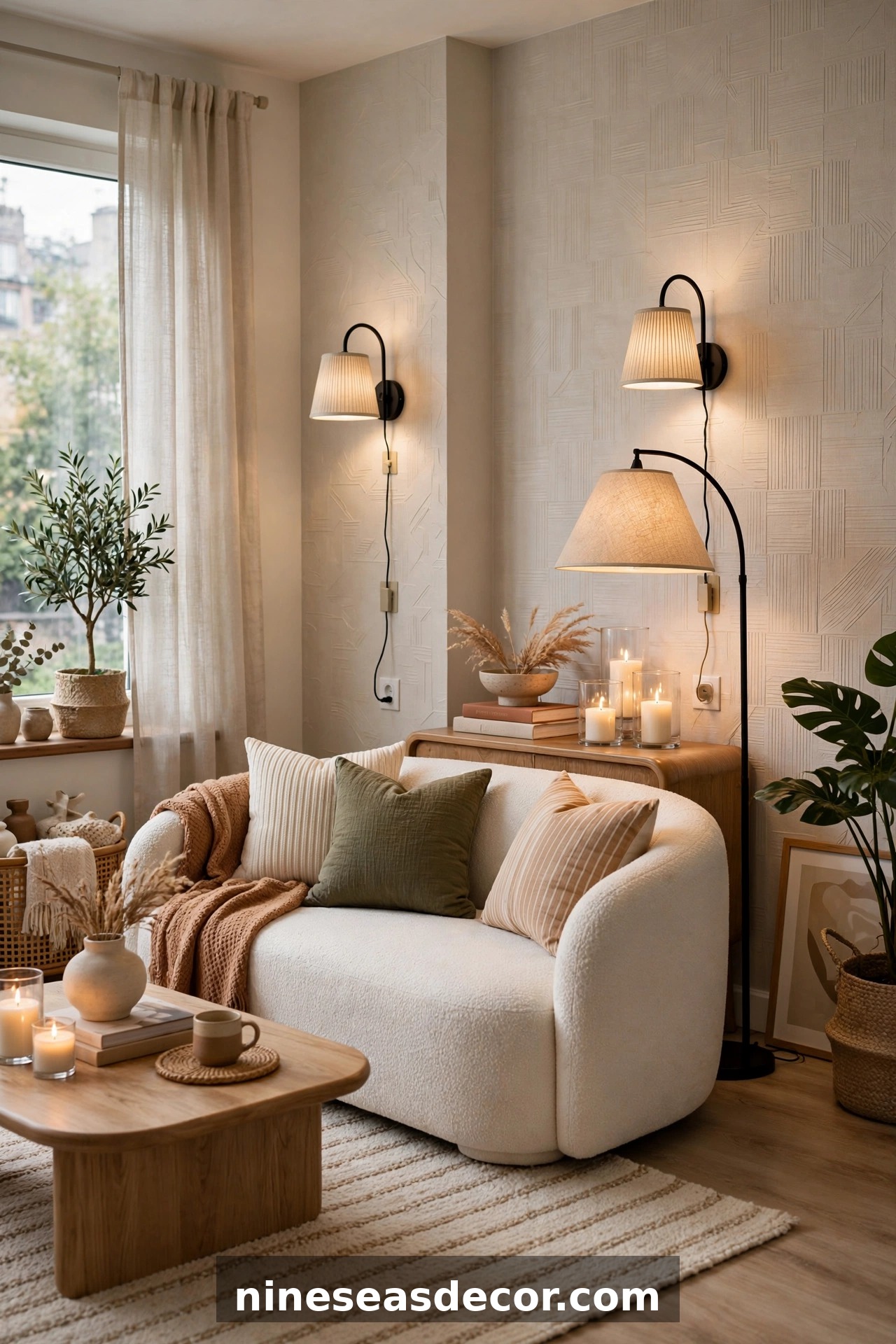
Renters, this section is for you specifically. Living in a rental with no overhead lighting is its own special challenge because you’re operating under the additional constraint of not being able to make permanent electrical changes or significant wall modifications. But I promise you this: some of the most impressively lit living rooms I’ve ever seen were rentals where the occupant got brilliantly creative within tight restrictions.
The most important principle for renters is to invest in portable, high-quality fixtures rather than making do with cheap options. Your floor lamps, table lamps, and any sconces you install are things you’ll take with you when you move. Spending ($200 on a beautiful arc floor lamp) that moves to your next three apartments is a far better value than spending ($50 on a wobbly lamp) that embarrasses you for two years. Think of your lighting as part of your furniture investment, not a disposable expense.
According to a 2024 Houzz Renter Design Survey, 68% of renters identified lighting as their single biggest challenge in personalizing their space, with overhead light limitations cited as the most common specific obstacle. The same survey found that renters who invested in quality portable lighting solutions reported significantly higher overall satisfaction with their apartment’s atmosphere than those who lived with inadequate lighting.
CORD MANAGEMENT FOR A CLEAN RENTAL LOOK
The number one thing that makes a rental lighting setup look amateur versus professional is cord management. Visible cords trailing across floors and walls immediately signal “temporary” and “rental” to any visitor. The good news is that excellent cord management solutions require zero permanent installation. Adhesive cord covers in white or paintable versions run ($15 to $40) for a (10-foot length) and snap onto any wall surface. Fabric-wrapped cord clips hold cords against baseboards invisibly. For plug-in sconces, a Wiremold cord channel painted to match your wall color is genuinely indistinguishable from hardwired conduit in photographs. Plan your lamp placement specifically to minimize cord run distances from outlets, and use furniture positioning to hide floor-level cords wherever possible.
BATTERY-POWERED LIGHTING OPTIONS FOR ZERO-OUTLET SITUATIONS
Sometimes your outlet situation is as limiting as your ceiling situation. Maybe your outlets are all on one wall. Maybe your only available outlet is in an inconvenient location. Battery-powered and rechargeable lighting has become dramatically better in the past three years and now represents a genuinely viable solution for accent and even some task lighting. Rechargeable table lamps from brands like Bover, Fermob, and even IKEA’s SOLVINDEN line provide (8 to 20 hours) of runtime per charge and look identical to corded counterparts. Battery-powered LED puck lights with motion sensors work brilliantly inside bookshelves and display cabinets. For wall-mounted accent lighting without any outlet access, rechargeable sconce-style fixtures now exist in the ($60 to $220 range) and charge via USB-C in (2 to 4 hours) for a full runtime.
Frequently Asked Questions
HOW MANY LAMPS DO I NEED FOR A LIVING ROOM WITH NO OVERHEAD LIGHT?
The honest answer is that it depends on your room’s size and how you use the space, but as a general rule, you should plan for a minimum of four to five light sources in a standard (12×15 foot) living room and six to eight sources in a larger (16×20 foot or bigger) space. This sounds like a lot until you realize that small accent table lamps, LED strip lights behind furniture, and plug-in sconces all count as individual sources. The goal is to achieve an even ambient brightness of (10 to 20 foot-candles) throughout the room with (30 to 50 foot-candles) at task areas. A simple way to check is to look at your room from the doorway at night: if any corner is noticeably darker than the center of the room, you need another source there. Budget anywhere from ($150) for a very basic setup to ($1,500 or more) for a fully layered, design-forward arrangement.
CAN I ADD OVERHEAD LIGHTING TO A LIVING ROOM WITHOUT EXISTING WIRING?
Yes, you can, but the approach and cost vary considerably based on your situation. For homeowners willing to do electrical work, running new wiring from an existing circuit through finished walls and ceilings typically costs ($800 to $3,500) in labor alone depending on ceiling construction and local electrician rates, plus ($150 to $2,000 or more) for the fixture itself. A less invasive alternative is a swag-style pendant lamp that hooks into your ceiling with a simple anchor bolt and plugs into a standard outlet, with the cord draped decoratively, these cost ($40 to $600) and require zero electrical work. Another option gaining popularity is the wireless battery-powered ceiling fixture, which mounts with adhesive or light hardware and uses rechargeable batteries for (6 to 12 months) of typical use before needing a recharge. Always consult a licensed electrician before attempting any hardwired installation.
WHAT IS THE BEST BULB COLOR TEMPERATURE FOR A LIVING ROOM WITH NO OVERHEAD LIGHTING?
For living rooms specifically, I recommend staying in the (2700K to 3000K) color temperature range for all your primary light sources. This is considered warm white to soft white territory, and it creates that cozy, inviting glow that living rooms should have. Bulbs labeled (4000K or 5000K), which are common in workspaces and kitchens, produce a cooler, bluer light that feels institutional and clinical in a living room context, especially when there’s no overhead fixture to distribute it broadly. For your accent lighting, such as LED strips behind a TV or inside a bookcase, you might even go warmer at (2400K to 2700K). Always choose bulbs with a Color Rendering Index (CRI) of 90 or above, which ensures that your furniture, textiles, and artwork display their true colors rather than looking washed out or oddly tinted. Quality high-CRI warm bulbs cost ($8 to $20 each) but last (15,000 to 25,000 hours), making them highly economical over time.
WHAT PAINT COLOR SHOULD I USE IN A LIVING ROOM THAT HAS NO OVERHEAD LIGHTING?
Paint color selection becomes even more critical when you’re relying entirely on portable light sources. You want colors with a Light Reflectance Value (LRV) of 60 or higher to ensure your lamps’ output gets multiplied rather than absorbed by dark walls. My top specific recommendations include Sherwin-Williams Alabaster (SW 7008) with an LRV of (82), which works in virtually any style of home and photographs beautifully under warm lamp light. Benjamin Moore White Dove (OC-17) at LRV (83.16) is another near-universal winner. If you want some warmth and color rather than a near-white, Sherwin-Williams Accessible Beige (SW 7036) at LRV approximately (58) still performs well and pairs beautifully with warm-toned lighting. For your ceiling specifically, use the highest-LRV white you can find, ideally (LRV 85 or above), in a flat finish that diffuses reflected light softly rather than creating glare spots. This ceiling treatment maximizes the output of your torchiere and upward-facing floor lamps dramatically.
HOW DO I CONTROL MULTIPLE LAMPS WITH ONE SWITCH IN A LIVING ROOM WITH NO OVERHEAD LIGHT?
This is genuinely one of the most practical questions I get, and the answer has become dramatically easier with modern technology. The simplest solution is smart plugs combined with a battery-powered wireless wall switch. Smart plugs from brands like Kasa, Wemo, or Lutron cost ($10 to $35 each), plug into your existing outlets, and connect to your home WiFi. A Lutron Pico remote control or a IKEA Symfonisk remote can then be stuck to your wall at switch height using the included adhesive mount and controls all your smart-plug-connected lamps simultaneously with a single button press. Total cost for a (four-lamp solution) using this approach runs ($80 to $180) including all plugs and one remote. For a more premium experience, the Lutron Caséta system provides the most reliable and responsive performance at approximately ($200 to $400) for a full living room setup, and it works even when your internet is down because it operates on a local radio frequency rather than cloud-dependent WiFi.
IS IT POSSIBLE TO MAKE A LIVING ROOM WITH NO OVERHEAD LIGHT LOOK PROFESSIONALLY DESIGNED?
Absolutely, and I’d actually argue it’s easier to achieve a professional look without an overhead fixture than with one. The key principles are: first, commit to a minimum of five varied light sources at three different heights (floor level around (0 to 18 inches), mid-level at (24 to 54 inches), and upper level at (60 to 80 inches)); second, keep all your bulb temperatures consistent in the (2700K to 3000K) range so the room reads as cohesive; third, choose fixtures that follow a consistent finish palette of two to three metals maximum, such as brass and black, or chrome and natural wood; and fourth, use your largest mirror strategically to double the perceived brightness of your room. According to a 2Living Room Design Guide 2026: Complete Layout, Decor & Style IdeasLiving Room Layout Ideas 2026: Arrange Furniture Like a Pro (Guide)Living Room Color Schemes 2026 | Transform Your Space