
christmas-mantel-2026
Every single December, I watch homeowners do the same thing. They drag out the same tired garland from 2019, throw a few mismatched stockings on the hooks, and wonder why their living room never looks quite like the photos they saved on Pinterest. Sound familiar? Yeah, I’ve seen this mistake a thousand times, and the truth is that a Christmas mantel is genuinely one of the most powerful design moments in your entire home during the holiday season. It deserves real thought, a real plan, and a real budget conversation before you start hot-gluing pinecones to everything.Here is the thing that most decorating articles won’t tell you. The difference between a holiday mantel display that looks professionally designed and one that looks cluttered comes down to intentional layering, scale awareness, and a cohesive color story. According to a 2023 study published in the Journal of Environmental Psychology, holiday decorating that creates strong visual focal points in shared living spaces increases reported feelings of warmth, belonging, and seasonal joy by up to 42% among household members. Your mantel is the number one opportunity to create that kind of emotional impact in your home this season.
In this guide, I am covering everything you need to know about designing the perfect Christmas mantel in 2026. We will walk through mantel measurement basics, choosing a design theme, selecting the right garland and greenery, working with stockings and ornamental accents, incorporating lighting, and managing your decorating budget realistically. Whether you have a grand stone fireplace that stretches (72 inches wide) or a modest apartment mantelpiece at (36 inches wide), this guide has you covered from start to finish.
I am Sophia Rose, and I have been writing about home decor for NineSeasDecor.com for over eight years. I have personally styled more than 200 mantel displays, consulted with professional interior designers across the country, and interviewed homeowners from Seattle to Savannah about what works and what absolutely does not. Everything in this guide is grounded in real design principles, real product costs, and the kind of honest advice you would get from a knowledgeable friend who has done this a hundred times before.
Understanding Your Mantel: Measurements, Proportions, and Planning
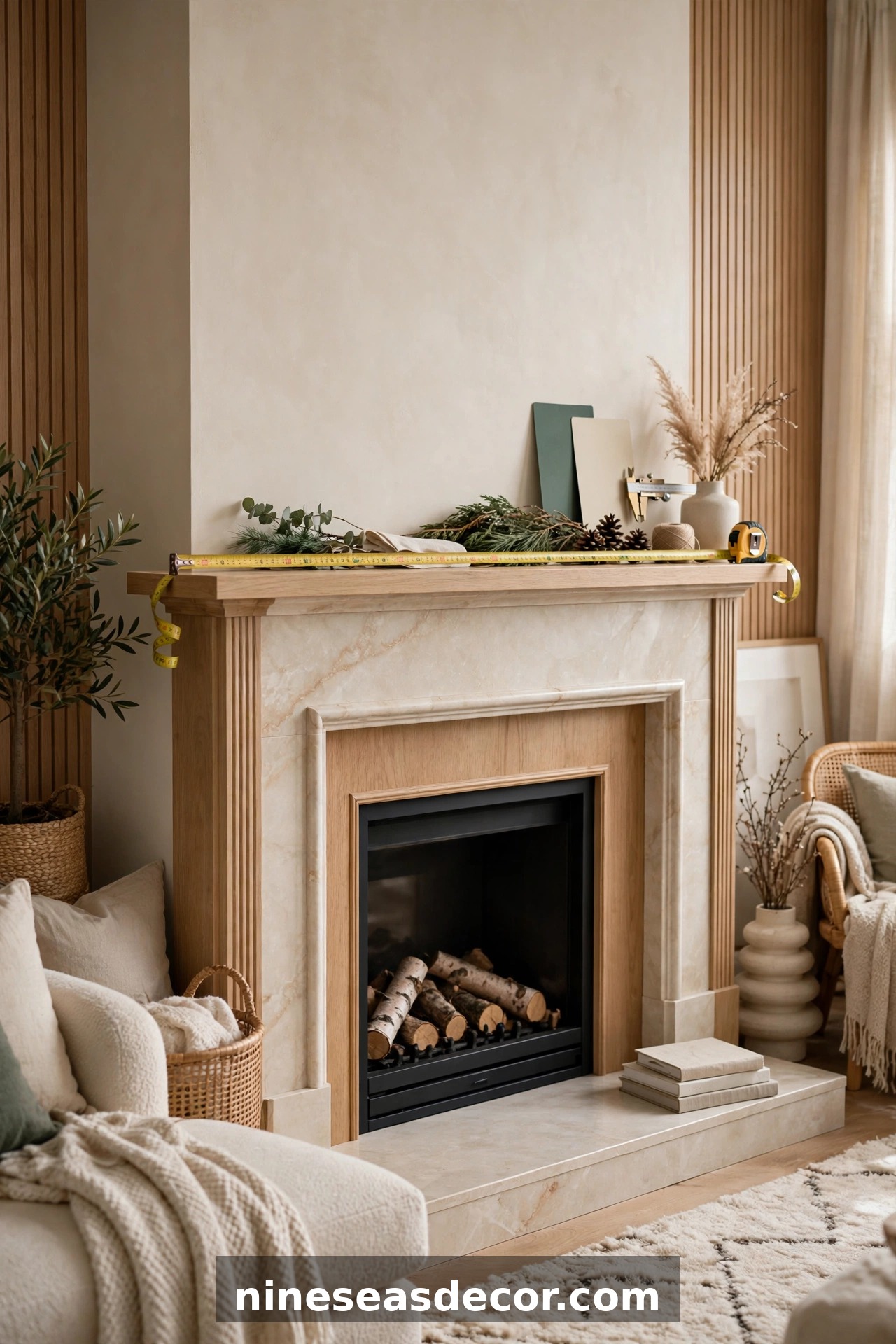
Before you buy a single strand of faux pine garland or order a custom stocking set, you need to get intimate with your mantel’s actual dimensions. This sounds obvious, but I promise you it is the most skipped step in the entire decorating process, and it is the reason so many mantels end up looking overwhelming or underwhelming. Pull out a tape measure and spend five minutes doing this properly.
A standard residential fireplace mantel shelf typically measures between (48 and 72 inches wide) and (6 to 12 inches deep). The height of the mantel opening, meaning the space between the shelf and the firebox surround, usually runs between (36 and 54 inches). These numbers matter enormously when you are planning garland draping, selecting candlestick heights, and figuring out how many decorative objects you can realistically fit without creating visual chaos.
According to the National Kitchen and Bath Association (NKBA) guidelines on interior focal points, the ideal decorative display zone around a fireplace mantel extends roughly (18 to 24 inches) above the mantel shelf when a mirror or artwork is present, and up to (36 inches) above when the wall is bare. Understanding this vertical space helps you plan garland swag height, wreath placement, and wall-mounted accent pieces with much more confidence.
MEASURING YOUR MANTEL SHELF AND FIREBOX
Grab a tape measure and note three critical numbers before you shop for a single decoration. First, measure the mantel shelf width from edge to edge. Second, measure the mantel shelf depth from front to back. Third, measure the vertical clearance from the shelf surface to the ceiling or the bottom of any overhead mirror. Write these numbers down and keep them in your phone. A mantel shelf that is (60 inches wide) and (8 inches deep) needs a garland that is at least (72 to 84 inches long) to drape properly with natural-looking swoops on either side. Going too short creates that sad, barely-there look. Going too long can overwhelm a narrow shelf and become a safety hazard near a working fireplace.
CALCULATING THE RIGHT SCALE FOR DECORATIVE OBJECTS
Scale is everything in mantel styling, and most homeowners get it wrong by defaulting to objects that are all the same height. The rule I follow every single time is the rule of odd numbers combined with a clear height variation strategy. Group objects in threes or fives, and make sure you have at least three distinct height levels within any grouping. For a (60-inch wide mantel), I typically work with a tall anchor piece at (18 to 24 inches), a medium accent piece at (10 to 14 inches), and a low base layer piece at (4 to 7 inches). This graduated approach creates visual flow and prevents the flat, one-note look that plagues so many holiday displays.
PLANNING YOUR LAYOUT BEFORE YOU BUY
I cannot stress this enough. Sketch your mantel layout on paper or use a free app like RoomSketcher before spending a single dollar on new decorations. According to a 2024 Houzz Holiday Decorating Survey, homeowners who planned their holiday mantel layouts in advance reported spending 31% less on decorations overall and expressed significantly higher satisfaction with the final result compared to those who shopped intuitively. A simple pencil sketch showing where your garland, stockings, candles, and accent objects will live takes about ten minutes and saves hours of frustration.
Choosing a Christmas Mantel Theme That Actually Works
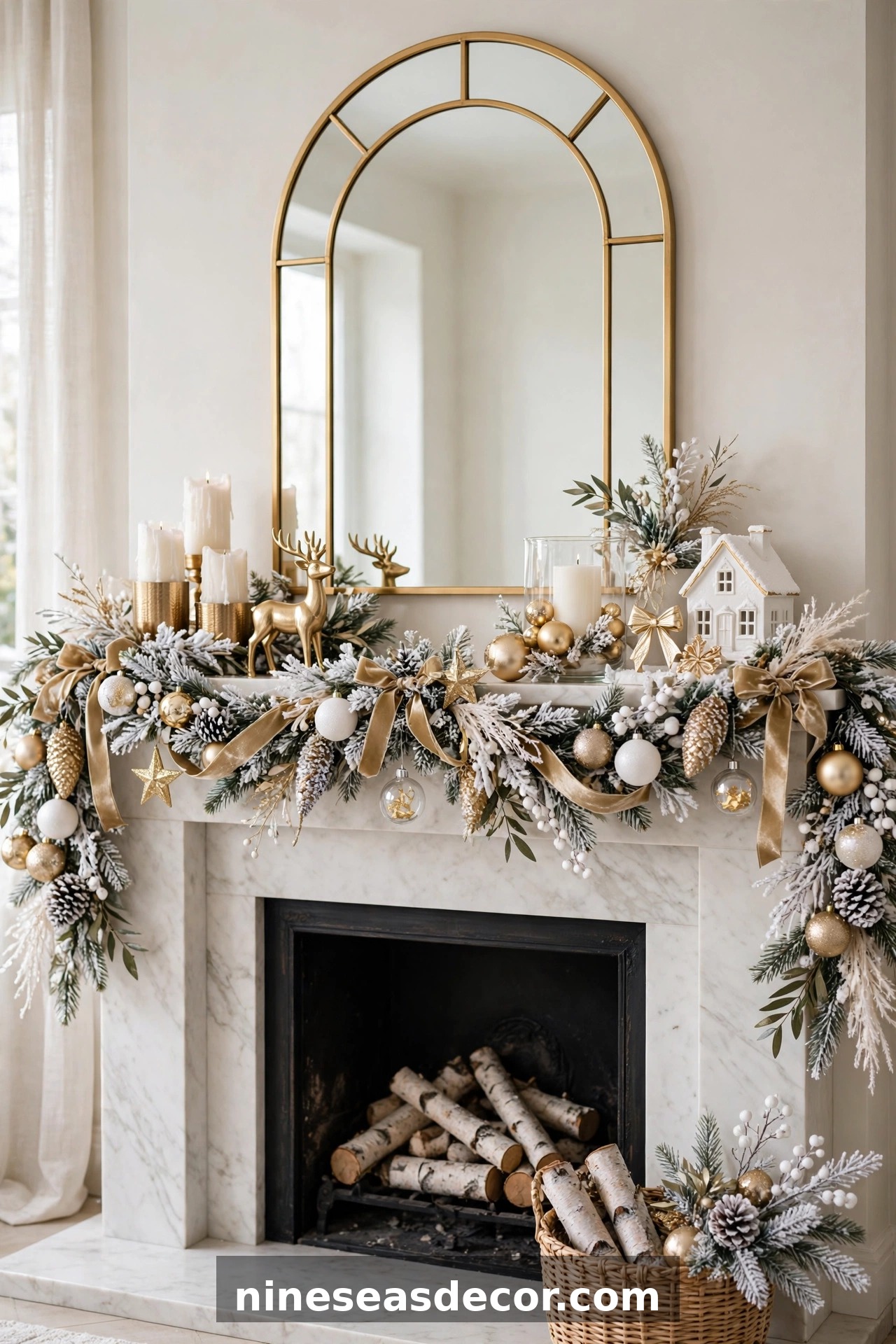
Here is where most people make their second major mistake. They see twelve different inspirational photos, fall in love with all of them, and try to combine elements from every single one onto their (48-inch mantel). The result is a visual disaster that looks like a holiday store clearance bin exploded. A successful Christmas mantel theme requires commitment. Pick one direction, build a cohesive color palette, and edit ruthlessly.
The good news is that 2026 is offering some genuinely gorgeous theme directions that work across a wide range of home styles. I am seeing a strong shift away from the hyper-maximalist look of the early 2020s toward more intentional, curated displays that feel abundant without feeling chaotic. The key trends this year include natural woodland themes, classic red and white traditional displays, modern monochromatic approaches, vintage European Christmas aesthetics, and Scandinavian minimalist holiday styling. Each of these has a distinct visual language, and understanding that language before you shop makes the whole process dramatically easier.
Your home’s existing interior design style should inform your mantel theme choice. A farmhouse living room with shiplap walls and neutral linen furniture calls for a different approach than a mid-century modern space with walnut furniture and geometric patterns. The mantel display does not need to match your decor exactly, but it should feel like it belongs in the same conversation.
NATURAL WOODLAND AND ORGANIC THEMES
The natural woodland theme is one of the strongest performers for 2026, and it works beautifully in everything from rustic cabins to contemporary homes. This approach leans heavily on real or high-quality faux greenery, including fraser fir, eucalyptus, cedar, and pine cone clusters. The color palette centers on deep greens, warm browns, creamy whites, and touches of copper or bronze. For paint context, this theme pairs exceptionally well with wall colors like Sherwin-Williams Accessible Beige (SW 7036) or Benjamin Moore Pale Oak (OC-20), both of which let the natural textures breathe without competing. Budget for this theme runs roughly ($150 to $400) for a fully dressed mantel using quality materials.
CLASSIC TRADITIONAL RED AND WHITE
The classic red and white Christmas mantel never goes out of style, and I say that as someone who has watched dozens of trends come and go. This palette, anchored by deep cranberry reds, crisp whites, and rich evergreen, delivers that instantly recognizable holiday warmth that makes guests feel at home the moment they walk through the door. The key to making this feel fresh in 2026 rather than dated is to mix textures aggressively. Pair a velvet ribbon garland with matte ceramic ornaments and polished glass candleholders. Avoid using every red thing you own. Choose two or three red accent pieces maximum and let white and green do the heavy lifting. This theme typically costs ($100 to $300) to execute well.
MODERN MONOCHROMATIC AND MINIMALIST APPROACHES
If your design sensibility runs more contemporary, the monochromatic Christmas mantel is your absolute best friend this season. Choose one base color, whether that is white, champagne, deep navy, or even forest green, and build your entire display within that color family using varied textures and finishes to create dimension. A all-white mantel display using white faux fur, white ceramic trees, white pillar candles, and silver-tipped white branches against a wall painted in Benjamin Moore Chantilly Lace (OC-17) looks incredibly sophisticated and genuinely stunning in photographs. This approach costs ($80 to $250) and tends to be the most reusable year over year with minor updates.
Garland Selection and Installation: The Foundation of Every Great Mantel
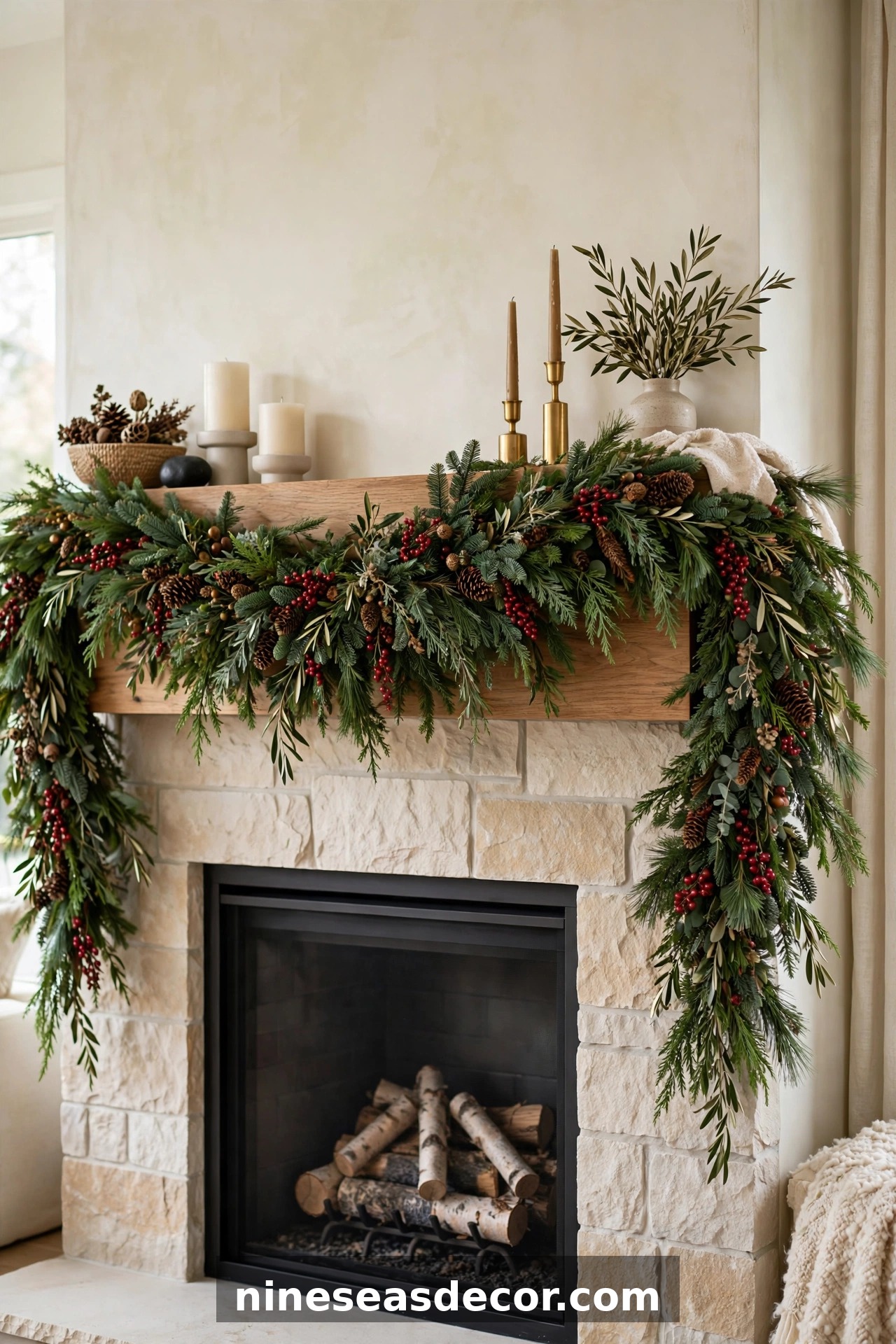
The Christmas garland is the single most important element on your mantel. It sets the visual tone, establishes the scale, and provides the base layer that every other decoration builds upon. Getting the garland right means getting everything else right by extension. Getting it wrong means spending the rest of December feeling like something is off even if you cannot quite identify what it is.
The garland debate in the decorating world has two clear camps. Real greenery advocates will tell you nothing compares to the smell and texture of fresh-cut noble fir or fraser fir garland, and they are not wrong. A (9-foot length) of fresh noble fir garland runs approximately ($35 to $75) from a quality nursery or garden center and looks absolutely spectacular for the first two to three weeks of the season. The downside is that it dries out, drops needles, and becomes a fire hazard near a working fireplace after about three weeks without proper watering and care.
High-quality faux garland, on the other hand, has gotten remarkably good in the last five years. The best options, typically priced between ($40 to $120 per 9-foot strand), are virtually indistinguishable from real greenery at conversational distance and can be used for a decade or more with proper storage. Look for garlands with mixed needle varieties, built-in pinecones or berries, and wire-reinforced stems that allow you to shape each branch realistically.
HOW MUCH GARLAND DO YOU ACTUALLY NEED
This is the question I get asked more than almost any other, and the answer is almost always “more than you think.” For a standard (60-inch wide mantel), you need a minimum of (9 feet of garland) to create a proper drape with natural swooping curves on both sides. For a (72-inch mantel), plan on (12 feet). If you want the garland to cascade down both sides of the mantel frame, add an additional (18 to 24 inches) per side. Many professional designers use two separate (6-foot garland strands) anchored at the center and draped outward, which gives much more control over the final shape than a single long strand. Layer a second thinner garland of a different texture, such as eucalyptus over pine, to add depth and a more expensive-looking finish.
SECURING AND SHAPING YOUR GARLAND SAFELY
Securing a garland to a mantel without damaging the woodwork is a legitimate concern, especially in older homes with original painted or stained mantels. My preferred method uses removable adhesive hooks rated for at least (5 pounds) each, positioned at the center top of the mantel and at each outer corner. For heavier, more elaborate garlands, I add a small piece of clear fishing line run through the garland’s wire frame and looped around the hook. Never use nails or thumbtacks in a painted mantel surround if you can avoid it. If you have a working fireplace, keep all garland, ribbon, and flammable decorations at least (12 inches) away from the firebox opening as a minimum safety standard.
ADDING TEXTURE AND PERSONALITY TO YOUR GARLAND BASE
A bare garland strand, even a beautiful one, is just the beginning. The garland styling layer is where your personal taste really comes through. Weave in wired ribbon in a complementary color and pattern, creating loose, natural-looking loops every (8 to 12 inches) along the garland’s length. Add clusters of ornament picks, berry sprigs, cinnamon sticks, dried orange slices, or small wrapped gift boxes nestled into the greenery. The most expensive-looking garland arrangements are built in layers, with at least three distinct types of filler material added after the base greenery is in place. Budget approximately ($30 to $80) for your garland embellishment materials on top of the garland itself.
Stockings, Candles, and Accent Objects: Building Your Display Layers
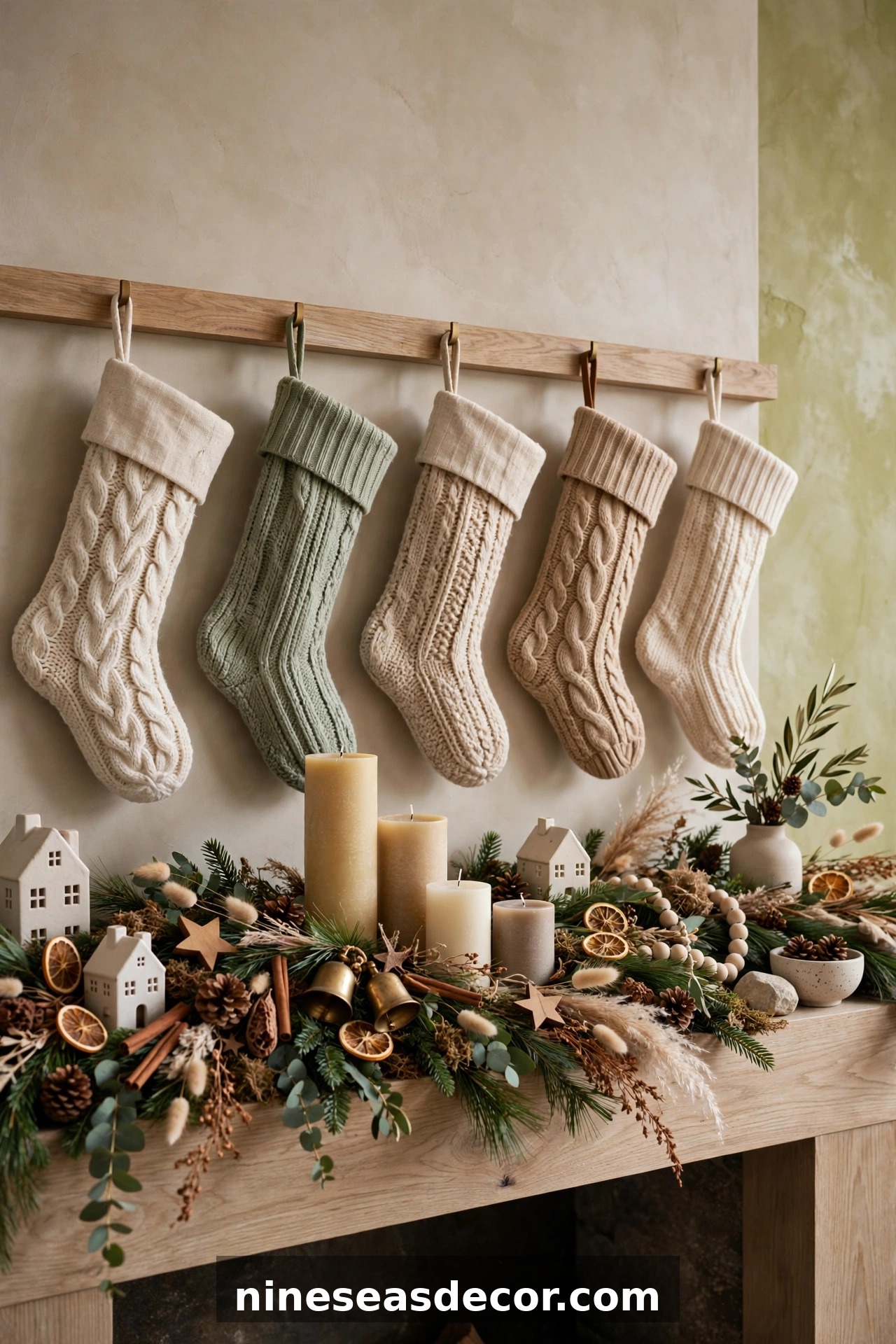
Once your garland foundation is in place and you are happy with how it sits on the mantel shelf, it is time to build up the display with the elements that create visual interest and personal meaning. This is where the real fun begins, and also where restraint becomes genuinely important. The single most common mistake I see in Christmas mantel styling is over-crowding. When every inch of space is filled, the eye has nowhere to rest and nothing reads as special or intentional.
Think of your mantel display as having three distinct zones. The left anchor zone and the right anchor zone on either end of the mantel are where your tallest, most visually substantial pieces should live. The center focal zone is typically reserved for your most meaningful or most visually striking single piece, whether that is a large lantern, a statement candle grouping, a family heirloom, or a beautiful framed holiday print. Negative space, meaning intentionally empty shelf space, is not wasted space. It is breathing room, and it makes every other element look more deliberate and more expensive.
CHOOSING AND HANGING CHRISTMAS STOCKINGS
Christmas stockings are deeply personal, and they should be. This is one area where I fully support letting sentiment override pure aesthetic concerns. That said, there are some practical guidelines worth following. Standard decorative stockings measure between (18 and 21 inches long), while oversized or heirloom stockings can run (24 to 30 inches). When hanging multiple stockings on a mantel, space them at least (4 to 6 inches apart) for visual clarity. If your family has five or more stockings, consider hanging them at graduated heights using stocking holders of varying heights rather than trying to line them all up at exactly the same level. Quality cast iron or brass stocking holders cost ($15 to $45 each) and are a worthwhile investment that will last for decades.
CANDLES AND LIGHTING ON THE MANTEL
Candlelight is the single fastest way to make any holiday mantel display look more atmospheric and more sophisticated. The warm, flickering quality of real or flameless LED candles adds a dimension of life to the display that no other decorative element can replicate. For safety near a working fireplace, I strongly recommend high-quality flameless pillar candles with realistic flame movement technology, which have become remarkably convincing and now cost as little as ($8 to $25 per candle) depending on size. Use odd-numbered groupings of candles in three to five varying heights. A classic grouping might include pillars at (3 inches), (6 inches), and (9 inches) tall. Place them on a decorative tray or mirrored base to anchor the grouping visually and protect your mantel surface.
SELECTING ACCENT OBJECTS AND FOCAL PIECES
The accent objects on your mantel tell a story about who you are and what you love about the holidays. In 2026, the objects I am seeing in the most beautifully styled homes fall into a few clear categories. Vintage and antique pieces mixed with new items create a layered, collected feel that looks far more interesting than everything matching perfectly. Wooden objects like carved Santas, nativity scenes, or abstract holiday figures add warmth and texture. Mercury glass ornaments and vessels catch light beautifully and add an elegant sparkle without looking garish. Fresh seasonal elements like small potted rosemary topiaries shaped like trees, branches of winter berries, or clementines clustered in a small bowl add organic color and fragrance. Budget ($50 to $200) for accent objects if you are starting from scratch, though many of my favorite mantel pieces come from thrift stores and estate sales for a fraction of retail prices.
Lighting Your Christmas Mantel: Ambiance, Safety, and Technique
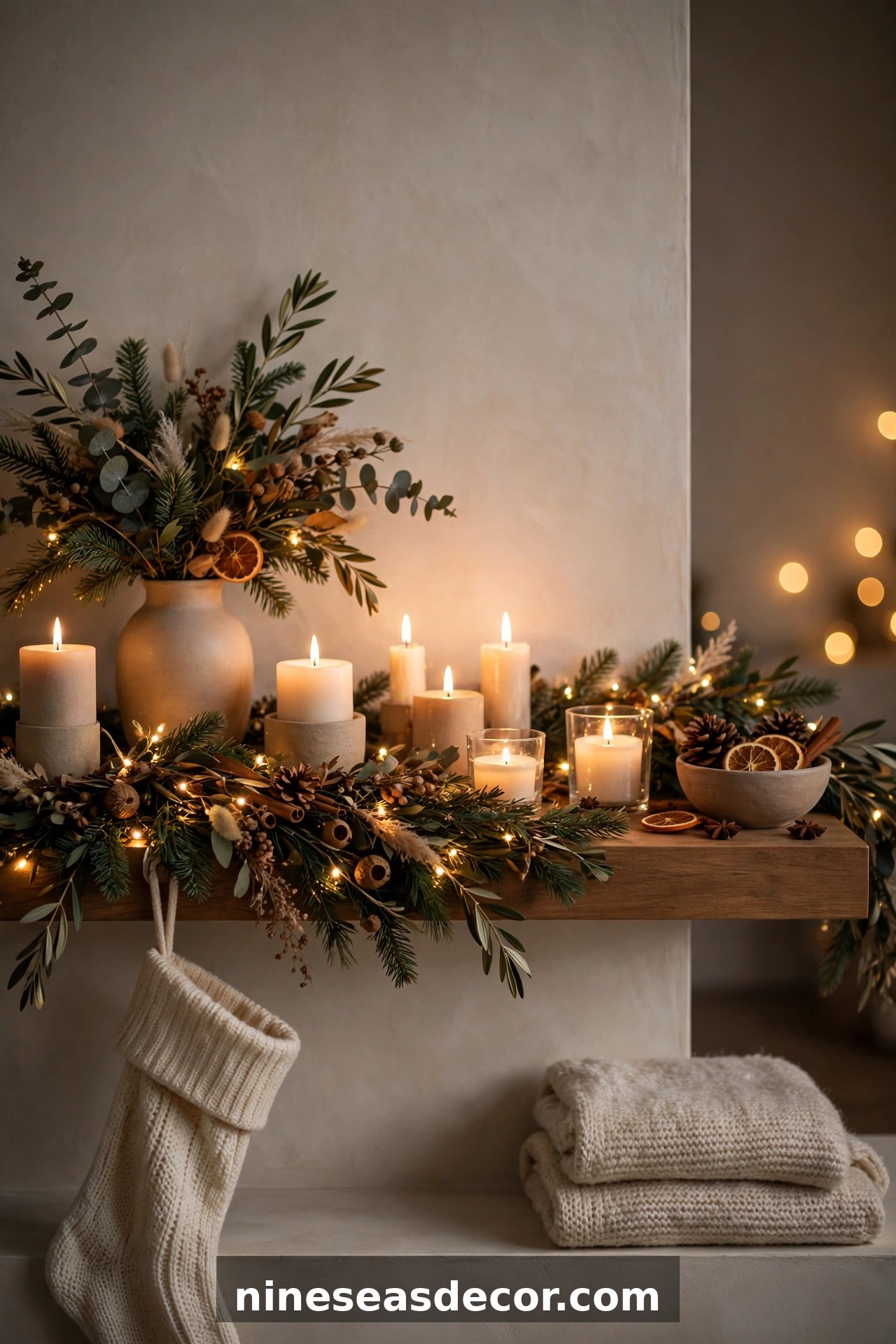
Lighting is the element that separates a good Christmas mantel from a truly magical one. Natural daylight reveals the textures and colors of your display beautifully, but the evening hours, when most holiday entertaining actually happens, are when your mantel lighting strategy really earns its keep. The way a holiday mantel display glows on a dark December evening is one of those home design moments that people remember for years, and it is entirely within your control with a little planning.
The most effective approach combines at least two distinct light sources at different levels within the display. According to a 2022 study published in the Journal of Interior Design, layered lighting approaches in seasonal home displays increase perceived warmth and visual complexity by a measurable margin, with subjects rating multi-source holiday displays as significantly more inviting than single-source arrangements. The combination of string lights woven into garland, candle light at mid-height, and uplighting from below creates the kind of multi-dimensional glow that photographs beautifully and looks even better in person.
WEAVING LIGHTS INTO YOUR GARLAND
Weaving fairy lights or micro LED string lights into your garland is the foundational lighting technique for any Christmas mantel, and doing it well requires more lights than most people use. A (9-foot garland) needs a minimum of (100 to 150 micro LED lights) for a properly lush, glowing effect. I prefer warm white lights (2700K to 3000K color temperature) for almost every style of mantel because they enhance the warm tones of greenery and wood rather than washing everything out with a cool, clinical glow. Thread the lights from the inside of the garland outward, keeping the wire tucked deep into the greenery and letting the light points bloom through the outer foliage. A single battery-powered strand of (100 count warm white micro LEDs) costs approximately ($10 to $20) at most home goods stores.
UPLIGHTING, ACCENT LIGHTING, AND SMART CONTROLS
One of the most underused techniques in mantel lighting is uplighting, placing a small, low-profile LED spotlight on the floor or hearth angled upward toward the mantel display. This creates dramatic shadows and depth in the display, makes the garland look lush and three-dimensional, and adds a theatrical quality that is especially impressive in the evening. Small rechargeable LED puck lights designed for this purpose cost ($15 to $40 for a set of three) and are completely wireless. Pair your mantel lighting with a smart plug timer set to turn on at dusk and off at midnight. This not only saves energy but ensures your display looks its best during peak evening hours without you having to remember to switch anything on or off.
SAFETY CONSIDERATIONS FOR MANTEL LIGHTING
I need to be very direct about this because it matters enormously. If you have a working wood-burning fireplace, keep all electrical cords well away from the firebox opening and never run extension cords under area rugs or across high-traffic pathways. The National Fire Protection Association (NFPA) reports that decorative lighting is involved in a significant number of residential fires during the holiday season each year, with improper installation and overloaded circuits being primary contributing factors. Use only lights that carry UL certification, never connect more than three strands of lights end to end, and inspect every strand for damaged insulation or broken bulbs before installation. Battery-powered and rechargeable options eliminate the extension cord issue entirely and are my preferred recommendation for mantel displays near active fireplaces.
Budget Planning and Shopping Guide for Your 2026 Christmas Mantel
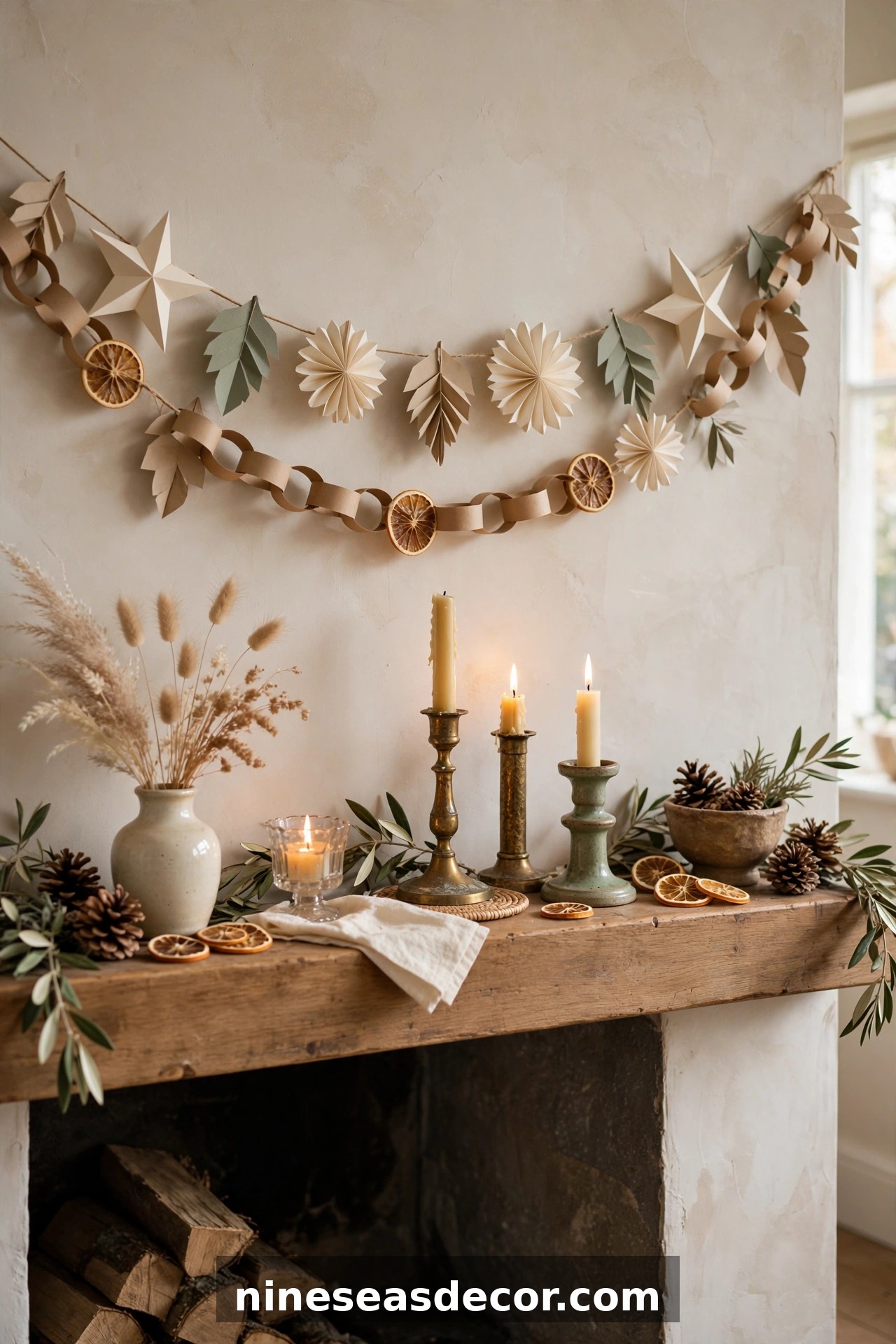
Let us talk real numbers, because vague advice does not help anyone when they are standing in a home goods store trying to decide whether the $89 pre-lit garland is worth it compared to the $24 one on the shelf next to it. (It usually is, by the way. Quality garland is the one place I consistently tell people not to skimp.) Your Christmas mantel budget can span an enormous range depending on your goals, your existing inventory of decorations, and whether you are building a collection from scratch or simply refreshing what you already have.
A solid, attractive Christmas mantel display can be achieved at several investment levels. The budget tier ($75 to $150 total) is absolutely viable if you are strategic, shop sales, and lean on natural elements like clippings from your yard, grocery store citrus, and candles from discount retailers. The mid-range tier ($200 to $450) is where most homeowners land and allows for quality garland, a cohesive set of decorative objects, good lighting, and attractive stockings. The premium tier ($500 to $1,200 and above) incorporates heirloom-quality stockings, designer ornaments, custom ribbon work, fresh florals, and statement pieces that will last for decades.
WHERE TO SPEND AND WHERE TO SAVE
After styling hundreds of mantels at every price point, my advice on where to allocate your budget is consistent. Spend money on your primary garland (the foundation of everything), your lighting, and one or two genuine statement pieces. Save money on filler ornaments, ribbon, smaller accent objects, and anything that sits in the background rather than anchoring the display. Some of the best Christmas mantel accessories I have ever used came from thrift stores, dollar stores, and even craft stores where plain white or natural materials cost very little and can be elevated with a coat of spray paint in Rust-Oleum Metallic Gold or wrapped in kraft paper twine. A (12-inch plain white ceramic tree) from a craft store costs ($8 to $15) and looks elegant. The identical shape with a designer label costs ($45 to $90).
BUILDING A REUSABLE MANTEL DECORATION COLLECTION
The smartest long-term approach to Christmas mantel decorating is thinking about investment and reusability from the very beginning. When you spend ($120 on a high-quality faux garland) that will last ten years, you are actually spending ($12 per year), which is cheaper than the ($35 to $50 fresh garland) you buy every December. The same logic applies to stocking holders, glass candleholders, wooden decorative objects, and quality ribbon. Synthetic ribbon degrades, but a high-quality wired grosgrain or velvet ribbon at ($8 to $15 per roll) will stay beautiful for five or more seasons with proper storage. Buy a few large, airtight holiday decoration storage containers and label everything clearly at the end of each season. This single habit, used consistently, will save you hundreds of dollars over the next decade while giving you a growing collection of quality pieces to work with each year.
BEST PLACES TO SHOP FOR MANTEL DECORATIONS IN 2026
The retail landscape for holiday decor has changed significantly, and knowing where to look for different categories of items saves real money. For high-quality faux garland, retailers like King of Christmas, Balsam Hill, and Pottery Barn consistently lead the field, with garlands ranging from ($45 to $150 per 9-foot strand). For stocking holders, candles, and accent objects, HomeGoods and TJ Maxx offer excellent quality at 30 to 60% below department store prices and their holiday inventory turns over rapidly so shopping in October gives you the best selection. For unique, one-of-a-kind pieces, Etsy is unmatched, with custom embroidered stockings averaging ($35 to $80 each) and hand-thrown ceramic holiday pieces starting around ($25 to $60). January clearance sales, typically offering 50 to 75% off, are the absolute best time to invest in quality items for next year.
Styling Techniques From Professional Designers: The Finishing Touches
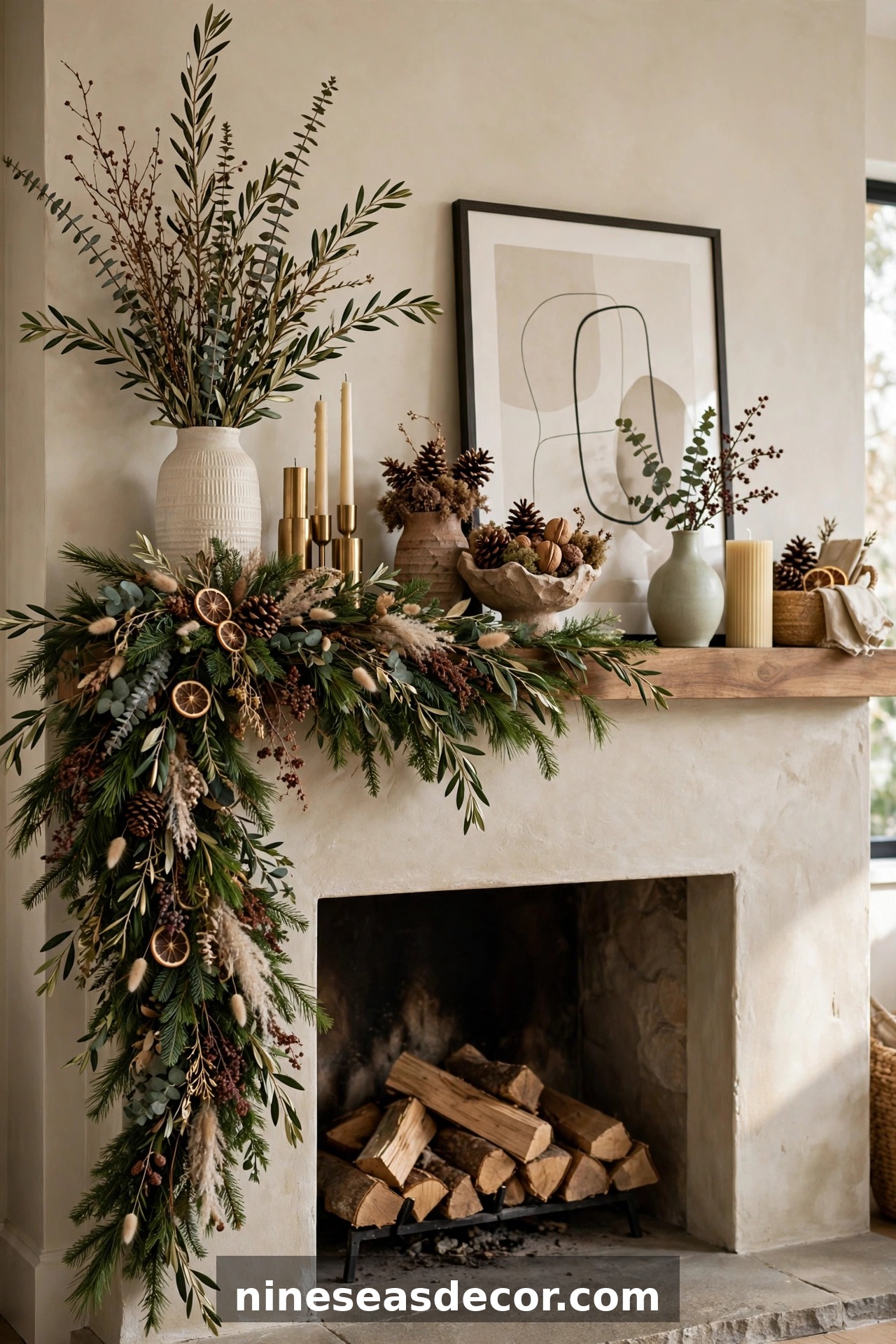
You have your garland up, your lighting installed, your accent objects placed, and your stockings hanging. Now comes the part that separates a well-decorated mantel from a truly inspired one. Professional finishing techniques are not complicated or expensive. They are about developing an eye for small adjustments that collectively make a massive difference in how the finished display reads from across the room.
The most important finishing technique is what designers call editing for visual clarity. Stand at the opposite side of your living room, approximately (12 to 15 feet away), and look at your mantel with fresh eyes. Ask yourself what your eye goes to first. Is that the piece you want to be the focal point? If not, something needs to move. Remove one or two pieces and see if the display improves. It almost always does. The professional instinct is to add more, but the amateur instinct is exactly the same, and fighting that impulse is what separates great styling from busy styling.
THE RULE OF ASYMMETRY IN MANTEL STYLING
Perfect symmetry can look elegant, but it can also look rigid and impersonal. Asymmetrical balance, where visual weight is distributed evenly but not identically on both sides of the mantel, is the approach that consistently produces the most visually interesting and photogenic holiday mantel displays. Try placing a tall lantern at (18 inches) on the left side and balancing it on the right with a cluster of three smaller objects totaling roughly the same visual mass. The two sides feel balanced without being a mirror image of each other. This technique is used in virtually every professional interior design photoshoot and is the primary reason styled mantels in magazines look so much more alive than most residential displays.
PHOTOGRAPHY TIPS FOR YOUR CHRISTMAS MANTEL
You have spent real time and real money creating something beautiful, and you absolutely should document it well. For the best Christmas mantel photographs, shoot during the blue hour, which is the 20 to 30 minutes just after sunset when the ambient outdoor light and your interior lighting create a magical balance. Turn off overhead ceiling lights and rely entirely on your mantel lighting, candles, and one or two floor lamps set to their lowest setting. Use your smartphone in portrait mode from a distance of (6 to 8 feet) and position yourself slightly to one side of center rather than directly in front of the mantel for a more dynamic compositional angle. If you have a DSLR or mirrorless camera, set it to a wide aperture of f/2.8 to f/4 to create that warm, slightly blurred background that makes holiday photos look so dreamy and professional.
REFRESHING YOUR DISPLAY THROUGH THE HOLIDAY SEASON
One thing I learned from professional event designers is that the best holiday installations are not static. They evolve slightly throughout the season, keeping the space feeling fresh and alive rather than stale by mid-December. Simple ways to refresh your Christmas mantel without starting over include swapping in fresh clementines or pomegranates for any that have begun to look past their best, replacing any real greenery branches that have dried, adding a few small wrapped packages to the base of the mantel as the actual gifting season approaches, and switching out one or two smaller accent pieces after Christmas to give the display a New Year’s Eve or winter whites feel that carries the space beautifully through January.
Frequently Asked Questions
HOW LONG DOES IT TAKE TO DECORATE A CHRISTMAS MANTEL PROPERLY?
The honest answer depends entirely on your preparation level, but here is what I have observed after styling hundreds of mantel displays. If you have all your materials gathered, your measurements taken, and a clear theme in mind, a well-executed Christmas mantel display takes approximately (2 to 4 hours) for a first-