
seasonal-decor-2026
Let me be honest with you. Every single year, I watch homeowners fall into the exact same trap. They go all out for the holidays, spend a small fortune on decorations, and then spend the next three months staring at a home that feels completely out of sync with the world happening outside their windows. Spring arrives and the house still feels heavy and dark. Summer hits and those cozy wool throws are somehow still draped over every piece of furniture. Sound familiar? Yeah, I’ve seen this mistake a thousand times, and it almost always comes down to one thing: people treat seasonal decor as an event rather than a lifestyle.According to a 2023 report published by Houzz, homeowners who actively update their interiors at least twice per year report a 43% higher satisfaction rate with their living spaces compared to those who keep static decor year round. That number genuinely shocked me when I first read it, but honestly, it makes complete sense. Our brains crave novelty and connection to the natural world around us. When your home reflects the season you are actually living in, something clicks. The space feels alive, intentional, and deeply personal.This guide is your complete 2026 seasonal decor playbook. We are going to walk through every major season, tackle room specific strategies, talk real budgets (because yes, this can be done without breaking the bank), share specific paint codes, and give you the kind of actionable advice that actually translates from the screen to your living room. We will cover everything from spring refresh techniques to winter cozy layering, from entryways to bedrooms, and all the spaces in between.Why should you trust me on this? I am Sophia Rose, and I have been writing about home decor for NineSeasDecor.com for over eight years. I have toured hundreds of homes, consulted with NKBA certified designers, and personally tested more decorating approaches than I can count. I have made the mistakes so you do not have to, and everything I share here is grounded in both real world experience and current research. Let us get into it.
Understanding The Seasonal Decor Mindset: Why It Matters More Than You Think
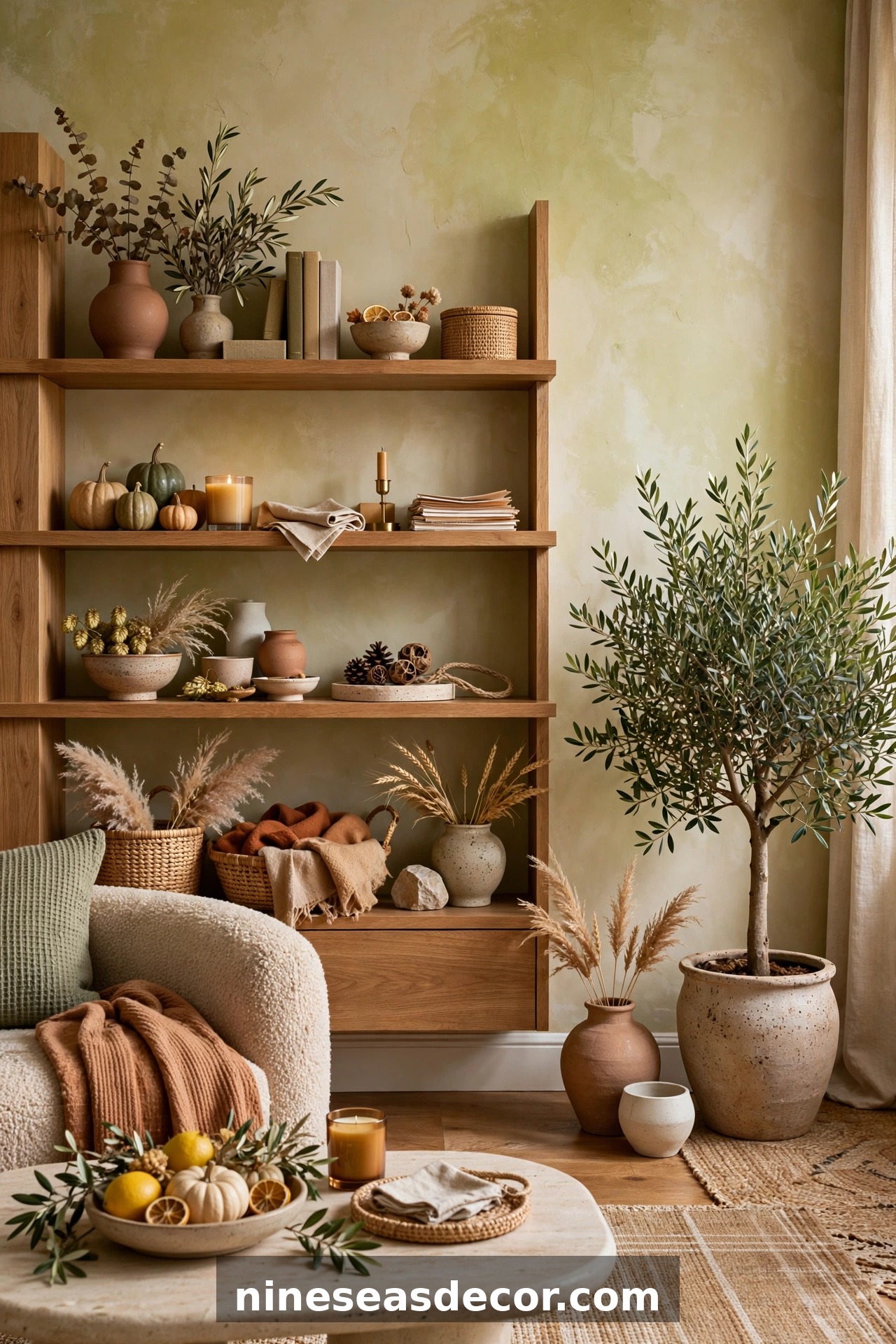
Before we dive into the specifics of what to hang, place, or paint, we need to talk about the philosophy behind intentional seasonal decorating. This is not about following trends blindly or spending ($500 to $2,000) every three months on brand new stuff. This is about creating a home that breathes with the rhythms of the year, and doing it in a way that is smart, sustainable, and genuinely beautiful.
The biggest misconception I encounter is that seasonal decor requires a complete overhaul four times a year. Absolutely not. The most successful approach I have seen in beautifully decorated homes is what I call the layering swap method. You establish a strong, neutral base that works year round, and then you layer in seasonal elements that can be rotated out with minimal effort and cost. Think of your base as the bones of the room, your sofa, your rugs, your major furniture pieces. These stay relatively constant. The seasonal layer lives in your throw pillows, your textiles, your table accessories, your greenery, and your accent colors.
According to research published in the Journal of Environmental Psychology in 2022, humans experience measurable reductions in stress and anxiety when their indoor environments contain visual cues that align with the current natural season. The study specifically noted that natural textures, seasonal color palettes, and organic materials triggered the strongest positive responses in participants. This is not just decorating for aesthetics. This is decorating for your mental wellbeing.
Start by auditing what you already own. Most homeowners have far more usable seasonal pieces than they realize, they are just stored in boxes without any organizational system. Invest in clear (12x12x12 inch) storage bins labeled by season. This one organizational step alone will transform how you approach decorating transitions and save you from buying duplicates of things you already own.
BUILDING YOUR SEASONAL DECOR BASE PALETTE
Your base palette is the foundation everything else builds upon, and getting this right is arguably the most important decision you will make. I consistently recommend starting with warm neutrals that can pivot in multiple directions depending on the season. Sherwin Williams Accessible Beige (SW 7036) is an absolute workhorse of a neutral, it reads warm without being yellow and plays beautifully against both the cool blues of winter decor and the warm corals of summer accents. Similarly, Benjamin Moore Pale Oak (OC-20) offers a greige tone that bridges seasons effortlessly. For walls that need to feel fresh year round, these two paint codes have never failed me. Your base furniture should live in the (SW 7036) family: think warm whites, soft taupes, and gentle greys. From this foundation, every seasonal layer will land with impact rather than conflict.
CREATING A SEASONAL TRANSITION TIMELINE
Timing your seasonal transitions correctly makes the whole system work smoothly. I recommend starting your decor shifts about two weeks before the actual season change, so approximately around March 5th for spring, June 5th for summer, September 5th for fall, and December 1st for winter. This gives you time to shop intentionally rather than reactively, and it means your home actually leads the seasonal shift rather than lagging behind it. Block out a single Saturday afternoon per transition, roughly three to four hours, and treat it as a dedicated home ritual. Put on a playlist, brew something good, and move through each room systematically. Most homeowners can complete a full seasonal transition in a (1,500 to 2,000 sq ft) home within that single afternoon once they have a working system in place.
Spring Seasonal Decor: Waking Your Home Up From Winter
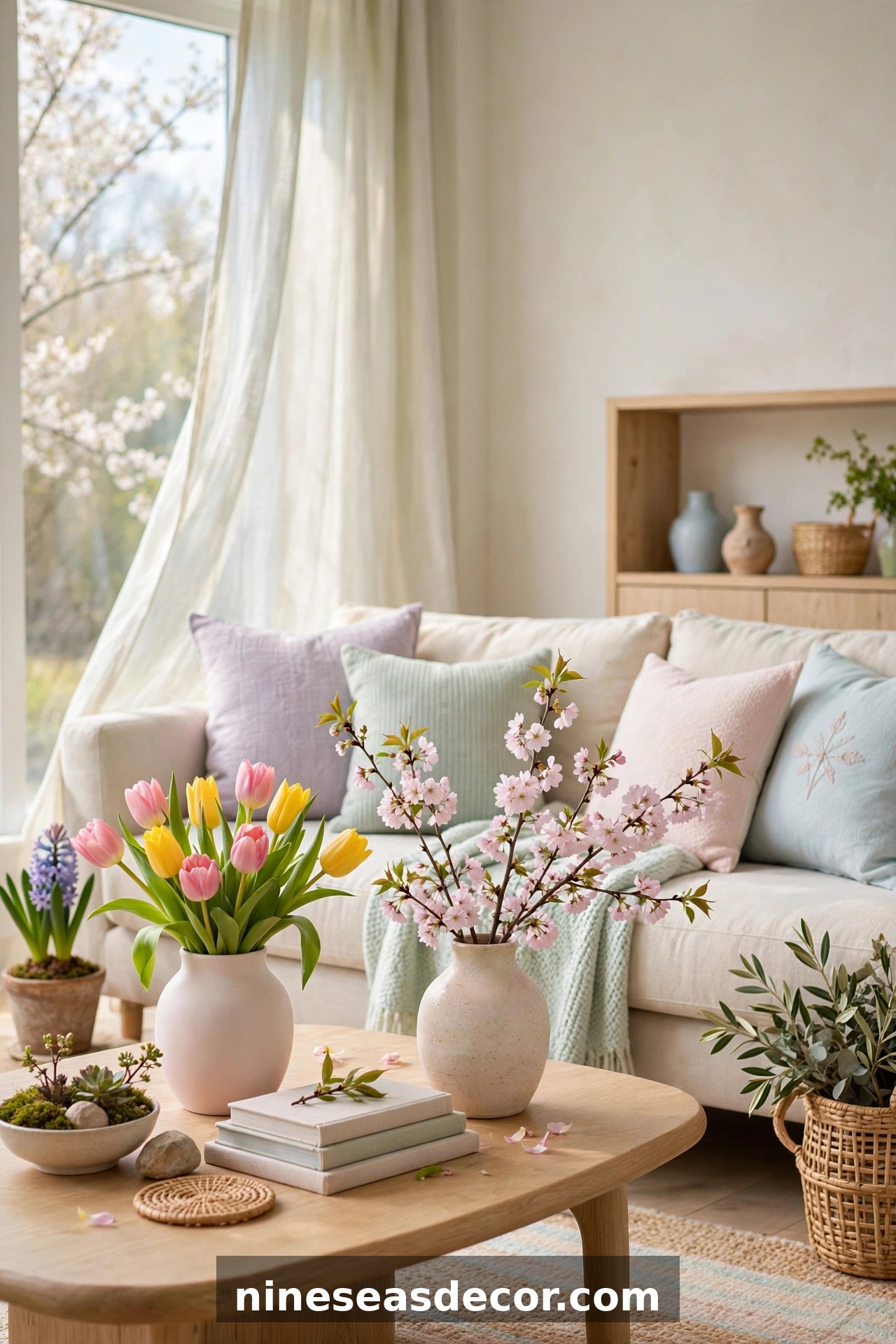
Spring is my absolute favorite transition to help homeowners navigate because the contrast is so dramatic and so rewarding. You are moving from the heavy, cocooning energy of winter into something that feels genuinely hopeful and light, and your home should absolutely mirror that shift. The spring decor transition is all about lightening your layers, introducing living elements, and rotating in that fresh, clean color energy that makes everyone feel like opening a window and taking a deep breath.
Start with the obvious: get those heavy winter textiles out of sight. Chunky knit throws, velvet pillow covers, and wool blankets should be washed, folded, and stored in your labeled bins. Replace them immediately with linen throws in soft sage or dusty blush, (18×18 inch) pillow covers in botanical prints, and lighter weight cotton blankets. The tactile shift alone is remarkable. Your body and brain will register the change even before your eyes fully process it.
For color, spring 2026 is leaning hard into terracotta adjacent tones, warm sage greens, and a very specific dusty lavender that feels both nostalgic and entirely fresh. The paint code I am absolutely obsessed with this season is Sherwin Williams Liveable Green (SW 6176), a muted, grounded sage that reads differently depending on the light and works beautifully as an accent wall in any room that gets decent natural light.
According to the National Association of Realtors 2024 Home Staging Report, homes decorated with spring appropriate color palettes during March through May showings sell for an average of ($8,000 to $15,000) more than comparably priced homes with stale or season mismatched decor. Even if you are not selling, that data tells you something powerful about the impact of seasonal alignment on perceived home value.
SPRING ENTRYWAY AND LIVING ROOM UPDATES
Your entryway sets the emotional tone for everything that follows, so this is where I always start my spring transition. Swap out any heavy dark doormats for a (24×36 inch) natural jute or woven cotton mat in a lighter colorway. Add a simple ceramic vase with fresh or high quality faux stems, tulips, ranunculus, and anemones are perfect for 2026. Replace your winter wreath with something made of preserved eucalyptus, dried cotton stems, or faux magnolia leaves. Budget for your entryway spring refresh at around ($75 to $200) depending on whether you shop vintage or retail. In the living room, pull your sofa away from the wall by at least (18 inches) if it has been pushed back for winter traffic flow, let the room breathe. Rotate in your lighter pillow covers and consider a (5×8 foot) lightweight cotton or flatweave rug if your winter rug was particularly heavy and dark.
SPRING DINING ROOM AND KITCHEN TOUCHES
The dining room is arguably the easiest room to update seasonally because so much of the visual work happens on the table itself. For spring, build a tablescape around a simple linen runner in warm white or soft ochre, layered with a mix of ceramic bud vases in varying heights from (4 to 12 inches). Fill them with a mix of faux and fresh stems for a realistic, abundant look. Swap your heavy candle holders for slender tapers in pale terracotta or sage. In the kitchen, bring in fresh herbs in simple (4 inch) terracotta pots along the windowsill. Rosemary, basil, and trailing thyme not only look intentional and beautiful but they are genuinely functional. Replace your dish towels with spring appropriate botanical prints and consider a ($25 to $40) ceramic soap dispenser in a matte sage or warm white finish to tie the whole look together.
Summer Seasonal Decor: Bringing the Outdoors Completely In
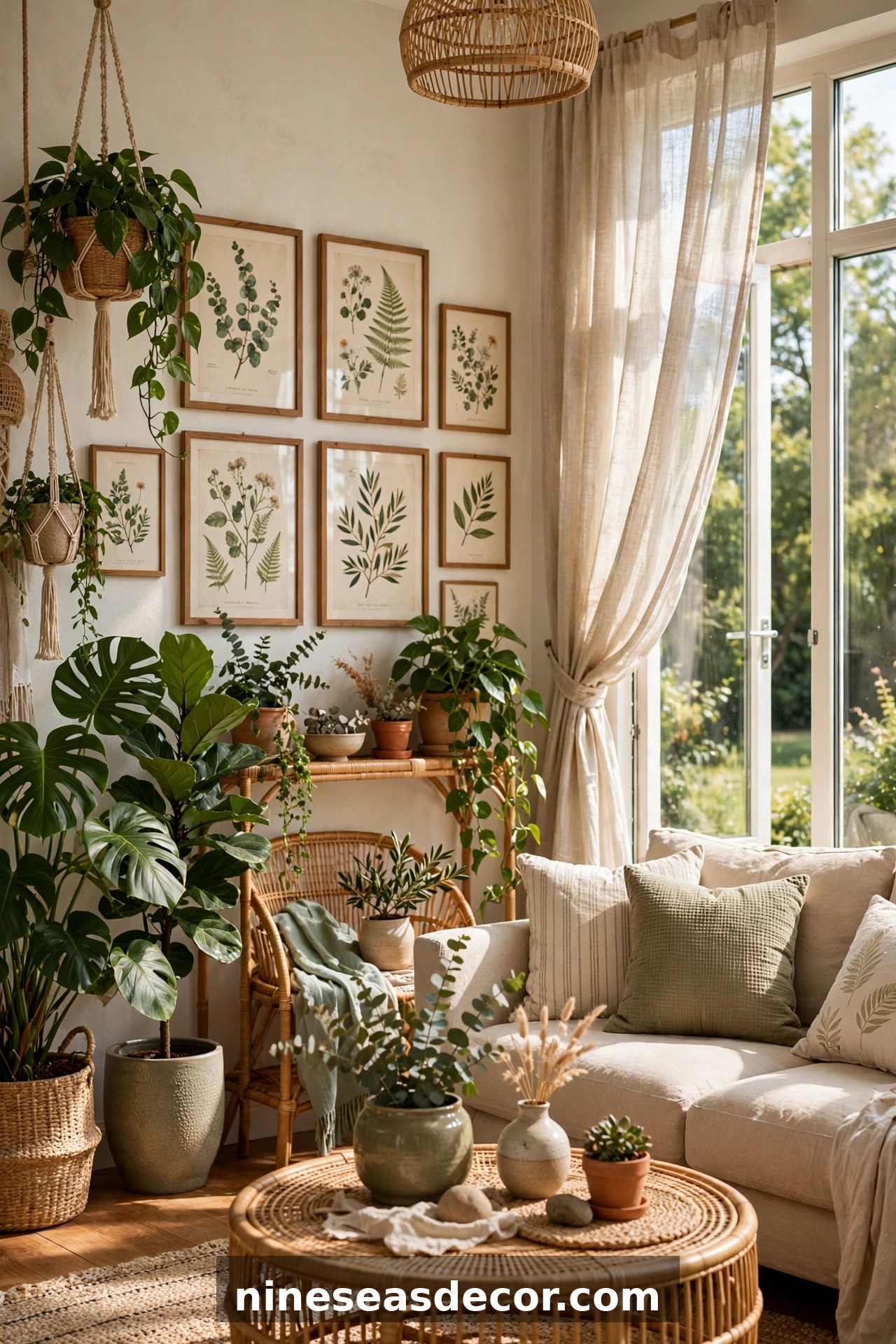
Summer decor has a reputation for being either over the top coastal or too casual, and I want to push back on both of those extremes. The best summer seasonal decor feels relaxed and effortless while still being visually intentional. Think of a beautiful beach house that has not tried too hard, everything feels collected rather than curated, natural rather than manufactured, and deeply comfortable rather than precious.
The 2026 summer palette is moving away from the stark whites and electric blues of years past and leaning into something warmer and more grounded. We are talking warm sand tones, sun bleached terracotta, dusty coral, and deep ocean teal used as a true accent rather than a dominant color. For a wall color that captures this summer energy perfectly, Benjamin Moore Pale Sea Mist (2146-60) is doing incredible things in living rooms and reading nooks right now. It is soft enough to feel airy but has enough depth to feel sophisticated.
The key to successful summer decorating is maximizing the connection between your indoor and outdoor spaces. If you have a patio, deck, or even a small balcony, your indoor and outdoor decor should feel like chapters of the same story. Use consistent color threads between your indoor throw pillows and your outdoor cushions. Bring the same type of greenery indoors and out. The investment in creating this visual flow is genuinely transformative, and it makes your entire home feel larger and more intentional.
SUMMER BEDROOM TRANSFORMATION TECHNIQUES
The bedroom is where summer decor can make the biggest quality of life difference, and it is often the room people forget about when doing seasonal refreshes. Start by completely stripping the bed of its winter layers and rebuilding it from scratch. A 100% linen duvet cover in warm white or pale sand is the single best summer bedding investment you can make. Linen is naturally breathable, gets softer with every wash, and looks effortlessly beautiful whether made up perfectly or slightly rumpled. Budget around ($120 to $280) for a quality linen duvet cover in a queen size. Swap your (20×20 inch) winter velvet pillow shams for washed cotton or linen covers in complementary tones. Remove your heavy drapes and replace them with sheer linen panels that filter the summer light into something golden and dreamy rather than blocking it entirely.
SUMMER OUTDOOR TO INDOOR FLOW STRATEGIES
Creating seamless indoor outdoor flow during summer requires a deliberate approach to both spaces. Start by identifying the transition zone, typically a sliding door area, french doors, or a back hallway, and treat it as its own dedicated design space. A large (8×10 foot) indoor outdoor rug that literally bridges both spaces works beautifully here, with options now available in the ($200 to $600) range that are stylish enough for indoor use but durable enough for foot traffic from outside. Layer in potted tropical plants, fiddle leaf figs, bird of paradise, and large leafed philodendrons all bring that lush outdoor energy inside without requiring any maintenance beyond regular watering. Consider adding a gallery wall in this transition zone featuring botanical prints, maps, or nature photography to reinforce the indoor outdoor narrative.
Fall Seasonal Decor: The Art of Cozy Without the Cliché
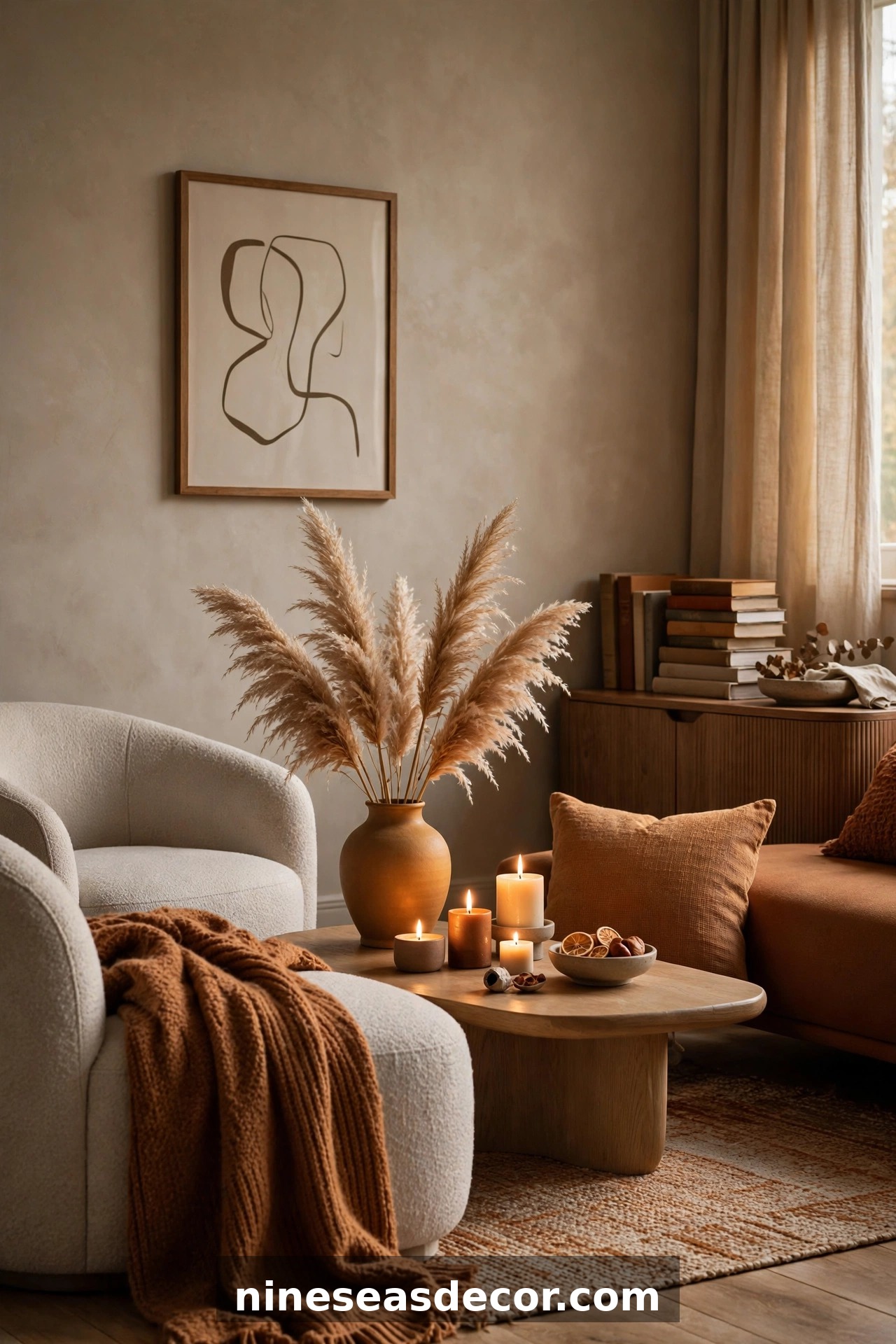
Okay, fall. This is the season where I have to talk about the elephant in the room, or maybe I should say the pumpkin on the porch. Fall decor has become almost aggressively clichéd in recent years, and I think a lot of homeowners genuinely feel trapped between wanting to embrace the season and not wanting their home to look like a Pinterest board from 2014. The good news is that 2026 fall decor is breaking away from the orange pumpkin and printed leaf aesthetic in really exciting directions.
The fall 2026 palette is deep, moody, and genuinely sophisticated. We are talking chocolate brown, burnt sienna, deep plum, aged brass, and a very specific warm black that reads more charcoal in natural light. For walls, Sherwin Williams Urbane Bronze (SW 7048), which actually won their 2021 Color of the Year, continues to perform beautifully as a fall accent wall color because it captures that rich, organic depth that defines the best fall interiors. Pair it with natural materials like raw linen, oiled wood, hammered brass, and genuine leather and you get something that feels luxurious rather than seasonal in a costume party way.
According to a 2023 Houzz Decorating Trends Report, fall remains the most popular season for home decor purchases among US homeowners, with an average household spending ($340 to $780) on fall specific decor items annually. Knowing this, I always encourage homeowners to be strategic: invest in pieces that can carry through to winter with minor modifications rather than buying fall specific items that get retired by December.
FALL FIREPLACE AND MANTEL STYLING MASTERY
The fireplace mantel is the undisputed crown jewel of fall decorating, and getting it right sets the tone for the entire room. The best mantels I have seen follow a rule I call the rule of varied heights: anchor with one tall element on each side, fill the middle with a cluster of medium elements, and scatter small elements throughout to add visual texture. For fall 2026, I love a grouping of sculptural gourds (not the orange carving kind, but the interesting warty heirlooms in creams, greens, and deep burgundies), a pair of (16 to 20 inch) taper candles in aged brass holders, and a horizontal mirror or artwork behind everything to add depth. Layer in dried pampas grass stems, preserved magnolia leaves, and a few (6 to 8 inch) pillar candles in varying heights. Keep the whole arrangement within a (48 to 60 inch) horizontal span for a proportional look that feels intentional rather than cluttered.
FALL TEXTILE LAYERING FOR LIVING ROOMS
Textile layering is the fastest and most cost effective way to transform a living room for fall, and most homeowners dramatically underestimate how powerful this tool is. The goal is to create a room that looks and genuinely feels like it has been wrapped in something warm and textured. Start with your area rug: if your current rug is a light, flat weave summer style, layer a (5×7 foot) sheepskin or high pile wool rug on top of it for instant texture. This trick alone changes the entire energy of a room and costs as little as ($80 to $250) for a good quality layering rug. Next, add a minimum of three different textures in your throw pillows: try a chunky knit, a velvet, and a woven or jacquard fabric. Throw blankets should be draped deliberately, not just tossed. Loop one end over the arm of your sofa and let the rest puddle slightly on the floor for that effortlessly styled look.
Winter Seasonal Decor: Beyond the Holidays Into True Winter Warmth
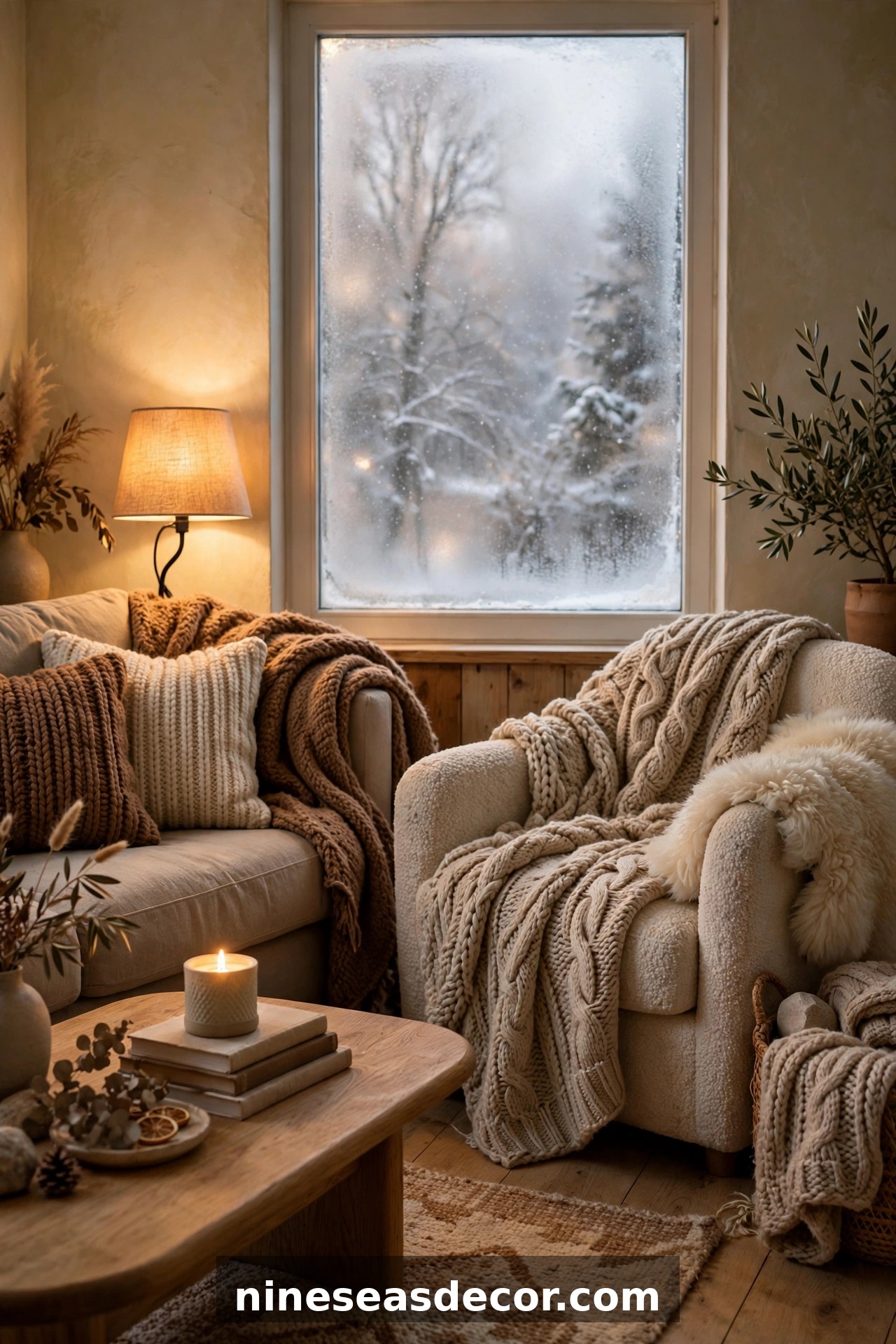
Here is where I need to say something that might be slightly controversial: winter decor and holiday decor are not the same thing. I see homeowners put up holiday decorations in late November, take them down on January 2nd, and then spend the next two and a half months in a decorating void, staring at a home that feels stripped and sad. January and February are genuinely the months when your home needs to work hardest for you emotionally, and a thoughtful winter decor strategy that extends beyond the holidays is one of the most impactful investments you can make.
True winter decor is about depth, warmth, and intentional coziness, what the Danish call hygge and what I simply call making your home feel like the best hug you have ever received. It is heavy linen and wool layered together. It is candlelight at every opportunity. It is dark, saturated wall colors that make rooms feel like intimate sanctuaries rather than cold boxes. Benjamin Moore Hale Navy (HC-154) is one of the most transformative winter paint colors I have ever recommended, it takes a bedroom from forgettable to absolutely stunning and pairs magnificently with warm brass hardware and cream colored textiles.
The winter decor budget tends to be the largest of any season for most households, largely driven by holiday spending. The National Retail Federation reported in their 2024 Holiday Spending Report that the average US household spends ($998) on holiday related purchases, a significant portion of which goes toward decor. Being strategic about which pieces will serve double duty beyond the holidays can stretch that budget considerably.
CREATING A HYGGE INSPIRED READING NOOK
The hygge reading nook might be the single most requested winter project I get asked about, and for good reason. Having a dedicated cozy corner transforms how you actually use and feel about your home during the dark months of January and February. You do not need a large space for this: a (4×5 foot) corner is genuinely enough to create something magical. Start with a generous armchair or chaise positioned to catch natural light from a nearby window. Layer it with a 100% wool throw in a deep forest green or warm camel tone, budget around ($80 to $180) for something genuinely high quality. Add a (16 to 18 inch) round side table at arm height for your mug and current book. String a set of warm white Edison bulb lights around the window frame above, and position a (24 to 30 inch) floor lamp with a warm bulb (look for 2700K color temperature) directly over the chair for reading light.
WINTER DINING TABLE AND ENTERTAINING SETUPS
Winter is peak entertaining season, and your dining table setup should reflect the generous, abundant energy of the months between November and February. I love building winter tablescapes around the concept of layered light: start with a long, low centerpiece of pillar candles in varying heights from (4 to 12 inches), grouped together on a wooden board or marble slab. Tuck in sprigs of fresh rosemary, pine, or eucalyptus around the candles for that incredible sensory element of scent combined with visual texture. Layer your place settings with a base plate, a contrasting charger in brass or aged gold, and your everyday dinnerware on top. A linen napkin folded loosely and tied with a simple sprig of greenery costs almost nothing and looks genuinely beautiful. Budget the full winter tablescape setup at ($150 to $400) depending on how many of the elements you already own.
Room-by-Room Seasonal Decor Budget Planning for 2026
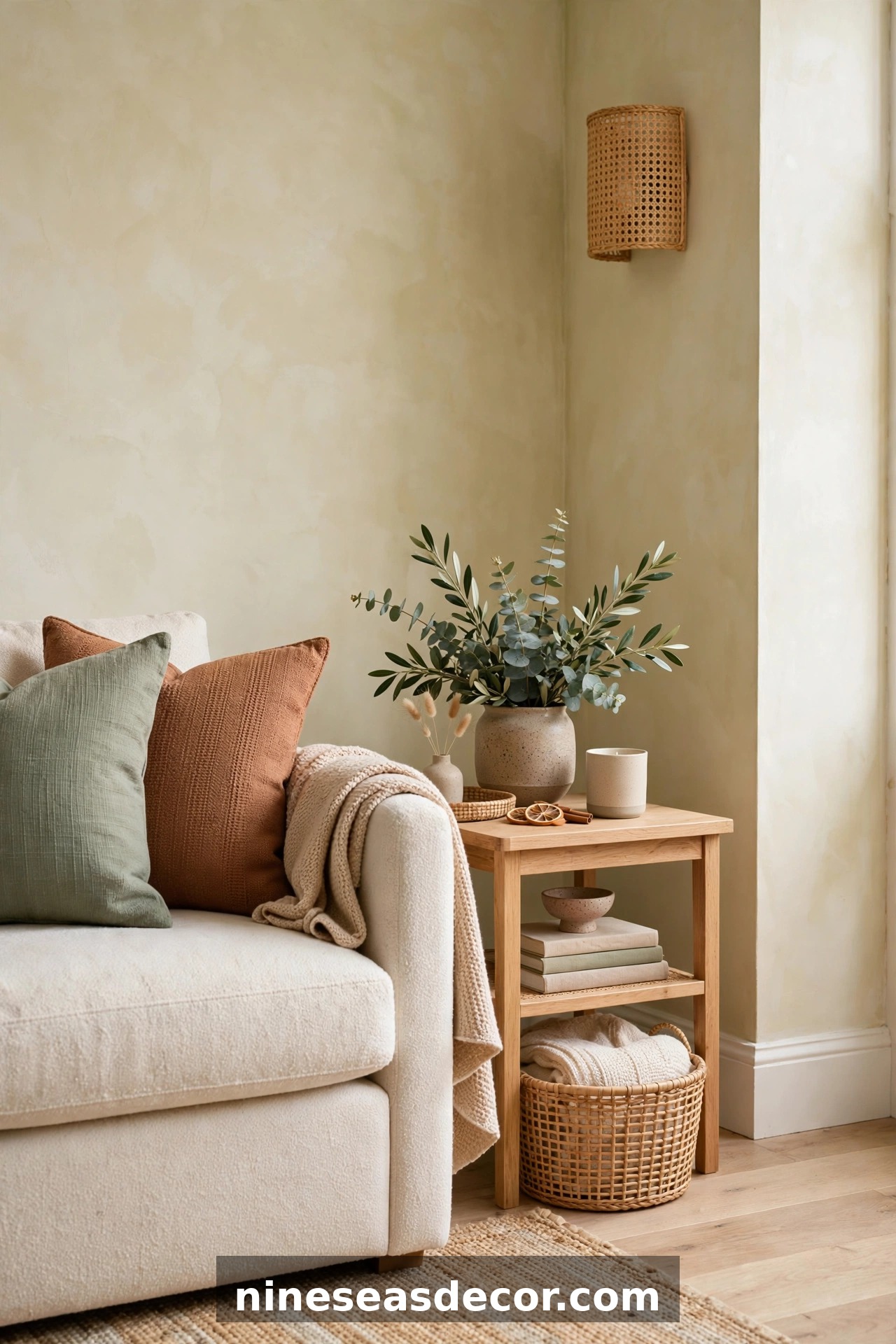
I want to talk real numbers here, because vague advice about “keeping costs reasonable” helps exactly nobody. The truth about seasonal decor budgeting is that the upfront investment in your first year of building out a proper seasonal rotation will always be the highest. Once you have quality basics in place, your annual spending drops dramatically because you are buying a few fresh pieces each season rather than starting from scratch.
For a (1,800 sq ft) three bedroom home, here is what a realistic first year seasonal decor investment looks like. For a full initial seasonal rotation covering all four seasons across all primary rooms (living room, dining room, primary bedroom, entryway, and kitchen), budget between ($1,500 and $3,500). This sounds significant, but break it down per season and you are looking at ($375 to $875) per seasonal transition, which is genuinely manageable when you shop strategically across a combination of retail, vintage, and budget sources.
After that first year, your annual seasonal refresh budget for the same home should drop to approximately ($400 to $900) per year, spent on fresh botanicals, a few new accent pieces, candles and consumables, and anything that has worn out or needs replacing. This is where the system pays for itself many times over compared to the alternative of impulsive, reactive decorating that leads to a garage full of random holiday stuff that never coheres into anything beautiful.
SEASONAL DECOR SHOPPING STRATEGIES THAT ACTUALLY WORK
Smart seasonal decor shopping is genuinely a skill, and I have refined it over eight years into a few core strategies. First: always shop the clearance sales of the previous season. The day after a major seasonal holiday, retail stores mark seasonal decor down by 50 to 75%. Buy your fall candles in early November at half price, your winter greenery in late December, your spring botanicals in early April. Second: estate sales and vintage shops are your greatest untapped resource for quality seasonal pieces. A genuine brass candleholder from an estate sale at ($5 to $15) will outlast and outperform a ($45) brass colored zinc knockoff from a big box store every single time. Third: invest in quality where it shows most, specifically in textiles and in any piece that will be prominently displayed. Skimp on the things that are background elements.
ORGANIZING AND STORING YOUR SEASONAL DECOR COLLECTION
The best seasonal decor system in the world falls apart without a solid storage and organization strategy. I have seen beautiful collections of decor become a chaotic, demoralizing mess simply because nobody thought carefully about storage. My recommended system uses clear lidded bins in a uniform (16x12x10 inch) size, labeled by season on both the lid and the short side so you can identify them when stacked. Fragile items like ceramic pieces and glass ornaments get individually wrapped in unbleached packing paper and placed in their own divided cardboard boxes before going into the bins. Textiles are washed, folded, and stored in vacuum seal bags to maximize storage space and protect against moisture. Allocate a dedicated (4×4 foot) storage area in your basement, attic, or large closet for your seasonal collection. Proper storage not only protects your investment but makes the actual decorating transitions infinitely less stressful and more enjoyable.
Frequently Asked Questions
HOW MUCH SHOULD I BUDGET FOR SEASONAL DECOR EACH YEAR?
This is genuinely one of the most common questions I receive, and the answer depends significantly on where you are in the process. If you are building your seasonal decor collection from scratch in your first year, budget between ($1,500 and $3,500) for a (1,500 to 2,000 sq ft) home to establish a proper four season rotation across your primary living spaces. This initial investment covers quality textiles, accent pieces, botanical elements, and storage systems. After that foundational first year, your annual maintenance budget should drop to approximately ($400 to $900) spread across all four seasonal transitions. That breaks down to roughly ($100 to $225) per seasonal refresh, which covers fresh flowers or botanicals, new candles, and one or two accent piece additions per season. Shopping clearance sales strategically can stretch this budget by an additional 30 to 40% in purchasing power.
WHAT ARE THE BEST NEUTRAL PAINT COLORS FOR YEAR ROUND SEASONAL DECOR FLEXIBILITY?
Choosing the right base wall color is genuinely the most important decision you will make for seasonal flexibility, and the wrong choice can fight against your seasonal decor rather than supporting it. My top three recommendations for year round versatility are Sherwin Williams Accessible Beige (SW 7036), which bridges warm and cool seasonal palettes effortlessly. Benjamin Moore Pale Oak (OC-20), a beautiful greige that reads differently in different light conditions, making it feel fresh across seasons. And Sherwin Williams Agreeable Gray (SW 7029), which is arguably the most flexible neutral currently available, working as a backdrop for everything from the bright corals of summer to the deep burgundies of fall. All three are available at most paint retailers for ($55 to $80) per gallon, and one gallon typically covers approximately (350 to 400 sq ft) with two coats.
HOW DO I TRANSITION FROM HOLIDAY DECOR TO GENERAL WINTER DECOR WITHOUT MY HOME FEELING EMPTY?
This is a pain point I hear about constantly, and it is entirely solvable with a little advanced planning. The key is to identify which elements of your holiday decor are actually winter decor in disguise, and keep those out past January 1st. Specifically: greenery (pine, eucalyptus, cedar) stays. Warm white twinkle lights stay. Candles and candleholders stay. Plaid and tartan textiles stay. What goes away is the specifically holiday iconography: Santas, specific ornaments, holiday themed pillows, and explicitly Christmas or Hanukkah specific pieces. Once those are boxed up, fill any visual gaps with additional winter whites and naturals: white birch branches in a tall vase, clusters of white pillar candles, and an additional chunky knit throw in a neutral tone. Budget about ($50 to $150) for these transitional gap fillers and your home will feel full and intentional right through February.
WHAT IS THE MOST COST EFFECTIVE WAY TO UPDATE DECOR FOR EACH SEASON?
The single most cost effective seasonal update strategy is a combination of three approaches working together. First, the pillow cover swap: invest in quality pillow inserts in standard sizes (18×18 inches and 20×20 inches) and rotate seasonal covers around them. Covers alone run ($15 to $45 each) versus ($45 to $90) for a complete pillow. Over four seasons, the savings are significant. Second, the botanical rotation: a single investment in high quality faux botanical stems, budget around ($80 to $150) for a starter collection, gives you pieces that can be grouped differently and combined with fresh seasonal elements across multiple years. Third, the candle and scent strategy: seasonal candles in appropriate scents (fresh linen for spring, citrus for summer, woodsmoke for fall, pine for winter) are inexpensive at ($15 to $35 each) and deliver an immediate multisensory seasonal shift that punches far above their price point.
HOW DO I MAKE SMALL APARTMENTS FEEL SEASONALLY UPDATED WITHOUT OVERWHELMING THE SPACE?
Decorating seasonally in a small apartment under (700 sq ft) requires a more edited approach, but the principle is exactly the same: swap the layers, not the bones. In a small space, I recommend focusing your seasonal energy on just three key zones: the entry area (even a small hook wall and doormat make a significant statement), the main seating area (pillow covers, a single throw, and one botanical element), and the dining or kitchen table (a seasonal centerpiece and fresh dish towels). Resist the urge to add volume to a small space seasonally. Instead, focus on color, texture, and scent to create the seasonal shift. A (4 inch) potted herb in a seasonal appropriate vessel does more for a small kitchen than a dozen decorative items fighting for counter space. According to a 2022 study in the Journal of Environmental Psychology, even single sensory seasonal cues (like scent or a specific color tone) trigger the same psychological response as full room seasonal transformations in smaller living environments.
WHEN SHOULD I START EACH SEASONAL DECOR TRANSITION?
Timing your seasonal transitions is more important than most homeowners realize, because rushing a transition feels chaotic and doing it too early feels forced. My recommended transition schedule for 2026 is as follows. Begin your spring transition around March 5th to 10th, roughly two weeks before the spring equinox on March 20th. Start your summer transition around June 1st to 5th, giving you a fully summer aligned home before the solstice on June 21st. Begin your fall transition around September 1st to 7th, which allows the home to shift before the autumnal equinox on September 22nd. And start your winter transition around December 1st, which aligns your home with the holiday season and the winter solstice on December 21st simultaneously. Each transition should take between two and four hours for a (1,500 to 2,500 sq ft) home if you have your seasonal storage organized and your swap system established. Scheduling these transitions as non negotiable calendar events is the single habit change that separates homeowners who successfully maintain seasonal decor from those who intend to but never quite get around to it.
WHAT ARE THE BEST PLANTS AND BOTANICALS FOR EACH SEASON IN HOME DECOR?
Botanical elements are the fastest way to make a space feel seasonally alive, and choosing the right ones for each season makes an enormous difference in authenticity and visual impact. For spring, prioritize tulips, ranunculus, peonies (fresh or high quality faux), budding branches, and potted

Hi, I’m Sophia Rose. I believe every home tells a story. At Nine Seas Decor, I share creative ideas, budget-friendly tips, and modern trends to help you turn your living space into a sanctuary. Let’s make your home beautiful, one corner at a time!